Best Family Cars in Australia 2026: Top 10 Ranked
Written by Uzzi · 5 May 2026
CarSorted Verdict
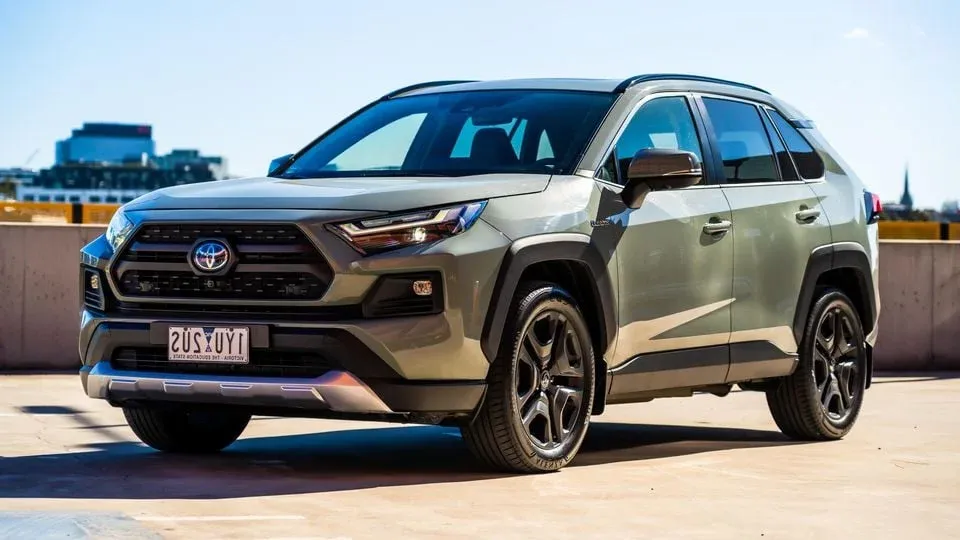
The Toyota RAV4 Hybrid is still the default best family car in Australia for 2026. The Kia Sportage Hybrid closes the gap with a longer warranty and bigger boot. For 7-seat families the Kia Carnival is unbeaten. For metro families with home charging, the BYD Sealion 6 PHEV is the new value pick at $42,990 RRP.
A family car needs to do everything well: safe enough for the kids, big enough for a pram and the weekly shop, cheap enough to run daily, and reliable enough not to leave you stranded on the way to school. We scored every car in our database against five family-specific criteria and ranked the top 10 below. Each pick links through to our directory so you can compare every variant on price, safety and running cost in one tap.
How we ranked these
- Safety (25%): 5-star ANCAP mandatory. Bonus points for AEB with cyclist detection, blind-spot, rear cross-traffic, centre airbag.
- Space (25%): boot litres, rear legroom, ISOFIX points, ability to fit 3 child seats across the back.
- Running cost (20%): fuel/electricity, insurance, servicing and tyres over 5 years at 15,000 km/year.
- Reliability (15%): warranty length, brand reputation in Australia, recall history.
- Features (15%): wireless Apple CarPlay/Android Auto, reversing camera, rear USB ports, dual-zone climate.
Top 10 family cars at a glance
| Rank | Car | Best for | From RRP |
|---|---|---|---|
| #1 | Toyota RAV4 Hybrid | Best overall | $45,990 |
| #2 | Kia Sportage | Best boot + warranty | $38,490 |
| #3 | Hyundai Tucson | Best value mid-size | $38,900 |
| #4 | Mazda CX-5 | Best interior quality | $39,990 |
| #5 | Toyota Corolla Cross | Best small family | $33,490 |
| #6 | BYD Sealion 6 PHEV | Best PHEV value | $42,990 |
| #7 | Mitsubishi Outlander | Best 7-seat under $45k | $39,990 |
| #8 | Kia Carnival | Best for 3+ kids | $55,490 |
| #9 | Toyota Kluger Hybrid | Best 7-seat hybrid | $62,410 |
| #10 | Hyundai Palisade | Best premium 7-seat | $66,800 |
#1 Toyota RAV4 Hybrid: the family-car default
The Toyota RAV4 Hybrid ticks every family-car box. 5-star ANCAP, 542 L boot, 4.8 L/100km combined, strong 1,500 kg towing on AWD variants, and the resale value that makes Toyota the safest financial bet in any segment. Toyota Safety Sense (AEB, lane assist, adaptive cruise, blind-spot) is standard.
Pricing starts at $45,990 RRP for the GX Hybrid 2WD. The popular Cruiser Hybrid AWD lands around $54,000 driveaway and adds heated seats, larger touchscreen and a power tailgate. The new sixth-generation arrived in early 2026 and is currently selling without a confirmed ANCAP rating until a mid-year running change meets the tougher 2026 protocols.
#2 Kia Sportage: biggest boot, longest warranty
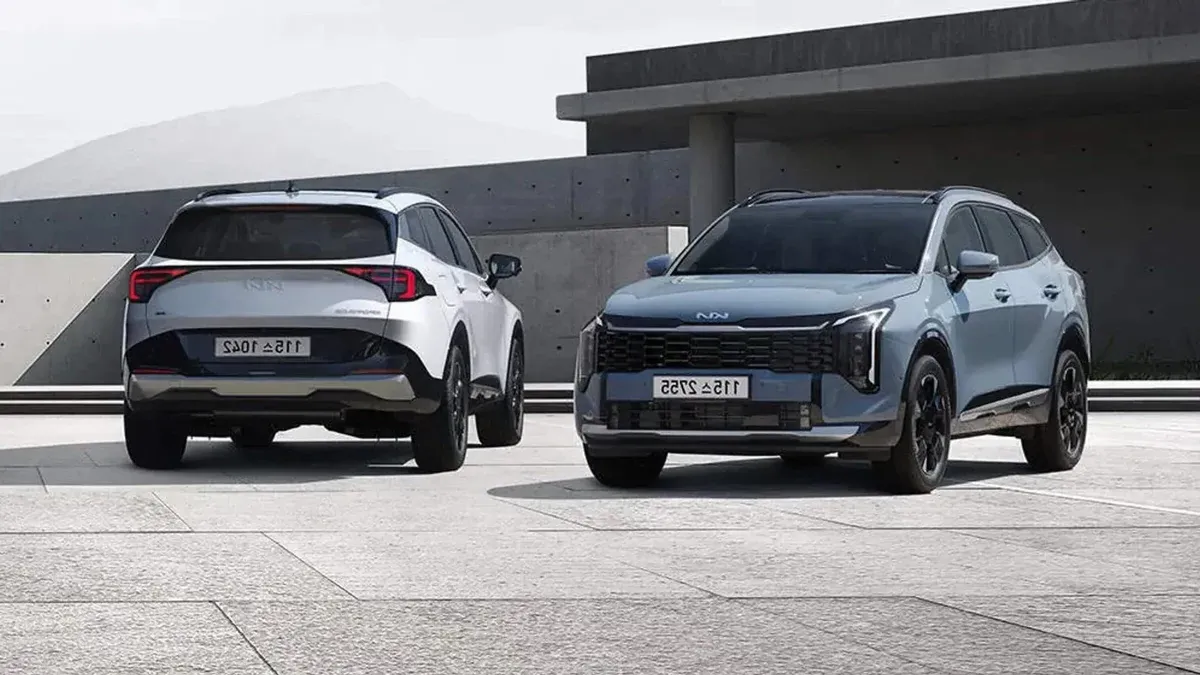
The Kia Sportage from $38,490 RRP has the largest boot of any mid-size family SUV in Australia at 591 L, plus Kia's industry-leading 7-year unlimited-km warranty. The Hybrid variant returns 4.9 L/100km combined and is the pick for families doing mostly suburban driving. Dual 12.3-inch screens are standard on Sport+ and above.
#3 Hyundai Tucson: best value mid-size
Same platform as the Sportage, slightly different design language. The Hyundai Tucson from $38,900 RRP offers a 539 L boot, 5-star ANCAP, and the same hybrid powertrain rated at 5.3 L/100km. Often discounted more aggressively than the Sportage at the dealer level. Read our full Hyundai Tucson review for the deep dive.
#4 Mazda CX-5: best interior at this price
The all-new third-generation Mazda CX-5 from $39,990 RRP is AWD as standard, has a 132 kW 2.5L petrol four, and a cabin that genuinely feels like it's punching one segment up on quality. The 2026 redesign added the 12.9-inch screen and 5 trim grades. The hybrid arrives in 2027. For now, the petrol model still beats most rivals on driving feel and material quality.
#5 Toyota Corolla Cross: best small family pick
If a RAV4 is too big, the Toyota Corolla Cross from $33,490 RRP is the family-car sweet spot. Hybrid variants do 4.3 L/100km, the 440 L boot fits a pram plus weekly shop, and Toyota Safety Sense is standard. The hybrid premium pays itself back in roughly 2 years of fuel savings versus the petrol.
#6 BYD Sealion 6 PHEV: the new value pick
From $42,990 RRP, the BYD Sealion 6 Essential PHEV is the most affordable plug-in hybrid family SUV in Australia. 92 km of pure-electric range covers most family weekday driving on electricity alone. Charge it overnight on a normal power point and your school-run fuel bill drops to roughly $300 a year. When the battery is empty, the 1.5L petrol engine takes over for road trips — combined claimed economy is just 1.4 L/100km.
Caveats: BYD's Australian warranty network is still growing, especially in regional areas. The PHEV system tows 1,500 kg, so it's not a caravan-pulling SUV. If those don't matter, this is genuinely cheaper to live with than any petrol or diesel rival.
#7 Mitsubishi Outlander: best 7-seat under $45k
From $39,990 RRP for the ES 2WD (5-seat) and around $42,000 for the 7-seat variant, the Mitsubishi Outlander is the cheapest properly 7-seat family SUV in Australia. Mitsubishi's 10-year warranty is the longest in the segment. The third row is best for kids on shorter trips, not adults on highway runs. The Outlander PHEV variant adds 84 km of EV range from around $55,990.
#8 Kia Carnival: best for 3+ kids
If you have three or more kids, stop reading the SUV list and look at the Kia Carnival. From $55,490 RRP for the S Petrol, you get genuine 8-seat capacity, sliding rear doors (a game-changer in tight car parks), 627 L boot behind the third row, and over 1,100 L with the third row folded. It drives like a normal car despite the size.
#9 Toyota Kluger Hybrid: best 7-seat hybrid
From $62,410 RRP, the Toyota Kluger Hybrid returns 5.6 L/100km in a 7-seat SUV, which is genuinely remarkable. Toyota reliability and resale apply just as strongly here as on the smaller RAV4. The third row is more usable for adults than the Outlander or Sorento.
#10 Hyundai Palisade: premium 7-seat without the German price
From $66,800 RRP for the Highlander Petrol, the Hyundai Palisade feels like a luxury car at a mainstream price. Genuine 7- or 8-seat configurations, captain's-chair option in the second row, heated and ventilated seats throughout, and one of the quietest cabins in any 7-seater. The Hybrid variant arrives mid-2026.
Annual running cost comparison
| Car | Fuel/yr | Service/yr | Insurance/yr | Total/yr |
|---|---|---|---|---|
| BYD Sealion 6 (charged daily) | ~$420 | ~$300 | ~$1,400 | ~$2,120 |
| Toyota Corolla Cross Hybrid | $1,225 | $300 | $1,300 | $2,825 |
| Toyota RAV4 Hybrid | $1,368 | $300 | $1,500 | $3,168 |
| Kia Sportage Hybrid | $1,397 | $340 | $1,500 | $3,237 |
| Hyundai Tucson Hybrid | $1,511 | $340 | $1,500 | $3,351 |
| Mazda CX-5 Petrol | $1,995 | $330 | $1,500 | $3,825 |
| Mitsubishi Outlander Petrol | $2,109 | $280 | $1,500 | $3,889 |
| Kia Carnival Petrol | $2,565 | $420 | $1,800 | $4,785 |
Numbers assume 15,000 km/year, $1.90/L unleaded, $0.32/kWh home electricity, average comprehensive insurance for a 35-year-old in metro NSW. Your actual costs depend on driving style, postcode and discounting available at the dealer.
Child seat compatibility checklist
Before signing the contract, do a fitting test at the dealer with your actual child seats. The things to check:
- ISOFIX points: outer rear seats are standard. A centre ISOFIX point (rare) lets you fit three seats across more easily.
- Top-tether anchors: mandatory in Australia for forward-facing child seats. Confirm location and accessibility.
- Rear door opening angle: narrow doors make installing seats painful. SUVs with sliding doors (Carnival) are the easiest.
- Three-across width: very few cars properly fit three child seats across the back seat. Carnival and Palisade pass; most mid-size SUVs don't.
- Seat-belt buckle access: if buckles sink between seat cushions, every drop-off becomes a fight.
Hybrid, PHEV or EV for families?
Three different answers depending on your driving:
- Mixed driving, no home charger: hybrid (RAV4 Hybrid, Corolla Cross Hybrid). Lowest friction.
- Mostly metro, can charge at home, occasional road trips: PHEV (Sealion 6, Outlander PHEV). Cheapest to run if you actually plug in.
- Mostly metro, home charging, rarely 500+ km trips: full EV. See our Best EVs Under $50K guide.
For a deeper cost comparison, our EV vs Hybrid analysis runs the 5-year ownership numbers across all three drivetrain types.
Compare any of these head-to-head on our 5-star safe SUV directory, or read related guides: Best Hybrid Cars 2026 | Best EVs Under $50K | Best Utes 2026 | Cheapest EVs in Australia.
Disclaimer: Pricing is RRP excluding on-road costs and accurate at time of publishing. Boot, fuel, ANCAP and warranty figures are sourced from manufacturer Australian websites and ANCAP. Read our scoring methodology for how rankings are calculated. Always confirm current specifications and pricing with your dealer before purchase.
Cars in This Article
Frequently Asked Questions
What is the best family car in Australia 2026?
What's the cheapest 5-star ANCAP family car in Australia?
What family car has the biggest boot in Australia?
Which family car is cheapest to run in Australia?
Are Chinese family SUVs as safe as Toyota or Mazda?
Which family cars have 7 seats under $60,000?
Hybrid, PHEV or EV — which is best for families?
Which family car has the longest warranty in Australia?
Disclaimer: All information in this article was believed to be correct at the time of publishing (5 May 2026). Prices are manufacturer recommended retail prices (RRP) and may vary by state, dealer, and options. Specifications, government incentives, and rebates can change without notice. Always verify details with the manufacturer or relevant authority before making a purchase decision. Running cost estimates are based on average Australian driving conditions at 15,000 km/year. CarSorted does not accept payment for recommendations or rankings.
Written by Uzzi, CarSorted Editorial Team · 5 May 2026 · how we research
Comments (0)
Sign in to join the conversation
No comments yet. Be the first!