Audi Q7 Review Australia (2026): Every Variant Compared
Written by Uzzi · 2 May 2026
The Verdict
The 2026 Audi Q7 is the most flexible seven-seat luxury SUV you can buy in Australia. Three engines, four trim ladders, a V8 flagship, and seven seats standard across every single variant. The entry petrol is competitively priced for a luxury seven-seater at $108,815 RRP, and the V8 SQ7 tops the range at $174,815 RRP. The 3,500kg braked towing capacity beats most of the segment, and the recently facelifted body looks better than ever. The catches: only one trim level (S line and above) gets the panoramic roof and Bang and Olufsen audio as standard, fuel costs on the V8 add up fast, and there is no plug-in hybrid option in Australia. For families who want a proper three-row luxury SUV without compromising on engine choice, this is the one to put on the shortlist.
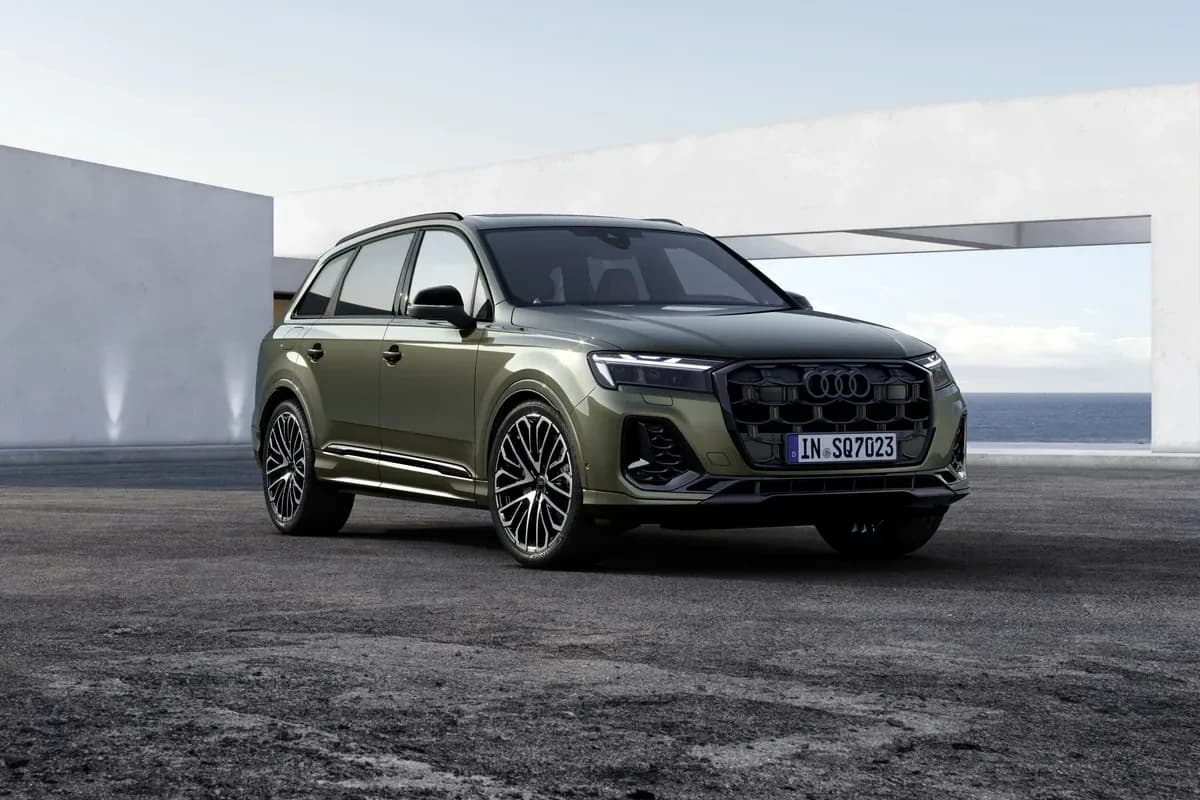
Image credit: Audi Australia
Audi Australia put the third-generation Q7 through a meaningful refresh in late 2024 and the result is the cleanest version of the car since it launched in 2015. New octagonal Singleframe grille, Matrix LED headlights with dynamic indicators, redesigned bumpers front and rear, and a tidied-up cabin with a digital instrument cluster and 10.1-inch MMI touchscreen. For 2026, Audi has gone a step further: every variant gets a meaningful price cut, and two new S line edition trims slot in for buyers who want the S line look without paying for the bigger V6 engines.
We have walked through every variant in the local lineup, run the configurator pricing for VIC drive-aways, and pulled out the differences that actually matter when you are deciding which Q7 to write the cheque for. There is genuine choice in this lineup, and the right pick depends on whether you want efficiency, performance, towing capability, or just the cheapest way into the badge. Let us get into it.
Pricing and the Lineup
The 2026 Audi Q7 range in Australia runs to seven variants spread across four powertrains. Prices below are the recommended list price (RRP, before on-road costs) plus the configurator-calculated drive-away price for Victoria. Other states will land within a few thousand dollars depending on stamp duty and registration.
| Variant | Engine | RRP | VIC drive-away |
|---|---|---|---|
| 45 TFSI quattro 185kW | 2.0L petrol I4 | $108,815 | $123,731 |
| 45 TDI quattro 170kW | 3.0L diesel V6 + MHEV | $117,284 | $136,258 |
| TFSI 185kW S line edition | 2.0L petrol I4 | $112,415 | TBC |
| TDI 170kW S line edition | 3.0L diesel V6 + MHEV | $124,130 | TBC |
| 50 TDI quattro S line 210kW | 3.0L diesel V6 + MHEV | $136,815 | $153,691 |
| 55 TFSI quattro S line 250kW | 3.0L petrol V6 + MHEV | $136,815 | $153,691 |
| SQ7 TFSI quattro 373kW | 4.0L petrol V8 + CoD | $174,815 | $197,967 |
A few things stand out. First, the 50 TDI S line and the 55 TFSI S line are priced identically at $136,815 RRP. Choose your fuel preference rather than your wallet at that price point. Second, the SQ7 commands a $30,000 premium over the next-most-expensive Q7 for the V8 and the chassis upgrades, which is steep but actually decent value when you remember that the only other naturally seven-seat V8 SUV at this price is the Lexus LX. Third, the dealer delivery fee for the Q7 family is $4,500, slightly higher than the $4,000 most other Audi SUVs charge.
Audi Australia included a 5-year unlimited-kilometre warranty as standard, alongside a 5-year roadside assist and a 5-year/75,000km capped-price service plan with 12-month/15,000km service intervals. That puts the Q7 on level pegging with most of the segment for ownership terms.
Engines: From 2.0 Petrol to 4.0 V8
SQ7 model shown. Image credit: Audi Australia
Audi offers four distinct powertrains across the Q7 lineup, and the differences matter more than the badging suggests. Here is the short version.
2.0L turbo petrol four-cylinder, 185kW (45 TFSI / TFSI 185kW S line edition)
The entry petrol uses a 1,984cc turbocharged four-cylinder making 185kW at 5,000rpm and 370Nm from 1,650 to 5,000rpm. It is the only Q7 variant that does not come with 48V mild hybrid technology. Audi has paired it with the eight-speed tiptronic torque converter automatic and full-time quattro all-wheel drive. 0-100km/h takes 7.3 seconds, which is fine for a 2,060kg three-row SUV.
Real-world fuel consumption sits in the low 9s on the combined cycle. It is the cheapest Q7 to buy and the cheapest to run on petrol pumps, but the lack of MHEV does mean it will not be quite as efficient at low speeds as the diesel V6 with regenerative braking. For city-heavy commutes the diesel makes a better case.
3.0L turbo diesel V6, 170kW (45 TDI / TDI 170kW S line edition)
The entry diesel is the all-rounder pick. A 2,967cc turbocharged V6 diesel with 48V MHEV produces 170kW at 3,500rpm and a meaty 500Nm from 1,500 to 3,000rpm. 0-100km/h takes 7.1 seconds, marginally faster than the petrol four despite weighing 265kg more at 2,325kg. That low-down torque makes a real difference when towing or moving seven up a hill.
Diesel suits the Q7 brief well. Long range from a tank, lower combined consumption, and the 48V mild hybrid system that helps off the line and during deceleration. AdBlue is required and topped up at service intervals.
3.0L V6 turbo diesel, 210kW (50 TDI quattro S line)
Same 2,967cc V6 diesel block as the 45 TDI but tuned to 210kW at 3,500rpm and 600Nm from 1,750 to 3,250rpm. 0-100 drops to 6.1 seconds and the kerb weight climbs slightly to 2,401kg with the bigger wheels and S line chassis kit. This is the variant most reviewers have called the sweet spot of the range for ordinary buyers.
3.0L V6 turbo petrol, 250kW (55 TFSI quattro S line)
A 2,995cc turbocharged petrol V6 with 48V MHEV producing 250kW at 5,200rpm and 500Nm from 1,370 to 4,500rpm. 0-100km/h takes 5.6 seconds and the kerb weight is 2,313kg. This is the petrol equivalent of the 50 TDI in price and trim, and the only meaningful difference between the two on paper is fuel choice and how the engines deliver their performance. The petrol revs harder and feels more eager at the top of the rev range. The diesel feels more relaxed at lower revs.
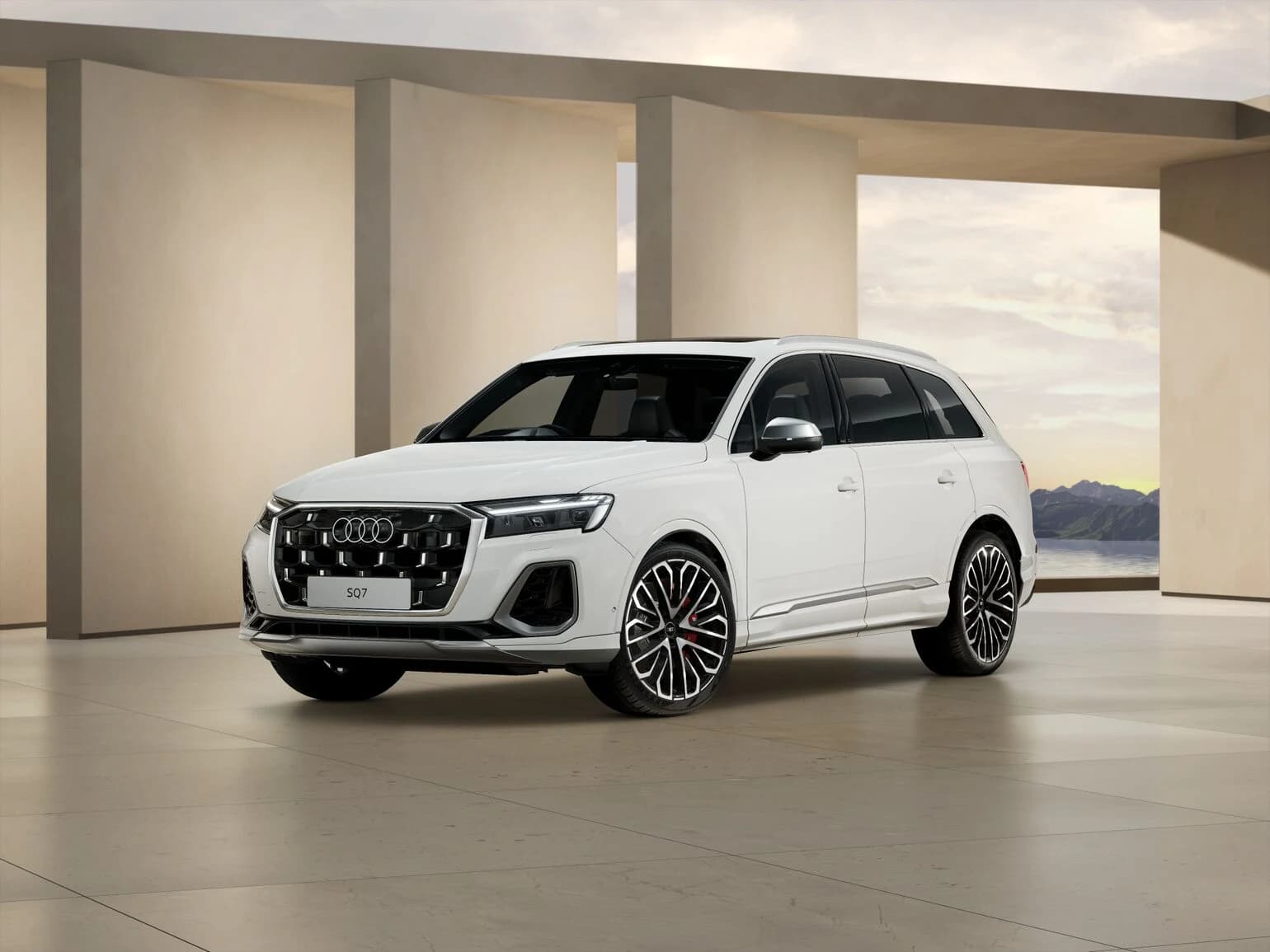
4.0L twin-turbo V8 with CoD, 373kW (SQ7 TFSI quattro)
The headliner. A 3,996cc twin-turbocharged V8 with Cylinder on Demand making 373kW at 5,500rpm and 770Nm from 2,000 to 4,000rpm. 0-100km/h in 4.1 seconds in a 2,439kg seven-seat SUV is genuinely shocking the first time you experience it. Cylinder on Demand shuts down four of the eight cylinders at light loads to save fuel, and it does work, although the SQ7 is still a thirsty proposition by Q7 standards.
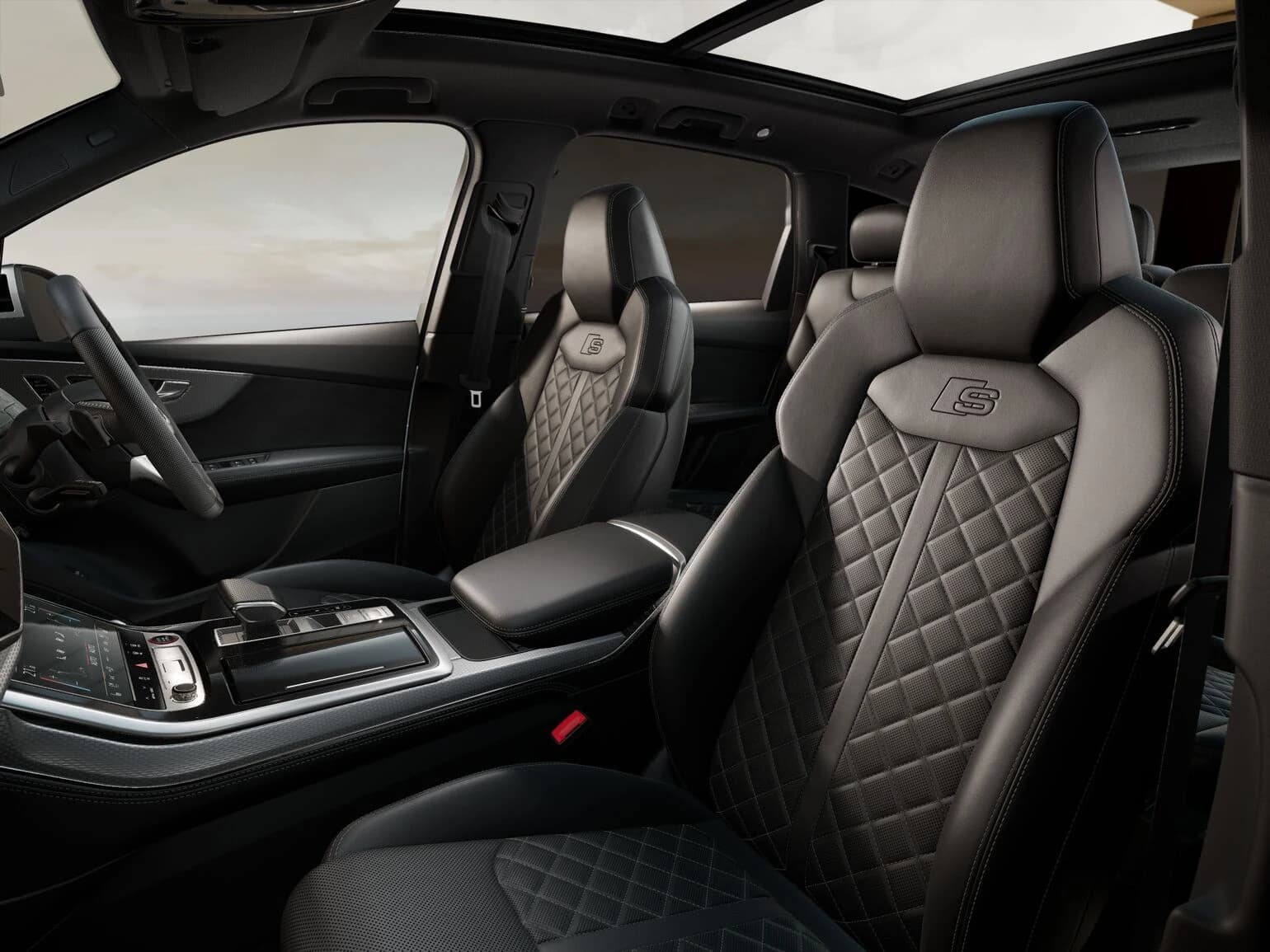
The SQ7 only comes one way, with the eight-speed tiptronic, sport-tuned air suspension, all-wheel steering, the Bang and Olufsen 3D Premium Sound System, four-zone climate control, and Valcona leather sport seats with embossed S logos. There is no cheaper SQ7. There is no faster Q7.
The Trim Ladder: Base, S line, S line edition, SQ7
Audi runs four distinct trims across the Q7 family in Australia. Knowing what comes standard on each is the difference between paying for options you do not need and missing kit you would have wanted.
Base (45 TFSI, 45 TDI)
The no-frills entry trims pair the 185kW petrol or 170kW diesel with 20-inch alloy wheels in a five-twin-spoke graphite grey design, body-coloured exterior mirrors, the standard Audi sound system (eight speakers, no B&O), three-zone climate control, Matrix LED headlights with dynamic indicators, panoramic sunroof, leather appointed upholstery, electric front seats with memory for the driver, four-way lumbar adjustment, heated front seats, 360-degree cameras, Audi pre sense rear, and adaptive air suspension. It is far from base in absolute terms, but compared to the S line trims it skips B&O audio, the panoramic sunroof, sport seats, four-zone climate, and the 21-inch wheels.
S line (50 TDI S line, 55 TFSI S line)
S line jumps to the V6 engines and brings the visual upgrades you expect. 21-inch Audi Sport wheels in a five-twin-spoke module design with satin grey and black inserts, S line bumpers in full body colour, a panoramic glass sunroof, privacy glass, four-zone climate control, Bang and Olufsen 3D Premium Sound System, Valcona leather with embossed S logo, sport front seats, headlining in black cloth, brushed aluminium inlays, illuminated S door sills, sport leather steering wheel with shift paddles and the heating function, and an electrically adjustable steering column with memory.
S line edition (TFSI 185kW S line edition, TDI 170kW S line edition)
The newest additions to the lineup, launched in November 2025. The S line edition takes the S line cosmetic package and bolts it onto the entry petrol and diesel engines for a $3,600 RRP uplift over the regular base trim. You keep the 185kW four-cylinder petrol or the 170kW V6 diesel underneath, and you gain the 21-inch Sport wheels, panoramic sunroof, B&O audio, Valcona leather, sport seats, and S line bumpers from the bigger-engined S line variants. Audi quotes "over $9,000 of customer value for $3,600", and the maths is hard to argue with if you wanted the S line look without paying for the V6.
SQ7
The full-fat SQ7 wears 22-inch Audi Sport multi-spoke wheels with high-sheen black metallic detailing on 285/35 R22 tyres, sport-tuned adaptive air suspension, all-wheel steering, the same B&O 3D Premium Sound System, four-zone climate, panoramic sunroof, exterior mirror housings in aluminium look, S sport front seats with seat ventilation and four-way electric lumbar, Valcona leather with rhombus pattern and S embossing, sport leather steering wheel with S badging in perforated leather and the heating function, electrically adjustable steering column, anti-theft alarm, and red brake calipers visible behind the wheels. There is no S line edition equivalent, no entry SQ7. One trim, one engine, one configuration.
Inside the Q7
SQ7 interior shown. Image credit: Audi Australia
The Q7 cabin feels properly luxurious without feeling overdone. The dashboard layout is clean, with a 12.3-inch Audi Virtual Cockpit Plus digital instrument cluster, a 10.1-inch upper MMI touchscreen for navigation and infotainment, and an 8.6-inch lower screen for climate and vehicle settings. The dual-screen setup looks sharp and the haptic feedback on the lower screen is more usable in motion than the Tucson's touch-only climate panel.
Materials feel appropriate for the price point. The base trims use leather appointed upholstery, which is the now-standard Audi mix of genuine and artificial leather. The S line and SQ7 trims jump to Valcona leather with embossing and contrast stitching. The plastics on the upper dash and door cards are soft-touch throughout, the brushed aluminium inlays on the S line look genuinely premium, and the gloss black trim around the gear selector keeps fingerprints visible (the only consistent complaint about the cabin).
Both rows two and three are usable. Row two has slide and recline adjustment for the bench, and the third row folds electrically into the boot floor when it is not needed. Adults will fit in the third row for short trips. For school runs and grandparents on weekend visits it works fine. For multi-day road trips with five teenagers, you will want them in the middle row.
Practicality: 7 Seats, Boot Space, 3.5T Towing
Three rows are standard across every Q7. That is the headline practicality story. With all three rows in use, boot space drops to a small but usable 295 litres. Fold the third row flat and you get a generous 770 litres, which is more than the Toyota RAV4's 580 litres and roughly matches the Mazda CX-5 with rear seats folded. Drop both rear rows and the Q7 swallows up to 1,955 litres of cargo. It is genuinely a moving van when you need it to be.
The electric tailgate is standard with programmable opening height and gesture control, which is genuinely useful when your hands are full. The luggage compartment net and electric cargo blind are also standard. Loading height is reasonable for an SUV this size, and the optional adaptive air suspension can lower the rear at the press of a button to make heavy cargo loading easier.
Towing capacity is where the Q7 starts to look like a serious tool. Every Q7 variant including the SQ7 will tow 3,500kg braked with the genuine Audi tow bar, with a 200kg tow ball download. That puts the Q7 in the same towing league as the LandCruiser 300, Patrol, and Lexus LX. The diesel V6 variants are the smarter pick if you tow regularly because of the 600Nm peak torque on the 50 TDI and the better fuel range, but even the entry 185kW petrol can tow the full 3,500kg if needed.
Driving: What the Specs Suggest
SQ7 model shown. Image credit: Audi Australia
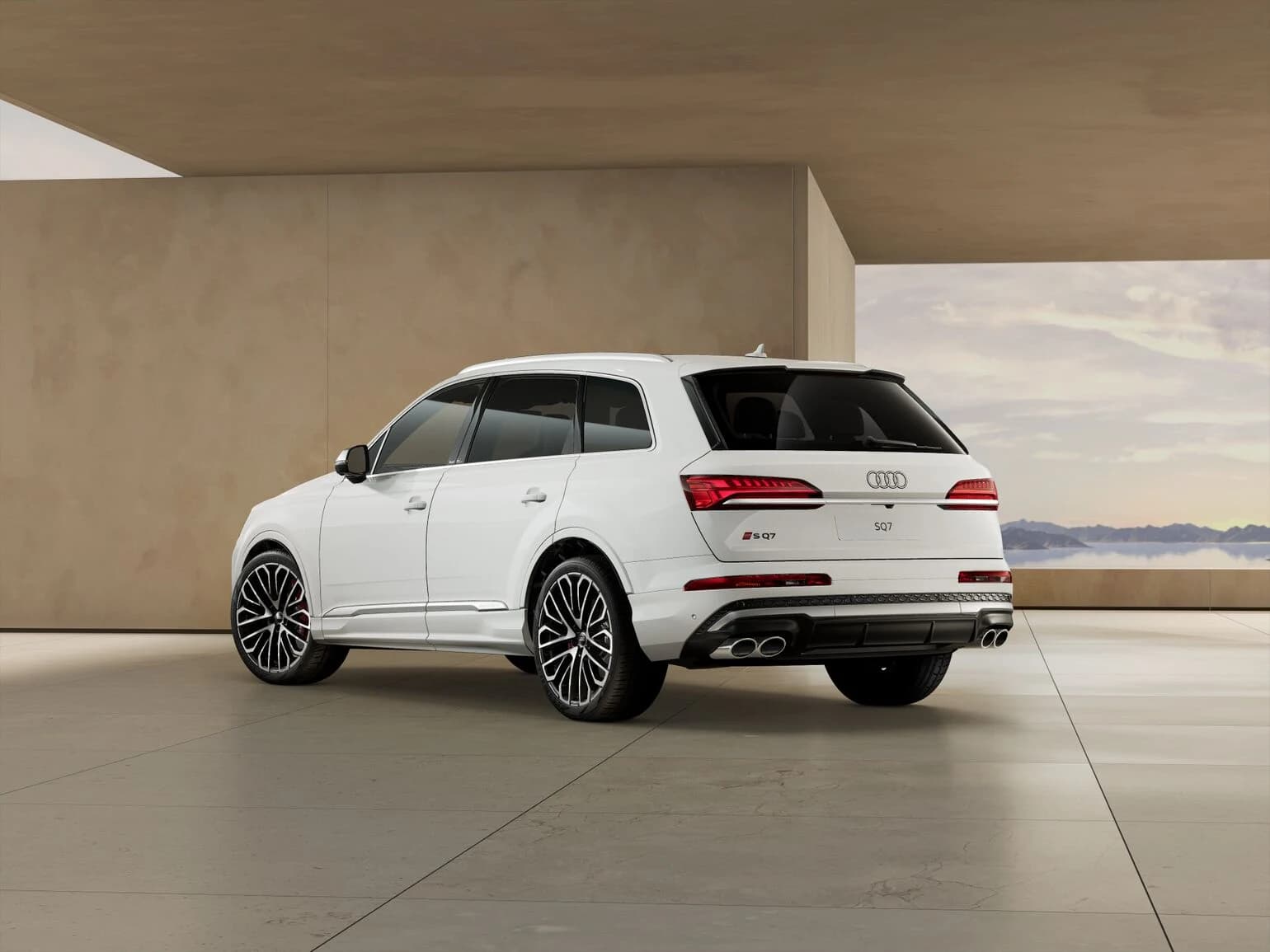
Adaptive air suspension is standard on every Q7 from the base trims up. That alone tells you what Audi's priorities are: ride comfort first, dynamics second. The SQ7 swaps the standard air suspension for a sport-tuned version and adds all-wheel steering, which dramatically reduces the turning circle at low speeds and tightens the rear end during quick direction changes at higher speeds. It is the variant that genuinely feels smaller than its 5,063mm length suggests.
The eight-speed tiptronic torque converter automatic is shared across the range. It is smooth, intelligently calibrated, and avoids the low-speed clunks that some of the dual-clutch boxes in smaller Audis can suffer from. Audi quattro all-wheel drive is standard on every variant. The Q7 is not a serious off-roader, but it will handle gravel roads, snow, and the wet better than any rear-wheel-drive luxury SUV.
On the highway, the V6 diesel is the most relaxed companion. It pulls strongly from low revs, returns the best fuel economy, and the 48V MHEV system smooths out stop-start cycles around town. The petrol V6 in the 55 TFSI is the more eager performer if you push it. The SQ7 is in another category entirely, with V8 burble at idle, a rich exhaust note under load, and the kind of mid-range shove that makes overtaking feel effortless even fully loaded.
Rivals: BMW X5, Mercedes GLE, Lexus LX
BMW X5 (from $128,900)
The X5 is the natural cross-shop. Both are five-star ANCAP, similar money for similar engines, and similar luxury content. The X5 fights back with a plug-in hybrid xDrive50e variant that the Q7 cannot match locally. The X5 also feels more dynamic on a twisty road and the iDrive infotainment is more polished than Audi's MMI. The Q7 wins on third-row seating (standard versus optional on X5), engine variety, and outright value at the entry petrol price point. If you want a PHEV or the sportier driver feel, X5. If you want flexibility and seven seats standard, Q7.
Mercedes-Benz GLE (from $137,900)
The GLE is the comfort pick of the segment. Mercedes' air suspension is exceptional, the cabin is opulent on higher trims, and the GLE 53 AMG goes after the SQ7 directly. The GLE only seats five as standard (the third row is a $4,500 option), the entry GLE is more expensive than the entry Q7, and the MBUX infotainment is a love-it-or-hate-it experience. For pure comfort and the best three-pointed-star badge prestige, GLE. For everyday family flexibility and lower entry pricing, Q7.
Lexus LX (from $158,500)
The LX is a different animal. Body-on-frame, proper off-road capability, twin-turbo V6 or V8 engines, and a level of long-term reliability that the European luxury SUVs cannot match. The LX is more expensive, less efficient, and feels less car-like on suburban roads, but if you actually want to take the family bush touring and you have $200k to spend, the LX makes a case the Q7 cannot. For 99% of luxury SUV buyers, the Q7 is the better daily drive. For the 1% who genuinely tow heavy loads off-road, the LX is the better tool.
Should You Buy the Audi Q7?
Buy the entry 45 TFSI quattro 185kW if you want the cheapest way into a luxury seven-seater with a strong tow rating. At $108,815 RRP it undercuts the BMW X5 by more than $19,000 and still gives you Matrix LED headlights, panoramic sunroof, three-zone climate, leather appointed upholstery, and adaptive air suspension. The 4-cylinder petrol is not the most refined engine in the lineup, but it does the job and it costs less to buy than any rival.
Buy the 45 TDI quattro 170kW if you tow regularly or do high-kilometre highway work. The 500Nm from low revs makes towing genuinely effortless, the 48V MHEV system shaves fuel use in city traffic, and the diesel range is huge. At $117,284 RRP, this is the practical sweet spot.
Buy a TFSI 185kW or TDI 170kW S line edition if you wanted the S line look but did not need the V6 engines. The $3,600 uplift gets you the panoramic roof, B&O audio, 21-inch Sport wheels, Valcona leather, sport seats, and S line bumpers. It is the value pick for buyers who care about kit more than power.
Buy the 50 TDI S line if you want the most balanced premium experience in the lineup. The 210kW V6 diesel with 600Nm of torque is properly fast, the S line trim is properly luxurious, and at $136,815 it is right in the middle of the segment's pricing.
Buy the 55 TFSI S line if you prefer petrol smoothness over diesel torque. Same trim, same price, just an eager V6 petrol instead of the V6 diesel. Great if your driving is mostly weekend and not heavy-towing-focused.
Buy the SQ7 if you want a 4.1-second seven-seat family bullet with a soundtrack that no other Q7 can deliver. The all-wheel steering, sport air suspension, and 22-inch wheels transform the chassis into something that does not feel like a 2.4-tonne SUV. It is expensive, thirsty, and very, very fun.
Compare all Q7 variants on CarSorted | Audi Q5 Review | Best 7-Seater Cars in Australia | Best Luxury SUVs in Australia
Disclaimer: Pricing is sourced from the Audi Australia configurator at audi.com.au, current as of May 2026. Drive-away prices are calculated for Victoria; other states will vary based on stamp duty and registration costs. Specifications are sourced from the Audi Australia configurator and are subject to change. The S line edition variants hold their November 2025 launch RRP because the configurator does not surface them as separately selectable trims at the time of writing. Always confirm current pricing and equipment with your local Audi dealer before making a purchase decision.
Compare these picks side by side
Stack 6 of them on 200+ specs, price, safety and running cost in one view.
Compare all 6 nowFrequently Asked Questions
How much does the Audi Q7 cost in Australia?
What is the difference between the Q7 and SQ7?
Does the Audi Q7 have 7 seats?
Is the Audi Q7 a hybrid?
How much can the Audi Q7 tow?
What is the fuel economy of the Audi Q7?
Audi Q7 vs BMW X5: which is better?
Is the Audi SQ7 worth the extra money?
New cars, real prices, straight to your inbox
Join the CarSorted mailing list for new-model launches, price drops and drive-away deals, honest reviews, and founding-member pricing on the upcoming CarSorted Pro Report.
- New-model launches
- Price drops & deals
- Honest reviews
No spam, unsubscribe anytime. By subscribing you agree to receive marketing emails.
Disclaimer: All information in this article was believed to be correct at the time of publishing (2 May 2026). Prices are manufacturer recommended retail prices (RRP) and may vary by state, dealer, and options. Specifications, government incentives, and rebates can change without notice. Always verify details with the manufacturer or relevant authority before making a purchase decision. Running cost estimates are based on average Australian driving conditions at 15,000 km/year. CarSorted does not accept payment for recommendations or rankings.
Written by Uzzi, CarSorted Editorial Team · 2 May 2026 · how we research
Comments (0)
Sign in to join the conversation
No comments yet. Be the first!