2026 Tesla Model 3 Premium Rear-Wheel Drive review
Is It Worth It From $54,900?
Data checked: specs 3 Oct 2026, price 1 Oct 2026
Text fact-checked against our data 30 August 2026Review snapshot
Model tested
Tesla Model 3 Premium Rear-Wheel DriveFrom $54,900 RRP
Excl. on-road costs
from $270/wk in VIC, excludes servicing and insurance (estimate)
72/100
CarSorted Score
- WLTP range
- 520km
- Energy use
- 13.8 kWh/100km
- Peak DC charging
- 175kW
- Boot
- 682L

Uzzi drove this car; the figures are Tesla's.
Written 7 April 2026. The snapshot, tables, prices and scores on this page update from our car data; figures quoted in the text are as at that date.
The Quick Verdict
The Model 3 Highland is the most complete electric sedan in Australia. The RWD starts at $54,900 and delivers 520km of WLTP range, a 682L boot, 5-star ANCAP, and running costs under $700 a year. The Highland facelift sharpened the looks and improved the cabin, and even the base model feels like a properly premium car. If you want more range, the Long Range pushes to 750km for $61,900, among the longest ranges in its class. Either way, it's the EV benchmark.
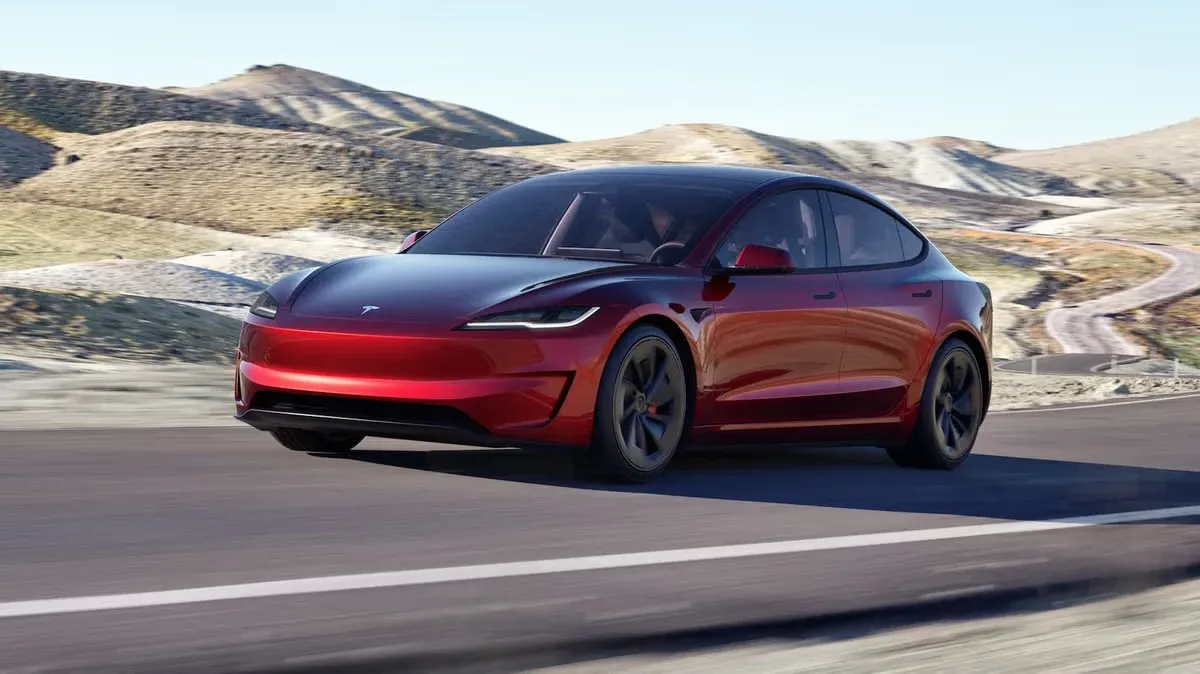
The variant in focus: 2026 Tesla Model 3 Highland RWD in Ultra Red.
Design: The Highland Facelift
The 2024 Highland update was the most significant visual change since the Model 3 launched. Up front, the old headlights were swapped for slimmer LED units with a continuous light bar across the bumper. It looks sharper and more premium than the pre-facelift car, which was starting to show its age against newer Chinese rivals.
The rear got new full-width tail lights that wrap around the boot lid. Side on, the silhouette is almost unchanged, which is fine because the Model 3's proportions were always good. The drag coefficient sits at an incredibly low 0.219, making it one of the slipperiest production cars on the planet. That number matters. It's a big part of why the Model 3 is so efficient at highway speeds.
At 4,720mm long on a 2,875mm wheelbase, it's a mid-size sedan that parks like a compact thanks to tight overhangs and a reasonable 11.6-metre turning circle. It'll fit in most Australian garage spaces without drama.
Colour options are limited (this is Tesla, after all), and anything other than white costs extra. The new Ultra Red and Quicksilver metallics look fantastic in person but add $2,000-$3,000 to the price.
| Key details | 2026 Tesla Model 3 Premium Rear-Wheel Drive |
|---|---|
| Engine | Electric motor |
| Power | 208kW |
| Torque | 340Nm |
| Drive type | RWD |
| Transmission | Automatic |
| Power-to-weight ratio | 118 kW/tonne |
| Weight | 1,761kg (kerb) |
| Spare tyre type | Tyre repair kit |
| Tow rating | 1,000kg braked750kg unbraked |
| Turning circle | 11.6m |
| Energy consumption | 13.8 kWh/100km |
| Boot | 682L seats up, 682L folded |
| ANCAP | 5 stars (2025) |
Key details for 3 other variants
| Key details | 2026 Tesla Model 3 Rear-Wheel Drive |
|---|---|
| Engine | Electric motor |
| Power | No data |
| Torque | No data |
| Drive type | RWD |
| Transmission | No data |
| Power-to-weight ratio | No data |
| Weight | No data |
| Spare tyre type | No data |
| Tow rating | No data |
| Turning circle | No data |
| Energy consumption | No data |
| Boot | No data |
| ANCAP | No rating on record |
| Key details | 2026 Tesla Model 3 Long Range RWD |
|---|---|
| Engine | Electric motor |
| Power | 235kW |
| Torque | 340Nm |
| Drive type | RWD |
| Transmission | Automatic |
| Power-to-weight ratio | 135 kW/tonne |
| Weight | 1,747kg (kerb) |
| Spare tyre type | Tyre repair kit |
| Tow rating | 1,000kg braked750kg unbraked |
| Turning circle | 11.6m |
| Energy consumption | 14.1 kWh/100km |
| Boot | 682L seats up, 682L folded |
| ANCAP | 5 stars (2025) |
| Key details | 2026 Tesla Model 3 Performance AWD |
|---|---|
| Engine | Electric motor |
| Power | 343kW |
| Torque | 660Nm |
| Drive type | AWD |
| Transmission | Single-speed fixed gear |
| Power-to-weight ratio | 185 kW/tonne |
| Weight | 1,854kg (kerb) |
| Spare tyre type | Tyre repair kit |
| Tow rating | 1,000kg braked750kg unbraked |
| Turning circle | 11.6m |
| Energy consumption | 16.5 kWh/100km |
| Boot | 682L seats up, 682L folded |
| ANCAP | 5 stars (2025) |
Is it good value?
What Does the Model 3 Cost in Australia?
Tesla simplified the Model 3 Highland lineup into three variants. Here's what you're looking at:
Driveaway, the RWD lands around $56,500-$58,000 depending on your state. Victoria's EV tax adds about $900/year on top if you're doing 15,000km. NSW and QLD buyers get a slightly better deal on stamp duty.
The variant in focus is the RWD in Ultra Red. At $54,900 it's the entry point, but it doesn't feel like a base model. You still get 520km WLTP range, 208kW, the full Highland interior, and every safety feature. For most Australians doing a 35km daily commute, 520km means charging once a week. If you need more range for regular long trips, the $7,000 jump to Long Range gets you 750km and faster DC charging (250kW vs 170kW).
Running Costs vs Petrol
Here's where the Model 3 makes its strongest case. At 15,000km per year charging at home on off-peak electricity (~$0.30/kWh), you're looking at roughly $600-700 in annual electricity costs. A comparable petrol sedan like a Camry or Mazda6 would cost $2,200-2,700 in fuel over the same distance at current prices.
Servicing is minimal. No oil changes, no spark plugs, no timing belts. Tesla's service schedule is basically brake fluid every two years and cabin air filter annually. Budget $300-400 per year. A petrol equivalent is $600-900.
The one catch: tyres. The Model 3 weighs 1,720kg (RWD) to 1,747kg (Long Range) and wears through rubber faster than a lighter petrol car. Expect to spend $500-600 per year on amortised tyre costs. Still, the total running cost gap is substantial. You're saving $1,500-2,000 per year vs a comparable petrol sedan. That's $7,500-$10,000 over five years. Check out our EV vs Hybrid cost breakdown for a deeper dive.
Rivals: What Else Should You Cross-Shop?
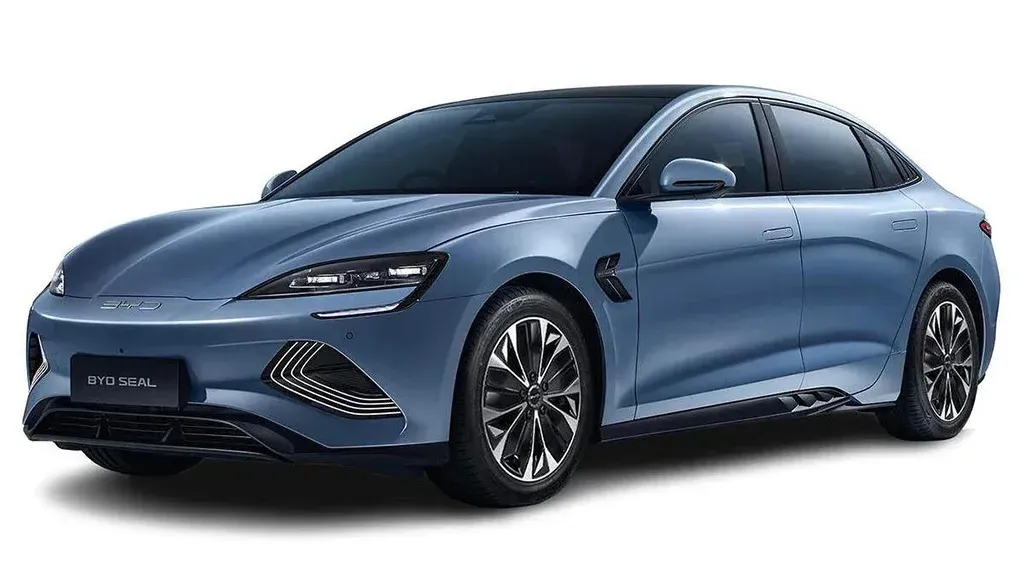
BYD Seal (from $47,388)
The Seal is the value play. For about $14,500 less than the Model 3 Long Range, you get 570km WLTP range, a gorgeous interior with physical climate controls, and BYD's 6-year warranty. The Seal drives well and the Blade Battery is proven safe. Where it falls short: DC charging tops out at 150kW (vs 250kW), the infotainment software isn't as polished, and the Supercharger network isn't available. For city-focused buyers who don't do long road trips, the Seal is arguably the smarter purchase.
Hyundai Ioniq 6 (from $74,000)
The Ioniq 6 is more expensive but brings 800V architecture. That means 350kW charging capability and 10-80% in just 18 minutes on a compatible charger. It's also the quieter, more comfortable car. Better sound insulation, softer ride, and a more conventional dashboard layout. Range is 614km WLTP on the Long Range. The Hyundai dealer network is broader than Tesla's service centre coverage, which matters in regional areas. Full comparison in our Model 3 vs Ioniq 6 head-to-head.
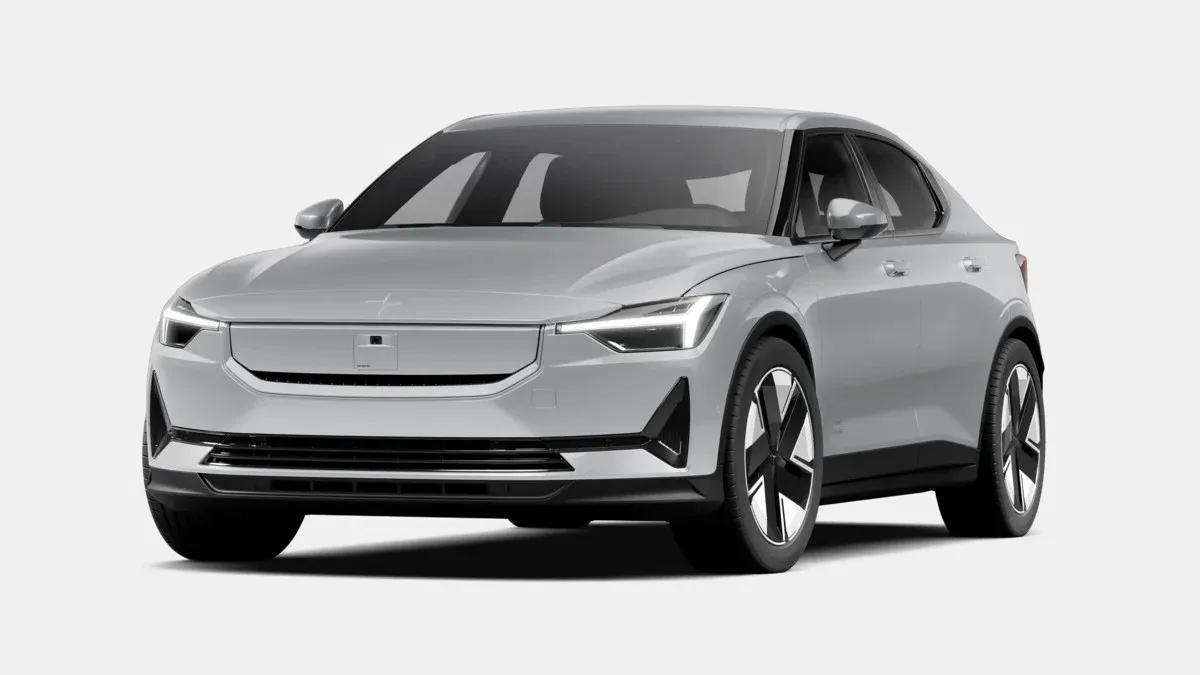
Polestar 2 (from $66,400)
The Polestar 2 is the driver's choice. Swedish-designed, built on Volvo's platform, with the most premium interior in this segment. The materials, the design language, the build quality. It feels expensive in a way the Tesla doesn't. Range is 554km WLTP for the Long Range Single Motor. It's not as efficient as the Model 3 and the charging network reliance on third-party providers is a drawback, but if you value driving feel and interior quality above all else, test drive one.
| Key details: Tesla Model 3 Premium Rear-Wheel Drive | |
|---|---|
| Price | From $54,900 RRPExcl. on-road costs |
| Drive-away estimate | Calculating... |
| Cost per week in VIC | from $270/wk in VIC, excludes servicing and insuranceRepayments, fuel or charging, rego and CTP, servicing, tyres and insurance where held. Estimate only, not a quote. |
| Body | Sedan |
| Powertrain | Electric, Electric motor |
| Towing (braked / unbraked) | 1,000kg / 750kg |
| Range | 520km (WLTP range) |
| Seats | 5 |
| Warranty | 5yr |
| Rivals | BYD Seal, Hyundai IONIQ 6, Polestar 2 |
| The Tesla Model 3 range on sale | Price | Powertrain | Fuel or energy use |
|---|---|---|---|
| Rear-Wheel Drive | From $45,900 RRP | Electric, RWD | No data |
| Premium Rear-Wheel Drive | From $54,900 RRP | Electric, RWD | 13.8 kWh/100km |
| Long Range RWD | From $61,900 RRP | Electric, RWD | 14.1 kWh/100km |
| Performance AWD | From $80,900 RRP | Electric, AWD | 16.5 kWh/100km |
How far does it go?
Efficiency and Range: The Model 3's Party Trick
Our RWD test car has a 60kWh battery with a WLTP-rated 520km range. The Long Range steps up to 77.8kWh and 750km WLTP, among the longest ranges of any Tesla sold in Australia.
WLTP figures are tested under lab conditions. You won't hit those numbers in real life. Here's what we saw from the RWD in mixed driving:
- Urban driving (30-60km/h): 130-140 Wh/km, translating to around 380-420km real range
- Suburban mixed (60-80km/h): 140-155 Wh/km, giving you 340-380km
- Highway cruising (100-110km/h): 160-180 Wh/km, delivering 290-330km
- Highway fast (120km/h+): 190-210 Wh/km, reducing range to 250-280km
For the Long Range, multiply those numbers by roughly 1.3x thanks to the bigger battery. Even with the RWD, 340km of real-world mixed range covers a week of commuting for the average Australian (35km/day). You're charging once a week at most.
In summer with the aircon blasting, knock 10-15% off those numbers. In mild autumn and spring conditions, you'll beat them. The Model 3's heat pump (standard on all Highland variants) is significantly more efficient than the old resistive heater, so winter range loss is less severe than pre-2024 models.
Charging
The RWD supports up to 170kW DC charging on Tesla Superchargers, while the Long Range bumps to 250kW. In practice, peak DC rates land around 150-170kW when the battery was between 5-30%, tapering down as it fills. A 10-80% charge takes roughly 30 minutes on a V3 Supercharger. The Long Range does it in about 25 minutes. Either way, that's a coffee stop, not a lunch stop.
Tesla's Supercharger network is the best-maintained fast-charging network in Australia. Coverage along the east coast is solid, with stations every 150-250km on major routes. It's also now open to non-Tesla vehicles at many locations, though Tesla owners still get priority pricing.
At home on a 7kW wall charger, the RWD takes about 9 hours for a full charge, the Long Range about 11 hours. Plug in at 9pm, wake up to a full battery. On a standard household powerpoint (2.3kW), it takes 26+ hours for the RWD. a wall charger ($1,200-1,800 installed) is basically essential. For more detail on charging options, read our complete EV charging guide.
| Energy and charging: Tesla Model 3 Premium Rear-Wheel Drive | |
|---|---|
| Energy use (combined) | 13.8 kWh/100km |
| Battery (gross / usable) | 60kWh / 57.5kWh |
| Battery chemistry | LFP |
| Range (WLTP) | 520km |
| Peak DC charging | 175kW |
| AC charging | 11kW |
| DC charge time (stated) | 16 min (to 80%) |
| Charge port | Tesla (CCS2 adapter included) |
| Vehicle-to-load | No data |
| Service interval | 20,000km |
What does it cost to own?
| Warranty and servicing: Tesla Model 3 Premium Rear-Wheel Drive | |
|---|---|
| Warranty | 5yr |
| Battery warranty | 8yr / 160,000 km |
| Roadside assistance | 4 years |
| Service interval | 20,000km |
| Capped-price servicing | No data |
Cost per week in VIC: from $270/wk in VIC, excludes servicing and insurance
- Repayment estimate$231/wk
$5,000 deposit, 5yr loan at an assumed 7.5% p.a. on the RRP. Not an offer of credit
- Charging$11/wk
13.8 kWh/100km at 27.5c/kWh, the VIC reference price (Victorian Default Offer, Jemena flat rate (the middle of the five Victorian zones, 25.96c to 31.98c)); your tariff differs. As at July 2026, Essential Services Commission (VDO 2026-27)
- Rego + CTP$18/wk
VIC typical: car, metropolitan (high risk) zone, 12-month renewal, $958.80 a year. As at July 2026, VicRoads
- ServicingNo data
No data: no servicing cost held for this car
- Tyres$10/wk
Typical tyre spend for this type of car, scaled to 15,000 km a year (not this car's tyres)
- InsuranceNo data
No data: no insurance estimate held for this car
Based on 15,000 km a year in VIC. Estimate only, not a quote.
How safe is it?
Safety: Five Stars, No Compromises
The Model 3 holds a 5-star ANCAP safety rating, which maps to the Euro NCAP assessment. The structural rigidity of the battery skateboard platform means it performs exceptionally well in crash tests. The rigid battery casing acts as a reinforcement layer across the entire floor of the car.
Standard active safety features include:
- Automatic Emergency Braking (AEB) with pedestrian and cyclist detection
- Lane Keep Assist and lane departure warning
- Adaptive cruise control with stop-and-go capability
- Blind spot monitoring via cameras (displayed on the touchscreen)
- 8 external cameras providing 360-degree visibility
- Sentry Mode that records activity around the parked car
- Speed Assist using camera-based sign recognition
Tesla's Autopilot (standard on all variants) handles adaptive cruise and lane centring on highways. It works well on Australian motorways, though it can get confused on roads with faded lane markings. The system is one of the more capable lane-keeping assists on the market, but you absolutely cannot take your hands off the wheel and zone out. It's a driver assist, not a self-driving system.
Eight airbags are standard across the range, including front knee airbags and a far-side airbag. All five seats have three-point seatbelts with pretensioners. The car's low centre of gravity also makes it extremely resistant to rollover incidents.
| ANCAP: Tesla Model 3 Premium Rear-Wheel Drive | |
|---|---|
| ANCAP rating | 5 stars (tested 2025) |
| Adult occupant | 90% |
| Child occupant | 95% |
| Vulnerable road users | 89% |
| Safety assist | 88% |
| Airbags | 8 |
| Driver assists: Tesla Model 3 Premium Rear-Wheel Drive | |
|---|---|
| Autonomous emergency braking | Standard |
| Adaptive cruise control | Standard |
| Blind-spot monitoring | Standard |
| Rear cross-traffic alert | Standard |
| Lane-keep assist | Standard |
| Speed sign recognition | Standard |
| Driver attention monitor | Standard |
| 360-degree camera | No data |
Standard, Optional (with the printed price), No (the maker's document says not fitted) or No data. 8 assists checked.
What is it like inside?
Interior: Minimalism, For Better or Worse
You either love this interior or you don't. There's no instrument cluster, no physical buttons for climate, and no traditional gear selector. Everything runs through the 15.4-inch centre touchscreen. The Highland update added an 8-inch rear screen for backseat passengers, ambient lighting that wraps around the cabin, and better material quality on the dashboard and door cards. It feels noticeably more premium than the pre-facelift car.
The screen itself is responsive and the software is still the best in the business. Over-the-air updates mean you're getting new features every few months without visiting a dealer. Apple CarPlay and Android Auto are still absent. Tesla insists you use their native apps. If that's a dealbreaker, note it now.
Material quality has improved with the Highland. The dash topper is a softer-touch material, the door inserts are better padded, and the new steering wheel has a more comfortable rim. But compared to something like a Polestar 2 or Ioniq 6, it still feels a touch sparse. There's a deliberate lack of visual noise in here. Some people find it calming, others find it sterile.
Storage is decent. The centre console has a generous covered bin, there's a wireless charging pad for two phones, and the glovebox opens via the touchscreen (which is mildly annoying every single time). Cup holders are where you'd expect them.
Practicality: Bigger Than You Think
The headline number is 682 litres of boot space. That's enormous for a sedan. Bigger than most mid-size SUVs. The boot opening is wide and the floor is flat, so loading bulky items is straightforward. There's also a 88-litre front trunk (frunk) where the engine would normally be, which is perfect for groceries, a gym bag, or keeping valuables hidden.
Rear seat legroom is good for two adults. Three across is tight, but manageable for shorter trips. The flat floor (no transmission tunnel) means the middle seat passenger actually has somewhere to put their feet, which is a genuine advantage over ICE sedans.
For families, there are ISOFIX anchor points on the two outer rear seats. Fitting child seats is straightforward. The wide rear doors open to a good angle, so you're not awkwardly wrestling a capsule into position like you are in some coupes. Two child seats fit comfortably with room for an adult in the middle, though it's snug.
The 2,875mm wheelbase translates to a genuinely spacious rear cabin. On a Sydney-to-Canberra run, rear passengers won't complain. That said, headroom is tighter than an SUV due to the sloping roofline. Anyone over 185cm will notice.
| Space and dimensions: Tesla Model 3 Premium Rear-Wheel Drive | |
|---|---|
| Seats | 5 |
| Boot, seats up | 682L |
| Boot, seats folded | 682L |
| Front boot | 88L |
| Length x width x height | 4,720 x 1,933 x 1,440mm |
| Wheelbase | 2,875mm |
| Ground clearance | 138mm |
| ISOFIX | 2 points (2L, 2R) |
| Top tethers | 3 |
| Seat trim | Perforated vegan leather |
| Spare wheel | Tyre repair kit |
Does it have good tech?
| Screens and audio: Tesla Model 3 Premium Rear-Wheel Drive | |
|---|---|
| Touchscreen | 16 inches |
| Driver display | No data |
| Audio | 9 speakers |
| USB | USB-C |
| Connected services term | No data |
| Connectivity: Tesla Model 3 Premium Rear-Wheel Drive | |
|---|---|
| Apple CarPlay | No data |
| Android Auto | No data |
| Wireless CarPlay / Android Auto | No data |
| Wireless phone charging | No data |
| Head-up display | No data |
| Built-in navigation | Standard |
| Digital radio | Standard |
| Over-the-air updates | Standard |
| Remote climate (app) | Standard |
What is it like to drive?Driven by Uzzi
Driving: The Bit Tesla Gets Right
Start with the acceleration. Our RWD test car produces 208kW and 340Nm of instantly available torque. 0-100km/h comes up in around 6.1 seconds. That's not headline-grabbing, but it feels quicker than the number suggests because the torque is there the instant you press the pedal. The Long Range bumps to 239kW and around 4.8-5.0 seconds, and the Performance does it in 3.1 seconds. But honestly, even the base car feels properly quick in everyday driving.
But straight-line speed isn't really the point here. What makes the Model 3 genuinely enjoyable to drive daily is the smoothness. There's no gearbox hunting for the right ratio, no turbo lag, no delay between pressing the accelerator and the car responding. The power delivery is linear and immediate. Overtaking on country roads feels effortless.
The steering is well-weighted and accurate. It's not BMW-sharp, but it's better than most EVs. The low centre of gravity (the battery pack sits under the floor) means body roll is minimal and the car feels planted through corners. It's a genuinely engaging car to punt along a twisty road.
Ride comfort was improved significantly with the Highland update. The new adaptive dampers smooth out most bumps, but Australian roads are notoriously rough and the 18-inch wheels don't hide everything. Expansion joints on highways produce a noticeable thud. It's not uncomfortable, but it's not Camry-smooth either.
Road noise is the Model 3's one weak spot in the driving experience. Wind noise is excellent thanks to that 0.219 Cd, but tyre roar on coarse-chip Australian bitumen is pronounced, especially above 90km/h. The Highland added more sound deadening, and it's better than the old model, but the BYD Seal and Ioniq 6 are both quieter at highway speed.
One-pedal driving works brilliantly. Lift off the accelerator and regenerative braking slows the car smoothly enough that you rarely need the brake pedal in urban driving. Most owners adapt within a day and never want to go back. It also reduces brake wear dramatically, so your brake pads could last the life of the car.
| The figures: Tesla Model 3 Premium Rear-Wheel Drive | |
|---|---|
| Power-to-weight | 118 kW/tonne |
| Power | 208kW |
| Torque | 340Nm |
| 0-100km/h (claimed) | 6.1s |
| Kerb weight | 1,761kg |
| Turning circle | 11.6m |
| Tyres | 235/45 R18 |
| Drive | RWD |
| Transmission | Automatic |
| Towing (braked) | 1,000kg |
Best deals
Get a great deal on a brand new car today
One enquiry, up to four cars. We ask local dealers for their best drive-away price and send them back to you, so you compare real numbers instead of list prices.
Free for you to use. If you buy, the dealer may pay us a commission. Your details only go to a dealer if you say so.
Find a new car dealShould I buy it?
Should You Buy the Tesla Model 3 Highland?
Yes, if:
- You want strong range from an EV (520km WLTP RWD, 750km WLTP Long Range)
- You regularly drive long distances and value the Supercharger network
- You can charge at home (this is critical for any EV, but especially for maximising the Model 3's cost advantage)
- You want the most cargo space in this class. 682L is unmatched among electric sedans
- Low running costs are a priority. under $700/year on electricity at home rates
- You're comfortable with a fully screen-based interior
Maybe not, if:
- You want a conventional cabin with physical buttons and a driver's instrument cluster
- You prioritise interior luxury and build quality above all else (look at the Polestar 2)
- You're on a tight budget (the BYD Seal delivers 80% of the experience for $14,500 less)
- You can't charge at home. relying solely on public charging erodes the cost advantage significantly
- You need a car for heavy highway use where tyre noise sensitivity is high
The Model 3 Highland starts at $54,900 for the RWD, and it doesn't feel like a compromise. You get a 682-litre boot, 5-star ANCAP, 5-year unlimited-km warranty, Supercharger access, and annual running costs that make petrol cars look financially reckless. The Long Range at $61,900 adds serious touring ability with 750km of range. Either way, for the all-round package of efficiency, tech, practicality, and charging infrastructure, nothing else in Australia matches it.
If you're cross-shopping, start with our Model 3 vs Ioniq 6 and Dolphin vs Model 3 head-to-head comparisons. Or browse the full best electric cars in Australia list to see where it ranks against every EV on sale.
→ Compare all Tesla Model 3 variants on CarSorted (200+ specs)
CarSorted Score breakdown
The CarSorted Score is algorithmic: it is calculated from this car's published data, not from a road test. How it works.
Safety
Energy Efficiency
Value
Practicality
Technology
Performance
Reliability
Questions buyers ask
How much does a Tesla Model 3 cost in Australia?
The Tesla Model 3 Premium Rear-Wheel Drive is from $54,900 RRP, before on-road costs. The range table above lists every current variant.
What is the real-world range of the Tesla Model 3 Highland?
The Tesla Model 3 Premium Rear-Wheel Drive has a WLTP range of 520km.
Is the Tesla Model 3 a good family car?
Yes. The Model 3 has a 682-litre boot (larger than most mid-size sedans), ISOFIX points in the rear, a 5-star ANCAP safety rating, and enough rear legroom for two child seats. The flat floor and lack of a transmission tunnel make the rear seat more usable than many rivals.
What warranty does Tesla offer in Australia?
The Tesla Model 3 comes with a 5yr warranty.
Is the Tesla Model 3 safe?
The Tesla Model 3 holds 5 ANCAP stars (rated 2025).
How big is the Tesla Model 3's boot?
The Tesla Model 3 has 682L of boot space with the seats up.
How much can the Tesla Model 3 tow?
The Tesla Model 3 Premium Rear-Wheel Drive is rated to tow 1,000kg braked and 750kg unbraked.
How powerful is the Tesla Model 3?
The Tesla Model 3 Premium Rear-Wheel Drive makes 208kW and 340Nm, with a claimed 0-100km/h of 6.1s.
How to read this page. Uzzi drove this car. Prices, specifications, ANCAP ratings, warranty, equipment and the CarSorted Score come from our records for the variant shown, sourced from Tesla's Australian documents, and update when those records change. RRP excludes on-road costs. Drive-away figures are estimates for the state you have selected unless marked as advertised; cost per week is an estimate, not a quote. The editorial text was written on 7 April 2026. Always confirm price and specification with the manufacturer or a dealer before you buy. CarSorted does not accept payment for recommendations.
Comments (0)
Sign in to join the conversation
No comments yet. Be the first!