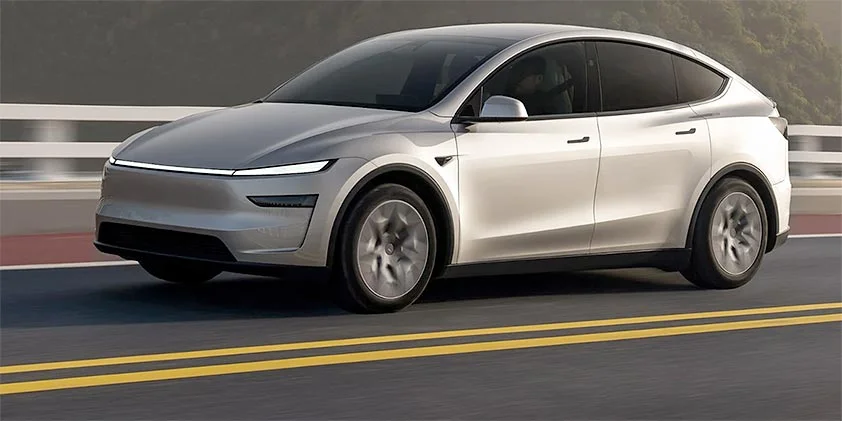

Tesla Model Y vs Kia EV5
The best-selling electric SUV takes on Kia's roomy, big-battery value family EV. Is the Tesla worth more, or does the Kia give you enough for less?
Data checked: specs 20 Sep 2026, price 16 Sep 2026
Comparison snapshot
Prices, scores and edges below update from our car data.
Cheaper by $2,270, uses 4.1 kWh/100km less
Reference image2 more years of warranty
Written 14 June 2026. The snapshot, tables, scores and verdict on this page update from our car data; figures quoted in the text are as at that date.
Price
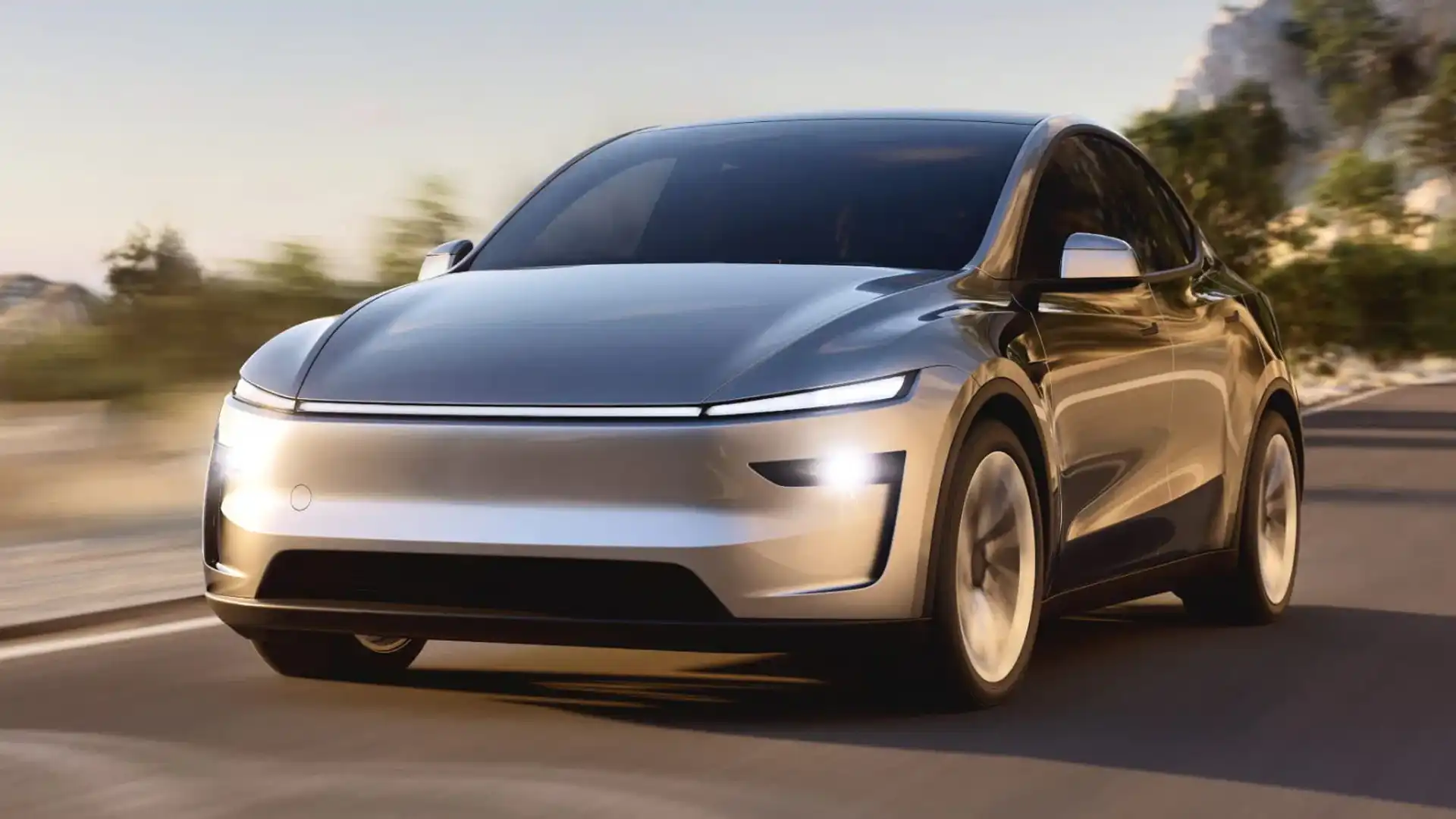
Both are five-seat mid-size electric SUVs, but they pitch differently. The Model Y now opens at $58,900 for the RWD after Tesla’s September reprice, while the EV5 starts at $56,770 for the Air Standard Range and offers the bigger-battery Air Long Range at $61,170. We have matched that Air Long Range against the Model Y RWD, and the Tesla now sits $2,270 under the Kia while the Kia carries a battery half again as large.
| Variant | Drive | RRP |
|---|---|---|
| Kia EV5 Air Standard Range | FWD | $56,770 |
| Tesla Model Y RWD | RWD | $58,900 |
| Kia EV5 Air Long Range | FWD | $61,170 |
| Kia EV5 Earth Long Range | AWD | $64,770 |
| Tesla Model Y Long Range | AWD | $68,900 |
| Kia EV5 GT-Line Long Range | AWD | $71,770 |
The price ladder has reshuffled. The EV5 Air Standard Range at $56,770 is now just $2,130 under the Model Y RWD, and every other EV5 lists above the entry Tesla: the matched Air Long Range is $2,270 dearer, and the dual-motor Earth Long Range AWD is $5,870 dearer. Kia's answer this month is a $2,000 cashback (or 1.88 per cent finance) on in-stock EV5s to 30 September, which pulls the Air Standard Range usefully clear again but does not get the Long Range under the Tesla.
Safety
Both carry a maximum five-star ANCAP rating, and both are recent: the EV5 in 2024 and the Model Y in 2025, so each was tested against current-era protocols. The Tesla has historically posted some of the highest ANCAP scores of any car sold here, with a well-proven Autopilot assist suite, though its camera-only approach divides opinion. The EV5 brings Kia's mature driver-assist package, AEB, adaptive cruise, lane-keep, blind-spot monitoring and a 360-degree camera, tuned to be calm and unintrusive.
Kia tunes its driver-assist calibration for the Australian market and specifies the EV5 accordingly, while Tesla's approach is camera-only and software-led. Both are safe, well-equipped family choices with current five-star ratings.
Features
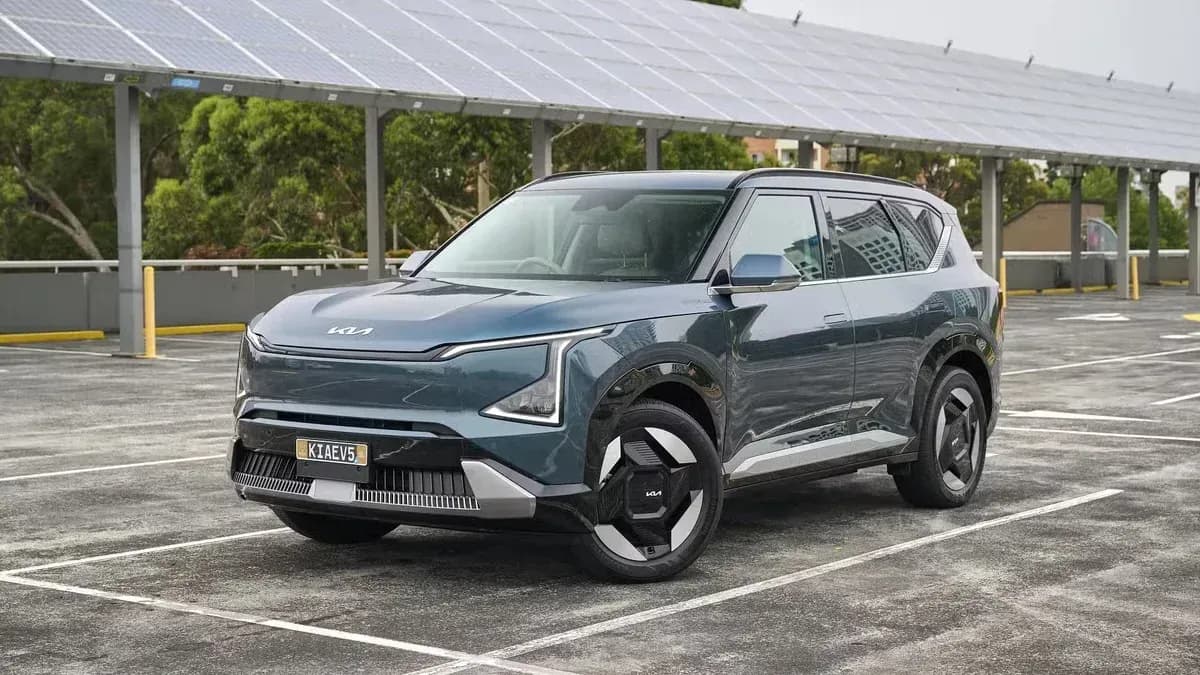
The EV5 plays the comfort-and-kit card. It has a roomy, lounge-like cabin, supportive seats, a triple-screen dashboard, and crucially a set of physical controls and buttons that many buyers still prefer to burying everything in a touchscreen. Higher trims add heated and ventilated seats, a head-up display and vehicle-to-load. It feels like a relaxed family device.
The Model Y is the opposite philosophy: a single 15-inch screen runs almost everything, supported by the slickest EV software in the business, excellent over-the-air updates and a polished app. There are fewer physical controls and less overt plushness, but the integration and responsiveness are class-leading. If you want buttons, space and comfort, the EV5 wins; if you want software and minimalism, the Tesla does.
Drivetrain
The Model Y is the stronger performer on paper. Its 255kW rear motor is quoted at 5.9 seconds to 100km/h against 8.9 for the front-drive EV5, a full three seconds, and at around 139Wh/km it is much more efficient than the Kia's 180Wh/km. That efficiency is real: the Tesla gets 466km from a 60kWh battery where the Kia needs 88.1kWh for its range. Per kilowatt-hour the Tesla travels a lot further, which means cheaper charging per kilometre.
The EV5 counters with that big battery, and the outright range number now sits with the Kia: 555km WLTP against 466, an 89km advantage. Less efficient, but further between charges. Where the Tesla pulls back ahead is charging speed and network. The Model Y peaks at 175kW and is quoted at 16 minutes from 10 to 80 per cent; the EV5 peaks at 150kW and takes a claimed 30 minutes. Add Supercharger access, which remains the most straightforward fast-charging in Australia, and the Tesla is the easier road-tripper even though the Kia goes further on a charge.
Space and comfort
The biggest practical gap is the boot. The Model Y holds 854 litres behind the rear seats plus a front trunk, one of the most usable cargo setups of any mid-size SUV at any price, against 513 litres in the EV5. If you haul prams, luggage and gear, that 341-litre difference shows up every week. On towing the Tesla is also ahead, rated to 1,600kg braked against the Kia's 1,250kg.
Inside, the EV5 feels the roomier and more comfortable place to spend time, with a flat floor, generous rear space and that button-friendly dash. The Model Y feels more tightly designed and better integrated with its tech, and its cargo flexibility is unmatched here. For passenger comfort the Kia leads; for outright load-carrying the Tesla does.
Cost to own
Kia covers the EV5 with a seven-year/unlimited-kilometre warranty, one of the longest of any mainstream brand in Australia and two years more than Tesla's five-year term. That warranty, the bigger battery and the 89km of extra range are now the Kia's whole value case, because the matched Air Long Range costs $2,270 more than the Model Y RWD. Tesla presses its advantage on energy too: at roughly 139Wh/km against 180 it costs meaningfully less to charge per kilometre, and Supercharger access keeps road trips simple.
On resale both are stronger than a brand-new marque. The Model Y has among the best resale of any EV here, helped by demand and the charging ecosystem, while Kia is a well-established brand in Australia with a solid used-market reputation, so the EV5 should hold up better than most newcomers even if it trails the Tesla. Over a typical ownership period the Tesla's resale and efficiency offset some of the Kia's lower purchase price, while the EV5's longer warranty and bigger battery keep it appealing for buyers who want comfort and cover for less.
The Tesla Model Y is the electric SUV most Australian families actually buy, and it has owned the segment on the strength of its boot, efficiency and charging network. The Kia EV5 is one of the most credible value answers yet: a roomy, comfortable family EV with a big battery, a long warranty, more claimed range, and a price ladder that, since Tesla’s September reprice, only undercuts the Model Y at the entry Air Standard Range.
So does the Kia give you enough for the money, or does the Model Y stay worth the premium? We have matched the EV5 Air Long Range against the Model Y RWD and worked through price, range, efficiency, charging, space, towing and warranty. You can also stack them side by side on every spec in our comparison tool, or browse the full EV comparison hub.
Key details
A tick marks the better figure only where both cars have one and the gap is meaningful (3% or more; a whole star or year).
| Detail | Tesla Model Y | Kia EV5 |
|---|---|---|
| Price | From $58,900 RRP | From $61,170 RRP |
| Drive-away estimate | Calculating... | Calculating... |
| Body | SUV | SUV |
| Powertrain | Electric, Electric motor | Electric, Electric motor |
| Power / torque | 255kW / 340Nm | 160kW / 310Nm |
| Energy use | 13.9 kWh/100km | 18 kWh/100km |
| Measured consumption (AAA) | 14.8 kWh/100kmAAA test: this grade, 2025 model year | 18.5 kWh/100kmAAA test: this grade, 2025 model year |
| Measured range (AAA) | 450 kmAAA test: this grade, 2025 model year | 537 kmAAA test: this grade, 2025 model year |
| 0-100km/h | 5.9s | 8.9s |
| Boot | 854L seats up | 513L seats up · 1,714L seats folded |
| Towing (braked) | 1,600kg | 1,250kg |
| ANCAP | 5 stars (2025) | 5 stars (2024) |
| Warranty | 5yr / unlimited km | 7yr / unlimited km |
Measured rows: Australian Automobile Association Real-World Testing Program (realworld.org.au), the on-road result for the vehicle each test names, beside the manufacturer's figure above rather than in place of it. Test pages: Tesla Model Y, Kia EV5.
At a glance
- Seats
- 5
- Boot
- 854L seats up
- Length x width x height
- 4,792 x 1,982 x 1,624mm
- Wheelbase
- 2,890mm
- Engine
- Electric motor
- Power
- 255kW
- Torque
- 340Nm
- Drive
- RWD
- Transmission
- Automatic
- Power-to-weight
- 133 kW/tonne
- Kerb weight
- 1,921kg
- Spare wheel
- Tyre repair kit
- Payload
- No data
- Towing braked / unbraked
- 1,600kg / 750kg
- Turning circle
- 12.1m
- Seats
- 5
- Boot
- 513L seats up · 1,714L seats folded
- Length x width x height
- 4,615 x 1,875 x 1,715mm
- Wheelbase
- 2,750mm
- Engine
- Electric motor
- Power
- 160kW
- Torque
- 310Nm
- Drive
- FWD
- Transmission
- Automatic
- Power-to-weight
- No data
- Kerb weight
- No data
- Spare wheel
- Tyre mobility kit
- Payload
- 436kg
- Towing braked / unbraked
- 1,250kg / 750kg
- Turning circle
- 11.7m
CarSorted Score breakdown
The CarSorted Score is algorithmic: it is calculated from each car's data, not from a road test. How it works.
Safety
Energy Efficiency
Value
Practicality
Technology
Performance
Reliability
The verdict
Tesla Model Y comes out ahead on the CarSorted Score (81 vs 76)
The deciding gaps
- Energy Efficiency:Tesla Model Y 93, Kia EV5 67, Tesla Model Y ahead by 26
- Performance:Tesla Model Y 71, Kia EV5 49, Tesla Model Y ahead by 22
- Reliability:Tesla Model Y 56, Kia EV5 69, Kia EV5 ahead by 13
The Tesla Model Y is also the cheaper of the two.
Same scorer as the live comparison of these two exact cars.
Our take (written 14 June 2026)
Tesla's September repricing turned this contest on its head. The Model Y RWD now lists at $58,900, which is $2,270 under the EV5 Air Long Range it matches against, and only $2,130 above the entry EV5 Air Standard Range. So the more complete car is now also the cheaper one of the matched pair: 95kW more power, three seconds off the 0-100, 341 litres more boot plus a frunk, 350kg more towing, roughly 139Wh/km against 180, and DC charging quoted at 10-80 per cent in 16 minutes against 30. The Kia's remaining case is real but narrower: its 88.1kWh battery is quoted at 555km WLTP against the Tesla's 466, so it goes 89km further on a charge, and it carries seven years of warranty against Tesla's five. Buy the Model Y unless maximum range and the longer warranty are your top two priorities, in which case the EV5 Air Long Range still earns its extra $2,270.
Prices on this page move. Want the next verdict?
One short email when prices shift or a new comparison lands. No spam, unsubscribe anytime.
Questions buyers ask
Is the Kia EV5 cheaper than the Tesla Model Y?
The Tesla Model Y RWD is from $58,900 RRP; the Kia EV5 Air Long Range FWD is from $61,170 RRP. That makes the Tesla Model Y $2,270 cheaper.
Which has more range, the Model Y or the EV5?
Electric range (WLTP where published): the Kia EV5 at 555km, against 466km for the Tesla Model Y.
Which has the bigger boot?
Boot space with the seats up: the Tesla Model Y at 854L, against 513L for the Kia EV5.
Which has the longer warranty?
The Tesla Model Y comes with a 5yr / unlimited km warranty; the Kia EV5 with a 7yr / unlimited km warranty.
Which is cheaper to run, the Tesla Model Y or the Kia EV5?
On the official combined cycle, the Tesla Model Y uses 13.9 kWh/100km and the Kia EV5 uses 18 kWh/100km.
What are the ANCAP ratings for the Tesla Model Y and Kia EV5?
The Tesla Model Y holds 5 stars (rated 2025), and the Kia EV5 holds 5 stars (rated 2024).
Which tows more?
Braked towing capacity: the Tesla Model Y at 1,600kg, against 1,250kg for the Kia EV5.
Which comes out ahead overall?
On the CarSorted Score the Tesla Model Y comes out ahead (Tesla Model Y 81/100, Kia EV5 76/100), mainly on energy efficiency, performance. The score is algorithmic; the editorial above says who each car suits.
Related
How to read this page. Prices, specs, ANCAP ratings, warranty, scores and the computed verdict come from our records for the two variants shown, sourced from manufacturer Australian documents, and update when those records change. RRP excludes on-road costs. Drive-away figures are estimates for the state you have selected unless marked as advertised. The editorial text was written on 14 June 2026. Always confirm price and specification with the manufacturer or dealer before you buy. CarSorted does not accept payment for recommendations.
Comments (0)
Sign in to join the conversation
No comments yet. Be the first!