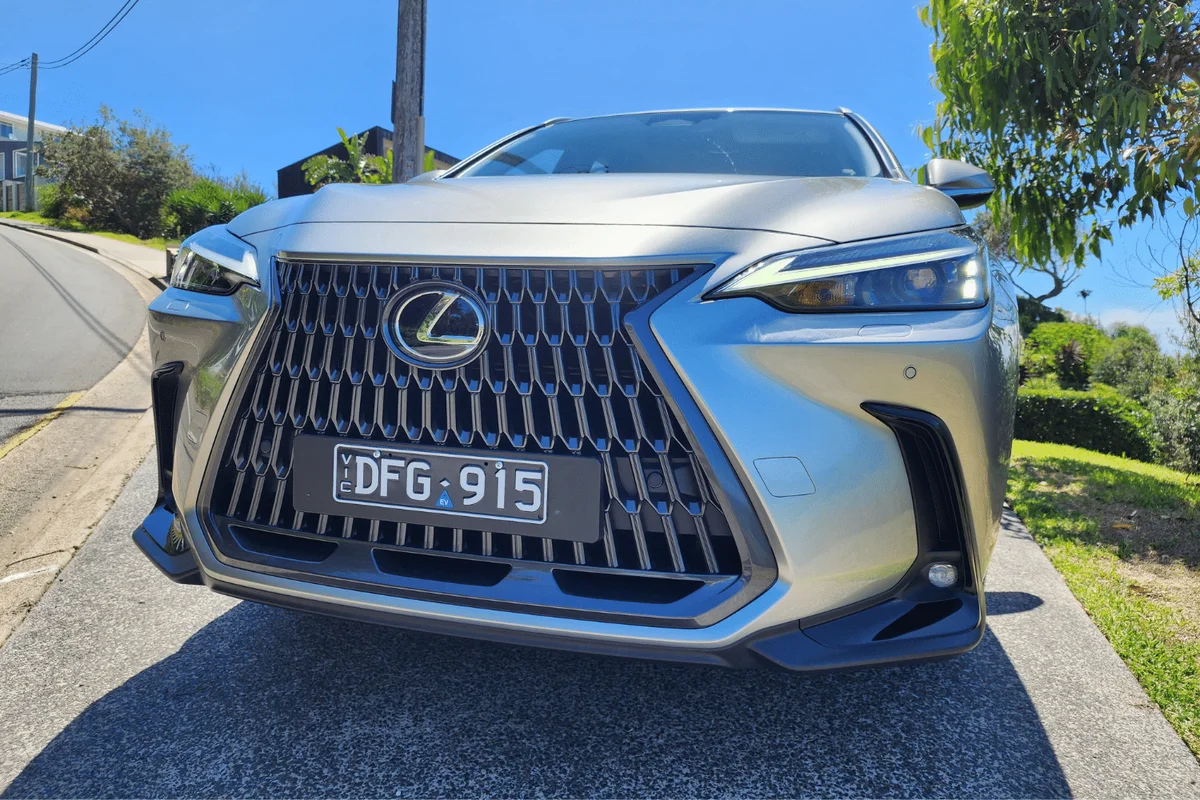
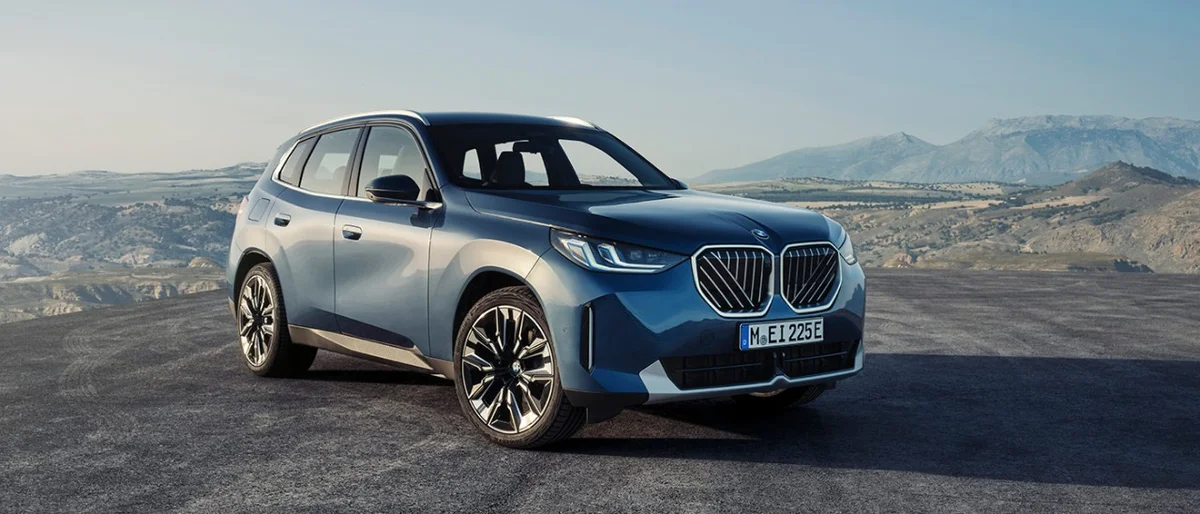
Lexus NX vs BMW X3
$71,700 vs $86,100. Japanese luxury reliability vs German driving dynamics. $14,400 apart.
Data checked: specs 28 Aug 2026, price 25 Jun 2026
Comparison snapshot
Prices, scores and edges below update from our car data.
Cheaper by $14,400, lighter on fuel by 2.5 L/100km
50L more boot, tows 900kg more
Written 7 April 2026. The snapshot, tables, scores and verdict on this page update from our car data; figures quoted in the text are as at that date.
Price
The $14,400 gap between these two is the story of this comparison. At $71,700, the NX250 Luxury sits below the 2026-27 Luxury Car Tax threshold for standard vehicles ($80,809; the fuel-efficient threshold of $91,661 needs 3.5L/100km or better, which neither of these petrol SUVs meets). The X3 20 xDrive at $86,100 attracts LCT on the amount above that threshold, adding a few thousand to the effective cost for the buyer.
Driveaway, the NX250 Luxury lands around $78,000 to $80,000 depending on state. The X3 20 xDrive pushes past $93,000 to $95,000 driveaway when you factor in stamp duty, CTP, LCT, and dealer delivery. That is roughly a $15,000 gap at the register.
Financed over five years at 7% (typical for luxury cars), the NX costs roughly $200 less per month in repayments than the X3. Over the loan term, you save around $12,000 in total repayments.
Fuel costs favour the X3 at 7.5L/100km versus 8.6L for the NX. Both use premium unleaded (around $2.10/L at metro servos). At 15,000km per year, the X3 saves approximately $346 annually on fuel. Over five years, that is $1,730. A decent saving, but barely a dent in the $26,200 purchase price gap.
Resale is worth thinking about but not worth a fake number. We do not hold used sale prices, so we cannot tell you what either car retains. The structural point stands on its own: the Lexus starts about $14,000 lower, so at any given retention rate it has less money exposed to depreciation than the BMW does.
Insurance is also cheaper on the NX. Expect to pay roughly $1,800 to $2,400 annually for the NX250 versus $2,200 to $3,200 for the X3, depending on your demographics. The higher value and higher performance perception of the BMW pushes premiums up.
Safety
Both wear 5-star ANCAP ratings and both come equipped with comprehensive active safety suites. At this price point, anything less would be unacceptable.
The NX250 Luxury gets the Lexus Safety System+ 3.0, which includes pre-collision safety with pedestrian and cyclist detection (daytime and night-time), all-speed dynamic radar cruise control, lane departure alert with steering assist, lane tracing assist, automatic high beam, road sign assist, and proactive driving assist (which can adjust speed based on upcoming curves and speed limit changes). Lexus also includes blind spot monitor with rear cross-traffic alert and safe exit warning.
The X3 20 xDrive comes with BMW Driving Assistant, featuring front collision warning with AEB (pedestrian and cyclist detection), lane departure warning, speed limit info, and attention assist. BMW also includes parking assistant with reversing camera and front and rear parking sensors. The xDrive AWD system provides additional stability in wet conditions.
Both vehicles have comprehensive airbag packages including front, side, curtain, and knee airbags. Both have ISOFIX on the outer rear seats with top tether points across the back row.
In practice, both are very safe vehicles. The Lexus system is slightly more proactive with its predictive speed adjustment, while the BMW's stronger chassis dynamics give it better emergency handling characteristics. For everyday driving, both will look after you equally well.
One practical note: the NX250's slightly smaller dimensions (it is 70kg lighter than the X3) make it marginally easier to park in tight city spots. Both have parking cameras and sensors, but the NX is a little more manageable in urban environments.
Features
At $59,900, the NX250 Luxury comes respectably equipped. You get a 9.8-inch touchscreen with wireless Apple CarPlay and wired Android Auto, a 7-inch digital instrument display, dual-zone climate control, leather-trimmed seats with power adjustment and heating (front), power tailgate, ambient interior lighting, an 8-speaker sound system, push-button start, LED headlights with adaptive function, and 18-inch alloy wheels.
The interior quality is Lexus-good, which means tight panel gaps, soft-touch materials on all the surfaces you actually contact, and a general sense of solidity. The NX cabin is a pleasant place to spend time, though the infotainment system can be fiddly compared to German rivals.
The X3 20 xDrive at $86,100 comes with BMW's curved display (a 12.3-inch instrument cluster and 14.9-inch touchscreen as a single unit), iDrive 9 with wireless Apple CarPlay and Android Auto, Vernasca leather upholstery, three-zone climate control, ambient lighting with selectable colours, a Harman Kardon surround sound system, heads-up display, powered front seats with memory, power tailgate, and 19-inch alloy wheels.
The BMW cabin is genuinely impressive. The curved display is beautiful, iDrive remains one of the best infotainment systems in the industry, and the materials feel a cut above. It should feel better at $26,200 more, and it does.
But the question is whether those extras are worth the premium. Heated seats, a power tailgate, leather, and a competent infotainment system: the NX has all of these. The X3 adds a bigger screen, better audio, heads-up display, and three-zone climate. Nice to have, but hardly essential.
Where the BMW pulls ahead most convincingly is in the driving experience. The iDrive system is more intuitive, the digital instrument cluster is more customisable, and the integration of all the tech feels more polished. If you are a tech-focused buyer who spends a lot of time interacting with the infotainment, the BMW is genuinely better.
Drivetrain
This is a fascinating matchup because the power figures are nearly identical, but the driving experience is quite different.
The NX250 Luxury uses a 2.5-litre naturally aspirated four-cylinder making 152kW and 243Nm, paired with an 8-speed torque converter automatic and AWD. This is a traditional, proven powertrain. The naturally aspirated engine is smooth and predictable, the 8-speed auto shifts cleanly, and the AWD system distributes torque between front and rear as needed. It does the job without drama.
The X3 20 xDrive runs a 2.0-litre turbocharged four-cylinder making 150kW and 310Nm through a 7-speed dual-clutch automatic and xDrive AWD. Despite having 2kW less peak power, the BMW has 67Nm more torque, and crucially that torque is available much lower in the rev range thanks to the turbocharger. This makes the X3 feel noticeably more responsive in the mid-range: merging, overtaking, and climbing hills all feel easier.
The X3's 7-speed dual-clutch gearbox is sharper and more engaging than the NX's torque converter auto. Shifts are quicker, downshifts more willing, and in Sport mode the BMW feels genuinely athletic. The NX is smoother and more refined, but it does not reward spirited driving in the same way.
Fuel economy favours the BMW at 7.5L/100km versus 8.6L for the Lexus. The turbo engine is simply more efficient than the naturally aspirated unit, particularly on the highway where the turbo four can cruise at lower revs. Both use premium unleaded, so the per-litre cost is the same, but the X3 needs fewer litres per 100km.
For towing, the X3 has a substantial advantage at 2,500kg braked versus 1,650kg for the NX. If you tow a mid-size caravan, boat, or horsefloat, the BMW gives you 850kg more capacity. The NX's 1,650kg is adequate for a small box trailer or jet ski but limits your options for larger loads.
Ride quality is where personal preference really comes in. The NX rides softly, absorbing bumps and road imperfections with comfort-focused tuning. The X3 is firmer and more controlled, which makes it better in corners but harsher over rough surfaces. Neither is bad, but they are tuned for different priorities.
Space and comfort
Boot space goes to the X3 at 570 litres versus 520 for the NX. That 50-litre difference is about the size of a large gym bag, so it is noticeable when you are packing for a weekend away. Both boots are wide, flat, and have power tailgates as standard.
With the rear seats folded, the X3 opens up to around 1,600 litres while the NX offers approximately 1,400 litres. Both are more than adequate for flat-pack furniture runs or loading up camping gear.
Rear seat space is comfortable in both. The X3 has a slight edge in rear legroom thanks to its longer wheelbase, but neither will leave adult rear passengers feeling cramped. Both have rear air vents and USB charging points.
Front seats are excellent in both. The BMW's Vernasca leather is slightly softer and more supportive, with more adjustment range and memory functions. The Lexus leather is good but does not quite match the BMW for long-distance comfort. Both have heated front seats.
Cabin noise isolation is an area where the NX quietly excels. Lexus has always prioritised NVH (noise, vibration, harshness) suppression, and the NX250 is remarkably quiet at highway speeds. The X3 is good but allows a touch more road noise through, particularly on coarse-chip surfaces that are common on Australian country roads.
Build quality is high in both. Panel gaps are tight, materials feel expensive, and there is nothing that rattles or squeaks. Both feel like the luxury vehicles they are. The BMW has a slight edge in design flair, while the Lexus has a slight edge in perceived solidity and quality of assembly.
Cost to own
Warranty goes to BMW here, which is unusual. The X3 20 xDrive comes with a 5-year unlimited-kilometre warranty, while the NX250 gets only 4 years or 100,000km. That is one area where Lexus lags behind, and the 100,000km cap is particularly relevant for high-kilometre drivers who might hit that mark before the four years are up.
Lexus has a strong reputation for reliability in this class, though we do not hold model-level reliability data and are not going to rank the two on it. The concrete version of that argument is the mechanical package: the NX250 uses a naturally aspirated four shared with high-volume Toyota models, which is simpler than the BMW's turbocharged unit and draws on a far larger parts pool.
BMW reliability has improved significantly in recent years, and the current X3 generation has been solid. But the complexity of the turbocharged engine, dual-clutch transmission, and advanced electronics means there are more potential points of failure compared to the Lexus's simpler naturally aspirated powertrain.
Servicing costs are where the BMW hits harder. BMW Service Inclusive packages can help cap costs, but out-of-warranty maintenance on a BMW is typically 30-50% more expensive than equivalent Lexus service. Lexus capped-price servicing runs around $400 to $600 per visit. BMW services tend to sit in the $500 to $900 range depending on the type of service.
Tyre and brake costs are also higher on the BMW. The X3 runs larger alloy wheels with run-flat tyres that cost $300 to $500 per corner to replace. The NX uses standard tyres in common sizes at $200 to $350 per corner. Over a five-year ownership period, two sets of tyres on each vehicle means a $600 to $1,200 difference.
We can put a number on two of those lines and not the rest. On purchase price and fuel, the NX250 Luxury comes in around $14,400 ahead, and its lower consumption widens that a little over five years. Insurance, servicing, consumables and resale would all move the total, and we do not hold those figures for either car, so we are not going to fold them into a single number. Get a servicing quote from both brands before you decide, because that is the line most likely to surprise you here.
The Luxury SUV Calculation
Luxury SUV buyers in Australia have never had more choice. The mid-size segment alone includes the NX, X3, Mercedes GLC, Audi Q5, Volvo XC60, and Genesis GV70. All are competent, all are safe, and all will depreciate substantially over five years. The question is how much you want to spend for how much luxury.
The NX250 and X3 20 represent two very different answers to that question. The Lexus says you can have luxury, reliability, and AWD for under $75,000. The BMW says you can have the best driving dynamics, the best tech, and the best towing for $86,100. Both are valid positions.
Who Should Buy Which?
Buy the NX250 Luxury if: you want a luxury SUV that makes financial sense. Lexus reliability is legendary, the NX is comfortable and well-equipped, and you save $14,400 upfront. For buyers who see a car as a tool rather than a statement, the NX is the rational luxury choice. It does everything you need a luxury SUV to do without the premium brand tax.
Buy the X3 20 xDrive if: driving enjoyment is non-negotiable and you have the budget. The BMW is genuinely the better driver's car with sharper dynamics, more torque, better tech, and a more characterful engine. It also tows 850kg more, which is a practical advantage for caravan and boat owners. If you can afford the premium and you value the driving experience above all else, the X3 delivers.
Compare both on CarSorted. Also worth reading: Sportage vs Tucson if you are considering mainstream alternatives, or RAV4 vs CX-5 for a comparison at half the price.
Key details
A tick marks the better figure only where both cars have one and the gap is meaningful (3% or more; a whole star or year).
| Detail | Lexus NX | BMW X3 |
|---|---|---|
| Price | From $71,700 RRP | From $86,100 RRP |
| Drive-away estimate | Calculating... | Calculating... |
| Body | SUV | SUV |
| Powertrain | Hybrid, 2.5L 4-cyl | Petrol, 2L 4-cyl |
| Power / torque | 179kW / 239Nm | 140kW / 310Nm |
| Fuel use | 5 L/100km | 7.5 L/100km |
| 0-100km/h | 7.7s | 8.5s |
| Boot | 520L seats up · 1,141L seats folded | 570L seats up |
| Towing (braked) | 1,500kg | 2,400kg |
| ANCAP | 5 stars (2022) | 5 stars (2025) |
| Warranty | 4yr / 100,000 km | 5yr / unlimited km |
At a glance
- Seats
- 5
- Boot
- 520L seats up · 1,141L seats folded
- Length x width x height
- 4,660 x 1,865 x 1,660mm
- Wheelbase
- 2,690mm
- Engine
- 2.5L 4-cyl
- Power
- 179kW
- Torque
- 239Nm
- Drive
- AWD
- Transmission
- Automatic
- Power-to-weight
- 97 kW/tonne
- Kerb weight
- 1,840kg
- Spare wheel
- Temporary spare
- Payload
- 560kg
- Towing braked / unbraked
- 1,500kg / 750kg
- Turning circle
- 11.4m
- Seats
- 5
- Boot
- 570L seats up
- Length x width x height
- 4,755 x 1,920 x 1,660mm
- Wheelbase
- 2,865mm
- Engine
- 2L 4-cyl
- Power
- 140kW
- Torque
- 310Nm
- Drive
- AWD
- Transmission
- Auto
- Power-to-weight
- 75 kW/tonne
- Kerb weight
- 1,855kg
- Spare wheel
- None
- Payload
- 645kg
- Towing braked / unbraked
- 2,400kg / 750kg
- Turning circle
- 12.1m
CarSorted Score breakdown
The CarSorted Score is algorithmic: it is calculated from each car's data, not from a road test. How it works.
Safety
Fuel Economy
Value
Practicality
Technology
Performance
Reliability
The verdict
Lexus NX comes out ahead on the CarSorted Score (74 vs 67)
The deciding gaps
- Fuel Economy:Lexus NX 91, BMW X3 68, Lexus NX ahead by 23
- Technology:Lexus NX 72, BMW X3 61, Lexus NX ahead by 11
- Practicality:Lexus NX 64, BMW X3 73, BMW X3 ahead by 9
The Lexus NX is also the cheaper of the two.
Same scorer as the live comparison of these two exact cars.
Our take (written 7 April 2026)
The X3 20 xDrive wins on torque, fuel economy, boot space, towing, and warranty. On paper, it is the better car. But the NX250 Luxury is $14,400 cheaper, offers near-identical power, AWD and 5-star safety, and runs the simpler engine of the two. For most buyers, spending $14,400 more on the BMW does not make financial sense. The NX delivers 90% of the luxury experience for a lower price. Buy the X3 if driving dynamics are your absolute priority and budget is secondary.
Prices on this page move. Want the next verdict?
One short email when prices shift or a new comparison lands. No spam, unsubscribe anytime.
Questions buyers ask
Is the Lexus NX250 better value than the BMW X3?
The Lexus NX NX350h Luxury is from $71,700 RRP; the BMW X3 20 xDrive is from $86,100 RRP. That makes the Lexus NX $14,400 cheaper.
Which is more reliable, Lexus or BMW?
We do not hold model-level reliability data for the Australian market, so we cannot rank them on it. What is comparable is the hardware and the cover: the NX250's naturally aspirated four is the simpler engine of the two, and both brands publish servicing pricing you should compare before you buy.
Which luxury SUV is better to drive?
The BMW X3 is the more engaging driver's car with sharper steering, firmer suspension, a more responsive turbo engine, and a quicker-shifting dual-clutch gearbox. The Lexus NX is smoother, quieter, and more comfortable but less sporty.
Which tows more, the NX or X3?
Braked towing capacity: the BMW X3 at 2,400kg, against 1,500kg for the Lexus NX.
Which has the better infotainment system?
The BMW X3 with iDrive 9 and its curved display setup is one of the best infotainment systems in any car at any price. The Lexus system is functional but less intuitive and visually impressive.
Which is cheaper to run, the Lexus NX or the BMW X3?
On the official combined cycle, the Lexus NX uses 5 L/100km and the BMW X3 uses 7.5 L/100km.
What are the ANCAP ratings for the Lexus NX and BMW X3?
The Lexus NX holds 5 stars (rated 2022), and the BMW X3 holds 5 stars (rated 2025).
Which has the bigger boot?
Boot space with the seats up: the BMW X3 at 570L, against 520L for the Lexus NX.
Which has the better warranty?
The Lexus NX comes with a 4yr / 100,000 km warranty; the BMW X3 with a 5yr / unlimited km warranty.
Which comes out ahead overall?
On the CarSorted Score the Lexus NX comes out ahead (Lexus NX 74/100, BMW X3 67/100), mainly on fuel economy, technology. The score is algorithmic; the editorial above says who each car suits.
Related
In the news
- 2026 Lexus NX 450h+ Luxury AWD Priced From $84,500: A Second, Cheaper PHEV Grade Joins the NX in Australia
- New Hyundai Tucson Revealed: Fifth-Gen NX5 Goes Boxy, Due in Australia Mid-2027
- Hyundai Recalls 11,461 Tucson in Australia Over Cluster and Head-Up Display Software That May Not Show Your Speed
- Mazda CX-5, BMW X3, MG S6 EV and Cupra Formentor All Score Five Stars With ANCAP
How to read this page. Prices, specs, ANCAP ratings, warranty, scores and the computed verdict come from our records for the two variants shown, sourced from manufacturer Australian documents, and update when those records change. RRP excludes on-road costs. Drive-away figures are estimates for the state you have selected unless marked as advertised. The editorial text was written on 7 April 2026. Always confirm price and specification with the manufacturer or dealer before you buy. CarSorted does not accept payment for recommendations.
Comments (0)
Sign in to join the conversation
No comments yet. Be the first!