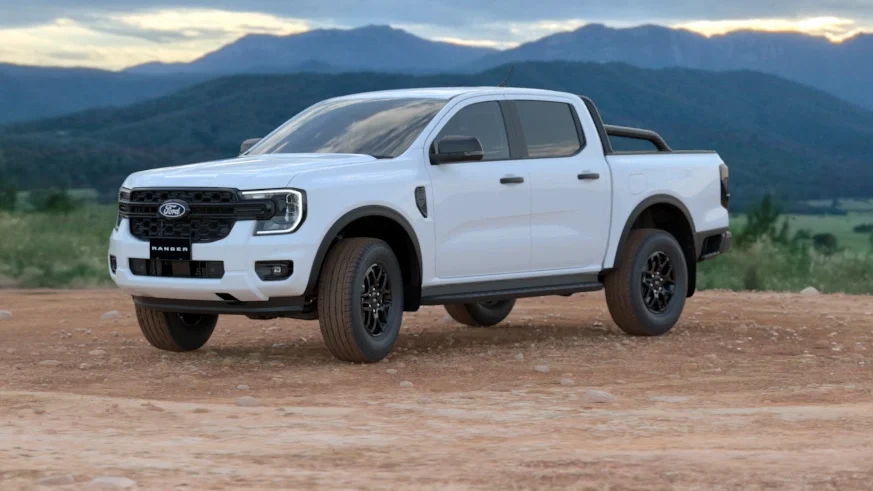
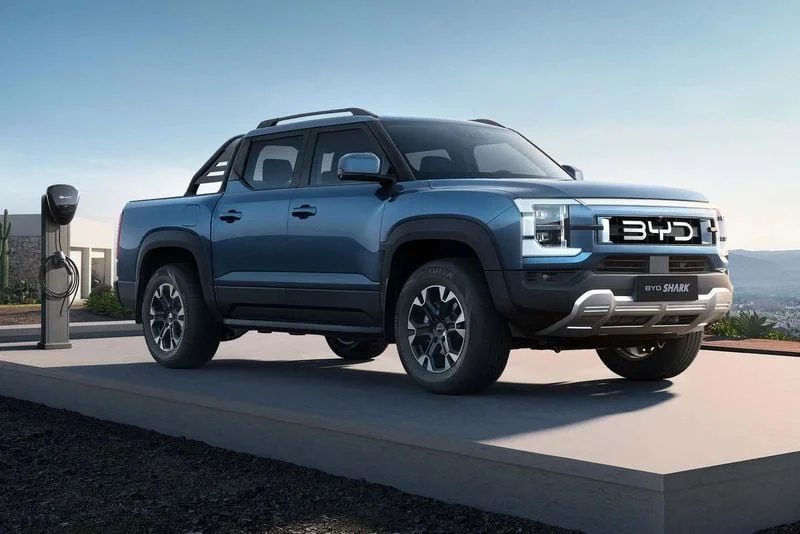
Ford Ranger vs BYD Shark 6
The ute that owns Australia takes on the plug-in hybrid that undercuts it on price and buries it on paper. Which dual-cab actually makes more sense?
Data checked: specs 23 Oct 2026, price 14 Oct 2026
Comparison snapshot
Prices, scores and edges below update from our car data.
Tows 1,000kg more
Cheaper by $9,290, lighter on fuel by 6.4 L/100km
Written 7 August 2026. The snapshot, tables, scores and verdict on this page update from our car data; figures quoted in the text are as at that date.
Price
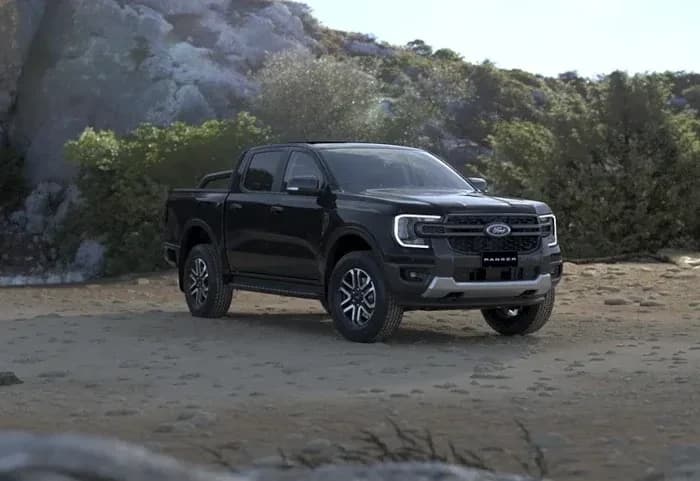
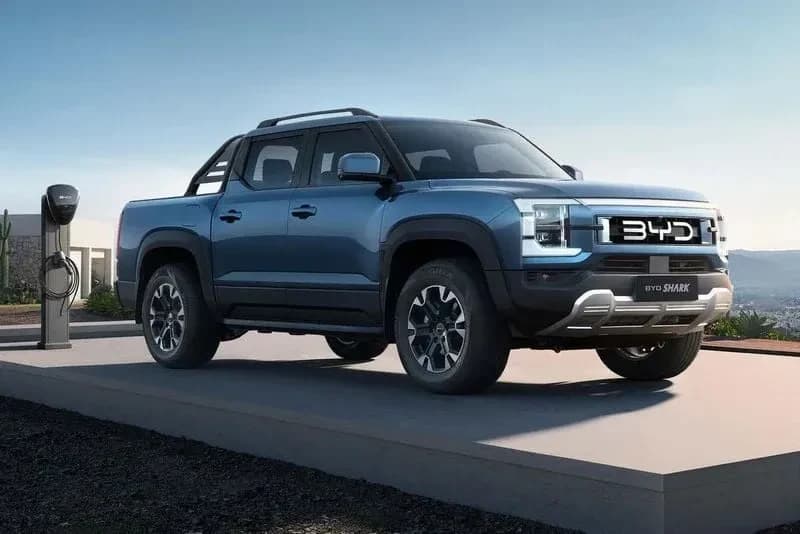
Both are five-seat dual-cab utes, but they sell on opposite pitches. The Ranger spans a huge range, from a $37,130 single-cab workhorse up to the $90,690 Raptor, so the fair fight is the volume-selling 3.0L V6 dual-cab. The Ranger XLT V6 lands at $67,190. The BYD Shark 6 keeps it simple with three trims, and the mid-spec Premium at $57,900 is the natural rival.
| Variant | Drive | RRP |
|---|---|---|
| BYD Shark 6 Dynamic | AWD | $55,900 |
| BYD Shark 6 Premium | AWD | $57,900 |
| BYD Shark 6 Performance | AWD | $62,900 |
| Ford Ranger XLT V6 Double Cab | 4x4 | $67,190 |
| Ford Ranger Sport V6 | 4x4 | $71,590 |
| Ford Ranger Wildtrak V6 | 4x4 | $75,090 |
That is roughly a $9,000 head start for the BYD before you factor in fuel. The whole Shark 6 range sits under the V6 Ranger, and even the top Performance comes in below the XLT V6. On the sticker alone, the Shark wins comfortably.
Safety
Both utes hold the maximum five-star ANCAP rating, with the Shark 6 tested more recently in 2024 against the stricter current protocols, and the Ranger rated in 2022. Both come loaded with the expected driver-assist kit: autonomous emergency braking, adaptive cruise, lane-keep assist, blind-spot monitoring and a reversing camera, with 360-degree cameras higher up each range.
Ford has been tuning the Ranger's driver-assist calibration for the Australian market for years, and the system list is comprehensive. The Shark 6 brings the same long feature list and its newer rating reflects strong crash performance, though like most recent arrivals its lane-centring and driver-attention monitor can nag a little until you learn the settings. Neither should give a safety-conscious buyer pause.
Features
The Shark 6 leans hard on value here. Even the Premium reads like a top-spec ute: a big rotating central touchscreen, synthetic leather, heated and ventilated front seats, a powered driver's seat, wireless charging and vehicle-to-load, which turns the truck into a giant battery for running tools, lights or a camp fridge straight from the tray. For tradies and campers that last one is genuinely useful.
The Ranger answers with substance rather than gadget count. Its SYNC 4 system is one of the better utes to live with, the cabin is properly screwed together, and the accessory and tray-fitout ecosystem is enormous because half the country drives one. You can option it into almost any working configuration. The BYD gives you more standard features per dollar; the Ford gives you a more proven, more configurable workhorse.
Drivetrain
On raw numbers it is a rout. The Shark 6 pairs a 1.5-litre turbo-petrol engine with twin electric motors for a combined 321kW and 650Nm, enough to fire this two-tonne ute to 100km/h in 5.7 seconds. The Ranger's 3.0-litre V6 turbo-diesel makes 184kW and 600Nm and takes 10.5 seconds. On paper that is close to five seconds of separation, which is a very large gap between two utes of similar size and mass.
The catch is how that performance holds up. The Shark is at its best plugged in, where it returns about 2.0L/100km combined and can cover a typical daily commute on electrons alone. Let the battery run down and it drives as a hybrid, drinking closer to 7.9L/100km, which is no longer far off the Ranger's 8.4L diesel figure. The Ranger never needs a plug, has a far bigger fuel tank for outback legs, and its proven diesel is happier under sustained heavy load. For commuters who charge nightly the BYD is dramatically cheaper to run; for high-kilometre remote work the diesel still makes sense.
Space and comfort
Both carry full five-seat dual-cab bodies with a usable tray, so practicality comes down to the working numbers. The Ranger tows a full 3,500kg braked against the Shark's 2,500kg, and that 1,000kg gap is the single most important line in this whole comparison if you pull a big van, boat or float. The Ranger also offers selectable four-wheel drive with a low-range transfer case for serious off-road and heavy-haul work, where the Shark's on-demand all-wheel-drive system is more of a soft-roader setup.
Inside, the Shark 6 is specified more like a passenger car, with synthetic leather, heated and ventilated front seats and a large rotating screen. The Ranger's cabin is specified for work first, with more hard-wearing trim and a much deeper accessory catalogue. Both quote five seats and a full dual-cab tub. If your ute is mostly a daily driver that occasionally tows, the Shark's equipment list is the stronger one; if it earns its keep towing heavy and going bush, the Ranger's hardware wins.
Cost to own
BYD covers the Shark 6 with a six-year/150,000km warranty plus a longer battery warranty, while Ford offers five years and unlimited kilometres. For very high-distance drivers the Ford's no-cap term has an edge; for typical use the BYD's longer year count is reassuring on a brand still building its local track record. Running costs, though, swing hard to the BYD if you can charge at home, where electricity for the daily commute costs a fraction of diesel.
The number that pulls it back toward the Ranger is resale. The Ranger has some of the strongest used-ute values in the country, backed by demand, a dealer in every town and a reputation built over decades. The Shark 6 is new enough that its used-market story is still being written, and plug-in hybrid utes have no long resale history here yet. Over four or five years the Ranger is likely to give back more of its purchase price, which narrows the BYD's up-front saving. Plug in daily and keep it long-term and the Shark still wins on total cost; tow heavy, drive remote or trade often and the Ranger's case strengthens.
Nothing sells like a ute in Australia, and nothing sells like the Ford Ranger, which has topped the national charts and become the default choice for tradies, towers and families alike. Then BYD dropped the Shark 6, a plug-in hybrid dual-cab that undercuts the V6 Ranger on price while making nearly twice the power and sipping a fraction of the fuel if you plug it in.
So is the newcomer a genuine Ranger killer, or does the benchmark still earn its keep where it counts? We have lined up the V6 Ranger XLT against the Shark 6 Premium and worked through price, performance, towing, running costs, safety and the long-term ownership maths that actually decides it. You can also stack them side by side on every spec in our comparison tool, or browse the full ute comparison hub.
Key details
A tick marks the better figure only where both cars have one and the gap is meaningful (3% or more; a whole star or year).
| Detail | Ford Ranger | BYD Shark 6 |
|---|---|---|
| Price | From $67,190 RRP | From $57,900 RRP |
| Drive-away estimate | Calculating... | Calculating... |
| Body | Ute | Ute |
| Powertrain | Diesel, 3L 6-cyl turbo | Plug-in hybrid, 1.5L 4-cyl |
| Power / torque | 184kW / 600Nm | 321kW / 650Nm |
| Fuel use | 8.4 L/100km | 2 L/100km (7.9 L/100km as a hybrid) |
| 0-100km/h | 10.5s | 5.7s |
| Boot | No data | No data |
| Towing (braked) | 3,500kg | 2,500kg |
| ANCAP | 5 stars (2022) | 5 stars (2025) |
| Warranty | 5yr / unlimited km | 6yr / 150,000 km |
At a glance
- Seats
- 5
- Boot
- No data
- Length x width x height
- 5,370 x 1,918 x 1,886mm
- Wheelbase
- 3,270mm
- Engine
- 3L 6-cyl turbo
- Power
- 184kW
- Torque
- 600Nm
- Drive
- AWD
- Transmission
- Automatic
- Power-to-weight
- 78 kW/tonne
- Kerb weight
- 2,349kg
- Spare wheel
- 17" Steel
- Payload
- 931kg
- Towing braked / unbraked
- 3,500kg / 750kg
- Turning circle
- 12.9m
- Seats
- 5
- Boot
- No data
- Length x width x height
- 5,457 x 1,971 x 1,925mm
- Wheelbase
- 3,260mm
- Engine
- 1.5L 4-cyl
- Power
- 321kW
- Torque
- 650Nm
- Drive
- AWD
- Transmission
- Auto
- Power-to-weight
- 118 kW/tonne
- Kerb weight
- 2,710kg
- Spare wheel
- Full-Size
- Payload
- No data
- Towing braked / unbraked
- 2,500kg / 750kg
- Turning circle
- 13.5m
CarSorted Score breakdown
The CarSorted Score is algorithmic: it is calculated from each car's data, not from a road test. How it works.
Safety
Fuel Economy
Value
Practicality
Technology
Performance
Reliability
The verdict
BYD Shark 6 comes out ahead on the CarSorted Score (76 vs 71)
The deciding gaps
- Technology:Ford Ranger 60, BYD Shark 6 92, BYD Shark 6 ahead by 32
- Performance:Ford Ranger 55, BYD Shark 6 80, BYD Shark 6 ahead by 25
- Value:Ford Ranger 70, BYD Shark 6 91, BYD Shark 6 ahead by 21
The BYD Shark 6 is also the cheaper of the two.
Same scorer as the live comparison of these two exact cars.
Our take (written 7 August 2026)
If your ute spends its life in the city and suburbs with the odd weekend tow, the BYD Shark 6 is the smarter money. It costs roughly $9,000 less than the V6 Ranger, it is far quicker, and plugged in every night it sips around 2L/100km against the Ranger's 8.4. But the Ranger is still the tool of choice if you tow heavy or travel remote: it pulls a full 3,500kg to the Shark's 2,500kg, has proper selectable four-wheel drive with low range, a vastly bigger dealer and service network, and resale the BYD has not yet earned. Buy the Shark 6 to save money and fuel on everyday duties; buy the Ranger if towing capacity, outback range and proven durability are non-negotiable.
Prices on this page move. Want the next verdict?
One short email when prices shift or a new comparison lands. No spam, unsubscribe anytime.
Questions buyers ask
Is the BYD Shark 6 cheaper than the Ford Ranger?
The Ford Ranger XLT 4x4 Double Cab Pick-up 3.0 V6 is from $67,190 RRP; the BYD Shark 6 Premium is from $57,900 RRP. That makes the BYD Shark 6 $9,290 cheaper.
Which tows more, the Ranger or the Shark 6?
Braked towing capacity: the Ford Ranger at 3,500kg, against 2,500kg for the BYD Shark 6.
How far can the BYD Shark 6 go on electricity alone?
Electric range (WLTP where published): the BYD Shark 6 is listed at 100km. We have no electric range figure on record for the Ford Ranger.
Which is faster?
Peak power: the BYD Shark 6 at 321kW, against 184kW for the Ford Ranger. The BYD Shark 6 is quicker to 100km/h (5.7s vs 10.5s).
Are both five-star ANCAP?
The Ford Ranger holds 5 stars (rated 2022), and the BYD Shark 6 holds 5 stars (rated 2025).
Which is cheaper to run, the Ford Ranger or the BYD Shark 6?
On the official combined cycle, the Ford Ranger uses 8.4 L/100km and the BYD Shark 6 uses 2 L/100km.
Which has the better warranty?
The Ford Ranger comes with a 5yr / unlimited km warranty; the BYD Shark 6 with a 6yr / 150,000 km warranty.
Which comes out ahead overall?
On the CarSorted Score the BYD Shark 6 comes out ahead (Ford Ranger 71/100, BYD Shark 6 76/100), mainly on technology, performance, value. The score is algorithmic; the editorial above says who each car suits.
Related
Compare
How to read this page. Prices, specs, ANCAP ratings, warranty, scores and the computed verdict come from our records for the two variants shown, sourced from manufacturer Australian documents, and update when those records change. RRP excludes on-road costs. Drive-away figures are estimates for the state you have selected unless marked as advertised. The editorial text was written on 7 August 2026. Always confirm price and specification with the manufacturer or dealer before you buy. CarSorted does not accept payment for recommendations.
Comments (0)
Sign in to join the conversation
No comments yet. Be the first!