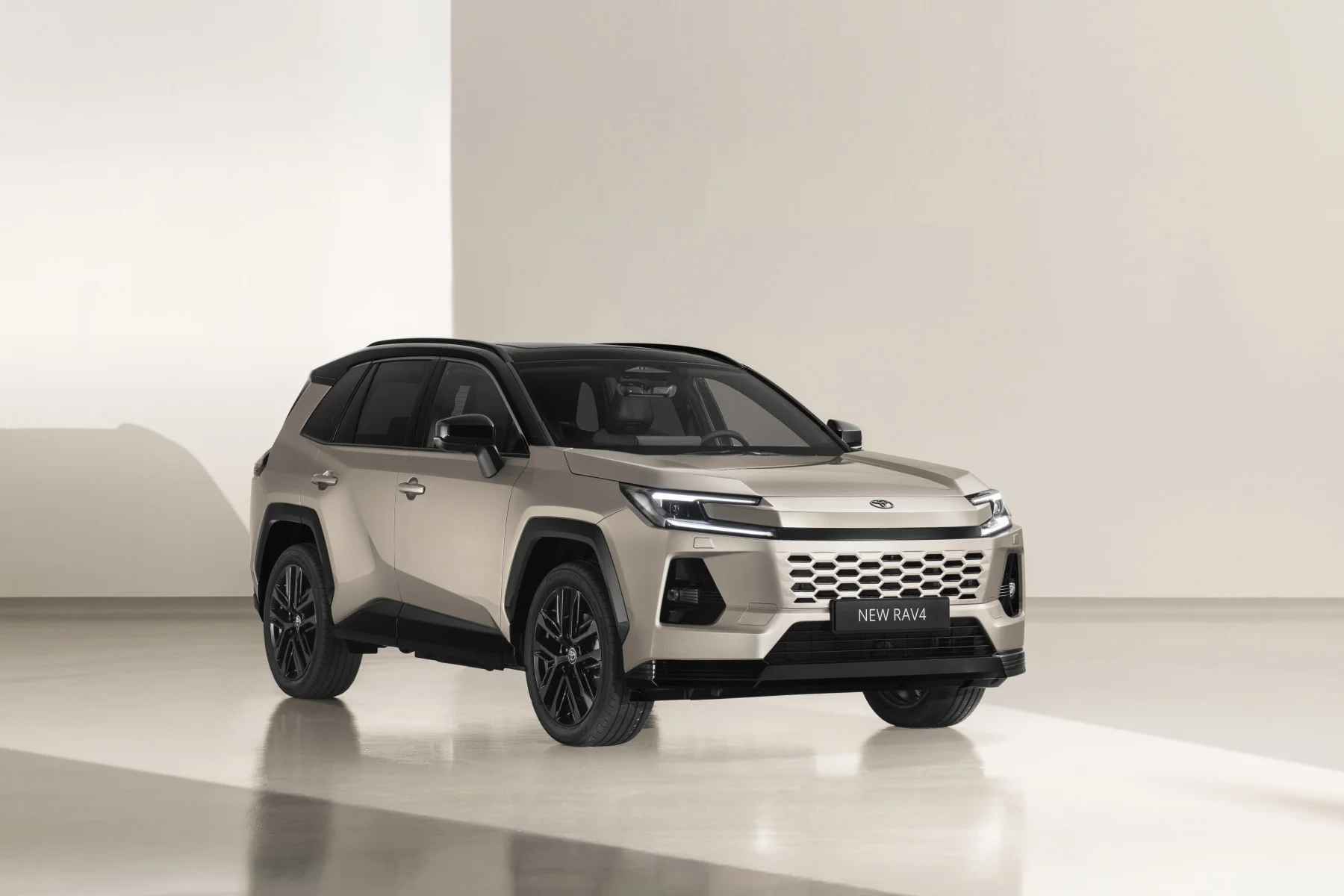
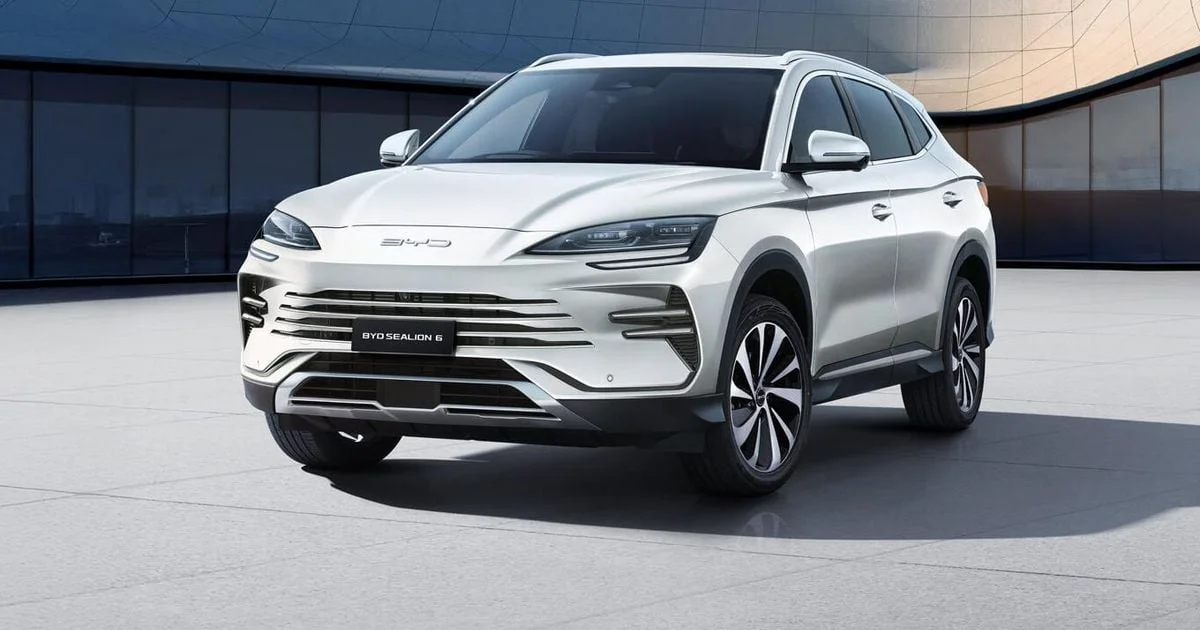
Toyota RAV4 vs BYD Sealion 6
The country's favourite hybrid SUV takes on a plug-in hybrid that costs less and adds an electric commute. Which one actually saves you money?
Data checked: specs 28 Aug 2026, price 23 Sep 2026
Comparison snapshot
Prices, scores and edges below update from our car data.
280L more boot
Cheaper by $3,000, lighter on fuel by 3.4 L/100km
Written 14 June 2026. The snapshot, tables, scores and verdict on this page update from our car data; figures quoted in the text are as at that date.
Price
The RAV4 is sold almost entirely as a hybrid now, opening at $45,990 for the GX and climbing through a long range to the plug-in GR Sport. The Sealion 6 keeps it tight with four trims, all plug-in hybrids, starting at $42,990. So the value entry points are close, with the BYD about $3,000 cheaper to get in the door.
| Variant | Type | RRP |
|---|---|---|
| BYD Sealion 6 Essential | PHEV FWD | $42,990 |
| BYD Sealion 6 Dynamic | PHEV FWD | $42,990 |
| Toyota RAV4 GX Hybrid | HEV FWD | $45,990 |
| BYD Sealion 6 Premium | PHEV AWD | $42,990 |
| Toyota RAV4 XSE PHEV | PHEV FWD | $45,990 |
| Toyota RAV4 GR Sport PHEV | PHEV AWD | $45,990 |
The pricing tells the real story. If you specifically want a plug-in hybrid, the Sealion 6 gives you one from $42,990, while the cheapest RAV4 plug-in is the $45,990 XSE PHEV. That is a near-$3,000 gap for plug-in capability, and the main reason the BYD has found buyers so quickly.
Safety
The Sealion 6 carries a five-star ANCAP rating from 2023 with a full suite of assists: autonomous emergency braking, adaptive cruise, lane-keep, blind-spot monitoring, rear cross-traffic alert and a 360-degree camera. The newly redesigned RAV4 has not yet been re-rated by ANCAP under the current protocols, so we list its rating as pending rather than quote the previous generation's result. Toyota's Safety Sense suite is standard and well proven, but we will only state a star rating once ANCAP publishes one for the new car.
On the road, Toyota's assists are among the least intrusive in the class, tuned over many years. The BYD's systems are comprehensive and its 2023 rating is strong, though the lane-centring and driver-monitoring can be eager until configured. Both are safe family choices on the equipment they carry.
Features
For the money, the Sealion 6 is generously equipped. Even the Essential brings a large rotating touchscreen, synthetic leather, a powered driver's seat, wireless charging and vehicle-to-load, so you can run appliances off the battery. Step up a trim or two and you add heated and ventilated seats and a panoramic roof. It feels a class above its price on features alone.
The RAV4 is more restrained, especially at GX level, where you are paying partly for the badge and the resale rather than sheer kit count. What you get instead is Toyota's slick, dependable infotainment, a cabin built to survive a decade of family life, and the largest hybrid dealer and service network in the country. If you judge by features per dollar the BYD wins; if you judge by long-term dependability the Toyota makes its case.
Drivetrain
This is where the two philosophies separate. The Sealion 6 is a plug-in hybrid with an 18.3kWh battery, good for around 92km of electric-only driving. Charge it at home and most commutes happen on electricity at a few cents per kilometre; BYD quotes 1.1L/100km on the combined plug-in test, though that figure assumes you start every trip with a full battery. Let the battery run flat and it drives as a regular hybrid at about 4.7L/100km, which is still impressively low.
The RAV4 takes the simpler path. Its self-charging hybrid never needs a plug, tops up its own small battery on the move, and returns a consistent 6.6L/100km whether you have a driveway charger or not. There is no range anxiety and nothing to remember. The trade-off is that it can never run a commute purely on cheap electricity the way the plugged-in Sealion can. If you have home charging the BYD is meaningfully cheaper to run; if you do not, the gap narrows and the Toyota's no-effort efficiency looks very attractive.
Space and comfort
The clearest practical split is the boot. The RAV4 swallows 580 litres against the Sealion 6's 400, a real difference when you are loading prams, sports gear or a big shop. The Sealion gives a little back with a higher 1,000kg braked towing rating to the RAV4 hybrid's 800kg, so light-trailer users lean the other way.
Up front both cabins are roomy and modern. The BYD feels plusher thanks to all that standard equipment and its big central screen, while the Toyota feels more conventional but is faultlessly easy to use and built to last. Rear-seat space is generous in both. For outright family load-lugging the RAV4's boot is the trump card; for in-cabin gadgetry the Sealion feels richer.
Cost to own
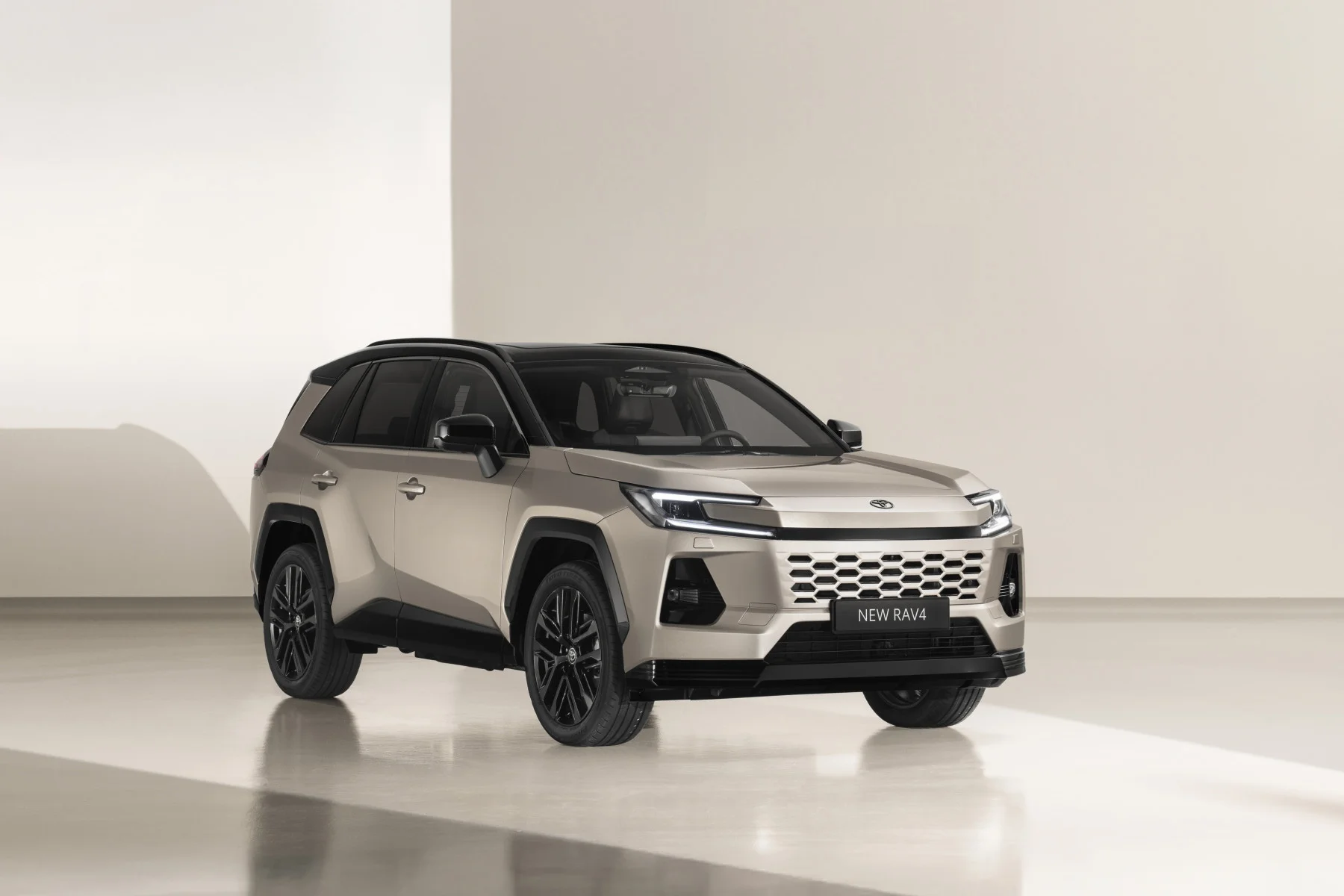
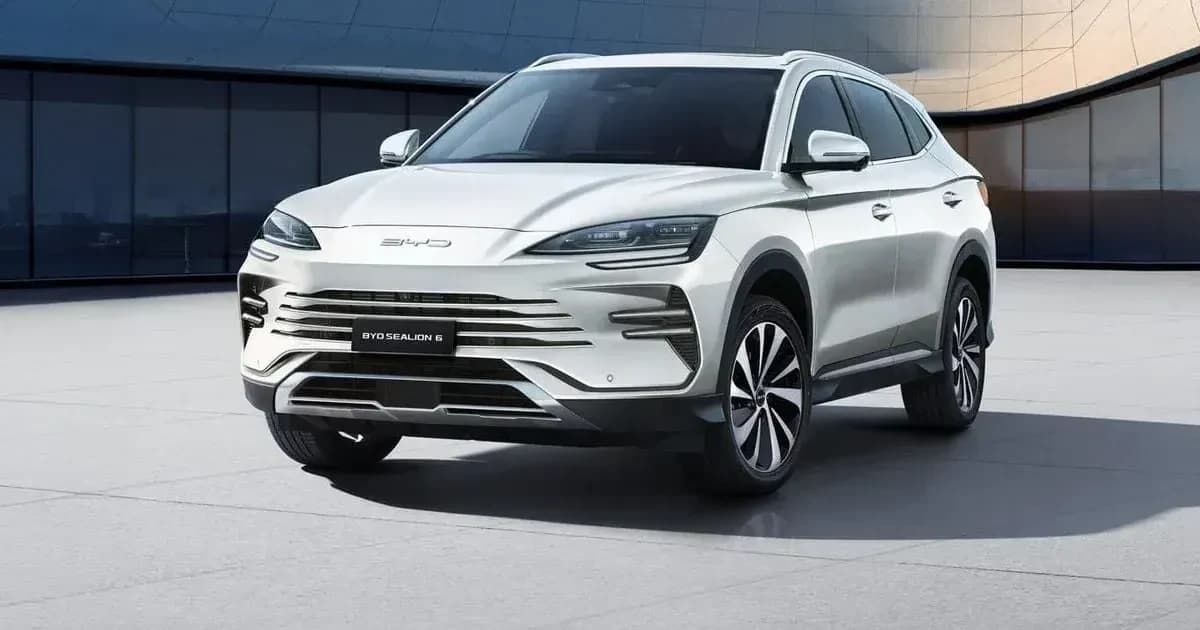
BYD covers the Sealion 6 with a six-year/unlimited-kilometre warranty plus longer battery cover, edging Toyota's five-year/unlimited term on paper. On running costs the Sealion wins clearly if you can charge at home, where electric commuting undercuts even the RAV4's frugal hybrid; without home charging the two come much closer, since a flat-battery Sealion at 4.7L and a RAV4 at 6.6L are in the same ballpark.
Then comes resale, and here Toyota is in a league of its own. The RAV4 has long been one of the strongest holders of value in Australia, helped by relentless demand and a hybrid system buyers trust. BYD's resale story is still young and Chinese plug-ins have no long local track record yet, so they are likely to depreciate faster in the early years. Over four or five years the RAV4's stronger resale claws back a chunk of the BYD's lower purchase price and cheaper fuel. Charge at home and keep the car a long time and the Sealion's total cost still looks great; trade often or skip home charging and the Toyota's resale safety net is hard to beat.
The Toyota RAV4 has been Australia's default family SUV for years, and its self-charging hybrid turned it into one of the efficiency benchmarks in the segment too. Now the BYD Sealion 6 has arrived with a different pitch: a genuine plug-in hybrid that undercuts the RAV4 on price and lets you run your commute on electricity rather than petrol.
So does the plug-in newcomer make the benchmark look expensive, or does Toyota's proven hybrid and bulletproof resale still win the day? We have lined up the value entry points of each and worked through price, electric range, running costs, space, safety and resale. You can also stack them side by side on every spec in our comparison tool, or browse the full SUV comparison hub.
Key details
A tick marks the better figure only where both cars have one and the gap is meaningful (3% or more; a whole star or year).
| Detail | Toyota RAV4 | BYD Sealion 6 |
|---|---|---|
| Price | From $45,990 RRP | From $42,990 RRP |
| Drive-away estimate | $50,872 drive-away (VIC), advertised | Calculating... |
| Body | SUV | SUV |
| Powertrain | Hybrid, 2.5L 4-cyl | Plug-in hybrid, 1.5L 4-cyl |
| Power / torque | 143kW / No data | 160kW / 300Nm |
| Fuel use | 4.5 L/100km | 1.1 L/100km (4.72 L/100km as a hybrid) |
| 0-100km/h | 8.4s | 8.5s |
| Boot | 705L seats up | 425L seats up |
| Towing (braked) | 800kg | 1,500kg |
| ANCAP | No data | 5 stars (2023) |
| Warranty | 5yr / unlimited km | 6yr / 150,000 km |
At a glance
- Seats
- 5
- Boot
- 705L seats up
- Length x width x height
- 4,600 x 1,855 x 1,685mm
- Wheelbase
- 2,690mm
- Engine
- 2.5L 4-cyl
- Power
- 143kW
- Torque
- No data
- Drive
- FWD
- Transmission
- CVT (e-CVT)
- Power-to-weight
- 82 kW/tonne
- Kerb weight
- 1,745kg
- Spare wheel
- Space saver
- Payload
- 400kg
- Towing braked / unbraked
- 800kg / 750kg
- Turning circle
- 11.36m
- Seats
- 5
- Boot
- 425L seats up
- Length x width x height
- 4,775 x 1,890 x 1,670mm
- Wheelbase
- 2,765mm
- Engine
- 1.5L 4-cyl
- Power
- 160kW
- Torque
- 300Nm
- Drive
- FWD
- Transmission
- Auto
- Power-to-weight
- 82 kW/tonne
- Kerb weight
- 1,940kg
- Spare wheel
- None
- Payload
- No data
- Towing braked / unbraked
- 1,500kg / 750kg
- Turning circle
- 11m
CarSorted Score breakdown
The CarSorted Score is algorithmic: it is calculated from each car's data, not from a road test. How it works.
Safety
Fuel Economy
Value
Practicality
Technology
Performance
Reliability
The verdict
Toyota RAV4 comes out ahead on the CarSorted Score (76 vs 74)
The deciding gaps
- Technology:Toyota RAV4 91, BYD Sealion 6 60, Toyota RAV4 ahead by 31
- Fuel Economy:Toyota RAV4 95, BYD Sealion 6 74, Toyota RAV4 ahead by 21
- Safety:Toyota RAV4 71, BYD Sealion 6 86, BYD Sealion 6 ahead by 15
The Toyota RAV4 wins on the score; the BYD Sealion 6 is the cheaper of the two, and price is already part of the Value axis.
Same scorer as the live comparison of these two exact cars.
Our take (written 14 June 2026)
These two answer the same question in different ways. The BYD Sealion 6 is a true plug-in hybrid: charge it at home and you cover roughly 92km on electricity before the petrol engine wakes up, so a typical commuter can run on cents-per-kilometre electrons most of the week, and it undercuts the RAV4 on price with more kit. The Toyota RAV4 is a self-charging hybrid that never needs a plug, never gives you range anxiety, hauls more luggage and holds its value better than almost anything in its class. Buy the Sealion 6 if you have home charging and want the lowest running costs; buy the RAV4 if you want proven, no-effort efficiency, the bigger boot and the resale safety net.
Prices on this page move. Want the next verdict?
One short email when prices shift or a new comparison lands. No spam, unsubscribe anytime.
Questions buyers ask
Is the BYD Sealion 6 cheaper than the Toyota RAV4?
The Toyota RAV4 GX Hybrid 2WD is from $45,990 RRP; the BYD Sealion 6 Essential is from $42,990 RRP. That makes the BYD Sealion 6 $3,000 cheaper.
Which has the bigger boot?
Boot space with the seats up: the Toyota RAV4 at 705L, against 425L for the BYD Sealion 6.
Which holds its value better?
The Toyota RAV4 GX Hybrid 2WD is from $45,990 RRP; the BYD Sealion 6 Essential is from $42,990 RRP. That makes the BYD Sealion 6 $3,000 cheaper.
Which is cheaper to run, the Toyota RAV4 or the BYD Sealion 6?
On the official combined cycle, the Toyota RAV4 uses 4.5 L/100km and the BYD Sealion 6 uses 1.1 L/100km.
What are the ANCAP ratings for the Toyota RAV4 and BYD Sealion 6?
We have no ANCAP rating on record for the Toyota RAV4, and the BYD Sealion 6 holds 5 stars (rated 2023).
Which tows more?
Braked towing capacity: the BYD Sealion 6 at 1,500kg, against 800kg for the Toyota RAV4.
Which has the better warranty?
The Toyota RAV4 comes with a 5yr / unlimited km warranty; the BYD Sealion 6 with a 6yr / 150,000 km warranty.
Which comes out ahead overall?
On the CarSorted Score the Toyota RAV4 comes out ahead (Toyota RAV4 76/100, BYD Sealion 6 74/100), mainly on technology, fuel economy. The score is algorithmic; the editorial above says who each car suits.
Related
Compare
- These two cars, side by side
- Every Toyota RAV4 and BYD Sealion 6 variant
- Toyota RAV4 vs Tesla Model Y: Hybrid SUV or Electric SUV
- BYD Sealion 6 vs Zeekr 7X: plug-in hybrid SUV or electric SUV with a bigger boot
- Toyota RAV4 vs Chery Tiggo 7 Super Hybrid: Hybrid boot space or Plug-in Hybrid value
- Mazda CX-5 vs BYD Sealion 6: Petrol AWD SUV or Plug-in Hybrid SUV
How to read this page. Prices, specs, ANCAP ratings, warranty, scores and the computed verdict come from our records for the two variants shown, sourced from manufacturer Australian documents, and update when those records change. RRP excludes on-road costs. Drive-away figures are estimates for the state you have selected unless marked as advertised. The editorial text was written on 14 June 2026. Always confirm price and specification with the manufacturer or dealer before you buy. CarSorted does not accept payment for recommendations.
Comments (0)
Sign in to join the conversation
No comments yet. Be the first!