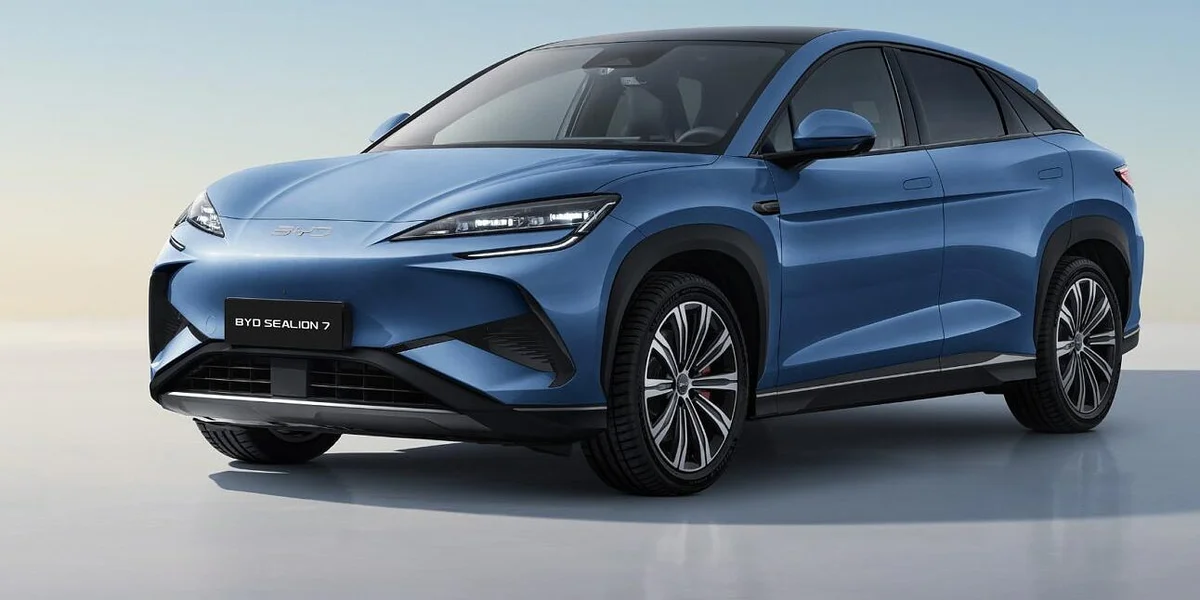
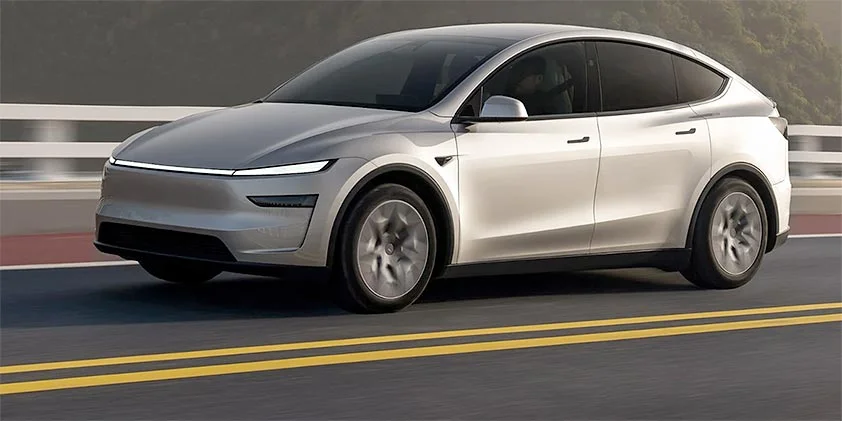
BYD Sealion 7 vs Tesla Model Y
The cut-price Chinese challenger takes on the world's best-selling EV. Is the Tesla still worth the premium?
Data checked: specs 20 Sep 2026, price 16 Sep 2026
Comparison snapshot
Prices, scores and edges below update from our car data.
Cheaper by $3,910, 1 more year of warranty
Uses 6 kWh/100km less, 354L more boot
Written 23 May 2026. The snapshot, tables, scores and verdict on this page update from our car data; figures quoted in the text are as at that date.
Price
Both are five-seat mid-size electric SUVs aimed squarely at the heart of the market. The difference is the entry price.
| Variant | Drive | RRP |
|---|---|---|
| BYD Sealion 7 Premium | RWD | $54,990 |
| Tesla Model Y RWD | RWD | $58,900 |
| BYD Sealion 7 Performance | AWD | $63,990 |
| Tesla Model Y Long Range | AWD | $68,900 |
| Tesla Model Y Performance | AWD | $89,400 |
We are matching the value entry points: the rear-drive Sealion 7 Premium at $54,990 against the rear-drive Model Y, which Tesla repriced to $58,900 in September. That gap used to be $11,000; it is now $3,910, and the dual-motor Sealion 7 Performance at $63,990 actually costs more than the entry Tesla. The BYD still undercuts it with a bigger battery and more range, but the rest of this now comes down to whether $3,910 is enough of a saving to pass on the Tesla.
Safety
Both cars carry a maximum five-star ANCAP rating, and both are genuinely strong here. The Model Y has historically posted some of the highest ANCAP scores of any car sold in Australia, helped by its active-safety suite and crash structure. The Sealion 7 matches the five-star headline and packs the same long list of assists: AEB, adaptive cruise, lane keeping, blind-spot monitoring, rear cross-traffic alert and a 360-degree camera.
In daily use the Tesla's systems are the more mature, with Autopilot well proven on Australian roads, though its camera-only approach divides opinion. The BYD's assists work well and are improving fast, but like most new arrivals the lane-centring and driver-attention monitor can be a touch eager. Both are safe choices; neither should put you off.
Features
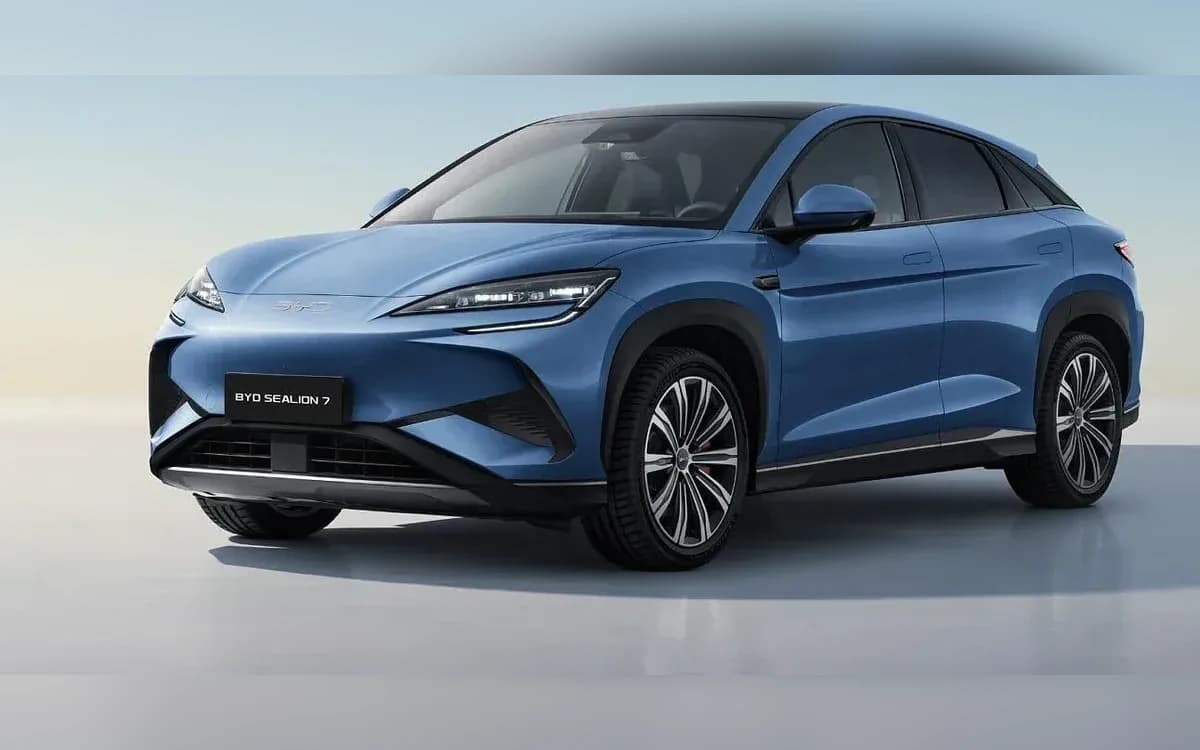
This is where the BYD makes its case loudest. For $16k less, the Sealion 7 Premium throws in a panoramic glass roof, ventilated and heated power front seats, a rotating central touchscreen, a head-up display, wireless charging and vehicle-to-load (so you can run appliances off the battery). It is a lot of equipment for the money.
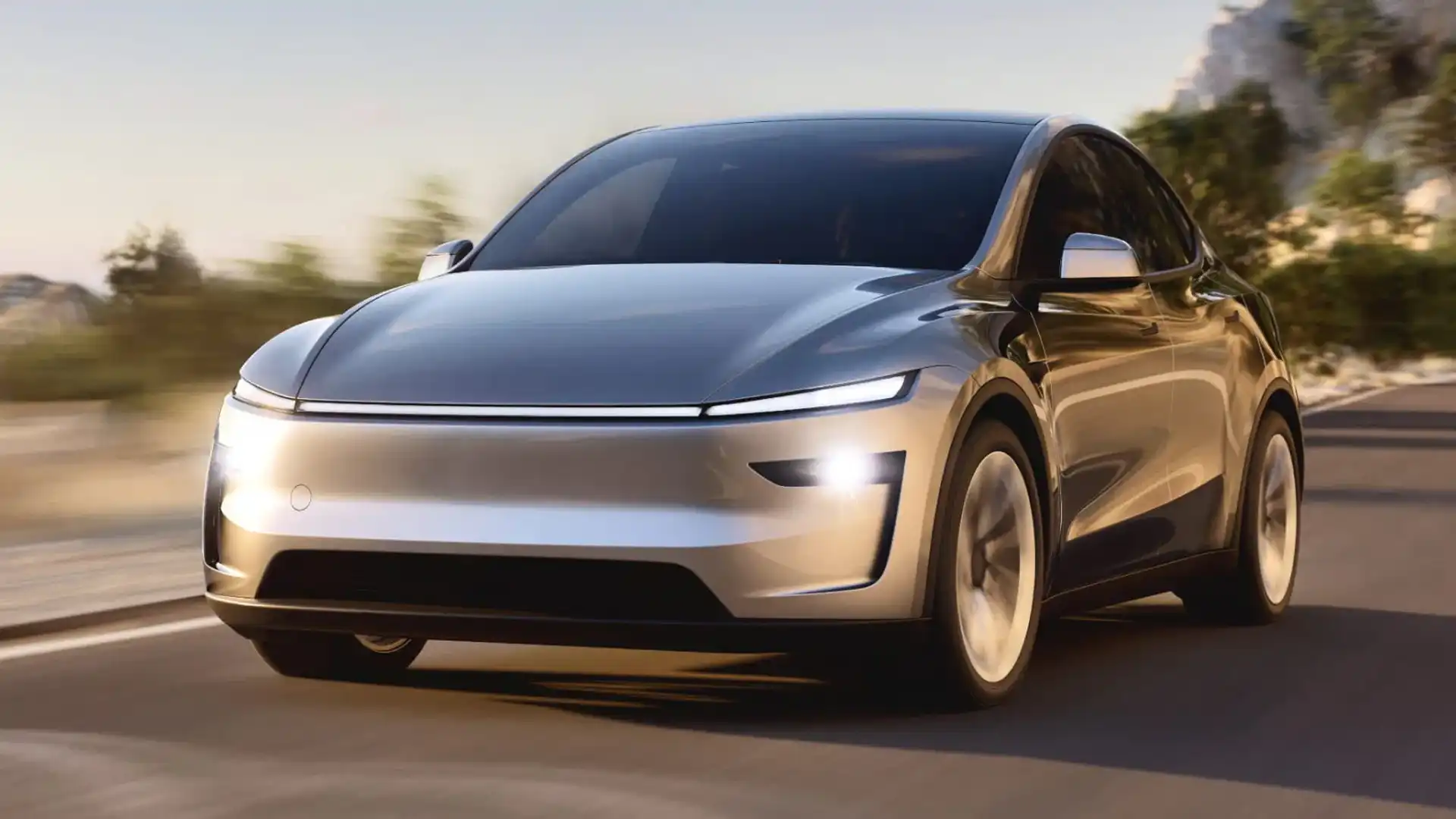
The Model Y is more minimalist by design. You get the famous 15.4-inch central screen that controls almost everything, excellent over-the-air updates, a slick app, and the most polished EV software in the business. What you do not get is the BYD's sheer feature count at the price. If you love gadgets per dollar, the Sealion wins; if you value software polish and a proven app ecosystem, the Tesla does.
Drivetrain
Both are single-motor, rear-drive EVs in their base form, but they take different routes. The Sealion 7 Premium runs a large 82.6kWh battery for a 502km WLTP range and 230kW, enough for a brisk 6.7-second 0-100km/h. Step up to the AWD Performance and it is a genuinely rapid 390kW.
The base Model Y uses a smaller 60kWh battery for 466km and is a little quicker off the line at 5.9 seconds thanks to Tesla's efficiency and tuning. The bigger story is charging: the Tesla peaks higher on DC and, crucially, plugs into the Supercharger network, which remains the most reliable, easiest-to-use fast-charging experience in Australia. The BYD charges respectably but you live on the public networks. For road-trippers, the Tesla's charging edge is real.
Space and comfort
The single biggest practical difference is the boot. The Model Y swallows a cavernous 854 litres behind the rear seats plus a 117-litre frunk, one of the most usable cargo setups of any mid-size SUV at any price. The Sealion 7's 400-litre boot is ordinary by comparison. If you haul prams, luggage or gear regularly, that gap matters more than any spec-sheet bragging right.
Up front, both have airy, modern, screen-led cabins with good materials for the money. The BYD feels the more overtly plush thanks to all that standard kit, while the Tesla feels the more cohesively designed and better screwed together. Rear-seat space is good in both. But on outright family practicality, the Model Y's boot is the trump card.
Cost to own
BYD covers the Sealion 7 with a six-year/150,000km warranty and an eight-year battery warranty; Tesla offers four years/80,000km on the car (commonly quoted as a five-year experience) with an eight-year battery warranty. On paper the BYD's vehicle cover is longer.
The number that swings it back is resale. The Model Y has among the strongest resale of any EV in Australia, helped by brand pull and the Supercharger ecosystem, while Chinese EVs are still establishing their used-market track record and tend to depreciate faster. Over three to four years, the Tesla's stronger resale recovers a meaningful slice of its higher purchase price, which is the single most important thing to weigh if you do not keep cars for a decade. If you do keep cars long-term, the BYD's lower entry price and longer warranty tilt back its way.
The mid-size electric SUV is the EV most Australian families actually buy, and for years the Tesla Model Y has owned it outright. But the Chinese challengers have arrived in force, and the BYD Sealion 7 is the most direct shot at the Tesla yet: similar size, more range on paper, and a price that undercuts it by thousands.
We have lined up the value entry point of each, the rear-drive Sealion 7 Premium at $54,990 against the rear-drive Model Y at $58,900, and worked through price, range, charging, safety, space and the long-term costs that decide which one is actually the smarter money. You can also stack them side by side on every spec in our comparison tool, or see how each stacks up across the wider EV comparison hub.
Key details
A tick marks the better figure only where both cars have one and the gap is meaningful (3% or more; a whole star or year).
| Detail | BYD Sealion 7 | Tesla Model Y |
|---|---|---|
| Price | From $54,990 RRP | From $58,900 RRP |
| Drive-away estimate | $54,990 drive away (VIC, advertised) | Calculating... |
| Body | SUV | SUV |
| Powertrain | Electric, Electric motor | Electric, Electric motor |
| Power / torque | 230kW / 380Nm | 255kW / 340Nm |
| Energy use | 19.9 kWh/100km | 13.9 kWh/100km |
| 0-100km/h | 6.7s | 5.9s |
| Boot | 500L seats up | 854L seats up |
| Towing (braked) | No data | 1,600kg |
| ANCAP | 5 stars (2025) | 5 stars (2025) |
| Warranty | 6yr / 150,000 km | 5yr / unlimited km |
At a glance
- Seats
- 5
- Boot
- 500L seats up
- Length x width x height
- 4,830 x 1,925 x 1,620mm
- Wheelbase
- 2,930mm
- Engine
- Electric motor
- Power
- 230kW
- Torque
- 380Nm
- Drive
- RWD
- Transmission
- Auto
- Power-to-weight
- 103 kW/tonne
- Kerb weight
- 2,225kg
- Spare wheel
- None
- Payload
- 410kg
- Towing braked / unbraked
- No data / 750kg
- Turning circle
- 11.7m
- Seats
- 5
- Boot
- 854L seats up
- Length x width x height
- 4,792 x 1,982 x 1,624mm
- Wheelbase
- 2,890mm
- Engine
- Electric motor
- Power
- 255kW
- Torque
- 340Nm
- Drive
- RWD
- Transmission
- Automatic
- Power-to-weight
- 133 kW/tonne
- Kerb weight
- 1,921kg
- Spare wheel
- Tyre repair kit
- Payload
- No data
- Towing braked / unbraked
- 1,600kg / 750kg
- Turning circle
- 12.1m
CarSorted Score breakdown
The CarSorted Score is algorithmic: it is calculated from each car's data, not from a road test. How it works.
Safety
Energy Efficiency
Value
Practicality
Technology
Performance
Reliability
The verdict
BYD Sealion 7 comes out ahead on the CarSorted Score (75 vs 74)
The deciding gaps
- Technology:BYD Sealion 7 87, Tesla Model Y 51, BYD Sealion 7 ahead by 36
- Energy Efficiency:BYD Sealion 7 68, Tesla Model Y 93, Tesla Model Y ahead by 25
- Practicality:BYD Sealion 7 56, Tesla Model Y 70, Tesla Model Y ahead by 14
The BYD Sealion 7 is also the cheaper of the two.
Same scorer as the live comparison of these two exact cars.
Our take (written 23 May 2026)
Tesla's September reprice has shrunk the Sealion 7's price advantage from five figures to $3,910, and that changes the answer. The BYD still gives you the bigger battery (82.6 vs 60kWh), 36km more claimed range and an extra year of warranty for less money. But for $3,910 the Model Y now buys more than double the boot (854L plus a frunk against 400L), 600kg more towing, quicker acceleration, the Supercharger network and much stronger resale, which on its own can recover the gap at trade-in time. At the old $11,000 spread the Sealion 7 was the obvious value play; at under four grand, the Model Y is the better buy for most people, and the BYD is the pick only if maximum range per dollar is the whole brief.
Our written take favoured the Tesla Model Y; on today's figures the score favours the BYD Sealion 7.
Prices on this page move. Want the next verdict?
One short email when prices shift or a new comparison lands. No spam, unsubscribe anytime.
Questions buyers ask
Is the BYD Sealion 7 better value than the Tesla Model Y?
The BYD Sealion 7 Premium is from $54,990 RRP; the Tesla Model Y RWD is from $58,900 RRP. That makes the BYD Sealion 7 $3,910 cheaper.
Which has more range, the Sealion 7 or Model Y?
Electric range (WLTP where published): the BYD Sealion 7 at 482km, against 466km for the Tesla Model Y.
Which has the bigger boot?
Boot space with the seats up: the Tesla Model Y at 854L, against 500L for the BYD Sealion 7.
Can both use Tesla Superchargers?
The Model Y plugs straight into Tesla's Supercharger network, the easiest fast-charging experience in Australia. The BYD Sealion 7 relies on the public CCS networks, which are widespread but less consistent. For frequent long trips, the Tesla's charging is the more relaxed.
Are both five-star ANCAP?
The BYD Sealion 7 holds 5 stars (rated 2025), and the Tesla Model Y holds 5 stars (rated 2025).
Which is cheaper to run, the BYD Sealion 7 or the Tesla Model Y?
On the official combined cycle, the BYD Sealion 7 uses 19.9 kWh/100km and the Tesla Model Y uses 13.9 kWh/100km.
Which tows more?
Braked towing capacity: the Tesla Model Y is listed at 1,600kg. We have no braked towing figure on record for the BYD Sealion 7.
Which has the better warranty?
The BYD Sealion 7 comes with a 6yr / 150,000 km warranty; the Tesla Model Y with a 5yr / unlimited km warranty.
Which comes out ahead overall?
On the CarSorted Score the BYD Sealion 7 comes out ahead (BYD Sealion 7 75/100, Tesla Model Y 74/100), mainly on technology. The score is algorithmic; the editorial above says who each car suits.
Related
In the news
- 2026 Mazda CX-6e Final Pricing: GT From $53,990, Azami $56,990, Now Cheaper Than a Tesla Model Y
- 2026 Leapmotor C10 Update: 510km Range, 220kW and 800V Charging for the Same $49,888
- Top 10 Best-Selling EVs in Australia: March 2026
- 13,907 Ford Rangers Recalled in Australia Over a Side Curtain Airbag That Can Snag the B-Pillar Trim
How to read this page. Prices, specs, ANCAP ratings, warranty, scores and the computed verdict come from our records for the two variants shown, sourced from manufacturer Australian documents, and update when those records change. RRP excludes on-road costs. Drive-away figures are estimates for the state you have selected unless marked as advertised. The editorial text was written on 23 May 2026. Always confirm price and specification with the manufacturer or dealer before you buy. CarSorted does not accept payment for recommendations.
Comments (0)
Sign in to join the conversation
No comments yet. Be the first!