Key Takeaways
- Complete $26,490, Inspire $30,990 (before on-roads)
- Second cheapest new EV on sale in Australia behind the BYD Atto 1
- Rear-drive: 60kW/252km WLTP or 85kW/345km WLTP, both on LFP
- Launch offer to 31 August: free 7kW home charger, free premium paint, 0.68% comparison finance
- Warranty 7yr/unlimited-km vehicle, 8yr/unlimited-km battery, ANCAP not yet rated
- Dealer arrivals from late July 2026
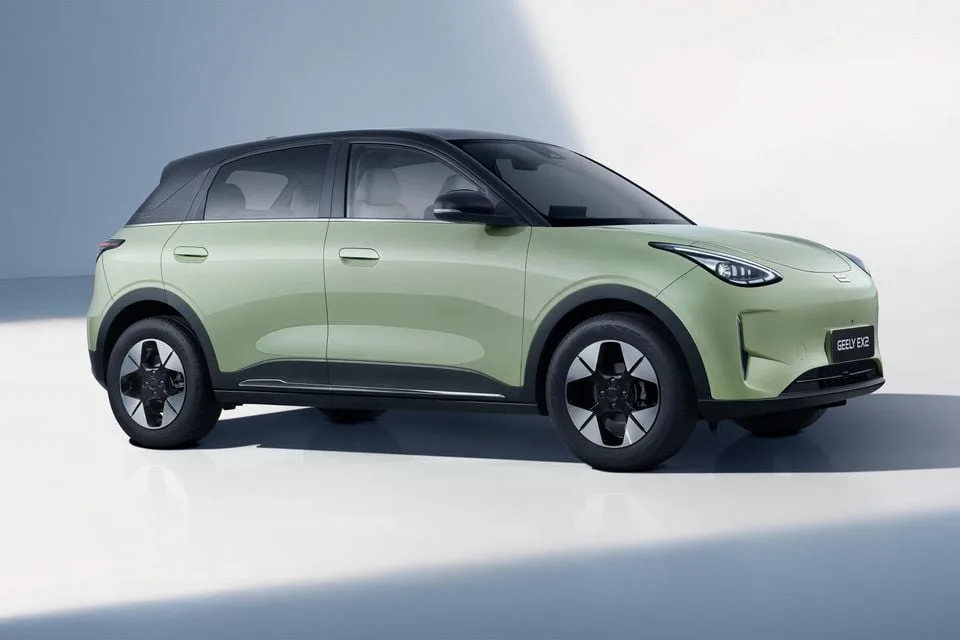
Image credit: Geely Australia
Geely has locked in the local sticker on its smallest EV, and it lands cheaper than most people expected. Complete opens the range at $26,490 before on-road costs and the better-equipped Inspire runs to $30,990 before on-roads. That first number matters because it drops the EX2 into the same conversation as an entry Suzuki Swift or a base MG3, except you never buy petrol again. It also slots the EX2 as the second cheapest new EV you can buy in this country, sitting between the four-seat BYD Atto 1 Essential at $23,990 and every other electric car on sale here.
For a buyer, the story here is not another Chinese brand launching another EV. It is that a five-door, five-seat electric car with a proper 345km range option and a seven-year warranty now costs less than a mid-spec Toyota Corolla hybrid. That changes the maths for a lot of people who have been waiting for the affordable EV moment to actually arrive.
Pricing
Two grades at launch, both single-motor rear-drive, both drawing from Geely's own LFP battery cell supply.
| Variant | Price (before on-roads) |
|---|---|
| EX2 Complete | $26,490 |
| EX2 Inspire | $30,990 |
Both prices sit above the outright cheapest new EV, the BYD Atto 1, but the EX2 is a genuinely larger car with a proper five-seat cabin, 375 litres of boot space and a 70-litre front trunk. The Atto 1 is a tiny four-seat urban runabout. The two are not really the same thing, and that is why Geely can charge the extra without flinching.
The launch offer is worth reading before you sign. Order and take delivery between 12 July and 31 August 2026 and Geely throws in a 7kW single-phase home wall charger (hardware only, install is on you), covers the $600 premium paint upgrade, and hands eligible finance buyers a 0.68 per cent comparison rate over 36 months. On the Inspire that stacks up to roughly $1,600 in savings before you count the finance benefit, which is a real lever if you were already going to buy one.
Powertrain and Charging
| Spec | Complete | Inspire |
|---|---|---|
| Motor | 60kW / 150Nm | 85kW / 150Nm |
| Drive | RWD | RWD |
| Battery | 35.3kWh LFP | 47.1kWh LFP |
| Range (WLTP) | 252 km | 345 km |
| 0 to 100km/h (claimed) | 14.2 sec | 11.5 sec |
| Top speed | 130 km/h | 130 km/h |
| DC peak | 60 kW | 80 kW |
| AC max | 6.6 kW | 6.6 kW |
Two things stand out. First, rear-drive at this price is unusual and it delivers the tight turning circle you feel the second you park one. Front-drive small EVs like the MG4 Urban and BYD Atto 1 have to route their driveshafts around the steering rack. The EX2 does not, so it turns like a London taxi. Second, the battery chemistry is LFP on both grades, which trades a bit of energy density for excellent cycle life. You can charge to 100 per cent every day without worrying about pack degradation, which is not the case with an NMC battery.
The DC charging figures are the weakest part of the package. A 60kW ceiling on the Complete and 80kW on the Inspire is slower than the 87kW GAC Aion UT or the 100kW-plus rivals a rung above. In practice a 30 to 80 per cent top-up on the Inspire takes around 21 minutes at a public charger, and the Complete closer to 25. Fine for a weekly stop. Not fine if you are planning to drive Melbourne to Sydney the next day. This is a city and suburbs car with occasional highway runs, not a long-haul tool.
Dimensions and Practicality
The EX2 measures 4,135mm long, 1,805mm wide and 1,580mm tall on a 2,650mm wheelbase. That is a bit longer than a Toyota Yaris hatch and roughly the same footprint as a Suzuki Baleno. Boot space is a real strength for the class: 375 litres with the rear seats up, 1,320 litres folded, plus a 70-litre frunk up front for cables and small bags. That is more usable luggage room than the BYD Atto 1 offers, and it is why the EX2 is closer to a genuine small family second car than a city runabout.
Both grades roll on 16-inch wheels. The Complete uses steel rims with plastic hubcaps, which will annoy some buyers and please anyone who has ever kerbed an alloy. The Inspire gets full alloys and a black contrast roof to break up the profile.
Equipment
Standard on both grades:
- 14.6-inch central touchscreen with in-built satellite navigation
- Wireless Apple CarPlay and Android Auto
- 8.8-inch digital driver instrument cluster
- Rear parking sensors and reversing camera
- Cruise control
- 16-inch wheels
The Inspire adds:
- 16-inch alloy wheels (vs steel with hubcaps)
- Six-speaker audio
- Wireless phone charger
- Heated front seats and heated steering wheel
- 256-colour ambient lighting
- Power tailgate
- Black contrasting roof
- Rain-sensing wipers
- 360-degree camera with transparent-view mode
Colour choices are simple. Moon White is the no-cost standard shade. Star Silver, Comet Grey, Nebula Beige, Aurora Green and Nova Pink are optional metallics at $600 extra, waived under the launch offer.
Safety
The EX2 is not yet rated by ANCAP and it has no Euro NCAP result to carry over. Standard active safety on both grades includes autonomous emergency braking, lane-keeping assist, lane-departure warning, adaptive cruise control, blind-spot monitoring, rear cross-traffic alert, driver-attention monitoring and a tyre-pressure monitoring system. Six airbags cover both rows. Until the ANCAP number lands, that kit list is what you have to judge it on, and it reads competitively against every other sub-$35k EV on sale.
How It Compares
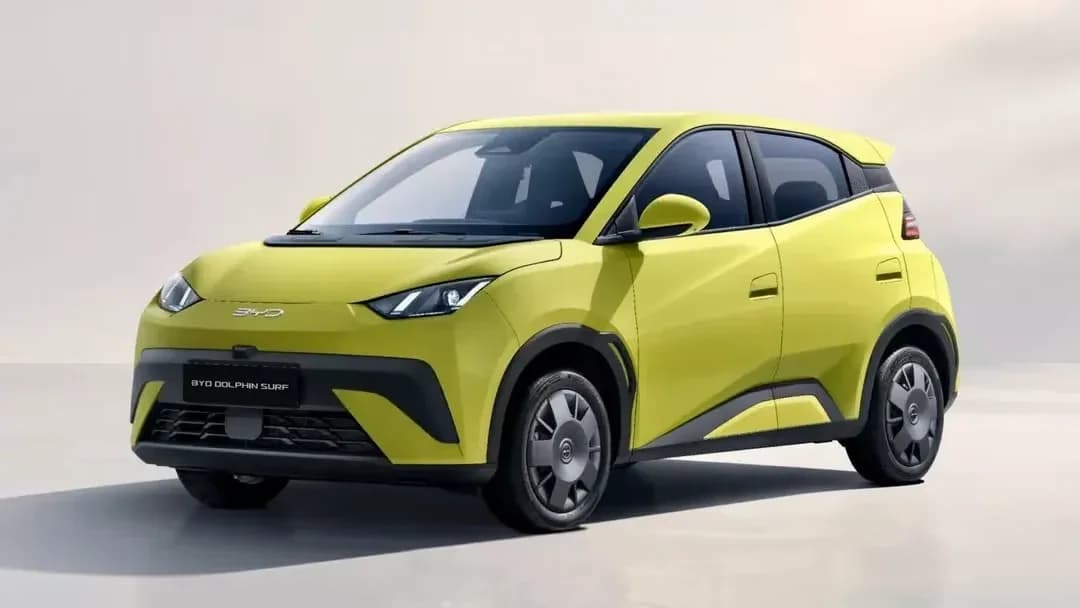
Image credit: BYD Australia
The obvious rival is the BYD Atto 1. The Essential grade starts at $23,990 before on-roads, so it is $2,500 cheaper than the entry EX2, but it is a four-seat car with a smaller boot and only 220km of range. The BYD Atto 1 Premium at $27,990 is closer in on paper with 310km of range, and it undercuts the EX2 Inspire by $3,000. Where the EX2 wins is the five-seat cabin, the longer 345km option and the bigger boot with a frunk. Where the Atto 1 wins is that it already has a 5-star ANCAP rating.
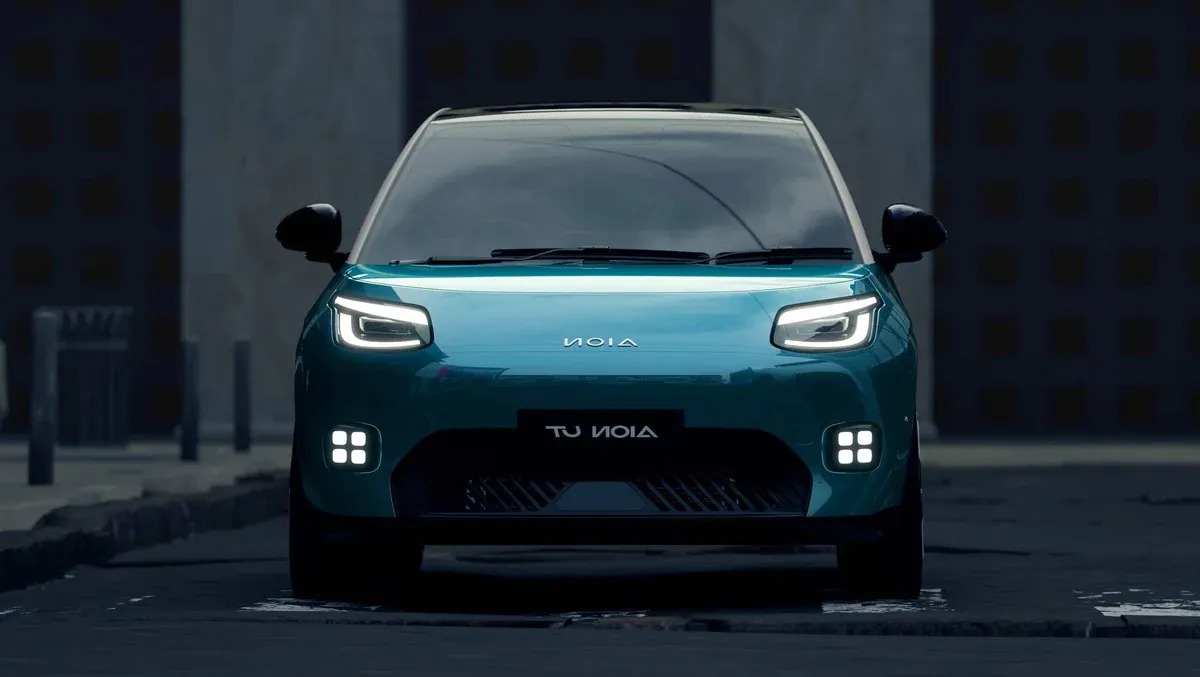
Image credit: GAC Australia
Step up a rung and the fight gets more interesting. The GAC Aion UT Premium is $31,990 before on-roads (or $32,990 driveaway on launch pricing), and for the extra $1,000 over the EX2 Inspire you get a 60kWh battery, 430km WLTP range, a 150kW motor and 87kW DC charging. The Aion UT is objectively the better long-distance car. The EX2 counters with a lower price point on the entry grade, RWD balance, a longer warranty, and a cabin tech load-out that reads more premium.
Fresh entrants matter here too. The new Leapmotor B05 at $35,990 driveaway is a bigger and much more powerful EV with 174kW DC charging, but it opens well above the EX2. If you are shopping under $30,000 for a real five-seater, the EX2 Complete is now the pointy end of that segment.
Warranty and Servicing
Geely covers the EX2 with a seven-year, unlimited-kilometre vehicle warranty and an eight-year, unlimited-kilometre high-voltage battery warranty. Capped-price servicing details for the local market are due at the customer handover kick-off and are expected to run at long intervals typical of EVs (24 months or 30,000km, whichever comes first). That warranty puts the EX2 ahead of Toyota (5yr/unlimited-km) and Hyundai (5yr/unlimited-km), level with MG (7yr conditional) and behind only Kia (7yr) and Chery (7yr) on the mass-market shelf.
The CarSorted angle: how it stacks on our data
Cross-shopping this segment on CarSorted, the numbers get interesting fast. The entry BYD Atto 1 Essential is $23,990 with 65kW and 220km of range. The BYD Atto 1 Premium is $27,990 with 115kW and 310km. The GAC Aion UT Premium is $31,990 with 150kW and 430km. The Geely EX5 Complete is $41,990 with 160kW and 430km. Drop the EX2 into that ladder and the value logic is clear: for anyone whose real world driving is under 200km per day and who charges at home, the Complete at $26,490 undercuts almost every meaningful competitor on price while beating them all on cabin space per dollar. The Inspire at $30,990 gets you inside a dollar of the GAC Aion UT and delivers rear-drive dynamics that no other car in the bracket offers.
If you run the running-cost maths against a Toyota Yaris Hybrid at $29,990 before on-roads with a real-world 3.5L/100km, that car costs about $1,050 in fuel for 15,000km at $2.00 per litre. The EX2 Inspire on 15,000km of home-charged driving at 25c/kWh works out closer to $525 in electricity over the same distance. That is a $525 per year gap, not the massive fuel savings people quote for EVs against turbo utes, but the Yaris is already efficient. The bigger story is the EX2 costs $1,000 more up front, is silent, has more torque than any small hybrid, and can be charged from a solar surplus for effectively zero running cost.
See the full segment side by side on our Cheapest Electric Cars in Australia 2026 ranking, or filter by price and range in the CarSorted directory.
What This Means for Buyers
If you have been waiting for an EV under $30,000 that is not a tiny four-seat runabout, the EX2 Complete is now the answer. It gives you five seats, 252km of usable range, a 14.6-inch screen, wireless CarPlay and a seven-year warranty for less money than most petrol light SUVs. The catch is the DC charging speed, so if your daily drive is under 100km each way and you have a home wallbox, the Complete is genuine value. If you drive further, or if you occasionally do 500km highway runs, spend the extra $4,500 on the Inspire for the bigger battery and the higher DC ceiling. That still leaves you $1,000 under the equivalent GAC Aion UT and about $15,000 under a mid-spec Geely EX5.
Novated leasing buyers should note that the EX2 sits well under the FBT-exempt luxury car tax threshold for fuel-efficient vehicles ($91,661 in FY2026-27), so an eligible salary sacrifice arrangement wipes tens of thousands off the effective cost. On a $30,990 Inspire that can bring the true out-of-pocket to around $18,000 to $22,000 depending on your marginal tax rate and lease term. That is where the EX2 stops being a curiosity and starts being one of the cheapest ways to own a new car in this country.
The one thing to hold your fire for is the ANCAP result. Every other car we would recommend at this price point already has a rating. If safety weighting is high for you (a first family car, a P-plater's daily), it is worth waiting a few months for the ANCAP number before signing.
Cross-shop the EX2 in our new car directory or read through the cheapest EVs guide for the full ladder from the Atto 1 up.
Disclaimer: Pricing and specifications are sourced from Geely Australia and are subject to change without notice. Prices exclude on-road costs unless stated. Range figures are manufacturer claims measured on the WLTP cycle and real-world results will vary with driving style, load, weather and use of climate control. ANCAP status is current at time of publishing.