If you're between the Tesla Model Y RWD and the new Mazda CX-6e, the gut feel is they're straight rivals. Spec by spec, they're not. One's a $65,900 American five-seat SUV with Supercharger network access and 620km of range. The other's a $59,106 Japanese coupe-SUV built in China with 484km of range but faster public DC charging. Here's the breakdown if you're shopping right now.
Mazda's CX-6e went on sale here in May 2026 from $59,106 GT or $62,232 Azami before on-road costs. That puts it $6,794 under the Tesla Model Y Standard Range RWD ($65,900) and head-on with what's become Australia's reference family electric SUV.
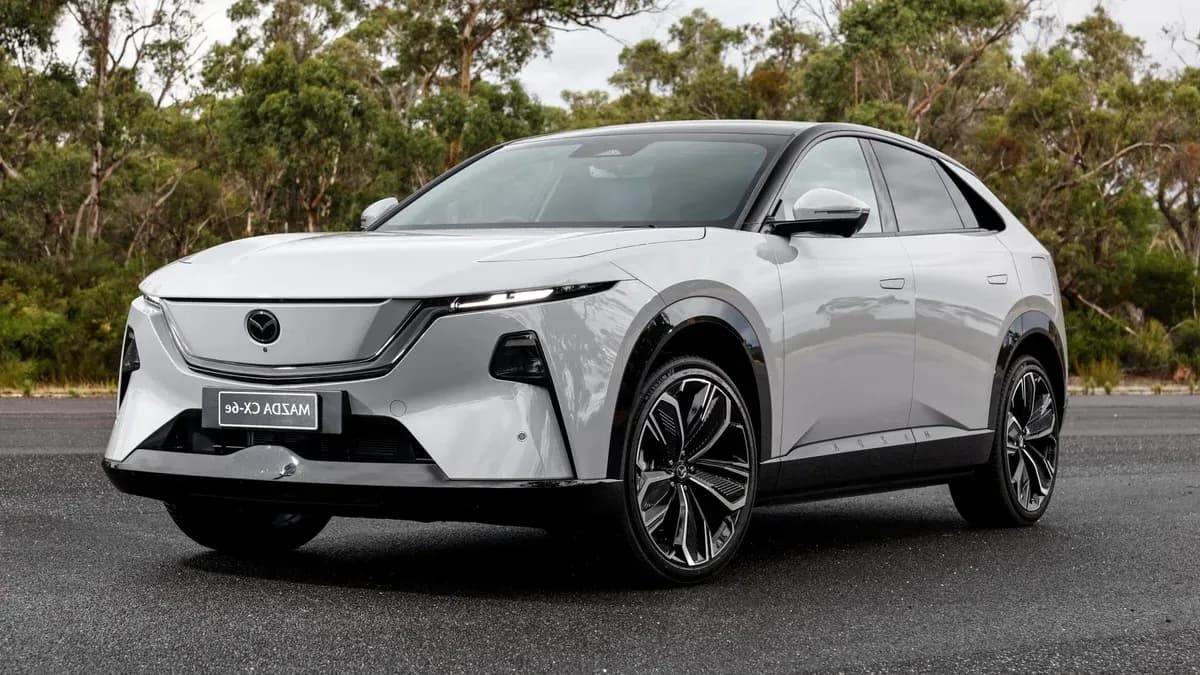
Image credit: Mazda Australia
What we know
Mazda CX-6e GT, $59,106 before on-roads. Single rear motor, 190kW and 290Nm. 78kWh Lithium Iron Phosphate (LFP) battery. 484km combined WLTP range. 194kW DC peak charging, 30 to 80% in about 15 minutes on a 350kW charger. 11kW AC. 363L boot plus an 83L frunk under the bonnet. 1,500kg braked towing. 5-year unlimited km warranty, 8-year / 160,000km battery warranty. Built at Changan Mazda New Energy in Nanjing, China.
Tesla Model Y Standard Range RWD, $65,900 before on-roads. Single rear motor, 194kW. 60kWh battery. 620km combined WLTP range. 175kW DC peak on CCS networks, up to 250kW on Tesla Supercharger V3. 11kW AC. 854L total cargo (under tonneau plus front trunk). 1,600kg braked towing. 4-year / 80,000km vehicle warranty, 8-year / 160,000km battery warranty. Built at Tesla Shanghai for the Australian market.
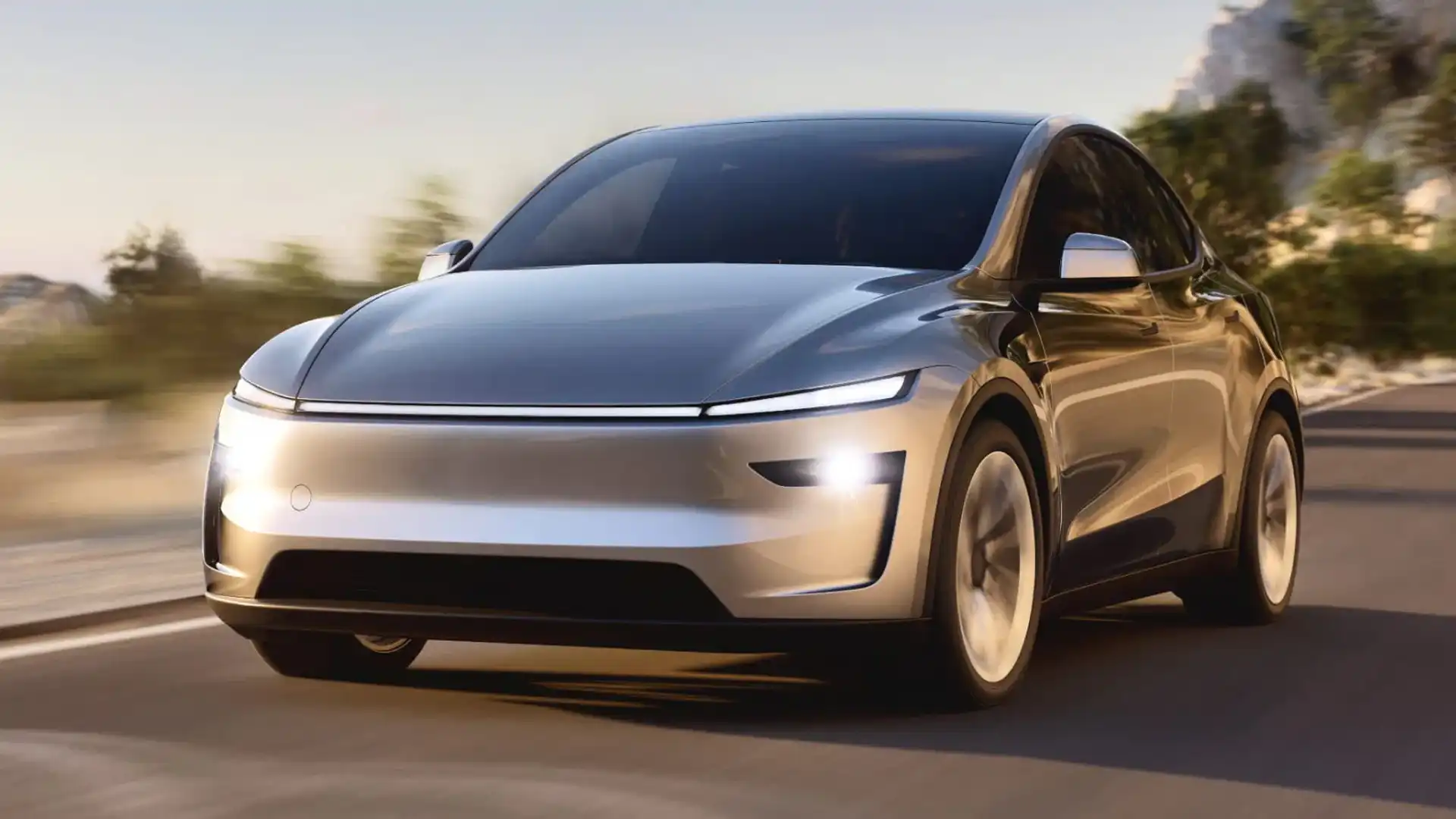
Image credit: Tesla Australia
What it means for buyers comparing this segment
The two cars look similar in the spec table but solve genuinely different problems.
Range gap, Tesla wins. The Model Y's 620km WLTP vs the CX-6e's 484km is a 136km gap. At Australian highway speeds of 110km/h, both lose roughly 15 to 20% off WLTP: the Model Y lands around 500 to 525km real-world, the CX-6e around 385 to 410km. For Sydney to Canberra (290km), both work without charging. For Sydney to Brisbane (around 900km), the CX-6e needs one extra DC stop versus the Model Y.
Charging gap, Mazda wins. The CX-6e's 194kW DC peak vs the Model Y's 175kW peak (on non-Supercharger CCS) means roughly 15 minutes for 30 to 80% on a 350kW Chargefox or Evie station, versus around 25 minutes for the Model Y at most public chargers. On Tesla Supercharger V3 (250kW), the Model Y closes that gap. The catch: Tesla Supercharger network access for the Model Y is real and reliable across the east coast; the CX-6e relies on Chargefox, Evie, BP Pulse and AmpCharge instead.
On CarSorted, the CX-6e GT is listed at $59,106, the CX-6e Azami at $62,232, and the Tesla Model Y Standard Range RWD at $65,900. Stack them side by side on our Mazda CX-6e vs Tesla Model Y comparison page.
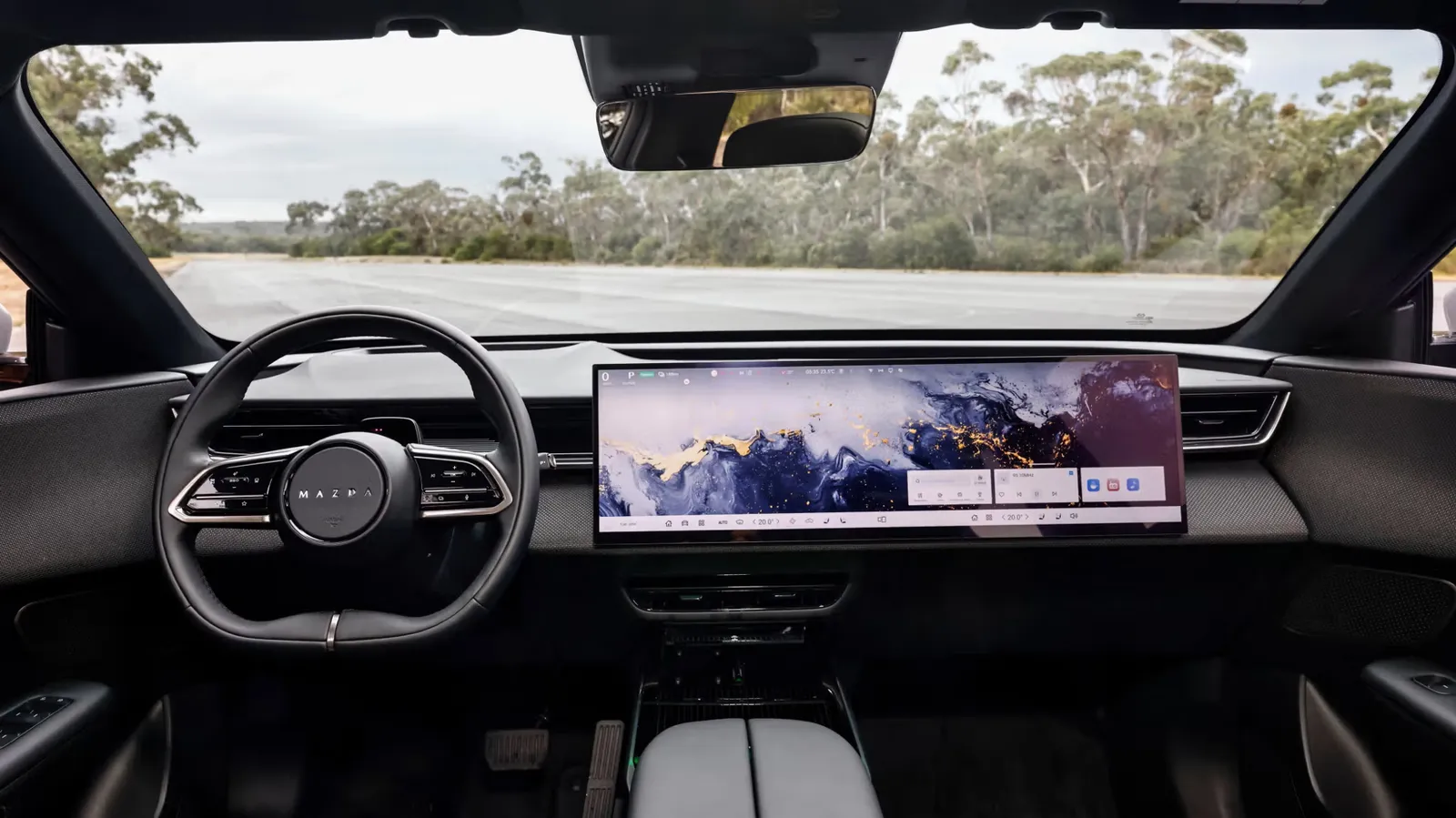
Image credit: Mazda Australia
The novated lease math, both qualify. Both cars sit under the $91,387 LCT threshold for 2025-26, so both qualify for FBT exemption when financed via novated lease through your employer. The typical saving for a 37% MTR earner is $5,000 to $9,000 a year over a 5-year lease, and the lower-priced CX-6e compounds the advantage further. Over 5 years, the Mazda lands around $20,000 to $25,000 cheaper than the Tesla on a fully-loaded novated lease for the same MTR bracket. See our FBT-exempt cars guide for the full eligibility list and the salary-packaging maths.
Build provenance, neither is a deal-breaker. The CX-6e is built at the Changan Mazda New Energy joint-venture plant in Nanjing, China. The Model Y comes from Tesla Shanghai for the Australian market. Both are mature Chinese builds under their respective brand quality programs, and both have early-life software wrinkles to watch for. Mazda's 5-year vehicle warranty is the longer of the two; Tesla's 4-year is the shorter, but Tesla's OTA software update cadence is class-leading.
What we don't know yet
- ANCAP rating for the CX-6e. Not yet tested in Australia.
- Mazda CX-6e capped-price service schedule. Mazda hasn't published it yet.
- Real-world CX-6e highway range at 110km/h sustained. Only WLTP is available.
- AWD variant timing for the CX-6e. Exists overseas, no Australian launch window confirmed.
- Mazda EV repairer network density outside Sydney and Melbourne.
Closing
If you need maximum range and Supercharger reliability, the Tesla still wins on the long road-trip use case. If you prioritise cabin refinement, faster public DC charging, and a lower entry price for a salary-packaged lease, the CX-6e undercuts the segment benchmark on a like-for-like spec for the first time. The deciding question for most buyers comes down to weekend driving patterns. If you regularly do 600km+ trips, Model Y. If most of your driving is metro plus shorter regional, the CX-6e is the smarter cash-flow play.
Get the full spec rundown on the Mazda CX-6e directory page, or stack both against the rest of the segment in our best electric cars Australia 2026 guide.
Pricing and specifications reflect Mazda Australia and Tesla Australia public information as of May 2026, before on-road costs. WLTP range figures are manufacturer-claimed under ADR 81/02. Real-world figures will vary with weather, payload, and route. The FBT-exemption maths is indicative and depends on your individual salary, marginal tax rate, and lease term. Confirm eligibility with your salary-packaging provider before signing.