The electric SUV is now the default family car for a growing number of Australians, and the choice has exploded: our database holds 83 battery-electric SUV nameplates on sale in Australia in 2026, from the $30,900 GWM ORA 5 to $200,000-plus luxury seven-seaters. That makes it the most competitive, and most confusing, corner of the new-car market. Here are the best of them by category, with real prices, range and the running-cost detail that decides whether an EV actually saves you money. For hatches and sedans too, see our broader best electric cars guide.
How we quote range and price on this page
Two things are worth knowing before you read the tables, because they are where most electric-SUV comparisons go wrong.
Every range figure below is the WLTP number for the exact variant we name and link to, not a "up to" headline for the model. It matters more than it sounds: a Kia EV3 Air Standard Range does 436km and an Air Long Range does 604km, and quoting 604 beside the $47,600 entry price describes a car nobody can buy. Where a maker publishes no figure we write "Not published" rather than deriving one. Where a carmaker quotes a CLTC or NEDC number instead of WLTP, we say so, because those cycles are materially more optimistic and are not interchangeable with WLTP.
Every price is RRP before on-road costs, unless we have written "drive-away" next to it. A few brands publish only a drive-away price, and where that is the case we quote the drive-away figure and label it, rather than presenting it as though it were an RRP.
Best electric SUVs at a glance
| Model (variant) | From (RRP) | Range (WLTP) | Seats | Best for |
|---|---|---|---|---|
| GWM ORA 5 Lux | $30,900 est. RRPas at 14 Oct 2026 | 435km WLTP | 5 | Cheapest electric SUV |
| BYD Atto 2 Dynamic | $31,990 RRPas at 4 Oct 2026 | 345km WLTP | 5 | Cheapest BYD SUV |
| Geely EX5 Complete | $41,990 RRPas at 19 Sep 2026 | 475km WLTP | 5 | Best equipment per dollar |
| Kia EV3 Air Standard Range | $47,600 RRPas at 6 Sep 2026 | 436km WLTP | 5 | Best value family SUV |
| Mazda CX-6e GT | $53,990 RRPas at 8 Oct 2026 | 484km WLTP | 5 | Best-riding mid-sizer |
| BYD Sealion 7 Premium | $54,990 RRPas at 14 Oct 2026 | 482km WLTP | 5 | Best Chinese mid-size |
| Renault Scenic E-Tech Techno Long Range | $59,990 RRPas at 24 Jun 2026 | 625km WLTP | 5 | Most range under $60k |
| Hyundai ELEXIO Elite | $61,990 RRPas at 6 Sep 2026 | 546km WLTP | 5 | Biggest-battery Hyundai under $60k |
| Tesla Model Y RWD | $58,900 RRPas at 16 Sep 2026 | 466km WLTP | 5 | Best all-rounder |
| Polestar 4 Long Range Single Motor | $78,500 RRPas at 24 Jun 2026 | 620km WLTP | 5 | Best long-distance pick |
| Kia EV9 Air RWD | $97,000 RRPas at 6 Sep 2026 | 443km WLTP | 7 | Best seven-seater |
| BMW iX3 50 xDrive | $109,900 RRPas at 4 Jul 2026 | 805km WLTP | 5 | Longest range on sale |
| Polestar 3 Rear Motor | $116,700 RRPas at 1 Jul 2026 | 603km WLTP | 5 | Best premium SUV |
Best all-rounder: Tesla Model Y
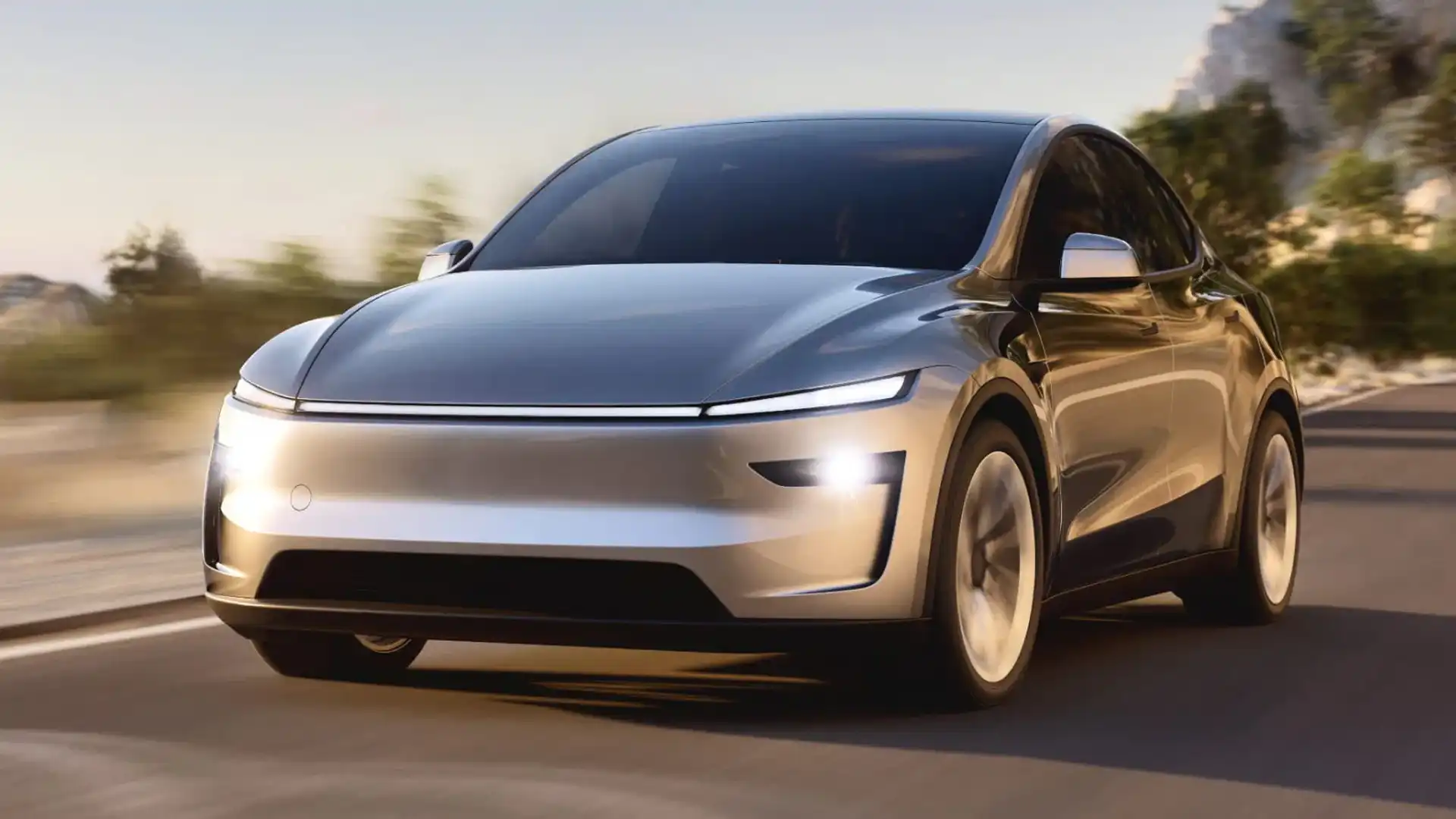
The Tesla Model Y RWD (from $58,900, 466km WLTP, after Tesla’s September reprice) is still the electric SUV to beat, and it is no longer far off the cheapest either. It combines class-leading efficiency (13.9kWh/100km), the slickest software, strong resale and exclusive access to the Supercharger network, which remains the easiest road-trip charging in the country. If you road-trip, the Long Range AWD at $68,900 is the one to buy: $10,000 more for 600km and 250kW DC charging instead of 175kW. See how the value challengers stack up in our Sealion 7 vs Model Y and Zeekr 7X vs Model Y comparisons.
Best value family SUV: Kia EV3
The Kia EV3 is the value standout of 2026: from $47,600 for the Air Standard Range, with a genuinely premium-feeling cabin, a seven-year warranty and five-star safety. Read the range figure carefully, though, because the two Air grades are very different cars on a long drive. The Air Standard Range does 436km WLTP on its 58.3kWh battery; the Air Long Range at $53,315 does 604km on 81.4kWh, and that is the one worth the extra $5,715 for most households. The Kia EV5 Air Standard Range ($56,770, 400km) is the slightly larger alternative if you need more space than range.
Cheapest electric SUVs: GWM ORA 5, BYD Atto 2 and Chery E5
Electric SUVs now start at petrol-hatch money. The GWM ORA 5 Lux is the cheapest at $30,900 RRP ($33,990 drive-away) and, unusually for the price leader, it is also the best of the budget group on range at 435km. The BYD Atto 2 Dynamic ($31,990) is the cheapest BYD SUV but gives away 90km at 345km, and the Chery E5 Ultimate ($35,150 RRP, $37,990 drive-away, 430km) is the third of the sub-$36k set. Then come the Jaecoo J5 EV Summit ($36,990, 402km) and the Leapmotor B10 Style ($37,888, 361km). The evergreen BYD Atto 3 Essential ($39,990, 345km) rounds out the affordable set, with the Suzuki e Vitara Motion ($42,700 RRP, $46,990 drive-away, 344km) the pick if you want a legacy badge at that money.
Best mid-size Chinese value: BYD Sealion 7, XPeng G6 and Zeekr
In the heart of the market, Chinese brands deliver the most metal and range per dollar. The BYD Sealion 7 Premium (from $54,990, 482km, 150kW DC) undercuts the Model Y with a bigger 82.6kWh battery, and the XPeng G6 Long Range RWD ($56,800, 570km, 800V and 280kW DC) is the value long-distance choice. The Zeekr 7X RWD ($57,900, 480km) charges harder than anything else near the price, at 450kW on an 800V architecture and 10-80% in a claimed 11 minutes. Cheaper again, the MG S6 EV Essence RWD ($49,990, 530km), the Deepal S07 RWD ($49,990, 475km), the Leapmotor C10 Design Long Range ($49,888, 510km) and the Zeekr X RWD ($49,900, 405km) all sit at $50k or under. For the full premium-Chinese picture see our best luxury Chinese EVs guide.
Best seven-seat electric SUV: Kia EV9
The Kia EV9 Air RWD (from $97,000, 443km WLTP) is the benchmark seven-seat EV: genuinely spacious across three rows, fast-charging on 800V and beautifully finished. Note the range, because it is the one figure people get wrong about this car. The $97,000 Air runs a 76.1kWh battery and does 443km; the Earth AWD at $106,500 steps up to 99.8kWh and 512km. The Hyundai IONIQ 9 Calligraphy (600km, from $119,750) and Volvo EX90 Plus Single Motor ($106,990, 479km) are the premium options, while the Mercedes-Benz EQB250 (from $84,900, 536km) remains one of the most affordable ways into a true seven-seat electric SUV. The Cadillac Vistiq Platinum ($116,000, 461km) is a six-seater, not a seven, which is easy to miss on a spec sheet.
Longest range: BMW iX3 and the 600km club
Range anxiety is fading fast, and the top of the chart moved decisively this year. The BMW iX3 50 xDrive ($109,900) is the longest-range electric SUV on Australian sale at 805km WLTP, on an 800V architecture that peaks at 400kW DC. Behind it sit the Mercedes-Benz EQS SUV 450 4MATIC (698km), the Volvo EX60 P10 (660km), the Polestar 3 Dual Motor (647km), the Mercedes-Benz GLC400 4MATIC (630km), the Audi Q6 e-tron quattro (625km), the Polestar 4 Long Range Single Motor (620km) and the Zeekr 7X Long Range RWD (615km). Any of these can do Sydney to Canberra and back on a single charge.
The bargain of the group sits a long way below all of them. The Renault Scenic E-Tech Techno Long Range EV87 is a 625km car at $59,990, which is among the most range you can buy in an electric SUV at or under $60,000 and beats several cars costing twice as much. Read the grade carefully, though: the Techno EV60 below it at $55,990 is a 430km car on the smaller 60kWh battery, and the two are easy to confuse on a price list.
One correction worth making, because we published it the other way round for two months: the Hyundai ELEXIO Elite is not a 700km car. Hyundai Australia publishes 546km WLTP for the Elite at $61,990 (and 562km for the entry grade). The 700km figure that circulates for the ELEXIO is a different test cycle from a different market, and a CLTC or NEDC number cannot be read across to WLTP. At 546km on 88.1kWh it is still a lot of car for the money; it is just not the range leader we made it out to be.
Best premium electric SUV: Polestar 3, BMW iX and Porsche Macan
At the top, the Polestar 3 Rear Motor (from $116,700, 603km), BMW iX xDrive45 M Sport ($142,900, 602km) and Porsche Macan ($129,800, 529km) lead the luxury class on design, performance and cabin quality. The Genesis Electrified GV70 ($132,800, 462km) is the value-luxury pick, and the Genesis GV60 Advanced RWD ($88,300, 561km) is the cheaper way into the badge with more range. Dig deeper in our best electric luxury SUVs guide.
The ones most guides skip
A dozen electric SUVs arrived in Australia in the last eighteen months without ever making a "best of" list, and several of them are better buys than the names that did. The legacy brands first: the Toyota bZ4X FWD ($55,990) is a 591km car on Toyota's published WLTP figure, which makes it among the longest-range electric SUVs under $60,000 from a Japanese brand, and its Subaru siblings the Solterra AWD ($61,990, 566km), Trailseeker AWD ($63,990, 533km) and Uncharted AWD ($59,990, 522km) give you all-wheel drive as standard. The Nissan ARIYA Engage ($55,840, 385km) is the softest-riding of the group and the shortest-range.
From Europe, the Volkswagen ID.4 Pro ($59,990, 544km) and its Skoda Enyaq 85 Sportline ($59,990 RRP, $63,990 drive-away, 547km) and Skoda Elroq 85 Select ($54,990 RRP, $59,990 drive-away, 529km) cousins are the sensible MEB trio, the CUPRA Tavascan Endurance ($66,490, 531km) is the same mechanical package with more attitude, and the Volvo EX40 Ultra Single Motor ($69,990, 520km) is the quiet one. The MINI Countryman E Core ($64,990, 462km) is the small-premium option that actually has a boot.
From America, the Ford Mustang Mach-E Premium RWD ($80,490) is a 600km car that almost nobody in Australia has driven, and Cadillac has quietly landed a full three-model range: Optiq ($80,000, 425km), LYRIQ ($90,000, 530km) and Vistiq ($116,000, 461km). Lexus has the RZ 500e Luxury ($84,500, 460km). And at the value end, the KGM Torres EVX ($48,800 RRP, $53,690 drive-away, 462km), Jeep Avenger ($49,990, 396km), GAC Aion V Premium ($42,590, 510km) and smart #1 Pro+ ($54,900, 420km) are all on sale now. The MG IM6 Premium 75 RWD ($55,450 RRP, $60,990 drive-away, 450km) is the newest of them, and the Platinum 100 grade above it charges at 396kW on 800V.
Where our own listings and the brochure disagree
Worth being straight about this, because it affects several cars on this page. Our database stores an EV's range in more than one column, and for a number of models the model-level figure and the per-variant WLTP figure from the manufacturer's brochure are not the same number. Where that happens we have used the brochure's per-variant figure here, and you may see a different number on the car's own directory page until the columns are reconciled. The featured cars where the two disagree by more than 20km are the Hyundai ELEXIO (546 WLTP against 700 stored), Kia EV3 Air Standard Range (436 against 559), Kia EV5 Air Standard Range (400 against 511), Kia EV9 Air RWD (443 against 519), Hyundai IONIQ 5 Dynamiq RWD (570 against 433), BMW iX1 xDrive30 (417 against 578), Zeekr X RWD (405 against 540), Toyota bZ4X FWD (591 against 516), Mercedes-Benz EQB250 (536 against 465) and Renault Scenic E-Tech Techno EV60 (430 against 588). We would rather tell you the numbers disagree than quietly pick whichever one flatters the car.
How to choose an electric SUV
Five things decide the right electric SUV for you. Range: plan on about 85% of the WLTP claim in real driving; anything over 450km suits most households, and 550km-plus all but eliminates road-trip stops. Home charging: this is what makes an EV cheap, off-peak home charging runs around $4-6 per 100km versus $15-20 for petrol, so if you can fit a wallbox the savings are large; if you cannot charge at home, factor in public charging costs. Charging speed: 800-volt cars (BMW iX3, Kia EV6/EV9, Hyundai IONIQ 5/IONIQ 9, Audi Q6 e-tron, XPeng, Zeekr, MG IM) add range fastest on a road trip; note that the Sealion 7 is a 400-volt car peaking at 150kW, not the 800-volt machine it is often described as. Tax: EVs under roughly $91,400 keep the FBT exemption for novated leases, a major saving plug-in hybrids no longer get, while dearer models attract Luxury Car Tax. Resale and backing: Tesla, Kia and Hyundai hold value strongly and have wide service networks; newer Chinese brands offer more up front but less certain resale, so weigh that against the savings if you change cars often.
The quick verdict
For the best all-round electric SUV, buy the Tesla Model Y. For the best value, the Kia EV3, and pay the extra for the Long Range. For the lowest price, the GWM ORA 5. For seven seats, the Kia EV9. For maximum range, the BMW iX3, or the Renault Scenic E-Tech Techno Long Range if $60,000 is the ceiling. For luxury, the Polestar 3. Whatever your budget, the key to actually saving money is charging at home. For a live, filterable ranking, use our interactive best electric SUVs tool, filter by range, price, seats and body style in our car directory, or add any of these to compare side by side.
Prices are RRP before on-road costs unless labelled drive-away, and range figures are the manufacturer's published WLTP number for the exact variant linked. All figures checked against the live CarSorted database on 15 August 2026.