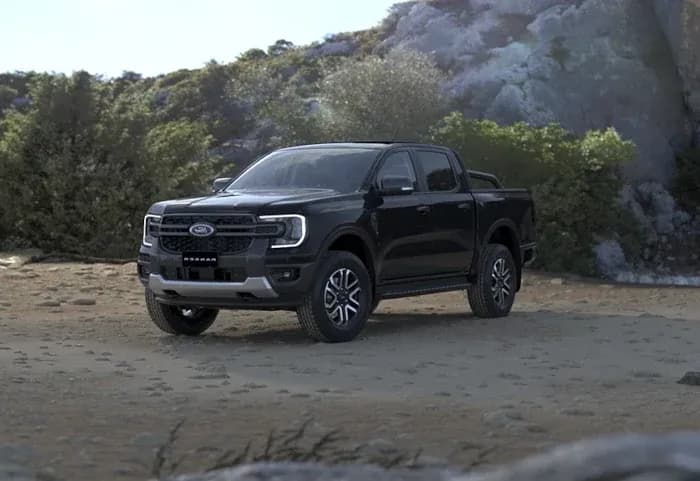
Image credit: Ford Australia.
CarSorted Verdict
The Ford Ranger is still the best overall ute in Australia for 2026 thanks to its refined cabin, 600 Nm V6, the best transmission in the segment and now a PHEV variant. The Toyota HiLux wins on long-term reliability and the strongest resale reputation in the segment. The Isuzu D-Max is the value pick. For most metro-with-occasional-towing buyers, the BYD Shark 6 PHEV is genuinely worth a look at $57,900. And for serious caravan towing (3,500 kg+) the Toyota Tundra is the only mainstream choice without stepping up to a RAM 1500 or F-150.
Australians buy more utes per capita than any country on earth. The Ford Ranger and Toyota HiLux trade the top-selling vehicle title in Australia almost every month, and the segment now spans everything from $33,990 work-spec single-cab diesels to $177,950 American full-size trucks. Below is our 2026 ranking, with deep dives into every major ute on sale, full comparison tables, resale projections, towing tips and what is coming in 2026 and 2027.
The 2026 Ranking at a Glance
| Rank | Ute | Best for | From RRP |
|---|---|---|---|
| #1 | Ford Ranger | Best overall | $37,130 |
| #2 | Toyota HiLux | Best resale | $33,990 |
| #3 | Isuzu D-Max | Best value | $41,243 |
| #4 | Mitsubishi Triton | Best warranty (10 yr) | $43,690 |
| #5 | BYD Shark 6 Premium | Best PHEV ute | $57,900 |
| #6 | GWM Cannon | Best budget loaded | $39,490 |
| #7 | VW Amarok | Best European | $55,990 |
| #8 | Nissan Navara | Comfortable daily | $47,990 |
| #9 | Mazda BT-50 | D-Max sister | $36,400 |
| #10 | Toyota Tundra | Best heavy towing | $155,990 |
The 2026 ute market explained
Five years ago, the Australian ute market was a five-horse race between Ranger, HiLux, D-Max, Triton and Navara. In 2026 there are 20+ utes on sale, four genuinely different drivetrains (diesel, petrol, PHEV, electric) and four distinct price-and-purpose brackets. Knowing which bracket fits your use case is more important than which model you pick within it.
- Sub-$40k mainstream: HiLux WorkMate, Ranger XL, D-Max SX, BT-50 XS, GWM Cannon, LDV T60 MAX, Foton Tunland.
- $40-60k mid-range: Ranger XLT/Sport, HiLux SR/SR5, Triton GLX/GLS, D-Max SX Crew Cab, Cannon Vanta, Navara SL/ST, Amarok Core, KGM Musso, BYD Shark 6 PHEV.
- $60-100k flagship: Ranger Wildtrak/Tremor/Raptor/Super Duty, HiLux SR5+/Rogue/Rugged X, D-Max X-Terrain/BLADE, Triton GSR, Triton Raider PREMCAR, Amarok Style/Aventura, Cannon Alpha PHEV, BT-50 GT.
- $100k+ American heavy: Toyota Tundra Limited/Platinum, Ford F-150 XLT/Lariat, RAM 1500 Laramie/Limited, RAM 2500 Laramie.
On top of that you have the body-style splits (single cab, extra cab, dual cab, cab-chassis, pickup) and the special editions every brand now does (Raptor, GR Sport, X-Terrain, BLADE, Raider PREMCAR, Wildtrak, Tremor and on). The deep-dive below covers each major nameplate, then the special editions, then PHEV/EV options, then comparison tables, then what is coming next.
Pick two
Two utes, side by side
Before the deep dives, tap any two of these and see where they actually differ.
| Spec | Ford Ranger Wildtrak | Toyota HiLux SR5 |
|---|---|---|
| Price from | $75,090RRP, before on-roads | $63,990RRP, before on-roads |
| Braked towing | 3,500 kg | 3,500 kg |
| Payload | 950 kg | No data |
| Fuel use | 8.4 L/100km | 7.1 L/100km |
| ANCAP | 5 starstested 2022 | 5 starstested 2025 |
| Warranty | 5 yrunlimited km | 5 yrunlimited km |
| Service interval | 15,000 km | 10,000 km |
Payload and braked towing are the manufacturer's published maximums, and the two cannot always be used at the same time. Figures come from our car database, which is built from Australian manufacturer documents. A blank field reads “No data” rather than a zero or a dash.
#1 Best Overall: Ford Ranger
The Ford Ranger wins on refinement, technology, and towing capability. The 3.0L V6 turbo-diesel (Wildtrak X, Raptor and the new Stormtrak) puts down 600 Nm of torque, one of the most of any mid-size ute on Australian sale. The 10-speed auto is the best transmission in the segment by a meaningful margin: smoother shifts, better tow management, more responsive in slow off-road work than the 6-speed Aisin in the HiLux or Triton.
The technology gap is also significant. Pro Trailer Backup Assist (turn a dial to steer the trailer, the truck steers itself) genuinely saves time at the boat ramp or caravan park. SYNC 4 infotainment is fluid and has wireless Apple CarPlay / Android Auto standard. The 360 camera system is the best in the segment for low-speed maneuvering with a load on. Pro Power Onboard (2.3 kW or 6.9 kW depending on variant) turns the ute into a portable generator at job sites.
Pricing kicks off at $37,130 RRP for the XL Single Cab Cab-Chassis 4x2, with the dual-cab pickup starting from $43,530 (XL 4x2). The popular XLT and Sport variants land between $56,690 and $71,590. The Wildtrak ($69,890-$75,090) and Raptor ($90,690) are the off-road flagships, and the new heavy-duty Ranger Super Duty range runs from $82,990 to $99,990.
Also new: the Ford Ranger PHEV is now on sale in three grades, XLT ($71,990), Sport ($75,990) and Wildtrak ($79,990), with a 207 kW combined plug-in hybrid system, 49 km of NEDC EV-only range, 6.9 kW Pro Power Onboard and the same 3,500 kg towing as the diesel. It is the first PHEV ute from a household-name legacy brand in Australia, and the obvious cross-shop against the BYD Shark 6.
#2 Best Reliability and Resale: Toyota HiLux
The Toyota HiLux reputation is not just marketing: it is backed by decades of mining, farming and construction abuse. The 2.8L turbo-diesel is simple, proven, and one of the most reliable engines you can put in a work vehicle. It also carries the strongest resale reputation of any ute sold here, though that is reputation and sales volume talking, not a number we can measure.
The HiLux is also the cheapest brand-new ute on the market. The WorkMate 4x2 Single Cab Manual at $33,990 RRP undercuts every rival on entry price, and a basic 4x4 single-cab landing under $40k. For fleet buyers, the WorkMate is the volume seller for good reason: simple, robust, easy to repair, dealer network everywhere.
The popular SR5 4x4 Double Cab starts at $63,990 (manual) or $65,990 (auto V-Active), and tow-ready dual cabs sit between $47,990 and $72,490. The off-road special editions, Rogue and Rugged X at $71,990 each, extract real value for buyers who want the badge plus chassis upgrades without going Raptor money.
Honest weaknesses: the 6-speed transmission feels antiquated next to the Ranger's 10-speed, infotainment is functional but dated compared to SYNC 4, and the cabin design is more utilitarian than the Ranger's. None of those things matter to most HiLux buyers, who are buying for the badge, the dealer network and the residual.
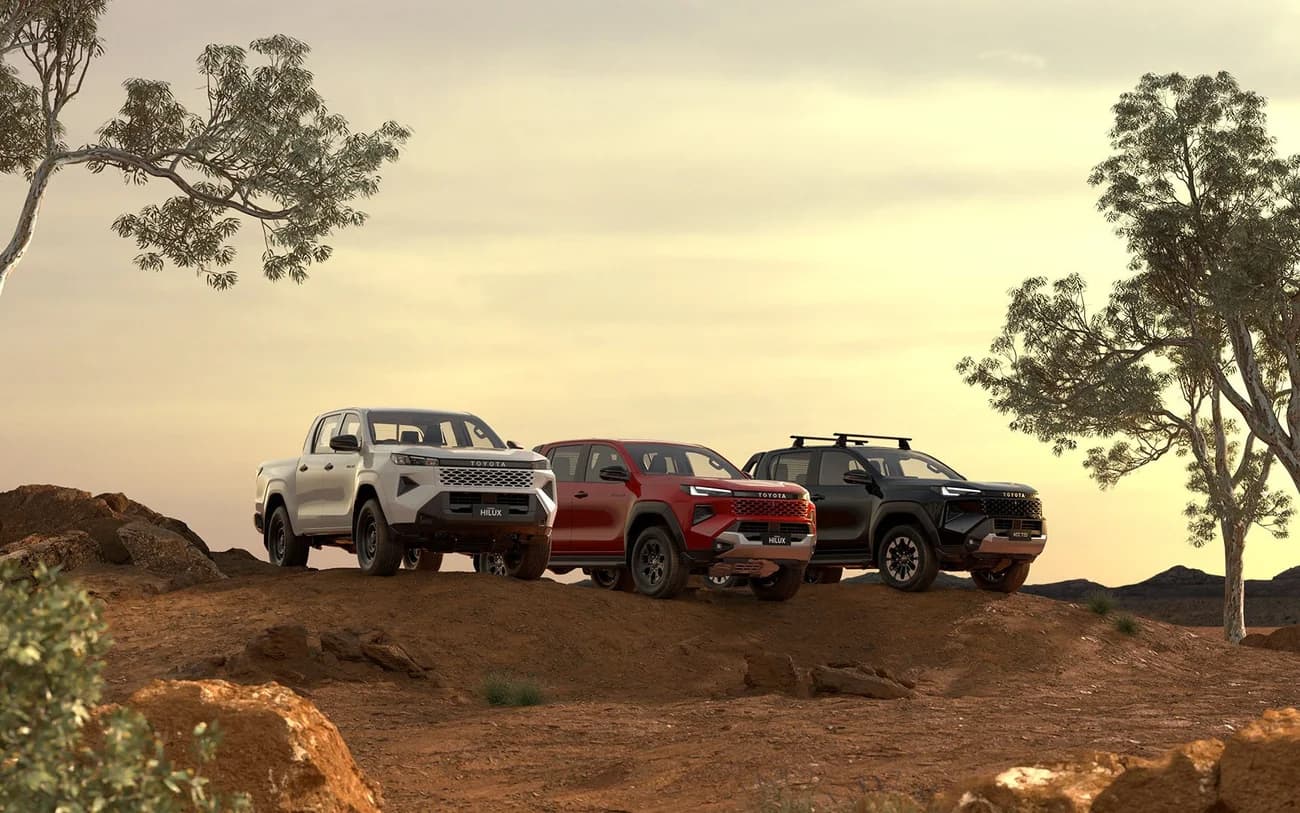
Image credit: Toyota Australia.
#3 Best Value: Isuzu D-Max
The Isuzu D-Max undercuts the Ranger and HiLux on equivalent variants by $2,000 to $5,000 while matching them on towing (3,500 kg) and safety (5-star ANCAP, 2022 rating). The 3.0L turbo-diesel is one of the most reliable engines in the segment (it shares its block design with Isuzu's commercial truck heritage) and the 6-year / 150,000 km warranty is competitive.
Pricing starts at $41,243 for the SX Single Cab Chassis 4x2, with the X-Terrain Crew Cab 4x4 flagship at $79,147. The X-Rider Crew Cab 4x4 at $65,242 is the sweet spot for most family buyers: dual cab, 4x4, leather, off-road equipment, all the modern safety gear. The BLADE off-road special edition at $87,284 adds Bilstein dampers, all-terrain tyres and a rear differential lock, positioning it above the Ranger Tremor rather than against it.
D-Max's underrated advantage is the shared-platform sister Mazda BT-50, which means dealer parts depth and a well-developed aftermarket support ecosystem. If you tour with serious gear (canopies, drawer systems, dual battery setups) the aftermarket compatibility is excellent.
#4 Best Warranty: Mitsubishi Triton (10-year cover)
The Mitsubishi Triton trumps every rival on warranty: 10 years / 200,000 km with capped-price servicing, conditional on annual dealer service. For trade buyers who put serious kilometres on the odometer, that warranty is genuinely valuable.
The current-generation Triton (released 2024) was a complete redesign with a much more refined cabin than the previous model, modern infotainment with wireless CarPlay, and a smoother 2.4L bi-turbo diesel. The 4x4 variants tow 3,500 kg braked, payload sits around 1,070 kg on the dual cab, and the 75-litre fuel tank delivers genuine 1,000 km+ touring range.
Pricing kicks off at $43,690 for the GLX 4x2 dual cab and runs to $63,140 for the GSR 4x4. The Triton Raider PREMCAR ($74,990) takes the GSR base and adds Premcar-developed suspension, all-terrain Bridgestones, an underbody bash plate and a unique exterior look. The Raider competes directly with the Ranger Tremor and D-Max BLADE at a sharper price point. We have the full Triton Raider Premcar spec in the directory.
#5 Best PHEV Ute: BYD Shark 6
The BYD Shark 6 Premium at $57,900 RRP is the first plug-in hybrid ute that genuinely makes sense in Australia. Around 100 km of pure-electric range covers most metro days without burning a drop of diesel, then the 1.5L petrol generator runs the show on longer trips and towing. Combined output is 321 kW through dual electric motors and AWD, so it is genuinely fast: 0-100 km/h in 5.7 seconds, quicker than a Ranger Raptor.
The catch on the Premium trim: it tows 2,500 kg braked (lower than the diesel pack at 3,500 kg). The new Shark 6 Performance at $62,900 lifts that to 3,500 kg with Crawl Mode added for off-road work, and the Cab-Chassis variant at $55,900 opens it up to fleet buyers who fit their own tray.
For tradies running mostly metro work with occasional weekend towing, the running-cost saving on EV-only days (roughly 25% of diesel) makes the higher purchase price wash out within 4-5 years. The vehicle-to-load (V2L) output also turns the ute into a portable generator for tools, lighting and camping appliances. The Apple CarPlay / Android Auto launched late via OTA but is now standard. Read our full BYD Shark 6 review.
#6 Best Budget Loaded: GWM Cannon
From $39,490 RRP for a loaded Premium dual-cab 4x4, the GWM Cannon packs features that cost $50k+ in a Ranger: leather seats, 360-degree camera, adaptive cruise, wireless smartphone mirroring, dual-zone climate, electric driver seat. The 2.0L turbo-diesel tows 3,500 kg, and the 7-year warranty is among the best in the segment.
The catch: resale and long-term reliability are unproven in Australia, and the brand is still building service-network depth in regional areas. If you keep cars for under 5 years and live in a metro area, the Cannon is hard to argue with on value-per-dollar. For longer ownership or remote use, lean toward HiLux or D-Max where the badge resale advantage matters more.
The Cannon Alpha Lux PHEV at $59,990 (Ultra PHEV $66,990) is GWM's answer to the BYD Shark 6, with a 300 kW petrol-electric drivetrain and 115 km claimed EV range. If you would rather have the bigger Alpha body on diesel, the Alpha Lux Diesel starts at $52,990. It uses an integrated frame-mounted battery design that maintains 3,500 kg braked towing in PHEV trim, which the BYD Shark 6 Premium doesn't quite match.
#7 Best European: Volkswagen Amarok
The current VW Amarok shares its platform with the Ranger (built in the same Ford South African plant) but Volkswagen tunes the chassis and styles the body its own way. Volkswagen fits its own suspension tune and its own interior, so the two are further apart to sit in than the shared platform suggests.
Pricing starts at $55,990 for the Core TDI405. The Style ($70,990 with the TDI600 V6, $71,990 with the TDI500) and Aventura ($81,990) trims layer on European luxury content. The Amarok is the natural choice if you want a ute that doesn't drive like a ute on the commute, but for absolute work-spec value, the Ranger you'd get for the same money is better-equipped. The W580 series Amarok with Walkinshaw-engineered upgrades is the off-road flagship.
#8 Comfortable Daily: Nissan Navara
The Nissan Navara has the most comfortable rear seat in the dual-cab segment thanks to its coil-spring rear suspension (most rivals use leaf springs). Touring families notice the difference immediately. The 4x2 grades have now been dropped from the local line-up, so pricing starts at $47,990 for the SL 4x4 and runs to $63,990 for the PRO-4X 4x4. Above that sits the PRO-4X Warrior, the off-road flagship with PREMCAR-tuned suspension, all-terrain tyres and a lifted ride height (the original PREMCAR ute collaboration before Mitsubishi's Raider).
The catch: the Navara sells in much smaller numbers than the HiLux and Ranger, which usually tells against a car at resale time, and the 2.3L bi-turbo diesel is older tech than the latest competitors. For a family that uses the ute primarily as a daily commuter with occasional towing, the Navara comfort advantage is likely to matter more.
#9 D-Max Sister: Mazda BT-50
The Mazda BT-50 shares its platform, drivetrain, towing capacity and most of its mechanical parts with the Isuzu D-Max. The differences are cabin styling, exterior styling, dealer network and a slightly softer suspension calibration. Pricing tracks the D-Max closely, from $36,400 for the XS Single Cab 4x2 up to $64,900 for the GT Dual Cab 4x4, but the BT-50 leans into Mazda's premium aesthetic with better dashboard materials and more refined trim.
For buyers who want D-Max underpinnings with a Mazda showroom experience, the BT-50 is the choice. For pure value, the D-Max usually undercuts equivalent variants. The GT and SP trims are particularly well-equipped against equivalent D-Max X-Rider / X-Terrain variants.
#10 Best Heavy Towing: Toyota Tundra
If you tow more than 3,500 kg, the Toyota Tundra Limited at $155,990 RRP (or Platinum at $172,990) is among the leading full-size American utes officially sold in Australia. The 3.4L twin-turbo V6 i-FORCE MAX produces 326 kW / 790 Nm and is rated to 4,500 kg braked towing, comfortably more than any HiLux or Ranger and on par with the RAM 1500.
Toyota Australia converts the Tundra to right-hand drive via the Walkinshaw Automotive Group in Melbourne. The conversion is factory-quality (Toyota AU stands behind it under full Toyota warranty) but the resulting vehicle is large enough to challenge small-town carparks and wide enough to limit access to many gated estates and Sydney suburban garages.
For caravan towing in the 3,000-4,500 kg range and serious payload requirements, the Tundra has a genuine reason to exist. For most buyers it is overkill, and the running costs match the size (11.0 L/100 km combined). If you need even more towing capacity look at the RAM 1500 (4,500 kg) or RAM 2500 (8,000 kg).
The American heavies: F-150, RAM 1500, RAM 2500
Three full-size American utes sit above the Tundra in size and capability. The Ford F-150 arrived officially in Australia in 2024 via RMA Automotive's Melbourne conversion. The 3.5L twin-turbo V6 makes 298 kW and tows 4,500 kg braked. Pricing starts at $114,950 for the XLT and $143,950 for the LARIAT.
The RAM 1500 is the most established American ute in Australia, converted by AGS in Melbourne with Stellantis backing. The 5.7L HEMI V8 is the soundtrack drawcard and the high-output Hurricane straight-six adds modern efficiency. Towing 4,500 kg, pricing runs from $119,950 for the Big Horn V8 to $137,850 for the Laramie V8 and $159,950 for the Limited Hurricane High Output.
The RAM 2500 sits above the 1500 as one of two on-sale 8,000 kg-tow capable factory utes, the other being the RAM 3500. Pricing starts at $172,950 for the Laramie Cummins, and the 3500 Laramie Cummins High Output is $177,950 with a 1,652 kg payload. If you tow a 25-foot caravan and want one truck that does everything, this is the answer. See our Best Towing Vehicles guide for the deep comparison.
The value-Chinese pack: KGM Musso, LDV T60, Foton Tunland
Three brands compete at the absolute bottom of the price-to-feature spectrum, all offering credible 3,500 kg-tow capable dual cabs from under $45,000.
The KGM Musso (formerly Ssangyong) starts at $40,500 for the ELX and offers a full 3,500 kg braked tow across the diesel range. The long-tub Advance XLV at $46,700 and Ultimate XLV at $51,700 add the extended tray, more equipment and an 880 kg payload for less than a base Ranger Sport. KGM's 7-year warranty matches GWM and MG. Note the Musso EV ($60,000 for the 2WD) tows only 1,800 kg, so it is not a like-for-like swap.
The LDV T60 MAX is SAIC's value ute, popular with fleet and ABN buyers. Pricing kicks off at $36,990 for the MAX Pro Auto, making it one of the cheapest 3,500 kg-tow dual cabs on sale, with the MAX Plus at $42,990 and the Mega Tub Plus at $43,990. The eT60 electric variant ($99,990) is one of the only all-electric utes on Australian sale, but with around 330 km of WLTP range and just 1,000 kg of braked towing it is a metro fleet vehicle, not a work ute.
The Foton Tunland is the absolute budget pick: $39,990 for the V7-C 4x2 dual cab, $42,990 in 4x4, with a 7-year warranty and a full 3,500 kg braked tow. Payload is the standout at 1,115 kg on the 4x2, higher than most of the mainstream pack. The interior tech is dated and resale value will be the weakest of any ute on sale, but on landed cost per kilogram of capability it is the cheapest game in town.
The rest of the field: Tasman, LandCruiser 70, Terron 9, Gladiator, Quartermaster and Silverado
Seven more nameplates are on sale in Australia right now, and between them they cover the two ends of the market the top ten skips: the brand-new mainstream challenger and the heavy, expensive and deliberately odd.
The Kia Tasman is the significant one. It is Kia's first ute anywhere in the world, it launched into the segment's most contested price band, and at $42,990 for the S 4x2 it lines up against the Ranger XL while matching it on the number most buyers check first: 3,500 kg braked. Payload is 1,124 kg, fuel is 7.4 L/100km, and Kia's 7-year warranty is longer than Ford's and Toyota's. Six variants run to $74,990. It is too new for resale data, which is the only real unknown.
The Toyota LandCruiser 70 Series is the one people mean when they say a ute should be simple. The Single Cab Chassis Workmate starts at $76,800 and carries 1,365 kg, with 3,500 kg of braked towing and 9.6 L/100km from the 2.8L four. That is a lot, though not the most here: the Ranger Super Duty cab-chassis grades go past 1,800 kg. Fourteen variants run to $99,990 for the Troop Carrier GXL. Nobody buys a 70 Series for the cabin. They buy it because it still has a ladder frame, coil-and-leaf suspension and a dealer network in places with no bitumen.
The LDV Terron 9 is SAIC's bigger, newer ute above the T60, from $50,990 for the Origin with 3,500 kg braked, a 1,100 kg payload and 7.9 L/100km. It is the pick if the T60 feels too old but a Ranger feels too dear.
Then the specialists. The Jeep Gladiator Rubicon ($84,990) is the only ute here with removable doors and a fold-down windscreen, and it pays for that with the segment's worst numbers: 2,721 kg braked, 693 kg payload and 12.4 L/100km. It is bought for what it does at 5 km/h, not 100. The Ineos Quartermaster ($105,000) is the Grenadier with a tray, and the same logic applies: 3,500 kg braked but only 760 kg of payload, on a vehicle engineered around a beam-axle chassis rather than a spec sheet.
Finally the Chevrolet Silverado, GM's answer to the RAM. The 1500 LTZ Premium is $134,500 and the 2500 HD LTZ Premium is $168,000, both rated at 4,500 kg braked. Like the RAM and the F-150 they are remanufactured to right-hand drive locally, and like them the payload is modest for the size, 748 kg and 733 kg respectively, because so much of the GVM is used up by the truck itself.
Special editions worth knowing about
Every major ute brand now does an off-road-focused special edition. Quick guide to what's on sale or arriving in 2026:
- Ford Ranger Tremor (~$80k), Bilstein dampers, all-terrain tyres, locking rear diff, raised ride height, unique exterior. The mid-tier off-road Ranger.
- Ford Ranger Wildtrak X (~$83k), Wildtrak luxury with Tremor-style off-road kit. The flagship all-rounder.
- Ford Ranger Raptor ($90,690), Twin-turbo petrol V6 (292 kW), Fox Live Valve dampers, wider track. More desert-runner than ute.
- Ford Ranger Super Duty ($82,990-$99,990), heavy-duty axles, upgraded GVM and GCM, bigger tank. The new heavy-tow and fleet Ranger, not an off-road trim.
- Toyota HiLux Rogue / Rugged X ($71,990 each), Sport bar, alloy bash plate, all-terrain rubber. The conservative HiLux off-road choice.
- Isuzu D-Max BLADE ($87,284), Bilstein dampers, all-terrain tyres, rear diff lock. Now the most expensive D-Max on sale.
- Mitsubishi Triton Raider PREMCAR ($74,990), Premcar suspension, all-terrain Bridgestones, 25 mm lift, bash plate.
- Nissan Navara PRO-4X Warrior, PREMCAR-tuned suspension, all-terrain rubber, lifted ride height, sitting above the $63,990 PRO-4X. The original PREMCAR collaboration.
- VW Amarok W580 series (~$85k+), Walkinshaw-engineered Amarok with off-road and styling upgrades.
- GWM Cannon XSR, Sport-styled Cannon, less off-road focused than the Tremor pack but cheaper.
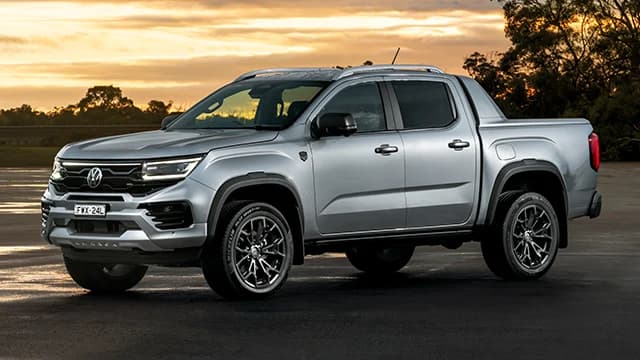
Volkswagen Amarok W580. Image credit: Walkinshaw Automotive Group.
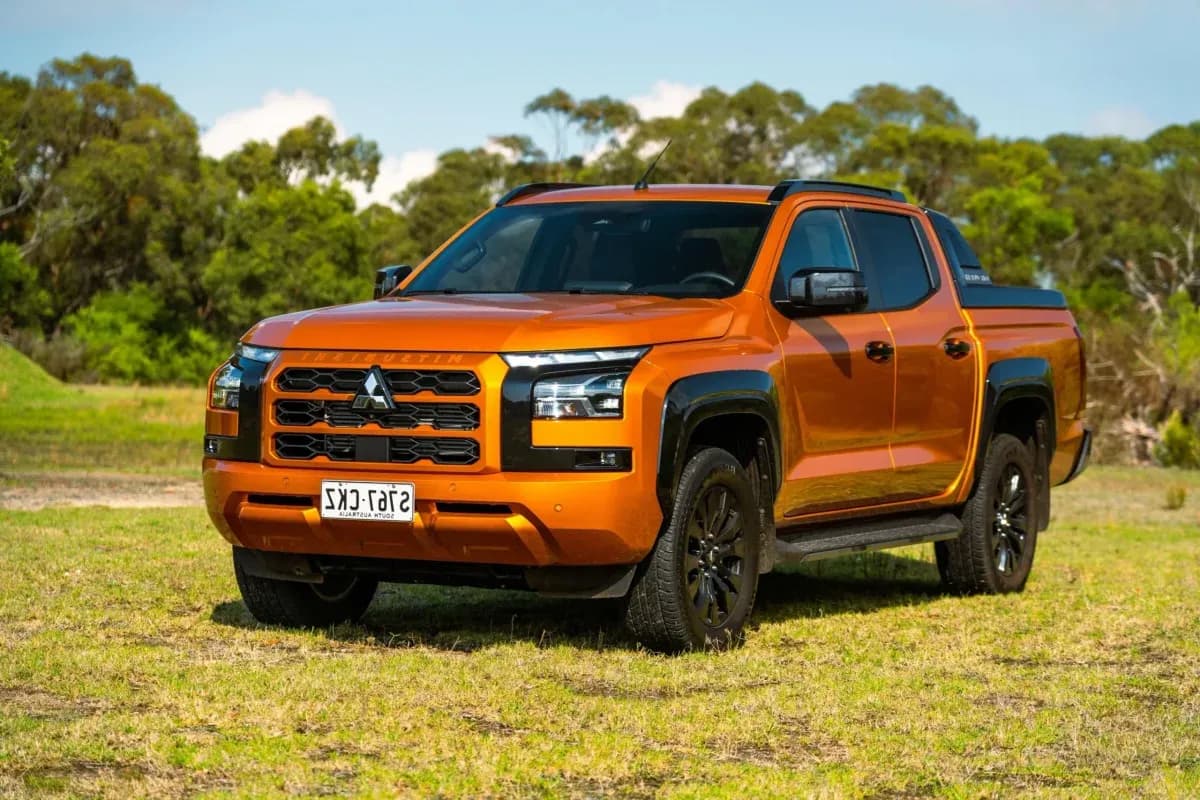
Image credit: Mitsubishi Motors Australia.
Full 2026 Ute Comparison
| Ute | From RRP | Towing | Payload | Fuel L/100km |
|---|---|---|---|---|
| Toyota HiLux WorkMate | $33,990 | 2,900 kg | 1,260 kg | 7.2-7.6 |
| Mazda BT-50 XS | $36,400 | 3,500 kg | 1,357 kg | 6.9 |
| LDV T60 MAX Pro | $36,990 | 3,500 kg | 1,040 kg | 8.1-8.8 |
| Ford Ranger XL | $37,130 | 3,500 kg | 1,447 kg | 7.2-8.4 |
| Kia Tasman S 4x2 | $42,990 | 3,500 kg | 1,124 kg | 7.4 |
| GWM Cannon Premium | $39,490 | 3,500 kg | 995 kg | 7.9-8.4 |
| Foton Tunland V7-C | $39,990 | 3,500 kg | 1,115 kg | 8.0 |
| KGM Musso ELX | $40,500 | 3,500 kg | 790 kg | 8.6-9.0 |
| Isuzu D-Max SX | $41,243 | 3,500 kg | 1,350 kg | 7.2-8.0 |
| Mitsubishi Triton GLX | $43,690 | 3,500 kg | 1,055 kg | 7.5 |
| Nissan Navara SL 4x4 | $47,990 | 3,500 kg | 1,117 kg | 7.4-8.1 |
| LDV Terron 9 Origin | $50,990 | 3,500 kg | 1,100 kg | 7.9 |
| VW Amarok Core | $55,990 | 3,500 kg | 974 kg | 7.2-9.5 |
| BYD Shark 6 Premium | $57,900 | 2,500 kg | Not published | 7.9 PHEV |
| Toyota LandCruiser 70 | $76,800 | 3,500 kg | 1,365 kg | 9.6 |
| Jeep Gladiator Rubicon | $84,990 | 2,721 kg | 693 kg | 12.4 |
| Ineos Quartermaster | $105,000 | 3,500 kg | 760 kg | 12.1 |
| RAM 1500 Big Horn | $119,950 | 4,500 kg | 878 kg | 12.0+ |
| Chevrolet Silverado 1500 | $134,500 | 4,500 kg | 748 kg | 12.1 |
| Toyota Tundra Limited | $155,990 | 4,500 kg | 744 kg | 11.4 |
| Chevrolet Silverado 2500 HD | $168,000 | 4,500 kg | 733 kg | Not published |
Every figure in this table is the manufacturer's published number for the exact variant linked, not a range average, so the price and the payload always describe the same vehicle. That matters more than it sounds: a single-cab cab-chassis carries hundreds of kilos more than the dual cab wearing the same badge, so quoting an entry-level price beside a dual-cab payload flatters both. Where a maker publishes no figure we say so rather than deriving one. BYD is the notable case: it publishes no payload for the Shark 6 in its Australian spec sheet, and the 790 kg widely quoted elsewhere is simply GVM minus kerb worked out by someone else. The calculator below will happily do that subtraction for you and label it as a derived number, which is the honest way to use it.
What About Resale?
This is the question we get asked most about utes, and it is the one we will not put a number on. We do not hold recorded used sale prices, so any five-year retention percentage on this page would be a guess dressed up as data. The HiLux and the Ranger have the reputation, and there are checkable reasons why: they are the two highest-volume utes in the country, which means the deepest parts supply, the widest dealer network and the largest pool of buyers when you come to sell. Those are structural advantages you can verify for yourself.
If resale matters to your purchase, the signals worth watching are the ones you can see today: how often a model runs drive-away or run-out campaigns, how long examples sit in the classifieds, and whether the nameplate has been on sale here long enough to have a settled used market. The plug-in hybrid utes are the clearest case of that last point. They are too new for anyone to know, ourselves included.
Single Cab vs Dual Cab vs Cab-Chassis
- Single Cab Pickup: tray ~2,400 mm, higher payload (1,200 kg+), designed for tradespeople and fleet use. No rear seats. ~$5,000-7,000 cheaper than equivalent dual cab.
- Single Cab Cab-Chassis: bare chassis behind the cab, you fit your own tray, service body or canopy. Cheapest entry price, highest payload (up to 1,500 kg on some variants), preferred by trades and fleet.
- Space Cab / Extra Cab: small rear seats for occasional use, tray length sits between the two main bodies. A compromise that works for sometimes-passengers, sometimes-cargo buyers.
- Dual Cab Pickup: 5 seats, shorter tray ~1,500 mm, family-friendly. Outsells single cab roughly 4:1 in Australia.
- Dual Cab Cab-Chassis: 5 seats with bare chassis. Popular for fleet ABN buyers, fire/SES, mining and rural use cases where a custom tray adds significantly more length than the factory pickup.
Towing Tips Before You Buy
- Check GCM, not just towing capacity. Gross Combined Mass = vehicle weight + payload + trailer weight. You can be within towing capacity yet exceed GCM, which is illegal. The HiLux SR5 has a GCM of 5,850 kg, at 3,500 kg tow you have ~745 kg for vehicle + passengers + cargo. Easy to exceed.
- Electric brakes are legally required for trailers over 750 kg in Australia. Factor in a brake controller install (~$400-800) when budgeting.
- Weight Distribution Hitch (WDH) is essential for caravans. It prevents tail sag and improves stability. Budget ~$700-1,500 for a quality WDH.
- Towball weight is typically capped at 350 kg. An overloaded towball makes the ute unstable on the highway.
- Transmission cooler is standard on Ranger, HiLux 4x4 and most premium-trim utes. If you tow regularly in hot conditions it extends gearbox life dramatically.
- Tow Pro Elite or similar electronic brake controllers are worth fitting on long-distance towing setups.
- 3,500 kg is not 3,500 kg in practice. Manufacturers often quote a max figure that requires specific tow-pack equipment. Verify your specific build with the dealer.
PHEV and EV utes, the state of play
Plug-in hybrid utes have arrived in volume. The BYD Shark 6 started it, the GWM Cannon Alpha PHEV followed, and the Ford Ranger PHEV is now on sale from $71,990. These give you the EV-only commuting upside of an electric ute with the towing capacity and range of a diesel.
Full electric utes are still niche in Australia and the towing numbers explain why. The LDV eT60 ($99,990) manages ~330 km WLTP but only 1,000 kg braked. The KGM Musso EV ($60,000) does better at 1,800 kg. Neither replaces a diesel for towing work. The Toyota HiLux BEV ($76,490) is the most credible of them, with 315 km and 2,000 kg braked. An electric MG U9 is still to come, so do not confuse it with the diesel U9 already in showrooms. For the deep dive, see our Best Electric Utes guide.
What's coming in 2026 and 2027
The next 12-18 months will reshape the segment significantly. Confirmed AU arrivals:
- Ford Ranger PHEV, now on sale, 207 kW combined, 49 km EV range, Pro Power Onboard, $71,990-$79,990.
- Ford Ranger Super Duty, now on sale, $82,990-$99,990, the heavy-GVM Ranger.
- Mitsubishi Triton Raider PREMCAR, now on sale, $74,990.
- BYD Shark 6 Performance, now on sale, 3,500 kg tow + Crawl Mode.
- GWM Cannon Alpha PHEV, now on sale, $59,990-$66,990, the BYD Shark 6 rival.
- MG U9 EV, an electric version of the diesel U9 that is already on sale, still to be confirmed for AU.
- KGM Musso EV, now on sale, $60,000 (2WD) and $64,700 (AWD).
- Toyota HiLux Hybrid, Toyota has hinted at a HiLux mild-hybrid for 2027, no firm AU date.
- Foton Tunland G7, facelift with modern interior tech, confirmed for AU 2027.
- JAC T9 / 212 T01 off-roader, Wrangler-style Chinese off-roader, 2027.
Picks by use case
Quick summary if you want to skip the rankings and just match a ute to your needs:
- Tradesman, daily metro work, occasional towing: Toyota HiLux WorkMate (lowest entry), Ford Ranger XL, GWM Cannon, BYD Shark 6 if you can charge at home.
- Family ute, dual-purpose weekday school run + weekend trailer: Ranger Sport, HiLux SR5, D-Max X-Rider, Triton GSR.
- Touring family, caravan up to 2,500 kg: BYD Shark 6 PHEV (cheapest combined fuel cost) or Ranger Sport / Wildtrak.
- Touring family, caravan 2,500-3,500 kg: Ranger Wildtrak with Pro Trailer Backup Assist, HiLux SR5, D-Max LS-U.
- Big-caravan, 3,500-4,500 kg: Toyota Tundra, Ford F-150, RAM 1500.
- Off-road weekend warrior: Ranger Tremor / Wildtrak X, Triton Raider PREMCAR, HiLux Rogue / GR Sport, D-Max BLADE.
- Hardcore off-road desert/competition: Ranger Raptor.
- Fleet / ABN / lowest TCO: HiLux WorkMate, Ranger XL Cab-Chassis, D-Max SX, LDV T60 MAX.
- PHEV with the best diesel-tow capability: GWM Cannon Alpha PHEV (3,500 kg) or BYD Shark 6 Performance (3,500 kg).
Compare any of these utes head-to-head on our ute directory, or read related guides: Best Electric Utes | Best Towing Vehicles | Ranger vs HiLux | Shark 6 vs Ranger | D-Max vs Ranger. Or use our interactive best utes ranking tool.
Disclaimer: Pricing is RRP excluding on-road costs and accurate at time of publishing. Towing and payload figures vary by variant and tray configuration; always verify the exact spec with the dealer for your intended use. Read our scoring methodology for how rankings are calculated. We do not hold recorded used sale prices, so this page carries no resale or retention figures for any ute.
Work out what your ute actually needs to tow
The tow rating on the brochure is only half the story. What matters is what is left to carry once the trailer is hooked up. Pick a ute below, add your trailer, passengers and gear, and see whether you stay legal on payload, GVM and GCM.
Payload 1,447 kg · GVM 3,230 · GCM 6,200 · Braked tow 3,500 · Tow-ball 350 kg
Passengers, accessories and the tow-ball all count against the vehicle's payload and GVM. The trailer adds to GCM.
Total weight of people and gear inside the vehicle
Fully-loaded trailer weight, not the dry tare
Assumed at 10% of trailer ATM
Enter both from a weighbridge / your compliance plate to add a rear-axle gauge. Nothing here is estimated.
How these are calculated
Payload = GVM − kerb weight. Passengers, accessories and the tow-ball download all count against it.
GVM used = kerb + passengers + accessories + tow-ball.
GCM used = kerb + passengers + accessories + trailer (ATM). The tow-ball isn't added twice: it's part of the vehicle load and comes out of the trailer's axle weight, so (kerb + load + tow-ball) + (ATM − tow-ball) = kerb + load + ATM.
Tow = trailer ATM vs the braked rating. Tow-ball is assumed at 10% of the trailer (a common rule of thumb) unless you enter your own.
When a vehicle's kerb weight isn't published but its payload is, we derive kerb = GVM − payload. Manufacturers usually quote payload off the lightest build, so a car with options already fitted will have a little less real-world payload.
Vehicle weights (kerb, GVM, GCM, braked-tow and tow-ball limits) are the manufacturer's published figures from our database. Figures are a guide, not independently verified. Confirm against the compliance plate and never exceed rated GVM, GCM, tow or tow-ball limits.
Not decided yet? Keep going