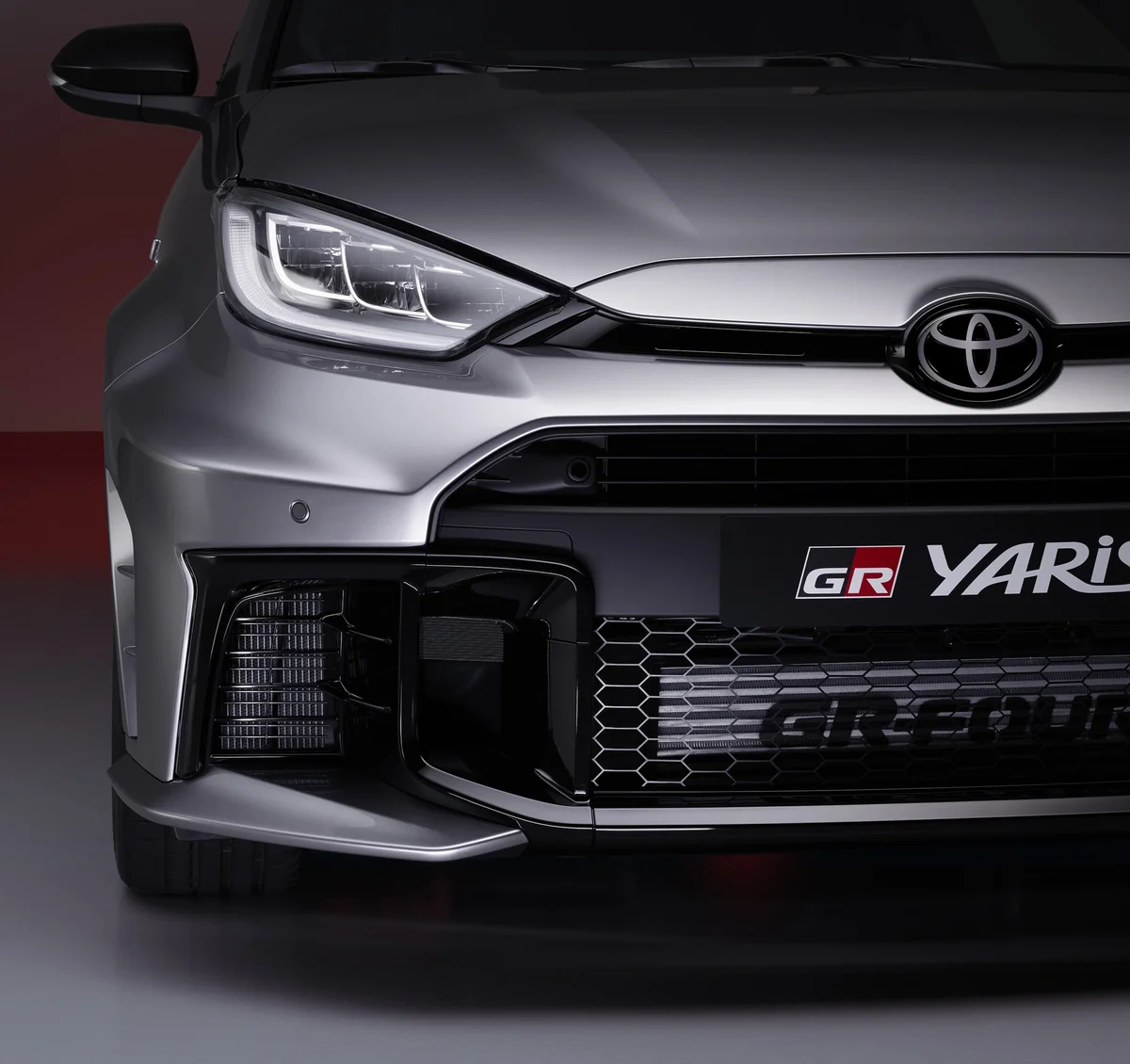
2017 Toyota Yaris: every variant sold in Australia
5 variants of the Toyota Yaris carry the 2017 model year in our catalogue — the XP130 generation, sold new 2017–2020. Specs, safety, economy and standard equipment for every grade, side by side.
The 2017 Toyota Yaris is no longer sold new in Australia. A price is shown only where we hold Toyota's own printed price for that variant: what it cost new, not a current offer or a used value. Specifications are kept for used-buyer research. See the current Toyota Yaris.
The 2017 Toyota Yaris in plain English
Read off the 5 rows we hold for this model year. Where a figure is not on record it is left out rather than estimated.
The 2017 Toyota Yaris is a Hatchback with five seats and front-wheel drive. The five grades we hold for 2017 are SX 5 Door Auto (XP130 2017), Ascent 5 Door Manual (XP130 2017), ZR 5 Door Auto (XP130 2017), Ascent 5 Door Auto (XP130 2017) and SX 5 Door Manual (XP130 2017). All of them are petrol.
No price is on record for the 2017 Toyota Yaris: a figure is printed only where we hold Toyota’s own published price.
Toyota’s combined consumption figures run 5.8 to 6.4 L/100km. At 15,000 km a year that is about $1,700 to $1,870 of fuel or energy, before servicing, rego, tyres and insurance.
We hold no ANCAP rating for any grade on this page, so none is shown. We never carry a rating across from another variant or model year.
On the grades that print one, boot space is 286 litres and braked towing is 900 kg. Figures are read off each grade’s own column, so a grade that prints none is left out rather than given its neighbour’s.
Every 2017 Toyota Yaris variant
| Variant | Drivetrain | Power | Economy / range | Towing | Seats | Full specifications |
|---|---|---|---|---|---|---|
| SX 5 Door Auto (XP130 2017)Hatchback | Petrol · 4-speed automatic · FWD | 80 kW | 6.4 L/100km | 900 kg | 5 | Full specs → |
| Ascent 5 Door Manual (XP130 2017)Hatchback | Petrol · 5-speed manual · FWD | 63 kW | 5.8 L/100km | 900 kg | 5 | Full specs → |
| ZR 5 Door Auto (XP130 2017)Hatchback | Petrol · 4-speed automatic · FWD | 80 kW | 6.4 L/100km | 900 kg | 5 | Full specs → |
| Ascent 5 Door Auto (XP130 2017)Hatchback | Petrol · 4-speed automatic · FWD | 63 kW | 6.4 L/100km | 900 kg | 5 | Full specs → |
| SX 5 Door Manual (XP130 2017)Hatchback | Petrol · 5-speed manual · FWD | 80 kW | 5.9 L/100km | 900 kg | 5 | Full specs → |
Equipment across the 2017 range
Four states, never three. Standard means the document prints it as standard on that grade. Optional means it is a factory extra, at the price the document prints. No means the document confirms it is not available. No data means we have not read it off a Toyota document yet, which is not the same as saying the car does not have it.
| Variant | Reversing camera |
|---|---|
| SX 5 Door Auto (XP130 2017) | Standard |
| Ascent 5 Door Manual (XP130 2017) | Standard |
| ZR 5 Door Auto (XP130 2017) | Standard |
| Ascent 5 Door Auto (XP130 2017) | Standard |
| SX 5 Door Manual (XP130 2017) | Standard |
Not yet read off a Toyota document for any 2017 variant: AEB, Adaptive cruise, Blind-spot monitor, Apple CarPlay, Android Auto. Left out of the table rather than shown as a column of “No data”; it is not a “No”.
What changed from the 2014 Yaris
Measured row by row against the 2014 variants we hold, matching each grade on its name, body, gearbox and drive (5 variants match across both years).
New generation: the 2014 rows are the XP130 (2014-2017); the 2017 rows are the XP130 (2017-2020).
| Variant | What | 2014 | 2017 |
|---|---|---|---|
| SX 5 Door Auto (XP130 2017) | Combined economy | 6.3 L/100km | 6.4 L/100km |
| Ascent 5 Door Manual (XP130 2017) | Torque | 121 Nm | 120 Nm |
| Ascent 5 Door Manual (XP130 2017) | Combined economy | 5.7 L/100km | 5.8 L/100km |
| ZR 5 Door Auto (XP130 2017) | Combined economy | 6.3 L/100km | 6.4 L/100km |
| Ascent 5 Door Auto (XP130 2017) | Torque | 121 Nm | 120 Nm |
| Ascent 5 Door Auto (XP130 2017) | Combined economy | 6.3 L/100km | 6.4 L/100km |
| SX 5 Door Manual (XP130 2017) | Combined economy | 5.8 L/100km | 5.9 L/100km |
What changed after the 2017 Yaris
No 2017 grade we hold carries into 2020 under the same name, body, gearbox and drive, so the change is shown as the line-up itself rather than as price or spec moves on a guessed pairing. See the 2020 Toyota Yaris.
New generation: the 2017 rows are the XP130 (2017-2020); the 2020 rows are the XP210 (2020-).
In our 2020 rows, not our 2017 rows: Ascent Sport Manual, SX Hybrid, ZR Hybrid.
In our 2017 rows, not our 2020 rows: Ascent 5 Door Auto (XP130 2017), Ascent 5 Door Manual (XP130 2017), SX 5 Door Auto (XP130 2017), SX 5 Door Manual (XP130 2017), ZR 5 Door Auto (XP130 2017).
2017 Toyota Yaris: size, weights, towing and servicing
| Figure | Across the grades | Grades holding it |
|---|---|---|
| Size | ||
| Length | 3,945 mm | 5 of 5 |
| Width | 1,695 mm | 5 of 5 |
| Height | 1,510 mm | 5 of 5 |
| Wheelbase | 2,510 mm | 5 of 5 |
| What it carries | ||
| Boot space, seats up | 286 L | 4 of 5 |
| Fuel tank | 42 L | 5 of 5 |
| Kerb weight | 1,025 to 1,055 kg | 5 of 5 |
| Tare mass | 1,000 to 1,030 kg | 5 of 5 |
| Gross vehicle mass (GVM) | 1,470 to 1,520 kg | 5 of 5 |
| Towing | ||
| Braked towing capacity | 900 kg | 5 of 5 |
| Unbraked towing capacity | 550 kg | 5 of 5 |
Nothing in this table is ranked. A figure the manufacturer prints on a different basis (a maximum kerb weight, a width including the mirrors, a length with a tow bar fitted) carries that basis beside it, because it is a different measurement and not a bigger number.
Not yet read off a Toyota document for any grade on this page: ground clearance, turning circle, boot space, rear seats down, payload, roof load, tray length, tray width, tow ball download, gross combination mass (gcm), wading depth, service interval (months), service interval (distance), warranty term. Those read “No data” rather than a guessed figure.
Recalls on the 2017 Toyota Yaris
The left hand rear door window glass may have been inadequately tempered, due to an improper cooling process during manufacture.
Published 2019-06-19. Matched to 5 of the 5 variants on this page. REC-003879 on the government register
If the glass is broken, it will not shatter into small pieces as intended, but rather into large fragments or shards of glass. This could increase the risk of injury in the event of a crash.
Where a figure has not been read off a source document it reads “No data” rather than a zero or a dash, and an equipment column reads “No” only where a document confirms the feature is not available. Full specs, the source for each variant and a side-by-side configurator for every Toyota Yaris variant, including other model years, are on the model page.
2017 Toyota Yaris: common questions
Which 2017 Toyota Yaris grades are there?
We list five grades of the 2017 Toyota Yaris: SX 5 Door Auto (XP130 2017), Ascent 5 Door Manual (XP130 2017), ZR 5 Door Auto (XP130 2017), Ascent 5 Door Auto (XP130 2017) and SX 5 Door Manual (XP130 2017). Each one is a separate row with its own price, specification and equipment, read off Toyota's Australian documents for that grade rather than averaged across the range.
What is the fuel consumption of the 2017 Toyota Yaris?
Toyota's combined-cycle figure for the 2017 Toyota Yaris is 5.8 to 6.4 L/100km across the grades, on five of the five grades we hold. A combined figure is a laboratory result; real consumption depends on how and where you drive.
How big is the boot in the 2017 Toyota Yaris?
Boot space with the rear seats up is 286 litres, as published by Toyota. Manufacturers measure boot space in more than one way, so a litre figure is best compared against another figure from the same manufacturer.
How much power does the 2017 Toyota Yaris have?
The 2017 Toyota Yaris is listed at 63 to 80 kW and 120 to 141 Nm across the grades we hold, as published by Toyota. A hybrid's combined system output and its engine output are different figures, and we store each grade's own as printed rather than adding them together.
What are the dimensions of the 2017 Toyota Yaris?
The 2017 Toyota Yaris measures 3,945 mm long and 1,695 mm wide, 1,510 mm tall. A width figure is the body unless this page labels it as including the mirrors, which is a different measurement and is marked where the manufacturer prints it that way.
How much does the 2017 Toyota Yaris cost to run each year?
At 15,000 km a year, fuel or energy for the 2017 Toyota Yaris works out at about $1,700 to $1,870 a year, on the manufacturer's own combined figure (15,000 km a year, $1.95/L petrol). That is fuel or energy only: servicing, registration, compulsory third party insurance, tyres and insurance are not in it, and a plug-in hybrid is costed with the battery not charged because that is the figure that holds when you do not plug in.
How much can the 2017 Toyota Yaris tow?
Braked towing capacity on the 2017 Toyota Yaris is 900 kg, on five of the five grades. A maximum capacity is the manufacturer's limit, not a figure to plan a load around on its own.
How many seats does the 2017 Toyota Yaris have?
Every grade of the 2017 Toyota Yaris we hold seats five. Seat count is read off each grade's own column, never carried across from another grade.
Is the 2017 Toyota Yaris still sold new in Australia?
No. We hold no current new-car offer for the 2017 Toyota Yaris, so no current price is shown. The figures on this page are kept for used-buyer research, and a price appears only where we hold Toyota's own printed price for that grade, labelled as the price when new.
Where to go next
- Every Toyota Yaris variant and price · the model page covers every generation and model year we hold, with the source for each variant and a side-by-side configurator.
- 2014 Toyota Yaris · the previous model year we hold, for the figures this page compares against.
- 2020 Toyota Yaris · the next model year we hold, and what changed after 2017.
- Towing capacity calculator · work a braked capacity, a tow ball download and a gross combination mass against a real trailer weight.
- Compare any two cars side by side · price, specification, equipment and running cost in one table.