BYD Atto 3 vs Jaecoo J5
Two small SUVs from two Chinese giants, and they are not the same shopping decision. The Atto 3 is electric or nothing. The J5 will sell you petrol, hybrid or electric, and it starts $14,000 lower.
Specifications and pricing correct at time of publishing. Prices are RRP before on-road costs unless stated otherwise. Always confirm with the manufacturer or dealer before purchasing.
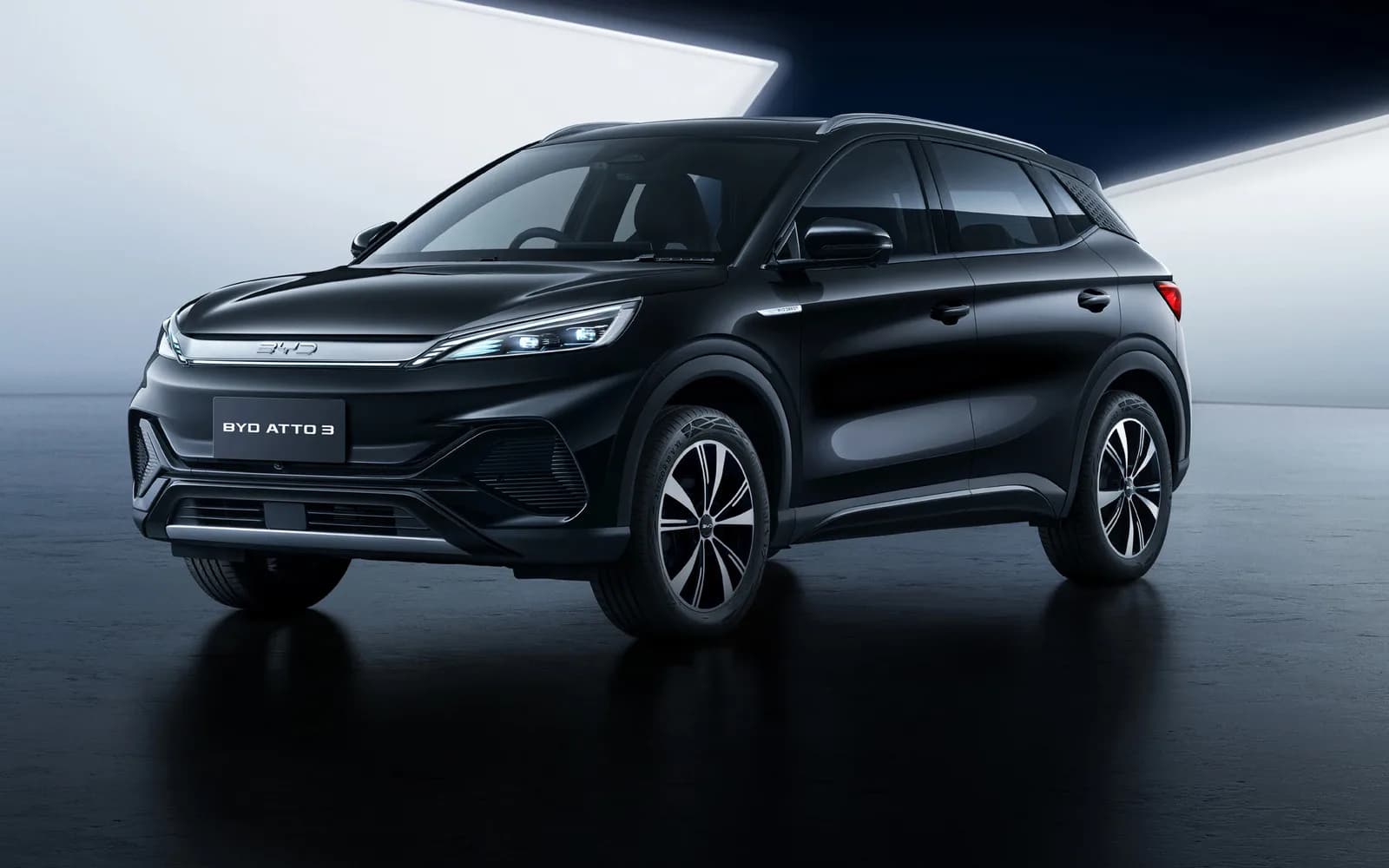
BYD Atto 3 Essential
From $39,990 plus on-roads
Electric SUV
Single Motor (FWD)
150kW
345km WLTP electric
5★ ANCAP (2022)
440L
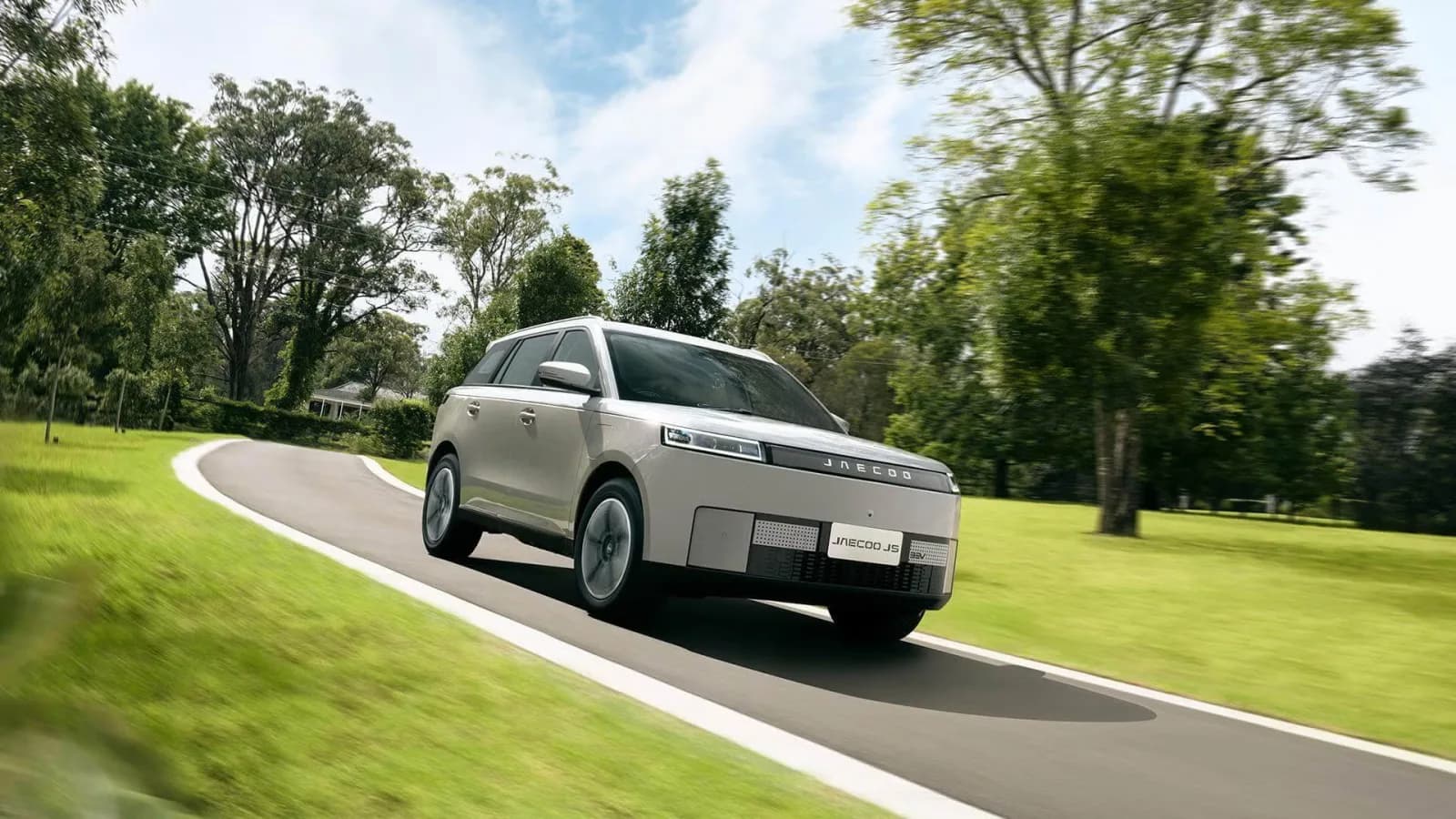
Jaecoo J5 Track
From $25,990 drive-away
Small SUV
1.5L Turbo Petrol
108kW
7.5L/100km
No ANCAP rating
384L VDA
Price Breakdown
Before any of the numbers matter, get the two price bases straight, because these brands do not quote the same way and the raw figures are not comparable.
BYD Australia quotes list price before on-road costs. The Atto 3 Essential is $39,990, and you add registration, stamp duty and dealer delivery on top. One thing to know before you shop: the Atto 3 range has changed. The Atto 3 Premium at $44,990 is gone, and BYD now sells a facelifted Atto 3 EVO series alongside the carried-over Essential. If you have been quoted $44,990 for an Atto 3 Premium, that is a price for a car BYD no longer lists.
Jaecoo quotes drive-away on most of its range. The J5 Track is $25,990 drive-away and the Summit is $29,990 drive-away, both already including on-road costs and both running to 30 September 2026. The J5 EV Summit is quoted two ways: $35,990 as a recommended retail price and $36,990 as a drive-away campaign figure. The Hybrid Summit needs a caveat we will come back to.
That EV Summit is the only clean like-for-like in the whole comparison, and it is the one worth holding onto: $35,990 for the J5 EV against $39,990 for the Atto 3 Essential, both before on-roads, a $4,000 gap. Everywhere else the J5 looks cheaper than it really is next to the BYD, because it is quoting a number that already has the on-roads baked in.
| Variant | Powertrain | Price | Basis |
|---|---|---|---|
| Jaecoo J5 Track | 1.5T petrol | $25,990 | Drive-away, to 30 Sep 2026 |
| Jaecoo J5 Summit | 1.5T petrol | $29,990 | Drive-away, to 30 Sep 2026 |
| Jaecoo J5 Hybrid Summit | 1.5L hybrid | $34,990 | Drive-away, offer window closed |
| Jaecoo J5 EV Summit | Electric, 58.9kWh | $35,990 | MRRP, plus on-roads |
| Jaecoo J5 EV Summit | Electric, 58.9kWh | $36,990 | Drive-away, to 30 Sep 2026 |
| BYD Atto 3 Essential | Electric, 49.92kWh | $39,990 | MSRP, plus on-roads |
| BYD Atto 3 EVO Dynamic | Electric, 60.48kWh | $41,990 | MSRP, plus on-roads |
| BYD Atto 3 EVO Premium | Electric, 74.88kWh, RWD | $46,990 | MSRP, plus on-roads |
The hybrid price needs a question at the dealer
Jaecoo still displays the J5 Hybrid Summit from $34,990 drive-away, and it is the only figure the brand publishes for that car. But its own footnote scopes that price to a pre-order window that ran from 15 July to 14 August 2026 and has not been replaced, and the hybrid does not appear on Jaecoo's offers page at all. The number is live on the manufacturer's site; the offer it was attached to is not. Ask the dealer what the current drive-away price is rather than assuming the campaign terms still stand.
The petrol offers carry their own conditions, quoted plainly: the drive-away figures are for cars "with no metallic paint or optional extras", on new stock ordered from participating dealers, while stocks last. Check Jaecoo's current offers on the day you sign.
BYD runs national campaigns too, usually a cash credit or free on-road costs rather than a lower list price, and they rotate between models. No Atto 3 grade was carrying a published national offer at the time of writing, but a free-on-roads campaign is worth roughly $4,000 on a car at this price, which would wipe out the J5 EV's entire list-price advantage on its own.
Safety Rundown
This is the section that should decide the comparison for a lot of buyers, and it is the one area where the price gap starts to explain itself.
The BYD Atto 3 holds a 5-star ANCAP rating awarded in 2022, which runs to December 2028 and applies, in ANCAP's words, to "all Australian variants". It comes with the expected assist suite as standard: autonomous emergency braking with pedestrian and cyclist detection, lane keep assist, blind spot monitoring and adaptive cruise. Two things worth knowing. The rating is scoped by build date, applying to vehicles built from 21 November 2022, with earlier cars unrated unless the relevant updates have been applied. And ANCAP's terms are written around the Standard Range and Extended Range names, with no mention of the EVO in any direction, so if you are buying an EVO grade specifically, confirm the rating's coverage before you sign.
The Jaecoo J5 carries no ANCAP rating at all, on any of its four powertrains. That is not a bad score and it is not a failure. It means the car has not been tested, so there is no independent measure of how it performs in a crash, and we will not tell you it is safe or unsafe on the strength of a feature list. We did not take that from our own database either: every current ANCAP rating record was checked, and the only Jaecoo with a rating is the J7. The J5 does launch with an active-safety package including autonomous emergency braking, but a list of fitted systems is not a crash-test result.
Two practical consequences. First, an unrated car is excluded from a lot of Australian fleet, novated-lease and rideshare procurement policies that require a current five-star result, so if you are buying through any of those channels the J5 may simply not be on the list. Second, if a rating is announced after you buy, you get whatever it turns out to be. Confirm the J5's current ANCAP status with the dealer before you sign, because this is the one gap in the car's pitch that money does not close.
Feature Showdown
We have not driven either of these cars, so we are not going to tell you how they ride, steer or settle on a country road. What follows is what the specifications and the published equipment lists say, and nothing more.
The Atto 3 is the more established product and it shows in the detail. It has been on sale here since 2022, and the things BYD is known for are all present: the rotating central touchscreen, vehicle-to-load power so the car can run tools or a fridge from its own battery, and the Blade pack that gives it a genuinely different degradation story from most cheap EVs. If your budget stretches, the EVO series above it moves to an 800-volt architecture, which is where that 220kW charging figure on the EVO Premium comes from.
The J5 is the newer, sharper-looking car. Its upright, blocky styling reads more expensive than the price, and the same body carries all four powertrains, so you do not have to change your mind about what the car looks like in order to change your mind about how it is powered. The Summit grades sit above Track on equipment across petrol, hybrid and electric. Both the Atto 3 and the J5 EV use lithium iron phosphate batteries, so both are happy being charged to 100 per cent as a daily habit.
The honest summary is that the Atto 3 is a known quantity with a rating, a network and three years of Australian history, and the J5 is a newer proposition that undercuts it, charges faster, tows more and covers you for longer. Which of those two sentences you find more persuasive is basically the whole decision.
Drivetrain
The Atto 3 Essential runs a front-mounted motor making 150kW and 310Nm, drawing on a 49.92kWh LFP Blade battery for 345km of WLTP range, and does 0-100km/h in 7.9 seconds. Step up to the EVO Dynamic and the battery grows to 60.48kWh for 420km and 7.3 seconds on the same 150kW; the EVO Premium moves to 74.88kWh, 230kW, rear-wheel drive and 510km. The Blade pack is the part of the car that has earned BYD its reputation: LFP chemistry is happy being charged to 100 per cent daily, so you are not managing a state-of-charge ceiling the way you would with a nickel-based battery. The Green Vehicle Guide lists the Atto 3 at 148 to 149 watt-hours per kilometre, about 14.8kWh/100km, which is genuinely efficient.
The J5 sells you a choice instead
Jaecoo's pitch is the opposite. The same body is available four ways, and each one is aimed at a different buyer.
The petrol Track and Summit run a 1.5-litre turbo making 108kW and 210Nm through a CVT, claiming 7.5L/100km and 172g/km from a 51-litre tank. That is the cheap entry point, and it is a modest engine by any measure. The Hybrid Summit is more interesting: a 105kW engine and a 150kW motor through a dedicated hybrid transmission, for a maximum combined system output of 165kW and 295Nm and a claimed 5.6L/100km. We checked the label on that cell rather than just the number, because hybrid figures are routinely misreported: Jaecoo prints it in its own row headed "Maximum Combined System Power", so 165kW really is the system total and not a component figure. The EV Summit makes 155kW and 288Nm from a 58.9kWh LFP battery for 402km of WLTP range.
Line the two electric cars up and the J5 EV wins on paper almost everywhere that is cheap to win. It has more power (155kW to 150kW), a bigger battery than the Atto 3 Essential (58.9kWh to 49.92kWh) and more range (402km to 345km), for $4,000 less on list price.
Charging is where the J5 lands its biggest hit
This is the specification that surprised us most, and it runs directly against the price.
The Jaecoo J5 EV peaks at 130kW on DC and Jaecoo quotes about 28 minutes from 30 to 80 per cent. The Atto 3 Essential peaks at 70kW. BYD's published 29-minute 30-to-80 figure belongs to the 88kW larger-battery car, not the Essential, so the entry Atto 3 is slower again than the number you will usually see quoted. The newer EVO grades do fix this, at 110kW for the Dynamic and 220kW for the Premium, but those are the $41,990 and $46,990 cars.
Both brands quote the same 30 to 80 per cent window, so for once the figures are directly comparable, and the cheaper car wins by a distance at the entry point. On a road trip that matters more than the headline range does. DC peak is also the one EV specification you cannot improve later, which makes it worth more than a features list.
What it actually costs to run
Charging either electric car at home at around 30c/kWh over 15,000km a year lands in the same place, roughly $650 to $700 a year. The petrol J5 at 7.5L/100km over the same distance is about $2,140 a year at $1.90 a litre, and the Hybrid Summit at 5.6L/100km is about $1,600. So the hybrid saves roughly $540 a year over the petrol, and the electric cars save about $1,450 a year over the petrol, before you count the servicing an EV does not need.
Those figures assume home charging and a national average fuel price, and this comparison is unusually sensitive to both. If you cannot plug in at home, an EV lives on public DC chargers at 45c to 60c/kWh or more, which roughly doubles its running cost and quietly deletes most of the advantage. Run your own tariff, fuel price and annual distance through our fuel cost calculator before you decide which powertrain you are actually buying. One note on the Jaecoo fuel claims: they are quoted on the older ADR 81/02 NEDC cycle, which tends to read optimistically against real driving, so treat 7.5 and 5.6 as best cases rather than averages.
Space & Comfort
The Atto 3 is the bigger car: 4,455mm long on a 2,720mm wheelbase against the J5's 4,380mm and 2,620mm. A 100mm wheelbase difference is worth real rear legroom in a car this size, so the BYD is the more comfortable back seat for adults. Both are five-seaters, and the J5's dimensions are identical across all three powertrains.
The boot, and a number you will see quoted wrongly
We went into this expecting the Atto 3 to win the boot comparison in a landslide, because our own database held the J5 at 384 litres expanding to 480, against 440 and 1,340 for the BYD. That looked like nearly three times the load space. It is not, and the reason is worth understanding before you compare any two cars from different brands.
Jaecoo publishes its boot under the heading "Luggage capacity, VDA" with two rows: up to the top of the seat back, 384 litres, and up to the roof, 480 litres. Both are the same boot with the seats up, measured to two different load heights. Jaecoo publishes no seats-folded volume at all. So 480 is not a seats-down figure and should never be lined up against BYD's 1,340.
BYD prints 440 litres minimum and 1,340 litres maximum and states no measurement standard at all, no VDA, no ISO, no SAE. So the only pairing either maker supports is seats-up: 440 litres for the Atto 3 against 384 VDA for the J5. The BYD is the bigger boot, by a useful but ordinary margin, not by a landslide. Anyone quoting you a three-to-one difference is comparing two different measurements.
Choosing the J5 Hybrid costs you boot space, and Jaecoo is upfront about it: the hybrid drops to 314 litres to the seat back and 410 to the roof, against 384 and 480 for the petrol and the EV. That is 70 litres gone to the hybrid hardware, measured on Jaecoo's own consistent basis, which makes it a real and comparable trade-off.
On towing the J5 takes it back, in one specific form. The J5 EV is rated to tow 1,250kg braked where the Atto 3 stops at 750kg, roughly the difference between a small camper trailer and a box trailer. The petrol and hybrid J5s are also capped at 750kg, so the towing advantage belongs to the electric J5 specifically, which is an unusual way round: normally the EV in a range is the one that cannot tow.
One number we are not going to give you is ground clearance. BYD publishes 175mm unladen for the Atto 3, and 150mm laden, which is a distinction most spec tables quietly drop. Jaecoo publishes no ground clearance for the J5 at all, on any of its three spec sheets or its model pages, so the 195mm and 200mm figures you will see quoted around the internet, including in our own database, have no manufacturer source behind them. If clearance matters to your driveway, measure the car.
True Cost to Own
The warranty headline swings hard to the J5, and then the fine print takes a good deal of it back, depending entirely on what you use the car for.
Jaecoo covers the J5 for eight years with no kilometre limit for ordinary private use, with a separate eight-year unlimited-kilometre warranty on the high-voltage battery and a 70 per cent capacity threshold for a claim. BYD covers the Atto 3 for six years or 150,000km, whichever comes first, with eight years or 160,000km on the battery and drive unit, also at 70 per cent retention.
The carve-out that reverses the headline
Read Jaecoo's warranty terms and there is a commercial-use clause: for vehicles used primarily for taxi, ride sharing, rental, courier, hire or driving school work, the warranty is limited to eight years or 150,000km. BYD's warranty document has no use-based reduction at all. We searched it for taxi, rideshare, hire, courier, driving school and rental and found nothing; the only use-based exclusion is motorsport.
So for a private buyer the comparison is eight years unlimited against six years or 150,000km, and the J5 wins clearly. For a rideshare or courier driver it becomes eight years or 150,000km against six years or 150,000km, and the gap narrows to two years on an identical distance cap. That matters here more than it would elsewhere, because Jaecoo actively courts rideshare drivers with a driver-partner offer. If that is you, the honest framing of this warranty comparison is "two extra years", not "unlimited versus capped".
Servicing, where the newcomer embarrasses the incumbent
Jaecoo publishes a full capped-price schedule with a dollar figure against every visit. The petrol and hybrid J5 run eight years or 120,000km at 12-month or 15,000km intervals, and the J5 EV runs eight years or 160,000km at 12-month or 20,000km intervals with visits alternating between $155 and $225. You can price the whole ownership before you walk into a dealership. Servicing outside the network is permitted provided the work meets manufacturer specifications and you keep detailed invoices, though warranty work itself must go through an authorised dealer.
BYD publishes no capped-price servicing dollars for the Atto 3 that we could find. The service interval is clear enough, 12 months or 20,000km, and being electric it has no oil, no spark plugs, no exhaust and no gearbox fluid to pay for, which should make it the cheaper car to keep on the road. But you cannot establish that from BYD's website, and for a segment sold almost entirely on running costs, that is a strange thing for the more established brand to leave out.
Roadside assistance is the same trick from both: Jaecoo gives one complimentary year, renewed another 12 months at each scheduled service with an authorised dealer. Miss or delay a service and both your roadside cover and your capped-price eligibility can be affected. It is a dealer-retention mechanism, not an eight-year grant, and it should be read that way.
The part nobody wants to talk about
Resale. The Atto 3 has been on sale here since 2022, so it has several years of actual used-market data behind it, and BYD has built out one of the larger dealer and service networks among the Chinese brands. Jaecoo is newer and smaller, sold here by Chery's Australian arm under the Omoda Jaecoo banner, and its residual values are still forming. That is the ordinary trade-off on a new badge and the reason the drive-away pricing is as aggressive as it is. Check what service coverage each brand has near you before you sign.
It is also the single biggest cost in owning either of these cars, and it is invisible at the point of sale. A $4,000 saving on list price is quickly irrelevant if the car is worth $6,000 less in four years. Run both through our depreciation calculator with a realistic ownership period before you decide the cheaper car is the cheaper car.
CarSorted Data Insight
These two turn up together in our search data constantly, and the reason is price rather than similarity. They sit in the same $26,000 to $47,000 band, they wear two of the Chinese badges Australians are actually cross-shopping, and beyond that they have almost nothing in common. One is an electric model in three battery sizes. The other is one body with four powertrains behind it.
We pulled every live variant of both and checked each headline claim against the maker's own Australian material, and two findings changed what this page says. The first is that the boot gap we expected does not exist. Jaecoo's 480-litre figure, which we had stored and which circulates widely, is the same boot as its 384, measured to the roof rather than the seat back, with the seats still up. Jaecoo publishes no seats-folded volume at all. Put next to BYD's 1,340 it produces a three-to-one difference that is pure measurement artefact.
The second is the charging figure, and it goes against the price in a way we rarely see. The $35,990 Jaecoo charges at 130kW; the $39,990 BYD charges at 70kW. DC peak is the one EV specification you cannot upgrade later, and at the entry point of both ranges the cheaper car is nearly twice as quick to fill. That is the single most surprising number in this comparison, and it sits alongside the one that goes the other way just as hard: the J5 has no ANCAP rating, on any powertrain, and the Atto 3 has held five stars since 2022.
The Verdict
Buy the BYD Atto 3 if: you have committed to electric, you want the 5-star rating, the longer wheelbase and the bigger seats-up boot, and you want the more established service network behind you.
Buy the Jaecoo J5 if: you want the cheapest way into a new SUV at $25,990 drive-away, you want to choose petrol, hybrid or electric in the same car, you tow, or you want 130kW charging, eight years of cover and servicing prices you can read before you sign.
Compare both on CarSorted. See also: Geely EX5 vs BYD Atto 3 | BYD Atto 3 vs MG ZS EV | The full Jaecoo range.
The Verdict
These two only look like rivals. The BYD Atto 3 is a battery-electric SUV and nothing else. It is the longer car with the bigger seats-up boot, and it is the only one of the pair that carries an ANCAP rating at all. The Jaecoo J5 is the wider range: a $25,990 drive-away petrol, a hybrid, and an electric Summit that undercuts the Atto 3 on list price, charges at nearly double the peak rate, tows 1,250kg, and comes with an eight-year warranty and published servicing prices. Buy the Atto 3 if you have already decided on electric and the five-star rating is not negotiable. Buy the J5 if you want the cheapest way into a new SUV, you want to choose your own powertrain, or fast charging matters more to you than a crash result the car has not been given yet.
Disclaimer: All information in this comparison was believed to be correct at the time of publishing (17 September 2026). Prices are manufacturer recommended retail prices (RRP) and may vary by state, dealer, and options. Driveaway costs include estimated on-road costs for Victoria. Fuel economy figures are WLTP/ADR combined cycle. Specifications can change without notice. Always verify with the manufacturer before making a purchase decision. CarSorted does not accept payment for recommendations.
Published by CarSorted Editorial Team · 17 September 2026
Comments (0)
Sign in to join the conversation
No comments yet. Be the first!