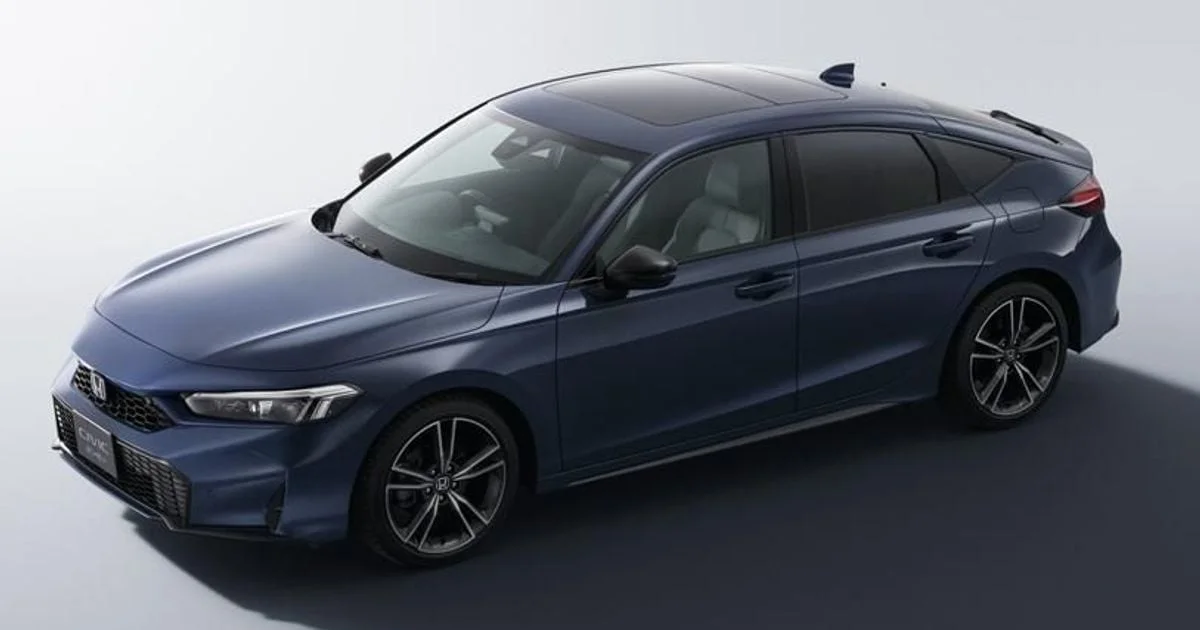
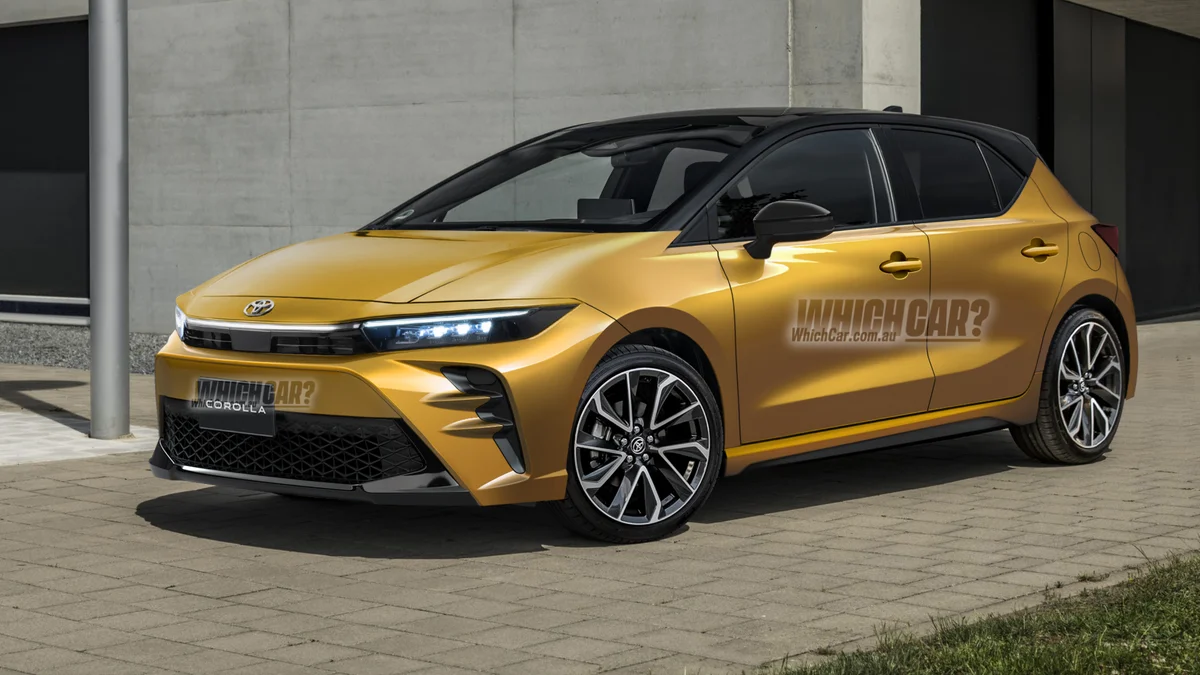
Honda Civic vs Toyota Corolla
$43,250 vs $32,990. Two of the most iconic nameplates on Australian roads, still fighting it out after five decades.
Data checked: specs 4 Aug 2026, price 24 Jun 2026
Comparison snapshot
Prices, scores and edges below update from our car data.
From about $43,250 est. RRP
Estimated RRP: this brand lists drive-away prices only.
193L more boot, 32kW more power
Cheaper by $11,140, lighter on fuel by 0.2 L/100km
Written 7 April 2026. The snapshot, tables, scores and verdict on this page update from our car data; figures quoted in the text are as at that date.
Price
The $10,260 gap between the Civic VTi LX and Corolla Ascent Sport Hybrid is meaningful, and the running cost story tilts things further in the Corolla's favour over time.
The Corolla Ascent Sport Hybrid starts at $32,990 before on-road costs. Driveaway in most states you are looking at roughly $36,000 to $37,500. The Civic VTi LX at $43,250 pushes driveaway to around $46,500 to $48,000. That is a $10,000-plus gap at the register.
Fuel economy is where the Corolla really pulls ahead. At 4.2L/100km combined versus the Civic's 5.2L, and with both using regular unleaded (around $1.90/L), the Corolla saves approximately $285 per year on fuel at 15,000km annually. Over five years, that is $1,425 in fuel savings.
Combined with the lower purchase price, the Corolla is significantly cheaper to own over five years on purchase price and fuel alone. Add in slightly cheaper insurance (lower value, Toyota brand, hybrid category) and comparable servicing costs, and the total cost of ownership gap sits well above $10,000 over five years.
Resale is close between these two. Both the Civic and Corolla hold their value exceptionally well by Australian standards. Toyota has a slight edge historically, with Corolla Hybrids retaining around 55-60% over five years versus 52-57% for the Civic. On a $33k to $43k car, that difference translates to roughly $1,000 to $2,000 at trade-in.
If pure cost efficiency is your top priority, the Corolla wins the numbers game convincingly. But the Civic is not expensive to own either, and the extra spend over five years buys you significantly more car in terms of power and boot space.
Safety
Both score 5 stars from ANCAP and both come well-equipped with active safety tech. Small car safety has improved dramatically in the last decade, and these two are excellent examples.
The Civic VTi LX gets Honda SENSING, which includes collision mitigation braking with pedestrian and cyclist detection, adaptive cruise control with low-speed follow, lane keeping assist, road departure mitigation, auto high beam, traffic sign recognition, and blind spot information with cross-traffic monitor. Honda also includes LaneWatch, their camera system that displays the left blind spot on the centre screen when you indicate left. It sounds gimmicky but it is genuinely useful in heavy traffic.
The Corolla Ascent Sport Hybrid comes with Toyota Safety Sense 3.0, featuring pre-collision safety with pedestrian and cyclist detection (daytime and night), dynamic radar cruise control, lane departure alert with steering assist, lane tracing assist, automatic high beam, road sign assist, and proactive driving assist. Toyota also includes a blind spot monitor with rear cross-traffic alert.
Both have ISOFIX on the outer rear seats with top tether points across the back row. Both have comprehensive airbag packages including front, side, curtain, and driver knee airbags.
Safety is a dead heat. Both manufacturers have invested heavily in making their volume models safe, and it shows. Neither cuts corners on active or passive safety, regardless of the trim level.
One practical consideration: the Civic sedan's larger dimensions give it a slight structural advantage in ANCAP adult occupant protection scores. The Corolla hatch is slightly smaller overall. In practice, both are extremely safe, but the difference matters if you are comparing like-for-like body styles.
Features
Both cars come well-equipped at these price points, but they focus on different things.
The Civic VTi LX gets a 9-inch touchscreen with wireless Apple CarPlay and wired Android Auto, a 10.2-inch digital instrument cluster, wireless phone charging, a 12-speaker Bose premium audio system, leather-trimmed seats, push-button start, dual-zone climate control, auto LED headlights with auto-levelling, rain-sensing wipers, an auto-dimming rearview mirror, and 18-inch alloy wheels. That is a lot of kit for a $36k car.
The Corolla Ascent Sport Hybrid gets an 8-inch touchscreen with wireless Apple CarPlay and Android Auto, a 7-inch multi-information display, a 6-speaker audio system, fabric seats, single-zone climate control (manual for rear), push-button start, auto LED headlights, and 16-inch alloy wheels. The equipment level is noticeably more modest.
The Civic is clearly the more feature-rich car. Leather seats, Bose audio, wireless charging, a bigger screen, and bigger wheels make it feel a class above the Corolla in terms of cabin ambiance. If you spend a lot of time in your car and these creature comforts matter to you, the Civic justifies some of its premium here.
The Corolla counters with the thing you cannot see on a spec sheet: Toyota hybrid reliability. The Corolla Hybrid uses Toyota's fourth-generation hybrid system, which has been on the road globally for over a decade in various forms. It is proven, dependable, and incredibly low-maintenance. The hybrid battery is warranted for 10 years in some markets, and real-world longevity exceeds even that.
Both have keyless entry with push-button start, which is standard at this price point. Both have reversing cameras and parking sensors. The Civic adds front parking sensors that the Corolla Ascent Sport misses.
Drivetrain
This is where the character difference between these two becomes most obvious. The Civic goes for power, the Corolla goes for efficiency. Both approaches are valid, but they create very different driving experiences.
The Civic VTi LX uses a 1.5-litre turbocharged four-cylinder making 135kW and 240Nm through a CVT. These are strong numbers for a small car. The turbo delivers a noticeable shove from low revs, and 240Nm of torque means the Civic pulls cleanly through the mid-range. Highway overtaking is confident, on-ramp merging is easy, and the car genuinely feels quick in everyday driving.
The Corolla Ascent Sport Hybrid combines a 1.8-litre Atkinson-cycle four-cylinder with an electric motor for a combined output of 103kW and 142Nm through an e-CVT. Those numbers are significantly lower than the Civic: 32kW less power and 98Nm less torque. In practice, the Corolla feels adequate but never quick. It gets up to speed without drama but there is not much in reserve for spirited driving or fully-loaded highway merges.
The driving experience gap is genuine. The Civic is the car you look forward to driving. Honda has tuned the steering to be precise and communicative, the chassis is composed through corners, and the turbo engine rewards you for pushing it. The Corolla is the car you appreciate rather than enjoy. It is smooth, quiet, efficient, and completely undemanding, but it does not ask anything of the driver.
For daily commuting in city traffic, the Corolla's hybrid system is brilliant. The electric motor provides instant torque at low speeds, the engine seamlessly cycles on and off, and the fuel gauge barely moves in stop-start traffic. This is where the 4.2L/100km figure comes alive. In heavy urban driving, some owners report figures under 4L/100km.
For highway driving, the Civic is the better companion. The turbo engine has the legs for comfortable cruising, the CVT keeps revs low at 100-110km/h, and there is always power in reserve when you need it. The Corolla's engine can sound strained on long uphill sections when the CVT holds high revs.
Towing is another clear Civic advantage. The Honda can tow up to 750kg braked, which covers a small box trailer, a jet ski, or a bike rack. The Corolla hatch has no towing rating. If you ever need to tow anything, even occasionally, the Civic is the only option here.
Space and comfort
Boot space is a significant differentiator. The Civic VTi LX sedan offers 333 litres, while the Corolla Ascent Sport Hybrid hatch manages just 217 litres. That 116-litre difference is enormous in practical terms. The Civic can swallow a large suitcase and a couple of overnight bags where the Corolla would struggle. For weekly grocery shopping, the Civic fits more with less Tetris required.
The Corolla's 217L boot is genuinely tight. It is one of the compromises of the hybrid system, which takes up some underfloor space. If boot space is a priority, the sedan version of the Corolla (with 422L) is worth considering, though it starts at a higher price point and is not available in the Ascent Sport trim with a hybrid.
Rear seat space is similar in both. Neither is a limousine, but adults can sit comfortably in the back for medium-length trips. The Civic has slightly more rear legroom thanks to its longer wheelbase, while the Corolla has marginally more headroom due to its hatchback roofline.
Front seats are good in both, but the Civic's leather-trimmed seats with more bolstering are more supportive on long drives. The Corolla's fabric seats are comfortable and hardwearing, but they lack the premium feel of the Civic's leather.
Cabin noise is interesting. The Corolla Hybrid is whisper-quiet at low speeds when running on electric power alone. At higher speeds, road noise becomes more noticeable. The Civic is slightly better insulated overall, with less wind and tyre noise intruding at highway speeds, though the turbo engine is audible under acceleration (and that is not necessarily a bad thing).
Storage throughout the cabin is adequate in both. Both have usable centre console storage, door bins, and cup holders. The Civic adds a wireless charging pad and a larger centre console bin. Neither has a glove box that is big enough to hold a laptop or large tablet.
Cost to own
Both offer 5-year unlimited-kilometre warranties with capped-price servicing. Neither has an advantage on warranty length. Both are backed by manufacturers with strong Australian dealer networks and parts availability.
The Corolla Hybrid has a reliability advantage that goes beyond the warranty period. Toyota's hybrid system has a proven track record spanning decades and millions of vehicles globally. The hybrid battery is designed to last the life of the vehicle, and real-world evidence from Prius, Camry, and Corolla Hybrid owners supports this. Out-of-warranty maintenance on a Toyota Hybrid is about as cheap as it gets: no clutch to replace, regenerative braking means brake pads last longer, and the engine is understressed thanks to electric assist.
The Civic's 1.5-litre turbo is also well-proven, though turbocharged engines have more complexity than naturally aspirated or hybrid setups. The turbocharger, intercooler, and higher-pressure fuel system are all additional components that can potentially require maintenance over a 10-plus-year ownership period. Honda's quality control is excellent, but there are simply more moving parts.
Service intervals are 12 months or 10,000km for the Civic and 12 months or 15,000km for the Corolla. The longer Corolla interval means fewer dealer visits over the ownership period. Individual service costs are comparable at $200 to $350 per visit under capped-price programs.
Insurance costs favour the Corolla due to its lower value and hybrid classification. Expect roughly $1,000 to $1,400 per year for the Corolla versus $1,100 to $1,600 for the Civic, depending on your profile.
Registration and CTP costs are similar for both as they are in the same vehicle class. Neither is particularly expensive to register.
Tyre costs are slightly higher on the Civic due to its larger 18-inch wheels versus the Corolla's 16-inch. Civic tyres run roughly $180 to $280 per corner, while Corolla tyres sit at $120 to $200 per corner. Over five years and two sets of tyres, that is a $240 to $640 difference.
Two Legends, Two Philosophies
The Civic and Corolla have been rivals since the 1970s, and the current generation of each represents the best these nameplates have ever been. Both are safer, more efficient, better equipped, and more refined than any previous version. The rivalry is healthy because it pushes both manufacturers to keep improving.
What makes this comparison tricky is that they are not really targeting the same buyer anymore. The Civic has moved upmarket with leather, Bose audio, and turbo power. The Corolla has doubled down on efficiency and value with its hybrid system. They have diverged in philosophy even as they remain close in price.
Who Should Buy Which?
Buy the Civic VTi LX if: you want the more engaging driving experience, need a usable boot (333L vs 217L), appreciate premium features like leather and Bose audio, or need to tow anything at all. The Civic is the enthusiast's choice and the better all-rounder for buyers who do more than just commute. If your weekends involve trips to Bunnings, the beach, or camping, the bigger boot and towing capacity make a real difference.
Buy the Corolla Ascent Sport Hybrid if: running costs are your top priority. The 4.2L/100km fuel economy is outstanding, the purchase price is lower, insurance is cheaper, and Toyota hybrid reliability is a known quantity. For daily commuters who do mostly city and suburban driving, the Corolla Hybrid is one of the most cost-effective vehicles on sale in Australia. It is quiet, effortless, and sips fuel in traffic.
Compare both on CarSorted. See also: Corolla vs Mazda3, i30 vs Mazda3, and our Best Small Cars Australia 2026 guide.
Key details
A tick marks the better figure only where both cars have one and the gap is meaningful (3% or more; a whole star or year).
| Detail | Honda Civic | Toyota Corolla Hatch |
|---|---|---|
| Price | From about $43,250 est. RRP | From $32,110 RRP |
| Drive-away estimate | $49,900 drive away (VIC, advertised) | Calculating... |
| Body | Hatch | Hatch |
| Powertrain | Hybrid, 2L 4-cyl | Hybrid, 1.8L 4-cyl |
| Power / torque | 135kW / 315Nm | 103kW / 142Nm |
| Fuel use | 4.2 L/100km | 4 L/100km |
| 0-100km/h | 8.1s | 8.1s |
| Boot | 410L seats up · 1,187L seats folded | 217L seats up |
| Towing (braked) | 750kg | 1,200kg |
| ANCAP | 5 stars (2022) | No data |
| Warranty | 5yr / unlimited km | 5yr / unlimited km |
At a glance
- Seats
- 5
- Boot
- 410L seats up · 1,187L seats folded
- Length x width x height
- 4,560 x 1,802 x 1,415mm
- Wheelbase
- 2,733mm
- Engine
- 2L 4-cyl
- Power
- 135kW
- Torque
- 315Nm
- Drive
- FWD
- Transmission
- Automatic
- Power-to-weight
- 88 kW/tonne
- Kerb weight
- 1,533kg
- Spare wheel
- Tyre repair kit
- Payload
- 397kg
- Towing braked / unbraked
- 750kg / 600kg
- Turning circle
- 11.4m
- Seats
- 5
- Boot
- 217L seats up
- Length x width x height
- 4,375 x 1,790 x 1,435mm
- Wheelbase
- 2,640mm
- Engine
- 1.8L 4-cyl
- Power
- 103kW
- Torque
- 142Nm
- Drive
- FWD
- Transmission
- CVT
- Power-to-weight
- 74 kW/tonne
- Kerb weight
- 1,400kg
- Spare wheel
- Temporary spare
- Payload
- 420kg
- Towing braked / unbraked
- 1,200kg / 750kg
- Turning circle
- 10.8m
CarSorted Score breakdown
The CarSorted Score is algorithmic: it is calculated from each car's data, not from a road test. How it works.
Safety
Fuel Economy
Value
Practicality
Technology
Performance
Reliability
The verdict
Honda Civic comes out ahead on the CarSorted Score (75 vs 66)
The deciding gaps
- Safety:Honda Civic 89, Toyota Corolla Hatch 51, Honda Civic ahead by 38
- Technology:Honda Civic 62, Toyota Corolla Hatch 46, Honda Civic ahead by 16
- Performance:Honda Civic 50, Toyota Corolla Hatch 41, Honda Civic ahead by 9
The Honda Civic wins on the score; the Toyota Corolla Hatch is the cheaper of the two, and price is already part of the Value axis.
Same scorer as the live comparison of these two exact cars.
Our take (written 7 April 2026)
This is a genuine split decision. The Corolla Hybrid is over $10,000 cheaper, more fuel efficient (4.2 vs 5.2L/100km), and has Toyota's legendary hybrid reliability. The Civic is significantly more powerful (135kW vs 103kW), has a 116L bigger boot (333L vs 217L), and can actually tow (750kg vs nothing). Buy the Corolla for lowest running costs and maximum fuel savings. Buy the Civic for performance, practicality, and a more engaging driving experience.
Prices on this page move. Want the next verdict?
One short email when prices shift or a new comparison lands. No spam, unsubscribe anytime.
Questions buyers ask
Is the Honda Civic better than the Toyota Corolla?
On the CarSorted Score the Honda Civic comes out ahead (Honda Civic 75/100, Toyota Corolla Hatch 66/100), mainly on safety, technology, performance. The score is algorithmic; the editorial above says who each car suits.
Which is cheaper to run, the Civic or Corolla?
On the official combined cycle, the Honda Civic uses 4.2 L/100km and the Toyota Corolla Hatch uses 4 L/100km.
Why is the Corolla boot so small?
Boot space with the seats up: the Honda Civic at 410L, against 217L for the Toyota Corolla Hatch.
Can the Toyota Corolla tow?
Braked towing capacity: the Toyota Corolla Hatch at 1,200kg, against 750kg for the Honda Civic.
Which is better for first-time buyers?
On the CarSorted Score the Honda Civic comes out ahead (Honda Civic 75/100, Toyota Corolla Hatch 66/100), mainly on safety, technology, performance. The score is algorithmic; the editorial above says who each car suits.
Which is cheaper, the Honda Civic or the Toyota Corolla Hatch?
The Honda Civic e:HEV L is from about $43,250 est. RRP; the Toyota Corolla Hatch Ascent Sport Hybrid is from $32,110 RRP. That makes the Toyota Corolla Hatch $11,140 cheaper.
What are the ANCAP ratings for the Honda Civic and Toyota Corolla Hatch?
The Honda Civic holds 5 stars (rated 2022), and we have no ANCAP rating on record for the Toyota Corolla Hatch.
Which has the better warranty?
The Honda Civic comes with a 5yr / unlimited km warranty; the Toyota Corolla Hatch with a 5yr / unlimited km warranty.
Related
The cars
In the news
- 2026 Nissan Z Priced for Australia: First Manual NISMO Joins the Range, GT-R Brakes, Orders Open
- 2026 MINI Cooper S Oxford Edition Confirmed for Australia: Just 40 Cars, 20 Red, 20 Blue, Q4 Landing
- Honda Civic Type R Orders Reopen: 98 Cars for Australia at $85,000 Driveaway, Carbon Wing Left Off
- The Ford Bronco Headed for Australia Is Built in China, Seats Five, and Has No Ladder-Frame Chassis
How to read this page. Prices, specs, ANCAP ratings, warranty, scores and the computed verdict come from our records for the two variants shown, sourced from manufacturer Australian documents, and update when those records change. RRP excludes on-road costs. Drive-away figures are estimates for the state you have selected unless marked as advertised. The editorial text was written on 7 April 2026. Always confirm price and specification with the manufacturer or dealer before you buy. CarSorted does not accept payment for recommendations.
Comments (0)
Sign in to join the conversation
No comments yet. Be the first!