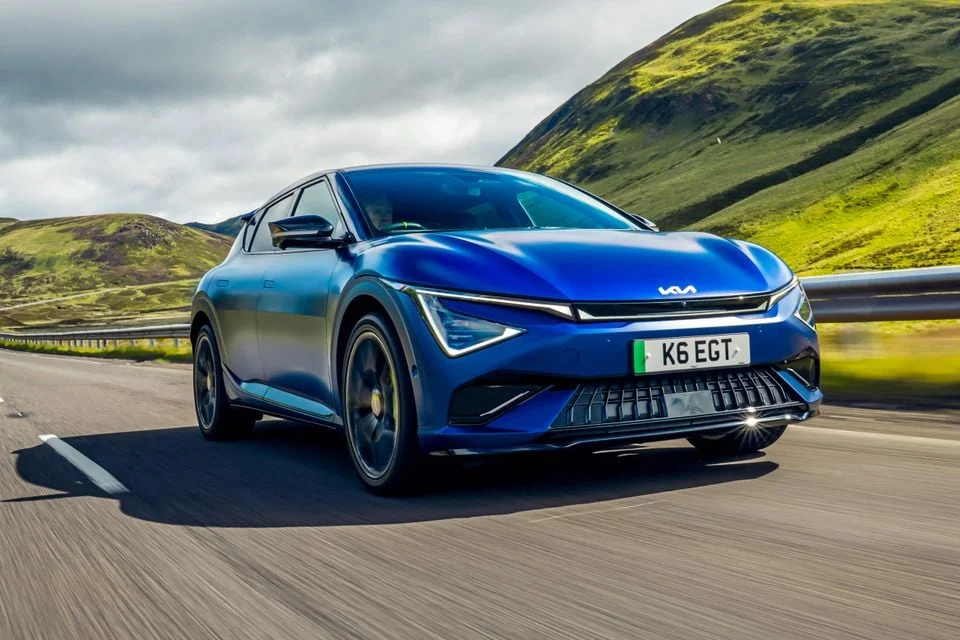
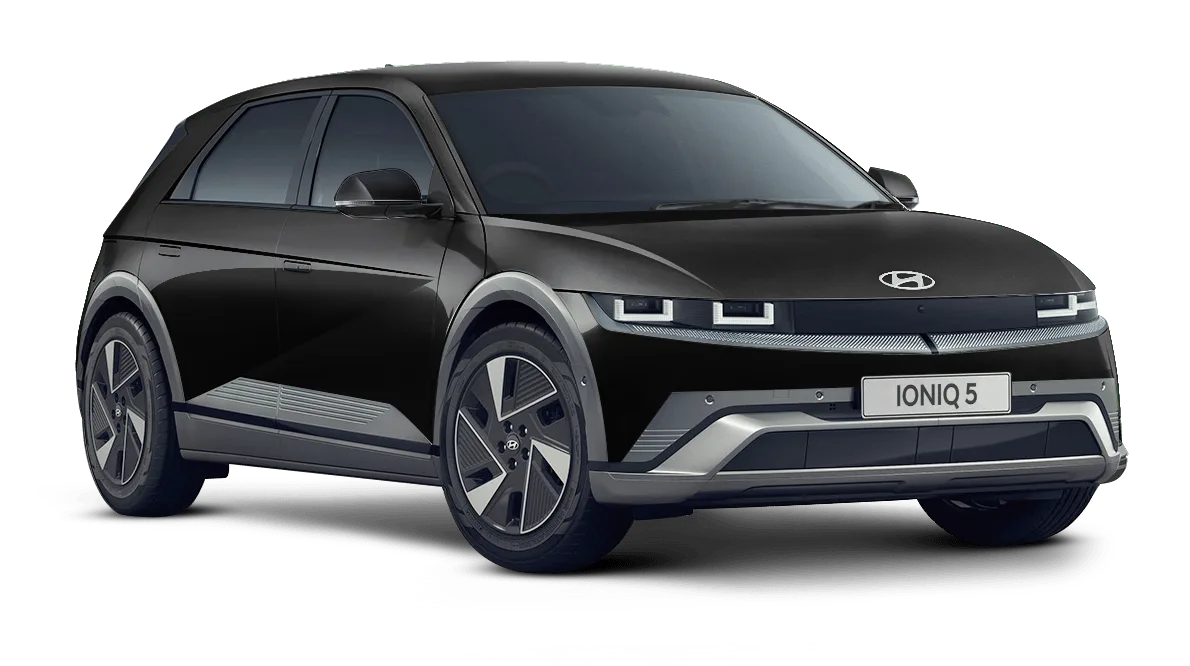
Kia EV6 vs Hyundai IONIQ 5
$72,590 vs $76,200. Both built on Hyundai Group's E-GMP platform. Same bones, very different packaging. Which Korean EV actually suits you?
Data checked: specs 20 Sep 2026, price 19 Sep 2026
Comparison snapshot
Prices, scores and edges below update from our car data.
Uses 1.1 kWh/100km less, tows 200kg more
30L more boot
Written 7 April 2026. The snapshot, tables, scores and verdict on this page update from our car data; figures quoted in the text are as at that date.
Price
Let's talk real numbers. The EV6 Air RWD lists at $72,590 and the IONIQ 5 RWD at $76,200. That's a $3,610 gap, which is not nothing. On-road in most states you're looking at roughly $76k driveaway for the EV6 and $80k for the IONIQ 5. The EV6 saves you close to $3,610 before you've even turned a wheel.
Running costs are a virtual wash. At $0.32/kWh and 15,000km per year, the EV6 costs about $792 annually in electricity. The IONIQ 5 is marginally thirstier at around $816. That's $24 a year, or less than fifty cents a week. Either way, both of these cars cost roughly $15 per week to charge at home. Compare that to a petrol SUV burning 8L/100km at $1.90/litre, that's $2,280 a year. You're saving over $1,400 annually regardless of which EV you pick.
Insurance sits in a similar bracket for both, typically $1,400–$1,800 per year depending on your postcode and driving history. Servicing is dead cheap on both thanks to fewer moving parts, expect around $300–$500 per service, and intervals are roughly every 15,000km or 12 months. Neither has a timing belt, clutch, exhaust system, or oil changes to worry about.
Where it gets interesting is resale. Kia's 7-year warranty gives buyers confidence when purchasing second-hand, which tends to prop up residual values. Hyundai's 5-year coverage is still solid but two years shorter. Over a 5-year ownership period, factoring in the purchase price gap, the IONIQ 5 will almost certainly cost less to own overall.
Safety
Both cars hold a full 5-star ANCAP safety rating, and both share the same E-GMP platform safety architecture underneath. That means identical crash structures, similar crumple zones, and the same fundamental approach to keeping occupants safe.
Standard safety tech on both includes autonomous emergency braking with pedestrian and cyclist detection, lane keeping assist, blind spot monitoring, rear cross-traffic alert, and adaptive cruise control. The EV6 adds Kia's Highway Driving Assist 2, which offers semi-autonomous driving on highways. The IONIQ 5 gets Hyundai's equivalent SmartSense suite, which is functionally identical.
One area where EVs genuinely excel is the lack of a large engine block up front. Both cars have a spacious front crumple zone that absorbs impacts without a heavy lump of metal being pushed into the cabin. For families with kids in the back, that extra protection is meaningful.
There's no meaningful safety difference between these two. Pick either one and you're getting as safe as any vehicle on Australian roads in 2026.
Features
The EV6 Air gets Kia's wide curved display, dual 12.3-inch screens that sweep across the dashboard. It looks premium, responds quickly, and supports wireless Apple CarPlay and Android Auto. Kia's interface is clean and fairly intuitive once you learn where things live. You also get vehicle-to-load (V2L) capability, which lets you plug in appliances, power tools, or charge other devices from the car's battery. That's a genuine lifestyle feature for camping trips or job sites.
The IONIQ 5 counters with the same dual 12.3-inch display setup, just styled a bit differently. Hyundai's infotainment is slightly more straightforward in its menu layout. It also gets V2L, wireless phone mirroring, heated front seats, and the same digital rear-view mirror option on higher trims.
In terms of charging tech, both support 800V architecture. That's the headline. Plug into a 350kW DC fast charger and you'll go from 10% to 80% in about 18 minutes. That's quicker than most people take to grab a coffee and stretch their legs at a servo. On a home wallbox (7kW), a full charge takes around 7–8 hours overnight. On the standard included charger from a powerpoint, you're looking at significantly longer, so a wallbox is strongly recommended.
Both cars also get a heat pump for more efficient cabin heating in winter without chewing through the battery. Seat heating and cooling are available across the range. In terms of interior quality, the EV6 leans slightly sportier while the IONIQ 5 has a more lounge-like, retro-futuristic cabin. Both are well built, though neither feels quite as premium as a European EV at this price.
Drivetrain
Underneath, these two are siblings. Both use Hyundai Motor Group's E-GMP (Electric Global Modular Platform) with a single rear-mounted motor producing 168kW and 350Nm of torque. Performance is essentially identical: 7.3 seconds to 100km/h for the EV6 and 7.4 seconds for the IONIQ 5. You'd never notice the difference in real life.
Both are rear-wheel drive in these variants, which gives them a natural, well-balanced driving feel. The EV6 is slightly firmer in its suspension tune, giving it a sportier character through corners. The IONIQ 5 is a touch softer and more comfort-oriented. On Australian roads riddled with potholes and speed bumps, that extra compliance in the IONIQ 5 can be appreciated.
The EV6 edges ahead on efficiency at 16.5kWh/100km versus 17.0kWh/100km for the IONIQ 5. Over 15,000km, that translates to about 75kWh less energy consumed per year. At 32 cents per kWh, you save $24 annually. Hardly earth-shattering, but the slightly better efficiency also translates to roughly 21km more range on a full charge (around 528km vs 507km WLTP). On a long road trip where charger spacing matters, that extra buffer could be handy.
Regenerative braking on both is adjustable via paddle shifters behind the steering wheel, and both offer a one-pedal driving mode that brings the car to a complete stop without touching the brake pedal. Once you've driven with one-pedal mode in city traffic, going back to a conventional car feels weirdly crude.
CarSorted Data Insight
Both rank in the top 5 most efficient EVs in our database. The EV6's 16.5kWh/100km and the IONIQ 5's 17.0kWh/100km put them ahead of competitors like the Toyota bZ4X (16.2kWh but much less range) and the Tesla Model Y (15.5kWh but different pricing structure). The EV6's 7-year warranty is one of the longest of any EV sold in Australia, matching the coverage on every Kia model. Both support CCS2 charging and 800V architecture for the fastest charging speeds available on the Australian market.
At $76,200, the IONIQ 5 is priced above the EV6. In our database of over Australian vehicles, the IONIQ 5 represents a strong value proposition in the EV space, offering 800V charging capability and a spacious cabin. The EV6's lower pricing and 7-year warranty make it a compelling alternative in this segment.
Design and Practicality
The EV6 has a lower roofline and a more aggressive, coupe-SUV stance. It looks fast standing still. The trade-off is 490L of boot space, which is decent but not class-leading. The IONIQ 5 goes the opposite direction with its boxy, retro-futuristic design inspired by Hyundai's original 1975 Pony. That boxier shape translates to 527L of boot, which is 37 litres more. For families juggling prams, shopping bags, and sports gear, that difference adds up over time.
Both have a frunk (front trunk) for smaller items, and both have a completely flat floor inside thanks to the skateboard battery layout. Rear seat legroom is generous in both. The IONIQ 5 has a slightly longer wheelbase, so rear passengers may find it fractionally roomier.
The Verdict
Buy the EV6 if: you value the 7-year warranty, slightly better efficiency and range, and prefer a sportier driving feel and design. You're comfortable paying the $8,690 premium for those advantages.
Buy the IONIQ 5 if: you want the lower price, more boot space, a roomier rear seat, and the retro-futuristic aesthetic. The $8,690 you save can go towards a home wallbox, a holiday, or just staying in your pocket.
Either way, you're getting a cracking EV. Both charge at 800V speeds, both tow 1,600kg, both hold 5-star safety ratings, and both cost roughly $15 a week to run. The biggest difference is the price tag and the warranty. Everything else is splitting hairs.
Compare both on CarSorted. See also: Model Y vs EV6 | Model Y vs IONIQ 5 | Best Electric Cars Australia 2026.
Key details
A tick marks the better figure only where both cars have one and the gap is meaningful (3% or more; a whole star or year).
| Detail | Kia EV6 | Hyundai IONIQ 5 |
|---|---|---|
| Price | From $72,660 RRP | Price coming soon |
| Drive-away estimate | Calculating... | No data |
| Body | SUV | SUV |
| Powertrain | Electric, Electric motor | Electric, Electric motor |
| Power / torque | 168kW / 350Nm | 168kW / 350Nm |
| Energy use | 15.9 kWh/100km | 17 kWh/100km |
| 0-100km/h | 7.7s | 8.5s |
| Boot | 490L seats up | 520L seats up |
| Towing (braked) | 1,800kg | 1,600kg |
| ANCAP | 5 stars (2022) | 5 stars (2021) |
| Warranty | 7yr / unlimited km | 5yr / unlimited km |
At a glance
- Seats
- 5
- Boot
- 490L seats up
- Length x width x height
- 4,695 x 1,880 x 1,550mm
- Wheelbase
- 2,900mm
- Engine
- Electric motor
- Power
- 168kW
- Torque
- 350Nm
- Drive
- RWD
- Transmission
- Automatic
- Power-to-weight
- No data
- Kerb weight
- No data
- Spare wheel
- Tyre mobility kit
- Payload
- 435kg
- Towing braked / unbraked
- 1,800kg / 750kg
- Turning circle
- 11.6m
- Seats
- 5
- Boot
- 520L seats up
- Length x width x height
- 4,655 x 1,890 x 1,605mm
- Wheelbase
- 3,000mm
- Engine
- Electric motor
- Power
- 168kW
- Torque
- 350Nm
- Drive
- RWD
- Transmission
- Automatic
- Power-to-weight
- No data
- Kerb weight
- No data
- Spare wheel
- Tyre mobility kit
- Payload
- No data
- Towing braked / unbraked
- 1,600kg / 750kg
- Turning circle
- 11.98m
CarSorted Score breakdown
The CarSorted Score is algorithmic: it is calculated from each car's data, not from a road test. How it works.
Safety
Energy Efficiency
Value
Practicality
Technology
Performance
Reliability
The verdict
Hyundai IONIQ 5 comes out ahead on the CarSorted Score (71 vs 68)
The deciding gaps
- Technology:Kia EV6 37, Hyundai IONIQ 5 83, Hyundai IONIQ 5 ahead by 46
- Reliability:Kia EV6 69, Hyundai IONIQ 5 63, Kia EV6 ahead by 6
- Value:Kia EV6 73, Hyundai IONIQ 5 68, Kia EV6 ahead by 5
Same scorer as the live comparison of these two exact cars.
Our take (written 7 April 2026)
Same platform, same motor, same torque, same towing. On paper these two are nearly identical. The IONIQ 5 RWD costs $3,610 more but has 37L more boot space. The EV6 Air RWD is slightly cheaper and gives you two extra years of warranty (7 vs 5), slightly better efficiency, and about 21km more range. If warranty peace of mind and a lower sticker price matter to you, the EV6 wins. If you want more boot space and don't mind paying a premium, the IONIQ 5 is worth considering.
Prices on this page move. Want the next verdict?
One short email when prices shift or a new comparison lands. No spam, unsubscribe anytime.
Questions buyers ask
Which has more range in Australia?
Electric range (WLTP where published): the Kia EV6 at 582km, against 530km for the Hyundai IONIQ 5.
Which EV has the better warranty in Australia?
The Kia EV6 comes with a 7yr / unlimited km warranty; the Hyundai IONIQ 5 with a 5yr / unlimited km warranty.
Can you tow with the EV6 or IONIQ 5?
Braked towing capacity: the Kia EV6 at 1,800kg, against 1,600kg for the Hyundai IONIQ 5.
Why is the EV6 more expensive than the IONIQ 5?
The Kia EV6 Air RWD is from $72,660 RRP; the Hyundai IONIQ 5 Dynamiq RWD is not priced on our records. The two prices are not on the same basis, so we do not set one against the other.
Which is cheaper to run, the Kia EV6 or the Hyundai IONIQ 5?
On the official combined cycle, the Kia EV6 uses 15.9 kWh/100km and the Hyundai IONIQ 5 uses 17 kWh/100km.
What are the ANCAP ratings for the Kia EV6 and Hyundai IONIQ 5?
The Kia EV6 holds 5 stars (rated 2022), and the Hyundai IONIQ 5 holds 5 stars (rated 2021).
Which has the bigger boot?
Boot space with the seats up: the Hyundai IONIQ 5 at 520L, against 490L for the Kia EV6.
Which comes out ahead overall?
On the CarSorted Score the Hyundai IONIQ 5 comes out ahead (Kia EV6 68/100, Hyundai IONIQ 5 71/100), mainly on technology. The score is algorithmic; the editorial above says who each car suits.
Related
In the news
- 2026 Kia EV6 Update: Bigger 84kWh Battery and More Range From $72,660
- 2027 Renault Megane E-Tech Facelift: 67kWh LFP, 500km WLTP and V2L Confirmed for Australia in 2027
- Hyundai, Kia and Genesis Extend EV Charger Warranty to 15 Years in Australia
- 2027 Genesis GV60 Magma Priced for Australia: $130,000, 478kW and a 3.4-Second 0-100
How to read this page. Prices, specs, ANCAP ratings, warranty, scores and the computed verdict come from our records for the two variants shown, sourced from manufacturer Australian documents, and update when those records change. RRP excludes on-road costs. Drive-away figures are estimates for the state you have selected unless marked as advertised. The editorial text was written on 7 April 2026. Always confirm price and specification with the manufacturer or dealer before you buy. CarSorted does not accept payment for recommendations.
Comments (0)
Sign in to join the conversation
No comments yet. Be the first!