
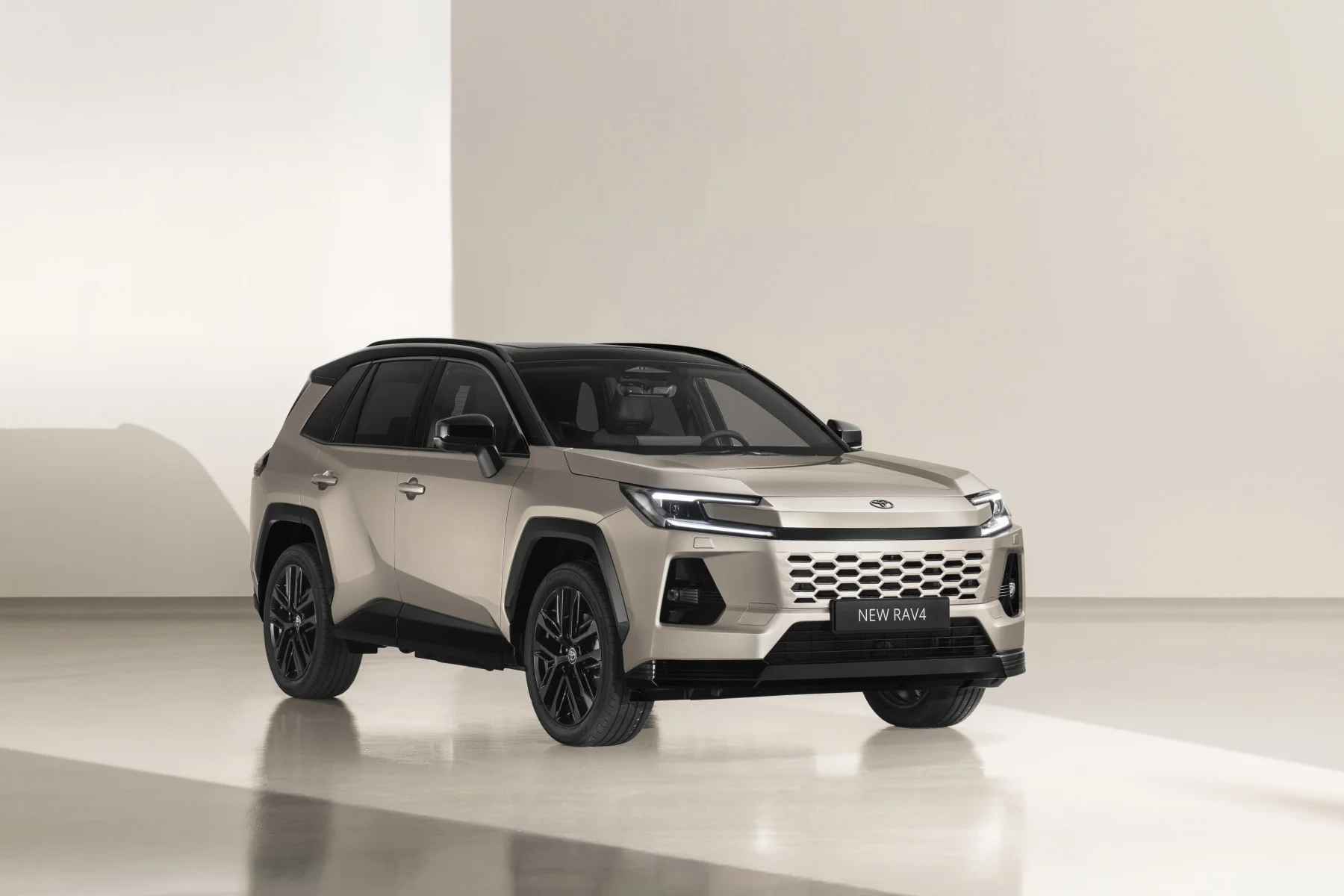
Subaru Forester vs Toyota RAV4
$45,990 vs $45,990. Identical list prices, opposite philosophies. The Forester gives you permanent AWD, the RAV4 Hybrid gives you half the fuel bill.
Data checked: specs 29 Aug 2026, price 6 Sep 2026
Comparison snapshot
Prices, scores and edges below update from our car data.
Tows 1,000kg more
Lighter on fuel by 3.4 L/100km, 209L more boot
Written 7 April 2026. The snapshot, tables, scores and verdict on this page update from our car data; figures quoted in the text are as at that date.
Price
The Forester AWD and the RAV4 GX Hybrid 2WD both list at $45,990 before on-road costs. There is nothing in it. What differs is what you get for the money: the Forester includes permanent all-wheel drive, while the RAV4 GX Hybrid is front-wheel drive only. To get AWD on the RAV4 Hybrid, you need the GXL AWD from around $49,000+.
But here's where the RAV4 fights back hard: fuel economy. At 5.0L/100km versus 7.9L/100km, the RAV4 Hybrid uses 2.9 litres less fuel per 100km. Over 15,000km at $1.90/litre, that translates to roughly $827 per year in savings. Over 5 years, the RAV4 saves about $4,135 in fuel alone. With the purchase prices level, that is $4,135 straight to the Toyota.
So the real question is: what do you value? If you never go off-road and don't tow, the RAV4 Hybrid's fuel savings make it the cheaper car to own over time, and it no longer costs more upfront to get there. If you do go off-road, tow regularly, or live somewhere with harsh winters and unsealed roads, the Forester's AWD and towing capacity change the equation entirely.
Servicing costs are comparable for both. Subaru offers capped-price servicing around $300–$450 per visit. Toyota's capped servicing runs $200–$380. Both are affordable to maintain. Insurance is typically $100–$200 per year cheaper on the Forester due to its lower value and lighter kerb weight.
Resale favours the RAV4. Toyota consistently leads Australian resale charts, and the hybrid powertrain boosts demand in the used market. The Forester holds value decently but can't quite match Toyota residuals. Over 5 years, expect the RAV4 to retain 2–4% more of its purchase price.
Safety
The Forester holds five stars from ANCAP, tested in 2024. The current RAV4 has no ANCAP rating at all: the previous generation's five-star result was tested in 2019 and expired at the end of 2025, and an expired rating does not transfer to the new car. So there is no independent score to compare the RAV4 against. Both do carry comprehensive active safety suites. Subaru's EyeSight system uses dual stereo cameras for adaptive cruise control, autonomous emergency braking, lane centring, and pre-collision throttle management. Toyota Safety Sense 3.0 offers comparable features including AEB, lane tracing assist, adaptive cruise, and road sign recognition.
The Forester has one major passive safety advantage that ANCAP doesn't test: visibility. Subaru engineers the Forester with the thinnest A-pillars in the class, the largest windows, and the most glass area of any mid-size SUV. You can see pedestrians, cyclists, and other cars that are simply invisible in most modern SUVs. The RAV4 follows the current industry trend of thicker pillars and smaller rear windows for styling reasons, which is fine for aerodynamics but worse for actually seeing what's around you.
For older drivers, nervous drivers, or anyone who values spatial awareness, the Forester's visibility is genuinely a safety feature. It reduces stress in car parks, at intersections, and when reversing. The RAV4 compensates with a decent rear camera and parking sensors, but there's no electronic substitute for being able to look out the window and see everything.
Both offer ISOFIX anchor points and top tether points in the rear for child seats. Both have rear cross-traffic alert and blind spot monitoring. On the technology front, they're evenly matched.
Features
The Forester AWD (base trim) comes with a 7-inch infotainment screen with Apple CarPlay and Android Auto (wired), dual-zone climate control, rear camera, LED headlights, roof rails, and 17-inch alloys. Subaru keeps things simple and functional. The interior isn't flashy, but everything works well and is logically placed. Physical buttons for the climate control are easy to use without looking away from the road.
The RAV4 GX Hybrid gets an 8-inch touchscreen with wired Apple CarPlay and Android Auto, dual-zone climate control, rear camera, LED headlights, roof rails, and 17-inch alloys. Very similar to the Forester on paper. Toyota's infotainment has improved dramatically in recent years, it's responsive and the screen resolution is decent.
Neither car screams luxury at these trim levels. Both have cloth seats, basic interior trim, and functional dashboards. The Forester feels a bit more utilitarian. The RAV4 has a slightly more modern design with angular lines and a floating centre console. Interior quality is honestly a wash at this price point.
Where they differ is the driving experience. The Forester sits you high with massive windows all around. Visibility is exceptional. You can see the front corners of the car from the driver's seat, which almost no other modern SUV can claim. The RAV4 has a more enclosed, cocooned feeling with a lower roofline and thicker pillars. It feels more car-like from behind the wheel, which some people prefer.
Drivetrain
These two take fundamentally different approaches to propulsion. The Forester runs Subaru's 2.5-litre horizontally opposed (boxer) four-cylinder petrol engine making 136kW and 226Nm. It's paired with a CVT and permanent symmetrical AWD. The boxer engine sits lower in the chassis than a conventional inline four, which lowers the centre of gravity and improves stability. It's a smooth, refined unit that doesn't set the world on fire on power but is perfectly adequate for daily driving and occasional towing.
The RAV4 GX Hybrid combines a 2.5-litre Atkinson cycle four-cylinder with an electric motor for a combined system output of 143kW and 221Nm. It's front-wheel drive only in GX form. The hybrid system is seamless. The transition between electric and petrol power is barely noticeable, and at low speeds around town the RAV4 often runs on electric power alone. That's why it achieves 5.0L/100km compared to the Forester's 7.9L.
The RAV4 is also quicker: roughly 8.4 seconds to 100km/h versus 9.8 for the Forester. The electric motor's instant torque off the line gives the Toyota a noticeable advantage in urban driving and when merging onto freeways.
Towing is where the Forester dominates. At 1,500kg braked, it can handle most box trailers, small caravans, jet skis, and medium boats. The RAV4 GX Hybrid is rated at just 800kg braked, which limits you to small box trailers and not much else. If you tow anything regularly, this is a decisive difference. The RAV4's 1,745kg kerb weight also means less payload capacity before you hit gross vehicle mass limits.
Subaru's symmetrical AWD is permanent. All four wheels get power all the time. It's predictable, confidence-inspiring, and genuinely capable on unsealed roads, wet grass, muddy boat ramps, and snow. The RAV4 GX Hybrid is front-wheel drive only. It will struggle in conditions where the Forester barely notices. If AWD matters to you, the Forester includes it at a lower price than the RAV4 Hybrid AWD variants.
Space and comfort
The Forester's boot measures 520L behind the rear seats. The RAV4's boot is 580L. That's 60 litres more in the Toyota, roughly one large travel bag. The RAV4's boot is also wider, making it easier to fit two suitcases side by side. Both have a flat load floor and fold-flat rear seats.
The Forester has a lower boot lip height, which makes it easier to load heavy items and lets dogs jump in and out without help. Subaru has always designed the Forester with active lifestyles in mind, and the low boot lip is a thoughtful touch that owners frequently cite as a reason they chose the car. The RAV4's boot lip is higher, requiring a bit more lifting.
Rear seat legroom is adequate in both, though the RAV4 has a slight edge for taller passengers thanks to its longer wheelbase. The Forester's massive windows make the rear feel more open and airy. Kids in the back can actually see out, which makes a difference on long road trips and for reducing car sickness.
Front seat comfort is good in both. The Forester's seats are well padded and the driving position is natural with excellent outward visibility. The RAV4's seats are a touch more supportive through corners. Neither offers heated seats at the base trim level, you'll need to step up a grade for that in both.
Cost to own
Over 5 years and 75,000km, the total cost of ownership picture looks like this. The two cost the same to buy, and the Forester then spends roughly $4,135 more on fuel. Servicing and insurance costs are within a few hundred dollars of each other. Net result: the RAV4 Hybrid is approximately $4,000 cheaper to own over 5 years, off an identical sticker. That's the hybrid advantage in action.
However, if you add towing to the equation, the maths change. A buyer who needs 1,500kg towing simply cannot choose the RAV4 GX Hybrid. The Forester is the only option. And upgrading to a RAV4 Hybrid AWD with better towing capability costs significantly more, which widens the gap back in the Subaru's favour.
Subaru's dealer network in Australia is smaller than Toyota's but has a loyal following and generally good customer satisfaction scores. Toyota's network is the largest in the country with the most service centres in regional and rural areas. If you live in a remote area, Toyota's service coverage is a practical advantage.
Both manufacturers offer 5-year unlimited-kilometre warranties with roadside assist included during the warranty period. Battery warranty on the RAV4 Hybrid is covered under the standard warranty. Neither has a particular advantage on warranty terms.
CarSorted Data Insight
In our database of over Australian vehicles, the RAV4 Hybrid's 5.0L/100km makes it among the most fuel-efficient non-plug-in SUVs available. The Forester's 7.9L/100km is above the mid-size SUV average but comes with the trade-off of permanent AWD, which inherently uses more fuel than a 2WD system. Comparing the Forester to other permanent AWD SUVs, its consumption is competitive.
The Forester's 1,500kg towing capacity matches most competitors in the segment and comfortably beats the RAV4 GX Hybrid's 800kg. For buyers who tow, our data shows the Forester sits alongside the CX-5 (2,000kg) and Tucson (1,650kg) as the best towing mid-size SUVs. The RAV4 GX Hybrid's 800kg rating puts it near the bottom of the segment for towing.
The Lifestyle Question
This comparison comes down to how you actually use your car. The Forester is built for people who leave the tarmac regularly: weekenders who hit the dirt, families who camp, dog owners who need a low boot lip at muddy parks, and anyone in regional Australia where unsealed roads are part of daily life. Subaru owners are a loyal bunch precisely because no other brand in this price range offers permanent AWD, excellent visibility, and genuine off-road capability as a package.
The RAV4 Hybrid is for the suburban family that wants the lowest possible fuel bill, the biggest boot in this comparison, and the peace of mind that comes with Toyota's resale and dealer network. It's a supremely competent school-run, commute, and weekend-trip car that happens to use barely more fuel than a small hatchback.
The Verdict
Buy the Forester if: you need genuine AWD capability, you tow boats or trailers, you value best-in-class visibility, or you live somewhere that demands all-weather traction. It also throws permanent AWD in for the same $45,990 the front-drive RAV4 Hybrid asks.
Buy the RAV4 Hybrid if: fuel economy is your top priority, you want a larger boot, you don't need AWD or heavy towing, and you value Toyota resale. The fuel savings alone justify the higher price over time.
Compare both on CarSorted. See also: RAV4 vs CX-5 | CR-V vs CX-5.
Key details
A tick marks the better figure only where both cars have one and the gap is meaningful (3% or more; a whole star or year).
| Detail | Subaru Forester | Toyota RAV4 |
|---|---|---|
| Price | From $45,990 RRP | From $45,990 RRP |
| Drive-away estimate | Calculating... | $50,872 drive-away (VIC), advertised |
| Body | SUV | SUV |
| Powertrain | Petrol, 2.5L 4-cyl | Hybrid, 2.5L 4-cyl |
| Power / torque | 136kW / 247Nm | 143kW / No data |
| Fuel use | 7.9 L/100km | 4.5 L/100km |
| 0-100km/h | No data | 8.4s |
| Boot | 496L seats up · 1,174L seats folded | 705L seats up |
| Towing (braked) | 1,800kg | 800kg |
| ANCAP | 5 stars (2024) | No data |
| Warranty | 5yr / unlimited km | 5yr / unlimited km |
At a glance
- Seats
- 5
- Boot
- 496L seats up · 1,174L seats folded
- Length x width x height
- 4,655 x 1,830 x 1,730mm
- Wheelbase
- 2,670mm
- Engine
- 2.5L 4-cyl
- Power
- 136kW
- Torque
- 247Nm
- Drive
- AWD
- Transmission
- CVT
- Power-to-weight
- 84 kW/tonne
- Kerb weight
- 1,622kg
- Spare wheel
- Full-size
- Payload
- No data
- Towing braked / unbraked
- 1,800kg / 750kg
- Turning circle
- 10.8m
- Seats
- 5
- Boot
- 705L seats up
- Length x width x height
- 4,600 x 1,855 x 1,685mm
- Wheelbase
- 2,690mm
- Engine
- 2.5L 4-cyl
- Power
- 143kW
- Torque
- No data
- Drive
- FWD
- Transmission
- CVT (e-CVT)
- Power-to-weight
- 82 kW/tonne
- Kerb weight
- 1,745kg
- Spare wheel
- Space saver
- Payload
- 400kg
- Towing braked / unbraked
- 800kg / 750kg
- Turning circle
- 11.36m
CarSorted Score breakdown
The CarSorted Score is algorithmic: it is calculated from each car's data, not from a road test. How it works.
Safety
Fuel Economy
Value
Practicality
Technology
Performance
Reliability
The verdict
Toyota RAV4 comes out ahead on the CarSorted Score (76 vs 76)
The deciding gaps
- Fuel Economy:Subaru Forester 65, Toyota RAV4 95, Toyota RAV4 ahead by 30
- Safety:Subaru Forester 98, Toyota RAV4 71, Subaru Forester ahead by 27
- Value:Subaru Forester 80, Toyota RAV4 87, Toyota RAV4 ahead by 7
Same scorer as the live comparison of these two exact cars.
Our take (written 7 April 2026)
These two now list at exactly the same price, $45,990, which strips the decision back to what each one is for. The Forester gives you permanent AWD, nearly double the towing (1,500kg vs 800kg), and 25mm more ground clearance. The RAV4 Hybrid saves roughly $827 per year in fuel, has 60L more boot space, is quicker, and more powerful. With nothing in it on purchase price, the RAV4 Hybrid is now the cheaper car to own by a clear margin. Buy the Forester for off-road ability, towing, and visibility. Buy the RAV4 Hybrid for fuel savings, boot space, and city efficiency.
Prices on this page move. Want the next verdict?
One short email when prices shift or a new comparison lands. No spam, unsubscribe anytime.
Questions buyers ask
Which SUV is cheaper to run, Forester or RAV4 Hybrid?
On the official combined cycle, the Subaru Forester uses 7.9 L/100km and the Toyota RAV4 uses 4.5 L/100km.
Which tows more, Forester or RAV4?
Braked towing capacity: the Subaru Forester at 1,800kg, against 800kg for the Toyota RAV4.
Which has better visibility, Forester or RAV4?
The Forester, and it is not close. Subaru designs the Forester with the thinnest pillars and largest windows in the class. You can see pedestrians and cyclists that are invisible in the RAV4 and most other modern SUVs. It is a genuine safety advantage.
Should I buy the Forester AWD or RAV4 Hybrid AWD?
On the CarSorted Score the Toyota RAV4 comes out ahead (Subaru Forester 76/100, Toyota RAV4 76/100), mainly on fuel economy, value. The score is algorithmic; the editorial above says who each car suits.
Which is cheaper, the Subaru Forester or the Toyota RAV4?
The Subaru Forester AWD is from $45,990 RRP; the Toyota RAV4 GX Hybrid 2WD is from $45,990 RRP. They cost the same.
What are the ANCAP ratings for the Subaru Forester and Toyota RAV4?
The Subaru Forester holds 5 stars (rated 2024), and we have no ANCAP rating on record for the Toyota RAV4.
Which has the bigger boot?
Boot space with the seats up: the Toyota RAV4 at 705L, against 496L for the Subaru Forester.
Which has the better warranty?
The Subaru Forester comes with a 5yr / unlimited km warranty; the Toyota RAV4 with a 5yr / unlimited km warranty.
Related
Compare
The cars
In the news
- Honda Civic Type R Orders Reopen: 98 Cars for Australia at $85,000 Driveaway, Carbon Wing Left Off
- 2026 Subaru Outback Wilderness Priced for Australia: Turbo Boxer Returns From $59,690
- 2026 Subaru Uncharted: Brand's Cheapest EV Lands From $59,990
- VFACTS August 2026: EVs Outsell Petrol, Diesel and Hybrid for the First Time in Australian History
How to read this page. Prices, specs, ANCAP ratings, warranty, scores and the computed verdict come from our records for the two variants shown, sourced from manufacturer Australian documents, and update when those records change. RRP excludes on-road costs. Drive-away figures are estimates for the state you have selected unless marked as advertised. The editorial text was written on 7 April 2026. Always confirm price and specification with the manufacturer or dealer before you buy. CarSorted does not accept payment for recommendations.
Comments (0)
Sign in to join the conversation
No comments yet. Be the first!