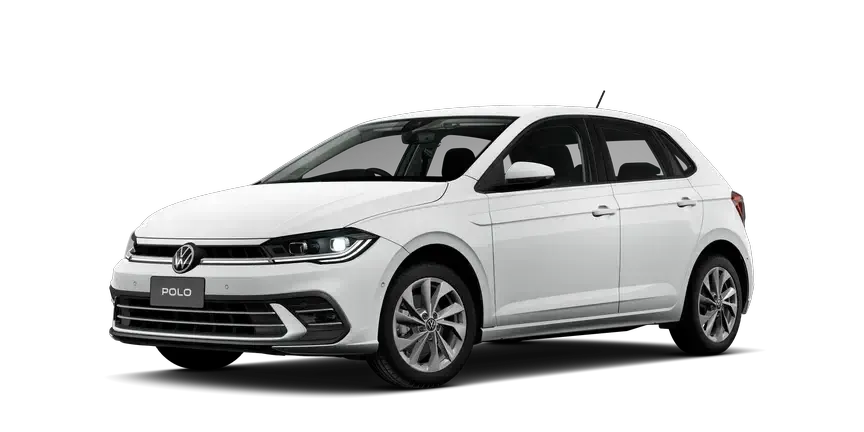
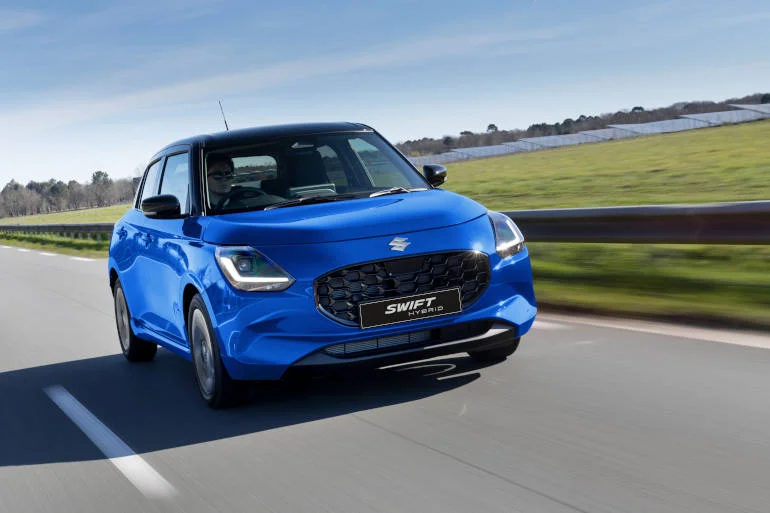
Volkswagen Polo vs Suzuki Swift
$32,990 vs $23,990. European turbo hatch vs Japan's lightweight budget king.
Data checked: specs 30 Aug 2026, price 23 Sep 2026
Comparison snapshot
Prices, scores and edges below update from our car data.
84L more boot, 25kW more power
Cheaper by $6,800, lighter on fuel by 1.4 L/100km
Written 7 April 2026. The snapshot, tables, scores and verdict on this page update from our car data; figures quoted in the text are as at that date.
Price
The price gap is $6,800, not the $9,000 often quoted. The Swift GL starts at $23,990, one of the most affordable new cars on sale in Australia. The Polo 85TSI Life asks $30,790. Both figures are recommended retail before on-road costs.
Fuel costs favour the Swift, and by more than we used to say. At 4.0L/100km the Swift is one of the most fuel-efficient non-hybrid cars you can buy. The Polo at 5.4L/100km is good but not in the same bracket. Based on 15,000km a year at $2.00 a litre, the Swift costs about $1,200 a year in fuel against $1,620 for the Polo. That is a saving of $420 a year, or $2,100 over five years, which recovers close to a third of the purchase gap. For more on cars that are cheap to run, check our cheapest cars to run in Australia guide.
Insurance is cheaper on the Swift too, thanks to its lower purchase price and smaller engine. For a young driver, this can be a meaningful difference of several hundred dollars per year.
Where the Polo claws back some value is the warranty. Volkswagen offers five years with unlimited kilometres, while Suzuki gives you three years and 100,000 kilometres. That is a two-year gap in coverage. If something goes wrong in year four or five, the Polo is still covered. The Swift is not. For buyers who plan to keep their car for five-plus years, that extra warranty coverage is worth real money.
Drive-away, you are looking at roughly $27,000 for the Swift and around $34,500 for the Polo depending on your state. The monthly finance repayment difference is about $130, which still matters for budget-conscious buyers, but it is not the gulf it once was.
Safety
This is the most important correction on the page. The two cars do not share a safety rating. The Polo holds five stars from ANCAP, tested in 2022. The current Swift holds three stars, tested in 2024 under the stricter present-day criteria. Some of that gap is protocol drift, because 2024 criteria are much harder to satisfy than 2022 criteria, but three stars is a published result and a two-star difference should be weighed properly, especially if the car is for a young or inexperienced driver.
The Polo comes with autonomous emergency braking, lane keep assist, adaptive cruise control, and a reversing camera. VW's safety systems are well calibrated and not overly intrusive. You also get front and rear parking sensors, which are useful given the Polo is likely to spend a lot of its life in tight city car parks.
The Swift gets AEB, lane departure warning, and a reversing camera. The safety suite is more basic than the Polo's but covers the essentials. Notably, the Swift does not get adaptive cruise control at the GL level, which is a missing feature some buyers will notice on highway drives.
The Swift's very light 957kg kerb weight is worth mentioning in a safety context too. Modern crash structures are engineered to protect regardless of weight, but in a collision with a heavier vehicle the lighter car absorbs more force. The Polo at 1,187kg has a modest advantage there, on top of the two extra ANCAP stars.
Our car safety features guide explains what AEB, lane keep, and the other acronyms actually do if you want to compare the systems in more detail.
Features
The Polo 85TSI Life comes well equipped for its price. You get an 8-inch touchscreen with wireless Apple CarPlay and Android Auto, a digital instrument cluster, dual-zone climate control, LED headlights, keyless entry with push-button start, and front and rear parking sensors. The digital cockpit in particular makes the cabin feel modern and premium, showing speed, navigation, and media information right in front of you.
The Swift GL is more modest but not bare. You get a 9-inch touchscreen with wireless Apple CarPlay and Android Auto, automatic air conditioning, LED headlights, a reversing camera, and cruise control (non-adaptive). The 9-inch screen is actually bigger than the Polo's, which is a nice surprise at this price point. Suzuki has clearly prioritised the features that matter most to daily drivers.
Interior quality is where the Polo justifies some of its premium. VW interiors have a solidity to them that most affordable cars cannot match. The doors close with weight, the switchgear feels precise, and the materials are a cut above. It is not luxury, but it feels grown-up and European. That DSG gearbox also gives the Polo a more premium driving feel than the Swift's CVT.
The Swift's interior is functional and cheerful but obviously budget-focused. Harder plastics are more prominent, and the overall feel is lighter and less substantial. That is not necessarily a criticism. The Swift knows what it is and does not pretend to be something else. It is a brilliant little city car that does not take itself too seriously. There is something refreshing about that honesty.
Both cars offer wireless Apple CarPlay, which is a win for both. In 2026, having to plug in a cable every time you hop in the car feels old-fashioned, and both these hatches have moved past that.
Drivetrain
The powertrain difference between these two cars is substantial. The Polo uses a 1.0-litre turbocharged three-cylinder making 85kW and 200Nm, paired with a seven-speed DSG dual-clutch auto. The Swift runs a 1.2-litre naturally aspirated three-cylinder producing 61kW and 112Nm through a CVT. The gap in performance is wide.
The Polo has 39 per cent more power and 79 per cent more torque, and the turbo delivers its 200Nm from low revs so the engine does not have to be worked hard to access it. On the claimed 0-100 figures that translates to 10.4 seconds against 12.4.
The Swift is slow by modern standards on the published numbers. 61kW is not a lot and the claimed 12.4 seconds to 100km/h is two seconds behind the Polo's 10.4. If you rarely leave the suburbs that is unlikely to bother you. If your daily drive involves highway merging or overtaking, the gap will.
The saving grace for the Swift is its weight. At 957kg it is 230kg lighter than the Polo, which is most of the reason it manages 4.0L/100km on a non-hybrid drivetrain. That is a genuinely outstanding number and 1.4L/100km better than the Polo.
The two use different transmission types, which is worth knowing before you commit. The Polo runs a seven-speed DSG dual-clutch, which steps through real gears but has the low-speed hesitancy dual-clutch gearboxes are known for. The Swift runs a CVT, which is smoother at crawling speeds but holds revs under load. Try both before you decide; this is a preference, not a spec-sheet winner.
Space and comfort
Boot space is still a clear Polo win, just by less than we said before. At 351 litres the Polo has 84 litres more than the Swift's 267. That is roughly the difference between fitting two large suitcases and fitting one. The Swift's boot is adequate for daily use but will limit you when packing for a trip.
Rear seat space favours the Polo too. It is the longer car, and rear passengers get noticeably more legroom. The Swift's rear seat is tight for adults, especially on longer drives. Kids are fine, but two six-footers in the back will not be happy after 20 minutes. The Polo is more accommodating, though still not spacious by any means. These are city cars, not family haulers.
The weight difference is substantial. The Swift weighs 957kg, the Polo 1,187kg. That 230kg gap is roughly three adult passengers, and it is a large part of why the Swift uses 1.4L/100km less fuel.
Towing is not really the domain of either car, but the Polo has a braked towing capacity of 750kg. That covers a small box trailer or a bike rack setup. The Swift is not rated for towing at all. If you ever need to pull anything, the Polo is your only option. It is not a major factor for most city car buyers, but worth knowing.
Both cars are easy to park and manoeuvre in the city, which is their core mission. The Swift's tighter turning circle and lower weight give it an edge in really tight spaces, but both are city-friendly hatches that will not stress you out in a shopping centre car park.
Cost to own
The warranty difference is significant. Volkswagen gives you five years with unlimited kilometres. Suzuki offers three years and 100,000 kilometres. That is a big gap. Modern cars are generally reliable, but when something does go wrong, the cost of out-of-warranty repairs can be steep. The Polo's extended coverage is a real selling point for buyers who plan to keep their car for the long term.
Servicing costs for the Polo are higher per visit than the Swift. VW's capped-price servicing is competitive by European standards but more expensive than Suzuki's. Over five years, the Swift will cost you less in scheduled maintenance. The gap is not enormous, perhaps a few hundred dollars over the ownership period, but it is there.
Reliability is strong for both cars. The current Swift is a known quantity with a solid track record in Australia and globally. The Polo's 1.0-litre turbo and DSG combination has been well proven across the VW Group range. Neither car has any widespread reliability issues to worry about.
The Polo has the advantage of VW's broader dealer and service network in Australia. Finding a VW dealer or VW-trained independent mechanic is easy in any capital city and most regional centres. Suzuki's network is smaller, though still adequate in metro areas. If you are in a remote location, parts availability could be slightly slower for the Swift.
Resale value is reasonable for both. The Swift's low purchase price means it does not lose much in absolute dollar terms. The Polo holds its value decently by European car standards. Over five years, expect to retain around 50 per cent of purchase price for the Polo and around 50-55 per cent for the Swift. Check our depreciation guide for a deeper look at how cars hold their value.
If you are a learner or P-plater looking at both of these, our best cars for learner drivers guide has more options worth considering in this price range.
The Verdict
This is a tale of two philosophies. The Swift GL strips things back to the essentials and does them for $23,990, with a 4.0L/100km fuel figure that almost nothing without a battery can match. What it does not have is a five-star crash rating: ANCAP gave the current car three stars in 2024.
Buy the Polo 85TSI Life if: you want the more complete car. 85kW and 200Nm against 61kW and 112Nm, two seconds quicker to 100km/h, 84 litres more boot, a 750kg tow rating, five years of warranty and five ANCAP stars. At $30,790 the gap is $6,800, and on that money it is the better car.
Buy the Swift GL if: the $6,800 is what decides your budget. The 4.0L/100km fuel economy and sub-tonne kerb weight make it one of the cheapest cars to buy and run in Australia. Just make the three-star ANCAP result a conscious decision rather than a surprise.
Compare both on CarSorted. See also: Yaris vs Swift, best small cars in Australia, and our best cars under $30k guide.
Key details
A tick marks the better figure only where both cars have one and the gap is meaningful (3% or more; a whole star or year).
| Detail | Volkswagen Polo | Suzuki Swift |
|---|---|---|
| Price | From $30,790 RRP | From about $23,990 est. RRP |
| Drive-away estimate | Calculating... | Calculating... |
| Body | Hatch | Hatch |
| Powertrain | Petrol, 1L 3-cyl turbo | Mild-hybrid petrol, 1.2L 3-cyl |
| Power / torque | 85kW / 200Nm | 59.6kW / 109Nm |
| Fuel use | 5.4 L/100km | 4 L/100km |
| 0-100km/h | 10.4s | 12.4s |
| Boot | 351L seats up | 267L seats up |
| Towing (braked) | 750kg | No data |
| ANCAP | 5 stars (2022) | 3 stars (2024) |
| Warranty | 5yr / unlimited km | 3yr / 100,000 km |
At a glance
- Seats
- 5
- Boot
- 351L seats up
- Length x width x height
- 4,080 x 1,751 x 1,450mm
- Wheelbase
- 2,564mm
- Engine
- 1L 3-cyl turbo
- Power
- 85kW
- Torque
- 200Nm
- Drive
- FWD
- Transmission
- Auto
- Power-to-weight
- No data
- Kerb weight
- No data
- Spare wheel
- Steel spare
- Payload
- 403kg
- Towing braked / unbraked
- 750kg / 750kg
- Turning circle
- 10.6m
- Seats
- 5
- Boot
- 267L seats up
- Length x width x height
- 3,860 x 1,735 x 1,520mm
- Wheelbase
- 2,450mm
- Engine
- 1.2L 3-cyl
- Power
- 59.6kW
- Torque
- 109Nm
- Drive
- FWD
- Transmission
- CVT
- Power-to-weight
- 62 kW/tonne
- Kerb weight
- 957kg
- Spare wheel
- Temporary spare
- Payload
- No data
- Towing braked / unbraked
- No data
- Turning circle
- 9.8m
CarSorted Score breakdown
The CarSorted Score is algorithmic: it is calculated from each car's data, not from a road test. How it works.
Safety
Fuel Economy
Value
Practicality
Technology
Performance
Reliability
The verdict
Volkswagen Polo comes out ahead on the CarSorted Score (65 vs 58)
The deciding gaps
- Safety:Volkswagen Polo 74, Suzuki Swift 48, Volkswagen Polo ahead by 26
- Performance:Volkswagen Polo 34, Suzuki Swift 19, Volkswagen Polo ahead by 15
- Fuel Economy:Volkswagen Polo 87, Suzuki Swift 100, Suzuki Swift ahead by 13
The Volkswagen Polo wins on the score; the Suzuki Swift is the cheaper of the two, and price is already part of the Value axis.
Same scorer as the live comparison of these two exact cars.
Our take (written 7 April 2026)
Two things have changed since we first ran this and both favour the Volkswagen. The Polo 85TSI Life is now $30,790, so the gap is $6,800 rather than $9,000. And the Swift is not a five-star car: it holds a three-star ANCAP rating from 2024, where the Polo holds five stars from 2022. Two stars is not a detail. The Swift is still the cheaper, lighter, more frugal car, and its 4.0L/100km is genuinely excellent for a non-hybrid, so it saves about $420 a year at the pump. But the Polo now answers with 39 per cent more power, 79 per cent more torque, two seconds off the 0-100, 84 litres more boot, a 750kg tow rating, a five-year warranty against three, and the crash rating. For $6,800 that is a lot of car. Buy the Swift if the budget genuinely decides it and you have looked at the three-star result and accepted it. Otherwise buy the Polo.
Prices on this page move. Want the next verdict?
One short email when prices shift or a new comparison lands. No spam, unsubscribe anytime.
Questions buyers ask
Is the Polo worth $6,800 more than the Swift?
The Volkswagen Polo 85TSI Life is from $30,790 RRP; the Suzuki Swift GL is from about $23,990 est. RRP. That makes the Suzuki Swift $6,800 cheaper.
Which is more fuel efficient?
On the official combined cycle, the Volkswagen Polo uses 5.4 L/100km and the Suzuki Swift uses 4 L/100km.
What ANCAP rating does the Suzuki Swift have?
The Volkswagen Polo holds 5 stars (rated 2022), and the Suzuki Swift holds 3 stars (rated 2024).
Which is faster?
Peak power: the Volkswagen Polo at 85kW, against 60kW for the Suzuki Swift. The Volkswagen Polo is quicker to 100km/h (10.4s vs 12.4s).
Can the Swift tow?
Braked towing capacity: the Volkswagen Polo is listed at 750kg. We have no braked towing figure on record for the Suzuki Swift.
Which has the better warranty?
The Volkswagen Polo comes with a 5yr / unlimited km warranty; the Suzuki Swift with a 3yr / 100,000 km warranty.
Which is better for a first car?
On the CarSorted Score the Volkswagen Polo comes out ahead (Volkswagen Polo 65/100, Suzuki Swift 58/100), mainly on safety, performance. The score is algorithmic; the editorial above says who each car suits.
Which has the bigger boot?
Boot space with the seats up: the Volkswagen Polo at 351L, against 267L for the Suzuki Swift.
Related
The cars
In the news
- 2026 MINI Cooper S Oxford Edition Confirmed for Australia: Just 40 Cars, 20 Red, 20 Blue, Q4 Landing
- 2026 Volkswagen ID. Polo Revealed: First Electric Polo Ever
- 2026 Volkswagen Amarok W600 by Walkinshaw Priced for Australia: $91,990, $300 Above a Ford Ranger Raptor, in Dealers From August
- Suzuki Jimny Rhino Confirmed for Australia: $44,990 RRP, 250 Units, Deliveries Now
How to read this page. Prices, specs, ANCAP ratings, warranty, scores and the computed verdict come from our records for the two variants shown, sourced from manufacturer Australian documents, and update when those records change. RRP excludes on-road costs. Drive-away figures are estimates for the state you have selected unless marked as advertised. The editorial text was written on 7 April 2026. Always confirm price and specification with the manufacturer or dealer before you buy. CarSorted does not accept payment for recommendations.
Comments (0)
Sign in to join the conversation
No comments yet. Be the first!