Key Takeaways
- BMW iX3 is the first vehicle assessed under ANCAP's new 2026-2028 Stages of Safety protocols
- Result: five stars, rating valid to December 2034
- Pillar scores: 71% Safe Driving, 83% Crash Avoidance, 86% Crash Protection, 95% Post-Crash
- Applies to both the incoming iX3 40 at $89,900 and the iX3 50 xDrive at $109,900
- Lane departure system rated the highest available ‘Good’, flagged by ANCAP as a standout
- New pillar structure lifts the bar: harder to hit five stars from 2026 onward
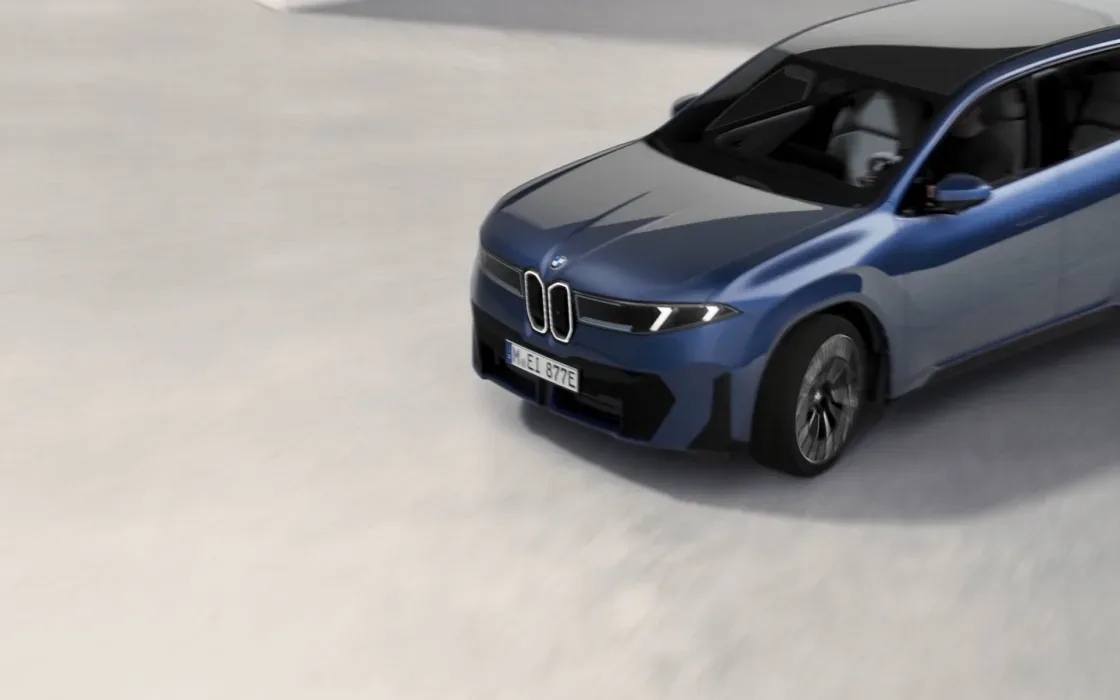
Image credit: BMW Australia
Well, that did not take long. ANCAP switched on its tougher 2026-2028 rating protocols a couple of weeks ago and the very first car through the door has walked out with five stars. The BMW iX3, the Neue Klasse electric SUV we priced up last week, now sits at the top of a brand new leaderboard that every other new car in Australia will be judged against for the next three years. The rating covers both the launch iX3 50 xDrive and the $89,900 iX3 40 that opens the range in the fourth quarter.
The interesting story here is not just that BMW hit the mark. It is what the new mark actually looks like. ANCAP has moved from a five-pillar rubric to a four-pillar Stages of Safety framework, and the way scores are earned inside each pillar has shifted. If you have been waving off ANCAP results as marketing wallpaper, this one is worth a proper look, because the bar just moved and the iX3 is the first car we can measure it against.
The Result at a Glance
| Pillar | iX3 score | What it covers |
|---|---|---|
| Safe Driving | 71% | Driver monitoring, distraction, speed assistance, seatbelt reminders |
| Crash Avoidance | 83% | Autonomous emergency braking, lane keeping, junction assist, reverse AEB |
| Crash Protection | 86% | Adult and child occupant results, vulnerable road user impact |
| Post-Crash | 95% | Automatic emergency call, rescue access, thermal event management |
Five stars, rating valid through December 2034. The tested vehicle was an iX3 50 xDrive built to Euro-spec at BMW's Munich plant, put through the wringer at Euro NCAP's facility in Germany. ANCAP has confirmed the local rating applies to Australian-delivered iX3 50 xDrive and iX3 40 vehicles as well, because the safety hardware and structure are identical.
What Actually Changed With the New Protocols
The short version: less emphasis on how well the car survives being hit, more emphasis on stopping the crash happening in the first place, and a brand new set of criteria for what happens in the ninety seconds after impact.
Under the previous rubric, ratings sat on four separate areas: Adult Occupant Protection, Child Occupant Protection, Vulnerable Road User Protection and Safety Assist. The 2026-2028 version reshuffles that into four stages ordered by when they matter. Safe Driving comes first (before anything goes wrong), then Crash Avoidance, then Crash Protection, then Post-Crash. Weightings inside each pillar have shifted too. Distracting touchscreens now cost points in Safe Driving. Lane centering that intervenes too gently loses points in Crash Avoidance. Emergency crash notification, which used to be a bonus item, is now a full column of its own worth 95% of the iX3's score.
The other big change is that the pass mark for five stars has been lifted. Under the outgoing framework a car could scrape five stars on the strength of great crash structure and mediocre active safety. Under the new one, weak Crash Avoidance or a poor Post-Crash score can drop you a star even if the structure is bulletproof. Older five-star cars keep their existing badges. Anything tested from mid-2026 onward is playing a different game.
Where the iX3 Excelled
The 86% Crash Protection score reflects a set of eye-catching individual results. The iX3 pulled a full 100% for the driver in the 32km/h oblique pole test, 100% for front occupants in the 35km/h full-width frontal test, 100% for rear-seated child dummies in the 50km/h frontal offset test, and 100% across the board in the 60km/h side impact test. Very few cars have hit that many perfect scores in a single assessment. BMW's use of an aluminium and high-strength steel body shell around a floor-mounted battery pack keeps intrusion down and gives the airbags a stable environment to fire into.
Crash Avoidance is where ANCAP made the loudest noise. The 83% is a solid number, but the callout was for the iX3's lane departure collision avoidance system, which earned the highest available ‘Good’ rating. ANCAP described it as a standout. In plain terms, this is the function that steers you back into your lane if you drift into oncoming traffic. Getting a ‘Good’ here means the system reacts early enough, sharply enough, and often enough across the test scenarios to keep the car inside its own lane without startling the driver.
The 95% Post-Crash number came off the back of BMW's emergency crash notification setup, which automatically triangulates the crash, notifies emergency services with GPS location and impact data, and, in a fire scenario, provides rescue crews with pre-loaded structural cut points via QR code on the door. It is not a new idea, but the point of the new pillar is that ANCAP now measures it directly and BMW has clearly optimised for it.
Where It Left Points on the Table
The 71% Safe Driving score is the softest number of the four. Under the old framework this pillar did not exist as a standalone category, so there is no clean apples-to-apples comparison, but expect Safe Driving numbers below 75% to be normal for launch vehicles as manufacturers get their heads around the new distraction penalties.
Vulnerable Road User protection was the other soft spot inside Crash Protection. The iX3 scored 64% overall against pedestrians and cyclists, made up of 61% for impacts with child pedestrians and 62% for both adult pedestrians and cyclists. The bonnet and A-pillar geometry are the usual suspects here. It is not a fail, but it is a reminder that a two-tonne electric SUV with a tall bonnet line has more work to do around pedestrians than a lower sedan does.
How It Compares to Recent Five-Star Cars
Because the rubric changed, most existing five-star ratings on the CarSorted directory sit under the 2023-2025 protocols. To give you a sense of what the iX3 is up against on paper, here is a quick lineup with rating year noted, so you can read the scores in the right context.
| Model | ANCAP | Protocol year | Adult occupant |
|---|---|---|---|
| BMW iX3 | 5 stars | 2026-2028 | 86% (Crash Protection) |
| Polestar 3 | 5 stars | 2024-2025 | 89% |
| Genesis GV70 | 5 stars | 2021-2023 | 91% |
| Volvo EX60 | not yet rated | - | - |
| Tesla Model Y | 5 stars | 2022-2023 | 97% |
Do not read the 86% as a step down against the older cars. Different protocol, different maths. The Polestar 3's 89% was earned when Vulnerable Road User Protection sat in a separate pillar with lighter weighting. Slot the Polestar or the Model Y into the 2026-2028 rubric today and you might see a similar 82 to 88 range on Crash Protection. The iX3 result is the first data point we can start calibrating a new baseline against.
The Standard Safety Kit on the iX3
Every iX3 sold in Australia gets BMW's Driving Assistant Plus and Parking Assistant Plus packages as standard, regardless of whether you go for the 40 at $89,900 or the 50 xDrive at $109,900. That covers autonomous emergency braking with junction and pedestrian recognition, adaptive cruise control with steering assist, lane departure warning and active lane-keep intervention, blind-spot monitoring, rear cross-traffic alert, exit warning, a surround-view camera, park distance control front and rear, an automated parking assistant, and a reversing assistant that retraces the last fifty metres of your inputs. Eight airbags, including a centre airbag between the two front occupants. Emergency crash notification is built in and does not require a paid subscription for the first three years.
The CarSorted Angle: Why This Result Actually Matters for Buyers Right Now
Two things are happening at once and they line up in an interesting way. First, the new ANCAP framework means fresh crash tests will start reading a bit differently through late 2026 and 2027, and some brands are going to look weaker than their marketing suggests. Second, novated-lease buyers under the fuel-efficient LCT cap have finally got a properly-sized premium EV that fits the maths.
On the CarSorted directory today, the FBT-exempt mid-size premium EV shortlist is thin. The Genesis GV60 RWD, the Audi Q6 e-tron Performance grade, the Volvo EX60 P6 at $86,990, and now the iX3 40 at $89,900. Of that group, the iX3 is the only one carrying a five-star rating from the new 2026-2028 protocols. The GV60 was rated in 2022. The Q6 e-tron sits on a 2024 result. The EX60 has not been tested yet. Not one of those cars is unsafe, but when a fleet manager or a partner-buyer starts pushing back on your choice with ‘how new is that safety rating,’ the iX3 is the only one that comes back with an answer dated 2026.
Compare the whole shortlist head to head on the CarSorted compare tool, or filter the directory for BEV plus LCT-eligible plus mid-size SUV to see the FBT-exempt group side by side. Match that against your annual kilometres and your electricity tariff and you get an answer that is closer to a spreadsheet than a hunch.
What This Means for Buyers
If you were already leaning toward the iX3 40, the ANCAP result is one less thing to worry about at delivery time in Q4. The rating is locked in, it covers your car, and it is fresh enough that it will not read as stale on the resale ad three years from now. If anything, the fresh 2026-2028 stamp is a mild resale-value asset because used-car listings often display the rating year.
If you were cross-shopping the Polestar 3 Rear Motor at $116,700 or the Audi Q6 e-tron Performance at $122,500, both are still five-star cars and neither is compromised. But the BMW is now the only one of the three that has been through the harder test. If safety headroom matters to the way you drive, or you are packaging a car for a partner who is on the fence, that is a talking point that changes the shortlist calculus.
If you were shopping outside the premium bracket entirely and the Tesla Model Y was your default, note this: Tesla's current Model Y ANCAP rating comes from the 2022 protocols. A Model Y retest under the 2026-2028 rubric is not confirmed, and until it happens the direct comparison to the iX3 is not a like-for-like. Neither result is invalidated by the framework change, but if you are the kind of buyer who wants the most recent independent safety pass on the sticker, the iX3 is where that currently lives.
Full crash test breakdown will land on ancap.com.au. BMW iX3 order books are open now at BMW Australia dealers. To see the FBT-friendly EV shortlist and check where the iX3 sits against the Polestar 3, Audi Q6 e-tron and Genesis GV70, jump into the CarSorted directory or build a three-way head-to-head in the compare tool.
Disclaimer: ANCAP scores, pillar breakdowns, tested variant coverage and rating expiry are sourced from ANCAP's official rating for the BMW iX3 published 9 July 2026. Pricing and standard equipment figures are sourced from BMW Australia and are correct at time of writing. Prices are before on-road costs unless noted. Comparison ratings for other vehicles reflect the protocol year they were originally tested under, which is not directly comparable to the 2026-2028 framework. Always confirm current safety kit at time of order with your dealer.