Key Takeaways
- New M177 EVO 4.0L twin-turbo V8 with a flat-plane crankshaft
- 450kW / 850Nm from the V8, plus a 48V mild hybrid adding 17kW and 205Nm
- GLE 63 S SUV and Coupe: 3.9 sec 0 to 100km/h. GLS 63: 4.2 sec
- Top speed limited to 280km/h on all three variants
- Mercedes-Benz Australia confirms the line-up, first deliveries 2027
- Australian pricing TBC; previous-gen GLE 63 S sat around $260k, GLS 63 around $290k
- No current ANCAP rating for the new AMG 63 versions

Image credit: Mercedes-Benz Australia
Almost every other performance brand is quietly throttling its V8s into retirement. BMW M has just shown the electric Neue Klasse concept that will spawn the next M3. Porsche is hybridising the Cayenne Turbo. Range Rover is moving the Sport SVR onto an electrified BMW-sourced 4.4L. Mercedes-AMG, by contrast, has just done the opposite. The 2027 GLE 63 S and GLS 63 have been signed off for Australia with a brand new V8, a brand new bottom end, and a brand new attitude problem. If you want a big, fast, eight-cylinder family SUV from Affalterbach, this update buys you another generation.
On CarSorted we cover this slice of the market for the buyer who is genuinely cross-shopping AMG, BMW M, Audi RS, Porsche and Range Rover. The headline for that buyer is simple: the V8 is back for another round, but it is a different V8 to the one in the old car, and the way it makes its power has changed in a way you will feel from the driver's seat.
M177 EVO: Same Badge, New Heart
AMG has kept the M177 name, but the internals have been overhauled. The biggest change is the move from a cross-plane crankshaft to a flat-plane design, the same layout you see in supercars from Ferrari and McLaren and in the previous Mustang Shelby GT350. Flat-plane V8s rev more freely because the rotating mass is lower, throttle response is sharper, and the firing order produces a higher-pitched, more aggressive exhaust note than the classic American-style burble. The trade-off is more secondary vibration, which AMG has tuned around with revised mounts and balance shafts.
Twin turbos sit inside the V to keep response quick and the pipework short. AMG has also added an updated intake camshaft, a reworked fuel-injection system and modern exhaust aftertreatment, including a particulate filter that ships as standard worldwide. That last item is the un-glamorous reason this engine exists at all. Without it, the V8 would not pass the next round of European and Australian emissions rules. With it, AMG buys itself enough breathing room to keep eight cylinders in the GLE and GLS through 2027 and likely beyond.
Outputs and Mild Hybrid
Peak power is 450kW between 5,500 and 6,100rpm. Peak torque is 850Nm, on tap from 2,500 to 4,500rpm. Those are the same headline numbers as the outgoing GLE 63 S, but they arrive in a different way thanks to the new crank and the 48V system. AMG has paired the V8 with an updated Integrated Starter-Generator 2.0, the same one used in the new C63 family, which adds up to 17kW and 205Nm of electric boost on top of the petrol engine for short bursts. It also handles smooth stop-start and lets the V8 coast with the cylinders effectively unloaded on light throttle, which helps real-world fuel use.
| Powertrain | Spec |
|---|---|
| Engine | 4.0L twin-turbo V8, flat-plane crank (M177 EVO) |
| Peak power | 450 kW at 5,500-6,100 rpm |
| Peak torque | 850 Nm at 2,500-4,500 rpm |
| Mild hybrid | 48V ISG 2.0, +17 kW / +205 Nm boost |
| Gearbox | 9-speed AMG Speedshift MCT |
| Drive | AMG Performance 4MATIC+ AWD |
| Fuel | Premium unleaded, particulate filter standard |
Performance, By Body Style
Three body styles, two acceleration targets. The GLE 63 S in either SUV or Coupe form does the 0 to 100km/h run in a claimed 3.9 seconds. The taller, heavier seven-seat GLS 63 takes 4.2 seconds, which is faintly ridiculous for a vehicle this size. All three are electronically limited to 280km/h, the same ceiling as the outgoing cars.
| Variant | 0-100 km/h | Top speed | Seats |
|---|---|---|---|
| GLE 63 S 4MATIC+ SUV | 3.9 sec | 280 km/h | 5 |
| GLE 63 S 4MATIC+ Coupe | 3.9 sec | 280 km/h | 5 |
| GLS 63 4MATIC+ | 4.2 sec | 280 km/h | 7 |
Design Tweaks Inside and Out
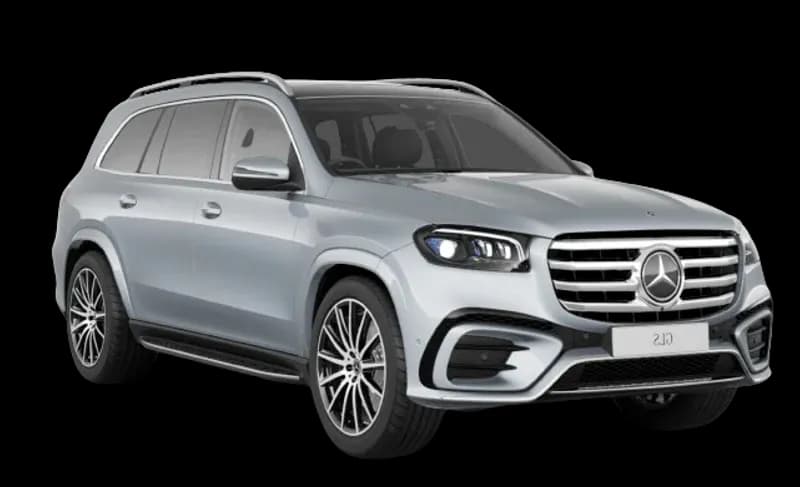
Image credit: Mercedes-Benz Australia
Visually the changes are evolutionary, not revolutionary. The new AMG-specific grille keeps the vertical-slat AMG signature but tucks the badge into a fresh chrome surround. The headlights gain Mercedes' new star-graphic daytime running light signature, mirroring what the rest of the line-up has been getting. The bumpers are reprofiled, the wheels are new, and the badge work on the back is updated.
Inside, both cars carry the latest MBUX generation with the larger portrait touchscreen, new graphics, and the same haptic steering wheel controls fitted to the rest of the 2026 Mercedes range. The AMG Track Pace logger and Drift Mode return on cars optioned with the AMG Dynamic Plus package. Seats are AMG Performance items with adjustable side bolsters as standard on the GLE 63 S, with optional ventilation and massage. The GLS 63 keeps its seven-seat layout, with the third row designed for adults rather than children.
Safety
ANCAP has not assessed the updated AMG GLE 63 S or GLS 63, so both are not yet rated. The civilian Mercedes-Benz GLE last carried a 5-star ANCAP score from 2019 under the old protocol, which has since expired. ANCAP's current rules require fresh testing for a new rating, and the AMG variants would need to be assessed separately even if the civilian car was retested.
Standard active safety is broadly carry-over from the wider Mercedes range and includes autonomous emergency braking with intersection support, adaptive cruise with active lane keeping, blind-spot monitor, rear cross-traffic alert, surround-view cameras, traffic-sign recognition and Pre-Safe occupant protection. AMG-specific items include carbon-ceramic brake hardware as a factory option and updated electronically controlled dampers.
How It Compares
This is where the strategic call AMG has made becomes interesting. The next-gen BMW X5 M Competition is widely expected to switch its 4.4L V8 to a plug-in hybrid for the next round of emissions rules, adding weight and electric-only range but also adding plug-in compliance for fleet drivers. The Range Rover Sport SVR has already moved to the BMW-sourced 4.4L V8 with a 48V mild hybrid, similar in concept to AMG's solution. The Porsche Cayenne Turbo GT is the last classic petrol-only super-SUV from Stuttgart and is on borrowed time before it gets a battery alongside its 4.0L V8. The Audi RS Q8 is in run-out, with Audi confirming the next RS-badged Q8 will be electric.
Against that backdrop, the GLE 63 S and GLS 63 stand out as comparatively pure performance V8 SUVs that have not yet been pulled into a plug-in cycle. For a buyer who already owns a charger but does not want to commit to a 2.5-tonne plug-in family hauler with a 300kg battery in the floor, that matters. For a buyer who can plug in nightly, the BMW X5 M PHEV will look more attractive on the FBT and fuel maths once it is locally priced.
Warranty and Servicing
Mercedes-Benz Australia covers the AMG range with a 5-year unlimited-kilometre warranty, the same cover offered on the rest of the brand's passenger and SUV line-up. AMG-specific items like the carbon-ceramic brakes, when fitted, follow Mercedes' standard wear-and-tear policy. Capped-price servicing has not been confirmed for the updated 63 models, but Mercedes' current AMG plans run in 3-year and 5-year prepaid blocks and tend to land north of $1,000 per visit at that performance tier.
The CarSorted Angle
On CarSorted's directory, the large luxury performance SUV category is the one segment where the petrol V8 has stubbornly refused to die. Of the cars in our database in this class, only two genuinely run a non-electrified V8 today: the Range Rover Sport SVR (now itself mild-hybrid V8) and the Porsche Cayenne Turbo GT. Everything else has gone PHEV, gone six-cylinder, or gone fully electric. Our internal cross-shop data on the existing Mercedes-AMG line shows that AMG C63 S E Performance shoppers most often ping the AMG GT Coupe and BMW M3 Competition next, but AMG GLE 63 S shoppers behave differently. They cross-shop the Range Rover Sport and the seven-seat GLS 63, not the BMW X5 M, which suggests these are buyers staying inside the three-pointed star.
Worth flagging too: from 1 July 2026 the Luxury Car Tax threshold for non-fuel-efficient cars sits at $80,809, with the fuel-efficient threshold at $91,661. Both AMG SUVs are well above either ceiling, so every dollar over the line attracts the 33% LCT rate. The mild-hybrid V8 does not push the GLE 63 S or GLS 63 inside the fuel-efficient threshold (which requires a claimed combined fuel use below 7.0 L/100km, and these cars are not close), so they pay LCT on the full overage. Our 2026-27 LCT update piece walks through how that works on real prices.
What This Means for Buyers
If you were going to spend $260,000-plus on an AMG GLE 63 S in late 2026 or early 2027, the simple read is: wait. The new car arrives next year with a more responsive engine, the latest cabin tech, and AMG's 48V mild-hybrid layer that materially smooths out the low-rpm response of the V8 and gives you another half-decade or so of resale runway before plug-in hybrid V8s become the new normal at this end of the market.
If you actively want to plug in at home and offset some of the fuel bill on a 5.2 L/100km claimed cycle, the GLE 63 S and GLS 63 are the wrong tools. The PHEV Mercedes-AMG C63 S E Performance sedan/wagon does that job already, and the next BMW X5 M Competition is expected to follow the same playbook on a bigger SUV body. The AMG 63 SUV update is, deliberately, a pitch for the buyer who wants the noise, the response, the 280km/h V-max and the rolling V8 reassurance that the family wagon can still embarrass a Toyota 86 off a roundabout.
For seven-seat buyers cross-shopping the GLS 63 against the new electric BMW M concept direction, the gap will be even starker in 2027. AMG is the petrol holdout in this size class. If that is what you want, it is also the only AMG family SUV that still gives it to you.
Compare luxury SUVs on CarSorted: Best Luxury SUVs Australia | Best Electric Luxury SUVs 2026 | Best 7-Seaters Australia
Disclaimer: Specifications are sourced from Mercedes-AMG's official press materials and Mercedes-Benz Australia. Australian pricing, on-sale dates and final equipment lists for the 2027 GLE 63 S and GLS 63 have not been confirmed. Acceleration claims are manufacturer figures and have not been independently verified by ANCAP or CarSorted. Comparison commentary is current as of 27 June 2026 and may change as competitor specifications and pricing are finalised.