Tax and incentive figures current as of July 2026
Thresholds, rebates and rules on this page change each financial year. We check them against the ATO and state revenue offices, but always confirm the current position with the relevant authority before you sign. LCT thresholds are set by the ATO and change each financial year. The $80,809 / $91,661 figures apply from 1 July 2026. The $120,000 zero-emissions threshold is agreed under the Australia-EU FTA and expected from 1 July 2027, but is not yet law and depends on ratification and enabling legislation. Confirm current figures with the ATO before relying on them.
Key Takeaways
- New thresholds from 1 July 2026: $80,809 (most cars) and $91,661 (fuel-efficient)
- Indexation factor of 1.003, lifting the lines by just $242 and $274
- LCT rate stays at 33 per cent of the value above the threshold
- A dedicated $120,000 zero-emissions threshold is agreed under the EU FTA, expected 1 July 2027, subject to legislation
- Family SUVs like the Toyota Kluger Hybrid sit right on the line
- The depreciation cost limit for businesses also indexes to $71,544 for 2026-27
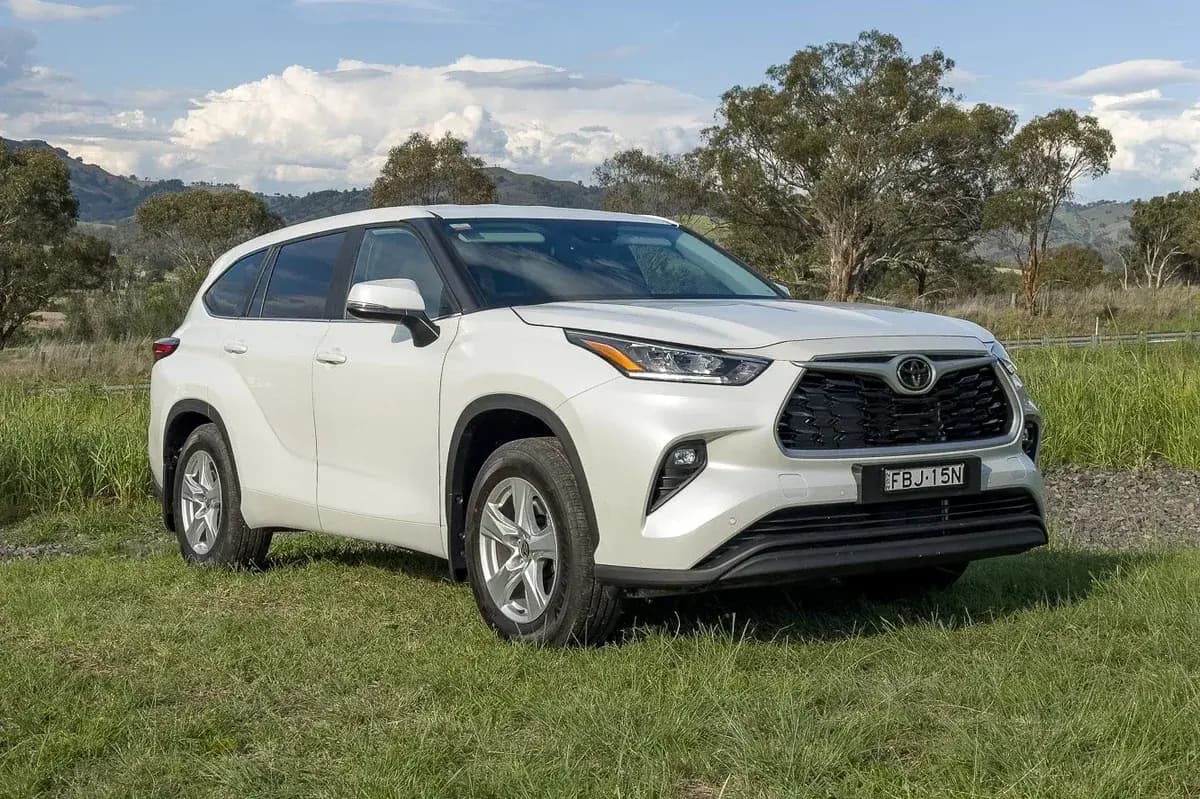
Image credit: Toyota Australia
The Australian Taxation Office has refreshed the Luxury Car Tax thresholds for the 2026-27 financial year, and if you are shopping anything north of about $80,000 driveaway, the new numbers matter to your bottom line. The non-fuel-efficient threshold lifts to $80,809 and the fuel-efficient threshold lifts to $91,661 from 1 July 2026. The bigger story is what arrives a year later. Federal Government documentation tied to the new Australia-EU free trade agreement sets out a dedicated $120,000 threshold for zero-emissions vehicles expected from 1 July 2027, which would quietly reshape what a sub-$120k premium EV costs to put on Australian plates. It is a treaty commitment rather than law so far, and the caveat is spelled out below.
We have built out the cross-shop maths on our directory so you can see exactly where each premium model lands. The short version is that this is a quiet year for the tax (a 1.003 indexation factor means the line only inches up by $242 and $274), so most buyers will feel zero change at signing on 1 July. The interesting cohort is the cars that sit within a few thousand of the threshold, plus every European EV in the $100k to $135k bracket, which is about to become structurally cheaper inside 12 months.
New thresholds, side by side
| Financial year | Non-fuel-efficient | Fuel-efficient | Indexation |
|---|---|---|---|
| 2024-25 | $80,567 | $91,387 | held |
| 2025-26 | $80,567 | $91,387 | held |
| 2026-27 (from 1 July) | $80,809 | $91,661 | 1.003 |
| 2027-28 (zero-emissions tier) | $120,000 EV-only threshold proposed for 1 July 2027, not yet law | TBC | |
Current price on CarSorted: Polestar 3 Rear Motor $116,700 RRP, as at 1 Jul 2026.
Two years of frozen thresholds and a third year of barely-there indexation is the underlying pattern. The ATO publishes these numbers each May and June in line with motor vehicle purchase CPI data. With overall vehicle inflation easing in late 2025 and into 2026, the formula barely moved. Translated into buyer impact, a fuel-efficient car priced exactly on last year's line at $91,387 effectively gets a $274 tax-free buffer next financial year, which is functionally rounding error in this market.
What 33 per cent actually costs you
LCT is charged at 33 per cent of the GST-inclusive value above the threshold, before on-road costs, but after customs duty. That maths catches a lot of buyers off guard, because the headline RRP on a manufacturer page already includes any LCT the importer is liable for, but you can still work backwards to see how much of your invoice is going to Canberra. A few worked examples on next year's lines:
| Vehicle scenario | RRP (incl. GST) | Threshold used | LCT payable |
|---|---|---|---|
| Mid-size petrol SUV at $85,000 | $85,000 | $80,809 | $1,383 |
| Plug-in hybrid family SUV at $100,000 | $100,000 | $91,661 | $2,752 |
| European EV at $115,000 | $115,000 | $91,661 | $7,702 |
| European EV at $115,000 (under the proposed 2027 EV tier) | $115,000 | $120,000 | $0 |
| Premium V8 SUV at $150,000 | $150,000 | $80,809 | $22,833 |
That bottom row is the part that has not changed for a decade. If you are buying a $150,000 LandCruiser, large performance SUV or full-size V8 ute, roughly $22,800 of your money is going straight to Treasury before stamp duty even gets a look-in. The fuel-efficient line at $91,661 buys back about $3,569 of that on a like-for-like RRP. If the proposed EV-only $120,000 line becomes law for 2027, it would buy back another $9,353 on top, but that tier still needs FTA ratification and legislation before it exists.
The $120,000 EV threshold, explained
The third tier is the one that will genuinely move metal. Under the Australia-EU FTA negotiated late last year, the Federal Government committed to a dedicated LCT threshold for zero-emissions vehicles. The agreed number is $120,000, expected to commence on 1 July 2027. EVs over that figure still pay 33 per cent above the line, but anything underneath becomes LCT-free.
One caveat that matters if you are thinking of timing a purchase around it. This is a treaty commitment, not yet law. The exchange of letters says Australia will implement the new category "in accordance with its laws and regulations", and it still needs FTA ratification through Parliament plus enabling legislation before it takes effect. The direction of travel is clear and the number is agreed, but the start date is an expectation rather than a certainty, so treat any plan that hinges on waiting for it as carrying that risk.
The cars that benefit most are not the cheap ones. A BYD Atto 2 or Volvo EX30 never crosses the existing $91,661 fuel-efficient line, so the new tier is irrelevant to them. The cohort that wins is anything from roughly $95,000 to $135,000: think BMW iX entry trims, the larger Audi e-tron range, mid-spec Volvo EX90, the new Cadillac Vistiq, and any plug-in performance SUV that sneaks under the cap. A $115,000 EV that pays $7,702 in LCT today would pay zero LCT once the new tier commences, which is roughly the difference between waiting and signing now, with the ratification caveat above attached to the timing.
We are flagging this because the savings change buyer behaviour. If you are shopping a sub-$120k European EV and can flex on delivery timing, holding through to Q3 2027 is genuinely worth doing the maths on, especially on novated-lease structures where the FBT exemption already lives below the fuel-efficient line.
Fuel-efficient definition still bites
The other change worth flagging is one that did not change for 2026-27 but is still relatively new in buyer memory. From the 2025-26 reset, the ATO halved the fuel-efficient cutoff from 7.0 L/100km combined to 3.5 L/100km. That cut excluded a large group of mild-hybrid SUVs that used to claim the higher threshold. For 2026-27, the 3.5 L/100km cutoff stays in place.
Practically, that means a petrol-only large SUV at 8 to 10 L/100km uses the $80,809 line. A regular hybrid like the Kluger Hybrid (around 5.6 L/100km combined) also uses the lower line, despite being a hybrid in the broader sense. A plug-in hybrid that genuinely claims under 3.5 L/100km combined, plus every pure EV, qualifies for the $91,661 fuel-efficient line. The Toyota RAV4 PHEV, Mitsubishi Outlander PHEV update, BYD Sealion 6, Cupra Leon Ve, and every BEV on sale here all land on the higher threshold.
Which cars sit right on the line
Cross-referencing the new lines against our own variant database flags a handful of models where a $500 option pack can swing whether you pay LCT or not. A few worth knowing about:
| Model | Indicative RRP | Threshold (2026-27) | Buffer |
|---|---|---|---|
| Toyota Kluger GXL Hybrid AWD | $71,930 | $80,809 | $8,879 under |
| Toyota Kluger Grande Hybrid AWD | $85,135 | $80,809 | $4,326 over |
| Kia Sorento GT-Line HEV AWD | $74,290 | $80,809 | $6,519 under |
| Hyundai Palisade Calligraphy Hybrid | $89,900 | $80,809 | $9,091 over |
| Cadillac Optiq Sport AWD | $80,000 | $91,661 | $11,661 under |
| Cadillac Lyriq (EOFY) | $90,000 | $91,661 | $1,661 under |
| Mercedes-Benz CLA 350 4MATIC Electric | $91,300 | $91,661 | $361 under |
| Hyundai IONIQ 5 Epiq AWD | $91,700 | $91,661 | $39 over |
| Polestar 3 Rear Motor | $116,700 | $91,661 | $25,039 over |
| BMW iX xDrive45 | $142,900 | $91,661 | $51,239 over |
Current price on CarSorted: Kia Sorento GT-Line HEV AWD $74,540 RRP, as at 8 Oct 2026; Hyundai Palisade Calligraphy Hybrid (8-Seat) $89,900 RRP, as at 4 Jul 2026.
The two cars either side of the fuel-efficient line are the ones worth staring at. The Mercedes-Benz CLA 350 4MATIC Electric lands $361 under the $91,661 threshold and pays no LCT at all. The Hyundai IONIQ 5 Epiq AWD lands $39 over it, and that $39 drags the whole amount above the threshold into the 33 per cent calculation. This is the part buyers get wrong most often: LCT is not a cliff you pay on the whole car, but it is a cliff you either trigger or you do not, and a few dollars of options can be what triggers it.
The two Klugers on that list tell the segment story neatly. The mid-spec GXL Hybrid clears the petrol-line threshold by a comfortable margin. Tick up to the Grande and you cross it. That is precisely why we keep flagging conventional hybrids on the lower (less generous) line: they get caught by the LCT a lot earlier than buyers expect.
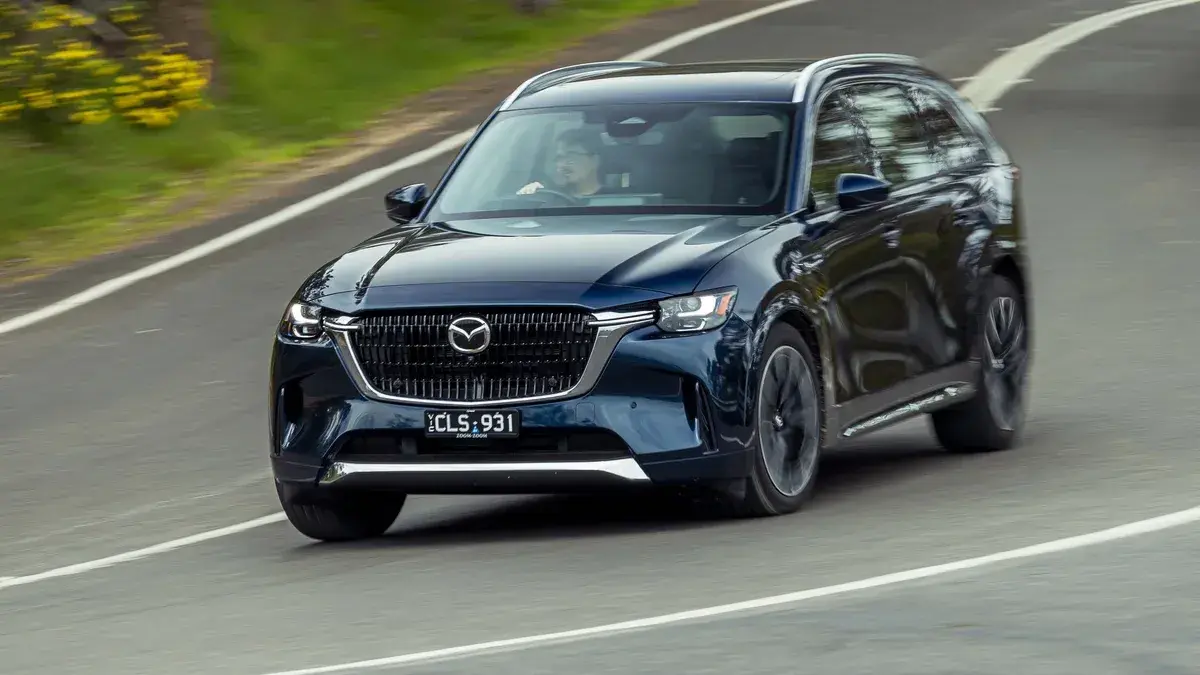
Image credit: Mazda Australia
Depreciation cost limit and instant write-off
Two related thresholds also move on 1 July. The car depreciation cost limit, which businesses use to cap how much of a car's purchase price can be claimed against income tax, indexes to $71,544 for 2026-27. The GST input tax credit cap for business car purchases sits at one-eleventh of that, around $6,504. Both lines apply regardless of fuel type, and neither moved much because they are tied to the same CPI series as the LCT.
Sole traders and small business buyers eyeing a $90,000-plus dual-cab or premium SUV should remember that the depreciation cap bites well before LCT does. A $95,000 ute with valid business use can only be depreciated up to that $71,544 line; the remaining $23,456 is your problem at the end of the year.
How we read it on CarSorted
Stacking these numbers against our own variant data, the practical takeaway is that 2026-27 is a flat year for LCT, and the real action is the looming EV-only tier in 2027-28. If you are shopping the family large SUV bracket, the difference between a Toyota Kluger Hybrid at $62,410 and a Hyundai Palisade Calligraphy Hybrid at $89,900 includes about $3,000 of LCT inside that gap, which is worth knowing when you cross-shop. If you are shopping a sub-$120k premium EV, the number you should care about is not the EOFY discount this June, it is whether the same car will be LCT-free in July 2027.
Run the side-by-side on our compare tool or jump into the directory and filter by powertrain to see which variants land on each side of the line. Every premium model in our database has the fuel-efficiency claim attached, so the threshold a given variant uses is unambiguous.
What this means for buyers
For most buyers, signing now versus on 1 July 2026 changes nothing material. The thresholds inch up by less than $300, which gets eaten by the next dealer admin fee. Three buyer profiles do need to think about it.
First, family SUV buyers in the high-$70k to mid-$80k bracket. The $80,809 line cuts straight through the Kluger Grande Hybrid, Mazda CX-90, mid-spec Audi Q5 and Hyundai Palisade Calligraphy. A single optional metallic paint colour or roof rack pack can be the difference between paying LCT and not. Use our directory to model spec-by-spec which trim sits on which side of the line before you commit at a dealer.
Second, premium EV buyers between $95,000 and $120,000. If you can wait through to 1 July 2027, you remove the LCT cost entirely on most of the segment. A Volvo EX60 P10 AWD at $99,606, the Cadillac Lyriq at $90,000 driveaway, or sub-$120k Audi e-tron specifications all sit inside the window where waiting saves real money. Cross-check on the Cadillac Lyriq EOFY price cut story to see how today's discounts stack against tomorrow's tax change.
Third, novated-lease drivers. The FBT exemption window for EVs still runs to the fuel-efficient threshold (currently $91,387, lifting to $91,661 from 1 July 2026). Crossing that line means your lease structure flips out of the exemption entirely, which is a much bigger hit than 33 per cent LCT on the over-threshold portion. Run the Volvo EX30, Polestar 4, Tesla Model Y L and similar through your salary packaging provider first.
Best Electric Luxury SUVs 2026 | Best Family Cars 2026 | Side-by-side compare tool
Disclaimer: LCT thresholds are sourced from the Australian Taxation Office (ato.gov.au) for the 2026-27 financial year. Indicative model pricing is RRP excluding on-road costs at time of writing, sourced from the relevant manufacturer Australian websites. Worked examples assume the entire above-threshold portion is taxed at 33 per cent and do not include stamp duty, registration, or dealer delivery. The $120,000 zero-emissions threshold reflects Federal Government documentation tied to the Australia-EU FTA, with a planned 1 July 2027 commencement. Always confirm the final number with a registered tax agent or the ATO before signing.