CarSorted Verdict
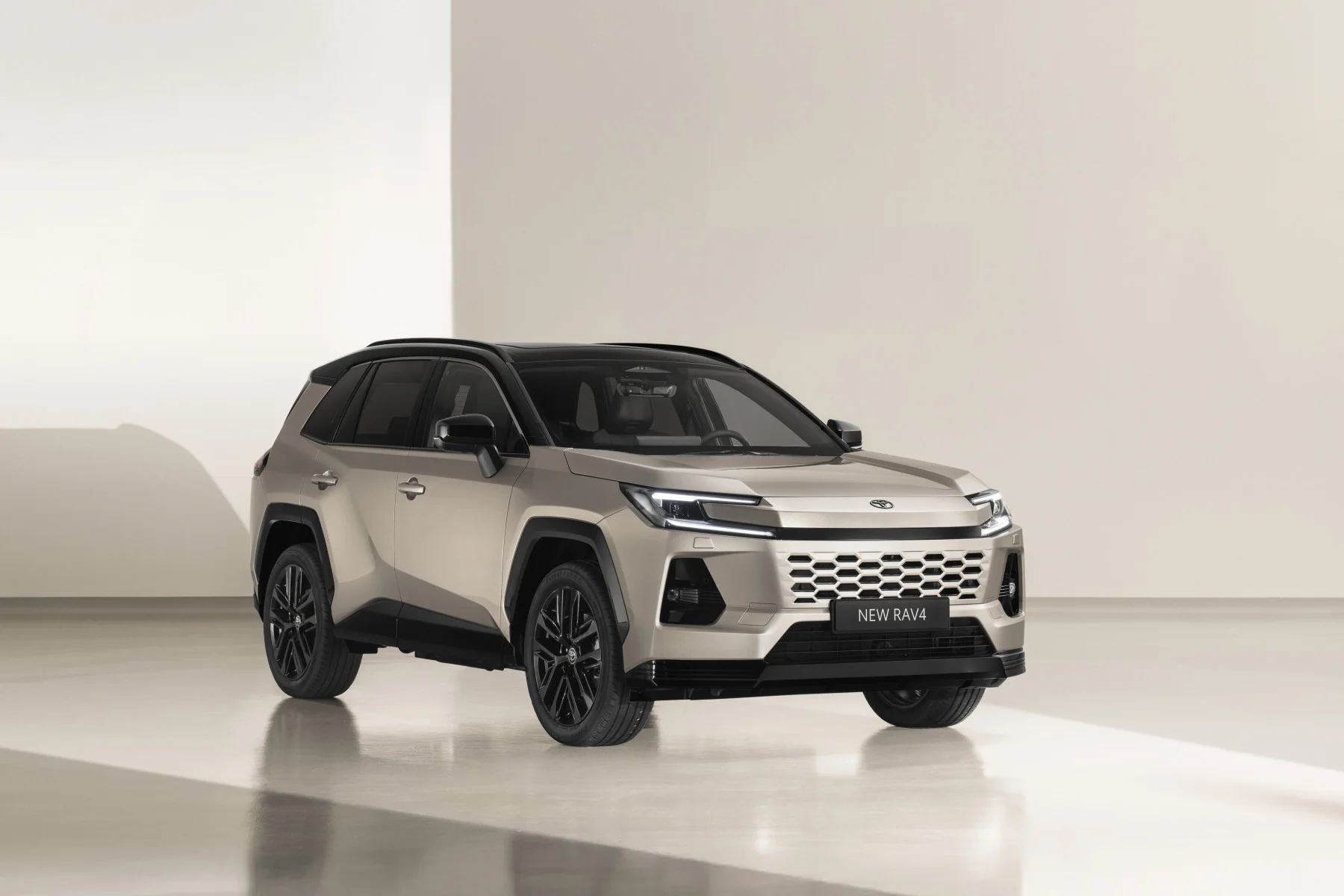
The Toyota RAV4 GX Hybrid 2WD is still the default best family car in Australia for 2026, and the new sixth-generation car's 705 L boot is now the biggest in the mid-size class. The Kia Sportage S HEV closes the gap on warranty (7 years, unlimited km) rather than on space. For 7-seat families the Kia Carnival is unbeaten. For metro families with home charging, the BYD Sealion 6 Essential PHEV is the value pick at $42,990 RRP.
One thing to know before the list: the sixth-generation RAV4 carries no ANCAP rating in our database. That is not the same as a bad result, and it is not a 5-star result either. Where a car has no published rating we say so rather than borrowing the previous generation's stars.
A family car needs to do everything well: safe enough for the kids, big enough for a pram and the weekly shop, cheap enough to run daily, and reliable enough not to leave you stranded on the way to school. We scored every car in our database against five family-specific criteria and ranked the top 10 below. Each pick links through to our directory so you can compare every variant on price, safety and running cost in one tap.
How we ranked these
- Safety (25%): a current 5-star ANCAP rating, weighted by how recent the protocol is. One exception is made and stated openly rather than papered over: a brand-new generation that has not been tested yet is scored on its predecessor's equipment and its own active-safety list, and is labelled "No data" on the rating itself. Bonus points for AEB with cyclist detection, blind-spot, rear cross-traffic and a centre airbag.
- Space (25%): boot litres, rear legroom, ISOFIX points, ability to fit 3 child seats across the back.
- Running cost (20%): fuel/electricity, insurance, servicing and tyres over 5 years at 15,000 km/year.
- Reliability (15%): warranty length, brand reputation in Australia, recall history.
- Features (15%): wireless Apple CarPlay/Android Auto, reversing camera, rear USB ports, dual-zone climate.
Top 10 family cars at a glance
| Rank | Variant | Best for | From RRP | Seats | Boot (seats up) | ANCAP |
|---|---|---|---|---|---|---|
| #1 | Toyota RAV4 GX Hybrid 2WD | Best overall | $45,990 | 5 | 705 L | No data |
| #2 | Kia Sportage S FWD Petrol | Best warranty | $38,490 | 5 | 543 L | 5 (2022) |
| #3 | Hyundai Tucson Active Petrol | Best value mid-size | $39,100 | 5 | 539 L | 5 (2021) |
| #4 | Mazda CX-5 G25 Pure AWD | Best interior quality | $39,990 | 5 | 466 L | 5 (2025) |
| #5 | Toyota Corolla Cross GX FWD | Best small family | $37,440 | 5 | 425 L | 5 (2022) |
| #6 | BYD Sealion 6 Essential PHEV | Best PHEV value | $42,990 | 5 | 425 L | 5 (2023) |
| #7 | Mitsubishi Outlander ES 2WD | Best warranty length | $39,990 | 5 | 485 L | 5 (2025) |
| #8 | Kia Carnival S Diesel | Best for 3+ kids | $54,560 | 8 | 627 L | 5 (2021) |
| #9 | Toyota Kluger GX Hybrid AWD | Best 7-seat hybrid | $62,410 | 7 | 241 L | 5 (2021) |
| #10 | Hyundai Palisade Elite Hybrid | Best premium 8-seat | $76,500 | 8 | 300 L | 5 (2025) |
Price, seats, boot and ANCAP in every row describe the same variant, the one the link goes to. That matters more than it sounds: quoting a hybrid's boot beside a petrol's price is the easiest way to flatter both. Boot is the seats-up figure, which on the three-row cars (Carnival, Kluger, Palisade) is the space behind the third row, so it looks small next to a five-seater and is not comparable to it. Seats-down figures are in the individual sections below. "No data" means the car carries no ANCAP rating in our database, not that it scored badly.
Pick two
Two family cars, side by side
The table above ranks them. Tap any two here for the things it does not show: fuel, towing, warranty and how often it needs servicing.
| Spec | Toyota RAV4 Hybrid | Kia Sportage S |
|---|---|---|
| Price from | $45,990est. RRP, before on-roads | $38,490RRP, before on-roads |
| Seats | 5 | 5 |
| Fuel use | 4.5 L/100km | 8.1 L/100km |
| Braked towing | 800 kg | 1,650 kg |
| ANCAP | No data | 5 starstested 2022 |
| Warranty | 5 yrunlimited km | 7 yrunlimited km |
| Service interval | 15,000 km | 15,000 km |
A plug-in hybrid's fuel figure is measured from a full battery, so it is never marked as beating a petrol or a regular hybrid here. Figures come from our car database, which is built from Australian manufacturer documents. A blank field reads “No data” rather than a zero or a dash.
#1 Toyota RAV4 Hybrid: the family-car default
The Toyota RAV4 Hybrid ticks nearly every family-car box. A 705 L boot (749 L loaded to the roof), 4.5 L/100km combined on the GX Hybrid 2WD, 1,500 kg braked towing on the AWD variants, and the resale value that makes Toyota the safest financial bet in any segment. Toyota Safety Sense (AEB, lane assist, adaptive cruise, blind-spot) is standard.
Pricing starts at $45,990 RRP for the GX Hybrid 2WD ($50,872 driveaway in Victoria). The AWD version of the same grade is $49,340 and is the one to have if you tow, because 2WD RAV4s are rated to just 800 kg braked against the AWD's 1,500 kg. The Cruiser Hybrid 2WD is $56,990 RRP ($63,034 driveaway VIC) and the Cruiser Hybrid AWD $60,340 RRP, adding heated seats, a larger touchscreen and a power tailgate. There is also a plug-in: the XSE PHEV 2WD from $58,840 with 95 km of claimed electric range.
The one gap: the sixth-generation (XA60) RAV4 arrived in 2026 and carries no ANCAP rating in our database. The previous XA50 car held 5 stars against 2019 protocols, but a rating does not transfer across a generation change and we will not quote one that has not been published. Treat the RAV4's rating as pending. Note also that the 705 L boot belongs to the new car: the XA50 it replaced was 542 L, so if you see that number quoted somewhere it is describing the old model.
#2 Kia Sportage: big boot, longest mainstream warranty
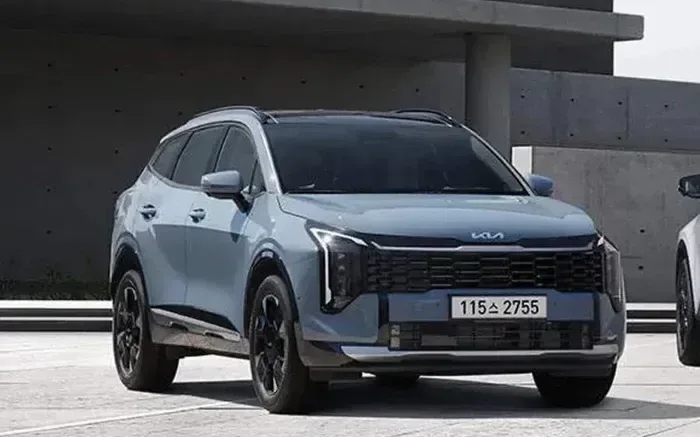
The range opens with the Kia Sportage S FWD Petrol at $38,490 RRP: 543 L behind the rear seats, 1,829 L with them folded, 8.1 L/100km, 5-star ANCAP from 2022, and Kia's class-leading 7-year unlimited-km warranty. Step up to the S HEV FWD at $44,450 and you get the bigger boot (586 L, 1,872 L folded) plus 4.9 L/100km, which is the pick for families doing mostly suburban driving. The AWD hybrid is $47,450 and 5.3 L/100km.
Worth being precise about, because the two figures get mixed up constantly: the hybrid's 586 L is not available at the $38,490 price, and neither number is the class leader any more. The sixth-generation RAV4's 705 L is. Dual 12.3-inch screens are standard on Sport+ and above.
#3 Hyundai Tucson: best value mid-size
Same platform as the Sportage, slightly different design language. The Hyundai Tucson Active Petrol from $39,100 RRP offers a 539 L boot (1,860 L folded) and 5-star ANCAP from 2021, on a 2.0-litre petrol four rated at 8.1 L/100km. The hybrid is a separate, dearer car: the Tucson Elite Hybrid at $48,100 RRP is the one rated at 5.3 L/100km, and it carries the larger 582 L boot. Quote the two together and the Tucson looks like a $39,100 hybrid, which it is not. Often discounted more aggressively than the Sportage at the dealer level. Read our full Hyundai Tucson review for the deep dive.
#4 Mazda CX-5: best interior at this price
The all-new third-generation Mazda CX-5 G25 Pure AWD from $39,990 RRP is AWD as standard, has a 132 kW 2.5L petrol four at 7.4 L/100km, a 466 L boot (1,594 L with the rear seats down), and a cabin that genuinely feels like it's punching one segment up on quality. It holds a 5-star ANCAP rating from 2025, the most recent protocol of anything in this top 10 alongside the Outlander and Palisade. The 2026 redesign added the 12.9-inch screen and five trim grades, from the $39,990 Pure to the $54,990 Akera, all G25 AWD. For now, the petrol model still beats most rivals on driving feel and material quality.
#5 Toyota Corolla Cross: best small family pick
If a RAV4 is too big, the Toyota Corolla Cross GX FWD from $37,440 RRP is the family-car sweet spot. The whole Australian range is hybrid now: the front-drive cars do 4.2 L/100km and the AWD cars 4.4, the 425 L boot fits a pram plus the weekly shop, and Toyota Safety Sense is standard. It holds 5-star ANCAP from 2022. Watch the boot if you go up the range, though: AWD drops it to 390 L and the Atmos AWD to 380 L, so the cheapest car here is also the roomiest.
#6 BYD Sealion 6 PHEV: the new value pick
From $42,990 RRP, the BYD Sealion 6 Essential PHEV is one of the most affordable plug-in hybrid family SUVs in Australia. 92 km of claimed electric range from an 18.3 kWh battery covers most family weekday driving on electricity alone. When the battery is empty the 1.5L petrol engine takes over for road trips; the combined claimed figure is 1.1 L/100km, which as with every PHEV assumes you start each trip charged. It holds 5-star ANCAP from 2023 and a 425 L boot.
Caveats: BYD's Australian warranty network is still growing, especially in regional areas, and the warranty itself is 6 years / 150,000 km rather than the unlimited-kilometre cover Kia and Toyota offer. The Essential tows 1,500 kg braked, so it's not a caravan-pulling SUV, and the dearer Dynamic and Premium trims actually tow less at 1,000 kg. If those don't matter, this is genuinely cheaper to live with than any petrol or diesel rival.
#7 Mitsubishi Outlander: the longest warranty in the top 10
The Mitsubishi Outlander ES 2WD starts at $39,990 RRP ($41,490 driveaway VIC), and that car is a five-seater, not a seven. The cheapest 7-seat Outlander is the LS 2WD at $44,040 RRP, which is $4,050 more than the headline price rather than the ~$2,000 usually quoted. Both hold 5-star ANCAP from 2025 and both carry Mitsubishi's 10-year / 200,000 km warranty, conditional on servicing at a Mitsubishi dealer, which is the longest cover in this top 10.
Boot is 485 L on the five-seat ES and 478 L on the seven-seat LS with the third row stowed, 1,500 L with the second row down. The third row is best for kids on shorter trips, not adults on highway runs. The Outlander PHEV ES adds 84 km of claimed electric range at 1.2 L/100km combined, but it starts at $58,990 RRP, which is a genuinely different price bracket and worth checking before you fall for the PHEV brochure.
#8 Kia Carnival: best for 3+ kids
If you have three or more kids, stop reading the SUV list and look at the Kia Carnival. Note that the petrol grades have been discontinued: the range now runs diesel and hybrid, so the entry point is the S Diesel at $54,560 RRP, with the S HEV at $56,310. For that you get genuine 8-seat capacity, sliding rear doors (a real help in tight car parks), four ISOFIX points rather than the usual two, a 627 L boot behind the third row and 2,827 L with both rear rows folded. It holds 5-star ANCAP from 2021.
Kia Australia does not publish a third-row-folded-only figure for the Carnival, so we have stopped quoting one: Not published. The two numbers above are the ones Kia does publish. Powertrain choice runs S Diesel $54,560 and the S HEV at $56,310 (Kia has dropped the petrol V6 from the range), and the hybrid is the pick on running cost at 5.8 L/100km against the petrol's 9.6, though it tows only 1,000 kg against 2,000.
#9 Toyota Kluger Hybrid: best 7-seat hybrid
From $62,410 RRP, the Toyota Kluger GX Hybrid AWD returns 5.6 L/100km in a 7-seat SUV, which is genuinely remarkable. Toyota reliability and resale apply just as strongly here as on the smaller RAV4, and it holds 5-star ANCAP from 2021. The third row is more usable for adults than the Outlander or Sorento. Boot is the usual three-row story: 241 L behind the third row, 552 L with it folded and 1,150 L with both rear rows down. The Australian range is hybrid-AWD only, running $62,410 GX, $71,930 GXL and $85,135 Grande.
#10 Hyundai Palisade: premium 7-seat without the German price
From $76,500 RRP for the Palisade Elite Hybrid (8-Seat), the second-generation Hyundai Palisade brings a luxury equipment list to a mainstream price. Genuine 7- or 8-seat configurations and heated front seats. It holds 5-star ANCAP from 2025, has four ISOFIX points, and returns 6.8 L/100km, which for a 2,085 kg eight-seater is the headline number.
The whole Australian range is hybrid: Elite 8-seat $76,500, Calligraphy 8-seat $89,900, Calligraphy 7-seat $90,900. There is no petrol Palisade on sale here and no hybrid still to come, so if you have read either of those things they are out of date. Boot is 300 L behind the third row and 2,081 L with both rear rows folded. Warranty is 7 years / unlimited km for cars first registered from 1 June 2025 when every scheduled service is done at a Hyundai dealer.
Annual running cost comparison
| Car | Fuel/yr | Service/yr | Insurance/yr | Total/yr |
|---|---|---|---|---|
| BYD Sealion 6 Essential (charged daily) | ~$955 | ~$300 | ~$1,400 | ~$2,655 |
| Toyota Corolla Cross GX Hybrid (4.2 L) | $1,197 | $300 | $1,300 | $2,797 |
| Toyota RAV4 GX Hybrid 2WD (4.5 L) | $1,283 | $300 | $1,500 | $3,083 |
| Kia Sportage S HEV FWD (4.9 L) | $1,397 | $340 | $1,500 | $3,237 |
| Hyundai Tucson Elite Hybrid (5.3 L) | $1,511 | $340 | $1,500 | $3,351 |
| Mitsubishi Outlander ES 2WD (7.5 L) | $2,138 | $280 | $1,500 | $3,918 |
| Mazda CX-5 G25 Pure AWD (7.4 L) | $2,109 | $330 | $1,500 | $3,939 |
| Kia Carnival S Petrol (9.6 L) | $2,736 | $420 | $1,800 | $4,956 |
Fuel costs are arithmetic, not opinion: 15,000 km/year at each variant's own manufacturer combined-cycle figure (shown in brackets) and $1.90/L. The Sealion 6 line is derived rather than quoted, an 18.3 kWh battery over 92 km of claimed electric range works out at 19.9 kWh/100km, which is ~$955 a year at $0.32/kWh if you drive it as an EV and charge every night. Servicing and insurance are estimates for a 35-year-old in metro NSW, not manufacturer figures. Your actual costs depend on driving style, postcode and dealer discounting.
Ten is not all of them: what this list leaves out
A top 10 is a top 10, but there are family cars on sale in Australia right now that a shortlist of ten simply cannot hold, and several of them undercut everything above. Most are recent Chinese arrivals, and the seven-seat end of the market in particular has changed faster than any guide's top 10 can track. Every figure below is the linked variant's own.
| Variant | Why it matters | From RRP | Seats | ANCAP |
|---|---|---|---|---|
| Chery Tiggo 8 Super Hybrid Urban | 7-seat PHEV, 95 km electric, 1.3 L/100km | $42,850 | 7 | 5 (2025) |
| Nissan X-Trail ST 4WD 7-seat | Cheapest 7-seat from a legacy Japanese brand | $41,140 | 7 | 5 (2021) |
| Honda CR-V VTi L7 | 7 seats, but only 4-star ANCAP | $42,750 | 7 | 4 (2024) |
| MG QS Excite | Large 7-seat SUV, 10yr/250,000 km warranty | $46,990 | 7 | 5 (2025) |
| Hyundai Staria Petrol | The other sliding-door 8-seater, 831 L behind row 3 | $54,300 | 8 | 5 (2021) |
| Geely Starray EM-i Complete | PHEV, 83 km electric, 428 L boot, undercuts the Sealion 6 | $37,490 | 5 | 5 (2025) |
| GWM Tank 500 Lux | 7-seat hybrid 4WD, 3,000 kg braked tow | $59,990 | 7 | 5 (2024) |
| BYD Sealion 8 Dynamic FWD | 7-seat PHEV, 103 km electric, 1,960 L max load space | $56,990 | 7 | No data |
| Hyundai Santa Fe 2.5 Petrol FWD | 642 L behind row 3, the biggest seats-up boot of any 7-seat SUV here | $54,400 | 7 | 5 (2024) |
| Kia Sorento S Diesel | The Carnival alternative if you want an SUV shape | $54,380 | 7 | 5 (2020) |
Two of these deserve a flag rather than a recommendation. The BYD Sealion 8 is a $56,990 seven-seat plug-in hybrid with no ANCAP rating in our database at all, which is a real gap on a car you would put three children in, and it is not the same thing as a poor result. The Honda CR-V seven-seater holds a 4-star rating from 2024, one star below everything in the top 10, which is worth knowing given how often it appears on family shortlists. The cheapest 7-seat SUV on sale in Australia, meanwhile, is the Chery Tiggo 8 Pro Max Urban FWD at $36,100 with a 5-star rating from 2023, though its 117 L behind the third row is the tightest here by a distance.
Child seat compatibility checklist
Before signing the contract, do a fitting test at the dealer with your actual child seats. The things to check:
- ISOFIX points: outer rear seats are standard. A centre ISOFIX point (rare) lets you fit three seats across more easily.
- Top-tether anchors: mandatory in Australia for forward-facing child seats. Confirm location and accessibility.
- Rear door opening angle: narrow doors make installing seats painful. SUVs with sliding doors (Carnival) are the easiest.
- Three-across width: very few cars properly fit three child seats across the back seat. Carnival and Palisade pass; most mid-size SUVs don't.
- Seat-belt buckle access: if buckles sink between seat cushions, every drop-off becomes a fight.
Hybrid, PHEV or EV for families?
Three different answers depending on your driving:
- Mixed driving, no home charger: hybrid (RAV4 Hybrid, Corolla Cross Hybrid). Lowest friction.
- Mostly metro, can charge at home, occasional road trips: PHEV (Sealion 6, Outlander PHEV). Cheapest to run if you actually plug in.
- Mostly metro, home charging, rarely 500+ km trips: full EV. See our Best EVs Under $50K guide.
For a deeper cost comparison, our EV vs Hybrid analysis runs the 5-year ownership numbers across all three drivetrain types.
Compare any of these head-to-head on our 5-star safe SUV directory, or read related guides: Best Hybrid Cars 2026 | Best EVs Under $50K | Best Utes 2026 | Cheapest EVs in Australia. Or use our interactive best family cars tool.
Disclaimer: Pricing is RRP excluding on-road costs unless a driveaway figure is labelled as such, and is accurate at time of publishing. Boot, seats, fuel, ANCAP and warranty figures come from manufacturer Australian websites and ANCAP, and every one in this guide describes the specific variant it sits beside. Where a manufacturer publishes no figure we write "Not published", and where a car holds no ANCAP rating we write "No data" rather than borrowing a sibling model's or a previous generation's stars. Read our scoring methodology for how rankings are calculated. Always confirm current specifications and pricing with your dealer before purchase.