Kia Sportage vs Toyota RAV4
$49,450 vs $52,340 for the matched all-wheel-drive hybrids. Australia's most-shopped SUV segment, and the two cars at the centre of it now do the same job in two very different ways.
Specifications and pricing correct at time of publishing. Prices are RRP before on-road costs unless stated otherwise. Always confirm with the manufacturer or dealer before purchasing.
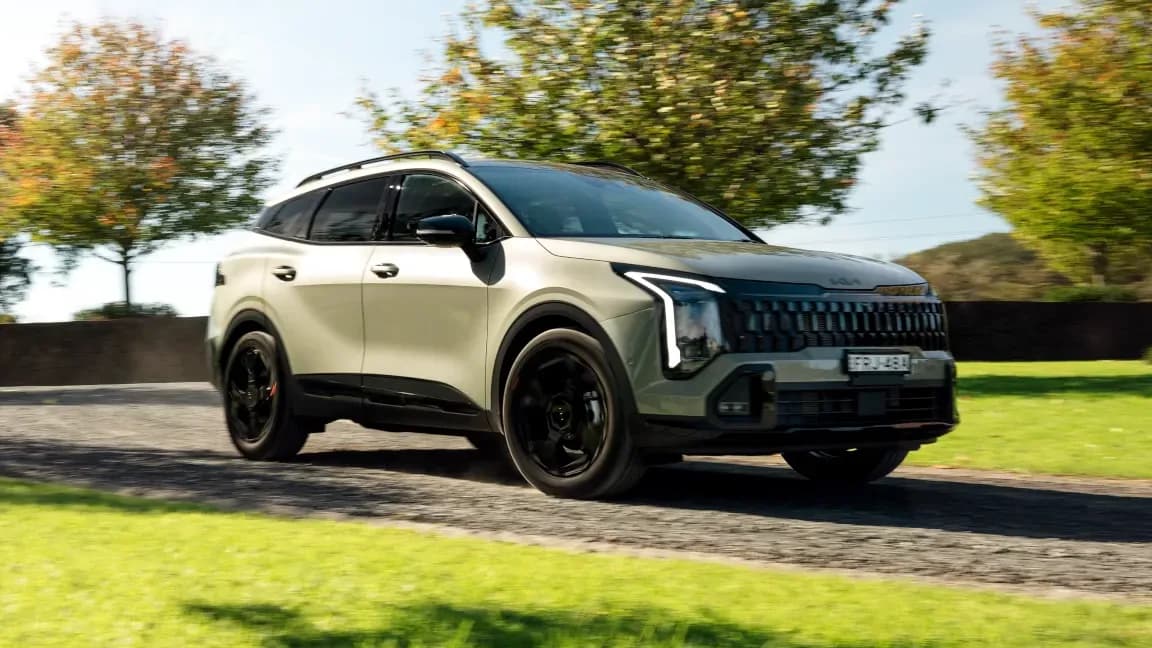
Kia Sportage SX HEV AWD
From $49,450
Mid-size SUV
1.6L turbo petrol hybrid
173kW combined
5.3L/100km
5★ ANCAP (2022)
586L (VDA)
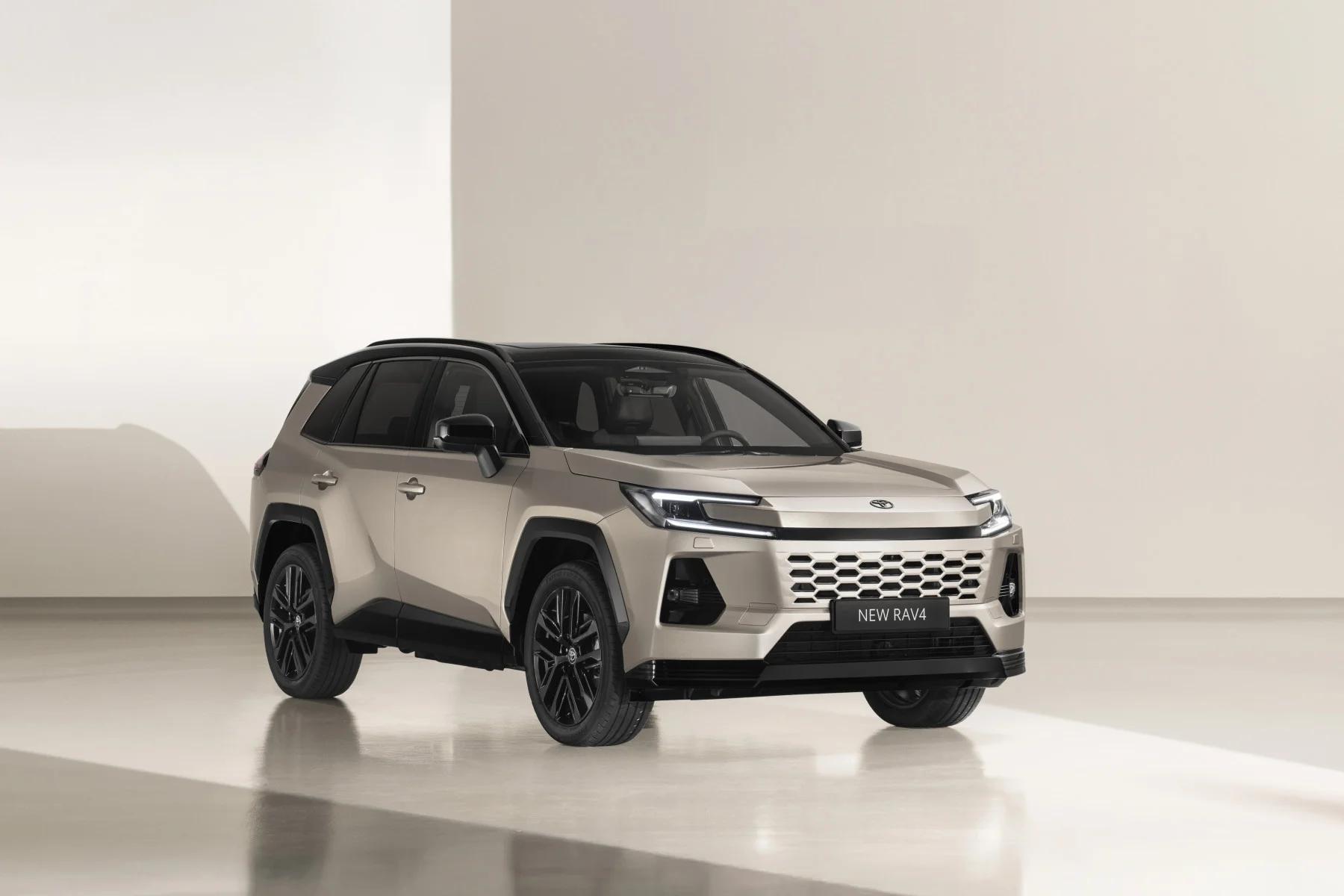
Toyota RAV4 GXL Hybrid AWD
From $52,340
Mid-size SUV
2.5L petrol hybrid
143kW combined
4.6L/100km
Unrated by ANCAP
Not published
Price Breakdown
Start with the number that frames everything else. A Sportage starts at $38,490 and a RAV4 starts at $45,990, both recommended retail before on-road costs. That is a $7,500 gap at the front door, and it exists because Toyota no longer sells a plain petrol RAV4. The sixth-generation car is hybrid or plug-in hybrid, full stop. Kia still sells you a 2.0-litre petrol if that is all you want.
Compare like with like and the gap narrows. The matched cars here are the Sportage SX HEV AWD at $49,450 and the RAV4 GXL Hybrid AWD at $52,340, both mid-grade all-wheel-drive hybrids, $2,890 apart, both RRP before on-road costs. One Toyota footnote worth knowing: the XSE grades carry a mandatory $675 premium paint charge on top of the listed price.
Kia is also running national drive-away campaign pricing on its diesel and hybrid grades right now, which puts the SX HEV AWD at about $52,490 drive-away against a standard VIC drive-away nearer $54,582. Campaign numbers move, so check it on the day rather than building it into your maths.
Toyota RAV4 hybrid (2.5L, e-CVT)
| Grade | Drive | Price (RRP) | Fuel |
|---|---|---|---|
| GX | 2WD | $45,990 | 4.5L/100km |
| GX | AWD | $49,340 | 4.6L/100km |
| GXL | 2WD | $48,990 | 4.5L/100km |
| GXL | AWD | $52,340 | 4.6L/100km |
| Edge | AWD | $55,340 | 4.6L/100km |
| Cruiser | 2WD | $56,990 | 4.5L/100km |
| XSE | AWD | $58,340 | 4.6L/100km |
| Cruiser | AWD | $60,340 | 4.6L/100km |
Toyota RAV4 plug-in hybrid (2.5L, e-CVT)
| Grade | Drive | Price (RRP) | Fuel |
|---|---|---|---|
| XSE | 2WD | $58,840 | 0.7L/100km |
| XSE | AWD | $63,340 | 0.7L/100km |
| GR Sport | AWD | $66,340 | 0.7L/100km |
Kia Sportage petrol and diesel
| Grade | Engine | Drive | Price (RRP) |
|---|---|---|---|
| S | 2.0 petrol | FWD | $38,490 |
| SX | 2.0 petrol | FWD | $40,980 |
| S | 2.0 diesel | AWD | $43,890 |
| SX+ | 2.0 petrol | FWD | $45,580 |
| SX | 2.0 diesel | AWD | $46,380 |
| SX+ | 1.6T petrol | AWD | $47,580 |
| SX+ | 2.0 diesel | AWD | $50,980 |
| GT-Line | 1.6T petrol | AWD | $54,490 |
| GT-Line | 2.0 diesel | AWD | $56,900 |
Kia Sportage hybrid (1.6T, 6-speed auto)
| Grade | Drive | Price (RRP) | Fuel |
|---|---|---|---|
| S HEV | FWD | $44,450 | 4.9L/100km |
| SX HEV | FWD | $46,450 | 4.9L/100km |
| S HEV | AWD | $47,450 | 5.3L/100km |
| SX HEV | AWD | $49,450 | 5.3L/100km |
| GT-Line HEV | FWD | $57,370 | 4.9L/100km |
| GT-Line HEV | AWD | $60,370 | 5.3L/100km |
Read the two ladders side by side and the difference in philosophy is obvious. Toyota gives you one hybrid drivetrain at 143kW and asks how much equipment you want on top of it, then offers a much more powerful plug-in hybrid above $58,840. Kia gives you four mechanical choices and lets you take any of them in a plain S. If you want an all-wheel-drive mid-size SUV under $45,000, Kia has one and Toyota does not.
Safety Rundown
This is the section where the two cars separate most sharply, and the reason is not what most people assume.
The Kia Sportage holds a five-star ANCAP rating awarded in 2022, covering all variants, for cars built from September 2021. The scores are 87 percent adult occupant protection, 87 percent child occupant protection, 66 percent vulnerable road user protection and 74 percent safety assist. The adult and child numbers are strong. The 66 percent vulnerable road user score is the weak spot and it is the one that would be hardest to repeat under the current protocols.
The all-new RAV4 is a different situation. ANCAP lists the sixth-generation car, built from March 2026, as unrated. That is an explicit statement on ANCAP's own register, not missing paperwork, and it is worth being precise about it. It is not a bad score. It is no score yet. The previous RAV4 was rated five stars in 2019, but that record closed in December 2025 with the old car and does not transfer to the one in showrooms now.
| ANCAP | Sportage | RAV4 |
|---|---|---|
| Rating | 5 stars | Unrated |
| Rated | 2022 | No data |
| Adult occupant | 87% | No data |
| Child occupant | 87% | No data |
| Vulnerable road user | 66% | No data |
| Safety assist | 74% | No data |
What each car actually carries is easier to compare. The RAV4 fits eight airbags on every grade, including a front centre and a driver's knee airbag, plus the current Toyota Safety Sense package: autonomous emergency braking with pedestrian and daytime cyclist detection and intersection turn assist, emergency steering assist, all-speed active cruise, lane trace assist, front and rear cross traffic alert, blind spot monitor, safe exit assist and front and rear parking sensors. That is a complete list from the $45,990 GX up.
The Sportage fits seven airbags, including a front centre airbag but no knee airbag, and every grade from the base S gets lane keeping assist, lane following assist, smart cruise control and rear cross-traffic alert. Both cars reserve their 360-degree cameras for the upper grades: surround view monitor on the Sportage GT-Line, panoramic view monitor on the RAV4 from XSE. Neither matched car here gets one.
Bottom line: if a current ANCAP star rating is a hard requirement, for a fleet policy or just for peace of mind, the Sportage has one and the RAV4 does not, today. Check the RAV4's ANCAP record before you sign, because that can change at any time.
Feature Showdown
Kia and Toyota load these cars in almost opposite orders, which makes a straight equipment count misleading.
Kia leads with the screen. Every Sportage, right down to the $38,490 S, gets a 12.3-inch touchscreen, wireless Apple CarPlay and Android Auto, digital radio, Kia Connect telematics and over-the-air updates. What the S does not get is satellite navigation, which starts at SX and brings ten years of traffic information and map updates with it. Below GT-Line the driver looks at a basic 4-inch LCD strip rather than a proper digital cluster.
Toyota does the reverse. The RAV4 GX and GXL run a smaller 10.5-inch touchscreen and you need the Edge at $55,340 for the 12.9-inch unit. But every RAV4 gets a 12.3-inch digital instrument cluster, inbuilt navigation, wireless CarPlay and Android Auto, five USB-C ports and an embedded drive recorder that uses the car's own cameras as a dashcam. The Kia gives you the bigger screen in front of the passenger; the Toyota gives you the better one in front of the driver.
At the matched grades the RAV4 GXL adds a wireless phone charger, rain-sensing wipers, rear privacy glass and an eight-way powered driver's seat with lumbar adjustment. The Sportage SX HEV matches it on 18-inch alloys and dual-zone climate and answers with the sat nav and Kia Connect. Neither gets a powered tailgate, which at fifty thousand dollars is a mild annoyance on both sides. Heated seats start at SX+ on the Kia and Edge on the Toyota, and head-up displays are GT-Line and Cruiser territory respectively.
Drivetrain
Two hybrids, two completely different engineering answers, and the spec sheet flatters the wrong one if you read it quickly.
The Sportage HEV pairs a 1.6-litre turbo petrol four making 132kW and 265Nm with a 47.7kW electric motor mounted in the transmission, running through a conventional six-speed torque converter automatic and a 1.49kWh lithium-ion battery. Kia quotes the combined system output as 173kW and 367Nm, and that 173kW figure is Kia's own measured number, not the sum of the two parts.
The RAV4 uses Toyota's fifth-generation 2.5-litre naturally aspirated hybrid through an e-CVT, with a rear electric motor added on AWD grades. Combined output is 143kW for both 2WD and AWD. Toyota publishes no single combined torque figure at all, printing front and rear motor torque separately, so the tempting 367Nm versus 221Nm comparison you will see quoted around the internet is not a like-for-like number. Ignore it.
Where the difference is real is at the bowser. On the same ADR 81/02 test, the RAV4 GXL AWD returns 4.6L/100km and 105g/km of CO2, against 5.3L/100km and 121g/km for the Sportage SX HEV AWD. The front-drive versions are closer, 4.5 against 4.9. At 15,000km a year that is roughly 105 litres of fuel, or about $200 a year at $1.90 a litre.
Then read the fuel grade line and most of that advantage evaporates. Toyota specifies 95 RON or higher for the RAV4. Kia specifies regular unleaded, E10 compatible, for the Sportage hybrid. Premium costs more than regular at every pump in the country, and on a 700-odd litre annual habit that spread is worth real money. We will not put a number on it because it moves constantly, but our fuel cost calculator will, using today's prices at your own servo.
The other thing the Kia range offers that the Toyota range simply does not is a diesel. The 2.0-litre CRDi makes 137kW and 416Nm, uses 6.3L/100km and comes with an eight-speed automatic and all-wheel drive from $43,890. For long country runs with a load behind you, that is a genuinely different tool, and there is no RAV4 equivalent at any price.
Space & Comfort
The Sportage is the bigger car here, by a margin that shows up in the back seat rather than the brochure photos.
| Dimension | Sportage | RAV4 |
|---|---|---|
| Length | 4,685mm | 4,600 to 4,645mm |
| Width | 1,865mm | 1,855 to 1,880mm |
| Height | 1,665mm (S, SX) | 1,680 to 1,685mm |
| Wheelbase | 2,755mm | 2,690mm |
| Boot, seats up | 586L VDA | Not published |
| Boot, seats down | 1,872L VDA | Not published |
| Fuel tank | 52L | 55L |
| Braked towing | 1,900kg | 1,500kg |
Sixty-five millimetres of extra wheelbase is the number that matters, because that is where rear legroom comes from. The Kia is the longer car overall too, though the RAV4 is a touch taller and, in its widest grades, slightly wider.
On boot space we have to be straight with you. Kia publishes 586 litres to the rear seats and 1,872 litres folded, both VDA, for the hybrid grades, and 543 litres for the petrol and diesel cars. Toyota Australia publishes no luggage volume for the new RAV4 at all. Its current specification table lists towing, seating and fuel tank capacity under weights and capacities, and nothing else. We will not carry a figure over from the old car or convert one from an overseas brochure, so the honest answer is that there is no comparable number yet. If boot volume decides this for you, take a pram and a shopping run to the dealer and use your eyes.
Towing looks like a clean Kia win and it half is. The Sportage is rated at 1,900kg braked across the diesel and both hybrids, against 1,500kg for the all-wheel-drive RAV4 and only 800kg for the front-drive ones. But read Kia's next line: maximum towball download is 100kg. The usual guide is about ten percent of trailer weight on the ball, so a 1,900kg van wants roughly 190kg. Work backwards from the 100kg limit and the Sportage's realistic ceiling for a conventional caravan is nearer 1,000kg. Toyota publishes no towball figure for the new RAV4 at all, so you cannot do the same sum; check the owner's manual before you buy a trailer, and run the numbers through our towing and payload calculator first.
One practical note before you assume the bigger car is the harder one to park. Toyota prints a 5.68m kerb-to-kerb turning figure, which can only be a radius at that size, which is an 11.4m circle. Kia prints 11.4 to 12.2m depending on wheel size. On the smaller wheels they are effectively identical.
True Cost to Own
This is where Kia has spent a decade building an advantage and it still holds.
Every Sportage comes with seven years and unlimited kilometres, fully transferable to the next owner, plus seven years of capped-price servicing. Toyota covers the RAV4 for five years and unlimited kilometres. The gap is not quite as wide as it looks, because Toyota adds two extra years of engine and driveline protection if you keep your logbook servicing at a Toyota dealer, which takes the powertrain to seven. Everything else, the parts and panels a warranty usually gets used for, stops at five.
Battery cover favours Toyota clearly. The RAV4's hybrid traction battery starts on the standard five-year cover and extends by a year at a time, up to ten years, with an annual traction battery health check at a Toyota dealer. Kia covers the high-voltage battery against capacity falling below 70 percent for seven years or 150,000km on pre-MY2027 cars and eight years or 160,000km from MY2027, which is a recent improvement, so ask which model year the car on the lot is.
Servicing is the sleeper. The RAV4 runs 12-month or 15,000km intervals, and Toyota's capped-price terms cover logbook servicing for five years or 75,000km, up to five services. The Sportage hybrid uses the 1.6 turbo engine, and under Kia's own capped-price rules turbo-petrol cars run 10,000km intervals, capped for seven years or 70,000km. Over a typical 15,000km year that is roughly three visits to the RAV4's two. The Sportage petrol and diesel grades keep the relaxed 15,000km schedule, which is one of the quieter arguments for the diesel.
Resale runs the other way. The RAV4 has been the best-selling SUV in Australia for years and used demand reflects that. The Sportage holds value respectably and the seven-year warranty carries to the second owner, which helps, but Toyota is still the benchmark, and over five years that gap can be worth more than the $2,890 you saved at the start.
CarSorted Data Insight
Kia sells 15 Sportage variants across four powertrains from $38,490 to $60,370. Toyota sells 11 RAV4 variants across one hybrid and one plug-in hybrid from $45,990 to $66,340. Kia is competing on choice, Toyota on refinement of a single idea, and the two ranges overlap across almost their entire length.
The most useful thing we found is not on any comparison table. The RAV4 is the more efficient hybrid on the official test by 0.7L/100km, which sounds decisive until you read the fuel grade line: Toyota asks for 95 RON, Kia asks for regular unleaded and says the hybrid is E10 compatible. On a 15,000km year the RAV4 burns about 105 fewer litres, but it burns them at the more expensive price, so the running-cost gap between these two is much smaller than a fuel-consumption comparison implies. Nobody puts that on a spec sheet.
The second thing is a gap rather than a figure. Toyota Australia's current RAV4 specification table publishes no boot volume, no kerb weight and no gross vehicle mass for the new car. On a family SUV those are three of the numbers people shop on, and we would rather tell you they are missing than fill them in from a brochure for a different car.
The Verdict
Buy the Kia Sportage if: you want the most car for the money, you need a current ANCAP five-star rating, you want a diesel or a plain petrol rather than being pushed into a hybrid, you value seven years of transferable cover, or you carry people in the back often enough that 65mm of wheelbase matters. The SX HEV AWD at $49,450 is the sweet spot, and the S diesel at $43,890 is the quiet bargain of the range.
Buy the Toyota RAV4 if: you are keeping the car a long time and resale is part of your maths, you want the most efficient hybrid in the class and the smoothest one in traffic, you service at 15,000km intervals rather than 10,000km, and you want a brand-new generation rather than one five years into its life. The GXL Hybrid AWD at $52,340 is the grade most people should look at first.
If it were our money and the car had to make sense on the day of purchase, we would take the Sportage. If it had to make sense in 2031, we would think much harder about the Toyota. The frustrating part is that the one piece of evidence that would settle the safety question, a current ANCAP result for the new RAV4, does not exist yet.
Compare both on CarSorted. See also: Sportage vs Tucson | RAV4 vs CX-5 | Forester vs RAV4. More from Kia and Toyota.
The Verdict
On what the two manufacturers actually publish today, the Sportage wins this and it is not especially close. It is $2,890 cheaper grade for grade, 65mm longer in the wheelbase, quotes a real boot figure where Toyota quotes none, tows 400kg more, runs on 91 RON instead of 95, holds a current five-star ANCAP rating where the new RAV4 holds no rating at all, and covers you for seven years instead of five. Kia also still sells a diesel and a 1.6 turbo petrol, so you are not forced into a hybrid to get into the range. The RAV4's case is narrower but it is real: it uses 0.7L/100km less on the same test, it goes 15,000km between services instead of 10,000km, it is brand new rather than five years into its life, and Toyota resale remains the strongest thing in this segment. Buy the Kia if you are choosing with a calculator. Buy the Toyota if you are choosing with a five-year horizon and a trade-in in mind.
Prices on this page move. Want the next verdict?
One short email when prices shift or a new comparison lands. No spam, unsubscribe anytime.
Disclaimer: All information in this comparison was believed to be correct at the time of publishing (20 September 2026). Prices are manufacturer recommended retail prices (RRP) and may vary by state, dealer, and options. Driveaway costs include estimated on-road costs for Victoria. Fuel economy figures are WLTP/ADR combined cycle. Specifications can change without notice. Always verify with the manufacturer before making a purchase decision. CarSorted does not accept payment for recommendations.
Published by CarSorted Editorial Team · 20 September 2026
Comments (0)
Sign in to join the conversation
No comments yet. Be the first!