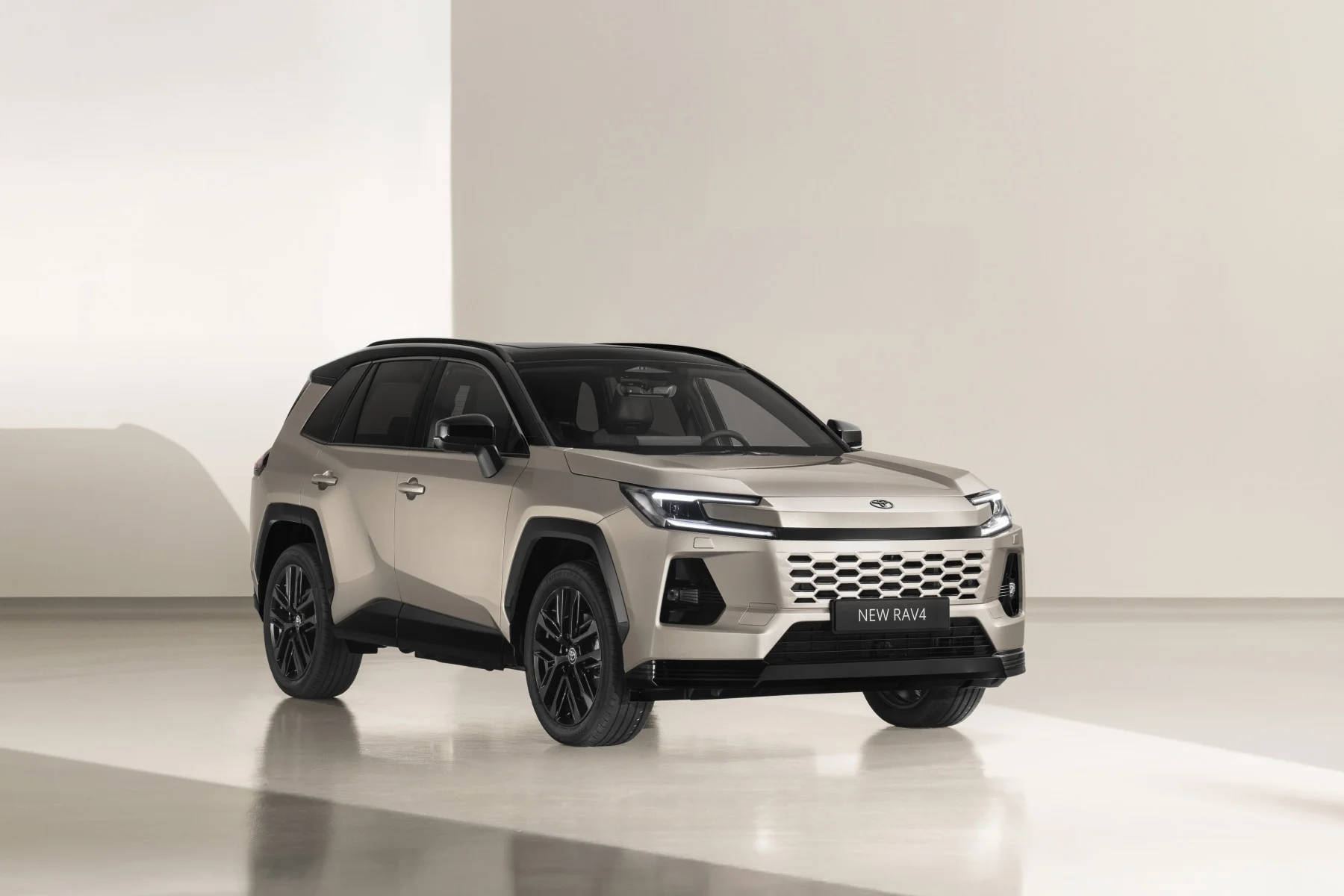
Image credit: Toyota Australia.
CarSorted Verdict
For most Australian buyers in 2026 the Toyota RAV4 Hybrid is still the default best hybrid. The Toyota Yaris Cross Hybrid at $31,790 is among the cheapest cars to fuel in the country. If you can charge at home, the BYD Sealion 6 PHEV at $42,990 RRP gives you 92 km of electric-only range and family-SUV practicality at a price most regular hybrids match. The Chery Tiggo 7 Super Hybrid at $34,990 drive-away undercuts even that. For 7 seats, the Mitsubishi Outlander PHEV still wins on warranty and proven AU reliability. PHEVs only make sense if you actually plug them in.
Hybrid sales in Australia overtook diesel in 2025 and now make up roughly one in four new-car sales. Toyota still dominates the regular-hybrid (HEV) end with the RAV4 Hybrid alone outselling many full brands. BYD, Chery and Mitsubishi own the plug-in hybrid (PHEV) end, and Honda's e:HEV takes a different technical route to both of them. Below is our 2026 ranking of every hybrid worth considering, with prices, real-world running costs, warranty cover, technology decoded, picks by use case, and a directory link to every variant we mention.
The state of hybrids in Australia, 2026
Five years ago, "hybrid" in Australia basically meant Toyota Camry, Corolla and RAV4. In 2026 there are 40+ hybrid and plug-in hybrid models on sale across 15+ brands. The growth is staggering:
- Hybrid powertrains now account for 25%+ of new-car sales in Australia.
- PHEV sales alone are up 200%+ year-on-year, driven by BYD Sealion 6 and Chery Tiggo 7 Super Hybrid.
- Toyota still sells more hybrids than every other brand combined.
- Honda's e:HEV range is now the second-best-selling hybrid family in Australia.
- Chinese Super Hybrid PHEV tech has democratised plug-in hybrids. The BYD Sealion 6 Essential at $42,990 RRP undercuts the Outlander PHEV ES by $16,000, and the Chery Tiggo 7 Super Hybrid Urban at $34,990 drive-away is cheaper again (note that is a drive-away figure against Mitsubishi's RRP, so it is not a like-for-like $24,000 gap).
- Toyota Camry is hybrid-only in Australia from 2024. Toyota Kluger Hybrid is now the volume seller of the Kluger range.
- GWM Haval H6 Ultra PHEV joined the segment with $46,990 pricing, 100 km of electric-only range and a 7-year warranty. Its H6GT sibling now leads the whole market on plug-in range at 180 km.
- Toyota has quietly become a plug-in player too: the RAV4 XSE PHEV does 154 km of electric-only range, more than any Chinese PHEV SUV in the mainstream price bracket.
HEV vs PHEV vs MHEV vs REEV: technology decoded
The word "hybrid" is doing three completely different jobs on Australian price lists, and the three behave nothing like each other for a buyer. Getting this wrong is the single most expensive mistake in the segment, because a plug-in hybrid bought by someone with nowhere to plug it in is simply a heavy petrol car. Every car in this guide is labelled with which of these it actually is.
- HEV (regular hybrid): a small battery (~1-2 kWh) charges from braking and the engine. No plug, no electric-only range figure to quote. The petrol engine and electric motor work together with the engine usually doing the highway work and the motor handling stop-start. Toyota RAV4 Hybrid, Corolla Hybrid, Honda CR-V e:HEV, Subaru Forester Hybrid. Fuel saving vs petrol equivalent: 25-40%.
- PHEV (plug-in hybrid): a much larger battery (13-36 kWh) you charge from a wall socket. On sale in Australia in 2026 the electric-only range spans 57 km (Kia Sorento PHEV) to 180 km (GWM Haval H6GT Ultra PHEV). That is the distance it does before the engine starts, not how far the car goes in total. BYD Sealion 6, Chery Tiggo 7 Super Hybrid, Mitsubishi Outlander PHEV, Mazda CX-80 PHEV, Geely Starray EM-i. Fuel saving vs petrol equivalent: 70-90% if you plug it in daily; 10-15% if you never do.
- MHEV (mild hybrid): a small 48V motor assists the engine but never drives the car alone. Fuel saving 5-10% versus the equivalent petrol. Often labelled "hybrid" in marketing but doesn't feel different to drive. Mazda's CX-90 is the mainstream AU example.
- REEV / EREV (range-extended electric): a less-common type where the petrol engine only generates electricity and never directly drives the wheels. Drive is always via the electric motor. The Leapmotor C10 Hybrid is the main AU example, at $43,888 with a 28.4 kWh battery good for 145 km before the generator fires. Behaves like a pure EV on electric days, then runs on petrol-generated electricity for long trips.
- Series Hybrid: similar concept to a REEV but a much smaller battery and no plug at all. Nissan's e-POWER system on the X-Trail is the main AU example, at 6.1 L/100km combined.
- Parallel Hybrid: the older hybrid design where both the engine and motor can drive the wheels directly. Honda's older IMA system was parallel; current e:HEV is series-parallel hybrid.
One correction worth making explicitly, because it is widely repeated: Subaru's current Forester is not a mild hybrid. Subaru Australia calls it a strong hybrid, meaning the 90 kW motor can drive the car on electricity alone at low speed, which is the definition of a HEV. It sits in the same bucket as a RAV4 Hybrid, not alongside a 48V assist system.
Quick rule of thumb: HEV for most buyers, PHEV if you have home charging and short daily commutes, MHEV is just marketing on most cars, REEV if you want the EV experience without range anxiety on longer trips.
Top 12 hybrids at a glance (2026 ranking)
| Rank | Car | Type | Electric-only range | Fuel | From RRP |
|---|---|---|---|---|---|
| #1 | Toyota RAV4 GX Hybrid 2WD | HEV | No plug | 4.5 L | $45,990 |
| #2 | Toyota Yaris Cross GX Hybrid | HEV | No plug | 3.8 L | $31,790 |
| #3 | Toyota Corolla Ascent Sport Hybrid | HEV | No plug | 4.0 L | $32,110 |
| #4 | Toyota Camry Ascent Hybrid | HEV | No plug | 4.0 L | $39,990 |
| #5 | BYD Sealion 6 Essential | PHEV | 92 km | 1.1 L* | $42,990 |
| #6 | Chery Tiggo 7 Super Hybrid Urban | PHEV | 93 km | 1.4 L* | $34,990 d/a |
| #7 | Kia Sportage S HEV FWD | HEV | No plug | 4.9 L | $44,450 |
| #8 | Honda CR-V e:HEV RS | HEV | No plug | 5.5 L | $56,900 d/a |
| #9 | Toyota Kluger GX Hybrid AWD | HEV (7-seat) | No plug | 5.6 L | $62,410 |
| #10 | Mitsubishi Outlander PHEV ES | PHEV | 86 km | 1.2 L* | $58,990 |
| #11 | GWM Haval H6 Lux Hybrid | HEV | No plug | 5.2 L | $39,990 |
| #12 | Mazda CX-80 P50e Touring | PHEV (7-seat) | 65 km | 2.7 L* | $75,750 |
Every figure describes the exact variant linked, not a range average, because trims inside one nameplate diverge hard: a Sealion 6 Essential does 92 km on electricity, a Premium Standard Range does 81 km and a Dynamic Extended Range does 140 km, all under the same badge. The electric-only column is the plug-in range before the engine starts, which is a completely different number from how far the car will go in total. HEVs get "No plug" rather than a zero because they have no plug-in range to publish, not a short one. *PHEV fuel figures marked with an asterisk are combined-cycle numbers measured starting from a full battery, which is why they read like typos next to a HEV. They are not comparable to the HEV figures in the same column and they are not what you will see if you stop charging.
Pick two
Two hybrids, side by side
Tap any two before the deep dives and see what separates them on fuel, towing, warranty and servicing.
| Spec | Toyota RAV4 Hybrid AWD | Toyota Corolla Hybrid |
|---|---|---|
| Price from | $49,340RRP, before on-roads | $32,110RRP, before on-roads |
| Fuel use | 4.6 L/100km | 4.0 L/100km |
| Electric-only range | N/Ano plug, cannot run on battery alone | N/Ano plug, cannot run on battery alone |
| Seats | 5 | 5 |
| Braked towing | 1,500 kg | 1,200 kg |
| ANCAP | No data | No data |
| Warranty | 5 yrunlimited km | 5 yrunlimited km |
| Service interval | 15,000 km | 15,000 km |
A car with no plug shows N/A for electric-only range, because it has no plug-in range to publish rather than a short one. Figures come from our car database, which is built from Australian manufacturer documents. A blank field reads “No data” rather than a zero or a dash.
#1 Toyota RAV4 Hybrid: the default
The RAV4 GX Hybrid 2WD is Australia's best-selling hybrid SUV for good reason. 4.5 L/100km combined, a 705 L boot (749 L loaded to the roof) and Toyota Safety Sense as standard, from $45,990 RRP. Towing is where the badge splits: the 2WD is rated to just 800 kg braked, while the GX Hybrid AWD at $49,340 does 1,500 kg on 4.6 L/100km. If you tow anything at all, that $3,350 is not optional. The popular Cruiser Hybrid 2WD is $56,990 RRP ($63,034 drive-away in Victoria).
The RAV4 XSE PHEV 2WD at $58,840 ($63,340 for the AWD) is Toyota's plug-in option in this segment, and on our data it is the electric-range leader of the mainstream PHEVs at 154 km before the engine starts. That is genuinely more plug-in range than a Sealion 6, an Outlander PHEV or a Tiggo 7 Super Hybrid, and it is the reason the PHEV RAV4 is worth the walk up from a Cruiser Hybrid if you have a wall socket. Its towing is 800 kg, same as the 2WD hybrid.
Honest weaknesses: the cabin design hasn't aged as well as the Honda CR-V e:HEV's, the eCVT can drone under hard acceleration, and the boot floor sits high. One more worth stating plainly, since the RAV4 is the default recommendation in this segment: the current XA60 generation does not carry an ANCAP rating in our data. The previous RAV4's five stars do not automatically transfer to a new generation, so we say rating pending rather than repeat a star count the regulator has not issued for this car. The 10-year battery warranty, with an annual hybrid health check, remains a genuine strength. Read our full RAV4 review.
#2 Toyota Yaris Cross Hybrid: cheapest car to fuel in Australia
At 3.8 L/100km combined, the Toyota Yaris Cross GX Hybrid 2WD is among the cheapest cars to fuel in Australia, and unlike the plug-in figures elsewhere in this guide that number needs no asterisk: there is no battery to arrive full. About $1,083 a year at 15,000 km. From $31,790 RRP it's also one of the cheapest brand-new hybrid SUVs in the country, with a 5-star ANCAP rating from 2021. AWD is available on higher trims. The 390 L boot is small but the cabin packaging is clever, and it's compact enough to park anywhere. Braked towing is only 400 kg, the lowest in this guide.
Best for: first-time car buyers, downsizing empty-nesters, urban commuters, drivers who want maximum fuel efficiency in a practical SUV body. See our Yaris Cross review.
#3 Toyota Corolla Hybrid: Australia's best-selling small car
From $32,110 RRP, the Toyota Corolla Ascent Sport Hybrid hatch returns 4.0 L/100km combined and tows 1,200 kg braked. The hybrid premium over the petrol Corolla is around $3,000, recouped in roughly 2 years of fuel savings. Available as hatchback or sedan. One of the most popular hybrids on Australian roads, which means strong service network coverage and a deep pool of buyers when you sell. The 217 L hatch boot is the one hard compromise.
Toyota is rumoured to drop the petrol Corolla entirely in late 2026, making the range hybrid-only like the Camry, though that is a rumour rather than anything Toyota Australia has published. Read our Corolla Hybrid review.
#4 Toyota Camry Hybrid: hybrid-only mid-size sedan
From $39,990 RRP, the Toyota Camry Hybrid is hybrid-only in Australia from 2024, the petrol option was dropped. 4.0 L/100km combined, 524 L boot, 1,200 kg towing. The current TNGA-K generation is genuinely refined, and the cabin has the cleanest design in the Toyota range. Best buy for highway-heavy ride-share drivers and long-distance touring families. Read our full Camry Hybrid review.
#5 BYD Sealion 6 PHEV: the family-SUV PHEV value pick
From $42,990 RRP for the Essential, the BYD Sealion 6 is one of the most affordable family-size PHEVs in Australia. 92 km of electric-only range from an 18.3 kWh battery covers most metro driving without the engine starting. Its combined-cycle economy is 1.1 L/100km, but that is the number you get from a test that begins with a full battery. Once the pack is depleted and the 1.5L engine is doing the work, BYD's charge-sustaining figure is 4.72 L/100km, which is the number to plan around if you are not disciplined about charging. Both are real; they just describe different days.
Standard equipment is impressive at the price: 15.6-inch rotating touchscreen, panoramic glass roof, ventilated and heated front seats, vegan leather upholstery, 360-degree camera, V2L (vehicle-to-load) power output for tools and appliances at 3 kW. Towing is 1,500 kg braked on the Essential and drops to 1,000 kg on every other grade, which is the opposite of what most buyers assume. The Premium trim ($52,990) steps up to 238 kW with 81 km of electric range (Standard Range) or 253 kW and 128 km (Extended Range), and the Dynamic Extended Range at $46,990 is the long-legged middle option at 140 km. If plug-in range is what you are buying, the $4,000 Dynamic is the pick of the family, not the $52,990 Premium.
Worth knowing about below it: the BYD Sealion 5 at $33,990 RRP is the cheapest plug-in hybrid BYD sells here, with 71 km of electric range from a 12.9 kWh pack and 4.5 L/100km once that runs out. It is a smaller car than the Sealion 6 and the range is genuinely short, but it undercuts every other PHEV SUV on this page on sticker price.
Compare directly with the segment veteran in our Sealion 6 vs Outlander PHEV comparison. Read our full BYD Sealion 6 review.
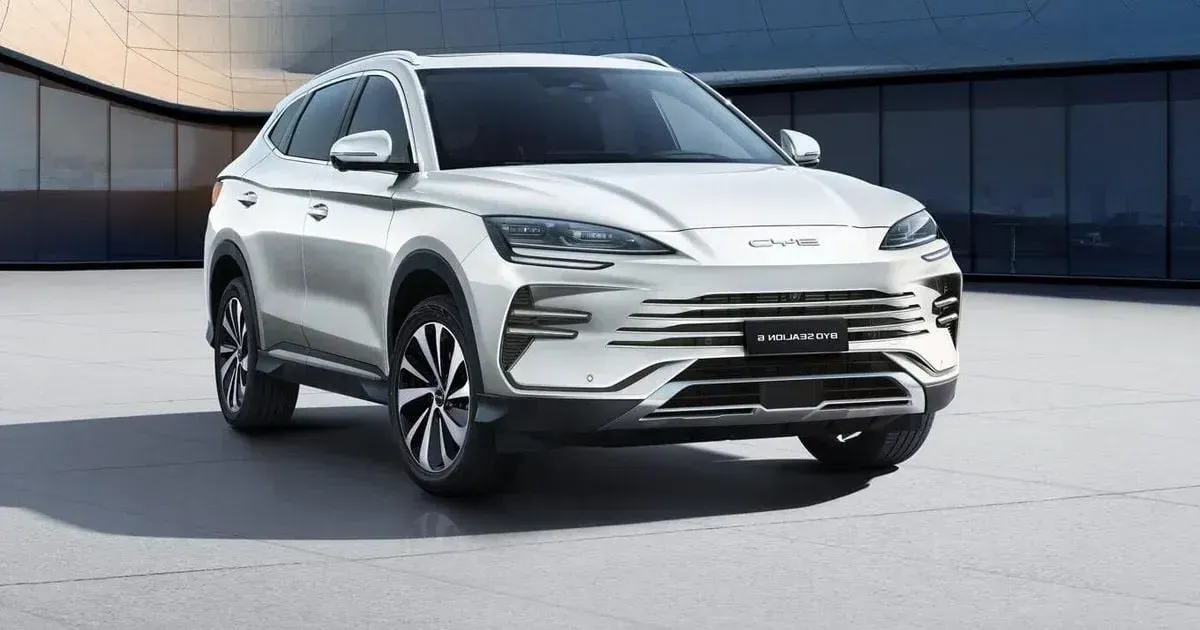
Image credit: BYD Australia.
#6 Chery Tiggo 7 Super Hybrid: cheapest PHEV family SUV
From $34,990 drive-away, the Chery Tiggo 7 Super Hybrid Urban is the cheapest plug-in hybrid family SUV you can buy in Australia. The Super Hybrid system pairs a 1.5L turbo with a dedicated hybrid transmission and an 18.4 kWh battery for 93 km of electric-only range and a 1.4 L/100km combined-cycle figure, which as with every PHEV here is measured from a full battery rather than from your driveway on a Thursday. The Ultimate grade is $38,990 drive-away. Chery sells drive-away only, so those are the figures to budget against. Braked towing is not rated on this variant.
Standard equipment includes ventilated front seats, panoramic roof, 360-degree camera, wireless CarPlay, a 7-year unlimited-km vehicle warranty and 8 years unlimited km on the high-voltage battery. The cabin is slightly less refined than the BYD Sealion 6 (harder plastics in places, less premium dashboard styling) but the value is undeniable. For buyers shortlisting the Sealion 6, the Tiggo 7 SH is the cheaper alternative. One caveat we will not paper over: this variant does not carry an ANCAP rating in our data, so treat its safety score as pending.
Compare directly via our Tiggo 7 SH vs CR-V comparison and read our full Chery Tiggo 7 Super Hybrid review.
#7 Kia Sportage Hybrid: long warranty + biggest boot
From $44,450 RRP for the S HEV FWD, the Kia Sportage Hybrid returns 4.9 L/100km combined and packs one of the biggest boots in the mid-size class at 586 L. It also tows 1,900 kg braked, the highest of any HEV in this top 12. Kia's 7-year unlimited-km vehicle warranty is the longest among mainstream hybrid brands, though the high-voltage battery is covered for 7 years / 150,000 km rather than unlimited. Sister model to the Hyundai Tucson Elite Hybrid at $48,100, same 1.6L turbo hybrid, different cabin styling and tuning (the Tucson Elite Hybrid is AWD and rated 5.3 L/100km). Both excellent picks for buyers prioritising warranty and practicality.
If you need a third row from the same drivetrain family, the Kia Sorento S HEV FWD at $56,380 does 5.4 L/100km with seven seats, and the Sorento S PHEV AWD at $70,880 is a genuine seven-seat plug-in. Be clear-eyed about the Sorento PHEV's plug-in range though: 57 km, the shortest of any PHEV on sale in Australia in this guide, and less than a third of what a Haval H6GT PHEV gives you for $17,000 less.
#8 Honda CR-V e:HEV: the series-hybrid outlier
From $56,900 drive-away ($51,400 RRP), the Honda CR-V e:HEV RS uses Honda's two-motor system, which works differently from the Toyota hybrids it competes with. In most driving the petrol engine acts as a generator and the electric motor drives the wheels, and only at highway cruise does the petrol engine couple directly. Because engine speed is decoupled from road speed for most of the time, it does not hold revs against the accelerator the way a single-motor eCVT hybrid does.
5.5 L/100km combined, 581 L boot (among the largest in our top 12), genuinely refined ride. Higher purchase price than the RAV4 Hybrid but a meaningfully nicer driving experience for the daily commute. One honest mark against it that most guides skip: the CR-V's ANCAP result is 4 stars (2024 protocol), not five, and it is the only car in our top 12 that is not either five-star or unrated. Towing is 750 kg. The Honda Civic e:HEV LX ($55,900 drive-away, $48,600 RRP, 4.2 L/100km) brings the same drivetrain to the small-car space; the Honda HR-V e:HEV L ($42,900 drive-away, $37,000 RRP, 4.3 L/100km) brings it to the small SUV space, and the Accord e:HEV RS ($64,900 drive-away) is the sedan. Read our CR-V e:HEV review.
#9 Toyota Kluger Hybrid: best 7-seat HEV
From $62,410 RRP, the Toyota Kluger GX Hybrid AWD is among the few 7-seat HEVs in our top 12 that returns under 6 L/100km, at 5.6. Toyota reliability and resale apply, and the third row is more usable for adults than the 7-seat Outlander or Kia Sorento. Towing is 2,000 kg braked, the highest of any hybrid in this guide. Boot space is 241 L with all three rows up, 552 L with the third folded. Best for: families that need seven seats without going PHEV or diesel. The cheaper seven-seat HEV alternatives are the Hyundai Santa Fe Hybrid FWD at $57,650 (5.6 L/100km) and the Kia Sorento S HEV at $56,380 (5.4 L/100km).
#10 Mitsubishi Outlander PHEV: longest PHEV warranty
From $58,990 RRP for the PHEV ES, the Mitsubishi Outlander PHEV gives you AWD as standard, 86 km of electric-only range from a 22.7 kWh battery and Mitsubishi's 10-year / 200,000 km vehicle warranty. Towing is 1,600 kg braked. The combined-cycle figure is 1.2 L/100km, again measured from a full battery. The original mainstream PHEV in Australia (the Outlander PHEV launched here in 2015) and still the only 7-seat PHEV with a 10-year warranty. Note the seven-seat layout starts with the PHEV Aspire at $66,790; the entry ES is a five-seater.
For warranty peace-of-mind, AWD as standard or 7-seat capability, choose the Outlander PHEV over the BYD Sealion 6. For sticker price and EV range, choose the Sealion 6. Read our Outlander PHEV review.
#11 GWM Haval H6 Hybrid: budget mid-size HEV
From $39,990 RRP, the GWM Haval H6 Lux Hybrid lands close to the Toyota RAV4 Hybrid on fuel economy (5.2 L/100km) at a meaningfully lower entry price, with GWM's 7-year unlimited-km warranty, a 560 L boot and 1,500 kg of braked towing. Standard kit includes a 360-camera, adaptive cruise, panoramic roof. The H6 Ultra PHEV AWD ($46,990, 100 km electric range, 268 kW) and Haval H6GT Ultra PHEV AWD ($53,990) add plug-in capability. The H6GT is the one worth circling: 180 km of electric-only range from a 35.4 kWh battery is the longest plug-in range of any car in this guide, and enough that most owners would go weeks between fuel stops. See our GWM Haval H6 review.
#12 Mazda CX-80 PHEV: premium 7-seat plug-in
From $75,750 RRP for the P50e Touring, the Mazda CX-80 PHEV is one of Mazda's plug-in hybrids in Australia. 65 km of electric-only range, 7 seats, premium interior materials, and 2,500 kg of braked towing, which is the most of any PHEV SUV here by a wide margin. Its combined-cycle figure is 2.7 L/100km, notably higher than the Chinese PHEVs because the battery is smaller relative to a heavy car. Well above the BYD Sealion 8 PHEV ($56,990) or Outlander PHEV but the cabin material quality is genuinely class-leading. The smaller five-seat CX-60 P50e Pure starts at $56,640 with 76 km of electric range, more than the bigger CX-80. Best for buyers who want PHEV efficiency in a premium-feeling SUV without paying European-brand prices.
Honourable mentions and worth knowing about
The 12 above are the volume sellers. Several other hybrids deserve consideration for specific use cases:
- BYD Sealion 8 PHEV, from $56,990 ($61,549 drive-away in Victoria), BYD's flagship 7-seat PHEV with 103 km of electric range on the Dynamic FWD, or 152 km and 359 kW on the AWD grades from $63,990. The Sealion 6's bigger sibling for families that need three rows.
- Chery Tiggo 8 Super Hybrid, 7-seat version of the Tiggo 7 SH from $45,990 drive-away, with 95 km of electric range. One of the cheapest 7-seat PHEVs in Australia.
- Chery Tiggo 9 Super Hybrid, Large premium-positioned PHEV from $58,268 drive-away for the Elite (90 km), or $65,469 for the Ultimate AWD, which uses a 34 kWh pack for 170 km. Going after the BYD Sealion 8 and Mazda CX-80.
- Jaecoo J7 SHS, Chery's sister-brand PHEV at $43,990 with SUV styling that some buyers prefer over the more conservative Tiggo. 90 km electric range, 5-star ANCAP (2025). The seven-seat J8 SHS Summit AWD sits above it at $59,990.
- GWM Haval H6GT PHEV, Sportier-styled H6 PHEV at $53,990 with 180 km of electric range, the longest plug-in range in this guide.
- Omoda 9 SHS, Chery's style sub-brand flagship PHEV at $61,990, 169 km of electric range from a 34 kWh battery, 395 kW and 4.9 seconds to 100 km/h. The second-longest plug-in range on sale here.
- Geely Starray EM-i, From $37,490, 83 km of electric range and 2.4 L/100km, with an Extended Range grade at $41,490 that lifts it to 136 km. Geely's plug-in answer to the Tiggo 7 SH, and it is entirely absent from most guides.
- MG HS Super Hybrid, From $50,990, 120 km of electric range from a 24.7 kWh battery on a 0.7 L/100km combined figure, backed by MG's 10-year / 250,000 km vehicle warranty.
- Subaru Forester AWD Hybrid, From $46,490, and it is a strong hybrid (HEV), not a mild hybrid, whatever the e-Boxer badge suggests. 6.2 L/100km, which is the thirstiest HEV in this guide, but it is the only one with permanent AWD and real off-tarmac ability.
- Mazda CX-60 PHEV, Mid-size 5-seat PHEV from $56,640 with 76 km of electric range. Premium-feeling alternative to the family pack.
- Toyota Corolla Cross Hybrid, From $37,440 at 4.2 L/100km, slots between the Yaris Cross and RAV4 Hybrid in Toyota's small-SUV hybrid range. The C-HR GXL is the style-led alternative at $46,940 and 4.0 L/100km.
- Honda HR-V e:HEV, From $42,900 drive-away ($37,000 RRP), Honda's small-SUV hybrid with the smooth e:HEV drivetrain at 4.3 L/100km.
- Nissan X-Trail e-POWER, Nissan's series-hybrid X-Trail from $48,915 at 6.1 L/100km combined. Behaves like an EV but never plugs in, and the fuel figure is the honest cost of carrying a generator instead of a bigger battery.
- Leapmotor C10 Hybrid (REEV), Range-extended electric SUV at $43,888. 145 km on the battery before the petrol generator starts, and the engine never drives the wheels. Pure EV experience with petrol backup for long trips.
- MG3 Excite Hybrid+, At $27,990 the cheapest hybrid on sale in Australia, at 4.3 L/100km. Note the 4-star ANCAP result (2025), the only sub-five score in this list alongside the CR-V.
- Chery Tiggo 4 Hybrid, From $29,990 drive-away at 5.4 L/100km, the cheapest hybrid SUV in the country.
Brand-by-brand hybrid lineup
Quick map of who sells what hybrid powertrain in 2026:
- Toyota: Yaris Cross, Corolla, Corolla Cross, Camry, C-HR, RAV4 (HEV + PHEV), Kluger. HSD eCVT system. 10-year battery warranty. The reliability benchmark. Note the Prius is not part of this list: Toyota Australia no longer sells one new, and we hold no on-sale Prius row.
- Honda: Civic, HR-V, ZR-V, CR-V, Accord. All "e:HEV" two-motor series-parallel system. 8-year battery warranty. Smoothest drivetrain in the segment.
- Kia / Hyundai: Sportage Hybrid, Sorento Hybrid + PHEV, Tucson Hybrid, Santa Fe Hybrid. Kia 7-year vehicle warranty with 7-year / 150,000 km battery cover; Hyundai 5-year vehicle with 8-year / 160,000 km battery. Parallel hybrid with proper transmission (not eCVT). We hold no on-sale Kia Niro Hybrid or Niro PHEV row, so we have dropped it from this list rather than keep listing a car you may not be able to order.
- Mitsubishi: Outlander PHEV. Original AU PHEV brand. 10-year / 200,000 km vehicle warranty.
- Mazda: CX-60 PHEV, CX-80 PHEV, CX-90 (mild hybrid). Premium-positioned with class-leading cabin material quality.
- BYD: Sealion 5 PHEV, Sealion 6 PHEV, Sealion 8 PHEV, Shark 6 PHEV ute. DM-i Super Hybrid PHEV tech. 6-year / 150,000 km vehicle, 8-year / 160,000 km battery.
- Chery: Tiggo 7 SH, Tiggo 8 SH, Tiggo 9 SH (all PHEV) plus Tiggo 4 Hybrid and C5 Hybrid (HEV). Super Hybrid system. 7-year unlimited-km vehicle, 8-year unlimited-km battery.
- Jaecoo: J7 SHS and J8 SHS PHEVs plus the J5 Hybrid, Chery's sister brand, same Super Hybrid tech.
- Omoda: Omoda 9 SHS, the longest-range Chery-group PHEV at 169 km.
- GWM: Haval H6 HEV + PHEV, H6GT PHEV, Jolion HEV, Tank 500 HEV, Tank 300 Hi4-T PHEV, Cannon Alpha HEV + PHEV. 7-year unlimited-km warranty.
- MG: MG3 Hybrid+ (cheapest hybrid in AU at $27,990), ZS Hybrid+, HS Hybrid+ and HS Super Hybrid (PHEV). 10-year / 250,000 km vehicle warranty with dealer servicing, 7-year / 150,000 km on the high-voltage battery.
- Geely: Starray EM-i PHEV, from $37,490 with 83 km, or 136 km on the Extended Range.
- Subaru: Forester AWD Hybrid, which is a strong hybrid (HEV), not a mild one.
- Nissan: X-Trail e-POWER and Qashqai e-POWER (series hybrids).
- Lexus: Pretty much every Lexus is hybrid-only in AU now. UX, NX, RX, RZ, LBX, LM, LC. The NX350h Luxury starts at $71,700.
- BMW / Mercedes / Audi: Multiple PHEV variants across X5/X3, GLC/GLE, Q5 PHEV. Premium-priced, mostly 3-year warranty.
- Leapmotor: C10 Hybrid (REEV, range-extended electric), from $43,888.
- Volvo: XC40 / XC60 / XC90 PHEVs in Recharge spec.
Real-world annual fuel costs
| Car | Combined L/100km | Fuel/yr (15k km) | Notes |
|---|---|---|---|
| MG HS Super Hybrid (from full battery) | 0.7 L | ~$200 | 120 km electric range. PHEV, see note |
| GWM Haval H6GT PHEV (from full battery) | 0.8 L | ~$228 | 180 km electric range, longest here |
| BYD Sealion 6 Essential (from full battery) | 1.1 L | ~$314 | 92 km electric range |
| Mitsubishi Outlander PHEV ES (from full battery) | 1.2 L | ~$342 | 86 km electric range |
| Chery Tiggo 7 Super Hybrid (from full battery) | 1.4 L | ~$399 | 93 km electric range |
| Geely Starray EM-i (from full battery) | 2.4 L | ~$684 | 83 km electric range |
| Mazda CX-80 P50e (from full battery) | 2.7 L | ~$770 | 65 km electric range, 7 seats |
| Toyota Yaris Cross Hybrid | 3.8 L | $1,083 | HEV. No plug, no asterisk |
| Toyota Corolla Ascent Sport Hybrid | 4.0 L | $1,140 | HEV. Best-selling small hybrid |
| Toyota Camry Ascent Hybrid | 4.0 L | $1,140 | HEV. Sedan, hybrid-only from 2024 |
| Toyota Corolla Cross GX Hybrid | 4.2 L | $1,197 | HEV |
| MG3 Excite Hybrid+ | 4.3 L | $1,226 | HEV. Cheapest hybrid in Australia |
| Toyota RAV4 GX Hybrid 2WD | 4.5 L | $1,283 | HEV. 4.6 L and $1,311 on the AWD |
| BYD Sealion 6 Essential (battery depleted) | 4.72 L | $1,345 | BYD's own charge-sustaining figure |
| Kia Sportage S HEV | 4.9 L | $1,397 | HEV. 7-year warranty |
| GWM Haval H6 Lux Hybrid | 5.2 L | $1,483 | HEV. Cheapest mid-size HEV |
| Chery Tiggo 4 Hybrid Urban | 5.4 L | $1,539 | HEV. Cheapest hybrid SUV |
| Honda CR-V e:HEV RS | 5.5 L | $1,568 | HEV. Smoothest hybrid drivetrain |
| Toyota Kluger GX Hybrid AWD | 5.6 L | $1,596 | HEV. Remarkable for a 7-seat |
| Nissan X-Trail ST-L e-POWER | 6.1 L | $1,739 | Series hybrid, no plug |
| Subaru Forester AWD Hybrid | 6.2 L | $1,767 | HEV. The AWD tax |
Numbers assume $1.90/L 95 RON unleaded, 15,000 km/year, applied to the manufacturer's published combined-cycle figure for the exact variant named. Read the top block and the bottom block as two different measurements, not one league table. The PHEV rows are combined-cycle numbers measured from a full battery, so they describe a car in the roughly 60 to 180 km after a charge and understate a year of real driving unless you plug in almost every night. The Sealion 6 appears twice on purpose: 1.1 L/100km from full, 4.72 L/100km once the battery is flat, both published by BYD, and the second number is the one to budget against if you do not have a wall socket. Add $200-300 a year in home electricity to any PHEV figure for the full picture. If you have solar at home with a feed-in tariff, the electric-only running cost drops further.
Hybrid battery warranty by brand
| Brand | Hybrid battery warranty | Notes |
|---|---|---|
| Toyota | 10 years / unlimited km | Requires annual hybrid health check at Toyota dealer |
| Chery / Jaecoo / Omoda | 8 years / unlimited km | Vehicle warranty 7 years unlimited km |
| Hyundai | 8 years / 160,000 km | Vehicle warranty 5 years |
| Honda | 8 years | Vehicle warranty 5 years unlimited km |
| BYD | 8 years / 160,000 km | Vehicle warranty 6 years / 150,000 km |
| Kia | 7 years / 150,000 km | Vehicle warranty 7 years unlimited km |
| MG | 7 years / 150,000 km | Vehicle warranty 10 years / 250,000 km with dealer servicing |
| GWM | Not published in our data | Vehicle warranty 7 years unlimited km |
| Mitsubishi (PHEV) | Not published in our data | Vehicle warranty 10 years / 200,000 km |
Two corrections worth flagging, because the wrong versions circulate widely. Hyundai and Kia do not offer a lifetime hybrid battery warranty in Australia: Kia's high-voltage cover is 7 years / 150,000 km and Hyundai's is 8 years / 160,000 km. And Chery's high-voltage battery cover is 8 years unlimited kilometres, not 10 years / 200,000 km. Where we have no manufacturer figure for a battery term we say so rather than infer one from the vehicle warranty.
Battery anxiety is the thing that stops most people buying a hybrid, so here is what is actually knowable. We do not hold failure-rate data and we are not going to quote one. What you can hold a manufacturer to is the warranty: every major brand selling hybrids here now covers the traction battery for 8 to 10 years, and that cover is a contractual commitment rather than an estimate. Ask the dealer for the out-of-warranty replacement price in writing before you buy if the number matters to your decision, because it varies by model and it is the figure nobody volunteers.
When NOT to buy a hybrid
- Highway-only driving: hybrid fuel saving is smallest at constant cruising speeds where the electric motor barely engages. A small turbo-diesel may match the economy.
- Heavy towing (3,000+ kg): most hybrids tow 1,500 kg or less. Diesel utes are still the only realistic option here. See our Best Towing Vehicles guide.
- Short ownership (under 3 years): the hybrid premium of $2,000-$4,000 over a petrol equivalent takes 2-3 years of fuel savings to recoup. If you upgrade often, the petrol may be cheaper overall.
- You can charge at home and rarely drive over 400 km: a full EV will be cheaper to run than even the best PHEV. See our Best Electric Cars Under $50K guide.
- You can't plug in at home (PHEVs specifically): buy a regular HEV instead. A PHEV that never plugs in burns MORE fuel than a regular hybrid because it carries 100-200 kg extra battery weight everywhere.
The PHEV plug-in trap
PHEV official fuel figures (0.7 L/100km, 1.1 L/100km, 1.4 L/100km) are combined-cycle numbers measured on a test that starts with a full battery. They are not fabricated and they are not useless, but they answer a narrow question: what does this car burn over a cycle that its electric range mostly covers? Manufacturers publish a second figure for the other case. BYD rates the Sealion 6 Essential at 1.1 L/100km combined and 4.72 L/100km charge-sustaining; the GWM Haval H6 Ultra PHEV at 1.1 and 5.3; the Haval H6GT at 0.8 and 5.3. Ask for the second number whenever a salesperson quotes the first. If you never plug it in, a PHEV uses more fuel than an equivalent regular hybrid, because it's hauling around an extra 100-200 kg of battery weight for nothing.
Only buy a PHEV if you have reliable home charging access and your typical day's driving fits inside the electric-only range, which in Australia in 2026 runs from 57 km on a Kia Sorento PHEV to 180 km on a GWM Haval H6GT Ultra PHEV. Note that this is electric-only range, not total range: a PHEV rated at 92 km will still drive 1,000 km on a tank, it just does the last 900 of them on petrol. Apartment dwellers without garage access should buy a regular hybrid instead. The Australian PHEV market grew 200% in 2025-2026 primarily because home solar penetration and apartment EV-charging infrastructure also grew significantly, so make sure both apply to your situation before choosing PHEV over HEV.
Picks by use case
Quick summary if you want to match a hybrid to your specific situation:
- Cheapest hybrid full stop: MG3 Excite Hybrid+ ($27,990, 4.3 L/100km) or Chery Tiggo 4 Hybrid ($29,990 drive-away, 5.4 L/100km) if you want the SUV body.
- First-time hybrid buyer / urban commute: Toyota Yaris Cross GX Hybrid ($31,790) or Toyota Corolla Ascent Sport Hybrid ($32,110).
- Family SUV, mostly metro: Toyota RAV4 GX Hybrid 2WD ($45,990) for proven resale, Honda CR-V e:HEV RS ($56,900 drive-away) for refinement, Kia Sportage S HEV ($44,450) for warranty + boot.
- Family SUV that also tows: RAV4 GX Hybrid AWD ($49,340, 1,500 kg) or Kia Sportage S HEV ($44,450, 1,900 kg). Not the 2WD RAV4, which is rated to 800 kg.
- Budget family SUV PHEV: Chery Tiggo 7 Super Hybrid ($34,990 drive-away) or BYD Sealion 6 Essential ($42,990). Tiggo for cheapest, BYD for the more proven brand. Geely Starray EM-i ($37,490) sits between them and is worth a look.
- Longest plug-in range for the money: GWM Haval H6GT Ultra PHEV ($53,990, 180 km), Omoda 9 SHS ($61,990, 169 km) or Chery Tiggo 9 SH Ultimate AWD ($65,469 drive-away, 170 km).
- 7-seat hybrid HEV: Toyota Kluger GX Hybrid AWD ($62,410), Hyundai Santa Fe Hybrid FWD ($57,650) or Kia Sorento S HEV FWD ($56,380).
- 7-seat PHEV: Mitsubishi Outlander PHEV Aspire ($66,790) for warranty, BYD Sealion 8 Dynamic FWD ($56,990) for value, Chery Tiggo 8 Super Hybrid ($45,990 drive-away) for cheapest, Mazda CX-80 P50e Touring ($75,750) for premium feel and 2,500 kg of towing.
- Daily commute under 50 km with home charging: Any PHEV, you'll drive mostly on electricity. Pick on price and warranty.
- Daily commute under 50 km, no home charging: HEV only. A PHEV will not deliver its published efficiency and you will have paid for a battery you never use.
- EV feel without charging anxiety: Leapmotor C10 Hybrid REEV ($43,888, 145 km electric before the generator starts) or Nissan X-Trail e-POWER ($48,915), which drives on electricity but never plugs in and costs 6.1 L/100km for the privilege.
- Long-distance highway tourer: Toyota Camry Ascent Hybrid ($39,990) or Toyota RAV4 Hybrid. Diesel is genuinely competitive here too.
- Tradesman ute with hybrid efficiency: BYD Shark 6 PHEV ($57,900). See our Best Utes guide.
- Premium feel without German prices: Lexus NX350h Luxury ($71,700), Mazda CX-60 P50e Pure ($56,640), Honda Accord e:HEV RS ($64,900 drive-away).
What's coming in 2026-2027
Major confirmed AU additions to the hybrid segment in the next 12-18 months:
- Ford Ranger PHEV, Now on sale from $71,990, 207 kW combined, 49 km EV range. First major-brand PHEV ute, and it has moved from this list into showrooms since we first published.
- Toyota HiLux Hybrid, Toyota has hinted at a HiLux mild-hybrid for 2027 with no firm AU date yet.
- Mazda CX-60 PHEV update, Improved EV range expected.
- Mazda CX-90 PHEV, Larger sibling of the CX-80 PHEV, late 2026.
- Subaru Outback Hybrid, Confirmed for 2026 with the new e-Boxer architecture.
- Subaru Crosstrek Hybrid, New version coming 2026.
- Nissan Qashqai e-POWER update, Refined e-POWER drivetrain incoming.
- Hyundai Santa Fe Hybrid update, Refreshed Santa Fe Hybrid for 2027.
- Honda 0 SUV, Honda's new pure-EV SUV is officially not a hybrid, but represents the broader Japanese EV push.
Browse all hybrids: all hybrids sorted by fuel economy. Read related guides: Best EVs Under $50K | Best Family Cars 2026 | EV vs Hybrid: Which Saves More? | Cheapest PHEVs in Australia. Or compare any two hybrids head-to-head in our RAV4 vs Sealion 6 comparison, Sealion 6 vs Tiggo 7 SH or CR-V vs RAV4. Or use our interactive best hybrids ranking tool, or see the most fuel-efficient cars in Australia 2026.
Disclaimer: Pricing is RRP excluding on-road costs and accurate at time of publishing. Fuel economy figures are manufacturer-claimed combined-cycle data; real-world economy varies with driving style, climate and conditions. PHEV fuel economy assumes regular plug-in charging. Read our scoring methodology for how rankings are calculated. Always confirm current specifications and pricing with your dealer before purchase.