With petrol still hovering around $2 a litre, fuel economy is one of the first things Australians look at, and the gap between the thirstiest and thriftiest cars now runs into thousands of dollars a year. Here are the most fuel-efficient cars on sale in 2026, ranked by real economy and running cost, then broken down by category, small car, SUV, family, seven-seater and ute. The short version: hybrids dominate the L/100km charts, but if you can charge at home, an EV is cheaper still. For total-cost-of-ownership rather than just fuel, see our cheapest cars to run guide.
Most fuel-efficient cars at a glance
| Car | Economy | From (RRP) | Type | Category |
|---|---|---|---|---|
| Toyota Yaris Hybrid | ~3.3L/100km | $26,490 | Hybrid | Among the most efficient overall |
| Lexus LBX Hybrid | 3.8L/100km | $47,550 | Hybrid | Efficient premium SUV |
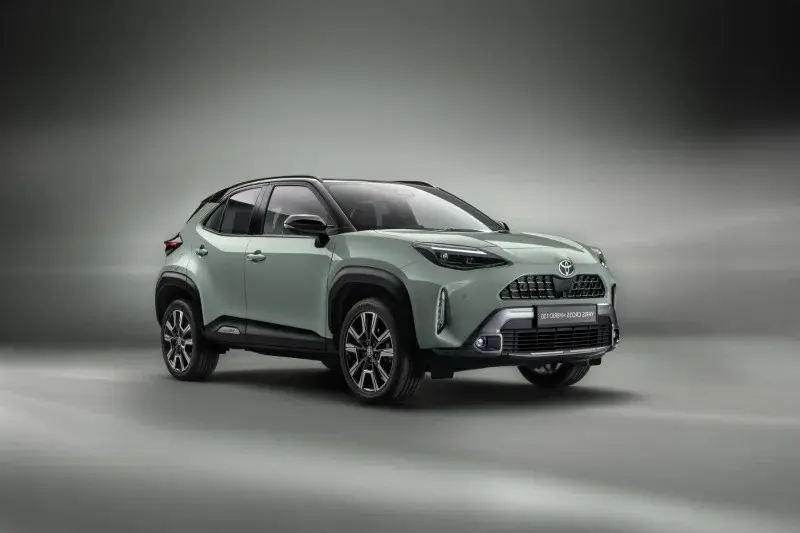
| Toyota Yaris Cross Hybrid | 3.8-4.0L/100km | $30,490 | Hybrid | Among the most efficient small SUVs |
| Hyundai Kona Hybrid | 3.9L/100km | $32,500 | Hybrid | Efficient small SUV |
| Toyota Corolla Hybrid | 4.0L/100km | $34,185 | Hybrid | Most efficient small car |
| Toyota Camry Hybrid | 4.0L/100km | $39,990 | Hybrid | Among the most efficient sedans |
| Toyota RAV4 Hybrid | ~4.7L/100km | $45,990 | Hybrid | Among the most efficient family SUVs |
| Toyota Kluger Hybrid | 5.6L/100km | $62,410 | Hybrid | Among the most efficient 7-seaters |
| BYD Dolphin / MG4 | ~$5/100km | $29,990 | Electric | Cheapest to run |
Most fuel-efficient car overall: Toyota Yaris Hybrid
On the traditional L/100km measure, the Toyota Yaris Hybrid is one of the most fuel-efficient cars you can buy in Australia, sipping around 3.3L/100km. That is roughly $1,000 a year in fuel at average kilometres. The Lexus LBX (3.8L), which shares Toyota's hybrid system in a premium small-SUV body, is the efficient luxury pick.
Cheapest to run overall: electric cars
If you measure running cost rather than litres, an EV wins. The BYD Dolphin, MG4 and similar small EVs cost around $4-6 per 100km in home electricity, roughly half the fuel bill of even the most efficient hybrid. The catch is you need somewhere to charge, ideally a home wallbox on an off-peak tariff. See our best electric cars guide for the full EV picture.
Among the most fuel-efficient small cars: Toyota Corolla Hybrid
The Toyota Corolla Hybrid (4.0L/100km) is one of the most efficient mainstream small cars, with the Yaris Hybrid smaller and thriftier still. Among petrol-only small cars, the mild-hybrid Suzuki Swift (around 4.6L) leads, though to get under 4L you really need a full hybrid.
Among the most fuel-efficient SUVs: Lexus LBX and Toyota Yaris Cross
The Toyota Yaris Cross Hybrid and Lexus LBX (3.8-4.0L/100km) are among the most fuel-efficient SUVs on sale, with the Hyundai Kona Hybrid (3.9L) and Honda HR-V Hybrid (4.3L) close behind. For more detail across the class, see our most fuel-efficient SUVs analysis.
Most fuel-efficient family car and 7-seater
For five-seat families, the Toyota RAV4 Hybrid (about 4.7L/100km) is one of the most efficient petrol-hybrid options, with the Kia Sportage Hybrid (4.9L) close behind. For seven seats, the Toyota Kluger Hybrid at 5.6L/100km is one of the most efficient petrol-hybrid genuine seven-seaters, remarkable for a vehicle this size. If you can charge at home, a plug-in hybrid like the Mitsubishi Outlander does the school run on electricity, see our best plug-in hybrid SUVs guide.
Most fuel-efficient ute
Utes are inherently thirstier, but the turbo-diesel Isuzu D-Max and Ford Ranger (around 7-8L/100km) are the most efficient conventional options. The new wave of plug-in hybrid utes, the GWM Cannon Alpha and BYD Shark 6, can run the commute on electricity and slash fuel use if charged, see our best utes guide.
Hybrid vs EV vs petrol: what actually saves money
The advertised figure is a starting point: expect roughly 10-20% more in real driving, though hybrids hold closest to their claim in the city where they recover braking energy. On running cost, a small EV charged at home (around $5/100km) beats a 4L/100km hybrid (around $9-11/100km on petrol), which in turn beats a 7-8L petrol car (around $14-16). A plug-in hybrid can be cheapest of all if you charge daily and stay within the EV range, but its headline ~1L/100km only applies with a full battery; once flat it uses 5-7L. The right answer depends on whether you can charge at home: if yes, lean EV or PHEV; if no, a Toyota-style hybrid is the safe, no-compromise efficiency pick.
The quick verdict
For the lowest fuel use without plugging in, the Toyota Yaris or Corolla Hybrid. For the most efficient SUV, the Lexus LBX or Yaris Cross. For families, the RAV4 Hybrid, and for seven seats, the Kluger Hybrid. For the lowest running cost of all and a home charger, a small EV like the BYD Dolphin. Compare any of them on fuel and running costs in our car directory.