2026 Toyota Corolla Hatch Ascent Sport Hybrid review
Still the Default Choice in Australia?
Data checked: specs 4 Aug 2026, price 7 Oct 2026
Review snapshot
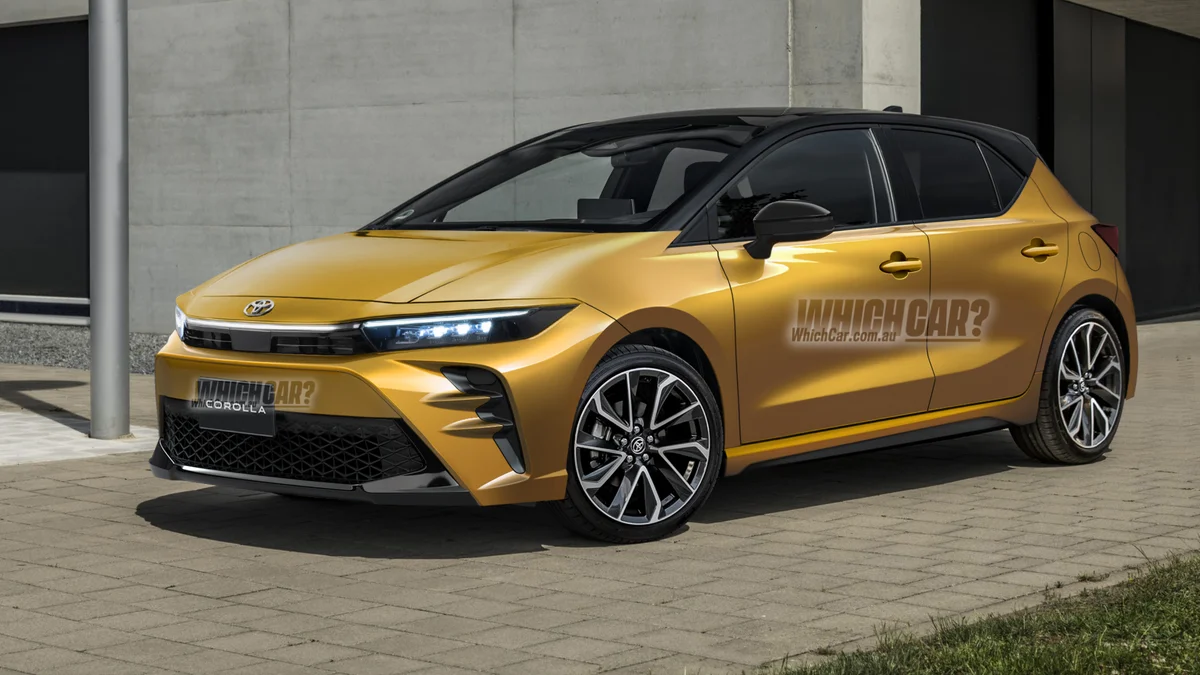
Model reviewed
Toyota Corolla Hatch Ascent Sport HybridFrom $32,110 RRP
Excl. on-road costs
from $174/wk in VIC, excludes servicing and insurance (estimate)
66/100
CarSorted Score
- Fuel use
- 4 L/100km
- Boot
- 217L
Competitors

This review is built from Toyota's published figures, ANCAP and our own calculators. We have not driven this car.
Written 7 April 2026. The snapshot, tables, prices and scores on this page update from our car data; figures quoted in the text are as at that date.
The Quick Verdict
The Corolla Hybrid isn't trying to be exciting, and that's exactly why it's been Australia's best-selling small car for decades. From $32,110, the Ascent Sport Hybrid brings a claimed 4.0L/100km that makes even diesel owners jealous, Toyota's bulletproof reliability reputation, and running costs so low you'll forget what it feels like to stress about petrol prices. The boot on the hatch is genuinely small and the infotainment is behind the times. But if you want a car that costs very little to run, the Corolla remains the benchmark that every small car in Australia is measured against.
Design: Familiar, Not Boring
The current-generation Corolla (introduced in 2018, facelifted in 2022) is probably the best-looking Corolla Toyota has ever made, which admittedly is a low bar. The hatchback version is the sharper-looking of the two, with a sportier stance, blacked-out C-pillar that creates a floating roof effect, and aggressively styled headlights. It looks modern and compact, if not exactly head-turning.
The sedan is more conservative. It's longer (4,630mm vs 4,370mm for the hatch) and has a more traditional three-box shape. It won't win any design awards, but it looks tidy and inoffensive. For plenty of buyers, "inoffensive" is exactly what they want. A car that doesn't shout, doesn't date quickly, and looks respectable in the work car park.
Both body styles sit on a 2,640mm wheelbase. The hatch is shorter and easier to park in crowded shopping centre car parks, while the sedan offers a more spacious rear cabin. Ground clearance is adequate at around 130mm, enough for driveways and speed bumps but not much more.
The colour palette is typical Toyota: white and silver are free, everything else is a premium option. The Eclectic Blue and Feverish Red on the ZR look decent, but you're paying $550-$650 extra for the privilege. Most buyers go white. It's a Corolla. It comes in white.
| Key details | 2026 Toyota Corolla Hatch Ascent Sport Hybrid |
|---|---|
| Engine | 1.8L 4-cyl |
| Power | 103kW |
| Torque | 142Nm |
| Drive type | FWD |
| Transmission | CVT |
| Power-to-weight ratio | 74 kW/tonne |
| Weight | 1,400kg (kerb) |
| Spare tyre type | Temporary spare |
| Tow rating | 1,200kg braked750kg unbraked |
| Turning circle | 10.8m |
| Fuel consumption | 4 L/100km |
| Boot | 217L seats up |
| ANCAP | No rating on record |
Key details for 2 other variants
| Key details | 2026 Toyota Corolla Hatch SX Hybrid |
|---|---|
| Engine | 1.8L 4-cyl |
| Power | 103kW |
| Torque | 142Nm |
| Drive type | FWD |
| Transmission | CVT |
| Power-to-weight ratio | 74 kW/tonne |
| Weight | 1,400kg (kerb) |
| Spare tyre type | Temporary spare |
| Tow rating | 1,200kg braked750kg unbraked |
| Turning circle | 10.8m |
| Fuel consumption | 4 L/100km |
| Boot | 217L seats up |
| ANCAP | No rating on record |
| Key details | 2026 Toyota Corolla Hatch ZR Hybrid |
|---|---|
| Engine | 1.8L 4-cyl |
| Power | 103kW |
| Torque | 142Nm |
| Drive type | FWD |
| Transmission | CVT |
| Power-to-weight ratio | 74 kW/tonne |
| Weight | 1,400kg (kerb) |
| Spare tyre type | Tyre repair kit |
| Tow rating | 1,200kg braked750kg unbraked |
| Turning circle | 10.8m |
| Fuel consumption | 4 L/100km |
| Boot | 333L seats up |
| ANCAP | No rating on record |
Is it good value?
What Does the Corolla Cost in Australia?
Toyota offers the Corolla in two body styles (hatch and sedan) across three trim levels (Ascent Sport, SX, and ZR), with the hybrid powertrain now standard across the entire range. Here's the lineup:
Driveaway, the base Ascent Sport hatch lands around $34,000-$36,000 depending on your state. The sedan is priced within a few hundred dollars of the hatch at each trim level. That's effectively free extra boot space and rear legroom, and arguably the smarter buy if you regularly carry passengers or luggage.
Compared to five years ago when the Corolla started in the mid-twenties, these prices feel steep. But here's the thing: the hybrid powertrain is now standard (no more choosing between petrol and hybrid), the equipment level has gone up, and the fuel savings over the life of the car more than offset the higher sticker price versus a comparable petrol-only rival. The Corolla Hybrid is not the cheapest small car you can buy new in Australia, but it might be the cheapest to own over five years.
Running Costs: The Corolla's Best Trick
At 4.0L/100km on the combined cycle, the Corolla Hybrid sips fuel like few others in its class. That's absurdly good for a petrol-powered car. At 15,000km per year and $2.00/litre, the claim works out to roughly $1,200 a year. Compare that to a Mazda3 G20 (5.9L/100km, around $1,770/year) or a Hyundai i30 Sedan Active (7.0L/100km, roughly $2,100/year) and the Corolla's claim saves you $570-900 a year in fuel.
Servicing through Toyota's capped-price program is competitive at roughly $200-350 per service, with intervals at 12 months or 15,000km. The hybrid battery and electric motor add almost zero maintenance cost. There are no belts, alternators, or starters to replace. Toyota hybrid systems have an outstanding track record of reliability, with plenty of Prius taxis hitting 400,000km on their original battery packs.
Insurance is typically cheap too, thanks to the Corolla's low theft rate, widespread parts availability, and excellent repair data. Budget $1,200-$1,800 per year for comprehensive cover depending on your age and postcode. And resale value? Toyotas hold their value better than almost any other mainstream brand in Australia. Expect to get 55-65% of the purchase price back after five years, which is top of class. For the full picture, check our cheapest cars to run in Australia analysis.
Rivals: What Else Should You Cross-Shop?
Mazda3 (from $33,490)
The Mazda3 is the premium alternative. Soft-touch materials throughout the cabin, and a design that looks like it costs $50k. The trade-off: no hybrid option means fuel consumption is 6.5L/100km, which costs about $750 more per year in fuel than the Corolla Hybrid on the claims. If you prioritise design and cabin materials over running costs, the Mazda3 is the pick. If you prioritise your wallet, the Corolla wins on maths alone. Full breakdown in our Corolla vs Mazda3 head-to-head.
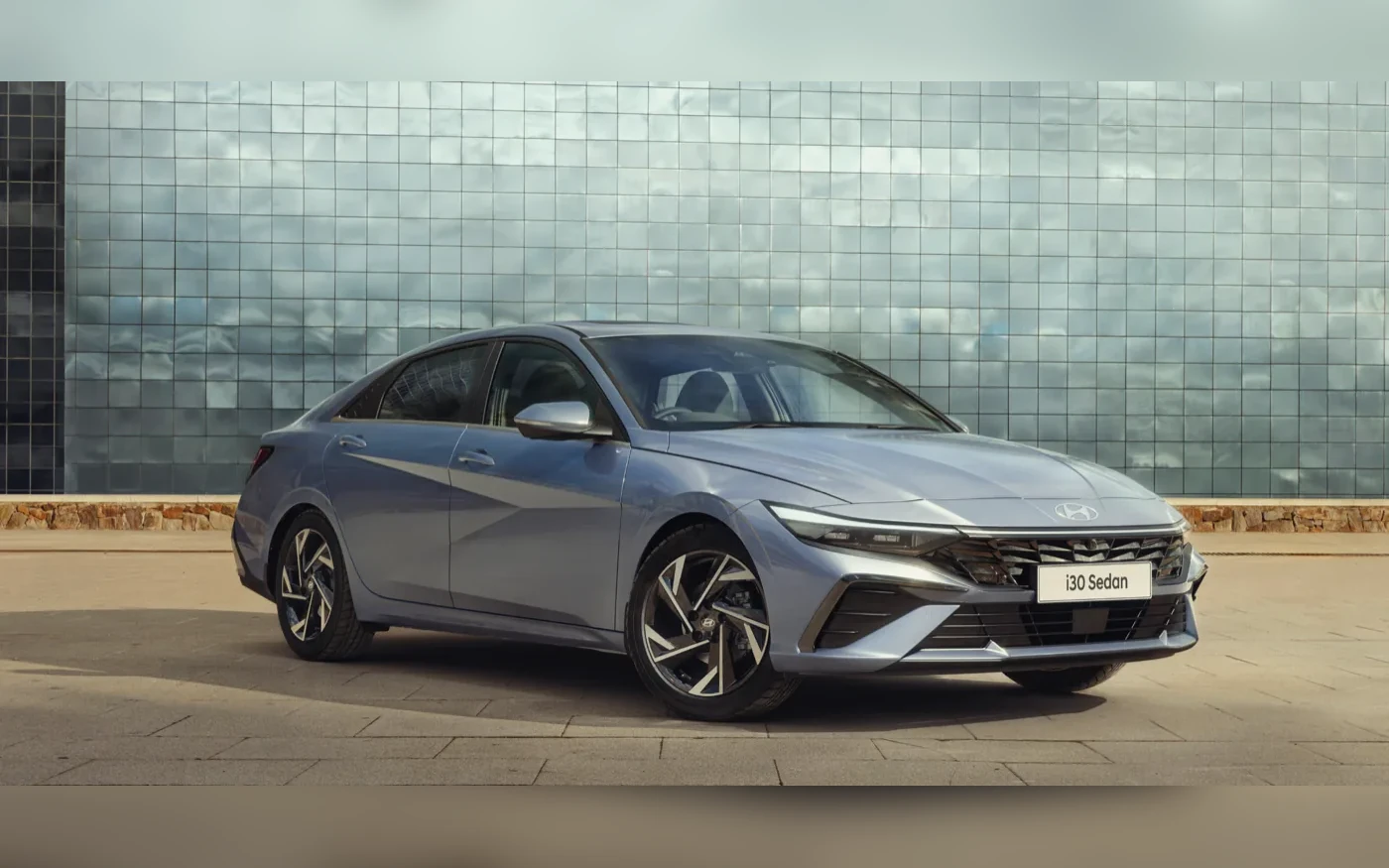
Hyundai i30 Sedan (from $29,250)
The everyday i30 hatch is no longer sold new, so Hyundai's small car is now the i30 Sedan. The Active is $2,860 cheaper than the Corolla Hybrid hatch, with a much bigger boot (474L vs 217L) and a 5-year warranty. The catch is fuel: the 117kW petrol claims 7.0L/100km against the Corolla's 4.0L/100km, about $900 a year more at 15,000km and $2.00/L, so the Corolla claws back the price gap in a little over three years on the claims. Hyundai also sells an i30 Sedan 1.6 Hybrid ($33,250) claiming 3.9L/100km. It is a sedan, so if you want a hatch, the Corolla and Mazda3 are the comparison.
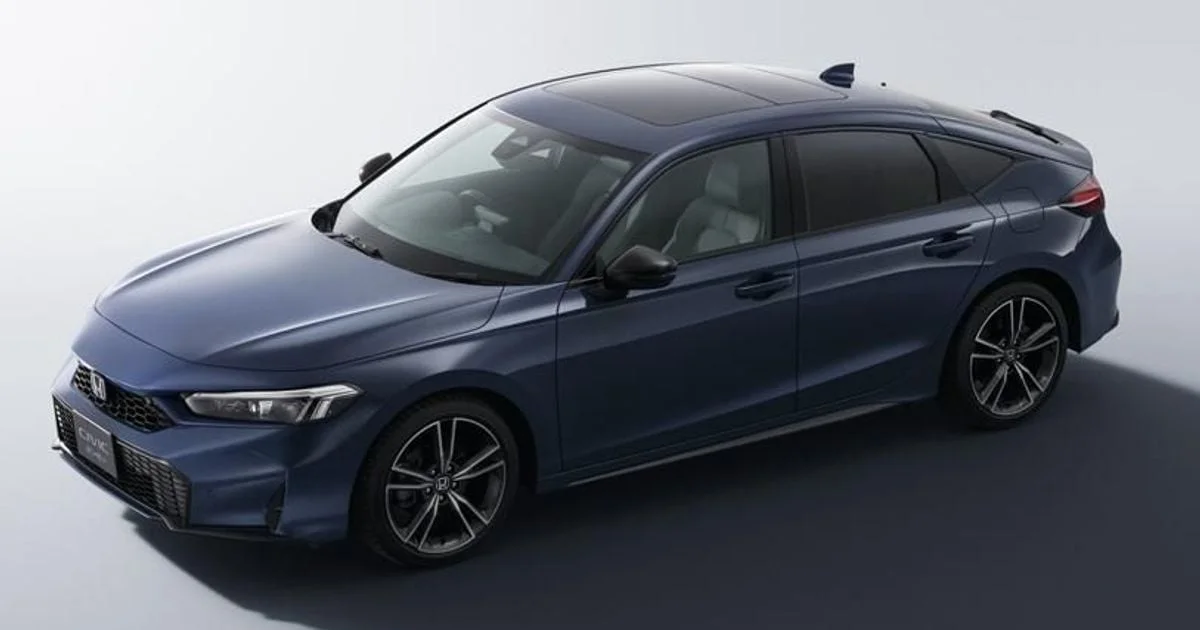
Honda Civic (from $43,250)
The Civic is the step-up choice: dearer, with more cabin space from its longer wheelbase. The 2.0-litre hybrid powertrain produces 135kW alongside a claimed 4.2L/100km, and Honda quotes a 410-litre boot. It's a properly grown-up small car that is closer to a mid-sizer in size. If your budget stretches to $43k+, the Civic is worth a serious look. Our Civic vs Corolla comparison breaks down every spec.
The Corolla dominates on fuel economy. The i30 Sedan wins on boot space. The Mazda3 wins on cabin materials. The Civic wins on space and power. All four are excellent cars, the "best" one depends entirely on what you prioritise. See our best small cars in Australia ranking for the full class comparison.
| Key details: Toyota Corolla Hatch Ascent Sport Hybrid | |
|---|---|
| Price | From $32,110 RRPExcl. on-road costs |
| Drive-away estimate | Calculating... |
| Cost per week in VIC | from $174/wk in VIC, excludes servicing and insuranceRepayments, fuel or charging, rego and CTP, servicing, tyres and insurance where held. Estimate only, not a quote. |
| Body | Hatch |
| Powertrain | Hybrid, 1.8L 4-cyl |
| Towing (braked / unbraked) | 1,200kg / 750kg |
| Seats | 5 |
| Warranty | 5yr / unlimited km |
| Rivals | Mazda Mazda3, Hyundai i30 Sedan, Honda Civic |
| The Toyota Corolla Hatch range on sale | Price | Powertrain | Fuel or energy use |
|---|---|---|---|
| Ascent Sport Hybrid | From $32,110 RRP | Hybrid, FWD | 4 L/100km |
| SX Hybrid | From $35,260 RRP | Hybrid, FWD | 4 L/100km |
| ZR Hybrid | From $39,100 RRP | Hybrid, FWD | 4 L/100km |
How much fuel does it use?
Efficiency: Where the Corolla Truly Excels
Toyota claims 4.0L/100km on the combined ADR test cycle, and that figure is the Corolla's headline act. It is measured in a lab on a standardised cycle, so it is a benchmark rather than a prediction, and it is worth knowing which way your driving will move it.
The hybrid system is at its best in exactly the conditions the test cycle favours. At low speed the electric motor can carry the car on its own, the petrol engine shuts down at every set of lights, and braking puts charge back into the battery, so urban and suburban running is where the Corolla lands nearest its claim. Sit it on 110km/h for an hour and the balance flips: the petrol engine runs more or less continuously, there is almost nothing to recover under braking, and consumption climbs. Cold starts on short trips, a boot full of gear and the air conditioning working hard in summer all nudge it up too.
The tank is only 43 litres, which sounds meagre until you pair it with a car this efficient. Even well off the claimed figure, a Corolla Hybrid goes a long way between visits to the servo. That is a genuine convenience benefit rather than just a cost one.
Compared to the non-hybrid small car segment, the savings are material. On claimed figures at 15,000km a year and $2.00/litre, a Hyundai i30 Sedan Active at 7.0L/100km costs roughly $2,100 in fuel and the Corolla Hybrid roughly $1,200. That's about $900 a year in your pocket, or around $4,500 over five years. Factor in the Corolla's typically lower servicing costs and insurance, and the total cost of ownership gap is even wider.
One note: the Corolla Hybrid is not a plug-in hybrid. You never need to charge it. The battery charges itself through regenerative braking and the petrol engine. You just fill up with regular unleaded, same as any other car, and the hybrid system does the rest. For many Australian buyers who aren't ready for the full EV leap, this is the perfect middle ground.
| Fuel: Toyota Corolla Hatch Ascent Sport Hybrid | |
|---|---|
| Fuel use (combined) | 4 L/100km |
| Fuel type | Hybrid |
| Minimum fuel grade | No data |
| Urban / extra-urban | 3.8 L/100km / 4.3 L/100km |
| Fuel tank | 43L |
| Range on a tank (calculated) | 1,075kmTank divided by the combined figure |
| CO2 (combined) | 91 g/km |
| Service interval | 12 months or 10,000km |
What does it cost to own?
| Warranty and servicing: Toyota Corolla Hatch Ascent Sport Hybrid | |
|---|---|
| Warranty | 5yr / unlimited km |
| Battery warranty | 10yr / 999,999 km |
| Roadside assistance | 3 years (renewed with dealer servicing) |
| Service interval | 12 months or 10,000km |
| Capped-price servicing | No data |
Cost per week in VIC: from $174/wk in VIC, excludes servicing and insurance
- Repayment estimate$125/wk
$5,000 deposit, 5yr loan at an assumed 7.5% p.a. on the RRP. Not an offer of credit
- Fuel$23/wk
4 L/100km combined at $1.95/L ULP 91, the site default
- Rego + CTP$18/wk
VIC typical: car, metropolitan (high risk) zone, 12-month renewal, $958.80 a year. As at July 2026, VicRoads
- ServicingNo data
No data: no servicing cost held for this car
- Tyres$8/wk
Typical tyre spend for this type of car, scaled to 15,000 km a year (not this car's tyres)
- InsuranceNo data
No data: no insurance estimate held for this car
Based on 15,000 km a year in VIC. Estimate only, not a quote.
How safe is it?
Safety: Toyota Safety Sense Standard
Toyota's Safety Sense suite is standard across every variant (the ANCAP table in this section shows what our records hold for the rating). That means even the base Ascent Sport gets:
- Pre-Collision Safety (AEB) with pedestrian and cyclist detection, daytime and night-time
- Lane Trace Assist (adaptive lane centring)
- Lane Departure Alert with steering assist
- Dynamic Radar Cruise Control with stop-and-go
- Road Sign Assist
- Automatic High Beam
Eight airbags are standard, including driver and front passenger, side, curtain, and a driver knee airbag. All five seats get three-point seatbelts. The TNGA platform is structurally rigid and performed well in both frontal offset and side impact tests during Euro NCAP assessment.
Dynamic Radar Cruise Control with stop-and-go is genuinely useful in Australian traffic, especially on congested Sydney and Melbourne freeways. The system can bring the car to a complete stop in traffic and pull away again when the car ahead moves, and Lane Trace Assist keeps the car centred in its lane on highways.
| ANCAP: Toyota Corolla Hatch Ascent Sport Hybrid | |
|---|---|
| ANCAP rating | No rating on record |
| Airbags | 7 |
| Driver assists: Toyota Corolla Hatch Ascent Sport Hybrid | |
|---|---|
| Autonomous emergency braking | Standard |
| Adaptive cruise control | Standard |
| Blind-spot monitoring | Standard |
| Rear cross-traffic alert | No data |
| Lane-keep assist | Standard |
| Speed sign recognition | Standard |
| Driver attention monitor | No data |
| 360-degree camera | No data |
Standard, Optional (with the printed price), No (the maker's document says not fitted) or No data. 8 assists checked.
What is it like inside?
Interior: Function Over Flash
The Corolla's interior is the definition of "does the job." The dashboard layout is clean and straightforward, with physical buttons for climate control (thank goodness), a clear instrument cluster with a small digital display, and Toyota's infotainment system sitting on top of the dash.
And here's where we need to have an honest conversation. The infotainment is the weak spot on paper: an 8-inch screen on the Ascent Sport running Toyota's older-generation interface. Apple CarPlay (wireless) and Android Auto (wired) are standard, so you can run your phone's interface instead.
Soft-touch materials cover the upper dashboard and door armrests, with harder plastics on the lower dash and centre console. The Corolla doesn't pretend to compete with the Mazda3 on cabin materials.
Seat height adjusts electrically on the SX and ZR, and the steering column adjusts for reach and rake.
The ZR gets synthetic leather trim.
Storage is adequate but not generous. The centre console has a covered bin and cupholders, the door pockets fit a water bottle, and there's a small tray near the gear selector for your phone. No wireless charging pad on the Ascent Sport, which is a miss in 2026.
Practicality: The Hatch vs Sedan Question
This is the Corolla's most significant split personality. The hatchback has a 217-litre boot. That is small. Genuinely small. Smaller than a Mazda3 (295L), smaller than an i30 Sedan (474L), smaller than pretty much anything else in the class. It'll swallow a couple of soft bags or a weekly grocery shop, but if you're doing an airport run with two suitcases, you might need to fold the rear seats. The hybrid battery sits under the boot floor, eating into the space that would otherwise be there.
The sedan, though, is a different story. With 493 litres of boot space, it's genuinely usable. The boot opening is wide and the floor is flat. If practicality matters to you at all, the sedan is the way to go, full stop. The $2,000 premium is justified by the extra 276 litres alone.
The sedan has slightly more rear legroom than the hatch, and the rear floor carries a tunnel. ISOFIX anchor points are on the two outer rear seats.
Towing capacity is rated at 1,200kg braked on the sedan and hatch, which is actually decent for a small car. That's enough for a small camper trailer or a single jet ski. Not many buyers will tow with a Corolla, but it's good to know the option exists.
For families with young children, the Corolla sedan works well as a primary family car for the first few years. Once the kids get bigger and the gear gets more substantial, you'll probably be looking at something like a RAV4 or Corolla Cross. But for a couple or a small family, the sedan is genuinely practical enough for daily life.
| Space and dimensions: Toyota Corolla Hatch Ascent Sport Hybrid | |
|---|---|
| Seats | 5 |
| Boot, seats up | 217L |
| Boot, seats folded | No data |
| Length x width x height | 4,375 x 1,790 x 1,435mm |
| Wheelbase | 2,640mm |
| Ground clearance | 132mm |
| ISOFIX | 2 points (2L, 2R) |
| Top tethers | 3 |
| Seat trim | Cloth |
| Spare wheel | Temporary spare |
Does it have good tech?
| Screens and audio: Toyota Corolla Hatch Ascent Sport Hybrid | |
|---|---|
| Touchscreen | 8 inches |
| Driver display | 7 inches |
| Audio | 6 speakers |
| USB | No data |
| Connected services term | No data |
| Connectivity: Toyota Corolla Hatch Ascent Sport Hybrid | |
|---|---|
| Apple CarPlay | Standard |
| Android Auto | Standard |
| Wireless CarPlay / Android Auto | Standard |
| Wireless phone charging | No data |
| Head-up display | No data |
| Built-in navigation | No data |
| Digital radio | Standard |
| Over-the-air updates | No data |
| Remote climate (app) | No data |
What the figures say about driving it
The Toyota Corolla Hatch Ascent Sport Hybrid has 74 kW for every tonne of kerb weight, 142Nm of torque, a claimed 0-100km/h of 8.1s. It weighs 1,400kg and turns in 10.8m. These are the figures that shape how quickly a car gets moving and how easily it parks.
| The figures: Toyota Corolla Hatch Ascent Sport Hybrid | |
|---|---|
| Power-to-weight | 74 kW/tonne |
| Power | 103kW |
| Torque | 142Nm |
| 0-100km/h (claimed) | 8.1s |
| Kerb weight | 1,400kg |
| Turning circle | 10.8m |
| Tyres | 205/55R16 |
| Drive | FWD |
| Transmission | CVT |
| Towing (braked) | 1,200kg |
We have not driven the Toyota Corolla Hatch; these are Toyota's published figures.
Best deals
Get a great deal on a brand new car today
One enquiry, up to four cars. We ask local dealers for their best drive-away price and send them back to you, so you compare real numbers instead of list prices.
Free for you to use. If you buy, the dealer may pay us a commission. Your details only go to a dealer if you say so.
Find a new car dealShould I buy it?
Should You Buy the Toyota Corolla Hybrid?
Yes, if:
- Running costs are your top priority. Few cars in this class can match 4.0L/100km on the combined cycle
- You want proven, long-term reliability backed by Toyota's 25+ years of hybrid experience
- Resale value matters. The Corolla consistently holds its value better than any rival in this segment
- You want a hybrid without any charging hassle. Fill up with petrol and the car does the rest
- You prefer physical climate controls and a straightforward, no-fuss cabin layout
- You're buying the sedan. The 493L boot makes it a genuinely practical family car
- Toyota's dealer and service network matters, there's a Toyota dealer in virtually every Australian town
Maybe not, if:
- You're buying the hatchback primarily for its boot space. 217L is genuinely small for the class
- Cabin materials and design are important to you. The Mazda3 leans much harder on them
- You want the latest infotainment tech. Toyota's system is functional but dated
The Toyota Corolla Hybrid is not the most exciting car in its class. It's not the best-looking, the fastest, or the most premium inside. But on the published figures it is among the cheapest in the class to fuel and to service, and Toyota's capped-price schedule is one of the more predictable ones you will sign up to. For the average Australian buyer who wants a small car that costs very little to run, it is very, very hard to argue against.
The sedan is the pick of the range. The extra boot space transforms the Corolla from "adequate" to "genuinely practical," and it costs about the same as the equivalent hatch, so it's essentially free practicality. The Ascent Sport gets you everything you need; the SX ($35,260 hatch) adds a few creature comforts for $3,150 more.
Start your comparison with our Corolla vs Mazda3 and Civic vs Corolla head-to-heads. Or browse the best small cars in Australia list to see where the Corolla ranks against every rival on sale.
→ Compare all Toyota Corolla variants on CarSorted (200+ specs)
CarSorted Score breakdown
The CarSorted Score is algorithmic: it is calculated from this car's published data, not from a road test. How it works.
Safety
Fuel Economy
Value
Practicality
Technology
Performance
Reliability
Questions buyers ask
How much does a Toyota Corolla cost in Australia?
The Toyota Corolla Hatch Ascent Sport Hybrid is from $32,110 RRP, before on-road costs. The range table above lists every current variant.
What fuel economy does the Corolla Hybrid achieve?
On the official combined cycle the Toyota Corolla Hatch uses 4 L/100km.
Is the Toyota Corolla a good first car?
Yes. The Corolla is one of the most commonly recommended first cars in Australia. It's affordable to buy and run, extremely reliable, and holds its resale value well. We have no current ANCAP rating on record for it, so check ancap.com.au before you buy.
Should I buy the Corolla hatch or sedan?
The Toyota Corolla Hatch scores 66/100 on the CarSorted Score, which is calculated from its published figures, not from a drive. The verdict above says who it suits.
What warranty does Toyota offer on the Corolla?
The Toyota Corolla Hatch comes with a 5yr / unlimited km warranty.
How does the Corolla compare to the Mazda3?
The Mazda3 leans on design and cabin materials. The Corolla is more fuel-efficient as a hybrid, cheaper to run, and has a stronger reputation for long-term reliability. See our full Corolla vs Mazda3 comparison for the detailed breakdown.
Is the Toyota Corolla Hatch safe?
We have no ANCAP rating on record for the Toyota Corolla Hatch.
How big is the Toyota Corolla Hatch's boot?
The Toyota Corolla Hatch has 217L of boot space with the seats up.
How to read this page. This is a review of the published figures: we have not driven this car. Prices, specifications, ANCAP ratings, warranty, equipment and the CarSorted Score come from our records for the variant shown, sourced from Toyota's Australian documents, and update when those records change. RRP excludes on-road costs. Drive-away figures are estimates for the state you have selected unless marked as advertised; cost per week is an estimate, not a quote. The editorial text was written on 7 April 2026. Always confirm price and specification with the manufacturer or a dealer before you buy. CarSorted does not accept payment for recommendations.
Comments (0)
Sign in to join the conversation
No comments yet. Be the first!