2026 Toyota HiLux WorkMate 4x2 Single Cab Manual review
Still the Tradie King in 2026?
Data checked: price 6 Sep 2026
Review snapshot
Model reviewed
Toyota HiLux WorkMate 4x2 Single Cab ManualFrom $33,990 RRP
Excl. on-road costs
from $200/wk in VIC, excludes servicing and insurance (estimate)
67/100
CarSorted Score
- Towing (braked)
- 2,900kg
- Payload
- 1,260kg
- Fuel use
- 7.3 L/100km
This review is built from Toyota's published figures, ANCAP and our own calculators. We have not driven this car.
Written 7 April 2026. The snapshot, tables, prices and scores on this page update from our car data; figures quoted in the text are as at that date.
The Quick Verdict
The HiLux isn't the newest or the most powerful ute you can buy in Australia. But it's the one that holds its value like nothing else, costs less to service than most rivals, and has a reliability reputation that's been earned over decades on building sites, cattle stations, and the school run. The 2.8-litre turbo-diesel makes 150kW, with 500Nm in the automatic grades and 420Nm in the manuals, the diesel 4x4s are rated to tow 3,500kg, and the claimed combined figure runs from 7.1 to 7.6L/100km depending on grade. From $47,990 to $65,990, it remains the default choice for a reason. Whether that reason still stacks up against the newer Ranger and D-Max is worth examining closely.
Design: Function Over Flash
Let's be honest. The HiLux was never going to win a beauty contest, and that's not what it's trying to do. The current design, refreshed in 2024, added a wider grille, sharper headlights, and more aggressive wheel arches. It looks tougher than the pre-facelift model, which was starting to look plain next to the Ranger Wildtrak and D-Max X-Terrain.
The SR5 gets LED headlights and daytime running lights, 18-inch alloy wheels, and a sport bar in the tub. It looks the business on a building site and won't embarrass you at Saturday morning sport. The WorkMate and SR grades are more utilitarian, which is exactly what fleet buyers want. Steel wheels, halogen lights, and a no-nonsense face.
Dimensions-wise, the dual-cab pickup measures 5,325mm long, 1,855mm wide, and 1,815mm tall. That's a big vehicle. It fills a standard Australian car park space and then some. The tub measures 1,525mm long by 1,540mm wide, which swallows a standard pallet and most building materials. The tailgate is damped on the SR5, which saves your shins and your dignity.
Ground clearance is 279mm on 4x4 variants, approach angle is 29 degrees, and the wading depth is 700mm. If you need to cross a creek on a property or tackle a rutted fire trail, the HiLux has the hardware for it out of the box. For serious off-roading or remote touring, check our best utes guide for how the HiLux stacks up against purpose-built models.
| Key details | 2026 Toyota HiLux WorkMate 4x2 Single Cab Manual |
|---|---|
| Engine | 2.8L 4-cyl turbo |
| Power | 150kW |
| Torque | 420Nm |
| Drive type | RWD |
| Transmission | Manual |
| Power-to-weight ratio | 89 kW/tonne |
| Weight | 1,690kg (kerb) |
| Spare tyre type | Full-size steel |
| Tow rating | 2,900kg braked750kg unbraked |
| Payload | 1,260kg |
| Turning circle | 10.8m |
| Fuel consumption | 7.3 L/100km |
| Boot | No data |
| ANCAP | 5 stars (2025) |
Key details for 3 other variants
| Key details | 2026 Toyota HiLux WorkMate 4x2 Single Cab Auto |
|---|---|
| Engine | 2.8L 4-cyl turbo |
| Power | 150kW |
| Torque | 500Nm |
| Drive type | RWD |
| Transmission | Automatic |
| Power-to-weight ratio | 88 kW/tonne |
| Weight | 1,700kg (kerb) |
| Spare tyre type | Full-size steel |
| Tow rating | 2,900kg braked750kg unbraked |
| Payload | 1,250kg |
| Turning circle | 10.8m |
| Fuel consumption | 7.4 L/100km |
| Boot | No data |
| ANCAP | 5 stars (2025) |
| Key details | 2026 Toyota HiLux WorkMate 4x4 Single Cab Auto |
|---|---|
| Engine | 2.8L 4-cyl turbo |
| Power | 150kW |
| Torque | 500Nm |
| Drive type | 4WD |
| Transmission | Automatic |
| Power-to-weight ratio | 82 kW/tonne |
| Weight | 1,830kg (kerb) |
| Spare tyre type | Full-size steel |
| Tow rating | 3,500kg braked750kg unbraked |
| Payload | 1,235kg (GVM minus kerb weight) |
| Turning circle | 10.8m |
| Fuel consumption | 7.4 L/100km |
| Boot | No data |
| ANCAP | 5 stars (2025) |
| Key details | 2026 Toyota HiLux WorkMate 4x2 Double Cab Auto |
|---|---|
| Engine | 2.8L 4-cyl turbo |
| Power | 150kW |
| Torque | 500Nm |
| Drive type | RWD |
| Transmission | Automatic |
| Power-to-weight ratio | 74 kW/tonne |
| Weight | 2,035kg (kerb) |
| Spare tyre type | Full-size alloy |
| Tow rating | 2,900kg braked750kg unbraked |
| Payload | 935kg |
| Turning circle | 10.8m |
| Fuel consumption | 7.4 L/100km |
| Boot | No data |
| ANCAP | 5 stars (2025) |
Is it good value?
What Does the HiLux Cost in Australia?
Toyota offers the HiLux in a bewildering number of configurations. Single cab, extra cab, dual cab. 4x2, 4x4. Manual, auto. Cab chassis, pickup. We'll focus on the dual-cab variants because that's what 75% of buyers actually purchase. Here's the lineup:
Driveaway, an SR5 dual-cab auto lands around $69,000-$72,000 depending on your state and dealer. That's before you start adding accessories, which is where HiLux ownership gets expensive fast. A bull bar, tub liner, tonneau cover, and tow bar will easily add $4,000-7,000 to the bottom line. Most dealers will bundle accessories into the finance deal, which hides the true cost. Be aware of that.
Running Costs
Toyota's capped-price servicing keeps costs predictable. Services run every 10,000km or 6 months and cost between $280 and $420 each, alternating between minor and major. Over five years at 15,000km per year, total servicing costs sit around $3,200-3,800. That's cheaper than the Ranger and roughly on par with the D-Max.
Fuel costs depend heavily on how you use it. At 15,000km per year and the SR 4x4 Double Cab Auto's claimed 7.4L/100km with diesel at $1.90/litre, you'd be looking at around $2,110. Treat that as a floor rather than a budget: the claim is measured unladen, and a loaded tray or a trailer will lift it, towing especially. Tyres on the SR5 with 18-inch alloys cost around $250-350 each for decent all-terrain rubber. Budget for a set every 40,000-50,000km.
The HiLux's ace card is resale value. After three years, a well-maintained SR5 dual-cab retains 65-70% of its original purchase price. That's among the highest depreciation shields in the entire Australian market. A Ranger holds roughly 60-65%. Over a typical ownership cycle, the HiLux's lower depreciation can offset thousands of dollars compared to rivals that cost less up front.
Rivals: What Else Should You Cross-Shop?
Ford Ranger (from $37,290)
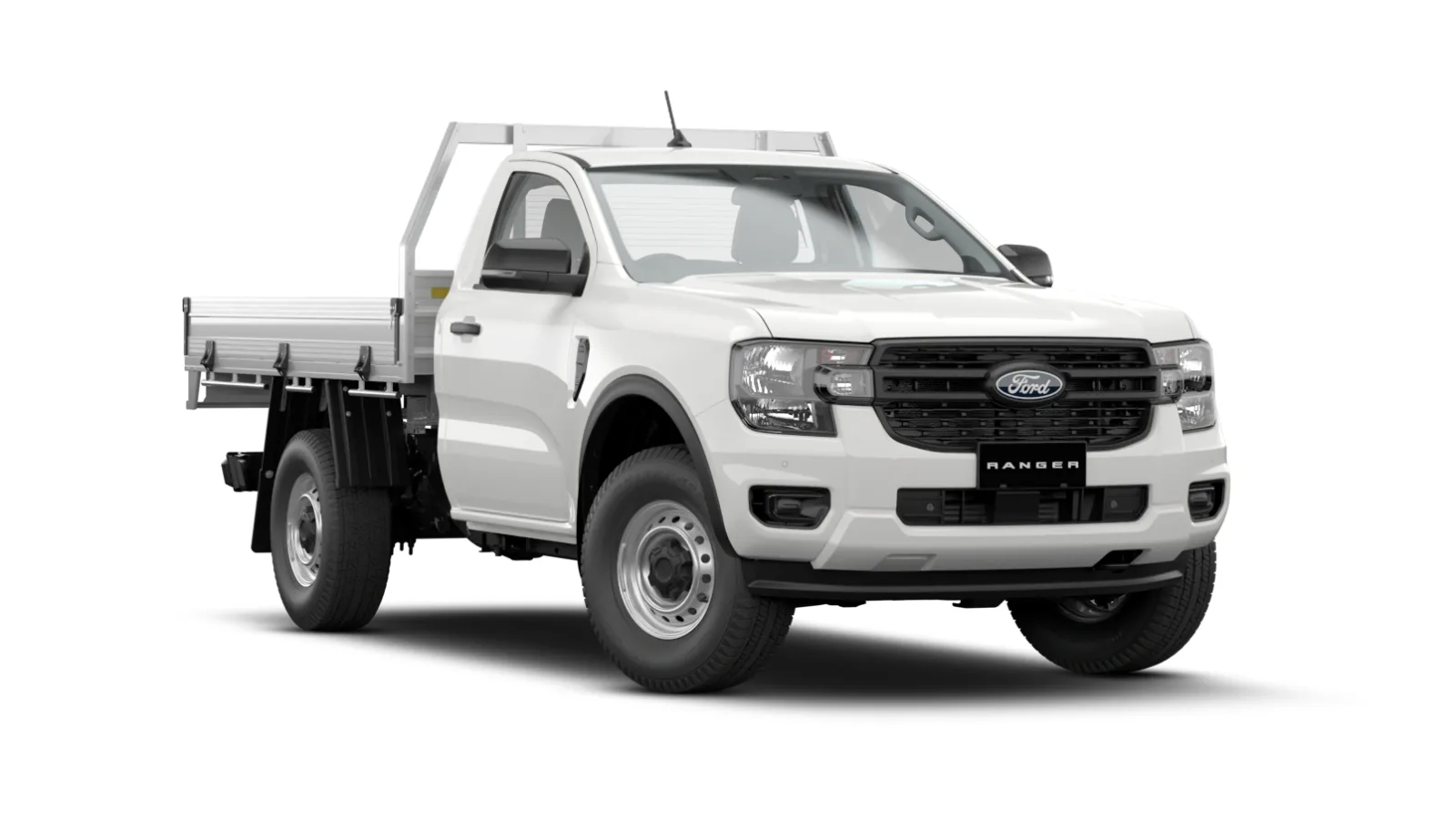
The Ranger is the HiLux's arch-rival and it's a genuinely better vehicle on several fronts. The 3.0-litre V6 turbo-diesel is significantly more powerful (184kW/600Nm), and the interior is more modern with its 12-inch portrait touchscreen, paired with a 10-speed auto. It also tows 3,500kg across more variants. The catch? It costs more, depreciates faster, and has higher servicing costs. The D-Max vs HiLux comparison covers this in depth, or check our HiLux vs Ranger head-to-head for the full breakdown.
Isuzu D-Max (from $41,243)
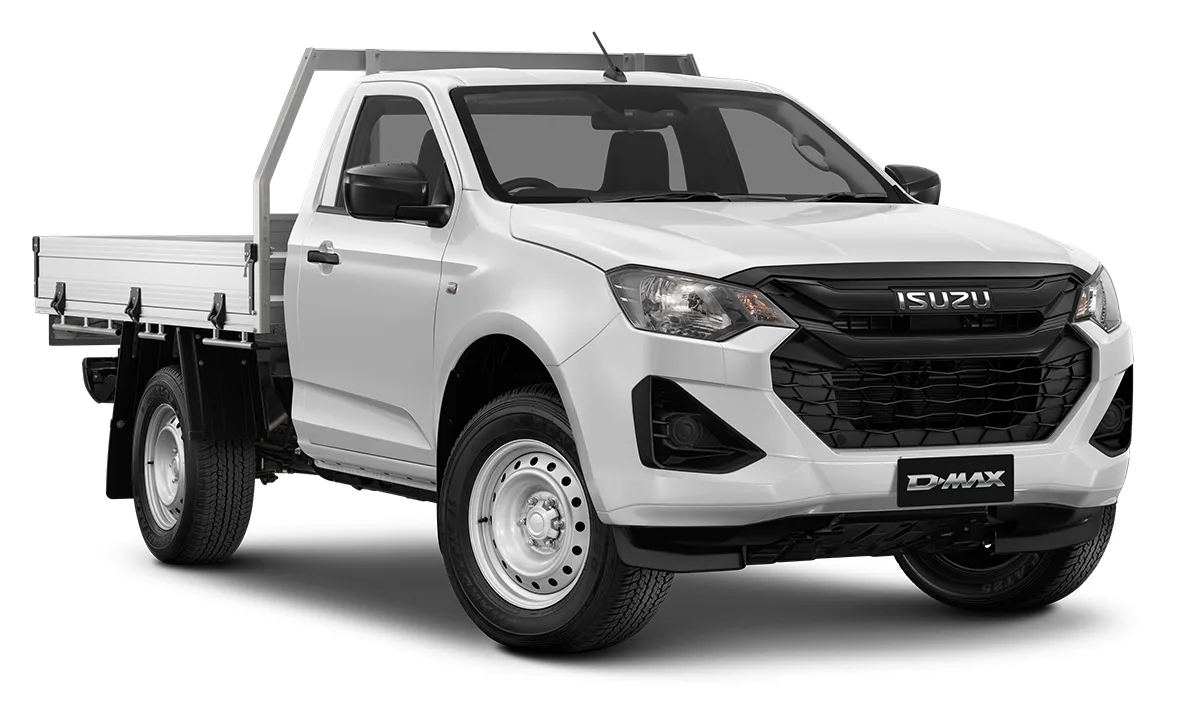
The D-Max is the thinking person's ute. It shares its platform underpinnings with the MU-X wagon, gets a solid 3.0-litre turbo-diesel making 140kW/450Nm, and has one of the best safety suites in the segment with Intelligent Driver Assistance standard across the range. Fuel economy is among the best in the segment. Isuzu's reliability record in Australia is excellent. It doesn't have the HiLux's resale cachet, but it's arguably the better all-round package. Detailed comparison at D-Max vs HiLux.
Mitsubishi Triton (from $43,690)
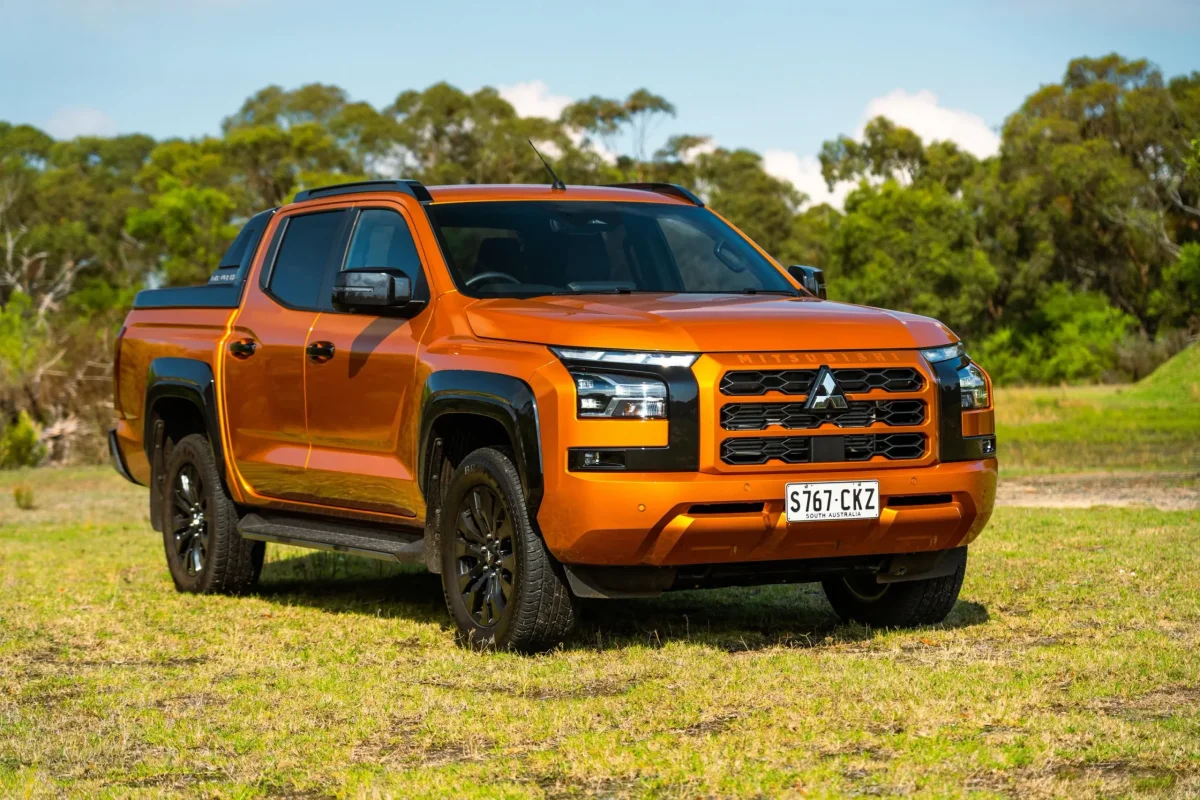
The new-generation Triton launched in 2024 with fresh styling, a revised 2.4-litre turbo-diesel, and an interior that's vastly improved over the old model. Every Triton grade we list, from the GLX 4x2 to the GSR 4x4, makes 150kW and 470Nm, which matches the HiLux on power and sits 30Nm under an automatic HiLux (500Nm) but 50Nm above a manual one (420Nm). Payload ratings are lower. It's a strong choice for buyers who use their ute 80% as a daily driver and 20% for work.
The HiLux wins on resale value and brand trust. The Ranger wins on power and interior tech. The D-Max wins on safety features and among the best fuel efficiency in the segment. The Triton wins on warranty length. None of them are bad utes. Compare them all in our best utes in Australia guide.
| Key details: Toyota HiLux WorkMate 4x2 Single Cab Manual | |
|---|---|
| Price | From $33,990 RRPExcl. on-road costs |
| Drive-away estimate | Calculating... |
| Cost per week in VIC | from $200/wk in VIC, excludes servicing and insuranceRepayments, fuel or charging, rego and CTP, servicing, tyres and insurance where held. Estimate only, not a quote. |
| Body | Cab Chassis |
| Powertrain | Diesel, 2.8L 4-cyl turbo |
| Towing (braked / unbraked) | 2,900kg / 750kg |
| Payload | 1,260kg |
| Tray length | No data |
| Seats | 2 |
| Warranty | 5yr / unlimited km |
| Rivals | Ford Ranger, Isuzu D-Max, Mitsubishi Triton |
| The Toyota HiLux range on sale | Price | Powertrain | Fuel or energy use |
|---|---|---|---|
| WorkMate 4x2 Single Cab Manual | From $33,990 RRP | Diesel, RWD | 7.3 L/100km |
| WorkMate 4x2 Single Cab Auto | From $35,990 RRP | Diesel, RWD | 7.4 L/100km |
| WorkMate 4x4 Single Cab Auto | From $45,990 RRP | Diesel, 4WD | 7.4 L/100km |
| WorkMate 4x2 Double Cab Auto | From $47,990 RRP | Diesel, RWD | 7.4 L/100km |
| WorkMate 4x4 Extra Cab Auto | From $52,490 RRP | Diesel, 4WD | 7.4 L/100km |
| SR 4x2 Double Cab Auto | From $52,990 RRP | Diesel, RWD | 7.4 L/100km |
| WorkMate 4x4 Double Cab Auto V-Active | From $53,990 RRP | Diesel, 4WD | 7.4 L/100km |
| SR 4x4 Double Cab Manual | From $54,990 RRP | Diesel, 4WD | 7.3 L/100km |
| SR 4x4 Extra Cab-Chassis Auto | From $54,990 RRP | Diesel, 4WD | 7.4 L/100km |
| SR 4x4 Double Cab Auto | From $57,990 RRP | Diesel, 4WD | 7.4 L/100km |
| SR 4x4 Double Cab Auto V-Active | From $59,490 RRP | Mild-hybrid diesel, 4WD | 7.2 L/100km |
| SR5 4x4 Double Cab Manual | From $63,990 RRP | Diesel, 4WD | 7.1 L/100km |
| SR5 4x4 Double Cab-Chassis Auto V-Active | From $64,490 RRP | Mild-hybrid diesel, 4WD | 7.4 L/100km |
| SR5 4x4 Double Cab Auto V-Active | From $65,990 RRP | Mild-hybrid diesel, 4WD | 7.2 L/100km |
| SR5+ 4x4 Double Cab Manual | From $70,990 RRP | Diesel, 4WD | 7.1 L/100km |
| Rogue 4x4 Double Cab Auto V-Active | From $71,990 RRP | Mild-hybrid diesel, 4WD | 7.6 L/100km |
| Rugged X 4x4 Double Cab Auto V-Active | From $71,990 RRP | Mild-hybrid diesel, 4WD | 7.6 L/100km |
| SR5+ 4x4 Double Cab Auto V-Active | From $72,490 RRP | Mild-hybrid diesel, 4WD | 7.2 L/100km |
| BEV SR Double Cab Cab-Chassis | From $74,990 RRP | Electric, AWD | 25.6 kWh/100km |
| BEV SR Double Cab Pick-Up | From $76,490 RRP | Electric, AWD | 20.2 kWh/100km |
| BEV SR5 Double Cab Pick-Up | From $82,990 RRP | Electric, AWD | 20.2 kWh/100km |
| SR5+ 4x4 Double Cab-Chassis Auto V-Active | POA | Mild-hybrid diesel, 4WD | 7.4 L/100km |
How much fuel does it use?
Efficiency: Diesel Pragmatism
Toyota claims 7.4L/100km on the combined ADR test cycle for the SR 4x4 Double Cab Auto. The thing to understand about that number is how it is measured: unladen, on a standardised lab cycle, with nothing on the tray and nothing on the towball.
That matters more for a ute than for almost anything else, because a HiLux spends its life doing the opposite. Weight is the dominant variable. A tray full of tools, a canopy, a load of gear or a trailer on the back all mean the engine works harder for the same distance, and towing near the 3,500kg limit is the single biggest jump you will see. After that comes aerodynamics: a bullbar, roof rack, light bar or high canopy all push consumption up at highway speed on a shape that was never slippery to begin with. Bigger all-terrain tyres and a lift kit add to it again, and stop-start town work suits a turbo-diesel less than a steady 100km/h cruise does.
On claimed figures the diesel HiLux grades run from 7.1 to 7.6L/100km, against 8.4L/100km for the Ranger 3.0 V6 and 7.5 to 7.7L/100km for the 150kW Triton 2.4-litre.
The 80-litre fuel tank is the other half of the equation. On the claimed figure that is roughly 1,100km of touring range, and even carrying a load and giving up a chunk of that, an unladen highway run between capitals is comfortably a one-stop job. For remote work or long touring, the combination of a diesel engine and a big tank is a practical advantage that EVs and petrols can't match yet.
On the claimed figure at 15,000km a year and diesel around $1.85-1.95/litre, fuel comes to roughly $2,000-$2,150. Budget above that, because almost nobody runs a ute empty and the extra weight shows up at the bowser. If you're doing 30,000km (common for tradies and regional workers), double it again. Diesel is also available at every servo in Australia, including remote roadhouses where you won't find a fast charger for decades. That's not a knock against EVs. It's just reality for anyone who works outside the capital cities.
| Fuel: Toyota HiLux WorkMate 4x2 Single Cab Manual | |
|---|---|
| Fuel use (combined) | 7.3 L/100km |
| Fuel type | Diesel |
| Minimum fuel grade | No data |
| Urban / extra-urban | 7.6 L/100km / 7.1 L/100km |
| Fuel tank | 80L |
| Range on a tank (calculated) | 1,096kmTank divided by the combined figure |
| CO2 (combined) | 192 g/km |
| Service interval | 6 months or 10,000km |
What does it cost to own?
| Warranty and servicing: Toyota HiLux WorkMate 4x2 Single Cab Manual | |
|---|---|
| Warranty | 5yr / unlimited km |
| Roadside assistance | 3 years (renewed with dealer servicing) |
| Service interval | 6 months or 10,000km |
| Capped-price servicing | No data |
Cost per week in VIC: from $200/wk in VIC, excludes servicing and insurance
- Repayment estimate$134/wk
$5,000 deposit, 5yr loan at an assumed 7.5% p.a. on the RRP. Not an offer of credit
- Fuel$40/wk
7.3 L/100km combined at $1.90/L diesel, the site default
- Rego + CTP$18/wk
VIC typical: car, metropolitan (high risk) zone, 12-month renewal, $958.80 a year. As at July 2026, VicRoads
- ServicingNo data
No data: no servicing cost held for this car
- Tyres$8/wk
Typical tyre spend for this type of car, scaled to 15,000 km a year (not this car's tyres)
- InsuranceNo data
No data: no insurance estimate held for this car
Based on 15,000 km a year in VIC. Estimate only, not a quote.
How safe is it?
Safety: Five Stars, Full Suite
The HiLux holds a 5-star ANCAP safety rating based on Euro NCAP testing. All variants from SR grade and above come with Toyota's Safety Sense package, which includes:
- Autonomous Emergency Braking (AEB) with pedestrian and cyclist detection (daytime)
- Lane Departure Alert with steering assist
- Adaptive Cruise Control (SR5 gets full-speed; SR gets high-speed only)
- Road Sign Assist displaying speed limits in the instrument cluster
- Pre-Collision Safety System at intersections
- Rear Cross Traffic Alert (SR5 only)
- Blind Spot Monitor (SR5 only)
The SR5 also gets a reversing camera and front and rear parking sensors. The WorkMate grade misses out on some of the active safety features, which is a cost-saving measure that's becoming harder to justify when rivals like the D-Max include a more complete suite across the range.
Seven airbags are standard across the lineup, including a driver knee airbag. The body structure uses high-strength steel in the cabin area, and the ladder-frame chassis provides solid crash protection in frontal and side impacts. For a full explanation of what these safety features actually do, have a look at our car safety features explainer.
| ANCAP: Toyota HiLux WorkMate 4x2 Single Cab Manual | |
|---|---|
| ANCAP rating | 5 stars (tested 2025) |
| Adult occupant | 84% |
| Child occupant | 89% |
| Vulnerable road users | 82% |
| Safety assist | 82% |
| Airbags | 8 |
| Driver assists: Toyota HiLux WorkMate 4x2 Single Cab Manual | |
|---|---|
| Autonomous emergency braking | Standard |
| Adaptive cruise control | Standard |
| Blind-spot monitoring | Standard |
| Rear cross-traffic alert | Standard |
| Lane-keep assist | Standard |
| Speed sign recognition | Standard |
| Driver attention monitor | No data |
| 360-degree camera | No |
Standard, Optional (with the printed price), No (the maker's document says not fitted) or No data. 8 assists checked.
What is it like inside?
Interior: Improved, But Still Behind
This used to be the HiLux's weakest point, and while Toyota has improved things, it's still not class-leading. The SR5 gets an 8-inch touchscreen with Apple CarPlay and Android Auto (wireless on 2025+ models), satellite navigation, digital radio, and a six-speaker audio system. The screen is small next to the Ranger's 12-inch portrait display.
The dashboard layout is straightforward. Physical buttons and dials for the climate control, a simple instrument cluster with a multi-info display between the gauges, and chunky controls sized for gloved hands. This is a vehicle designed for people who use it for work. Mud on your hands is not going to ruin a capacitive touchscreen because Toyota kept the important stuff analogue.
The SR5 gets leather-accented seats, soft-touch material on the top of the dash, and contrast stitching. The lower door trims are hard plastic, and everything below the window line is built to survive abuse rather than impress at a car show. That's a fair trade-off if you're buying a ute to work.
Storage is generous. There's a large centre console bin, decent door pockets, a tray ahead of the gear lever, and two cup holders. The glovebox is a good size. Rear passengers get map pockets, air vents, and USB-A charging ports. It's not fancy, but it's functional.
Practicality: The Whole Point
You buy a HiLux because you need to carry stuff, tow stuff, or get to places that normal cars can't reach. On that front, it delivers. The tub on the dual-cab pickup measures 1,525mm long, 1,540mm wide between the arches, and 480mm deep. A standard Aussie pallet fits with room to spare. Payload capacity is 1,015kg on the SR5 4x4, which is lower than the Ranger (1,003-1,106kg depending on variant) but adequate for most trade use.
Towing is rated at 3,500kg braked for 4x4 variants and 2,900kg for 4x2 models. The automatic's 500Nm (420Nm in a manual) is the figure to weigh up for a single-axle caravan or a boat on a tandem trailer. But be aware of the GCM limit of 5,950kg. Once you load the tray and hook up a heavy trailer, the maths can get tight quickly. Always weigh your setup. Our towing capacity guide explains GVM and GCM in detail.
ISOFIX anchor points are fitted to the outer rear seats in the dual cab, and the high floor means you're lifting kids further up than you would in an SUV or wagon.
The rear seats fold up in a 60/40 split to create a flat floor behind the front seats. Tradies use this space for tool storage or as a secure lockable area for valuables. It's one of those practical touches that shows Toyota understands how these vehicles actually get used in Australia.
| Space and dimensions: Toyota HiLux WorkMate 4x2 Single Cab Manual | |
|---|---|
| Seats | 2 |
| Boot, seats up | No data |
| Boot, seats folded | No data |
| Length x width x height | 5,380 x 1,855 x 1,880mm |
| Wheelbase | 3,085mm |
| Ground clearance | 225mm |
| ISOFIX | No data |
| Top tethers | No data |
| Seat trim | Cloth |
| Spare wheel | Full-size steel |
Does it have good tech?
| Screens and audio: Toyota HiLux WorkMate 4x2 Single Cab Manual | |
|---|---|
| Touchscreen | 12.3 inches |
| Driver display | 7 inches |
| Audio | 2 speakers |
| USB | USB-C |
| Connected services term | No data |
| Connectivity: Toyota HiLux WorkMate 4x2 Single Cab Manual | |
|---|---|
| Apple CarPlay | Standard |
| Android Auto | Standard |
| Wireless CarPlay / Android Auto | Standard |
| Wireless phone charging | No |
| Head-up display | No data |
| Built-in navigation | Standard |
| Digital radio | Standard |
| Over-the-air updates | No data |
| Remote climate (app) | No data |
What the figures say about driving it
The Toyota HiLux WorkMate 4x2 Single Cab Manual has 89 kW for every tonne of kerb weight, 420Nm of torque, a claimed 0-100km/h of 10.2s. It weighs 1,690kg and turns in 10.8m. These are the figures that shape how quickly a car gets moving and how easily it parks.
| The figures: Toyota HiLux WorkMate 4x2 Single Cab Manual | |
|---|---|
| Power-to-weight | 89 kW/tonne |
| Power | 150kW |
| Torque | 420Nm |
| 0-100km/h (claimed) | 10.2s |
| Kerb weight | 1,690kg |
| Turning circle | 10.8m |
| Tyres | 265/65R17 |
| Drive | RWD |
| Transmission | Manual |
| Towing (braked) | 2,900kg |
We have not driven the Toyota HiLux; these are Toyota's published figures.
Best deals
Get a great deal on a brand new car today
One enquiry, up to four cars. We ask local dealers for their best drive-away price and send them back to you, so you compare real numbers instead of list prices.
Free for you to use. If you buy, the dealer may pay us a commission. Your details only go to a dealer if you say so.
Find a new car dealShould I buy it?
Should You Buy the Toyota HiLux?
Yes, if:
- Resale value matters to you. few utes in Australia hold their value like a HiLux
- You want the cheapest long-term servicing costs in the dual-cab segment
- Reliability is your number one priority and you plan to keep the vehicle for 5+ years
- You need genuine off-road capability for work or weekend adventures
- You're towing regularly and want a proven, durable drivetrain
- You're a sole trader looking to take advantage of instant asset write-off
- The massive aftermarket parts and accessories ecosystem matters to you
Maybe not, if:
- You want one of the most powerful engines among mainstream utes (the Ranger V6 is in another league for this class)
- Interior tech and screen quality are important to you (the Ranger and D-Max are ahead)
- You want a longer warranty (Mitsubishi offers 10 years, Isuzu offers 6)
The HiLux has been Australia's best-selling vehicle for years running, and that's not an accident. The Ranger is more powerful, the D-Max claims less fuel, and the Triton has the longer warranty. But the HiLux's combination of reliability reputation, resale value, low servicing costs, massive aftermarket support, and Toyota's extensive dealer network across regional Australia adds up to a package that's genuinely hard to beat for total cost of ownership. The V6 Ranger is the one to test drive against it if you want more power.
→ Compare all Toyota HiLux variants on CarSorted (200+ specs)
CarSorted Score breakdown
The CarSorted Score is algorithmic: it is calculated from this car's published data, not from a road test. How it works.
Safety
Fuel Economy
Value
Practicality
Technology
Performance
Reliability
Questions buyers ask
How much does a Toyota HiLux cost in Australia?
The Toyota HiLux WorkMate 4x2 Single Cab Manual is from $33,990 RRP, before on-road costs. The range table above lists every current variant.
Can the Toyota HiLux tow 3500kg?
The Toyota HiLux WorkMate 4x2 Single Cab Manual is rated to tow 2,900kg braked and 750kg unbraked.
What is the fuel economy of the Toyota HiLux?
On the official combined cycle the Toyota HiLux uses 7.3 L/100km.
Is the Toyota HiLux safe?
The Toyota HiLux holds 5 ANCAP stars (rated 2025).
What warranty does the Toyota HiLux have?
The Toyota HiLux comes with a 5yr / unlimited km warranty.
How powerful is the Toyota HiLux?
The Toyota HiLux WorkMate 4x2 Single Cab Manual makes 150kW and 420Nm, with a claimed 0-100km/h of 10.2s.
How to read this page. This is a review of the published figures: we have not driven this car. Prices, specifications, ANCAP ratings, warranty, equipment and the CarSorted Score come from our records for the variant shown, sourced from Toyota's Australian documents, and update when those records change. RRP excludes on-road costs. Drive-away figures are estimates for the state you have selected unless marked as advertised; cost per week is an estimate, not a quote. The editorial text was written on 7 April 2026. Always confirm price and specification with the manufacturer or a dealer before you buy. CarSorted does not accept payment for recommendations.
Comments (0)
Sign in to join the conversation
No comments yet. Be the first!