Key Takeaways
- All-new Mahindra Lifestyler dual-cab confirmed for Australia as the outgoing Pik-Up wraps up after 20 years
- Fresh body-on-frame ladder platform derived from the Scorpio N SUV family, not the old Bolero bones
- Australian targets: 3,500kg braked tow, 6,300kg GCM, 1-tonne payload, matching HiLux and Ranger diesel dual-cabs
- India launch April 2027 from under ₹19.79 lakh; Australian showroom timing later in 2027, price not yet set
- Australian suspension tune signalled, three concept themes shown (Valley, Reef, Trail)
- ANCAP not yet rated; final specs and pricing due closer to the local launch
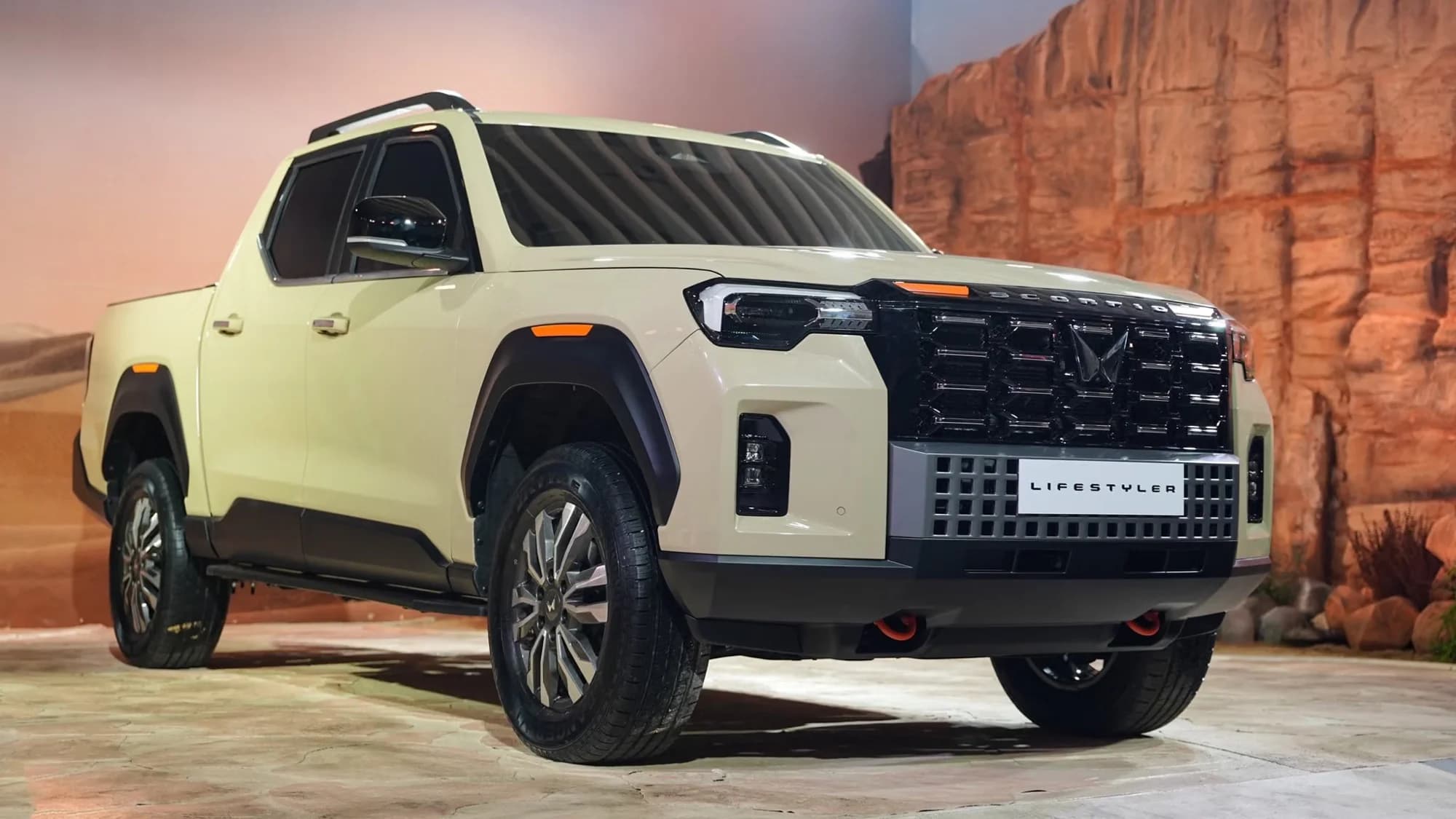
The Lifestyler as revealed in Mumbai on 14 August 2026, wearing the Trail theme in Sahara Beige. The three themes Mahindra showed are styling direction rather than confirmed Australian trims, and this is a show car on a stand, not an Australian-spec production vehicle. Credit: Mahindra.
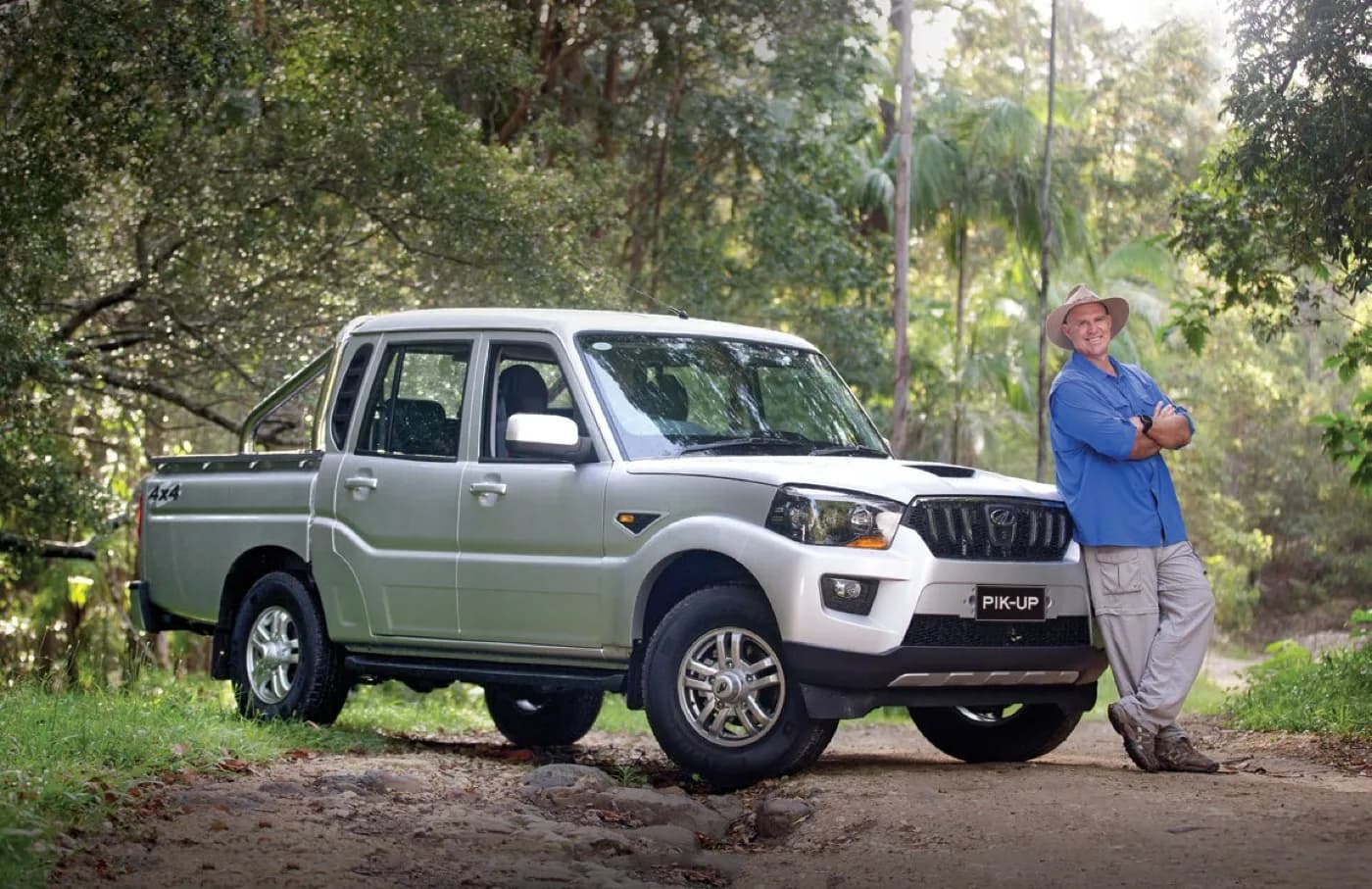
The outgoing Pik-Up, for scale on how far this moves. It bowed out earlier this year after almost 20 years, and it was never on the shortlist the Lifestyler is aiming at. Credit: Mahindra Australia.
The one-tonne ute segment in Australia is about to get another entrant, and this one has more history behind it than most of the Chinese newcomers currently rearranging the price ladder. Mahindra pulled the wraps off its all-new Scorpio Lifestyler in Mumbai on 14 August, and Mahindra Automotive Australia has already confirmed the ute for the Australian and New Zealand markets. It replaces the current Pik-Up, which quietly bowed out earlier this year after nearly two decades on sale, and it is being engineered from the outset with a 3.5-tonne tow rating and a 6,300kg gross combination mass in mind. That matters because those are the numbers a diesel Ford Ranger or Toyota HiLux buyer needs to see on the brochure before they will even take a test drive.
What is actually new here
The old Pik-Up was competent and cheap but felt every one of its years, riding on a much older commercial platform. The Lifestyler starts from a clean sheet, with a body-on-frame ladder chassis derived from the Scorpio N SUV that Mahindra launched globally in 2022. Same platform philosophy, tuned for load-lugging duty. Mahindra says the ute has been engineered specifically for global markets rather than as an India-first design with export tweaks, and more than 600 development vehicles have reportedly been through validation testing since 2024. Australia has been in the plan from the start, which is why the Lifestyler badge, rather than the Indian Scorpio Lifestyler name, is what buyers here will see on the tailgate.
In photos the ute is clearly related to the Scorpio N up front, with the same seven-slot grille motif and vertical LED signature, but the wheel arches are squarer, the rear window kicks up into a tougher C-pillar and the tray sits on a stretched wheelbase that gives the double cab genuine one-tonne credentials. Mahindra also showed three concept themes at the reveal, called Valley (Artemis Grey with a road-biased look), Reef (Aquareef paint and lifestyle bar work) and Trail (Sahara Beige with heavier off-road gear). These are not confirmed Australian trim names, they are styling directions that Mahindra Australia can pick from when the local range is finalised.
What Mahindra has confirmed for Australia
| Item | Status |
|---|---|
| Confirmed for Australia and NZ | Yes |
| Body style | Dual-cab pick-up, body-on-frame ladder chassis |
| Braked tow target | 3,500 kg |
| GCM target | 6,300 kg |
| Payload target | ~1,000 kg |
| Platform origin | Scorpio N-derived ladder frame, purpose-built for global markets |
| Concept themes shown | Valley (Artemis Grey), Reef (Aquareef), Trail (Sahara Beige) |
| Australian suspension tune | Signalled by Mahindra Automotive Australia |
| India launch | April 2027 from under ₹19.79 lakh ex-showroom |
| Australian launch timing | Not yet confirmed; second half of 2027 at the earliest |
| Australian pricing | Not disclosed |
| ANCAP rating | Not yet rated |
The tow number matters more than any single spec on this car. The current one-tonne ute segment in Australia lives and dies by 3,500kg braked, because that is the caravan and trailer bracket most weekend buyers actually pull. The Pik-Up never reached that number in Australian tune. The Lifestyler is being built to hit it from day one, and to carry a matching GCM that lets you tow it while still loaded, not empty. On paper, that alone puts the Lifestyler on the same shortlist as a diesel Ford Ranger, HiLux, D-Max or Triton, which is a shortlist the old Pik-Up simply was not on.
What is not confirmed yet
Mahindra has been careful with the powertrain talk. In India the Scorpio N sells with a 2.2-litre mHawk turbo-diesel four, good for around 129kW and 400Nm in its current tune, and a 2.0-litre mStallion turbo-petrol four running 152kW and around 380Nm. Both engines pair with either a 6-speed manual or a 6-speed Aisin torque-converter automatic, and a genuine part-time 4WD system with a low range. It would be a surprise if the Lifestyler landed with anything wildly different, but the Australian outputs have not been signed off, and there is a live conversation inside Mahindra about a hybrid or electrified variant later in the cycle. Do not treat any specific engine number you read today as final Australian spec.
Also unconfirmed: final Australian trim names, price ladder, exact wheel and tyre sizes, tray dimensions, screen sizes, ADAS suite, service intervals, warranty length (Mahindra has been offering seven years on the XUV 3XO here, but the Lifestyler has not been backed in yet) and any hint at whether the Australian-market tune will get local suspension work in the mould of what Premcar has done for other importers. The Chasing Cars headline flagged an "Australian tune" quote from Mahindra Automotive Australia; we would read that as a strong hint rather than a confirmed partnership.
Safety
The Lifestyler is not yet rated by ANCAP. This is a brand-new ute on a brand-new platform, so a rating cannot exist until Australian-spec vehicles are physically available to test. Under the current 2026 to 2028 ANCAP protocol, a five-star result requires a strong AEB spread (car-to-car, car-to-pedestrian day and night, car-to-cyclist), lane support, driver monitoring, centre airbag between the front seats, and rear occupant protection improvements. Chinese newcomers have been passing this bar; European utes have been slipping under it. Mahindra will be judged against the same yardstick.
How it stacks against what is already on sale
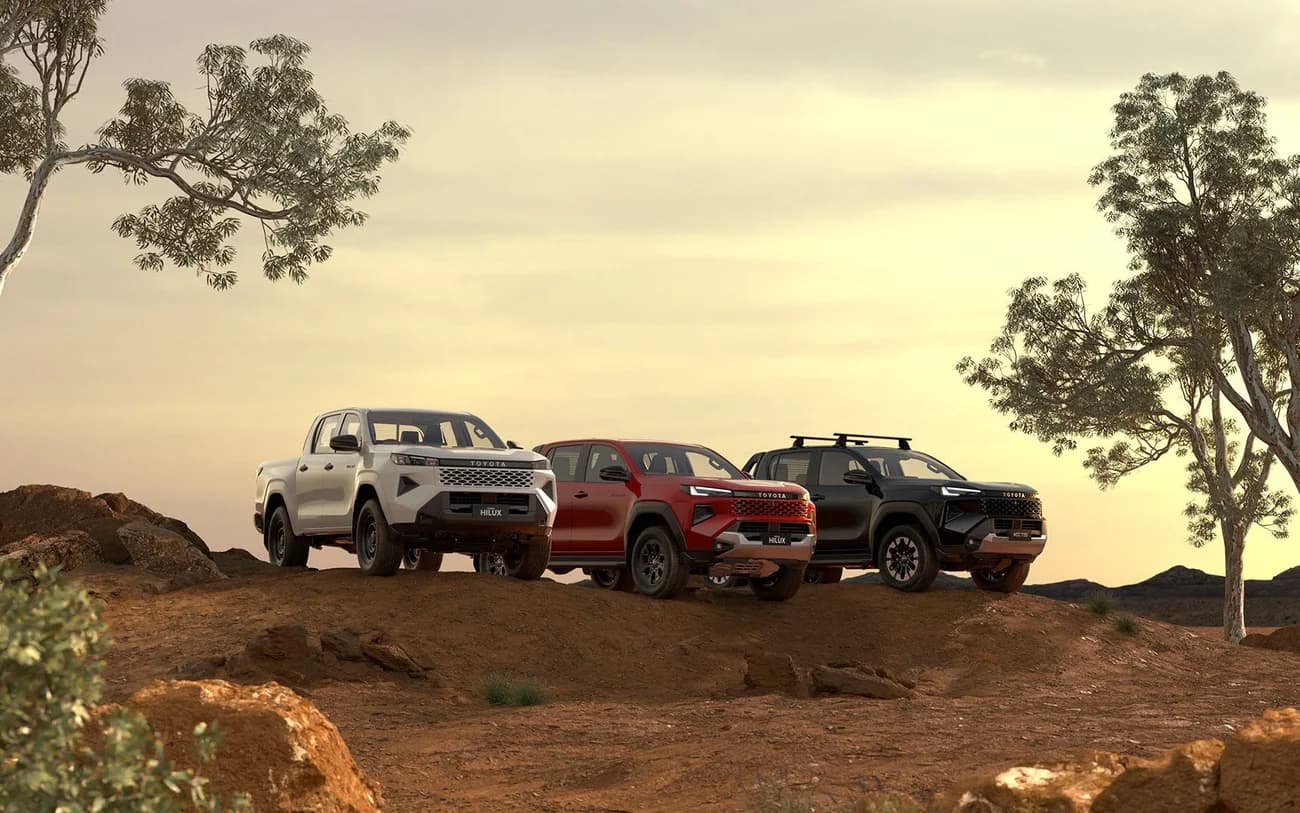
Image credit: Toyota Australia. The HiLux is the yardstick every new one-tonne ute here has to beat.
The Australian one-tonne segment is deeper than it has ever been. The Toyota HiLux and Ford Ranger still set the top of the volume charts. The Isuzu D-Max and Mitsubishi Triton anchor the value diesel end. GWM, LDV and JAC have each landed a competitive dual-cab under $50k plus on-roads. Chinese PHEV utes like the BYD Shark 6, GWM Cannon Alpha PHEV and JAC Hunter PHEV have opened up a whole new plug-in slice of the market that did not exist 18 months ago. Here is how the Lifestyler's confirmed target numbers sit against a mixed group of the utes it is actually going to be cross-shopped with.
| Model | Powertrain | Braked tow | Price hint (before ORC) |
|---|---|---|---|
| Mahindra Lifestyler (target) | 2.2L diesel, likely 4WD | 3,500 kg | To be confirmed |
| Toyota HiLux SR5 diesel | 2.8L diesel 150kW/500Nm | 3,500 kg | ~$63,000 |
| Ford Ranger Sport bi-turbo diesel | 2.0L bi-turbo 154kW/500Nm | 3,500 kg | ~$65,000 |
| Isuzu D-Max LS-U diesel | 3.0L diesel 140kW/450Nm | 3,500 kg | ~$59,000 |
| Mitsubishi Triton GLX+ diesel | 2.4L bi-turbo 150kW/470Nm | 3,500 kg | ~$50,000 |
| JAC Hunter Pro PHEV | 2.0L PHEV 360kW combined | 3,500 kg | Under $50,000 |
| BYD Shark 6 Premium | 1.5L PHEV 321kW combined | 2,500 kg | $57,900 (drive-away offer) |
Two things fall out of that table. First, the Lifestyler will not be the cheapest ute in the segment. That title has moved firmly to the JAC Hunter and, before that, to GWM and LDV. To make a dent, Mahindra Australia will need to land the Lifestyler at meaningfully less than a comparable HiLux SR5 or Ranger Sport, ideally in the low-to-mid $40k plus on-roads bracket at the base end. Second, the 3.5-tonne tow figure is what makes it competitive in the first place. Without that, the Lifestyler is a Chinese-brand rival at best. With it, it is a mainstream ute that also happens to have a lot of Australian off-road heritage attached to the badge (Mahindra tractors have been on Australian farms for a long time and Mahindra 4WDs are a familiar sight in the paddock).
The dealer network question
This is where Mahindra has more work to do than most new entrants. The Pik-Up sold in small enough volumes that many metro buyers had to travel to find a dealer. Mahindra Automotive Australia has been quietly expanding its passenger-car network on the back of the XUV 700 and XUV 3XO, but the ute buyer expects a service centre that can turn a 5,000km inspection around in an afternoon, has parts on the shelf, and can handle warranty on a tow rig. Getting that footprint sorted before the Lifestyler lands is arguably more important than the exact kW figure it eventually launches with.
Warranty and running costs
Mahindra has not confirmed the Lifestyler's warranty length or capped-price servicing schedule yet. Its current Australian passenger cars run a 7-year unlimited km warranty, which matches Kia and MG and beats Toyota, Ford and Isuzu's standard cover. Matching that on the Lifestyler would be a meaningful lever for fleet buyers, particularly against a HiLux (5 years unlimited km) or a Ranger (5 years, 5-year capped servicing). If Mahindra pulls the warranty back to 5 years on the Lifestyler to align with commercial ute market norms, that would be a step backwards from its recent passenger-car positioning and worth calling out at launch.
The CarSorted angle: how to cross-shop this today
The Lifestyler is not on sale yet, so nobody can hand you a driveaway quote today. But if you are the buyer Mahindra is chasing, you are already in-market for a ute and you already have quotes in a folder. On CarSorted, the diesel Ford Ranger is listed with a 3,500kg braked tow and a 3,500kg GVM depending on grade. The JAC Hunter Pro PHEV has been signalled at under $50,000 plus on-roads with 360kW combined and a 3,500kg braked tow. The BYD Shark 6 Premium is running a $57,900 driveaway offer through 30 September that includes free on-road costs, though it caps out at a 2,500kg braked tow. And the GWM Cannon Alpha PHEV Lux sits at $52,990 plus on-roads with 300kW and 3,500kg braked.
The obvious head-to-head Mahindra will run is Lifestyler versus the mainstream diesel HiLux and Ranger, on the basis of tow rating, build quality and dealer service. But the more interesting cross-shop for the enthusiast buyer is Lifestyler diesel versus JAC Hunter PHEV. If both open in the same $45k to $50k plus on-roads window, one gives you a modern SUV-derived ladder chassis with a familiar diesel tune, and the other gives you 360kW of combined petrol-electric shove, plug-in commuting, and V2L on a work-site. That is the interesting decision, and it is the one CarSorted's compare tool is built to make easier once the Lifestyler is homologated into the database.
What this means for buyers
If you are ready to buy a ute in the next six months, the Lifestyler is not your car. It is a 2027 story, and even that is on India's timeline first. You should be cross-shopping the utes already in showrooms. Start with the CarSorted directory at the $50k to $70k mark, filter by 3,500kg braked tow, then decide whether you want the resale confidence of a Ranger or HiLux, the value proposition of a Triton or D-Max, or the newer Chinese diesel and PHEV alternatives. If you can wait 12 to 18 months, then it is worth putting the Lifestyler on your watch list, because a body-on-frame Mahindra ute with a 3.5-tonne tow rating, an Australian tune and (hopefully) 7-year warranty is genuinely a new option, and the segment is still competitive enough that it will not launch at silly money.
The story to watch between now and Australian launch is threefold. First, whether Mahindra confirms the mHawk diesel as the base engine or whether it goes petrol-only in Australia to sidestep the emissions push. Second, whether Mahindra Automotive Australia commits to a local suspension and steering tune (they have hinted at it, and they will need it against a locally-developed Ranger). Third, whether the warranty holds at 7 years. If all three land the right way, the Lifestyler goes on the shortlist. If any of them slip, this is a HiLux-fighter that will end up back in the JAC and LDV price bracket, which is a different fight entirely. Either way, the Pik-Up era is over.
Disclaimer: Australian pricing, powertrain and final specification for the Mahindra Lifestyler have not been confirmed by Mahindra Automotive Australia. Tow rating, GCM and payload figures cited here are targets signalled at the global reveal in Mumbai on 14 August 2026 and are subject to change ahead of Australian homologation. India-market price (₹19.79 lakh ex-showroom) does not reflect Australian on-costs, duty, or the local tune. ANCAP rating is not yet available. Rival pricing quoted above is indicative of listed Australian RRP or drive-away offers current as of 17 August 2026 and may move between now and the Lifestyler's Australian arrival.