Image credit: Toyota Australia
Recall summary
- 13,390 vehicles affected in Australia, built 28 August 2025 to 24 February 2026
- Recall reference: REC-006578 on vehiclerecalls.gov.au
- Only HiLux GUN226R, GUN227R and GUN236R fitted with a Toyota Genuine bull bar, or a nudge bar with light bar
- Fault: the accessory wiring harness bracket can be incorrectly installed and pinch the harness, compromising the earth to the Electric Power Steering module
- Effect: EPS can become inoperative without any warning light, leaving the steering unassisted at low speed
- Fix: free inspection at any Toyota dealer, about 30 minutes; the EPS earth terminal is re-oriented if needed
- Toyota Australia is contacting owners directly. VIN check at toyota.com.au/toyota-recalls
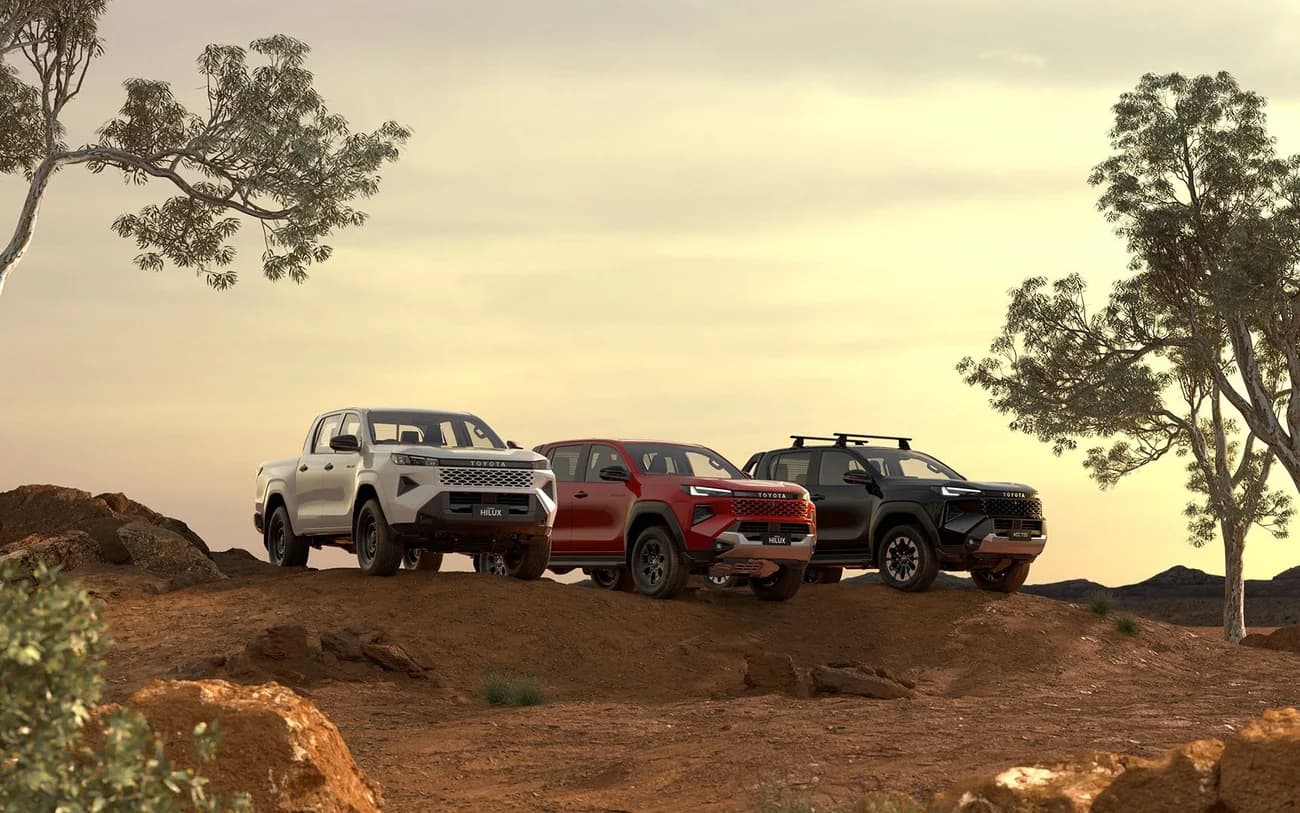
If your HiLux came off the boat with a factory-fitted bar on the front, this one matters. Toyota Australia has called back 13,390 current-generation HiLux utes over a wiring harness bracket in the Genuine Accessory bull bar and nudge bar that can pinch the loom and quietly break the earth on the Electric Power Steering module. When that fault triggers, the assist just stops. No warning light, no chime, no message on the driver display, just a wheel that suddenly needs both arms to turn at parking speed. It is a short trip to a scraped bollard or a clipped kerb, and Toyota's own notice does not shy away from the risk of an accident with injury or death if it happens at the wrong moment.
Everything about the fix is straightforward and free. What matters for you as a HiLux owner is knowing whether your ute is on the list, understanding why a bull bar can knock out the steering assist on a modern ute, and lining up a workshop appointment before you next tow a horse float down a suburban side street.
Which HiLuxes are on the list
The scope is narrow but the volume is not. Toyota Australia's recall notice, registered as REC-006578 on the federal Vehicle Recalls register, covers the three current-generation HiLux body codes: GUN226R (4x4 double-cab pick-up), GUN227R (4x4 double cab-chassis and extra cab) and GUN236R (4x2 variants). Every grade is potentially in scope, from base WorkMate through SR, SR5, Rogue and Rugged X. The narrowing factor is the front-end accessory: only utes delivered with a Toyota Genuine Accessory bull bar, or a nudge bar with light bar, were installed with the wiring harness in question, and only utes built between 28 August 2025 and 24 February 2026 made it out with the incorrect bracket orientation.
| HiLux body code | Drive | Grades on the recall list |
|---|---|---|
| GUN226R | 4x4 double-cab pick-up | WorkMate, SR, SR5, Rogue, Rugged X |
| GUN227R | 4x4 double cab-chassis and extra cab | WorkMate, SR |
| GUN236R | 4x2 grades | WorkMate, SR, SR5 |
HiLux utes delivered without a factory bar are not on the list. The HiLux BEV is not affected either, and neither is the incoming new-generation HiLux due later in 2026. If a bar was fitted at the dealer at handover, or by an aftermarket workshop later, the accessory sits outside the recall on paper, but you should still run your VIN through toyota.com.au/toyota-recalls to be sure.
What is actually going wrong
Toyota's notice describes it plainly. The wiring harness bracket for the Genuine bull bar or nudge bar with light bar may have been installed the wrong way around at the factory. When the bracket sits in that incorrect orientation, it can rub or pinch the wiring loom, and over time the physical damage can compromise the earth connection running back to the Electric Power Steering (EPS) module.
The current HiLux uses a fully electric power-steering assist, not a hydraulic pump driven off the engine. The EPS motor lives at the base of the steering column and pulls its power and its ground reference through a small loom that shares real estate with the accessory wiring. When the earth on that module goes intermittent or open, the assist controller sees a fault it cannot safely work through and it disables the motor. From the driver's seat, the wheel that used to turn with one fingertip now demands both arms to move at parking speed, and Toyota is upfront that there are no warning lights or symptoms beforehand.
The car does not lose the ability to steer at all. Mechanically, the steering rack still moves the wheels. What you lose is the motor doing most of the work for you, which is a much bigger deal in a ute than a hatch. A HiLux double-cab weighs 2.1 to 2.3 tonnes empty. Add a family in the second row, a boat trailer on the tow ball and a tank of diesel, and manoeuvring at walking pace with no assist becomes a serious upper-body workout. Doing it unexpectedly, mid-turn, in a car park, is where the injury risk sits.
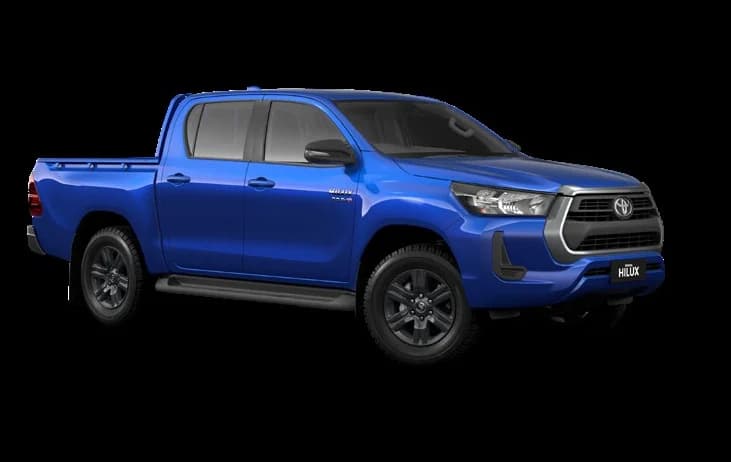
Image credit: Toyota Australia
Why an accessory can bring down the steering
A modern ute is a rolling bundle of small brackets and stapled looms in a very tight engine bay. A dual-cab with a full frontal-protection bar, a light bar, driving lights, a UHF antenna and a bull-bar-mounted winch can carry an extra kilometre of copper in and around the firewall by the time everything is wired in. Manufacturers deal with that by defining accessory looms that share ground points with core vehicle systems, because it saves weight and eliminates redundant earth paths.
That approach works right up until the bracket that pins the loom in place is fitted upside down. Then a service point that was meant to be tucked flat against the chassis rail sits proud against the loom, and every time the ute flexes over a corrugation or a driveway lip the harness insulation takes a small hit. Enough small hits, or one big drop off a truck ramp, and the earth path opens and the EPS controller pulls the plug. It is a small-parts problem with an out-of-proportion consequence, which is exactly the kind of thing recalls exist for.
What to do if you own an affected HiLux
- Check your VIN. Toyota Australia is writing to every owner on the affected list, but do not wait for the letter if you have any doubt. Punch your 17-digit VIN into toyota.com.au/toyota-recalls, or search REC-006578 on vehiclerecalls.gov.au. Your dealer service department can also confirm from the VIN.
- Book the free inspection. Toyota says the workshop time is about 30 minutes. Dealers will inspect the accessory wiring, and if the bracket is in the wrong orientation, they re-orient the EPS earth terminal. Parts do not need to be replaced. You do not need to remove the bull bar first.
- Drive with extra care in the meantime. Toyota is not asking owners to stop driving. What the notice implies is caution, because there is no lead indicator that the assist is about to drop. Give yourself extra room in car parks, slow down through tight turns, and treat parking manoeuvres like the wheel might get heavier without warning.
- Keep the paperwork. If your HiLux is a fleet vehicle or a lease car, hand the recall completion notice to whoever holds the log book. It matters at resale time and it matters if the ute ever ends up in front of a state roadworthy inspector.
How this compares to other Australian ute recalls
Two things stand out about this one. First, the volume. 13,390 vehicles is a big chunk of the current HiLux population from a single six-month build window, and the current HiLux is Australia's second best-selling nameplate this year behind the Ranger. Second, the failure mode. Recalls for power-steering issues on utes are not rare, but they usually involve a hydraulic hose leak, a pump connector or a software bug in the assist algorithm. This one is a physical installation error in a factory-fit accessory line, and it is on a car that has otherwise been the segment's incumbent for a decade.
It sits alongside the recent Jeep Wrangler and Gladiator EHPS pump recall (9,199 vehicles, fire risk if the pump connector overheats) and the Ford Ranger and Everest 10R80 gearbox recall (2,537 more cars re-notified this July). All three campaigns land on utes and 4WDs that are used hard, towed with, and loaded up with dealer accessories. If you drive a modern one-tonner, the safest habit is a quarterly VIN check on vehiclerecalls.gov.au rather than waiting for a letter.
Our take, from a CarSorted cross-shop
The Toyota HiLux sits in a segment where trust in the badge is a big part of the buying decision. On CarSorted right now, HiLux dual-cab pick-up variants stretch from around the mid-$40,000s for a WorkMate 4x4 through to the mid-$70,000s for the Rogue and Rugged X, with the diesel 2.8-litre four-cylinder and six-speed automatic doing the heavy lifting across most of the range. The Ford Ranger, Isuzu D-Max and Mitsubishi Triton are the direct cross-shops, and none of the three carry a comparable open recall on the accessory wiring right now.
That does not automatically move the buying decision. A single accessory-fitment recall on a car with the HiLux's field record is a footnote, not a red flag. What it should nudge you to do is stop treating "factory-fitted" accessories as intrinsically safer than good aftermarket ones. Both need proper install validation, both can be recalled, and both should be checked at handover, not assumed. That checklist is a fair addition to our HiLux vs Ranger comparison, where the factory-fit accessory line and how much of it comes wired from the assembly plant is starting to matter as much as engine torque and tow rating.
What this means for buyers
If you own one of the 13,390 HiLux utes on the list, this is a phone call to the dealer and a half-hour appointment. There is no cost, no parts wait, no down-time beyond the coffee you drink while it is on the hoist. Do it before you next take the ute on a job that involves tight turns at walking pace with a load on the back, and do not let the ute sit on the list for months out of habit.
If you are shopping a new HiLux right now, this recall does not change the calculation on the model as a whole. Any current-build ute that lands with you between now and mid-2026 will have been produced after Toyota Australia fixed the installation error at source, and any car left on a dealer lot that falls inside the affected build range will be inspected before delivery. If you are cross-shopping the HiLux against the Ranger, D-Max or Triton, our HiLux vs Ranger and full Ute directory will give you the working-day comparison of payload, tow rating and standard safety kit that actually decides most orders.
See also: Jeep Wrangler and Gladiator Power Steering Recall | Toyota HiLux Factory GVM Upgrade for 2026.
Disclaimer: Recall details are sourced from Toyota Australia's official press release and the Federal Department of Infrastructure, Transport, Regional Development, Communications and the Arts vehicle-recalls register (REC-006578). Vehicle counts, build-date ranges and affected variant codes are accurate at time of publishing and may be revised if the recall is extended. Always confirm individual vehicle status with Toyota Australia by entering your VIN at toyota.com.au/toyota-recalls, or with your authorised Toyota dealer. Read our methodology for how we source and verify recall data.