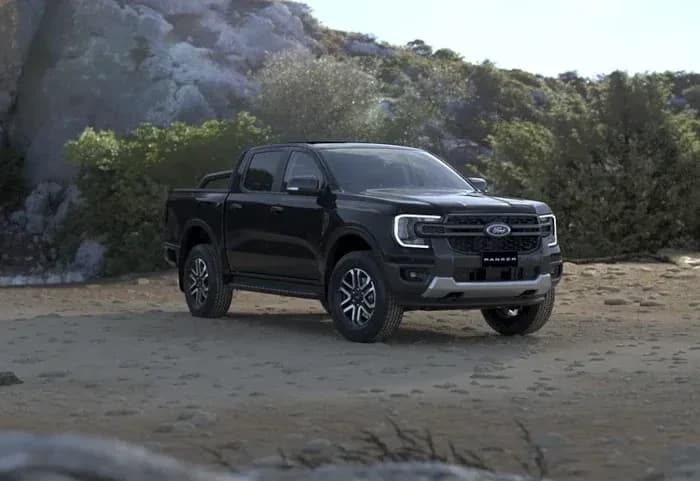
Image credit: Ford Australia
Key takeaways
- 2,537 more vehicles pulled in on a re-notification of the December 2020 recall
- Models: Ford Ranger and Ford Everest with the 10-speed 10R80 automatic
- Ranger build window: 19 December 2017 to 20 September 2019
- Everest build window: 27 November 2017 to 29 June 2019
- Fault: software can let the transmission fluid pump gears fail, dropping hydraulic pressure and drive
- Fix: free software update at any Ford dealer, typically under an hour
- ACCC reference: REC-000320 on vehiclerecalls.gov.au. Hotline 13 3673
Ford Australia has just gone back to a group of Ranger and Everest owners who slipped through the net on the original 10-speed transmission recall from 2020, and asked them to bring the car back. If your Ranger was built between late 2017 and September 2019, or your Everest was built between late 2017 and mid-2019, and it has the 10-speed 10R80 automatic, this is the one to check on your VIN before you get in the car tomorrow.
The core defect has not changed. It is the same transmission fluid pump gear failure Ford flagged in December 2020 under REC-000320. What has changed is that around 2,537 vehicles never came back for the software update the first time. They stayed on dealer databases, changed hands on the used market, moved interstate, or simply never got the letter. Ford is now flushing that group out with a fresh mailout and a repeat of the same free fix.
What is actually going wrong
The 10R80 is the joint Ford and GM 10-speed automatic that sits behind the 2.0-litre bi-turbo diesel and the 3.2-litre five-cylinder diesel in the PX3 Ranger and the first-generation Everest. It is a good gearbox in service, but it depends on a small internal fluid pump to build the hydraulic pressure that clamps every clutch pack inside the box. No pressure means no drive, so the pump is a hard failure point.
On the affected cars, Ford has traced the problem to the Powertrain Control Module and Transmission Control Module calibration. The software allows a torque-load spike that can chew the teeth off the pump drive gears under specific conditions. Once those teeth go, the pump stops moving fluid, the hydraulic circuit loses pressure and the transmission slips out of gear. The driver feels it as a sudden neutral in the middle of a corner or on a hill.
There is no crash sensor here, no airbag involvement, no fuel leak. It is purely a driveline event. But because it can happen without warning at highway speed with a caravan behind, the ACCC lists it as a safety recall rather than a service action, and Ford has to work through the affected VIN list until every car has had the software patch loaded.
Which Rangers and Everests are on the list
| Model | Body / engine | Transmission | Build date range |
|---|---|---|---|
| Ford Ranger PX3 | Dual-cab, super-cab and single-cab, 2.0L bi-turbo and 3.2L diesel | 10-speed 10R80 auto | 19 Dec 2017 to 20 Sep 2019 |
| Ford Everest (UA) | 7-seat 4WD wagon, 2.0L bi-turbo and 3.2L diesel | 10-speed 10R80 auto | 27 Nov 2017 to 29 Jun 2019 |
A few important exclusions. Any Ranger with the six-speed automatic, any earlier PX or PX2 truck, and any Next-Gen Ranger (T6.2) from 2022 onwards is not part of this campaign. The current Everest on the T6.2 platform is also clear. So is the V6 diesel, the PHEV and the incoming Ranger Super Duty. This is strictly a PX3 Ranger and first-gen Everest re-notification.
If you drive a 2020, 2021 or 2022 PX3 Ranger and are wondering, the build cut-off is the tell. Anything assembled after 20 September 2019 for the Ranger, or after 29 June 2019 for the Everest, has the corrected software from factory and is outside REC-000320.
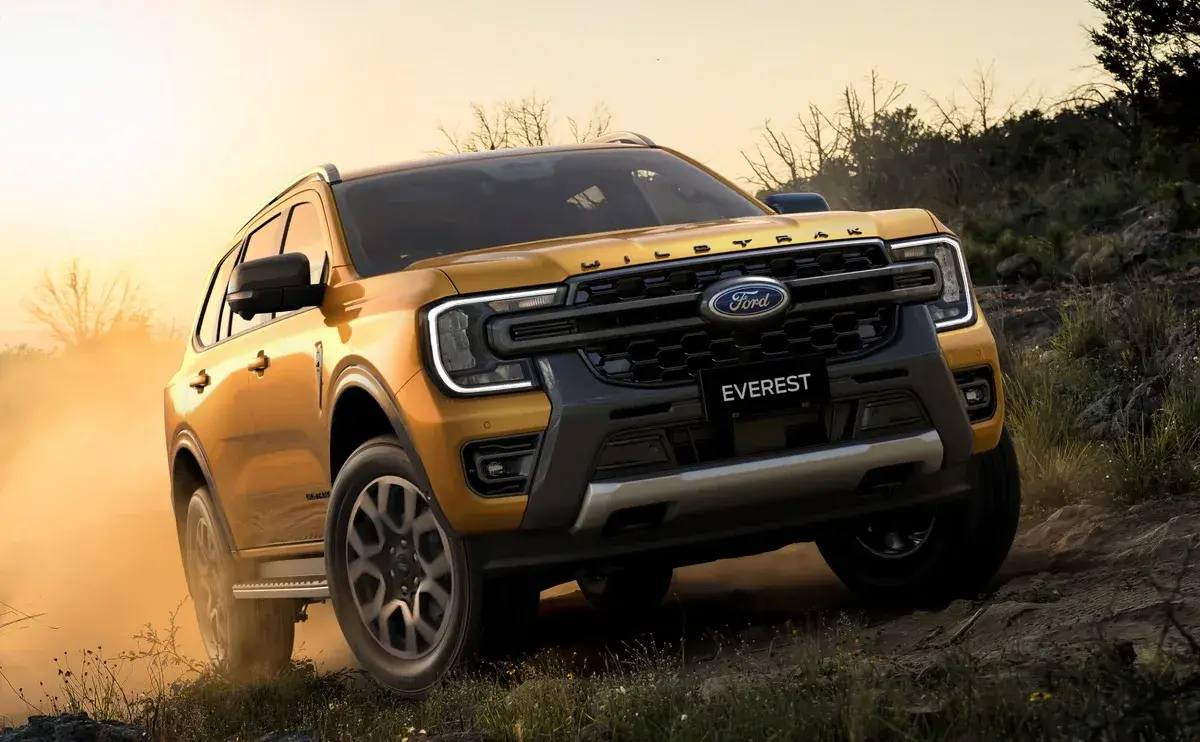
Image credit: Ford Australia
Why this one is coming back around now
The original REC-000320 was issued on 3 June 2020 and covered 25,573 Rangers and Everests. Ford Australia worked through that VIN list steadily from 2020 to 2023 as owners came in for scheduled services, but the completion rate never hit 100 per cent. The residual 2,537 cars is what happens over five years when a truck of this vintage passes through two or three sets of hands, a couple of interstate moves and a data cleanse or two at the dealer end.
Ford is now pushing a second wave of letters, mail and phone contact through Salmat and its dealer network, and the ACCC has updated REC-000320 rather than issuing a new recall code. That is standard practice for a re-notification, and it means the underlying defect notice, hazard description and remedy on the ACCC page stay in place. Only the completion target and the mailout list are refreshed.
Some of those 2,537 cars have almost certainly already had the software update done at a dealer without the campaign being properly closed on the file. If you have receipts showing a PCM or TCM reflash between 2020 and 2024, take the paperwork to your Ford dealer and ask them to check the campaign status on the VIN. In some cases a five-minute admin update in Ford's system is enough to close it out and you never need to book the workshop time again.
What the fix involves
The remedy is a calibration update to the Powertrain Control Module and Transmission Control Module. The dealer plugs the truck into the Ford Diagnostic and Repair System, flashes the two modules with the current software level and clears the campaign flag against the VIN. Typical workshop time is under an hour and the truck rolls straight back out. No parts are ordered, no fluid is drained, the transmission is not opened.
There is one small catch worth flagging. Because the update writes to the powertrain modules, some owners have reported minor shift-character changes after the reflash: slightly firmer 1-2 changes, a marginally later downshift under braking, a keener kick-down on part throttle. None of it is unsafe or unusual, but if you spent an afternoon in 2022 tuning the truck around its factory shift map, expect it to feel like a slightly different vehicle for the first week after the recall.
Ford has confirmed the recall repair itself is free of charge, which is standard for a manufacturer safety recall. Consequential costs are less cut and dried: if your transmission already failed before the recall letter arrived, related repairs and towing may be covered under warranty or the Australian Consumer Law consumer guarantees depending on the circumstances, so keep every receipt and phone Ford Customer Service before you sign off on any repair paperwork. If you hit a wall, your state consumer affairs body is the next call.
What to do this week
- Check your VIN. Type your 17-digit VIN into the recall and service action lookup at ford.com.au. It will tell you in seconds whether REC-000320 is open on your truck. Cross-check on vehiclerecalls.gov.au if you want a second data point.
- Book the workshop time. Any authorised Ford dealer can do the reflash. Book by phone or through the FordPass app. The workshop time is short, so you can often get in inside a week rather than the four-week wait a full service takes.
- Chase your dealer if you moved. Ford has posted letters based on the original registration address. If you moved between 2019 and now, update your address with Ford Customer Service on 13 3673 and the letter will reroute inside 10 business days.
- Watch for shift character changes. A neutral feel between gears at highway speed, a slur on 3-4 changes, or a delayed take-off from rest are the tells that the pump has already lost some capacity. Treat any of those as a call to the dealer today, not next month.
- Get the paperwork. Ask for a stamped campaign completion slip when the reflash is done. It matters at resale, and it matters if the truck is still under any part of the extended warranty coverage some finance packs added.
The used-market angle from our data
Cross-referencing REC-000320 against the CarSorted directory, the affected trucks are still very much in circulation. A 2018 or 2019 Ranger Wildtrak dual-cab bi-turbo trades on the used market between roughly $34,000 and $46,000 depending on kilometres and condition, and a 2018 or 2019 Everest Titanium 3.2L sits between $38,000 and $52,000. These are not fleet write-offs, they are still bread-and-butter family utes and 7-seat wagons for a lot of Australian households.
On our directory the current Next-Gen Ford Ranger opens at $37,130 before on-road costs for the XL 4x2 diesel and climbs past $80,000 for the Raptor. The current Ford Everest sits from around $54,240 for the Ambiente up past $84,000 for the Platinum V6. Neither of those cars carries the 10R80, so if you are cross-shopping a used PX3 Ranger against a brand new Next-Gen and this recall is bugging you, the newer platform sidesteps the issue entirely.
On the other hand, if you already own a PX3, we would not read this as a reason to sell. The 10R80 in the corrected state is a strong long-life box. The fix is a one-hour visit. The trade-in loss on running scared is easily $4,000 to $6,000 more than the actual inconvenience of the workshop appointment.
If you are shopping a used PX3 Ranger or first-gen Everest this weekend
Three quick things before you sign anything.
First, ask the seller for the Ford dealer stamp confirming REC-000320 is closed on the VIN. A dealer stock ute should already carry it. A private seller can produce the same by phoning Ford Customer Service and quoting the VIN. If the seller shrugs at the request, run the VIN yourself before you put a deposit down. It takes 30 seconds.
Second, use an open recall as negotiating leverage, not a walk-away. A 2019 Everest Trend with an open REC-000320 is worth roughly $1,500 less than the same truck with a closed campaign, purely because you carry the workshop time and the paperwork chase. Bank that number as a discount rather than as a reason to look at another car.
Third, look at every other campaign against the VIN while you are in there. A 2019 Ranger will often show two to three older service actions from Ford, most of them tiny (a park-brake harness tie, an infotainment reflash, a coolant reservoir cap). The pattern of a seller who has ignored all of them is a data point about how the truck has been looked after.
How this campaign sits against Ford Australia's wider recall pattern
Ford Australia has issued a run of Ranger and Everest recalls across the current and previous generations, ranging from small compliance-label rework campaigns on 60 vehicles to genuine safety items on tens of thousands. The 2022 to 2025 Next-Gen Ranger has had a valve-body campaign and a rear-camera software issue. The 2024 to 2025 Ranger and Mustang have shared a fuel-system service action. None of those touch the 10R80 in the older truck, so if you are on the current V6 3.0-litre diesel Next-Gen Ranger you are outside this campaign entirely.
The pattern here is normal for a truck that has sold nearly 100,000 units a year in Australia at various points across the decade. Recall count on the Ranger tracks the volume it sells, not any brand-wide quality problem. Toyota HiLux, Mitsubishi Triton and Isuzu D-Max have all had their own multi-thousand-unit campaigns across similar build windows. The important number is not how many recalls a nameplate has, it is what percentage close inside the first 12 months. Ford Australia sits mid-pack on that metric.
Safety and ANCAP
The PX3 Ranger and first-generation Everest both hold their five-star ANCAP ratings from 2015 and 2015 respectively. Those ratings have expired for new-car use under ANCAP's revised protocol timetable, but they remain valid on cars already sold. This recall does not affect the ANCAP score. Ratings are about crash performance, and REC-000320 is about a driveline software calibration. The two do not overlap.
The current Next-Gen Ranger holds a five-star ANCAP rating under the 2022 protocol, and ANCAP's published scope for it covers all variants except the Raptor. Ratings are published per model rather than shared between cars that use the same platform, so for the current Everest check ANCAP's own scorecard rather than reading the Ranger result across. Neither of the current cars is on this campaign. If you are cross-shopping the older PX3 truck against the current one, the newer body is materially safer regardless of any recall paperwork.
What this means for buyers
For current PX3 Ranger and first-gen Everest owners, this is a paperwork chore rather than a stop-drive event. Check the VIN, book the workshop time, get the stamp, keep driving. The 10R80 with the corrected calibration has clocked hundreds of thousands of kilometres in fleet service without repeat pump failures, and the fix is quick and free.
For anyone shopping a used mid-size ute or seven-seat 4WD around $35,000 to $55,000 this weekend, this is a reason to be pickier, not to walk away from the segment. Cross-shop the 2018 to 2019 PX3 Ranger against a 2018 to 2019 Toyota HiLux, a 2019 Isuzu D-Max or a 2019 Mitsubishi Triton and check every one of them for open campaigns. The Ranger is usually still the most car-like drive of the group, and the current Wildtrak V6 3.0-litre diesel is easily among the top three utes in Australia on our data.
For anyone weighing up a used first-generation Everest against a used Prado, Fortuner or Pajero Sport in the same window, this recall is not a reason to move away. The Everest is a comfortable long-distance seven-seat 4WD that the market has under-priced relative to the LandCruiser Prado on the used market for years. A closed REC-000320 is a small win for the buyer, not a red flag.
Compare more utes and 4WDs on CarSorted: Ford Ranger vs Toyota HiLux | Best Utes in Australia 2026 | Browse the CarSorted directory.
Ford Australia contact
Ford Customer Service Centre: 13 3673 (13 FORD)
Recall and service action lookup: ford.com.au/owners/vehicle-support/recall-and-service-action-lookup
ACCC recall reference: REC-000320 on vehiclerecalls.gov.au
Disclaimer: Recall details are sourced from the ACCC product safety recall notice REC-000320 published on vehiclerecalls.gov.au and Ford Australia. Affected VIN ranges, unit counts and remedy details are accurate at the time of publishing and may change if the campaign is further extended. Used-market pricing referenced is indicative only and varies by state, condition and dealer. Always confirm the campaign status of your specific vehicle with Ford Australia (13 3673) or through the official recall and service action lookup at ford.com.au. Read our methodology for how we source and verify recall data.