Key Takeaways
- New entry-level Hybrid XL from $59,000 driveaway, Sport $66,000, Wildtrak $70,000
- The Ranger PHEV name is gone. Same plug-in hardware, sold as Ranger Hybrid from MY26.5
- Combined 207kW / 697Nm, 11.8kWh battery, 49km electric-only range
- 3,500kg braked towing across the line, 6.9kW Pro Power Onboard kept
- XL deletes side steps, power-folding mirrors and the perimeter alarm to make the price
- Cheaper than a BYD Shark 6 Premium driveaway in most states, dearer than a GWM Cannon Alpha Lux PHEV
- XL deliveries from Q3 2026, Sport and Wildtrak already in dealers
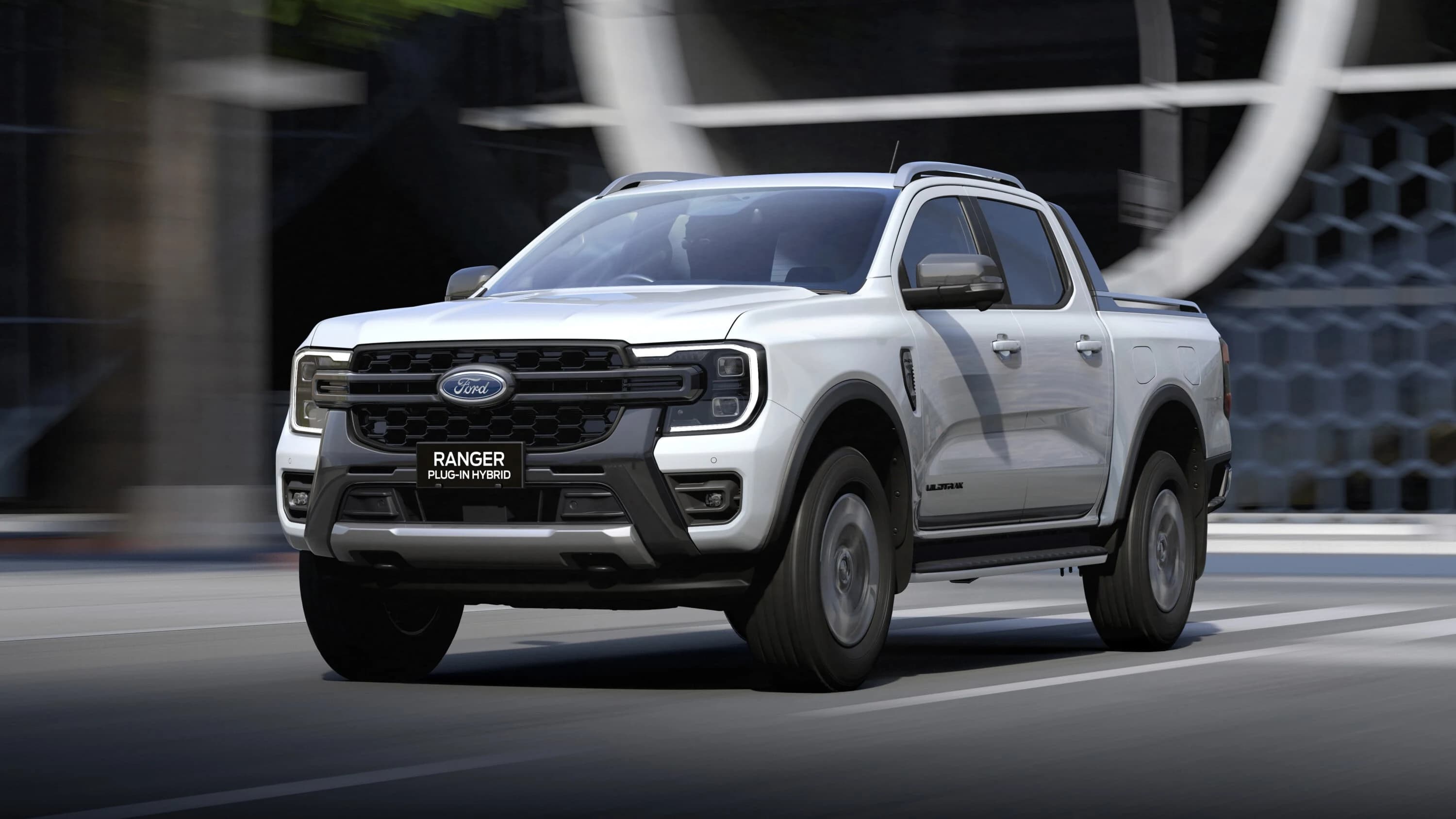
Image credit: Ford Australia
If you have been waiting for the plug-in Ranger to look sensible on price, this is the week the maths changed. Ford has rebadged the Ranger PHEV as the Ranger Hybrid for MY26.5, dropped a fleet-friendly XL grade into the bottom of the range at $59,000 driveaway, and held the Sport and Wildtrak at $66,000 and $70,000 driveaway respectively. For context, the original Ranger PHEV Sport opened the books at $71,990 before on-road costs in September 2025, which put it close to $80,000 once you registered it. The new XL undercuts that landed figure by roughly $20,000, and it is the first time a plug-in Ranger has sat under the BYD Shark 6 Premium PHEV on a driveaway basis in most states.
The name change is the part the press kits keep skating over. The hardware has not changed. You still get a 2.3-litre EcoBoost petrol four, a 75kW electric motor sandwiched into the 10-speed automatic, an 11.8kWh usable battery and a charge port behind the driver door. It is a plug-in. You still need to plug it in if you want the electric range. Calling it "Hybrid" on the boot lid is a marketing decision aimed at buyers who hear PHEV and walk away, and we will be watching closely to see whether Ford ends up explaining the charge port to a few confused tradies.
Pricing
| Variant | MY26.5 driveaway | Status |
|---|---|---|
| Ranger Hybrid XL 4x4 dual cab | $59,000 | Orders open, Q3 2026 delivery |
| Ranger Hybrid Sport 4x4 dual cab | $66,000 | In dealers now |
| Ranger Hybrid Wildtrak 4x4 dual cab | $70,000 | In dealers now |
Current price on CarSorted: BYD Shark 6 Premium $57,900 RRP, as at 14 Oct 2026; BYD Shark 6 Performance $62,900 RRP, as at 4 Oct 2026; GWM Cannon Alpha Lux PHEV $57,490 drive-away (VIC), as at 19 Sep 2026.
The Stormtrak that sat on top of the launch line-up has been deleted. So has the original PHEV Sport price ladder. What is left is a tighter three-grade range that mirrors how Ford prices the diesel Ranger, only with the plug-in powertrain bolted in. The simpler the menu, the easier the dealer pitch.
Powertrain and Performance
Same drivetrain as before, same numbers. A 2.3-litre turbocharged petrol four, an electric motor built into the gearbox housing, a 10-speed automatic and full-time 4x4. Total system output is the headline figure that has not moved since launch.
| Spec | Ranger Hybrid (all grades) |
|---|---|
| Engine | 2.3L turbo petrol 4-cyl (EcoBoost) |
| Electric motor | 75kW |
| Combined system output | 207kW / 697Nm |
| Battery (usable) | 11.8kWh |
| Electric-only range (claimed) | 49km |
| Combined fuel consumption (claimed) | 2.9 L/100km |
| Electricity consumption (claimed) | 18.7 kWh/100km |
| AC charging (on-board) | 3.5kW (15A socket) |
| Transmission | 10-speed automatic (modular hybrid) |
| Drive | Full-time 4x4 |
| Braked towing | 3,500kg |
| Pro Power Onboard | Up to 6.9kW (two 15A tray sockets, one 10A cabin) |
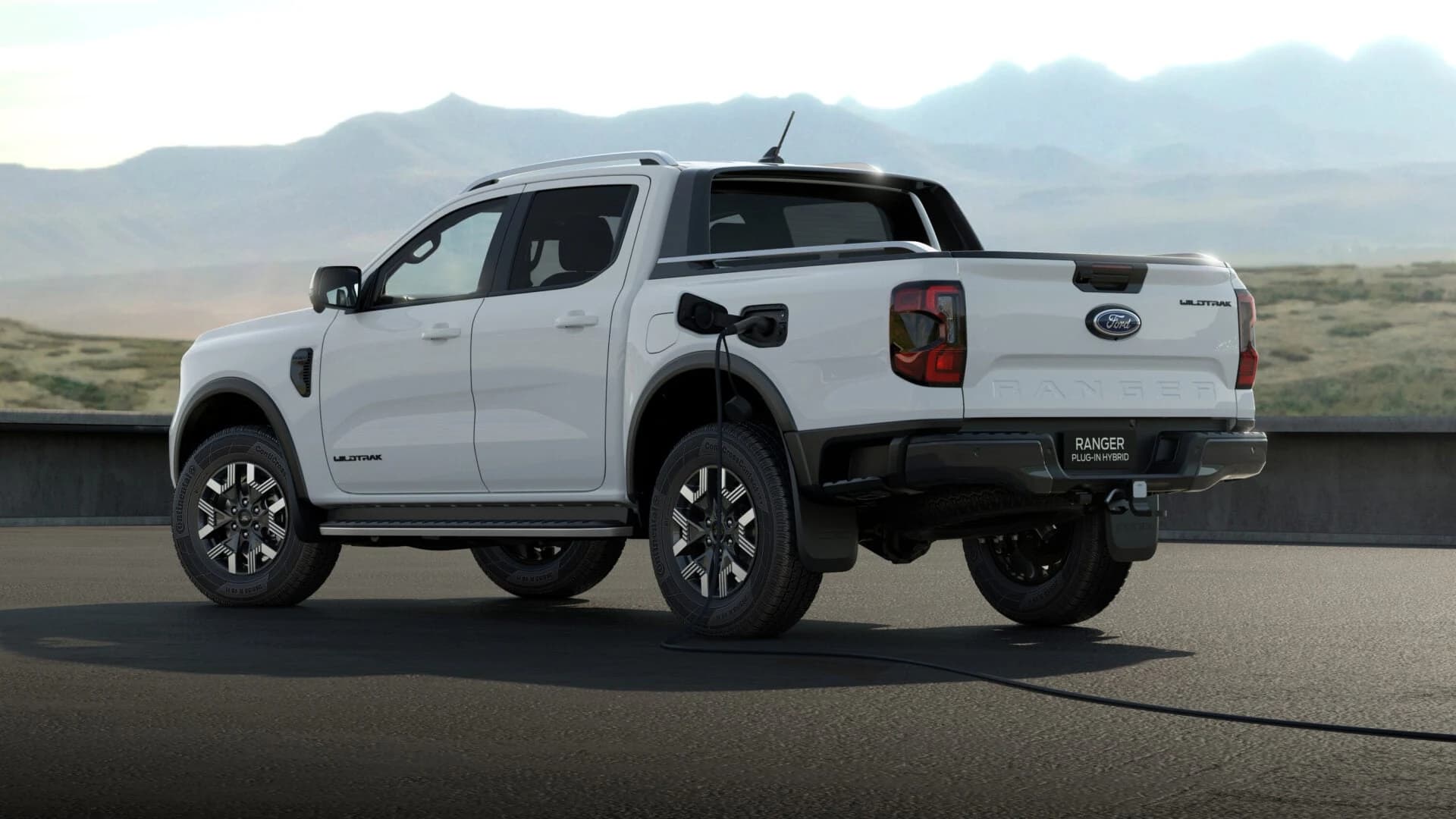
Image credit: Ford Australia
The 49km claim is the electric-only figure, not the combined range. Ford does not quote a WLTP electric number for Australia and the lab combined figure of 2.9 L/100km is the usual hot-battery test result that you should treat as the floor rather than the average. Most owners reviewing the MY25 PHEV on long highway runs with a depleted battery have settled into the 8 to 9 L/100km bracket, which is roughly where a 2.0-litre bi-turbo diesel Ranger lives. The fuel savings live in the first 49km of every day, not in the 250km after that.
What the XL Drops to Hit $59,000
The XL trim is a deliberate fleet bid. It runs 17-inch alloys, dual-zone climate, a 12-inch portrait centre touchscreen and a 12.4-inch digital instrument cluster, which is more screen real estate than the diesel XL gets. To land at $59,000 driveaway Ford has taken out the power-folding mirrors, the integrated side steps and the perimeter alarm. Cloth seats and manual lumbar replace the heated leather you get in the Sport and Wildtrak.
Importantly, none of the load-carrying or towing hardware changes between the XL and the Wildtrak. Same battery, same charge port, same Pro Power Onboard, same 3,500kg braked rating, same chassis. Local councils, electricians and small fleets who do not need leather but do need to plug a circular saw straight into the tray have just had their case made for them.
What the Sport and Wildtrak Add
Move up to the Sport at $66,000 driveaway and you pick up 18-inch alloys, the side steps, power-folding mirrors and the perimeter alarm the XL gives up, plus part-leather trim and heated front seats. Wildtrak at $70,000 driveaway brings matrix LED headlights with dynamic bending and auto-levelling, a power roller shutter, a 10-speaker Bang & Olufsen stereo, full leather, ambient cabin lighting and the more aggressive Wildtrak exterior pack with the body-coloured sports bar.
The Wildtrak walks into BYD Shark 6 Premium driveaway territory without flinching. The Sport sits roughly $4,000 above a Cannon Alpha Lux PHEV driveaway. Ford has plainly priced this lineup against the Chinese plug-ins, not against its own diesel Ranger XLT.
Safety
The Ranger's five-star ANCAP rating was earned under the 2022 protocol, and the published scope covers all variants except the Raptor. ANCAP has not separately tested the plug-in body, so do not assume the plug-in is covered by that result. Check what the current scorecard actually lists for the variant you are buying before you sign. Standard safety equipment across all three grades includes nine airbags, AEB with intersection function, lane-keep assist, adaptive cruise with stop-and-go, reverse brake assist, blind-spot monitoring with rear cross-traffic alert, traffic sign recognition and a 360-degree camera (Sport and Wildtrak get a higher-resolution version).
How It Compares
Five plug-in dual-cabs are now genuinely on sale or close to it. Here is how the Hybrid XL stacks up against the rivals it was priced against.
| Variant | Price | Combined power | Battery | Braked towing |
|---|---|---|---|---|
| Ford Ranger Hybrid XL | $59,000 driveaway | 207 kW | 11.8 kWh | 3,500 kg |
| BYD Shark 6 Premium | $57,900 +ORC | 321 kW | 29.6 kWh | 2,500 kg |
| GWM Cannon Alpha Lux PHEV | $52,990 +ORC | 300 kW | 37.1 kWh | 3,500 kg |
| JAC Hunter Pro PHEV | From under $50,000 +ORC | 360 kW | 31.2 kWh | 3,500 kg |
| Toyota HiLux SR5 diesel | $63,260 +ORC | 150 kW (diesel) | N/A | 3,500 kg |
Current price on CarSorted: BYD Shark 6 Premium $57,900 RRP, as at 14 Oct 2026; GWM Cannon Alpha Lux PHEV $57,490 drive-away (VIC), as at 19 Sep 2026; Toyota HiLux WorkMate 4x2 Single Cab Manual $33,990 RRP, as at 6 Sep 2026.
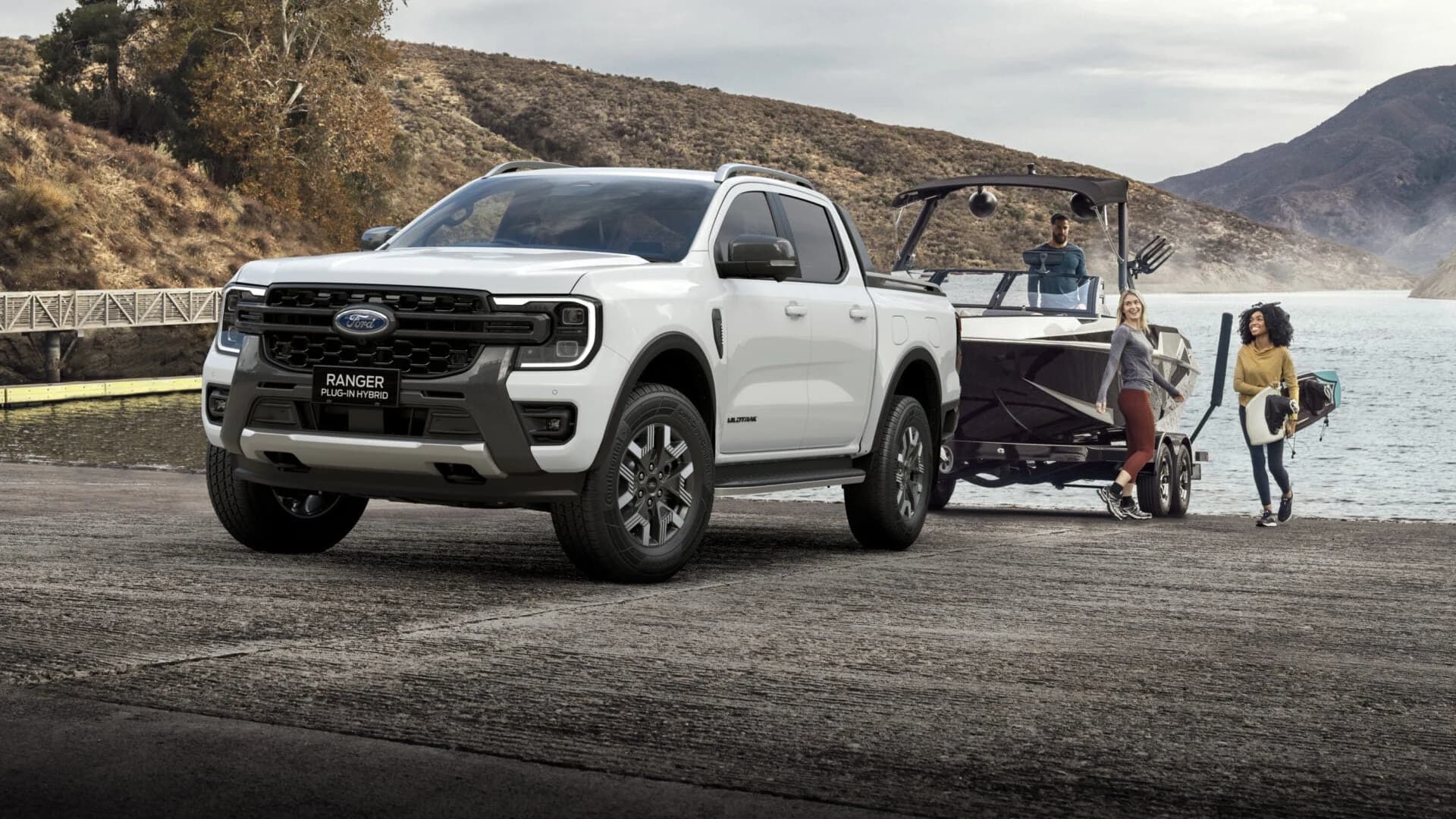
Image credit: Ford Australia
Three things jump out of that table. The Cannon Alpha Lux PHEV is still the price floor for a 3,500kg-rated plug-in dual cab. The Shark 6 has roughly double the battery for similar money but stops at 2,500kg braked, which rules it out for two-horse floats and the bigger boats. The Hunter is the new wildcard that could reset the whole segment if JAC delivers in Q3. Stack any pair head to head in our Shark 6 vs Ranger comparator.
Warranty and Servicing
Ford keeps its five-year, unlimited-kilometre vehicle warranty and adds an eight-year battery warranty for the high-voltage components. Service intervals are 12 months or 15,000km, with capped-price servicing carried over from the rest of the Ranger range. That is shorter coverage than the seven-year warranties from GWM and JAC and the six-year cover from BYD, and worth modelling into a fleet TCO. Our warranty comparison has the full breakdown.
The CarSorted Angle
On CarSorted's Ford Ranger directory entry the comparable Ranger Wildtrak 3.0L V6 diesel sits at $73,440 plus on-roads with 184kW and 600Nm, a 7.6 L/100km combined claim and the same 3,500kg braked tow rating. Step across to the new Ranger Hybrid Wildtrak at $70,000 driveaway and you pay roughly the same money once on-roads are added in, but you walk away with 207kW, 697Nm and a 49km commute-from-the-charger zone bolted on the front of the journey. If you average 40km of urban running a day and you can plug in at home overnight, our running-cost model has the Hybrid Wildtrak landing about $1,650 per year cheaper on energy than the diesel V6 Wildtrak at 1.85c per kilowatt-hour controlled-load and $1.85 per litre 95RON. Across a five-year hold that closes the upfront gap and leaves you in front, even before the FBT exemption thresholds are factored in for a novated lease.
For a tighter cross-shop, stand the Hybrid XL next to the Shark 6 Premium on the CarSorted directory. The Ranger holds the towing advantage and the Pro Power Onboard, the Shark 6 holds twice the battery and a far quicker on-board AC charger. Build your shortlist in our Shark 6 vs Ranger compare tool and use the filters in the main directory to add the Cannon Alpha PHEV or the Hunter once it goes live.
What This Means for Buyers
If you are a tradie or a small business with a dedicated home charger and a daily round trip of 40 to 50km, the Hybrid XL is the most interesting new ute to land here this quarter. You get the diesel Ranger's towing, the diesel Ranger's payload, the diesel Ranger's 4x4 hardware and a 49km plug-in window that wipes most of the fuel bill off your weekday driving. That has not been on offer at under $60,000 driveaway from a legacy brand before this week.
If you cannot plug in at home, none of this matters. With the battery flat, the Ranger Hybrid is a heavier 2.3-litre petrol Ranger and will pull 8 to 9 L/100km in the real world, which is worse than the 2.0-litre bi-turbo diesel. Buy it for the plug-in window or do not buy it at all.
If your priority is electric range and outright value, the GWM Cannon Alpha Lux PHEV at $52,990 plus on-roads still owns the floor on price and has a bigger battery. If your priority is acceleration and tech kit, the Shark 6 Performance does 4.7 seconds to 100km/h and undercuts the Wildtrak. Pick the Ranger Hybrid when you need the towing, the dealer footprint and the familiar Ranger ownership story bundled with a plug.
Best Electric and PHEV Utes 2026 | Compare Shark 6 vs Ranger | Ute tray size comparison
Disclaimer: Pricing and specifications are sourced from Ford Australia. Driveaway figures are the manufacturer's national driveaway promotion at time of writing and may vary by postcode, dealer and stock availability. Fuel and electricity consumption claims are manufacturer laboratory results and will not match real-world figures. ANCAP star rating refers to the wider Ranger range; check ANCAP's scorecard for variant-specific applicability before purchase.