2027 edition: the new guide is up. Best Electric Utes in Australia 2027, rebuilt from our directory with this year's prices and arrivals.
CarSorted Verdict
The electrified ute market in Australia has gone from one option to fifteen variants in two years, and the arrival of the Ford Ranger PHEV ($71,990-$86,990) means a household-name brand is finally in the fight. On price, the BYD Shark 6 ($55,900-$62,900) is still the value benchmark and the best urban PHEV all-rounder, and the new Performance grade now tows the full 3,500kg. If towing is the whole point, the GWM Cannon Alpha Lux PHEV ($59,990) is the cheapest way to get 3,500kg braked plus 115km of EV range. If you only want full-electric, the KGM Musso EV ($60,000-$64,700) is the sensible alternative to the LDV eT60, with 420km of range and a 7-year warranty. Use the 4-way comparison tool to put them side by side, or jump straight to a Shark 6 vs Cannon Alpha head-to-head.
Researching electrified utes? Start here:
- → Best Electrified Utes (Hybrid, PHEV & EV) ranked, the full overview and verdict
- → Best Plug-In Hybrid (PHEV) Utes, Cannon Alpha vs Shark 6 vs Ranger
- → This page: every electric & PHEV ute compared on specs, prices and compare links
The State of Electric Utes in Australia
Utes are Australia's biggest-selling body style. The Ford Ranger and Toyota HiLux have occupied the top two sales spots nationally for years. But the electrification story in this segment has been slow, because towing is hard on an EV, heavy payloads are hard on an EV, and outback distances are hard on an EV. All three are what utes are built for.
That has changed faster than anyone predicted. As of July 2026, there are fifteen electrified ute variants on sale in Australia across six manufacturers: BYD, Ford, GWM, KGM, LDV and now Toyota, whose battery-electric HiLux is the first EV ute from a top-two-selling nameplate here. Ford's Ranger PHEV was the big one, because it puts a plug-in ute in every Ford dealership in the country. Two more are at the dealer-launch stage: MG U9 EV and the Chery KP31 diesel PHEV, both late 2026. By the end of 2027 we expect Toyota, Kia and Isuzu to all have electrified utes here too. The choice has gone from “none” to “more than the full-size SUV segment” in two model years.
Below we run through every electrified ute currently on Australian roads, what it actually does well, where it falls short, and a direct link to compare it head-to-head with its closest rivals on our comparison engine. Then we cover what is coming next and who should wait. All specs and pricing are pulled from manufacturer Australia websites and the CarSorted live database.
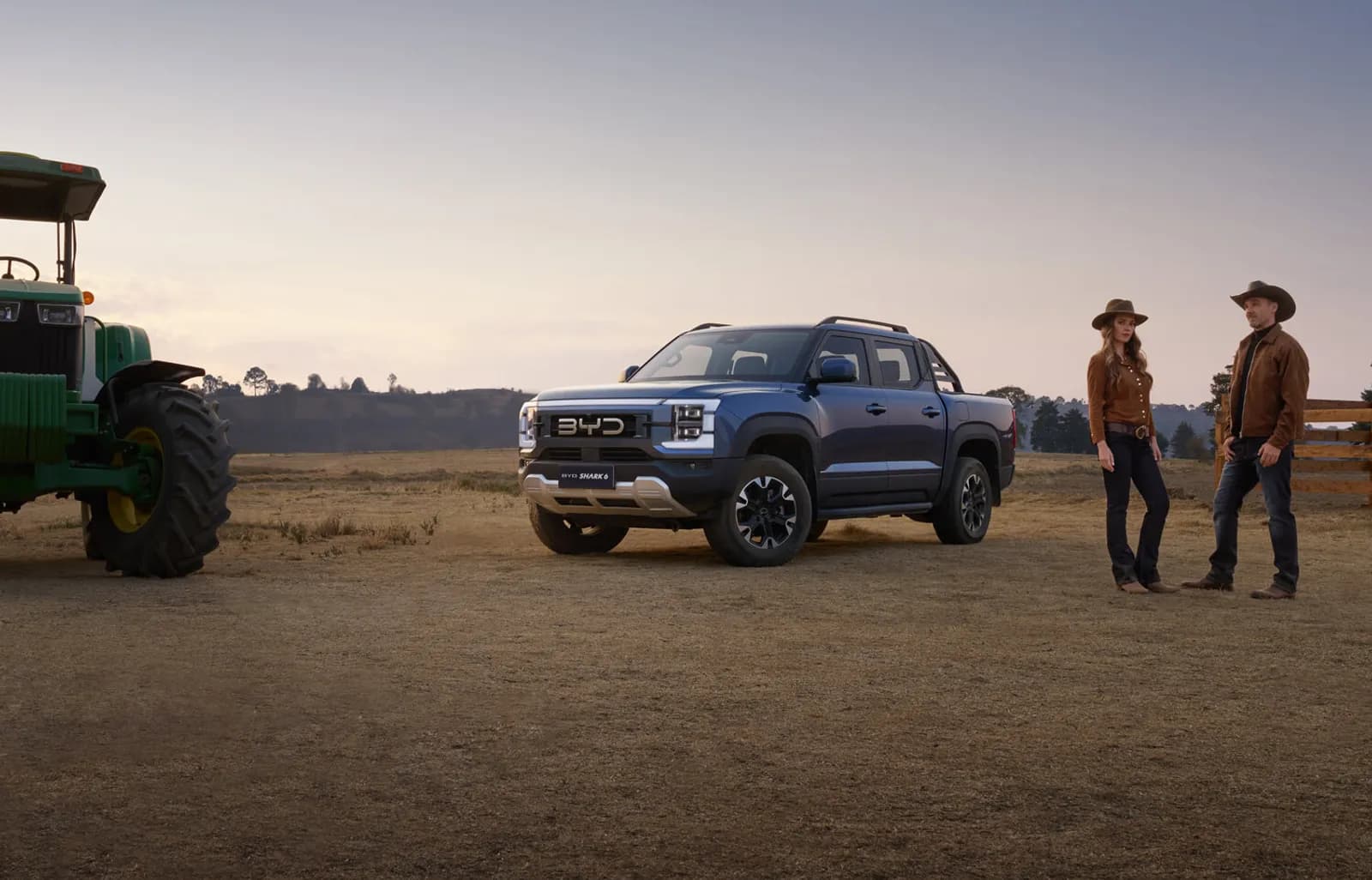
Image credit: BYD Australia
The Top Electric & PHEV Utes in Australia
1. BYD Shark 6: Best Urban PHEV All-Rounder
The Shark 6 is a plug-in hybrid dual-cab that gets electric utes right for the average Australian driver. A 1.5-litre turbo-petrol engine acts as a generator and drive assistant, paired with a 29.6kWh Blade battery delivering around 100km of EV-only range. Total combined range is over 800km. Peak system outputs are 321kW and 650Nm, which is genuine performance.
Towing on the on-sale Premium and Cab-Chassis is rated at 2,500kg braked, which is below the 3,500kg that most traditional diesel utes offer, but fine for a box trailer, caravan under 2.5 tonne, or jet ski. The BYD Shark 6 Performance, now on sale at $62,900, jumps to the full 3,500kg braked, lifts system output to 350kW and adds Crawl Mode for off-road work. Payload on the Premium is 790kg and the tray measures 1,450mm long by 1,520mm wide. For most tradies who drive 60-80km a day and tow occasionally, the Shark 6 is genuinely cheaper to run than a diesel Ranger: around $500 a year on home charging versus $3,000-plus on diesel.
Pricing starts at $55,900 before on-roads for the Cab-Chassis, $57,900 for the Premium and $62,900 for the Performance, with a 6-year/150,000km warranty and 8-year battery cover. That makes the Cab-Chassis the cheapest electrified ute on sale in Australia. See it head-to-head against its biggest rival: BYD Shark 6 vs GWM Cannon Alpha, or against the segment kings: Ford Ranger vs Shark 6 and Toyota HiLux vs Shark 6.
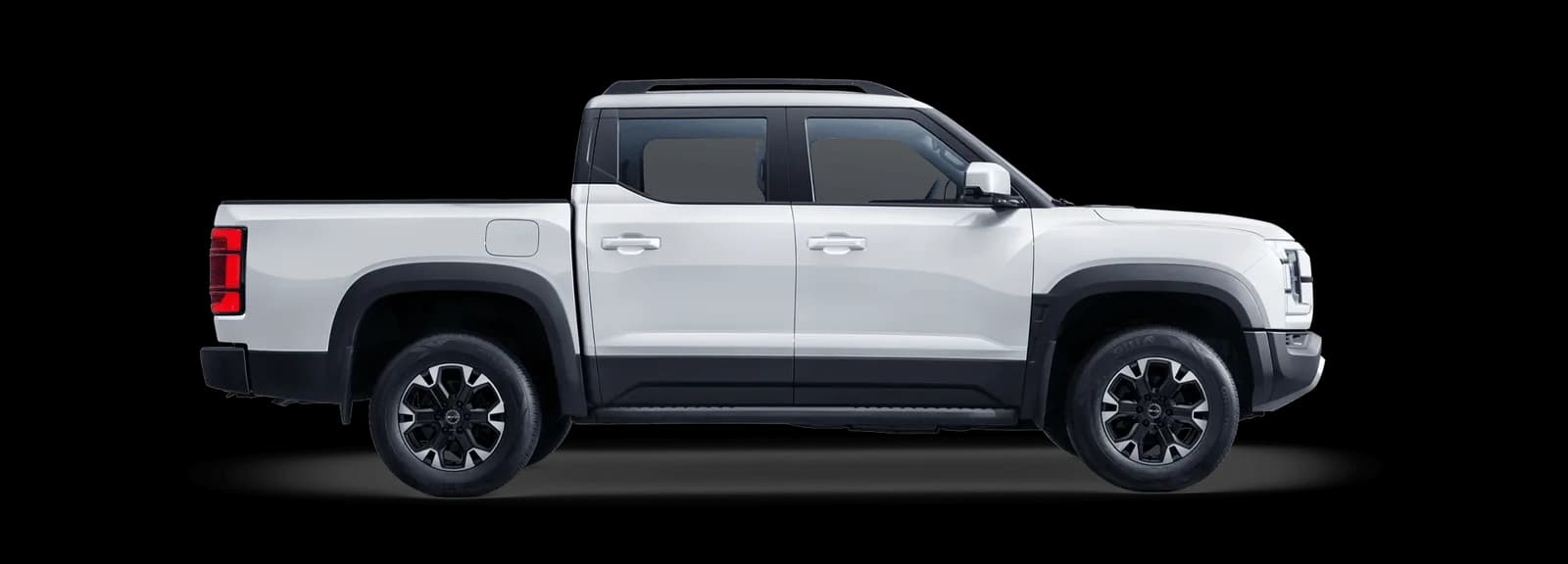
Image credit: BYD Australia
2. GWM Cannon Alpha PHEV: Cheapest Plug-In Ute That Tows 3,500kg
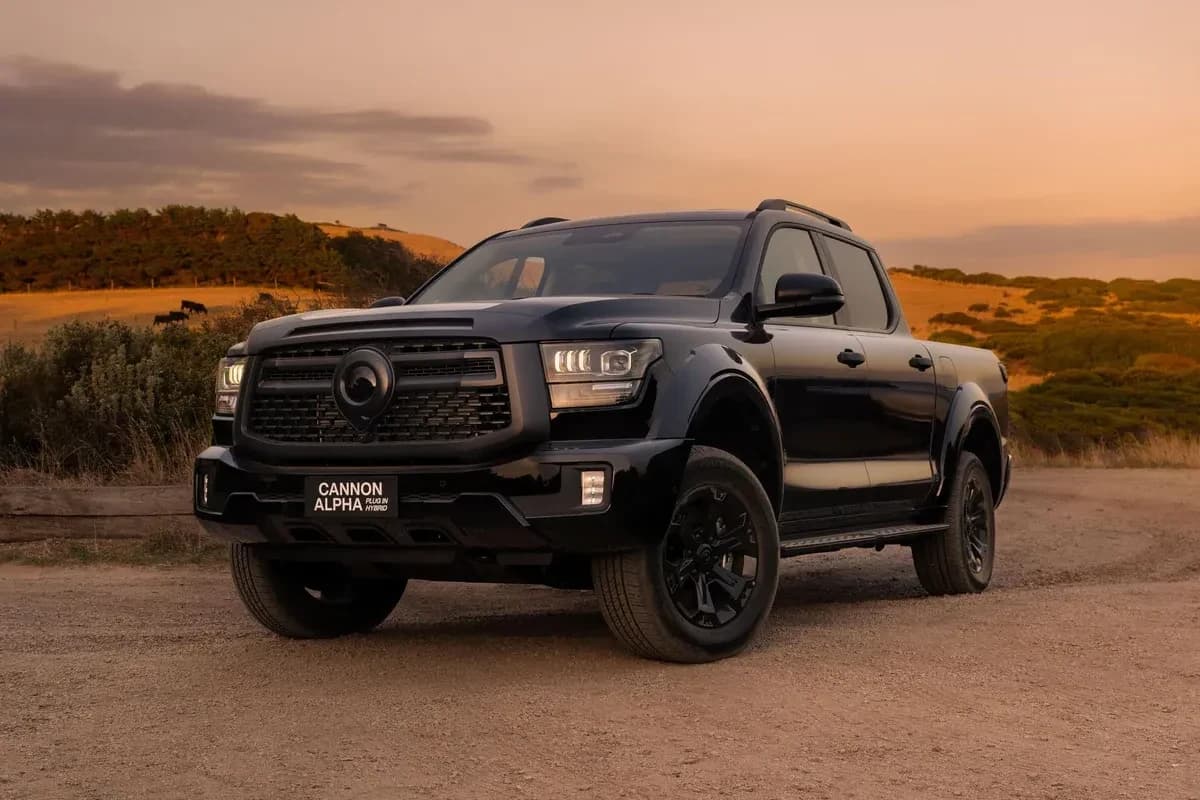
Image credit: GWM Australia
The most disruptive ute on the Australian market right now isn't the Shark 6. It's the GWM Cannon Alpha PHEV. Built on GWM's Hi4-T platform, it pairs a 2.0-litre turbo-petrol with an electric motor for 300kW and 750Nm of combined output, a 37.1kWh battery, and 115km of EV-only range. It is full-size, physically larger than a Ranger or HiLux, with front and rear locking diffs, low-range and a serious off-road tune. Towing is the headline: the full 3,500kg braked, GCM matched to traditional diesel dual-cabs.
Pricing is where it gets interesting. The Lux PHEV starts at $59,990 before on-roads, which undercuts the 3,500kg-rated BYD Shark 6 Performance by $2,910 and makes it one of the cheapest ways to get a plug-in ute with the full 3,500kg braked rating. The Ultra PHEV at $66,990 adds 14-way leather seats, ventilation, a 14.6-inch infotainment screen and a head-up display. Both come with a 7-year, unlimited-kilometre warranty. If you want the Alpha body but not the plug, the Alpha Lux Diesel starts at $52,990.
For buyers who cannot charge at home, GWM also lists the Cannon Alpha Ultra HEV at $64,490: a no-plug self-charging hybrid with 255kW system output, the same 3,500kg towing and 6.9L/100km combined claimed economy. It is the choice for fleets without depot charging. The Cannon Alpha's downsides are size (it is a big truck, harder to park than a Ranger), the still-thin GWM dealer network in regional Australia, and the fact that long-term resale is unproven. Compare it directly: Cannon Alpha vs Shark 6, Cannon Alpha vs Ranger, or Cannon Alpha vs HiLux.
3. Ford Ranger PHEV: The Household Name Arrives
The Ford Ranger PHEV is the one most buyers were waiting for, and it is now on Australian dealer floors in four grades: XLT ($71,990), Sport ($75,990), Wildtrak ($79,990) and Stormtrak ($86,990). It pairs Ford's 2.3-litre EcoBoost with a 75kW electric motor for 207kW and 697Nm system output, an 11.8kWh useable battery, 49km of NEDC EV range, 2.9 L/100km combined, and the full 3,500kg braked towing across every grade. The headline feature is Pro Power Onboard, a 6.9kW output split across two 15A tray sockets and a 10A cabin socket, enough to run heavy power tools or a caravan's appliances.
The trade-off is price. At $71,990 the entry XLT is $12,000 more than a GWM Cannon Alpha Lux PHEV and $9,090 more than a BYD Shark 6 Performance, both of which also tow 3,500kg and carry more than double the EV range (115km and 100km respectively versus 49km). What you buy with the premium is Ford's nationwide dealer footprint, Pro Trailer Backup Assist, resale that no Chinese ute can match yet, and 30 years of proven Ranger underpinnings. If your daily commute is under 45km and you charge at home, the Ranger will still cover most days on electricity alone. Cross-shop: Ranger vs Shark 6, Ranger vs Cannon Alpha.
4. Toyota HiLux BEV: The Fleet Play From Australia's Best-Selling Nameplate
Australia's first battery-electric HiLux is on sale in three variants: SR Double-Cab Cab-Chassis at $74,990, SR Double-Cab Pick-Up at $76,490 and SR5 Double-Cab Pick-Up at $82,990. A 59.2kWh battery feeds motors on both axles for 144kW and 468Nm and permanent all-wheel drive, with 2,000kg braked towing, among the highest of any full-electric ute on sale here, ahead of the KGM Musso EV's 1,800kg and well clear of the LDV eT60's 1,000kg.
Range is the catch: 245km on the Cab-Chassis and 315km on both Pick-Up grades, among the shortest of any electric ute here and well short of the KGM Musso EV's 420km. That figure is measured unladen, so treat it as a ceiling and expect materially less when towing or carrying a load. Toyota has not published an energy consumption figure. DC fast charging covers 10-80% in about 30 minutes on a 150kW charger, and a 10kW AC charge takes about 6.5 hours.
Toyota is candid that this is a fleet vehicle: it is targeting roughly 500 sales in its first year, aimed at mining, construction and government buyers who run fixed urban or site-based routes and charge at a depot. It also has not published kerb weight, GVM or payload, and describes the specification as pre-production, so the numbers that decide whether a work ute is legal when loaded are not yet available. For a tradie weighing this against a diesel HiLux, that is the gap to press a dealer on. ANCAP has not rated the BEV, and the diesel's five stars do not carry across.
5. KGM Musso EV: Most Range You Can Buy Today
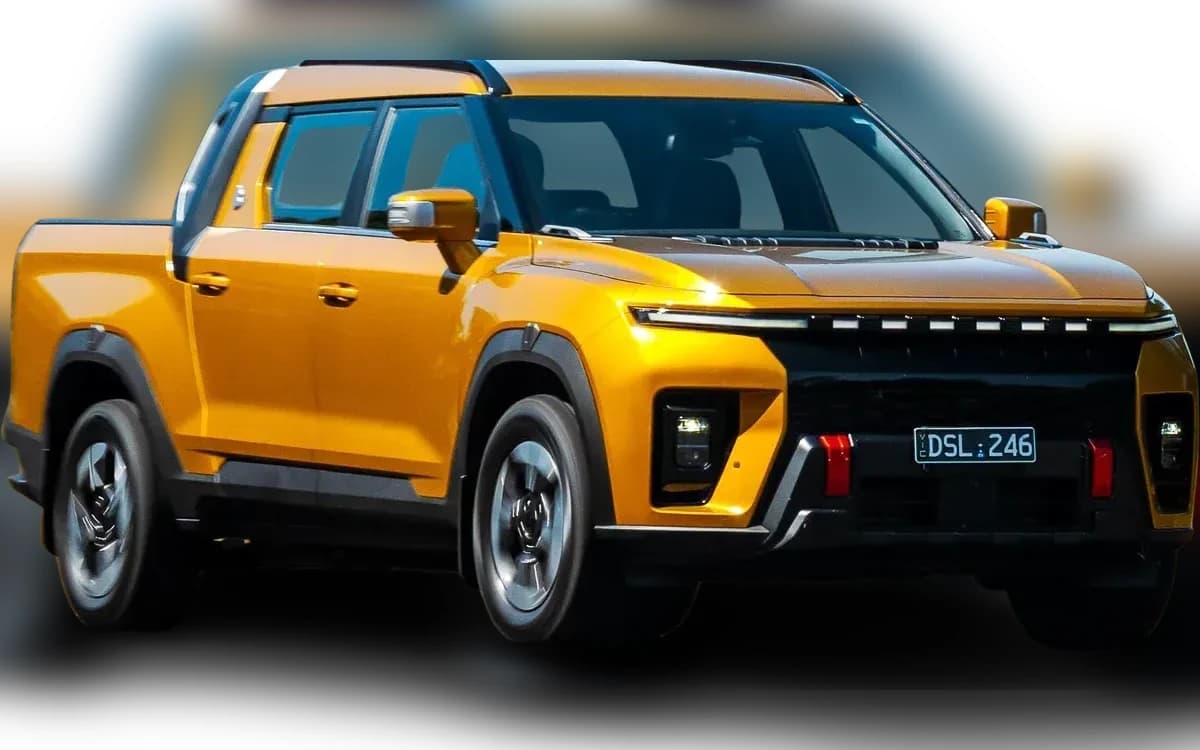
Image credit: KGM (Korando Global Motors) Australia
Rebranded from SsangYong, KGM (Korando Global Motors) has quietly launched the Musso EV, and it is the cheapest full-electric dual-cab in Australia with more than 300km of usable range. The 2WD at $60,000 delivers 152kW, an 80.6kWh battery and 420km of WLTP range, while the AWD at $64,700 doubles up to 266kW with the same battery and 380km of range. Payload is strong at 905kg (2WD) and 805kg (AWD), but towing is the weak spot at 1,800kg braked, well short of a diesel.
Where the Musso EV makes sense is metro tradies and fleets that want a real electric work-truck without the LDV eT60's 1,000kg tow cap. The 7-year warranty matches the Cannon Alpha's. Charging supports DC fast-charging, so a 20-80% top-up at a public charger takes around 30 minutes. The interior is closer to a 2022-era SsangYong than a Ranger Wildtrak, and the styling is divisive, but the maths is hard to argue with. Compare: Musso EV vs BYD Shark 6, Musso EV vs Cannon Alpha.
6. LDV eT60: The Original Australian Electric Ute
The LDV eT60 has been on sale in Australia since 2023 as our first fully electric ute. It is a 2WD dual-cab with an 88.6kWh battery, 330km WLTP range, and 130kW output. Towing is rated at just 1,000kg braked and payload is 1,000kg, which makes it a metro tradie runabout rather than a grey nomad tow vehicle.
At $99,990 RRP (around $108,000 driveaway), the eT60 has been expensive for what it offers, and the arrival of the KGM Musso EV at $60,000-$64,700 with more range, more towing and more payload has made it a harder sell. LDV still has the broadest commercial dealer network of the three full-electric ute brands and offers V2L output for running power tools on site. Side-by-side: eT60 vs Shark 6, eT60 vs Cannon Alpha.
7. MG U9 EV: Among the First Full-Electric Utes With 3,500kg Towing (Late 2026)
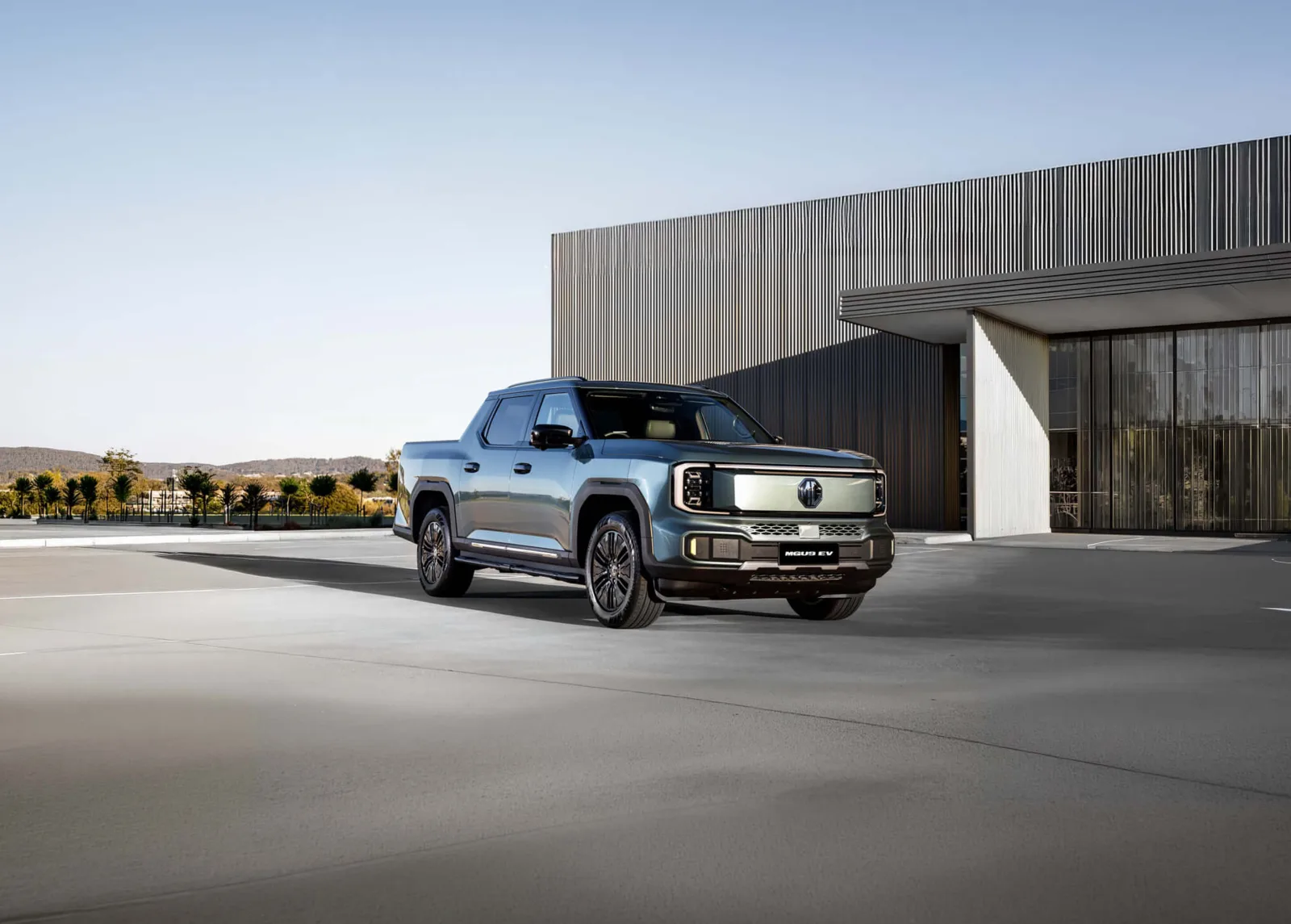
Image credit: MG Motor Australia
The MG U9 EV is set to be among Australia's first full-electric dual-cab utes with a genuine 3,500kg braked towing rating. It claims 430km of WLTP range, a 102kWh battery, and DC fast-charging at up to 120kW. Payload is 1,025kg, which beats most petrol utes on the market.
For tradies who want electric without the PHEV compromise, this is the one to watch. The caveat is range while towing. Expect a 40-55 percent hit when pulling 2,500kg or more, which puts the real-world towing range closer to 200km. Pricing is still unconfirmed but is expected to land in the $70,000-$85,000 bracket. Australian launch is pencilled in for late 2026.
8. Chery KP31: World's First Diesel PHEV Ute (Late 2026)
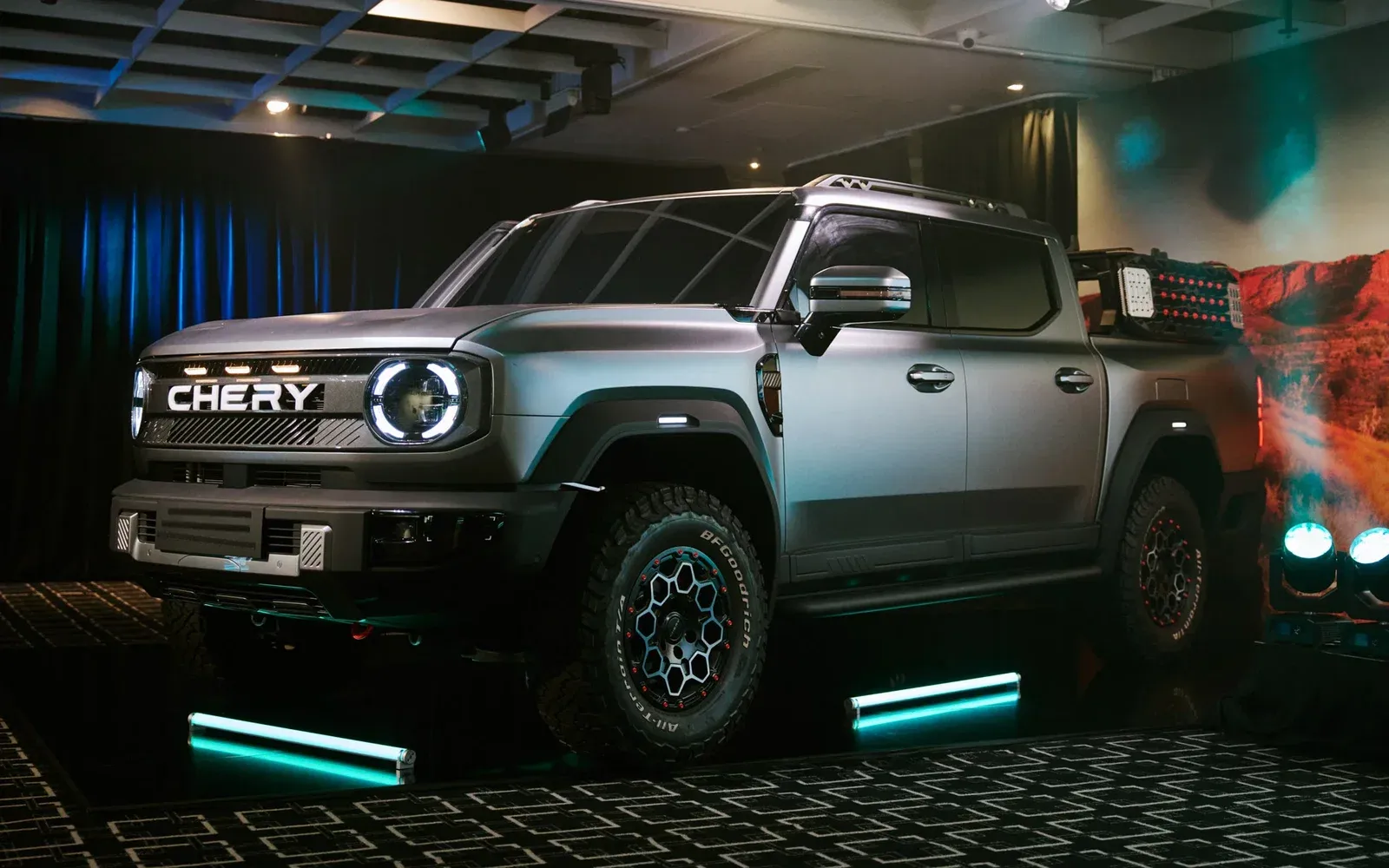
Image credit: Chery Australia
The Chery KP31 is positioned to be among the world's first diesel plug-in hybrid utes. A 2.0-litre turbo-diesel is paired with a 34kWh battery for 170km of pure electric range and a combined range of over 1,100km. Towing is rated at 3,500kg braked, with three diff locks and a proper off-road focus.
For buyers who tow long distances, this is potentially the holy grail: daily EV running costs with full diesel capability for the big trips. The catch is the unknowns. Chery is still new to the Australian ute market, dealer network coverage is patchy outside metro areas, and pricing has not yet been confirmed. Expected landing in late 2026.
The Ford F-150 Lightning is not officially sold in Australia, but RMA converts right-hand-drive versions from around $200,000 driveaway. It offers 3,500kg+ towing, 515km of range, and a massive frunk, for buyers at the top end of the market who want the most capable electric ute money can buy here.
Pick two
Two electrified utes, side by side
Tap any two of the utes above to see what actually separates them on range, towing and payload.
| Spec | BYD Shark 6 Premium | GWM Cannon Alpha PHEV |
|---|---|---|
| Price from | $57,900RRP, before on-roads | $57,490drive-away, not an RRP |
| Electric-only range | 100 km | 115 km |
| Braked towing | 2,500 kg | 3,500 kg |
| Payload | No data | 685 kg |
| Fuel use | 2.0 L/100kmfrom a full battery, 7.9 once flat | 1.7 L/100kmfrom a full battery, 7.9 once flat |
| ANCAP | 5 starstested 2025 | 5 starstested 2024 |
| Warranty | 6 yr150k km | 7 yrunlimited km |
Electric-only range is the plug-in figure where the ute has a plug, and total driving range where it is battery electric. Figures come from our car database, which is built from Australian manufacturer documents. A blank field reads “No data” rather than a zero or a dash.
Compare Every Electrified Ute Side-by-Side
The fastest way to actually pick between them is to put them next to each other on price, towing, payload, EV range, warranty and running cost. Jump straight into the comparison engine with the pairings buyers ask about most often:
Want to compare three or four at once? Use the 4-way comparison for Cannon Alpha PHEV, Shark 6 Premium, Musso EV and LDV eT60, or build your own from the comparison tool.
Electric Ute Comparison Table
| Ute | Type | Towing | Range | Price From |
|---|---|---|---|---|
| BYD Shark 6 Cab-Chassis | PHEV | 2,500 kg | 100 km EV / 800+ km total | $55,900 |
| BYD Shark 6 Premium | PHEV | 2,500 kg | 100 km EV / 800+ km total | $57,900 |
| GWM Cannon Alpha Lux PHEV | PHEV | 3,500 kg | 115 km EV / 800+ km total | $59,990 |
| KGM Musso EV 2WD | Full EV | 1,800 kg | 420 km WLTP | $60,000 |
| BYD Shark 6 Performance | PHEV | 3,500 kg | 100 km EV / 800+ km total | $62,900 |
| GWM Cannon Alpha Ultra HEV | Hybrid | 3,500 kg | no plug · 6.9 L/100km | $64,490 |
| KGM Musso EV AWD | Full EV | 1,800 kg | 380 km WLTP | $64,700 |
| Toyota HiLux BEV SR Cab-Chassis | Full EV | 2,000 kg | 245 km | $74,990 |
| Toyota HiLux BEV SR Pick-Up | Full EV | 2,000 kg | 315 km | $76,490 |
| Toyota HiLux BEV SR5 Pick-Up | Full EV | 2,000 kg | 315 km | $82,990 |
| GWM Cannon Alpha Ultra PHEV | PHEV | 3,500 kg | 115 km EV / 800+ km total | $66,990 |
| Ford Ranger PHEV XLT | PHEV | 3,500 kg | 49 km NEDC EV | $71,990 |
| Ford Ranger PHEV Wildtrak | PHEV | 3,500 kg | 49 km NEDC EV | $79,990 |
| Ford Ranger PHEV Stormtrak | PHEV | 3,500 kg | 49 km NEDC EV | $86,990 |
| MG U9 EV (late 2026) | Full EV | 3,500 kg | 430 km WLTP | TBC (~$70-85k) |
| LDV eT60 | Full EV | 1,000 kg | 330 km WLTP | $99,990 RRP |
| Chery KP31 (Late 2026) | Diesel PHEV | 3,500 kg | 170 km EV / 1,100+ km total | TBC |
| Ford F-150 Lightning (RMA) | Full EV | 3,500 kg+ | 515 km | ~$200,000 d/a |
Annual Running Cost: Electric Ute vs Diesel Ute
This is where the electric and PHEV utes genuinely beat diesel alternatives. Based on 20,000km of annual driving at Australian average fuel and electricity rates, here's roughly how the maths works:
| Ute | Fuel / Power /yr | Service /yr | Total /yr |
|---|---|---|---|
| Ford Ranger XLT diesel | $2,740 | $840 | $3,580 |
| Toyota HiLux SR5 diesel | $2,812 | $800 | $3,612 |
| BYD Shark 6 PHEV | $780 | $460 | $1,240 |
| GWM Cannon Alpha PHEV | $830 | $510 | $1,340 |
| KGM Musso EV (2WD) | $680 | $520 | $1,200 |
| LDV eT60 full EV | $870 | $520 | $1,390 |
| Ford Ranger Raptor diesel | $3,330 | $920 | $4,250 |
A BYD Shark 6 or Cannon Alpha PHEV typically costs around $2,300 less per year to run than a diesel Ranger, and roughly $3,000 less than a Ranger Raptor. Over a 5-year ownership cycle, that's $11,500-$15,000 saved on fuel and servicing. For tradies on a novated lease or with FBT exemption, the savings are larger still. See our FBT exempt cars guide for the full list.
Who Should Buy What
Metro tradies who drive 80km a day or less and tow occasionally: The BYD Shark 6 Premium is the sweet spot, with 100km of EV range covering the daily commute and a petrol engine for weekends. Compare it directly against the GWM Cannon Alpha if you want 3,500kg towing capability for under $60k.
Tradies who need full 3,500kg towing every weekend: The GWM Cannon Alpha Lux PHEV at $59,990 is the cheapest way to do this with a plug, and the BYD Shark 6 Performance at $62,900 is the next step up. Both are well under the $71,990 Ranger PHEV. The Cannon Alpha is also one of the very few sub-$70k vehicles with locking front and rear diffs. Cross-shop against the Ford Ranger if dealer footprint and resale matter more than purchase price.
Buyers who want a plug-in ute from a brand their mechanic already knows: The Ford Ranger PHEV XLT at $71,990. You pay roughly $12,000 more than the Cannon Alpha and get less than half the EV range, but you also get the largest ute dealer network in the country, Pro Trailer Backup Assist, and the resale profile of Australia's best-selling vehicle.
Fleet buyers without depot charging: The Cannon Alpha Ultra HEV at $64,490 is a no-plug self-charging hybrid that returns roughly 6.9L/100km combined, around 35% better than a diesel Ranger. Same warranty, same 3,500kg towing, no charging infrastructure required.
Metro tradies who want full electric and zero fuel cost: The new KGM Musso EV at $60,000 (2WD) has now replaced the LDV eT60 as the default electric ute for the urban tradie. More range, more payload, more towing, and a 7-year warranty. Side-by-side: Musso EV vs Shark 6 PHEV.
Regional buyers who tow big loads long distances: Wait. The Chery KP31 diesel PHEV in late 2026 is going to land as the world's first diesel plug-in hybrid ute with 170km of EV range and a diesel for the highway. If you cannot wait, a diesel HiLux or Ranger is still the right pick.
Grey nomads with big caravans: Not yet. Full-electric ute range while towing 3 tonnes at 100km/h is still a problem. A diesel HiLux or a Ranger V6 is still the sensible pick here for the next couple of years.
List of Upcoming Electric and PHEV Utes in Australia (2026 and 2027)
The next 18 months are going to reshape the Australian electric ute market again. Five more EV or plug-in hybrid utes are confirmed or expected by the end of 2027, now that the Ranger PHEV has landed. Here is the full list with everything we know, ranked by Australian arrival date.
| Upcoming Ute | Type | Towing | EV Range | Australian Arrival |
|---|---|---|---|---|
| MG U9 EV | Full EV | 3,500 kg | 430 km WLTP | Late 2026 |
| Chery KP31 Diesel PHEV | PHEV (Diesel) | 3,500 kg | 170 km | Late 2026 |
| Toyota HiLux PHEV | PHEV (Petrol) | TBC (target 3,500 kg) | TBC | 2027 |
| Kia Tasman EV | Full EV | TBC | TBC | 2027-2028 |
| Isuzu D-Max EV | Full EV | TBC | TBC | 2027 (global), AU TBC |
Ford Ranger PHEV: full spec breakdown
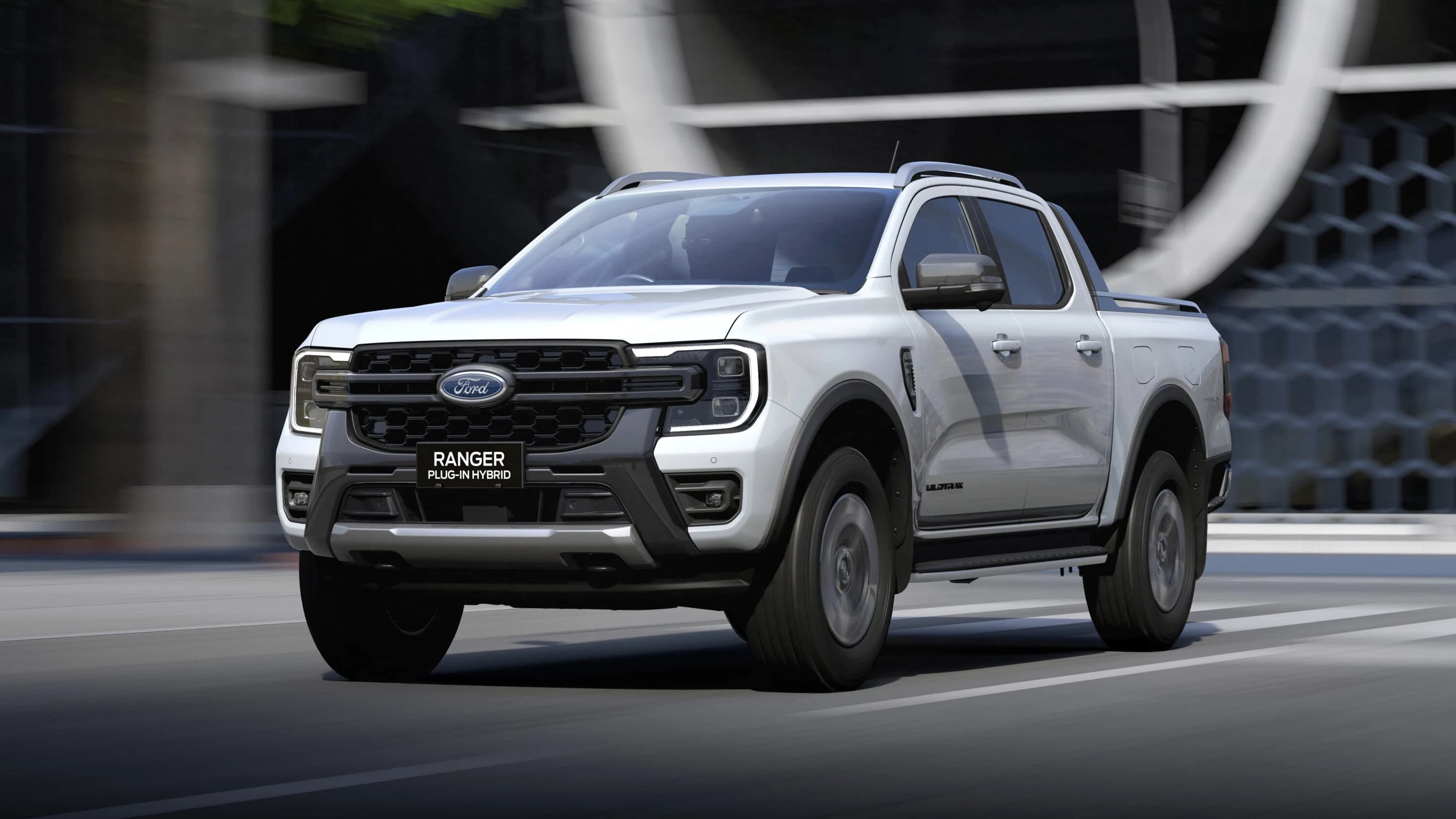
Image credit: Ford Australia
The Ranger PHEV is on sale in four trim levels: XLT ($71,990), Sport ($75,990), Wildtrak ($79,990) and Stormtrak ($86,990) (the Stormtrak is a special edition). All four are 4x4 Double Cab Pick-up only, all share the same plug-in hybrid powertrain, and all tow the full 3,500 kg with the standard Genuine Ford tow pack. Drive-away pricing in Victoria runs from roughly $76,000 to $92,500.
The powertrain pairs Ford's 2.3-litre EcoBoost turbo petrol making 138 kW and 411 Nm with a 75 kW electric motor for combined system outputs of 207 kW and 697 Nm. Drive goes through a 10-speed Modular Hybrid Transmission to full-time four-wheel drive with a locking rear diff. The 11.8 kWh useable battery delivers 49 km of NEDC electric range, charging from a household 10A socket in around 6 hours 53 minutes or from a 15A 230V supply in 4 hours flat. Combined fuel economy is 2.9 L/100km (with battery charged) and CO2 emissions land at 66 g/km.
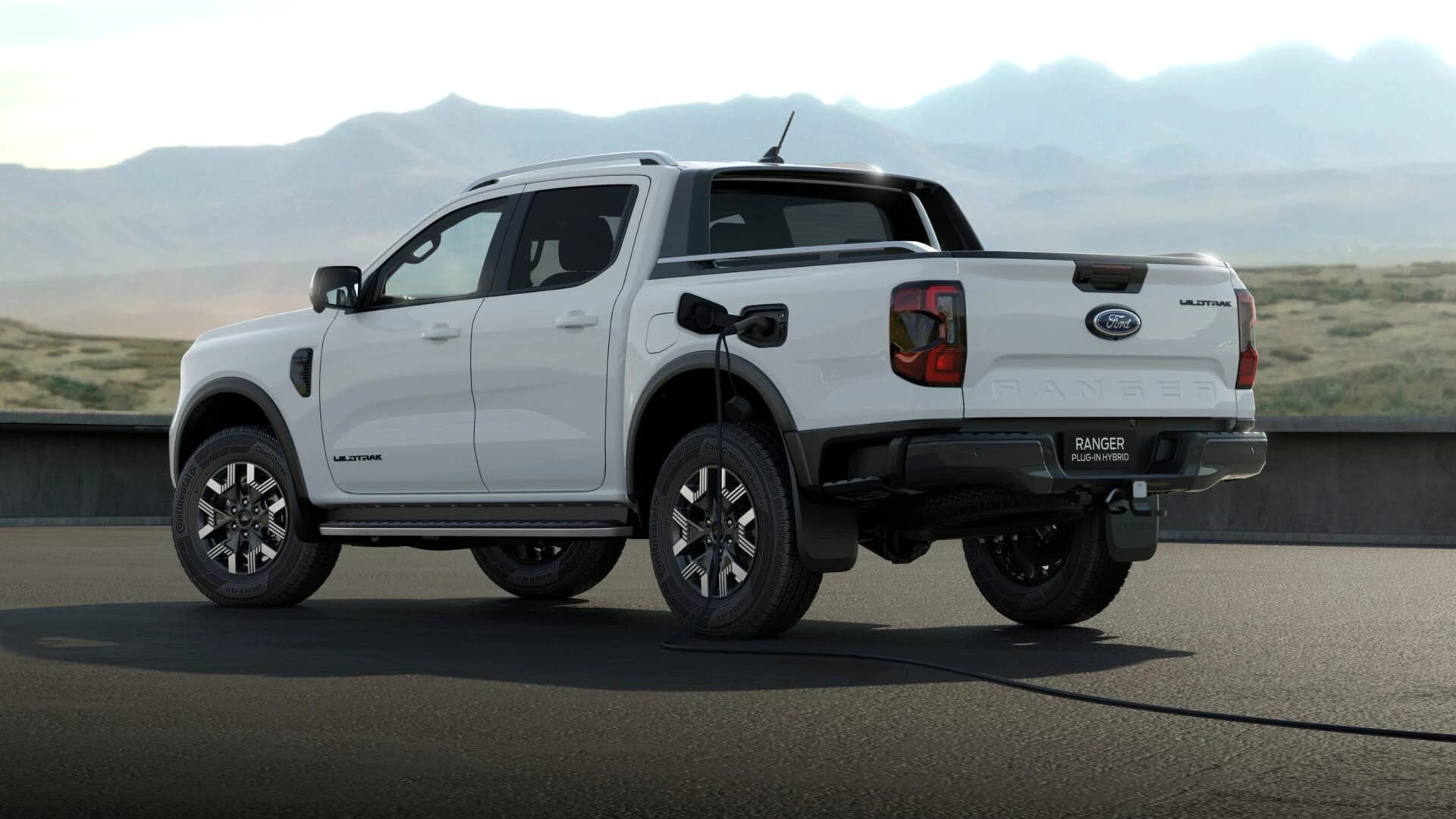
Image credit: Ford Australia
The headline feature is Pro Power Onboard: a 6.9 kW total V2L output split across two 15A tray sockets and one 10A cabin socket. That is enough to run heavy-duty power tools on a worksite, charge an e-bike, or power a caravan's appliances and lights. Capability is uncompromised: 800mm water wading, locking rear diff, Mud and Ruts mode, Sand mode, Tow and Haul mode, and Pro Trailer Backup Assist standard on Wildtrak and Stormtrak (optional on Sport). Payload runs from 808 kg on the Stormtrak up to 973 kg on the XLT, with 6,580 kg GCM across the range. In practice the PHEV commands roughly a $10,000 premium over the equivalent diesel Ranger trim.
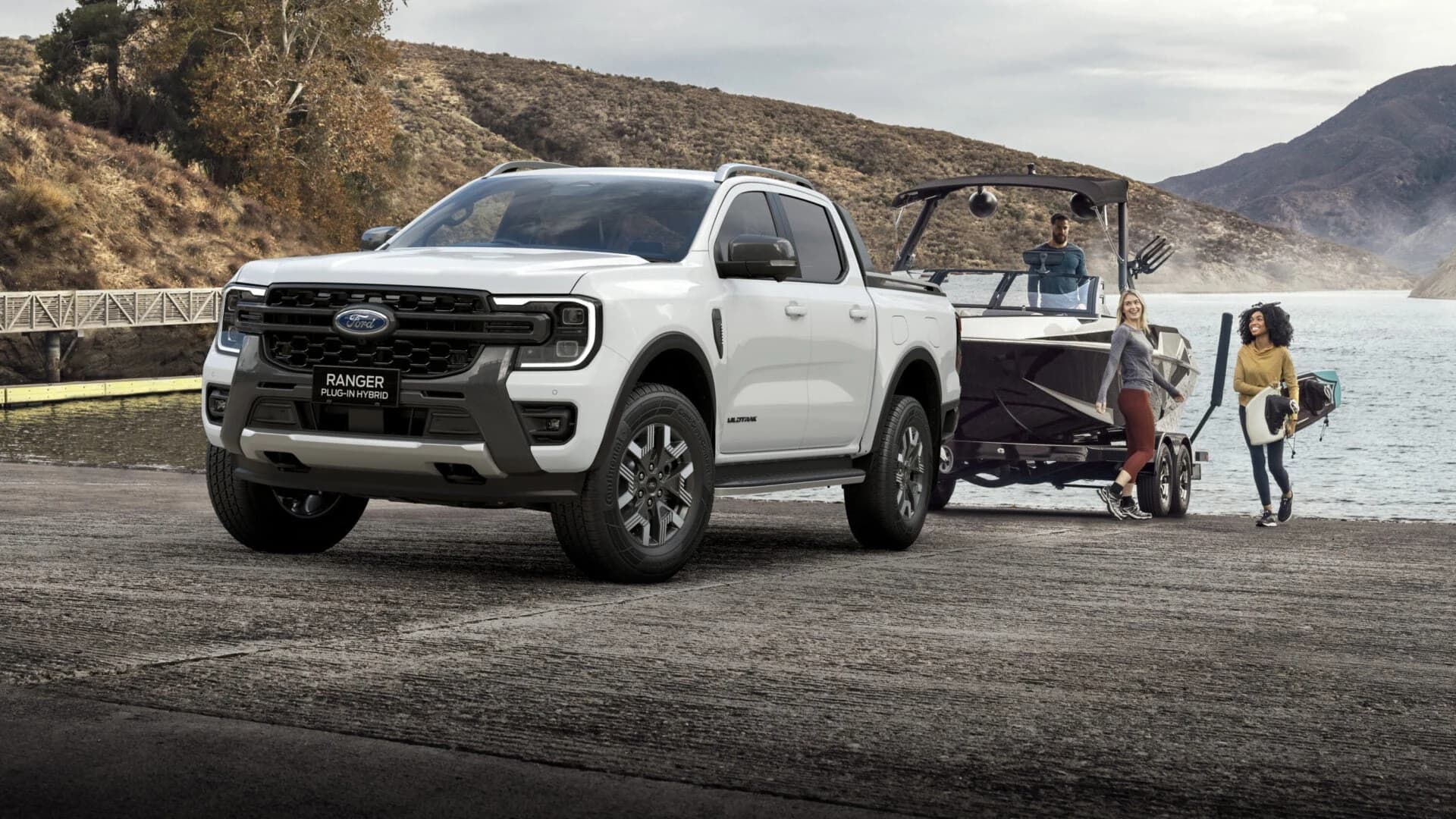
Image credit: Ford Australia. Ranger PHEV uses Pro Trailer Backup Assist on Wildtrak and Stormtrak trims.
MG U9 EV (Late 2026)
The first full-electric dual-cab to claim the magic 3,500 kg braked tow rating. 102 kWh battery, 430 km WLTP range, 1,025 kg payload, and DC fast-charging at up to 120 kW. Pricing TBC but expected $70,000-$85,000. The catch with any full-electric ute is range under load: expect a 40-55 percent range hit when towing 2,500 kg or more, which puts real-world towing range closer to 200 km. See the dedicated section above for the full take.
Chery KP31 Diesel PHEV (Late 2026)
Set to be among the world's first diesel plug-in hybrid utes. A 2.0-litre turbo-diesel paired with a 34 kWh battery for 170 km of pure electric range and over 1,100 km combined. 3,500 kg braked towing, three diff locks, and a serious off-road focus. The combination of EV running costs for the daily and full diesel capability for caravan touring makes this the most interesting of the upcoming PHEV utes for grey nomads. Pricing TBC.
Toyota HiLux PHEV (2027)
Toyota Australia has confirmed an electrified HiLux is coming, with a plug-in hybrid the most likely path. Specs are not public yet, but the segment-leading volume of the diesel HiLux (over 60,000 units a year in Australia) means whatever Toyota launches will instantly become the benchmark. Expect a similar formula to the Ranger PHEV: petrol-electric, 3,500 kg towing, 50-80 km of EV range, and an aggressive launch price designed to defend HiLux market share. Australian launch flagged for 2027.
Kia Tasman EV (2027-2028)
Kia's first ute, the Tasman, lands in Australia in 2026 in diesel form initially. An electric variant has been confirmed by Kia for global rollout from 2027, with Australian launch likely a year later. Built on Hyundai-Kia's next-generation EV ladder-frame platform, expect a 100 kWh-plus battery and proper 3,500 kg towing capability. Pricing TBC.
Isuzu D-Max EV (Australia TBC)
Isuzu has confirmed a full-electric D-Max for global markets from 2027, but Australian timing is not yet locked in. The D-Max EV uses a 66 kWh battery, dual motors for proper 4WD capability, and is targeting 3,500 kg towing. Norway is the lead market. Australian launch will depend on local emissions standards and whether Isuzu Ute Australia decides to commit to right-hand-drive certification.
Should you wait for one of the upcoming utes?
The one that was worth waiting for, the Ford Ranger PHEV, has arrived, so the case for holding off is now much weaker. The remaining reason to wait is the Chery KP31 diesel PHEV in late 2026, which pairs 170 km of EV range with a diesel for the highway. For anyone else, the choice you would make in six months is broadly the choice available today.
If your daily driving is under 80 km and the BYD Shark 6's 100 km of EV range covers you, there is no reason to wait at all. The Shark 6 Performance matches the Ranger PHEV on towing (3,500 kg) and beats it on EV range (100 km vs 49 km) for $9,090 less. The trade-offs are a less-established Australian dealer network, slightly less off-road capability, and a smaller V2L output (6 kW vs 6.9 kW).
For more: Cheapest Electric Cars in Australia (2026) | Best Electric Cars Under $50K (2026) | Best Utes in Australia 2026 | Best Towing Vehicles in Australia
Disclaimer: Specifications and pricing are sourced from manufacturer Australia websites and the CarSorted live database as at July 2026. Launch dates for incoming electric utes may shift. Real-world range varies with load, speed, temperature and terrain; expect a 40-55% range reduction when towing near maximum braked capacity. Always confirm specs and pricing with your local dealer.