Image credit: Ford Australia
The plug-in hybrid ute is the most sensible electrified pickup you can buy in Australia right now, and it is easy to see why. You charge it at home, do the daily commute and school run on cheap electricity, then it switches to petrol for towing the van, big country trips and anywhere a charger is a long way off. No range anxiety, full 3,500kg towing on most, and real fuel savings if you plug in. In 2026 there are three on sale and a fourth on the way, and they are genuinely different from one another. This is our head-to-head breakdown of which plug-in ute deserves your money, ranked on the numbers.
The three plug-in utes on sale (and one coming)
| Ute | Price From | Power | Battery | EV Range | Towing |
|---|---|---|---|---|---|
| GWM Cannon Alpha PHEV | $52,990 | 300kW | 37.1kWh | ~115km | 3,500kg |
| BYD Shark 6 Premium | $57,900 | 321kW | 29.6kWh | ~100km | 2,500kg |
| Ford Ranger Hybrid | ~$59,000 d/a | 207kW | 11.8kWh | ~49km | 3,500kg |
| JAC Hunter PHEV (coming) | under $50,000 | 360kW | 31.2kWh | long* | 3,500kg |
*JAC Hunter PHEV claims ~1,005km NEDC combined range; figures unconfirmed until Australian launch.
Best value and capability: GWM Cannon Alpha PHEV
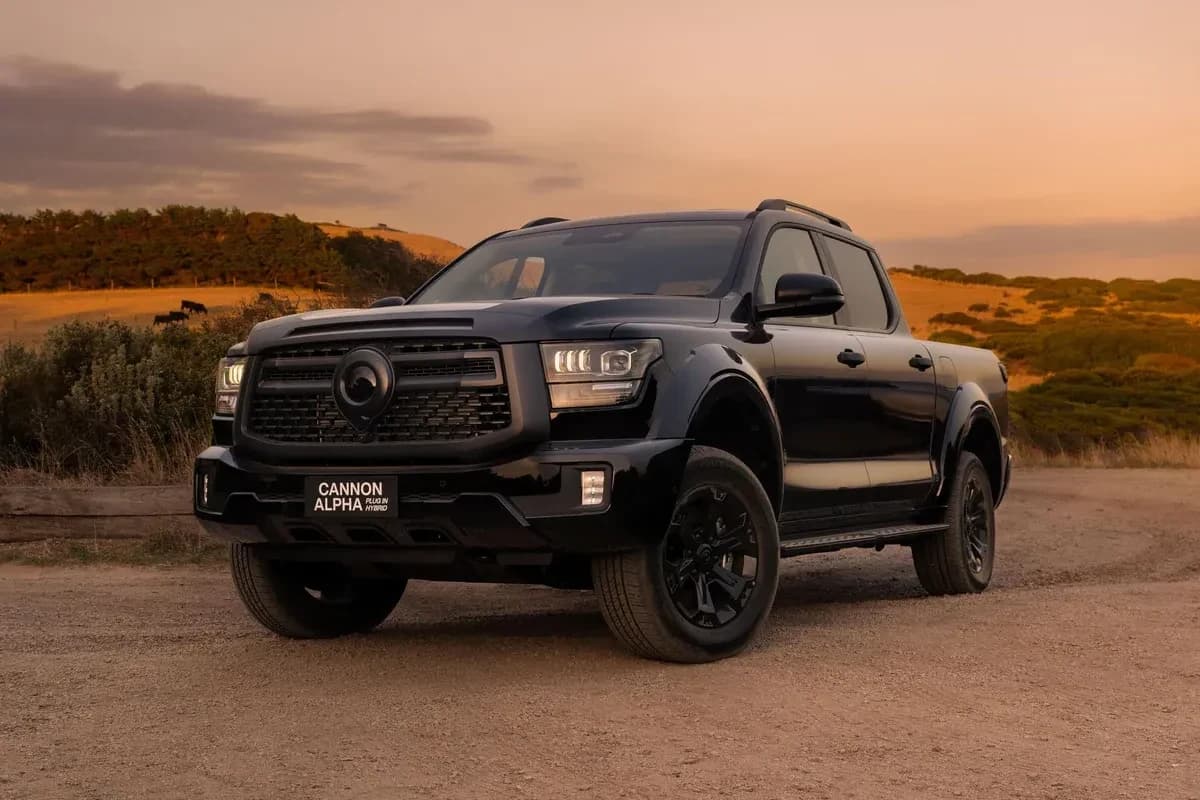
Image credit: GWM Australia
The GWM Cannon Alpha PHEV is the value and capability champion, and it is the plug-in ute we would point most buyers toward. From $52,990 drive-away it is one of the cheapest plug-in utes on sale, yet it carries the biggest battery in the segment, a 37.1kWh pack good for around 115km of claimed electric range. That is the headline number that matters, because more electric range means more of your week spent on cheap home electricity rather than petrol. Many owners will commute, do the school run and run errands all week without burning a drop.
It also refuses to compromise on the ute basics: a 300kW/750Nm combined output, the full 3,500kg braked towing, and three diff locks for genuine off-road work, a feature the others can't match. With a flat battery it returns roughly 7.9L/100km as a hybrid, in line with a diesel. The cabin is plush and quiet, the ride is more SUV than workhorse, and it holds a 5-star ANCAP rating with GWM's 7-year warranty behind it. The knocks: the infotainment feels a generation behind, the driver-assist nannies can be intrusive until you tame them, and the spare-tyre setup is fiddly. None of that dents the core value story. See full Cannon Alpha specs and pricing.
Best daily drive and refinement: BYD Shark 6
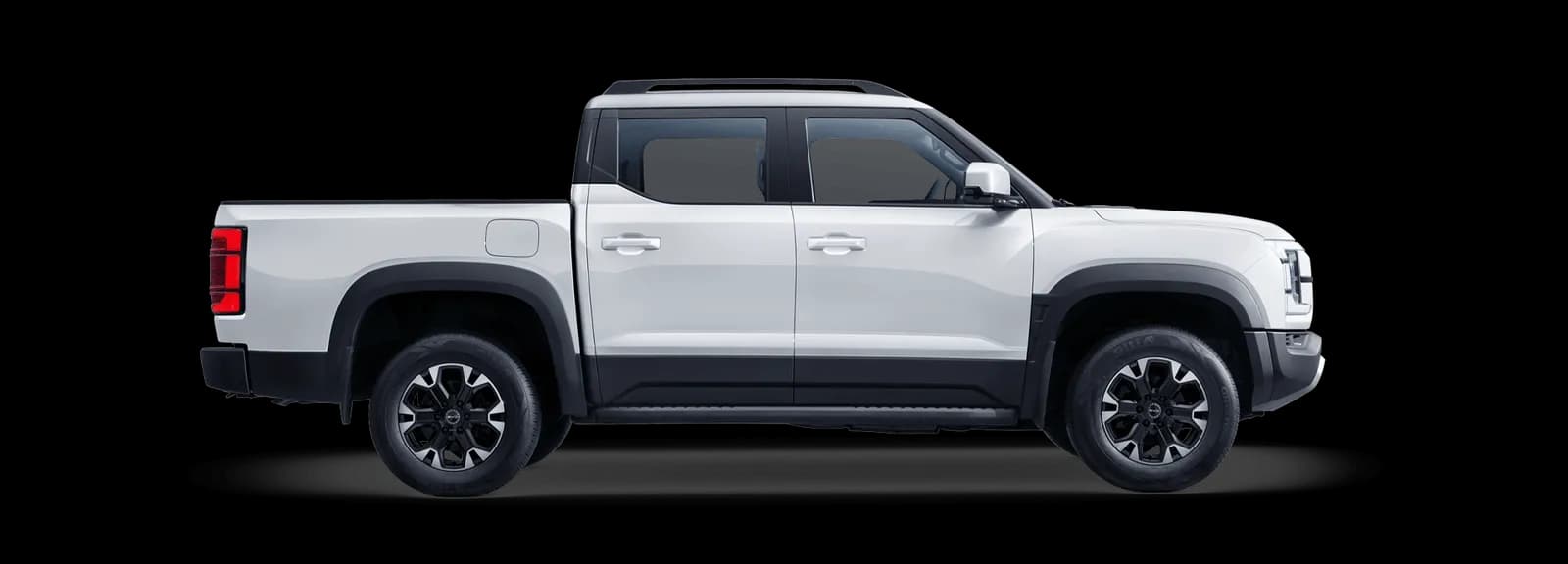
Image credit: BYD Australia
The BYD Shark 6 (Premium from $57,900) has become a genuine sales phenomenon, and the spec sheet shows why. Its 321kW system is the most powerful here, ahead of the Cannon Alpha PHEV on 300kW, and because it drives electric-first it runs near-silently at the low speeds where a diesel is loudest. The cabin gets a large rotating touchscreen. Around 100km of electric range from the 29.6kWh battery covers most daily duties on zero fuel, and standard V2L lets you power tools or a campsite straight from the tray.
Two things to weigh. First, the standard Shark 6 tows 2,500kg, not the full 3,500kg, which rules it out for heavy caravan duty unless you step up to the Shark 6 Performance ($62,900), which adds a stronger driveline, upgraded brakes and suspension and lifts towing to 3,500kg. Second, it is less hardcore off-road than the Cannon Alpha or Ranger. But if your ute mostly does highway miles, the daily commute and weekend duties, the Shark 6 is the nicest thing here to drive. 5-star ANCAP, 6-year warranty. See full Shark 6 specs and pricing.
→ Compare the BYD Shark 6 vs GWM Cannon Alpha side by side
Most trusted, best for work: Ford Ranger Hybrid
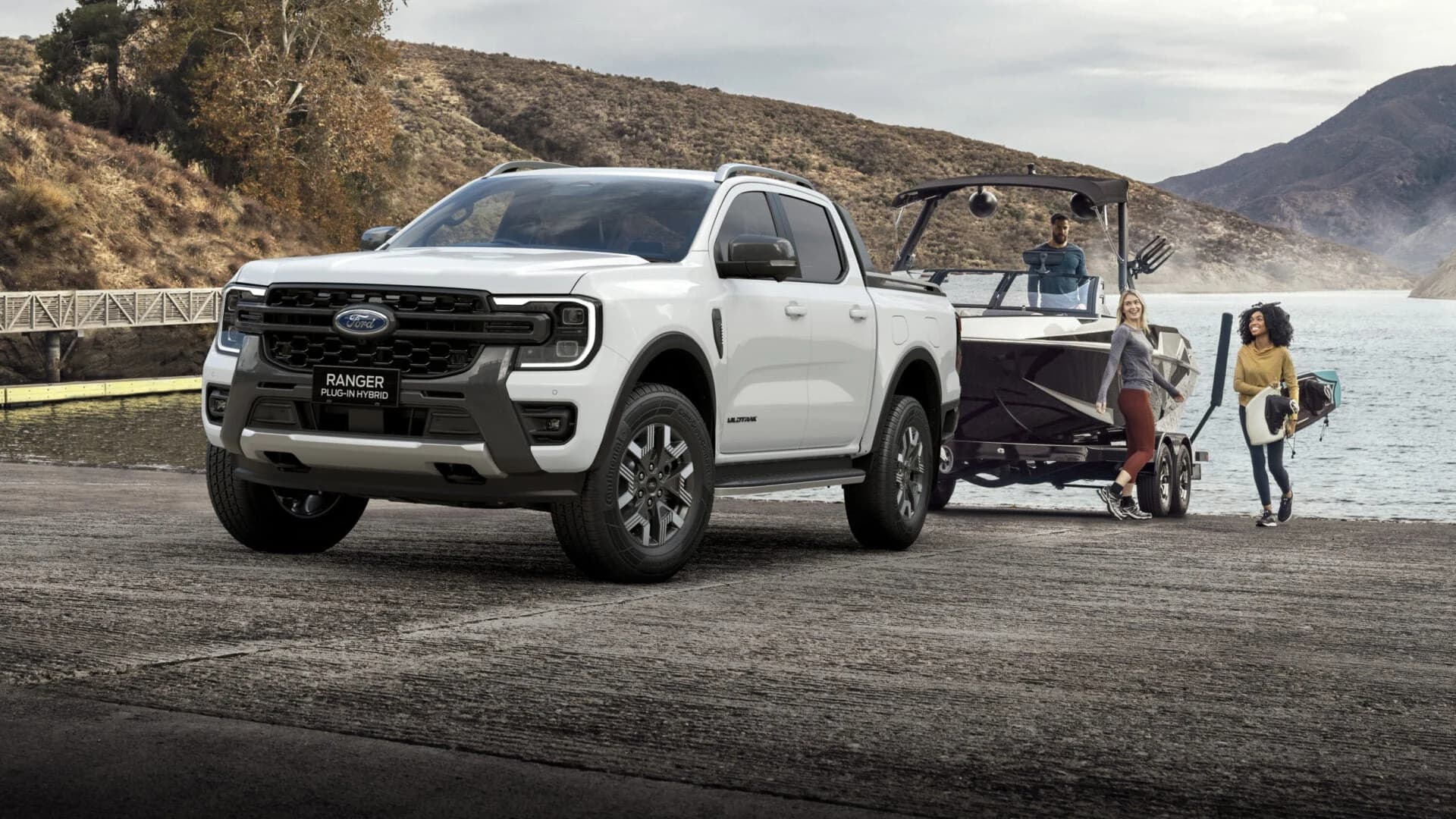
Image credit: Ford Australia
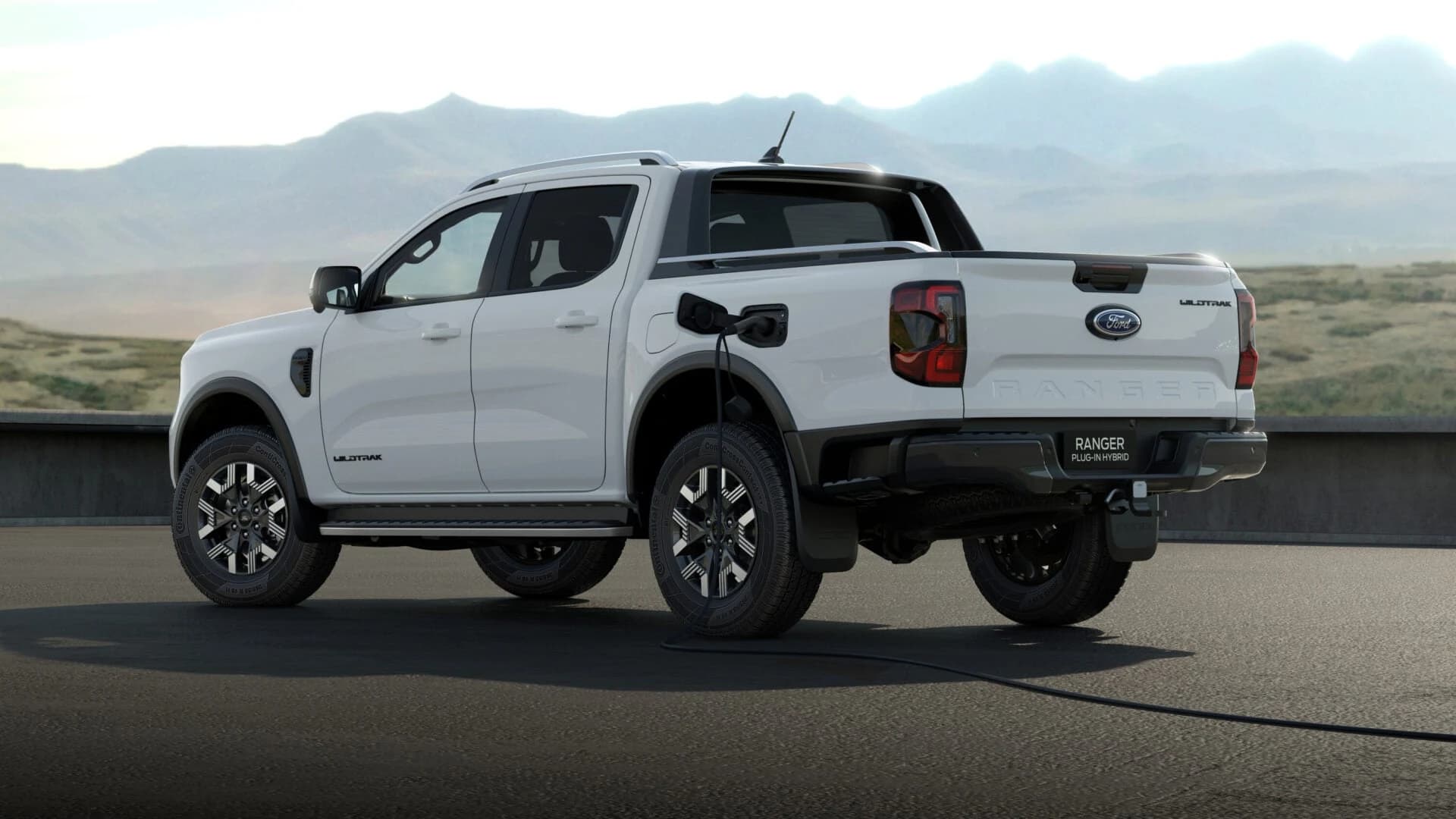
If you want an electrified ute that still feels like a proper, no-excuses ute, the Ford Ranger Hybrid (from around $59,000 drive-away) is the one. The Ranger is Australia's best-selling vehicle for good reason: class-leading ride and handling, the most polished and least irritating safety tech in the segment, locally tuned suspension, genuine off-road ability, and the country's biggest dealer and service network behind it. Its plug-in system makes 207kW/697Nm, tows the full 3,500kg, and crucially keeps a workhorse payload north of 800kg, where the heavier Chinese utes can dip lower. V2L is standard.
The compromise is the battery. At just 11.8kWh it is by far the smallest of the trio, so electric-only range is under 50km, less than half the Cannon Alpha's. For a long commute that means you will use petrol sooner. And it is the dearest of the three. You are paying for the badge, the network, the resale value and the polish, and for buyers who tow, travel and want proven reliability, that is money well spent. Ford has dropped the "PHEV" label in favour of "Ranger Hybrid" and added a cheaper XL grade to widen its reach. See full Ranger specs and pricing.
The value disruptor: JAC Hunter PHEV (coming Q3 2026)
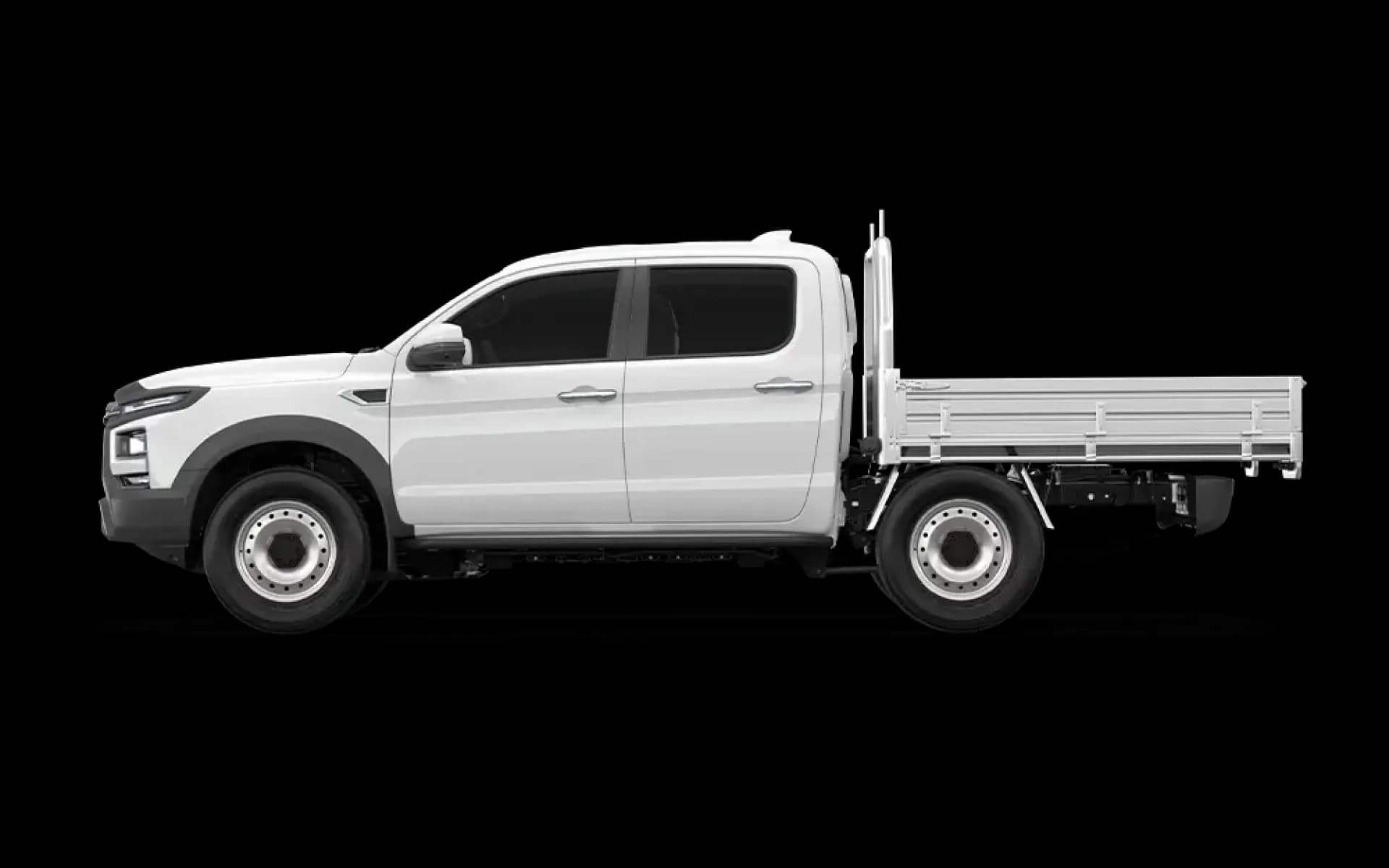
Image credit: JAC Australia
The JAC Hunter PHEV is the one to watch. It opens from under $50,000 plus on-road costs, which would make it one of the cheapest plug-in utes in the country when deliveries begin around the third quarter of 2026. JAC quotes a combined 360kW, a 31.2kWh battery, a headline 1,005km combined range and the full 3,500kg towing, with a 7-year warranty. The Hunter X flagship adds front and rear locking diffs for serious off-roaders.
Treat that 1,005km figure with healthy scepticism, it is a generous NEDC number and the real-world WLTP figure will be lower. The Hunter is also untested by ANCAP and its specs are unconfirmed until launch, so we are not ranking it above the proven options yet. But on paper it threatens to reset the value benchmark the Cannon Alpha currently holds. If your budget is tight and you can wait a few months, it is worth seeing how it lands. We will update this guide the moment JAC confirms Australian pricing and WLTP range.
How to choose between them
All four are plug-in hybrids, so the question is what you prioritise:
- Best value and most electric range: GWM Cannon Alpha PHEV. cheapest, biggest battery, ~115km EV range, 3,500kg towing, three diff locks
- Best daily driver: BYD Shark 6. Most power, longest electric-only range, quietest at low speed (Performance grade for 3,500kg towing)
- Most trusted and best for work/towing: Ford Ranger Hybrid. refinement, payload, dealer network, but smallest battery
- Cheapest, if you can wait: JAC Hunter PHEV. from under $50k, arriving Q3 2026, unproven
The running-cost reality: only if you plug it in
Here is the honest maths every PHEV ute ad skips. These utes only save you real money if you charge them. Plugged in nightly and driven mostly within their electric range, a Cannon Alpha or Shark 6 can cut your fuel bill by more than half, you are spending maybe $4-6 in home electricity for a commute that would cost $15-20 in diesel. Over a year of mostly-electric running, that is hundreds of dollars back in your pocket, and the Cannon Alpha's bigger battery means more of your driving lands in that cheap-electricity zone.
But let the battery go flat and never charge it, and a PHEV ute uses around 7.9L/100km, no better than a good diesel, while lugging a heavy battery you paid thousands for. So the entire case rests on your charging habits. Off-street parking and a power point? The numbers are compelling, and the smaller-battery Ranger asks less of your charging routine. Apartment or street parking with no easy charging? A diesel or mild-hybrid ute may genuinely cost you less to own. Be honest with yourself about whether you will actually plug it in.
Payload, towing and the battery-weight catch
The trade-off the brochures gloss over: batteries are heavy, and a ute's Gross Vehicle Mass is fixed, so battery weight comes out of your payload. Several plug-in utes carry noticeably less than their diesel equivalents. The Ford Ranger Hybrid is the standout for protecting its 800kg-plus payload, while some rivals dip toward 600-700kg, which matters once you add a canopy, tools and gear. On towing, the Cannon Alpha, Ranger and Shark 6 Performance all hold the line at 3,500kg; the standard Shark 6 is the outlier at 2,500kg. And remember towing hammers the battery, so once it is depleted a PHEV tows exactly like a regular hybrid, at hybrid fuel economy.
Charging a plug-in ute at home: the practical reality
A plug-in ute only pays off if charging fits your life, so it is worth being clear-eyed about it. The big-battery utes here, the Cannon Alpha (37.1kWh) and Shark 6 (29.6kWh), hold roughly two to three times the energy of a typical plug-in SUV, so they take longer to fill. On a standard 10-amp household power point you are looking at an overnight-plus charge from empty; on a 7kW home wall box the Cannon Alpha tops up in roughly five to six hours, comfortably overnight. The smaller-battery Ranger Hybrid (11.8kWh) is the easiest to keep charged, it tops up in a couple of hours and asks far less of your routine, which partly offsets its shorter electric range.
The honest takeaway: if you have a garage or driveway with a power point, daily charging is a non-event, you plug in like a phone and wake up to a full battery and a near-empty fuel need. If you rely on public charging, the maths gets shakier fast, because paying for AC or DC charging erodes much of the saving versus diesel, and few public chargers are set up for a five-metre ute towing nothing, let alone with a trailer attached. All three offer vehicle-to-load (V2L) too, so the same battery that saves you fuel can run a worksite, a campsite fridge or power tools, genuinely useful, and something no diesel ute does.
Off-road and capability: which is the real 4x4?
Plug-in utes are heavier than their diesel cousins, but the good ones use their electric torque to genuinely improve low-speed control. The GWM Cannon Alpha PHEV is the most serious off-roader of the three on sale, with three diff locks (front, centre and rear), low-range capability and instant electric torque that makes technical climbs and rock-crawling smoother than a diesel auto. The Ford Ranger Hybrid brings Ford's well-sorted four-wheel-drive system, locally tuned suspension and a deserved reputation for durability in the bush, it is the one most likely to shrug off a hard outback life. The BYD Shark 6 is the least hardcore of the trio off-road: it is very capable on gravel, fire trails and the school run, but it is tuned more for on-road refinement than serious low-range work. If your weekends involve genuine 4x4 tracks and towing a camper trailer into the scrub, the Cannon Alpha and Ranger are the picks; if off-road means a gravel boat ramp and the odd beach run, the Shark 6 is more than enough.
Warranty, resale and ownership
This is where the established names and the newcomers diverge. The Ford Ranger has the biggest service and dealer network in the country, the strongest resale history in the segment, and the deepest parts supply, if uptime and trade-in value matter to your business, that is worth real money. The Chinese utes counter with longer warranties and sharper pricing: GWM backs the Cannon Alpha with a 7-year warranty, BYD covers the Shark 6 for 6 years, and JAC is promising 7 years on the Hunter. Battery warranties typically run longer again, usually 8 years, which matters on a plug-in.
Resale is the open question for the Chinese plug-in utes. They are new enough that long-term used values are unproven, and a big traction battery is an unknown quantity to a future buyer. The Ranger's resale is a known, strong quantity; the Cannon Alpha and Shark 6 ask you to take a bet, offset by their much lower purchase price and longer warranties. For a private buyer keeping the ute a long time, the value play (Cannon Alpha, Shark 6) is compelling. For a business that churns vehicles every three to four years and lives on resale, the Ranger's known residuals may win the total-cost-of-ownership sum despite the higher sticker.
PHEV vs EV vs diesel: is plug-in the right call?
For most Australian ute buyers in 2026, a plug-in hybrid is the smartest electrified choice, you get electric running for the daily grind plus full towing and petrol range for everything else. A pure-electric ute like the KGM Musso EV or Toyota HiLux BEV is cheaper still to run per kilometre, but tows only 1,600-1,800kg and asks you to plan around charging on longer trips, so it suits lighter, local duties. A diesel still makes sense if you can't charge at home or you do huge remote distances. For the full picture across every electrified ute type, hybrid, plug-in and electric, see our complete electrified utes guide.