2027 Ford Ranger XL 4x2 Super Cab Cab-Chassis review
Our test vehicle: 2025 Ford Ranger Platinum Auto Full-Time 4WD Double Cab (MY25.25).
Data checked: specs 9 Nov 2026, price 29 Oct 2026
Text fact-checked against our data 30 August 2026The car in this article
Ford Ranger XL 4x2 Super Cab Cab-Chassis$48,877 est. drive-away (VIC 3000)as at 29 Oct 2026
Compare real car-loan ratesDriva is an independent finance provider, not part of CarSorted. We aren't paid for this link.
Compare with another carFast facts
2027 Ford Ranger XL 4x2 Super Cab Cab-Chassis
Review snapshot
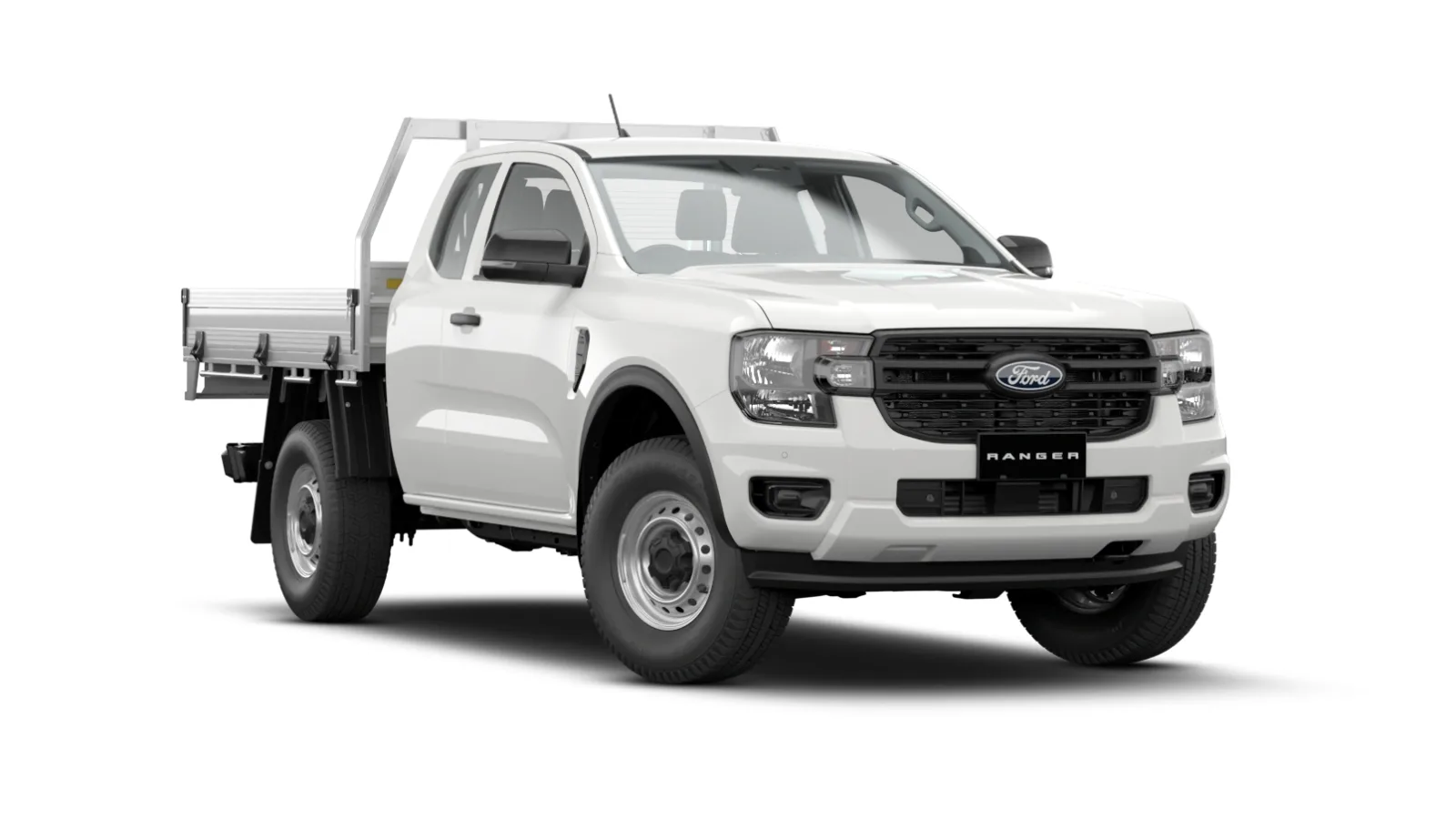
Model tested
Ford Ranger XL 4x2 Super Cab Cab-ChassisEst. $48,877 drive-away (VIC 3000)
Ford's own estimate for postcode 3000; your price varies by state. Checked 29 Oct 2026.
from $266/wk in VIC, excludes servicing and insurance (estimate)
73/100
CarSorted Score
- Towing (braked)
- 3,500kg
- Payload
- 1,350kg
- Fuel use
- 6.8 L/100km
The Ford Ranger is the most refined ute you can buy in Australia. It tows 3,500kg, rides better than most rivals in the segment, and the cabin is genuinely good enough for a family SUV. Starting from $37,130 for the XL single cab, it covers everything from fleet workhorse to weekend warrior. The V6 diesel in the Wildtrak and Raptor is the best engine in any ute, full stop. If your priorities are comfort, tech, and towing, the Ranger is the one to beat.
Uzzi drove this car; the figures are Ford's.
Written 7 April 2026. The snapshot, tables, prices and scores on this page update from our car data; figures quoted in the text are as at that date.
Our test vehicle: 2025 Ford Ranger Platinum Auto Full-Time 4WD Double Cab (MY25.25).
Design (Exterior)
The current Ranger is a handsome thing. Ford went for an aggressive, squared-off look that's a clear step up from the curvy previous generation. The front end is dominated by a wide C-clamp headlight design that wraps into a bold grille. It looks purposeful without being overdone.
The XL and XLS keep things understated with halogen headlights and smaller wheels (16-inch steelies on the XL). Move up to XLT and you get LED headlights, 18-inch alloys, and fog lights. The Wildtrak adds its signature orange accents and unique grille, while the Raptor is unmistakable with flared guards, unique front bumper with integrated recovery points, and that big FORD lettering across the grille.
In terms of proportions, the Ranger is a big vehicle. The dual cab sits 1,884mm tall and is 5,370mm long. It has presence on the road. Ground clearance ranges from 227mm (4x2 models) to 235mm (4x4) and up to 283mm for the Raptor. Approach angle on the 4x4 is 30 degrees, which is solid for the class.
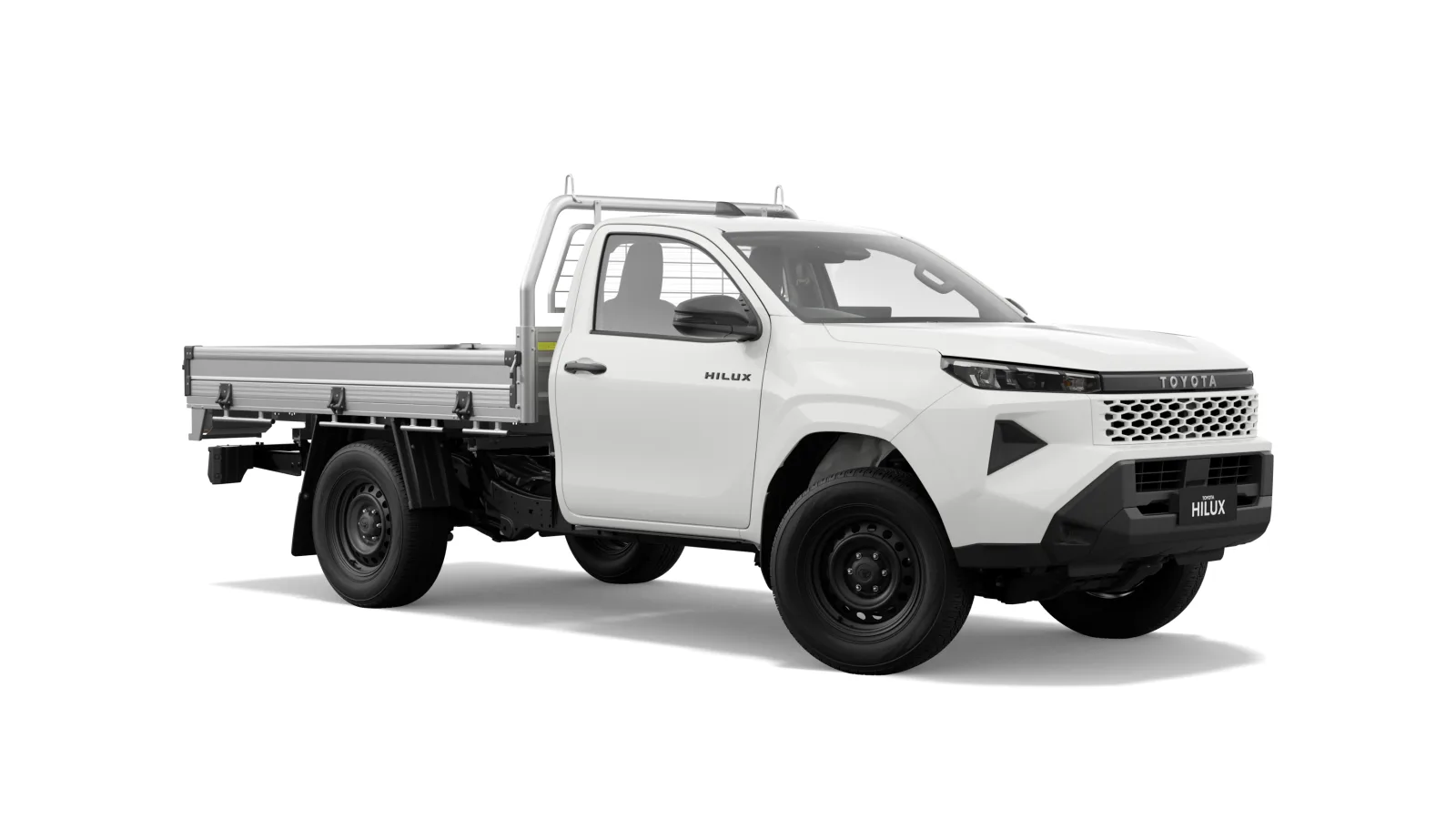
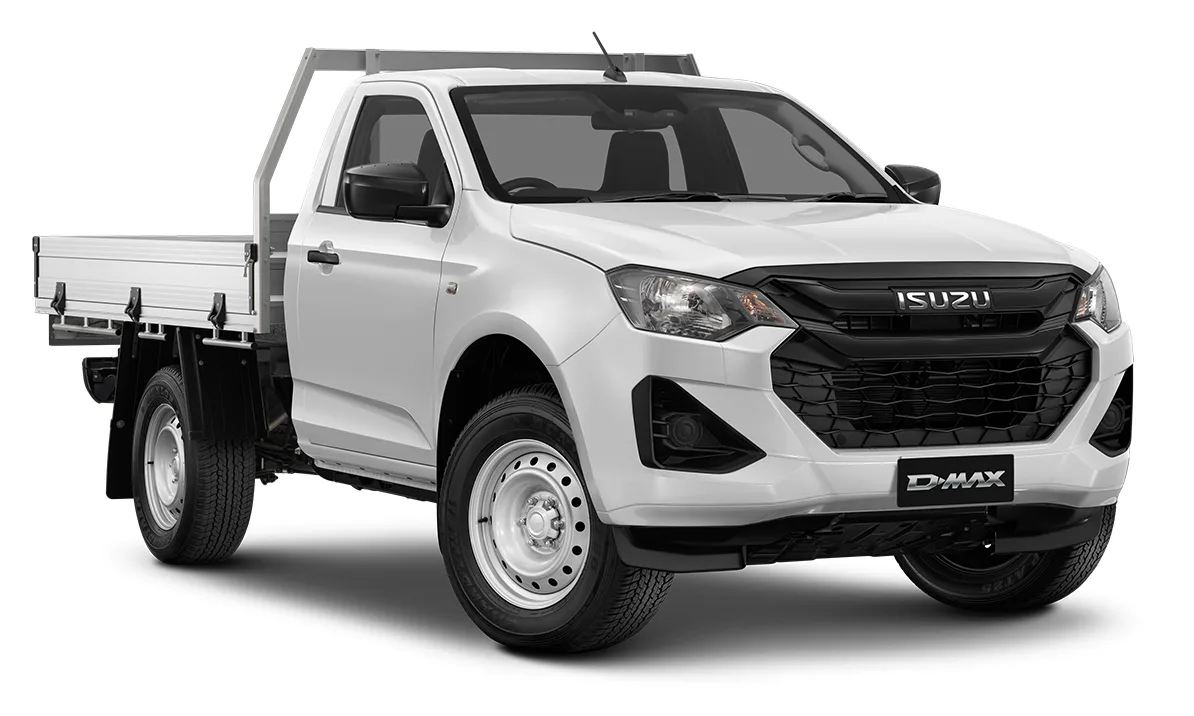
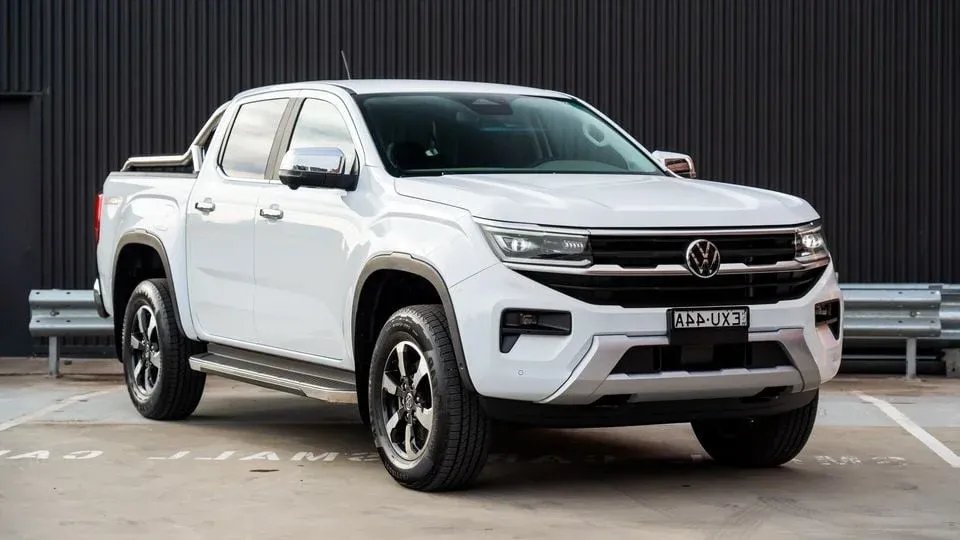
The Volkswagen Amarok shares the same platform and basic silhouette, but the Ranger has a more distinctive face. Against the HiLux and D-Max, the Ranger simply looks more modern.
CarSorted
Track the Ford Ranger
Free, and we email you when the price or a manufacturer offer changes.
| Key details | 2027 Ford Ranger XL 4x2 Super Cab Cab-Chassis |
|---|---|
| Engine | 2L 4-cyl |
| Power | 125kW |
| Torque | 405Nm |
| Drive type | RWD |
| Transmission | 10-speed automatic |
| Power-to-weight ratio | 68 kW/tonne |
| Weight | 1,850kg (kerb) |
| Spare tyre type | Spare Wheel - 16" Steel |
| Tow rating | 3,500kg brakedNo data unbraked |
| Payload | 1,350kg |
| Turning circle | 14m |
| Fuel consumption | 6.8 L/100km |
| Boot | No data |
| ANCAP | 5 stars (2022) |
Key details for 3 other variants
| Key details | 2027 Ford Ranger XL 4x2 Single Cab Cab-Chassis |
|---|---|
| Engine | 2L 4-cyl |
| Power | 125kW |
| Torque | 405Nm |
| Drive type | RWD |
| Transmission | 10-speed automatic |
| Power-to-weight ratio | 72 kW/tonne |
| Weight | 1,728kg (kerb) |
| Spare tyre type | Spare Wheel - 16" Steel |
| Tow rating | 3,500kg brakedNo data unbraked |
| Payload | 1,422kg |
| Turning circle | 14m |
| Fuel consumption | 6.8 L/100km |
| Boot | No data |
| ANCAP | 5 stars (2022) |
| Key details | 2027 Ford Ranger XL 4x2 Double Cab Pick-up |
|---|---|
| Engine | 2L 4-cyl |
| Power | 125kW |
| Torque | 405Nm |
| Drive type | RWD |
| Transmission | 10-speed automatic |
| Power-to-weight ratio | 61 kW/tonne |
| Weight | 2,036kg (kerb) |
| Spare tyre type | Spare Wheel - 16" Steel |
| Tow rating | 3,500kg brakedNo data unbraked |
| Payload | 1,164kg |
| Turning circle | 14m |
| Fuel consumption | 6.8 L/100km |
| Boot | No data |
| ANCAP | 5 stars (2022) |
| Key details | 2027 Ford Ranger XL 4x4 Single Cab Cab-Chassis 2.0L |
|---|---|
| Engine | 2L 4-cyl |
| Power | 125kW |
| Torque | 405Nm |
| Drive type | 4WD |
| Transmission | 10-speed automatic |
| Power-to-weight ratio | 69 kW/tonne |
| Weight | 1,824kg (kerb) |
| Spare tyre type | Spare Wheel - 16" Steel |
| Tow rating | 3,500kg brakedNo data unbraked |
| Payload | 1,366kg |
| Turning circle | 12.9m |
| Fuel consumption | 7.1 L/100km |
| Boot | No data |
| ANCAP | 5 stars (2022) |
Is it good value?
Rivals
The Ranger doesn't exist in a vacuum. Here's how it stacks up against the three main alternatives.
Toyota HiLux
The eternal rival. The HiLux wins on reliability reputation and resale value (it retains roughly 63% after five years vs the Ranger's 58%). The Ranger counters with a larger touchscreen, a more car-like cabin layout, and a 3.0-litre V6 the HiLux range has no answer to. We have not driven the HiLux, so treat the ride and refinement comparison as the consensus of published road tests rather than our own verdict. If you value comfort and tech, Ranger. If you value simplicity and resale, HiLux. Read the full three-way comparison.
Isuzu D-Max
The value play. The D-Max undercuts the Ranger by $2,000-5,000 at comparable spec levels, offers a 6-year/150,000km warranty, and its 3.0L turbo diesel is a proven unit. Towing is matched at 3,500kg. Where the Ranger pulls ahead on paper is interior tech and the V6 engine option, and note the D-Max's five-star ANCAP scope excludes the Blade. The D-Max is the smarter buy if you want to save money upfront. Check our D-Max vs Ranger comparison for the full breakdown.
Volkswagen Amarok
The Amarok shares the Ranger's platform, body structure, and even the V6 engine. So what's different? The Amarok gets a unique front-end design, different interior trim (arguably more premium in feel), and VW's own infotainment calibration. It's positioned as the more upmarket option and priced accordingly, typically $2,000-4,000 more than the equivalent Ranger. If you want the Ranger's mechanicals with a more premium wrapper, the Amarok is worth a look. Full details in our Ranger vs Amarok comparison.
| Key details: Ford Ranger XL 4x2 Super Cab Cab-Chassis | |
|---|---|
| Price | Est. $48,877 drive-away (VIC 3000)Ford's own estimate for postcode 3000; your price varies by state. Checked 29 Oct 2026. |
| Drive-away estimate | $48,877 est. drive-away (VIC 3000) |
| Cost per week in VIC | from $266/wk in VIC, excludes servicing and insuranceRepayments, fuel or charging, rego and CTP, servicing, tyres and insurance where held. Estimate only, not a quote. |
| Body | Ute |
| Powertrain | Diesel, 2L 4-cyl |
| Towing (braked / unbraked) | 3,500kg / No data |
| Payload | 1,350kg |
| Tray length | No data |
| Seats | 4 |
| Warranty | 7yr / unlimited km |
| Rivals | Toyota HiLux, Isuzu D-Max, Volkswagen Amarok |
| The Ford Ranger range on sale | Price | Powertrain | Fuel or energy use |
|---|---|---|---|
| XL 4x2 Single Cab Cab-Chassis | Est. $46,518 drive-away (VIC 3000) | Diesel, RWD | 6.8 L/100km |
| XL 4x2 Double Cab Pick-up | Est. $48,845 drive-away (VIC 3000) | Diesel, RWD | 6.8 L/100km |
| XL 4x2 Super Cab Cab-Chassis | Est. $48,877 drive-away (VIC 3000) | Diesel, RWD | 6.8 L/100km |
| XL 4x4 Single Cab Cab-Chassis 2.0L | Est. $55,215 drive-away (VIC 3000) | Diesel, 4WD | 7.1 L/100km |
| XL 4x4 Double Cab Pick-up 2.0L | Est. $56,925 drive-away (VIC 3000) | Diesel, 4WD | 7.2 L/100km |
| XL 4x4 Super Cab Cab-Chassis 2.0L | Est. $57,579 drive-away (VIC 3000) | Diesel, 4WD | 7.1 L/100km |
| XLT 4x2 Double Cab Pick-up | Est. $58,558 drive-away (VIC 3000) | Diesel, RWD | 6.8 L/100km |
| XL 4x4 Double Cab Cab-Chassis 2.0L | Est. $58,979 drive-away (VIC 3000) | Diesel, 4WD | 7.2 L/100km |
| XL 4x4 Single Cab Cab-Chassis 3.0L V6 | Est. $61,893 drive-away (VIC 3000) | Diesel, AWD | 8.3 L/100km |
| XL 4x4 Double Cab Pick-up 3.0L V6 | Est. $63,603 drive-away (VIC 3000) | Diesel, AWD | 8.3 L/100km |
| XL 4x4 Super Cab Cab-Chassis 3.0L V6 | Est. $64,152 drive-away (VIC 3000) | Diesel, AWD | 8.3 L/100km |
| XL 4x4 Double Cab Cab-Chassis 3.0L V6 | Est. $65,657 drive-away (VIC 3000) | Diesel, AWD | 8.3 L/100km |
| XLT 4x4 Double Cab Pick-up 2.0L | Est. $67,291 drive-away (VIC 3000) | Diesel, 4WD | 7.2 L/100km |
| XLS 4x4 Double Cab Cab-Chassis 3.0L V6 | Est. $67,661 drive-away (VIC 3000) | Diesel, AWD | 8.3 L/100km |
| XLT 4x4 Super Cab Pick-up 3.0L V6 | Est. $69,650 drive-away (VIC 3000) | Diesel, AWD | 8.3 L/100km |
| XLT 4x4 Double Cab Pick-up 3.0L V6 | Est. $73,963 drive-away (VIC 3000) | Diesel, AWD | 8.3 L/100km |
| Wildtrak 4x4 Double Cab Pick-up 2.0L | Est. $74,580 drive-away (VIC 3000) | Diesel, 4WD | 7.2 L/100km |
| XLT 4x4 Double Cab Cab-Chassis 3.0L V6 | Est. $76,017 drive-away (VIC 3000) | Diesel, AWD | 8.3 L/100km |
| Wildtrak 4x4 Double Cab Pick-up 3.0L V6 | Est. $81,258 drive-away (VIC 3000) | Diesel, AWD | 8.3 L/100km |
| Platinum 4x4 Double Cab Pick-up | Est. $87,214 drive-away (VIC 3000) | Diesel, AWD | 8.4 L/100km |
| Raptor 4x4 Double Cab Pick-up | Est. $97,279 drive-away (VIC 3000) | Petrol, AWD | 11.5 L/100km |
| Black Edition 4x4 Double Cab Pick-up 3.0L V6 | POA | Diesel, AWD | 8.3 L/100km |
| PHEV Sport | POA | Plug-in hybrid, 4WD | 3.1 L/100km |
| PHEV Wildtrak | POA | Plug-in hybrid, 4WD | 3.1 L/100km |
| Black Edition 4x4 Double Cab Pick-up 2.0L | POA | Diesel, 4WD | 7.2 L/100km |
| PHEV XL | POA | Plug-in hybrid, 4WD | 3.1 L/100km |
Get the week's car price moves by email
Australia's free car comparison site. One email a week: verified price moves, new offers and car news. Unsubscribe anytime.
How much fuel does it use?
Fuel Economy
Fuel efficiency varies quite a bit across the range. The base 2.0L single-turbo claims 6.9L/100km combined, which is the best figure in the lineup and competitive with the D-Max (6.8L) and slightly better than the HiLux (7.6L).
In the real world, expect around 7.5-8.5L/100km for the single-turbo depending on driving conditions. Highway cruising sits around 6.5-7.0L, while metro driving pushes towards 9.0L. The bi-turbo 2.0L is rated at 7.4L/100km but typically returns 8.0-9.0L in mixed driving.
The V6 is thirstier, as you'd expect. Ford claims 8.7L/100km for the Wildtrak V6 and 9.0L for the Raptor. Real-world numbers for the V6 tend to sit around 9.5-11.0L/100km in mixed driving, climbing to 12-14L when towing. At today's diesel prices (around $1.85/L), the V6 costs roughly $300-400 more per year in fuel than the bi-turbo four-cylinder.
Over 15,000km a year, the base XL will cost around $1,910 in diesel. The V6 Wildtrak will set you back roughly $2,410. That $500 difference is the price of having that lovely V6 smoothness.
| Fuel: Ford Ranger XL 4x2 Super Cab Cab-Chassis | |
|---|---|
| Fuel use (combined) | 6.8 L/100km |
| Fuel type | Diesel |
| Minimum fuel grade | No data |
| Urban / extra-urban | 7.6 L/100km / 6.4 L/100km |
| Fuel tank | 80L |
| Range on a tank (calculated) | 1,176kmTank divided by the combined figure |
| CO2 (combined) | 179 g/km |
| Service interval | 12 months or 15,000km |
What does it cost to own?
Price and Running Costs
The Ranger lineup is wide. Really wide. Ford offers everything from a stripped-out single cab chassis to the full-noise Raptor, and the price gap between them is over $50,000. Here's how the range stacks up.
That $37,130 entry price for the XL single cab is competitive. Not the cheapest in the segment (the Isuzu D-Max undercuts it), but fair given the equipment levels. For the most popular configuration, a dual cab 4x4 XLT, you're looking at $58,790 before on-road costs. Driveaway, that's roughly $63,000-65,000 depending on your state.
Running costs are reasonable for a ute. Ford's capped-price servicing program covers the first five years, with intervals every 12 months or 15,000km. Average annual servicing sits around $750-850. Fuel will set you back roughly $2,000-2,400 a year at 15,000km depending on which engine you pick. Insurance runs $1,800-2,200 for a typical owner. Ford backs the whole range with a 5-year unlimited-kilometre warranty, matching Toyota and Nissan.
For a full breakdown of how the Ranger stacks up on ownership costs, check out our best utes guide which compares annual running costs across the segment.
| Warranty and servicing: Ford Ranger XL 4x2 Super Cab Cab-Chassis | |
|---|---|
| Warranty | 7yr / unlimited km |
| Roadside assistance | 1 year, renewable with servicing up to 7 years |
| Service interval | 12 months or 15,000km |
| Capped-price servicing | No data |
Cost per week in VIC: from $266/wk in VIC, excludes servicing and insurance
- Repayment estimate$203/wk
$5,000 deposit, 5yr loan at an assumed 7.5% p.a. on the advertised drive-away. Not an offer of credit
- Fuel$37/wk
6.8 L/100km combined at $1.90/L diesel, the site default
- Rego + CTP$18/wk
VIC typical: car, metropolitan (high risk) zone, 12-month renewal, $958.80 a year. As at July 2026, VicRoads
- ServicingNo data
No data: no servicing cost held for this car
- Tyres$8/wk
Typical tyre spend for this type of car, scaled to 15,000 km a year (not this car's tyres)
- InsuranceNo data
No data: no insurance estimate held for this car
Based on 15,000 km a year in VIC. Estimate only, not a quote.
How safe is it?
Safety
The Ranger holds a 5-star ANCAP safety rating, scoring strongly across all four categories: adult occupant (85%), child occupant (87%), vulnerable road user (69%), and safety assist (82%). It's one of the safest utes you can buy.
Standard safety equipment across the range includes autonomous emergency braking (AEB) with pedestrian and cyclist detection, lane-keep assist, rear cross-traffic alert, blind-spot monitoring, and a rear-view camera. The XLT and above add adaptive cruise control with stop-and-go, evasive steer assist, and a 360-degree camera.
Notably, the Ranger was one of the first utes to offer intersection AEB, which can detect vehicles approaching from the side at intersections. It's a meaningful feature for a vehicle this size, particularly in urban environments.
Airbags include driver and front passenger, side curtain (extending to second row), and driver's knee. A centre airbag between the front seats is standard from XLT up.
For a deeper look at what these ratings actually mean, see our ANCAP safety ratings guide.
| ANCAP: Ford Ranger XL 4x2 Super Cab Cab-Chassis | |
|---|---|
| ANCAP rating | 5 stars (tested 2022) |
| Adult occupant | 84% |
| Child occupant | 93% |
| Vulnerable road users | 74% |
| Safety assist | 83% |
| Airbags | 9 |
| Driver assists: Ford Ranger XL 4x2 Super Cab Cab-Chassis | |
|---|---|
| Autonomous emergency braking | Standard |
| Adaptive cruise control | Standard |
| Blind-spot monitoring | Standard |
| Rear cross-traffic alert | Standard |
| Lane-keep assist | Standard |
| Speed sign recognition | Standard |
| Driver attention monitor | Standard |
| 360-degree camera | No data |
Standard, Optional (with the printed price), No (the manufacturer's document says not fitted) or No data. 8 assists checked.
What is it like inside?
Interior, Screen, and Materials
This is where the Ranger genuinely leaps ahead of the competition. Our Platinum test car came with the full suite: 12-inch portrait touchscreen, leather-trimmed seats, and a cabin that could genuinely pass for a premium SUV. Previous-generation utes had interiors that felt like an afterthought. The current Ranger's cabin could pass for a mid-range SUV.
The XL gets the basics right: air conditioning, an 8-inch touchscreen with Apple CarPlay and Android Auto, and a digital instrument cluster. It's fine for a work truck. The XLT is the sweet spot. It gets a massive 12-inch portrait touchscreen running Ford's SYNC 4A system, a 12.4-inch digital instrument cluster, dual-zone climate, and soft-touch materials on the dash and door trims. The system is responsive and well laid-out, and wireless Apple CarPlay is a nice touch.
Wildtrak adds leather-accented seats, heated front seats, and a premium audio system. The Raptor goes further with unique sports seats, orange stitching throughout, and magnesium paddle shifters. All models get a leather-wrapped steering wheel from XLS up.
Storage is decent. There's a large centre console bin, bottle holders in all four doors, and a phone tray with wireless charging (XLT and above). The glovebox is adequate but not huge. Under-seat storage in the rear is limited because of the flat floor, but there are map pockets and ISOFIX points for child seats.
Build quality is good throughout. The dashboard doesn't creak, the switches feel solid, and there's very little cheap-feeling plastic above knee height on XLT and above models. It's a genuinely pleasant place to spend time, which matters when you're driving this thing five or six days a week.
Practicality: Boot, Tray, Rear Seats, and Towing
The Ranger is a practical vehicle by nature, but the details matter. Let's break it down.
Tray Size
Single cab models get a tray length of approximately 2,315mm. That's enough for standard building materials and most trade setups. The dual cab tray is 1,553mm long, 1,139mm wide between the wheelarches, and 511mm deep. It'll take a standard Aussie pallet (1,165 x 1,165mm) flat. The Ranger's tray is slightly larger than the HiLux (1,520mm) in most configurations and is among the larger trays in the ute segment. See our full ute tray comparison for exact measurements across every model.
Rear Seats
Rear seat space in the dual cab is good. In our Platinum test car, the leather-trimmed rear bench had plenty of room for two adults, and the flat floor makes the middle seat more usable than most utes. Adults over 180cm will fit without their knees hitting the front seatback. There's a flat floor (no transmission tunnel hump), decent headroom, and three-across seating is possible for shorter trips. Two ISOFIX points and three top-tether anchors make child seat installation straightforward. The rear seats fold up to create extra covered storage, which is handy.
Towing
This is where the Ranger really earns its keep. Every variant can tow 3,500kg braked, which puts it level with the HiLux and D-Max. The ball weight limit is 350kg. Where the Ranger stands out is the towing experience. The 10-speed auto (XLT and above) manages gear selection beautifully under load, keeping the engine in its torque band without constant hunting. The optional Pro Trailer Assist system lets you reverse a trailer using a dial on the dashboard. It sounds gimmicky, but it genuinely works and saves you time at boat ramps and caravan parks.
The V6 diesel in the Wildtrak and Raptor makes towing feel effortless. 600Nm of torque means overtaking on the highway with a loaded trailer doesn't require a running start. The exhaust brake is strong enough to hold speed on long descents without riding the brakes.
If towing is your primary use case, the Ranger with the V6 is among the best towing utes in Australia right now. Read our best towing vehicles guide for the broader picture.
| Space and dimensions: Ford Ranger XL 4x2 Super Cab Cab-Chassis | |
|---|---|
| Seats | 4 |
| Boot, seats up | No data |
| Boot, seats folded | No data |
| Length x width x height | 5,410 x 1,910 x 1,866mm |
| Wheelbase | 3,270mm |
| Ground clearance | 224mm |
| ISOFIX | No data |
| Top tethers | No data |
| Seat trim | Cloth |
| Spare wheel | Spare Wheel - 16" Steel |
Does it have good tech?
| Screens and audio: Ford Ranger XL 4x2 Super Cab Cab-Chassis | |
|---|---|
| Touchscreen | 12 inches |
| Driver display | 8 inches |
| Audio | 4 speakers |
| USB | No data |
| Connected services term | No data |
| Connectivity: Ford Ranger XL 4x2 Super Cab Cab-Chassis | |
|---|---|
| Apple CarPlay | Standard |
| Android Auto | Standard |
| Wireless CarPlay / Android Auto | Standard |
| Wireless phone charging | No |
| Head-up display | No data |
| Built-in navigation | No |
| Digital radio | No |
| Over-the-air updates | No data |
| Remote climate (app) | No data |
What is it like to drive?Driven by Uzzi
Driving: Handling, Ride, and Engine
The Ranger's party trick is its ride quality. Ford replaced the traditional leaf-spring rear suspension with a Watt's-link setup on XLT, Sport, Wildtrak, and Raptor models, and it transforms the way this ute drives. Unladen, where most utes bounce and skip over bumps, the Ranger absorbs imperfections with a composure that's closer to an SUV than a workhorse. It's noticeably better than the HiLux, which still uses leaf springs across the range.
The XL and XLS stick with leaf springs, and you can feel the difference. They're still acceptable for a work ute, but if you're driving to and from site every day, the XLT's suspension is worth the step up.
Engines
The base engine is a 2.0-litre four-cylinder turbo diesel making 125kW and 405Nm. It's matched to a 6-speed automatic on XL and XLS models. For unladen driving and light-duty work, it's adequate. Not exciting, not underpowered. Just gets the job done.
The bi-turbo version of the same 2.0L bumps output to 154kW and 500Nm, paired with the 10-speed auto. This is noticeably punchier and the better gearbox makes a real difference. It's the engine most buyers will end up with in the XLT.
Then there's the 3.0-litre V6 twin-turbo diesel in the Wildtrak and Raptor. At 292kW and 583Nm (Raptor) or 184kW and 600Nm (Wildtrak), this engine is in a different league. It's smooth, quiet at cruise, and has enormous reserves for towing or overtaking. The V6 is genuinely the best engine in any ute sold in Australia, and it's one of the key reasons the Ranger leads the segment.
Off-Road
| The figures: Ford Ranger XL 4x2 Super Cab Cab-Chassis | |
|---|---|
| Power-to-weight | 68 kW/tonne |
| Power | 125kW |
| Torque | 405Nm |
| 0-100km/h (claimed) | No data |
| Kerb weight | 1,850kg |
| Turning circle | 14m |
| Tyres | No data |
| Drive | RWD |
| Transmission | 10-speed automatic |
| Towing (braked) | 3,500kg |
Best deals
Should I buy it?
Should You Buy It?
Yes, if: you want the best all-round ute in Australia. The Ranger does more things well than any competitor. The ride quality is class-leading, the interior is genuinely good, the V6 is spectacular, and the towing capability is as strong as anything in the segment. For tradies, families using a ute as their primary vehicle, and anyone who tows regularly, the Ranger makes a compelling case.
Maybe not, if: you plan to resell within three years (the HiLux holds value better), you want the cheapest possible ute to run (the D-Max undercuts it), or you do serious remote-area work where Toyota's parts network and proven simplicity matter more than creature comforts.
The sweet spot in the range is the XLT 4x4 Dual Cab. You get the 10-speed auto, the multi-link rear suspension, the big 12-inch screen, and all the safety gear. It's where the Ranger starts to feel like the premium product Ford intends it to be, without the Wildtrak or Raptor premium.
If budget is tight and you just need a reliable workhorse, the XL single cab at $37,130 is solid value. It still gets 5-star ANCAP safety, the 5-year warranty, and the efficient 2.0L diesel at 6.9L/100km.
CarSorted Score breakdown
The CarSorted Score is algorithmic: it is calculated from this car's published data, not from a road test. How it works.
Safety
Fuel Economy
Value
Practicality
Technology
Performance
Reliability
Questions buyers ask
How much does the Ford Ranger cost in Australia?
The Ford Ranger XL 4x2 Super Cab Cab-Chassis is est. $48,877 drive-away (VIC 3000). The range table above lists every current variant.
What is the Ford Ranger towing capacity?
The Ford Ranger XL 4x2 Super Cab Cab-Chassis is rated to tow 3,500kg braked.
How fuel efficient is the Ford Ranger?
On the official combined cycle the Ford Ranger uses 6.8 L/100km.
Is the Ford Ranger reliable?
The current-generation Ranger has proven reasonably reliable. Ford offers a 5-year unlimited-kilometre warranty. Common issues include infotainment glitches and some DPF-related concerns on earlier builds, but overall reliability feedback has been positive.
Is the Ford Ranger safe?
The Ford Ranger holds 5 ANCAP stars (rated 2022).
What warranty does the Ford Ranger have?
The Ford Ranger comes with a 7yr / unlimited km warranty.
How powerful is the Ford Ranger?
The Ford Ranger XL 4x2 Super Cab Cab-Chassis makes 125kW and 405Nm.
How to read this page. Uzzi drove this car. Prices, specifications, ANCAP ratings, warranty, equipment and the CarSorted Score come from our records for the variant shown, sourced from Ford's Australian documents, and update when those records change. RRP excludes on-road costs. Drive-away figures are estimates for the state you have selected unless marked as advertised; cost per week is an estimate, not a quote. The editorial text was written on 7 April 2026. Always confirm price and specification with the manufacturer or a dealer before you buy. As at October 2026, no car manufacturer or dealer pays CarSorted for a ranking, score, verdict or spec value.
Comments (0)
Sign in to join the conversation
No comments yet. Be the first!