Key Takeaways
- 108,760 new cars delivered in August 2026, up 4.9% on August 2025 and the strongest August the Australian market has ever run
- 27,078 battery EVs, or 24.9% of the market. First time in Australian history EVs alone outsold petrol, diesel and hybrid separately
- Tesla Model Y family tops the chart on 6,414, with the Model Y L three-row on 3,236 in only its second full month
- Toyota RAV4 holds second on 5,470, HiLux third on 4,833, Prado fourth on 2,475, Ranger fifth on 2,440
- Toyota still the number-one brand on 19,712, with BYD second on 8,231 and Tesla third on 7,685
- Five Chinese-built models in the top 10, six once you include the China-built Model Y
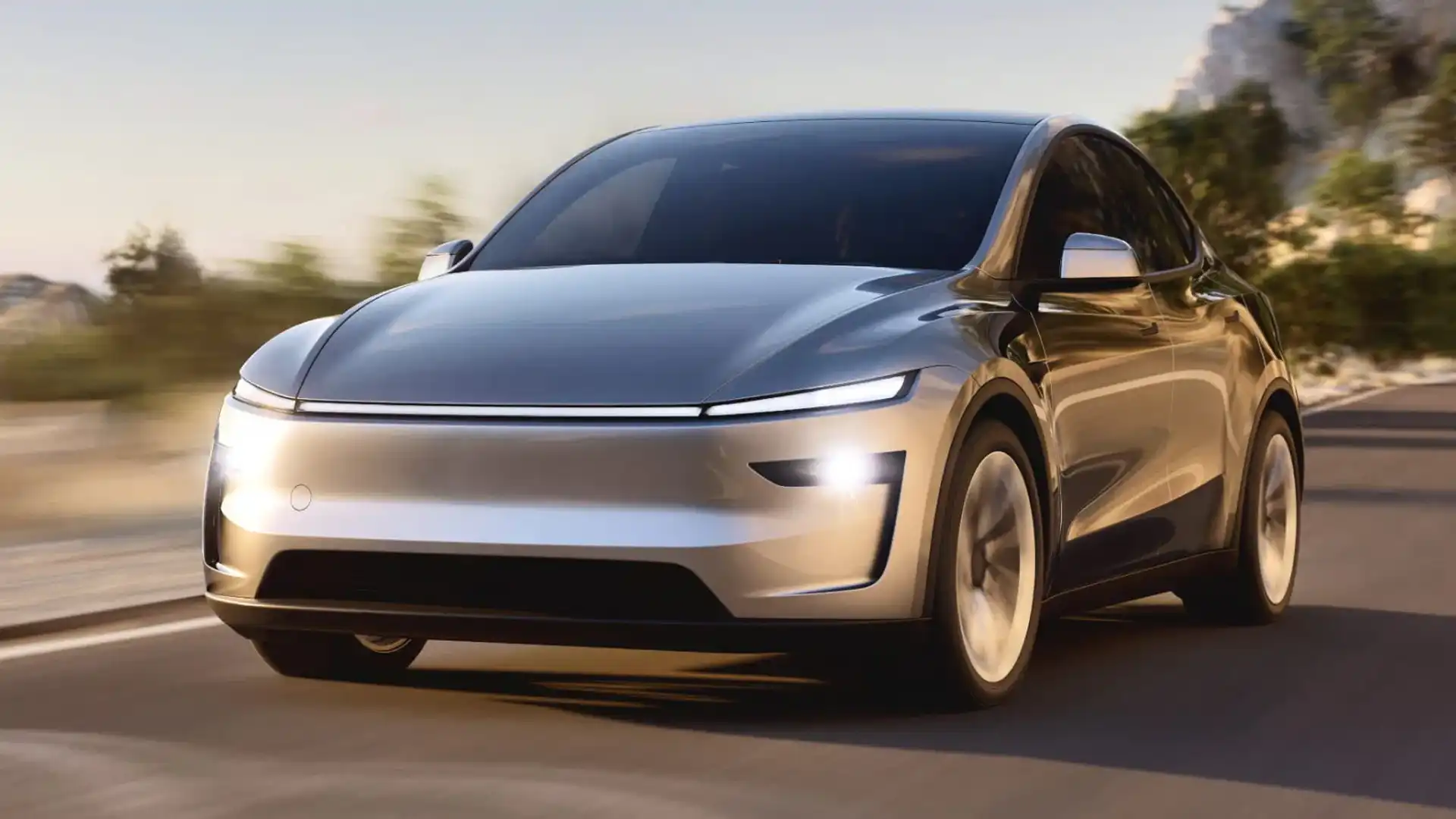
Image credit: Tesla Australia
The Australian new-vehicle market crossed a line in August that a lot of people spent the last decade arguing would never happen this decade. In the 31 days from 1 to 31 August, 27,078 battery-electric vehicles were delivered to customers. That is 24.9 per cent of the whole market, and for the first time in the history of Australian new-car sales, battery EVs outsold pure petrol, pure diesel and conventional hybrid vehicles as separate powertrain categories. The Federal Chamber of Automotive Industries counted 108,760 total new-vehicle deliveries when its VFACTS figures are combined with Electric Vehicle Council data for Tesla and Polestar, up 4.9 per cent on August 2025.
For anyone shopping this week, three things matter. The Tesla Model Y is now Australia's best-selling new car of any kind, not just of any electric kind. The three-row Model Y L has landed with enough force to add roughly 3,200 units all by itself in its second full month of deliveries. And the price gap between the country's default hybrid mid-size SUV, its default electric mid-size SUV, and its fastest-selling Chinese electric mid-size SUV is now inside $10,000. If you were waiting for the market to normalise before making a decision, August is what normal looks like now.
The Top-Sellers in August 2026
Model rank reflects total new-vehicle deliveries for the month, as reported by the FCAI and supplemented with Electric Vehicle Council figures for Tesla and Polestar. The Tesla Model Y line combines the five-seat Model Y (3,178) with the new three-row Model Y L (3,236), which the FCAI groups as one nameplate.
| Rank | Model | Segment / built in | August sales |
|---|---|---|---|
| 1 | Tesla Model Y family | Mid-size electric SUV, China | 6,414 |
| 2 | Toyota RAV4 | Mid-size hybrid SUV, Japan | 5,470 |
| 3 | Toyota HiLux | Dual-cab diesel ute, Thailand | 4,833 |
| 4 | Toyota LandCruiser Prado | Large diesel 4WD, Japan | 2,475 |
| 5 | Ford Ranger | Dual-cab diesel / PHEV ute, Thailand | 2,440 |
| 6 | BYD Sealion 7 | Mid-size electric SUV, China | 2,213 |
| 7 | Chery Tiggo 4 | Small SUV petrol / hybrid, China | 2,012 |
| 8 | Geely EX5 | Mid-size electric SUV, China | 1,947 |
| 9 | GWM Haval Jolion | Small SUV hybrid, China | 1,891 |
| 10 | Zeekr 7X | Mid-size electric SUV, China | 1,748 |
Look at that list slowly. An electric SUV is number one. A hybrid SUV is number two. Two diesel utes fill third and fifth, one large diesel 4WD sits at four, and then five of the six cars from sixth to tenth are Chinese-built electrics or hybrids. The Toyota Corolla, the Toyota Camry and the Kia Sportage did not make the top 10 in August. The Model Y outsold the Toyota RAV4 by 944 cars and it outsold every single BYD line in the country combined. Twelve months ago the RAV4 was the number-one nameplate and no EV was even close to a monthly top-three finish. That gap has been closed and then flipped in a year.
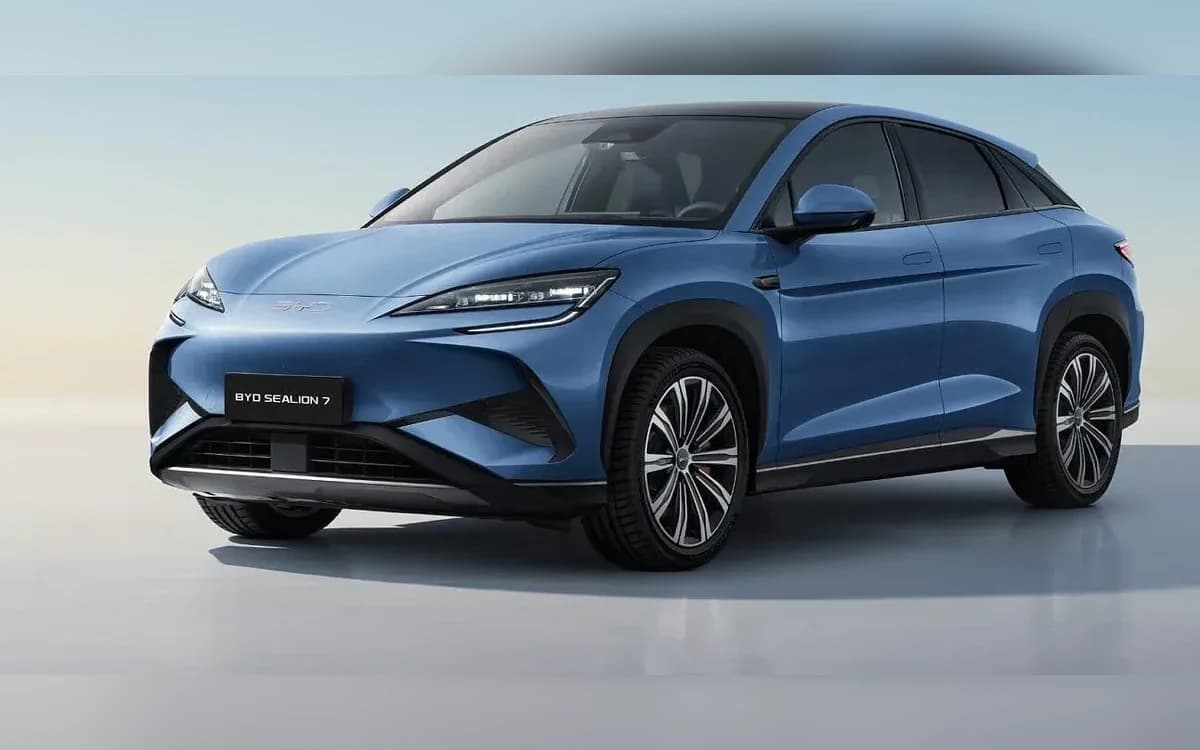
Image credit: BYD Australia
The Brand Race
| Brand | August 2026 | Share (approx.) |
|---|---|---|
| Toyota | 19,712 | 18.1% |
| BYD | 8,231 | 7.6% |
| Tesla | 7,685 | 7.1% |
| Kia | 6,500 | 6.0% |
| Mazda | 6,203 | 5.7% |
| Hyundai | 5,355 | 4.9% |
| GWM | 4,870 | 4.5% |
| Ford | 4,816 | 4.4% |
Toyota's monthly gap over BYD widened again to more than 11,000 cars, which is the largest it has been all year. The interesting movement is behind them. Tesla lands third and sits within 546 units of BYD for second overall, on the strength of one badge and effectively one nameplate. Chery, GWM, MG and Geely all continue to trade blows for the small-SUV dollars that used to be a straight Kia versus Hyundai fight. Ford drops to eighth in August, which is the first month since June 2020 the blue oval has finished outside the top five in a normal trading month.
The Powertrain Split: The Line Everyone Was Watching
Battery EVs were 24.9 per cent of the new-vehicle market in August, or 27,078 cars. Plug-in hybrids added another 10.5 per cent, conventional hybrids 18.5 per cent, and diesels held on to a large slice thanks to the ute market. Pure petrol is still the biggest single powertrain if you count it as one bucket, but only just, and it is the powertrain shrinking fastest. The headline is that BEVs on their own have now beaten conventional hybrids on their own, plug-in hybrids on their own, and diesels on their own in a single month. Twelve months ago BEVs sat at roughly 9.2 per cent of the market. They have almost tripled that share in a year.
Two things pushed the number up in August. First, Tesla's Model Y L three-row is now landing in real dealer volume, and it opened a size class the segment did not have last month. Second, the arrival of the Zeekr 7X, XPeng G6, Deepal S07 and Geely EX5 in customer hands during July has fed August's invoicing peak. There is a third structural factor sitting underneath it. The fuel excise discount ended on 2 August, and 91-RON pump prices lifted about 17c/L from Monday 3 August. That is worth roughly $10 a fill and it hurts the case for a pure-petrol car every single week from here to Christmas.
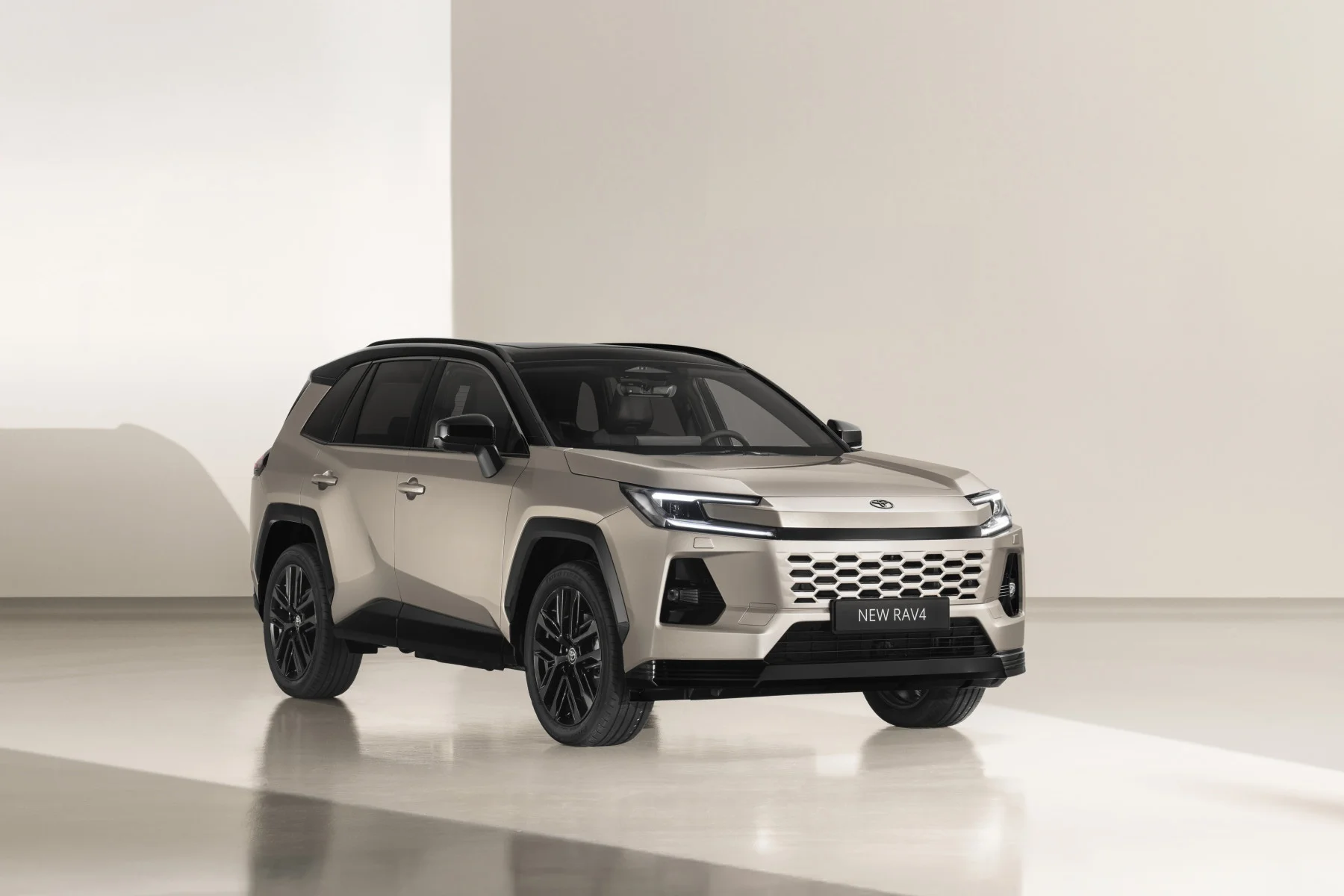
Image credit: Toyota Australia
Where the Cars Now Come From
Five of the ten best-selling new cars in Australia in August were built in mainland China. Six, if you count the Tesla Model Y that leads the whole chart, which is built at Tesla's Shanghai gigafactory. The Sealion 7, Chery Tiggo 4, Geely EX5, GWM Haval Jolion and Zeekr 7X sit inside the top 10 on their own, and each of them ships out of a different Chinese factory. Add the Cupra Tavascan, the Polestar 4, the Volvo EX30, the Mini Countryman electric and the Mazda 6e that all sit just outside the top 10, and the Chinese production share of the whole month easily clears one in every three new cars sold. If your shortlist is still a Corolla, a Sportage and a Kluger, our earlier piece on the non-Chinese brands built in China is worth 10 minutes before you sign anything.
The CarSorted Angle: What August Actually Costs You
On CarSorted the Tesla Model Y RWD is listed at $58,900 with 466km WLTP range and a 5-star ANCAP rating from the 2022 assessment carried over. The Toyota RAV4 Hybrid GXL is $49,990 with 4.8 L/100km, 5-star ANCAP and Toyota's 5-year unlimited-km warranty. The BYD Sealion 7 Premium is $58,990 with 456km WLTP and a 6-year warranty. That is the three-car cross-shop that decided top of the charts in August, and each of them is priced within about $9,000 of the other two. If you have off-street parking and a plug, the Model Y or the Sealion 7 will pay back the price gap against the RAV4 inside four years on running costs alone at current pump prices. If you do not have home charging, the RAV4 hybrid is still the easy call, but the Model Y's charging network is now closer to a mainland petrol network than it is to a curiosity. Run the numbers on our RAV4 vs Model Y compare page before you sign anything.
On the dual-cab ute floor, the HiLux and Ranger are still the volume leaders but the fifth-place Ranger tally of 2,440 in August is well down on the 4,000-plus months it was posting through the first half of the year. Ranger fleet buyers appear to be waiting for the local Ranger PHEV to build customer confidence, and the BYD Shark 6 is quietly stealing weekend-tow-boat buyers who used to default to a Ranger XLT or a HiLux SR5. If you are cross-shopping a ute right now, our HiLux vs Ranger compare is the fastest way to line them up on tow rating, tare and driveaway.
The small-SUV story is the one that changed most. Chery Tiggo 4 posting 2,012 units, GWM Haval Jolion posting 1,891 and Geely EX5 posting 1,947 means three Chinese small-SUV nameplates each moved more units than the Hyundai Kona or Kia Seltos did in August. The Tiggo 4 Urban CSH is $27,990 driveaway with an inline hybrid drivetrain and 5-star ANCAP. The Jolion Ultra Hybrid is $32,990 driveaway. The Kona Hybrid is listed on our directory at $36,000 before on-roads. If you are shopping under $35,000 driveaway, the shortlist has genuinely moved.
The September Setup
August's numbers are also the last full month before a heavy September launch calendar. The MG IM5 sedan and IM6 SUV from $60,990 begin deliveries this month. The Mazda CX-6e from $53,990 lands in customer driveways in September. The Nissan X-Trail Rock Creek and cheaper 2WD e-POWER also open this month. The BYD Atto 3 Evo deliveries start now, and the Hyundai Palisade XRT Pro from $79,900 is in dealers from September. Any of them could shuffle September's top 10, and every one of them adds fresh EV or hybrid supply into a market that is already tilting hard away from pure petrol. The full-year 2026 tally will be decided in the last four months, and the direction of travel is now clear.
What This Means for Buyers
If you have been sitting on the fence about an EV because the resale story worried you, August is the month the resale story changed. A car that sells 6,414 units in a single month is not a niche buy any more, and Model Y three-year residuals are already firming on the used market accordingly. Sealion 7 residuals are following behind it as BYD stock stabilises. The point of the August VFACTS is not that you should buy an electric car, it is that the risk premium you were paying for buying one has already halved. Compare a Model Y against a Sealion 7 on our tool and take a driveaway quote to each dealership before you sign.
If you drive fewer than 15,000km a year and you do not have home charging, the Toyota RAV4 Hybrid is still the sensible default, and it is not close. The problem has never been the RAV4. The problem is Toyota's supply, and the extra 20,000 units Toyota locked in for the second half of the year should keep RAV4 wait times inside three months now. If you drive more than 20,000km a year and you can plug in overnight, the running-cost gap between a Model Y and a RAV4 clears the sticker-price gap in three to four years, and August's pump-price step change shortened that window.
If you are shopping small under $35,000 driveaway, do yourself the favour of driving a Chery Tiggo 4, a GWM Haval Jolion or a Geely EX5 before defaulting to a Korean small SUV. The residual gap is narrower than it was even six months ago, the warranties are longer, and the driveaway pricing is between $3,000 and $8,000 lower for equivalent kit. Build a real side-by-side on our compare tool and drop into two dealerships in one Saturday.
Browse the CarSorted directory | Build a side-by-side compare | Read July's VFACTS wrap
Disclaimer: Sales figures are sourced from the Federal Chamber of Automotive Industries (FCAI) VFACTS release for August 2026, supplemented with Electric Vehicle Council data for Tesla and Polestar deliveries where the FCAI does not receive them directly. Brand and model tallies are drawn from the FCAI's own release and independently corroborated across multiple automotive news outlets. Pricing referenced from CarSorted listings is before on-road costs unless stated as driveaway; individual outcomes vary based on grade, options and driveaway offers at each dealership. Fuel-economy and range figures are the manufacturer's claimed values under WLTP where applicable. ANCAP ratings are the current certified rating for the variant referenced.