Key Takeaways
- Palisade XRT Pro from $79,900 before on-roads, in dealers from September 2026
- About $3,400 above the Elite Hybrid at $76,500 and roughly $10,000 below the Calligraphy Hybrid at $89,900
- Only non-hybrid on the second-gen Palisade: 2.5-litre turbo petrol four, 207kW / 422Nm, 8-speed auto, on-demand AWD
- Australian chassis tune, 212mm clearance, e-LSD rear diff, 18-inch alloys on 255/60 R18 Continental all-terrain tyres
- Braked tow rating 2,200kg (with Hyundai Genuine tow kit), 160kg max towball weight, 8 seats standard
- 5-star ANCAP (2025), 14-speaker Bose, dual 12.3-inch displays, heated and ventilated front seats, sunroof, full-size alloy spare
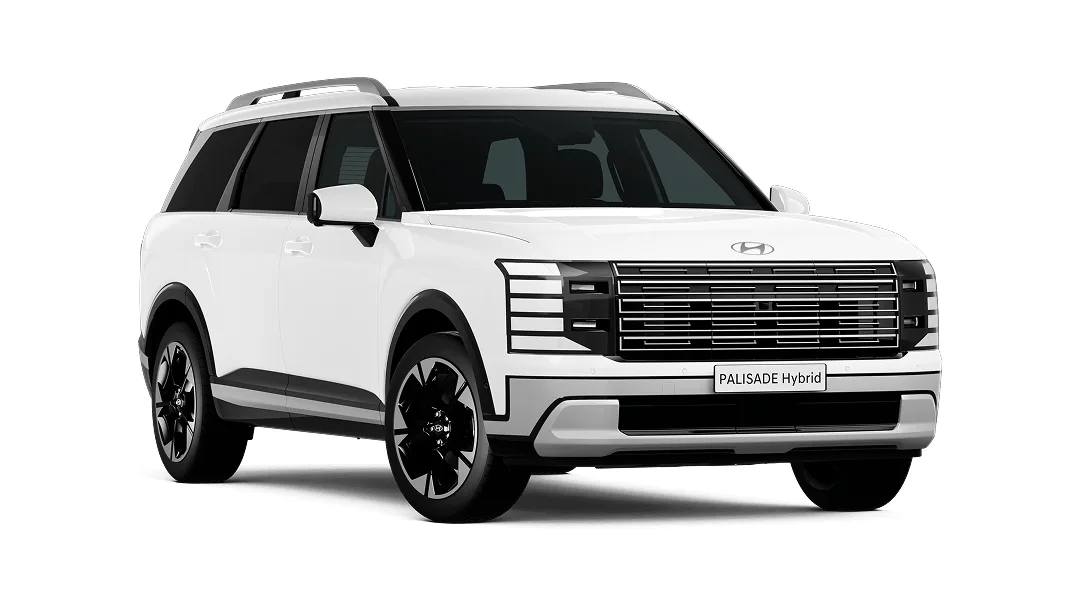
Image credit: Hyundai Australia
If you have been holding out for a three-row family SUV with a bit of a lift, a set of all-terrain tyres from the factory and a proper Australian chassis tune, Hyundai has now put a price on the one it built for you. The Palisade XRT Pro opens at $79,900 before on-road costs and lands in local dealers this month. It is the only variant on the second-generation Palisade that is not a hybrid, and Hyundai has aimed it directly at buyers who currently cross-shop a Toyota Prado or a Ford Everest but do not actually need low range and a 3,500kg tow. In other words, it is not a ladder-frame 4WD, and it is not pretending to be. It is a large family SUV with the off-road spec turned up a click, and the Australian arm is confident enough in it to fit its first local suspension tune since the 2024 i30 Sedan.
Positioning matters here. The XRT Pro sits between the Elite Hybrid at $76,500 and the Calligraphy Hybrid at $89,900, so it is about $3,400 up from the range opener and a full $10,000 under the current flagship. Hyundai kept the seat count at eight and left the option to switch to a seven-seat captain-chair layout in the Calligraphy line, not this one. That is the trade for the off-road hardware: a rugged Palisade you can genuinely fit a family into, that opens at the same money as a mid-spec Prado.
Pricing and Where It Sits in the Range
| Variant | Drivetrain | Price (before on-roads) |
|---|---|---|
| Palisade Elite Hybrid | 2.5T Hybrid AWD | $76,500 |
| Palisade XRT Pro | 2.5T petrol AWD | $79,900 |
| Palisade Calligraphy Hybrid | 2.5T Hybrid AWD | $89,900 |
| Palisade Calligraphy Black Ink | 2.5T Hybrid AWD | $92,400 |
Current price on CarSorted: Hyundai Palisade Elite Hybrid (8-Seat) $76,500 RRP, as at 8 Oct 2026.
Prices are before on-road costs. The XRT Pro is the only non-hybrid variant in the local lineup and the only one on all-terrain tyres from the factory. Hyundai has not yet published a drive-away figure, so the number your dealer will actually quote depends on state stamp duty, registration and any dealer or run-out contribution on the day.
Powertrain: Why Hyundai Left the Hybrid Off This One
The XRT Pro is the first second-generation Palisade to drop the electric assist. That is not accidental. The Elite and Calligraphy Hybrid share a 2.5-litre turbocharged four-cylinder petrol engine paired with an electric motor for a combined 245kW and 460Nm, driving a six-speed automatic and all-wheel drive. The XRT Pro keeps the 2.5-litre turbo petrol, ditches the electric side and switches to an eight-speed automatic. Peak outputs sit at 207kW and 422Nm.
| Spec | Palisade XRT Pro |
|---|---|
| Engine | 2.5-litre turbocharged four-cylinder petrol |
| Power | 207 kW |
| Torque | 422 Nm |
| Transmission | 8-speed automatic |
| Drive | On-demand AWD |
| Fuel consumption (combined) | Not yet published |
| Braked tow rating | 2,200 kg (with Genuine tow kit) |
| Max towball down weight | 160 kg |
| Seats | 8 |
| Warranty | 5 years, unlimited km |
The read here is simple. The hybrid saves fuel in urban stop-start work but complicates towing, off-road heat rejection and load carrying. Pulling it out for the XRT Pro takes away the mass and complexity that fleet and outback buyers push back on, gives the eight-speed a longer set of gear ratios to work with, and cuts the price of admission by $10,000 versus the Calligraphy Hybrid. The trade is fuel: the hybrid Palisade claims 6.8 L/100km combined, and the XRT Pro figure has not landed yet, but do not expect the same number.
Off-Road Hardware, Not Cosplay
The XRT Pro is the interesting bit. Hyundai Australia has fitted a bespoke local suspension tune (its first since the 2024 i30 Sedan) which lifts the car by about 25mm and pushes ground clearance from 187mm to 212mm. That is a meaningful number: it is above a Ford Everest Trend (208mm) and Isuzu MU-X LS-T (235mm claimed), well up on the standard Palisade, and it puts the underbody clear of the kind of rutted station tracks that will scrape a standard large SUV bumper flat.
Approach angle rises to 20.5 degrees, ramp-over to 18.3 and departure to 22.4. The car rides on 18-inch alloys wearing 255/60 R18 Continental all-terrain tyres as standard, and the rear axle picks up an electronic limited-slip differential (e-LSD) to keep drive at the wheel with grip on loose surfaces. A Terrain Mode selector adds Mud, Sand and Snow presets, and Downhill Brake Control comes in the box. The camera package includes a ground-view monitor and off-road displays showing real-time pitch and roll, compass and elevation.
What it does not have is a low range or a locked centre differential. If your weekend is a boat launch, a graded fire trail or a beach run to a campsite, that will not stop you. If your weekend is High Country crawling or a Simpson desert crossing, this is not the car and Hyundai is not selling it as one. That is exactly the honest line Toyota drew when the Kluger arrived and Ford drew when the Bronco skipped Australia: an all-terrain Palisade is a Ranger-tyre-sized upgrade over a family SUV, not a downpayment on a Prado replacement.
Interior and Equipment
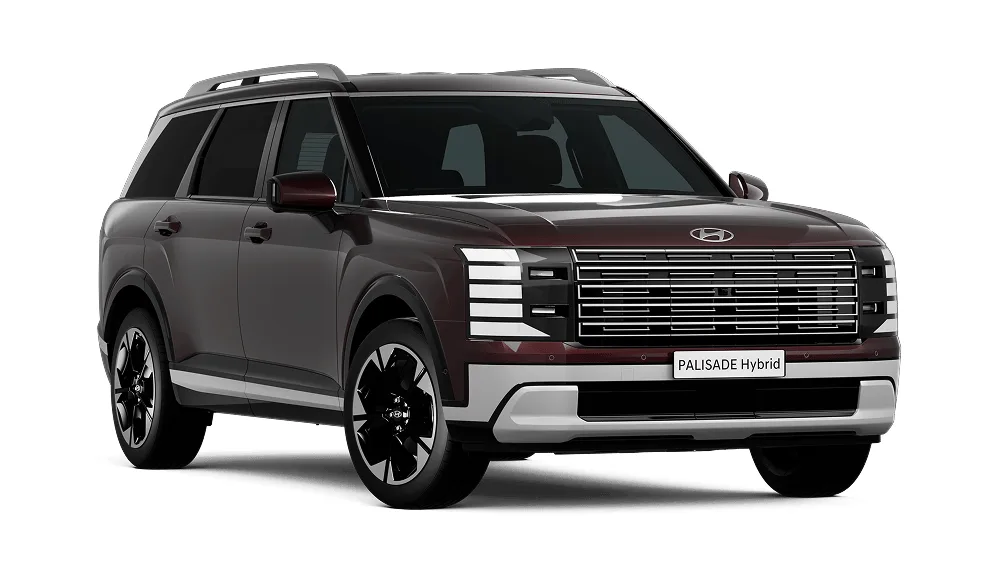
Image credit: Hyundai Australia
Standard equipment on the XRT Pro leans toward the pointy end of the range. Hyundai fits black synthetic leather trim on all three rows, heated and ventilated front seats, a heated steering wheel, dual 12.3-inch displays across the dash (one touchscreen, one digital cluster), a 14-speaker Bose sound system, a single sunroof, wireless smartphone charging and a full-size alloy spare wheel underneath. The camera system includes the ground-view monitor and the off-road display suite. The eight-seat second row is standard, and unlike the Calligraphy line there is no seven-seat captain-chair option here.
Standard driver assist covers adaptive cruise, lane-keep assist, blind-spot monitoring, rear cross-traffic alert, driver attention monitoring and AEB with junction and cyclist detection. Hyundai has not called out any active-safety deletions on the XRT Pro over the rest of the range, which is a change of tone from the recent GAC Emzoom episode where a cost-driven safety-kit deletion cost the brand more than it saved.
Safety and ANCAP
The second-generation Palisade carries a 5-star ANCAP rating from its 2025 assessment, and Hyundai has confirmed the XRT Pro is covered by the same result. That is worth flagging on a car doing this kind of positioning: the recently-launched rugged large SUV category has had a mixed run at ANCAP, and it matters that Hyundai has not had to run a second submission with the taller ride height and different tyres.
Separately, the Palisade Calligraphy Hybrid remains under a customer-delivery pause tied to recall REC-006585 covering the power-fold third-row seat. The XRT Pro uses the same body, but Hyundai has confirmed the interim over-the-air software fix applies across the LX3 line, and the XRT Pro is not under the same shipping pause as the Calligraphy Hybrid at launch. If you are placing a Calligraphy Hybrid order, that remains the variant to watch. For a full read of what the recall covers and how Bluelink handles the update, see our ANCAP guide and the linked recall article.
How It Compares
At $79,900 before on-roads the XRT Pro walks into an unusually crowded price bracket. On CarSorted the natural cross-shop is not the rest of the Palisade range but the ladder-frame set that Australian families actually walk in to look at with the same budget. Here is how the numbers sit on the current Australian spec.
| Model | From (before on-roads) | Power | Braked tow | Seats |
|---|---|---|---|---|
| Hyundai Palisade XRT Pro | $79,900 | 207 kW | 2,200 kg | 8 |
| Toyota LandCruiser Prado | $72,500 | 150 kW | 3,500 kg | 7 |
| Ford Everest | $56,340 | 154 kW | 3,500 kg | 7 |
| Isuzu MU-X 3.0 LS-M 4x4 | $57,900 | 140 kW | 3,500 kg | 7 |
| GWM Tank 500 | $66,490 | 255 kW (hybrid) | 3,000 kg | 7 |
Current price on CarSorted: Toyota Prado GX Diesel $72,500 RRP, as at 6 Sep 2026; Isuzu MU-X LS-M 3.0L 4x4 $57,900 RRP, as at 26 Aug 2026.
The Palisade XRT Pro is the most expensive car on the shortlist and has the smallest tow rating, but it is the only one with three rows of eight-seat capacity, a car-based ride and a set of factory all-terrain tyres. Everyone else is a body-on-frame diesel or a body-on-frame hybrid with genuine low range. If your family is six kids and the daily is a school run, the Palisade wins. If your family is four kids and a 2.5-tonne caravan, so does the Everest. That is the real segmentation, not the badge.
We have already broken these down in more depth in Prado vs Everest, Everest vs MU-X and Tank 500 vs Prado. Those pages update automatically as pricing shifts, so they are the fastest way to see where the XRT Pro slots after each of the rivals moves.
Warranty and Servicing
Hyundai covers the Palisade with a 5-year, unlimited-kilometre new-vehicle warranty plus roadside assist for the length of the service program. Capped-price servicing and interval detail is set at delivery. It is not the 10-year MG number or the 7-year Kia number, but it is the same term Toyota and Ford offer against the ladder-frame rivals on this shortlist, so it does not disadvantage the Palisade against the natural cross-shop.
The CarSorted Angle: How This Sits Against the Rest of Our Directory
On CarSorted the buyer who lands on the Palisade XRT Pro page is almost never a straight-line Palisade shopper. Our directory data says a Palisade XRT Pro pageview correlates strongly with sessions that also open a Toyota Prado page, a Ford Everest page and a GWM Tank 500 page. That is a real signal: this car is being cross-shopped as the softer, quieter, less capable but more comfortable alternative to a ladder-frame 4WD. Our own best 7-seater guide and best family cars guide already flag the standard Palisade Elite Hybrid at $76,500 as our best-premium 8-seat pick for exactly the same reason: a car that is quiet, spacious, factory-tuned in Australia and returns 6.8 L/100km. The XRT Pro is that car with the off-road spec turned up and the fuel figure turned down.
Line the XRT Pro up on our comparison tool against the Prado or the Everest and the story is clear: cheaper on running cost per kilometre against a full-tank ladder-frame diesel over an urban year, more expensive if the same year is spent towing 2,500kg out of the driveway every weekend. The Palisade XRT Pro vs Prado compare page is the fastest way to see it side-by-side once the XRT Pro row is in the database.
What This Means for Buyers
If you were about to sign for a Palisade Elite Hybrid at $76,500, the XRT Pro is a $3,400 conversation. You give up the 6.8 L/100km hybrid figure and the electric-assist smoothness, and you pick up 25mm of clearance, an e-LSD, a set of all-terrain tyres and an Australian chassis tune. For a family whose weekends are a boat, a caravan under two tonnes, or a graded track to a coastal campsite, that is a straight upgrade. For a family whose weekends are Bunnings and childcare pickup, it is not: keep the hybrid.
If you were about to sign for a Toyota Prado or a Ford Everest, the XRT Pro is the softer alternative that keeps three usable rows, adds a Bose stereo, keeps the quiet freeway ride, and keeps the 5-star ANCAP result on the 2025 test. What it costs you is the last twenty per cent of remote-touring capability: no low range, no locked centre diff, no 3,500kg braked tow, and no 80-litre long-range fuel tank. Only you know whether your calendar actually needs those figures. If the honest answer is once a year, this is a better daily car; if the honest answer is one weekend a month, buy the ladder frame.
Start with our Prado vs Everest comparison, then swing through the Palisade Elite Hybrid directory page and cross-shop it against the numbers below. When the XRT Pro row lands in our database we will link it directly, and the compare tool will show the two side-by-side on price, tow rating, seats and running cost. Until then, the honest test is: does your weekend need low range, or does it need a set of all-terrain tyres and a bit of clearance? Answer that and the choice makes itself.
Disclaimer: Pricing is before on-road costs as published by Hyundai Australia and confirmed across independent Australian motoring outlets on the XRT Pro launch. Actual drive-away prices depend on state stamp duty, registration and any dealer contribution on the day. Off-road angles and clearance are Hyundai Australia claimed figures. Fuel consumption for the XRT Pro has not been published at time of writing. ANCAP rating covers the second-generation Palisade from the 2025 assessment. Braked tow rating requires the Hyundai Genuine tow accessory kit. Rival pricing is sourced from the current Australian specifications in the CarSorted database at time of publication and will move as manufacturers update their price lists.