Isuzu MU-X vs Toyota Fortuner
Two ladder-frame seven-seaters built off utes. One of them left the showroom in April 2026, and that changes the whole answer.
Specifications and pricing correct at time of publishing. Prices are RRP before on-road costs unless stated otherwise. Always confirm with the manufacturer or dealer before purchasing.
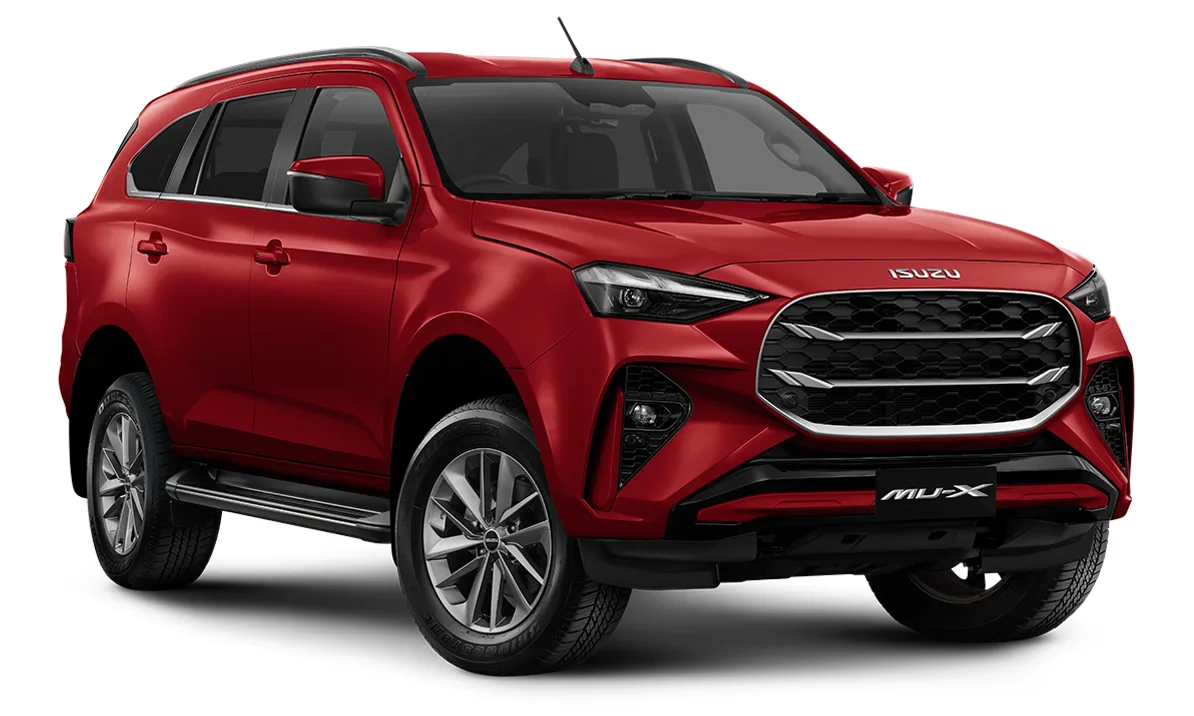
Isuzu MU-X X-TERRAIN 3.0L 4x4
From $76,490 drive-away
7-Seat 4WD
3.0L Turbo-Diesel
140kW
7.6L/100km
5★ ANCAP, tested 2022
311L (7 seats up)
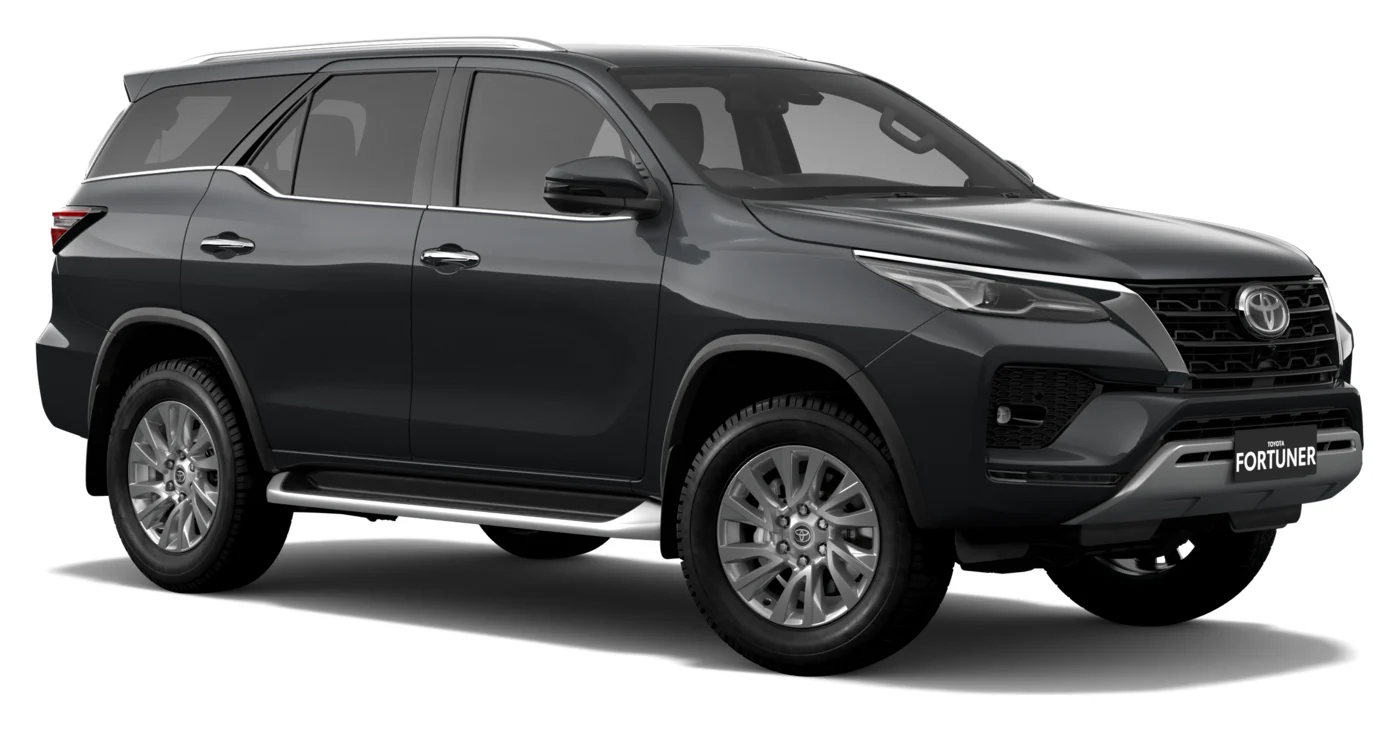
Toyota Fortuner Crusade
Withdrawn from sale April 2026
7-Seat 4WD
2.8L Turbo-Diesel
150kW
7.6L/100km
5★ ANCAP, tested 2019 (expired Dec 2025)
Not published
Price Breakdown
Start with the honest problem: neither of these two has a straightforward price in September 2026, and for opposite reasons.
Toyota withdrew the Fortuner. Its model page on toyota.com.au now carries a banner reading that the Fortuner has been discontinued from April 2026 and is not available for purchase, the nameplate is gone from Toyota's all-vehicles range list, and the drive-away widget on every grade returns "currently unavailable". Toyota publishes no price for it today, at all. We are not going to invent one.
Isuzu has the reverse problem. It sells the MU-X, but it does not publish a recommended retail price for the current 25.5MY range. What it publishes is a set of national drive-away offers covering four of the nine variants. So the table below shows exactly what Isuzu prints and nothing else.
Isuzu MU-X 25.5MY, diesel, as priced by Isuzu
| Variant | Engine | Drive | Price |
|---|---|---|---|
| MU-X LS-M | 2.2L diesel | 4x2 | $49,990 drive-away |
| MU-X LS-M | 2.2L diesel | 4x4 | Not published |
| MU-X LS-M | 3.0L diesel | 4x4 | Not published |
| MU-X LS-U | 2.2L diesel | 4x4 | Not published |
| MU-X LS-U | 3.0L diesel | 4x4 | Not published |
| MU-X LS-T | 2.2L diesel | 4x4 | $69,990 drive-away |
| MU-X LS-T | 3.0L diesel | 4x4 | Not published |
| MU-X X-TERRAIN | 3.0L diesel | 4x4 | $76,490 drive-away |
| MU-X LS-T TOUR MATE | 3.0L diesel | 4x4 | $79,990 drive-away |
Price basis, Isuzu: those four figures are drive-away, for private, ABN and business fleet customers only, and include twelve months registration, CTP, dealer delivery and statutory charges. Metallic, mica and pearl paint is $695 extra except on the X-TERRAIN, where it is already in the price. The offer runs to 30 September 2026 unless extended or varied. Check it is still live before you use it as your benchmark.
Toyota Fortuner, diesel
| Variant | Engine | Drive | Price |
|---|---|---|---|
| Fortuner GX | 2.8L diesel | 4x4 | No longer published |
| Fortuner GXL | 2.8L diesel | 4x4 | No longer published |
| Fortuner Crusade | 2.8L diesel | 4x4 | No longer published |
Price basis, Toyota: there is no current one. The most recent Fortuner prices Toyota Australia still publishes anywhere are the 2020 launch figures in its own pressroom, $49,080 for the GX, $54,350 for the GXL and $61,410 for the Crusade, described there as manufacturer's recommended retail prices excluding statutory charges and other on-road costs. Those are six years old and they are not what a 2026 Fortuner sold for. Treat them as history, not as a guide.
The practical upshot for a buyer: the Fortuner is now a used-car decision, and the only prices that matter to you are the ones in front of you on a used lot. The MU-X is a new-car decision, and the figure to anchor on is a drive-away number rather than a list price you then have to add several thousand dollars to.
Safety Rundown
Both hold five stars, and the two ratings are not the same thing.
The MU-X carries five stars with a 2022 datestamp, which expires in December 2028 and applies to all variants built from July 2022. ANCAP combined additional 2022 frontal tests, run after Isuzu revised the driver knee airbag and instrument panel, with results from 2020 and 2021. Category scores are 86 percent adult occupant protection, 85 percent child occupant, 69 percent vulnerable road user and 84 percent safety assist.
The Fortuner carries five stars with a 2019 datestamp, and that rating expired in December 2025. ANCAP lists it as an old model. Its scores read higher in two categories, 95 percent adult occupant and 88 percent vulnerable road user, against 84 percent child occupant and 78 percent safety assist. Do not read those as beating the Isuzu. They were awarded under a different, older protocol against different requirements, and a 2019 result is not comparable with a 2022 one. Worth knowing too: the Fortuner's rating was never based on crash tests of a Fortuner. ANCAP applied results from the HiLux after Toyota supplied technical information showing they carried across.
One more thing to carry into a dealership. Toyota's own Fortuner page still advertises a "5 star ANCAP rating" with no year and no expiry next to it, while ANCAP's own page for the car says the rating expired in December 2025. Both statements are technically defensible and only one of them tells you what you need. The car was rated five stars, in 2019, and that rating is no longer current.
Feature Showdown
This is where the two separate properly, and not because of what the cars do. It is because of what the makers publish.
The MU-X is rated to 3,500kg braked and 750kg unbraked, with a 350kg maximum tow ball download, on every variant in the range. The 3.5-tonne figure is conditional: Isuzu requires a genuine tow bar kit and an electronic brake controller. It also publishes GVM 2,800kg on all 4x4s and a GCM of 5,900kg across the whole range, plus a printed payload per variant, 605kg on the X-TERRAIN through to 715kg on the LS-M 2.2 4x4.
The Fortuner is rated to 3,100kg braked and 750kg unbraked with a GVM of 2,800kg. And that is where Toyota's published towing data stops. It prints no GCM, no maximum tow ball download and no payload figure, only the sentence that payload is GVM less kerb weight. It also publishes no ground clearance, no wading depth and no approach, departure or ramp-over angles for the Fortuner. Isuzu publishes all of them: 235mm of clearance on the 4x4 grades, 800mm of wading depth at a steady 7km/h, and a 29.2 degree approach, 26.4 degree departure and 23.1 degree ramp-over on the X-TERRAIN.
The 3,500kg number deserves a closer look
Work the MU-X's own published figures and the headline tow rating gets tight fast. GCM is 5,900kg. Hitch a 3,500kg trailer and the car itself may only weigh 2,400kg, which is 400kg below its own 2,800kg GVM. An X-TERRAIN has a 2,195kg kerb weight, so that leaves 205kg for people, fuel you have already counted, luggage, accessories and the tow ball download. A 3,500kg van sitting at a typical ten percent ball weight is putting 350kg on the hitch on its own. The sums do not close.
That is not an Isuzu failing, it is how nearly every 3.5-tonne-rated ute-based wagon in Australia works, and the lighter grades have more room to play with: the LS-M 2.2 4x4 has a 2,085kg kerb and the 4x2 is 1,995kg. The point is that you can check it, because Isuzu prints the four numbers you need. With the Fortuner you cannot do the same arithmetic at all, because Toyota never published a GCM. Put your actual van and your actual family into our towing and payload planner before you sign anything, whichever one you are looking at.
Drivetrain
Both run a four-cylinder turbo-diesel through a six-speed automatic, and both are rated at exactly 7.6L/100km on the ADR 81/02 combined cycle. Same fuel bill on paper, same 80-litre tank, so roughly the same range between fills.
The Fortuner has the bigger engine and it shows in the numbers. Toyota's 1GD-FTV 2.8-litre makes 150kW at 3,000 to 3,400rpm and 500Nm from 1,600 to 2,800rpm. Isuzu's 4JJ3-TCX 3.0-litre makes 140kW at 3,600rpm and 450Nm from 1,600 to 2,600rpm. That is 10kW and 50Nm to the Toyota, and it is the one genuine dynamic advantage the Fortuner holds. Under a heavy trailer on a long climb, 50Nm is not nothing.
Isuzu also sells a 2.2-litre alternative, the RZ4F-TC, with 120kW and 400Nm and an eight-speed automatic rather than the 3.0-litre's six. It is the more efficient engine, at 6.4L/100km in 4x2 and 6.7L/100km in 4x4, and it carries the same 3,500kg braked rating. It also gives up roughly five degrees of approach angle to the 3.0-litre on the same grade, which is published rather than inferred, so the cheaper engine is not simply a smaller version of the same car off-road.
Both are part-time 4x4 with a dual-range transfer case. Isuzu's Terrain Command gives you 2-High, 4-High and 4-Low with shift on the fly up to 100km/h, plus a rear differential lock and Rough Terrain Mode, and all of that is standard from the base LS-M 4x4 upward. Toyota's Fortuner is part-time 4x4 with a rear diff lock standard on GX, GXL and Crusade, and downhill assist on GXL and Crusade only.
Space & Comfort
Both seat seven as standard on every grade. The Isuzu is the bigger car by a little in every direction that matters: 4,860mm long against 4,795mm, 1,870mm wide against 1,855mm, and a 2,855mm wheelbase against 2,745mm. That extra 110mm between the axles is where a third row lives or dies.
Isuzu publishes the cargo numbers and they are good for the class: 311 litres behind the third row, 1,119 litres with the third row folded flat, and 2,138 litres with the second and third rows down. It also prints 915mm of second-row legroom and 850mm in the third, plus third-row air vents with their own controls, outer armrests with cup holders and three-point belts in every seating position including the centre.
Toyota publishes no cargo volume for the Fortuner. Not behind the third row, not with the rows folded. The spec sheet has no cargo row at all. What it does publish is the mechanism, and it is the thing to understand before you buy one: the Fortuner has split side-stowable third-row seats. They do not drop into the floor, they swing up and clip against the side windows. You get a flat-ish floor, but the seats are still in the car, eating into the width of the load bay and the rear three-quarter vision. The MU-X's third row folds flat into the floor, which is why it can quote a 1,119-litre figure with a straight face.
If you are going to use all seven seats regularly and still want to put luggage behind them, the Isuzu is the more honest seven-seater. If the third row is an occasional thing, both are fine, and the Fortuner's second row does tip and tumble in a 60:40 split for access.
True Cost to Own
Isuzu covers the MU-X with a six-year, 150,000km warranty that transfers to subsequent owners. Toyota covered the Fortuner with five years and unlimited kilometres, extending the engine and driveline cover to seven years if you kept servicing inside the Toyota network. Unlimited kilometres suits a high-mileage tourer; six years suits someone who keeps a car a long time and does not do the distance. Call it even, and note that a used Fortuner has already spent some of its five.
Servicing is the clearer gap, and it is not close. The MU-X runs 15,000km or twelve-month intervals at $469 a service under Isuzu's flat-price program, which covers the first five services to five years or 75,000km. That is $2,345 to get to 75,000km. The Fortuner runs 10,000km or six-month intervals, so the same 75,000km takes about eight visits rather than five, before you count the price of each one. Toyota's service pricing calculator now needs a registration or VIN before it returns a figure, and with the model discontinued there is no published dollar amount for a Fortuner service any more, so we are not printing one.
Isuzu's roadside assistance is worth reading properly rather than taking off the badge. It is advertised as up to seven years, but it runs thirteen months at a time and resets for another thirteen every time a participating Isuzu dealer performs a scheduled service. Skip a service at the dealer and the cover lapses. That is a real condition, not fine print you can ignore.
Dealer network still favours Toyota, and for remote-area touring that is a genuine argument. Parts and knowledge for a HiLux-derived Fortuner exist in places where other brands do not. Against that, Isuzu UTE's network and the D-Max-derived aftermarket have grown enormously, and a discontinued model's parts supply is a question that only gets harder with time.
CarSorted Data Insight
Run the two spec sheets side by side and the most striking difference is not a performance number. It is how much each maker is prepared to tell you. Isuzu publishes GVM, GCM, kerb, payload, tow ball download, wading depth and all three off-road angles, per variant, for nine variants. Toyota publishes GVM, kerb and a braked tow rating, and stops. On a vehicle whose entire purpose is carrying and pulling heavy things, that asymmetry is the story. It is also why the MU-X is easier to set up legally: you can prove your rig works on paper before you spend money on it.
What changed, and why this comparison reads differently now
For most of the last decade the MU-X and the Fortuner were the two obvious value entries in the seven-seat 4WD wagon class, sitting under the Prado and the Everest and doing ninety percent of the job. Toyota ended that in April 2026. The Fortuner is not on the Australian price list any more, and the nameplate has moved into Toyota's pre-owned bucket alongside the Tarago and the Aurion.
So if you arrived here comparing two new cars, there is only one new car. The real decision is either MU-X versus something else new, or MU-X versus a used Fortuner. Both are reasonable. A late facelift Fortuner is a genuinely tough, proven thing and Toyota's remote-area support is not a marketing line. Just go in with your eyes open about the expired rating, the missing published tow data and the six-monthly service schedule.
Who should buy which?
Buy the Isuzu MU-X if: you want a new seven-seat 4WD you can still order, you tow anything heavy, you want the numbers published so you can check your rig against them, and you would rather visit a workshop five times in 75,000km than eight. The 3.0-litre LS-U or LS-T is the tourer's pick; the 2.2-litre is the efficiency pick and keeps the 3.5-tonne rating.
Look at a used Toyota Fortuner if: you want the 2.8-litre's extra 50Nm, you travel where the Toyota network is the nearest help for hundreds of kilometres, and you are buying on a used price that reflects a discontinued model. Do not pay a new-car premium for a nameplate that left the showroom.
Skip both if: you need the full 3.5 tonnes with a loaded family aboard. At that point you are shopping GCM, and these wagons run out of it before the tow rating does.
Compare both on CarSorted. See also: Everest vs MU-X | Prado vs Everest | D-Max vs HiLux.
The Verdict
There is a fact that settles most of this before any number gets compared: Toyota Australia withdrew the Fortuner from sale in April 2026, and its own model page now says so. If you are shopping new, the MU-X is the only one of these two you can order, and it happens to be the better tow vehicle anyway, with 3,500kg braked against 3,100kg and a published 5,900kg GCM the Fortuner never had. The Fortuner's answer is its 2.8-litre engine, which makes 150kW and 500Nm against the Isuzu's 140kW and 450Nm, and Toyota's dealer network. If you are looking at a used Fortuner, and plenty of people are, go in knowing two things. Its five-star ANCAP rating carries a 2019 datestamp and expired in December 2025, and Toyota publishes no GCM, no tow ball rating, no ground clearance and no payload number for it, which makes a legal tow setup much harder to check on paper than it is with the Isuzu.
Disclaimer: All information in this comparison was believed to be correct at the time of publishing (17 September 2026). Prices are manufacturer recommended retail prices (RRP) and may vary by state, dealer, and options. Driveaway costs include estimated on-road costs for Victoria. Fuel economy figures are WLTP/ADR combined cycle. Specifications can change without notice. Always verify with the manufacturer before making a purchase decision. CarSorted does not accept payment for recommendations.
Published by CarSorted Editorial Team · 17 September 2026
Comments (0)
Sign in to join the conversation
No comments yet. Be the first!