Tesla Model Y vs Kia EV3
$58,900 vs $58,600. Almost the same money, two very different cars. Australia's best-selling electric SUV against a small SUV that goes further on a charge.
Specifications and pricing correct at time of publishing. Prices are RRP before on-road costs unless stated otherwise. Always confirm with the manufacturer or dealer before purchasing.
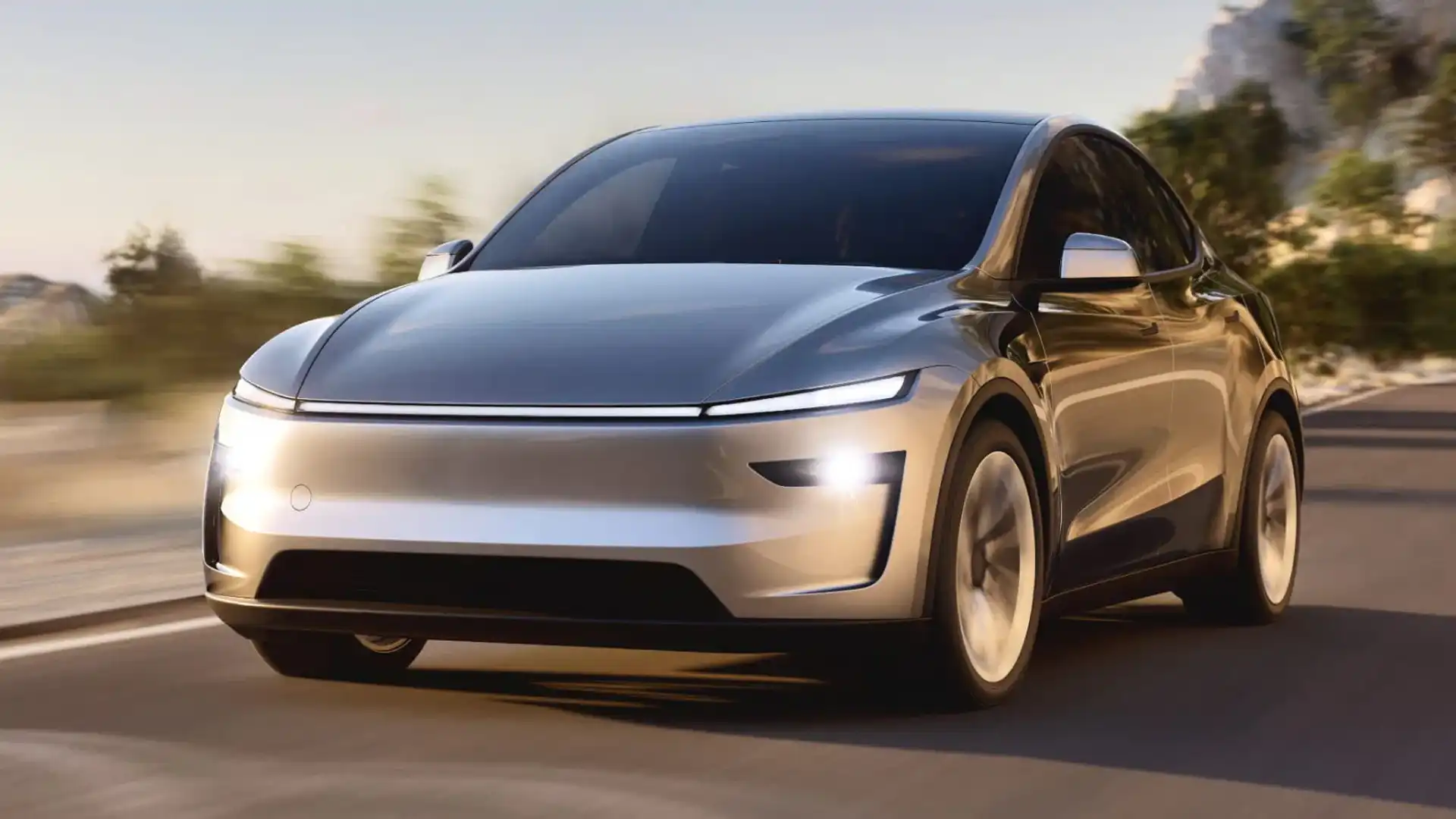
Tesla Model Y Rear-Wheel Drive
From $58,900
Mid-size Electric SUV
Single Motor (RWD)
255kW
466km WLTP
5★ ANCAP (2025)
854L
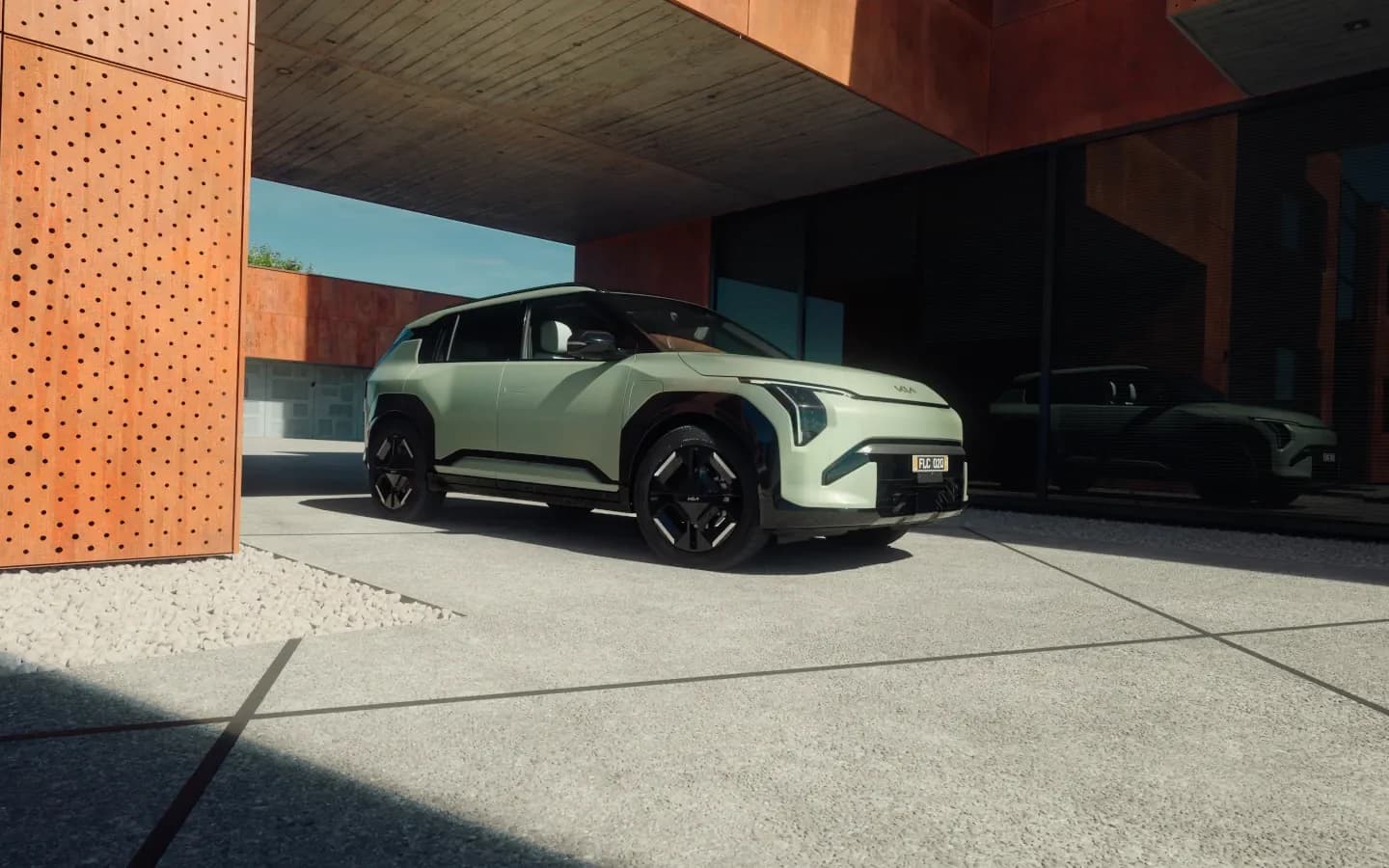
Kia EV3 Earth Long Range
From $58,600
Small Electric SUV
Single Motor (FWD)
150kW
563km WLTP
5★ ANCAP (2025)
460L
Price Breakdown
This is one of the more interesting price coincidences on the market right now. Tesla lists the Model Y Rear-Wheel Drive at $58,900 and Kia lists the EV3 Earth Long Range at $58,600. Three hundred dollars apart, and one of them is a mid-size SUV while the other is a small one. That is the whole reason this comparison exists.
Check the basis before you compare anything, because the two brands quote differently on the way to the driveway. Tesla's $58,900 is the vehicle price only. On top of that sit a $400 order fee and a $1,400 delivery fee, then stamp duty, registration, CTP and plates. Tesla's own configurator worked a NSW example out to $64,115 drive-away for the Rear-Wheel Drive. Kia's prices are recommended retail before on-road costs in the usual way, and Kia is separately running estimated drive-away offers through September 2026 that land the Earth at $58,990 drive-away, which is only $390 above its own list price. That is a campaign number, not arithmetic, so check it is still live when you buy.
Tesla Model Y (single-speed, 400V)
| Variant | Drive | Price (RRP) | WLTP range |
|---|---|---|---|
| Rear-Wheel Drive | RWD | $58,900 | 466km |
| Long Range AWD | AWD | $68,900 | 600km |
| Performance AWD | AWD | $89,400 | 580km |
Kia EV3 (single-speed, front-wheel drive)
| Variant | Battery | Price (RRP) | WLTP range |
|---|---|---|---|
| Air Standard Range | 58.3kWh | $47,600 | 436km |
| Air Long Range | 81.4kWh | $53,315 | 604km |
| Earth Long Range | 81.4kWh | $58,600 | 563km |
| GT-Line Long Range | 81.4kWh | $63,950 | 563km |
Read that second table and the obvious question is why you would spend $58,600 on an EV3 at all. The Air Long Range is $5,285 cheaper and travels further, 604km against 563km, because it rides on smaller wheels and carries less equipment. The Earth buys you 19-inch alloys, artificial leather, heated and ventilated front seats, a heated wheel, a powered driver's seat and a smart tailgate. Worth having, but the value pick in the EV3 range is not the one that happens to match the Tesla on price.
Safety Rundown
Both cars hold a current five-star ANCAP rating awarded in 2025, and both ratings run to December 2031. That is where the similarity stops, because the underlying scores are not close.
| ANCAP (2025) | Model Y | EV3 |
|---|---|---|
| Adult occupant | 91% | 83% |
| Child occupant | 95% | 86% |
| Vulnerable road user | 86% | 78% |
| Safety assist | 92% | 81% |
The Model Y is ahead in all four categories, and its 92 percent safety assist score is one of the strongest results ANCAP has published under the 2023 to 2025 protocols. ANCAP's rating applies to all five-seat, two-row Model Y variants built from February 2025 and on sale from May 2025, which is the facelifted car Tesla sells here now. The EV3's rating covers all variants.
None of that makes the Kia unsafe. Eighty-three percent adult occupant protection is a solid result and the EV3 arrives with seven airbags including a front centre bag, autonomous emergency braking that covers cars, pedestrians, cyclists and junction turning, blind-spot collision avoidance, rear cross-traffic collision avoidance and lane keeping with lane following assist, all standard from the base Air. The gap is real but it is a gap between good and excellent, not between safe and unsafe.
One practical note in the Kia's favour: the EV3 does not get a surround-view camera on Air or Earth, which is an odd omission on a car near $60,000 and something to weigh if you park in tight spaces a lot.
Feature Showdown
Tesla and Kia have close to opposite philosophies about how a car interior should work, and this is where a test drive matters more than any spec sheet.
The Model Y puts almost everything on one central screen. No instrument cluster, no stalk-heavy column, minimal switchgear. People who live with it stop noticing within a week. People who hate it never stop hating it. What the Tesla does give you that nothing else in the segment matches is the software: over-the-air updates that genuinely add features, a navigation system that plans charging stops for you, and the Supercharger network, which remains the least stressful way to do a long drive in an electric car in Australia.
The EV3 is the more conventional car and, for a lot of buyers, the more comfortable one. It runs a 12.3-inch driver display, a 5-inch climate strip and a 12.3-inch touchscreen in one panoramic housing, keeps physical controls for the things you touch while moving, and adds Kia Connect with over-the-air updates. Vehicle-to-load is standard inside and out across the range at up to 3.6kW, so the EV3 will run a fridge, a projector or power tools off the battery. Tesla does not offer vehicle-to-load on the Model Y in Australia.
Step up through the EV3 range and the Earth adds heated and ventilated front seats, a heated steering wheel, artificial leather and a powered driver's seat. That is the whole point of a grade walk, and Tesla does not really have one. You buy a Model Y in one specification and the choices left are paint, wheels, interior colour and the driver-assistance software. Neither Model Y has a head-up display. On the $58,600 Earth against the $58,900 Model Y, the Kia hands you more equipment for the money and the Tesla hands you more car, which is a different kind of value.
Drivetrain
The Model Y Rear-Wheel Drive runs a single rear motor making 255kW and 340Nm, good for 5.9 seconds to 100km/h and a 201km/h top speed. The EV3 Earth Long Range has a single front motor making 150kW and 283Nm, 7.9 seconds to 100km/h, and tops out at 170km/h. Two seconds is a big margin at this price, and rear-wheel drive gives the Tesla a cleaner, more planted feel when you push it. The EV3 is brisk rather than quick, which is honestly all most small SUVs need.
Range flips it. The Kia carries an 81.4kWh battery against the Tesla's 60kWh (57.5kWh usable) and claims 563km WLTP to the Model Y's 466km. That is 97km, or roughly a fifth more, from a smaller and cheaper car. Efficiency is the reason: the EV3 is shorter, narrower and lighter, and it is not dragging a 255kW motor around.
Charging swings back hard to Tesla. The Model Y peaks at 175kW on DC and our data has it doing 10 to 80 percent in about 16 minutes. The EV3 peaks at about 101kW, and Kia quotes 10 to 80 percent in approximately 29 minutes on a 350kW charger, or 55 minutes on a 50kW unit. On a single long drive the EV3's bigger battery means fewer stops, but each stop takes noticeably longer, and you are relying on public networks rather than Superchargers. Both take 11kW and 10.5kW respectively on AC, so overnight home charging is a non-issue for either.
WLTP is a laboratory number and neither car will hit it on a 110km/h highway run. If you want to sanity-check what these figures mean for your actual commute, our range estimator works from the battery and conditions rather than the brochure.
Space & Comfort
Here is the part this comparison exists for, and there is no polite way to fudge it. These are not the same size of car.
| Dimension | Model Y | EV3 Earth | Difference |
|---|---|---|---|
| Length | 4,792mm | 4,310mm | 482mm |
| Width | 1,982mm | 1,850mm | 132mm |
| Wheelbase | 2,890mm | 2,680mm | 210mm |
| Boot, seats up | 854L | 460L | 394L |
| Boot, seats folded | 2,138L | No data | Not comparable |
| Front boot | 116L | 25L | 91L |
| Braked towing | 1,600kg | 1,000kg | 600kg |
Half a metre of length and 210mm of wheelbase is not a rounding error, it is a segment. The Model Y seats three adults across the back without anyone negotiating, swallows a pram and a weekly shop at the same time, and takes a 1,600kg braked trailer. The EV3's 460 litres is a good boot for a small SUV, and it is bigger than plenty of rivals in its own class, but it is barely more than half the Tesla's. Rear seat space in the Kia is fine for two adults and tight for three.
Kia has done clever things with what it has. The luggage floor sits at two heights so you can choose depth or a flat load lip, there is a 25-litre frunk for cables, and the cabin feels airier than the numbers suggest. But if you are a family of four who go away for a week at a time, the 394-litre boot gap will decide this comparison before anything else does.
The flip side is everything the smaller car is better at. The EV3 is 132mm narrower, which is the difference between comfortable and careful in an older shopping centre car park. It turns tighter, it is easier to place on a narrow street, and at 4,310mm it fits in a standard garage without the shuffle. Plenty of people buy a mid-size SUV they do not need and then spend three years annoyed at parking it.
True Cost to Own
Kia covers the EV3 with seven years and unlimited kilometres, against Tesla's five years and unlimited kilometres. Two extra years of cover is worth real money on a car you plan to keep, and Kia has a large, long-established Australian dealer network to use it at.
Battery cover goes the other way. Tesla warrants the Model Y Rear-Wheel Drive battery for eight years or 160,000km, and the Long Range and Performance for eight years or 192,000km. Kia covers the EV3 battery for seven years or 150,000km. So the Tesla gives you an extra year and an extra 10,000km on the single most expensive component, while the Kia gives you two more years on everything else.
Servicing favours Kia on paper. The EV3 runs 24-month or 30,000km intervals, which is about as relaxed as it gets. The Model Y is on a 20,000km schedule, and Tesla does not run a capped-price servicing program in the way mainstream brands do, so annual costs are harder to predict up front. Neither car will cost much to maintain by petrol standards. There is no oil, no filters and no exhaust on either one.
Energy is the cost that actually shows up every month, and the EV3 wins it. The Kia does more kilometres per kilowatt-hour than the Tesla, so on the same home tariff and the same annual distance it is cheaper to run. Not dramatically, but consistently. Resale is the reverse: the Model Y has among the strongest used demand of any EV in Australia, helped by the badge and the charging network, while Kia is a well-established brand with a solid used reputation that should hold up better than most newcomers.
If you are putting either car on a novated lease, the monthly number and the tax treatment will move the answer more than the sticker does. Our lease calculator is the quickest way to see what each one costs you a fortnight rather than on the windscreen.
CarSorted Data Insight
Pull both model ranges out of our database and the shape of the decision is obvious. Tesla sells the Model Y in one size with three power levels, from $58,900 to $89,400. Kia sells the EV3 in one power level with four equipment levels, from $47,600 to $63,950. Tesla is asking you to choose how fast; Kia is asking you to choose how much kit. The two ranges cross at exactly one point, and that point is the $58,900 Model Y Rear-Wheel Drive against the $58,600 EV3 Earth Long Range.
What makes that crossing worth writing about is that the cheaper Kia in the range is also the better Kia. The Air Long Range costs $53,315 and travels 604km, which is 41km further than the $58,600 Earth and 138km further than the Model Y. If range is what brought you to this page, the variant to look at is not the one that matches the Tesla on price.
The Verdict
Buy the Tesla Model Y if: you need mid-size space, you tow, you do long drives often enough that charging speed and the Supercharger network matter, or you want the quickest car of the two by a clear margin.
Buy the Kia EV3 if: you want more range from a smaller, easier car, you value two extra years of warranty and a real dealer network, and a 460-litre boot covers what you actually carry. Start with the Air Long Range at $53,315 rather than the Earth.
The honest answer is that these two are not really rivals. They are what happens when a well-equipped small SUV and a base-model mid-size SUV meet in the middle of a price list. Work out which size you need first, then argue about the rest.
Compare both on CarSorted. See also: Model Y vs EV5 | EV3 vs EX30 | EV3 vs Atto 3. More from Tesla and Kia.
The Verdict
These two land within $300 of each other and then go in opposite directions. The Model Y is half a metre longer, carries nearly twice the boot, charges much faster and is two seconds quicker to 100km/h. The EV3 Earth Long Range answers with 97km more WLTP range, two extra years of warranty and a car that is genuinely easier to live with in a city. If you regularly carry people and luggage, or tow, the Tesla is the more capable machine and it is not close. If your week is commuting, school runs and the occasional long weekend, the Kia does that job on less energy, in a smaller footprint, with longer cover. And if the $58,600 Earth is more EV3 than you need, the Air Standard Range starts at $47,600, which changes the conversation entirely.
Disclaimer: All information in this comparison was believed to be correct at the time of publishing (17 September 2026). Prices are manufacturer recommended retail prices (RRP) and may vary by state, dealer, and options. Driveaway costs include estimated on-road costs for Victoria. Fuel economy figures are WLTP/ADR combined cycle. Specifications can change without notice. Always verify with the manufacturer before making a purchase decision. CarSorted does not accept payment for recommendations.
Published by CarSorted Editorial Team · 17 September 2026
Comments (0)
Sign in to join the conversation
No comments yet. Be the first!