Key Takeaways
- Eleven nameplates from non-Chinese brands are built in China for Australian showrooms
- Most are EVs. Geely-group brands (Polestar, Volvo, Lotus) and Tesla account for the bulk
- Joint-venture builds: Cupra Tavascan (VW + JAC), Mini Cooper E and Aceman (BMW + GWM), Mazda 6e (Mazda + Changan)
- Korean surprise: the Hyundai Elexio and Kia EV5 are both China-built for Australia
- None of this affects ANCAP ratings. Build origin and crash performance are independent
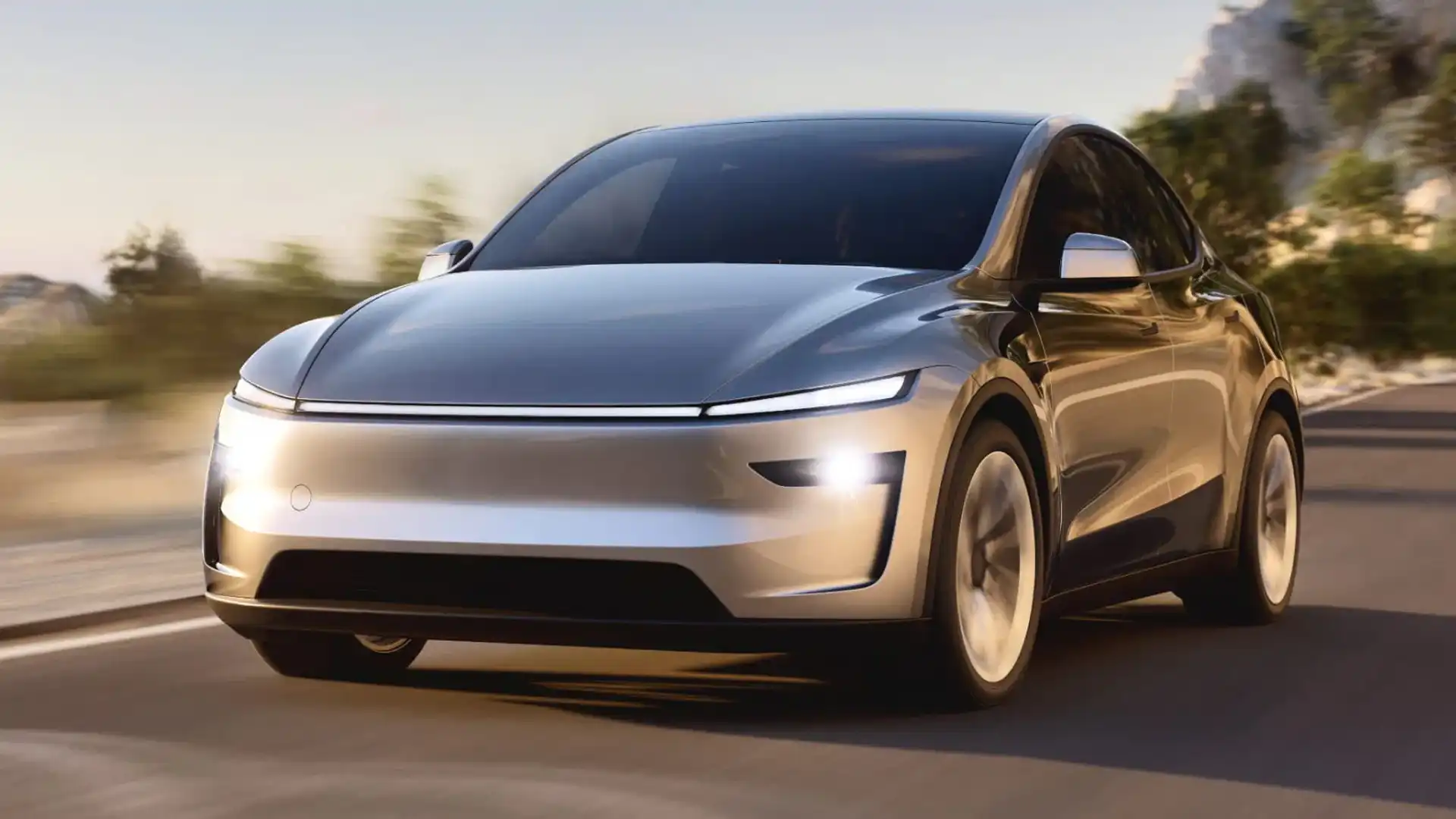
Image credit: Tesla
The arrival of nine new Chinese brands in Australia over 2026 and 2027 has put Chinese-built cars firmly back in the conversation. What gets lost in the noise is how many supposedly American, European or Korean cars are also built in China and have been for years.
Below is the full list of non-Chinese brands selling Chinese-built cars in Australia, ordered loosely from highest sales volume to most surprising. Where it's relevant we've linked the actual variants in our car directory so you can compare them like-for-like against rivals.
1. Tesla Model 3 and Model Y (Shanghai)
Every Tesla Model 3 sold in Australia comes from Tesla's Shanghai Gigafactory. Same with the bulk of the Model Y range: the Premium RWD and Premium Long Range are China-built, while only the Performance variant is sourced from Tesla's plant in Berlin-Brandenburg, Germany.
Tesla is the only Western automaker with a wholly owned production facility in China that operates without a Chinese joint-venture partner. Shanghai went online in 2019 and now produces more cars than Tesla's Fremont plant in California. For Australia specifically, the cost of shipping from Shanghai is one of the reasons Model Y pricing has stayed competitive against the new wave of Chinese rivals.
2. Polestar 2, 3, 4 and 5 (Chengdu, Taizhou, Hangzhou)
Polestar likes to lead with its Swedish design heritage, but every car it sells in Australia is built in China. The brand is majority owned by China's Geely Holding.
- Polestar 2: built in Taizhou, Zhejiang province
- Polestar 3: also Chengdu (and Charleston, USA, for North America)
- Polestar 4: Hangzhou Bay (Zhejiang)
- Polestar 5: Hangzhou
Polestar's recent 31% per-car emissions reduction since 2020 covers all of these plants under its supplier reporting framework.
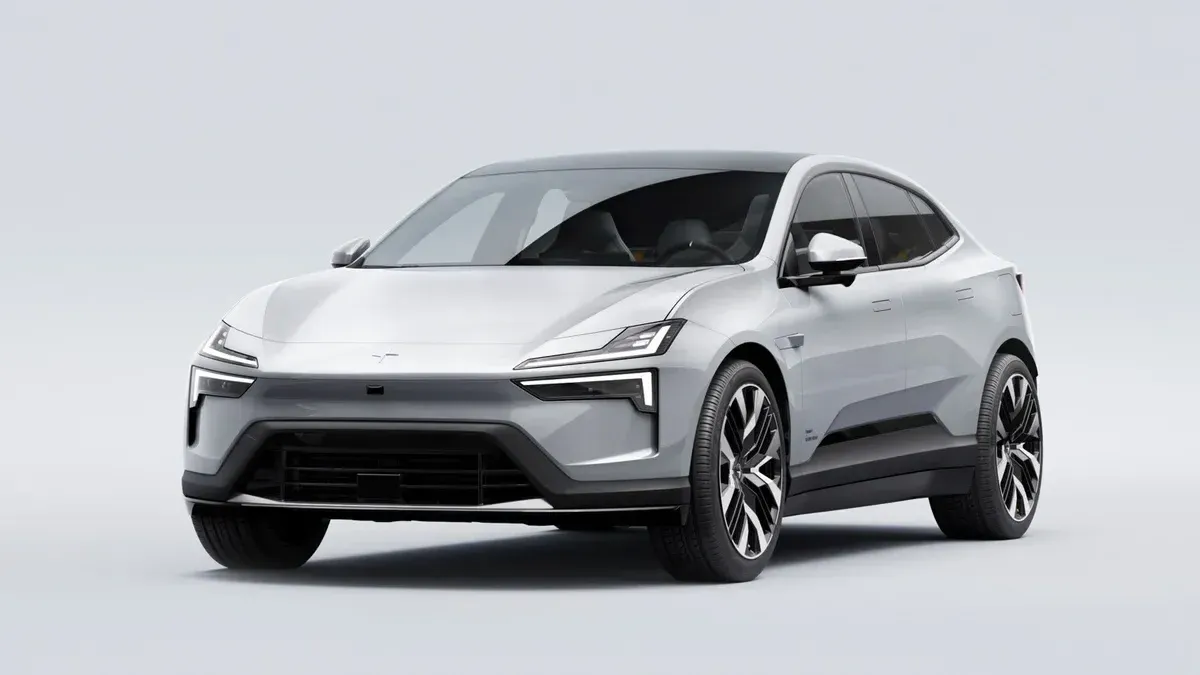
Image credit: Polestar
3. The Volvo Electric Lineup (Daqing, Luqiao, Taizhou)
Same parent company as Polestar (Geely), and the same answer on production: if your Volvo's name starts with E, it's built in China.
- Volvo ES90 sedan
- Volvo EX30 compact SUV
- Volvo EX40 small SUV
- Volvo EX90 large SUV
The latest-generation XC40 and XC60 are also Chinese-built (and in the case of the XC60 that includes both petrol mild-hybrid and T8 Recharge plug-in hybrid versions). The seven-seat XC90 petrol and PHEV stays at Volvo's Torslanda plant in Sweden.
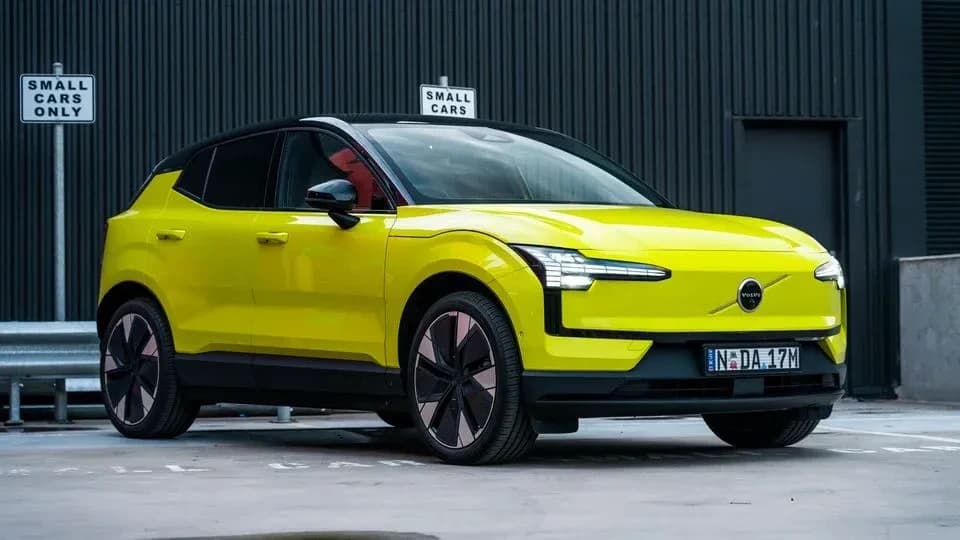
Image credit: Volvo Australia
4. Lotus Eletre and Emeya (Wuhan)
The third Geely brand on this list. The Lotus Eletre SUV and Lotus Emeya sedan are built in a modern facility in Wuhan, Hubei province. The Eletre alone shares its 800V architecture with the Polestar 3.
Lotus still builds the petrol Emira sports coupe in the UK, at the historic Hethel plant in Norfolk, but the electric range that's actually growing the company is now Chinese-built end to end.
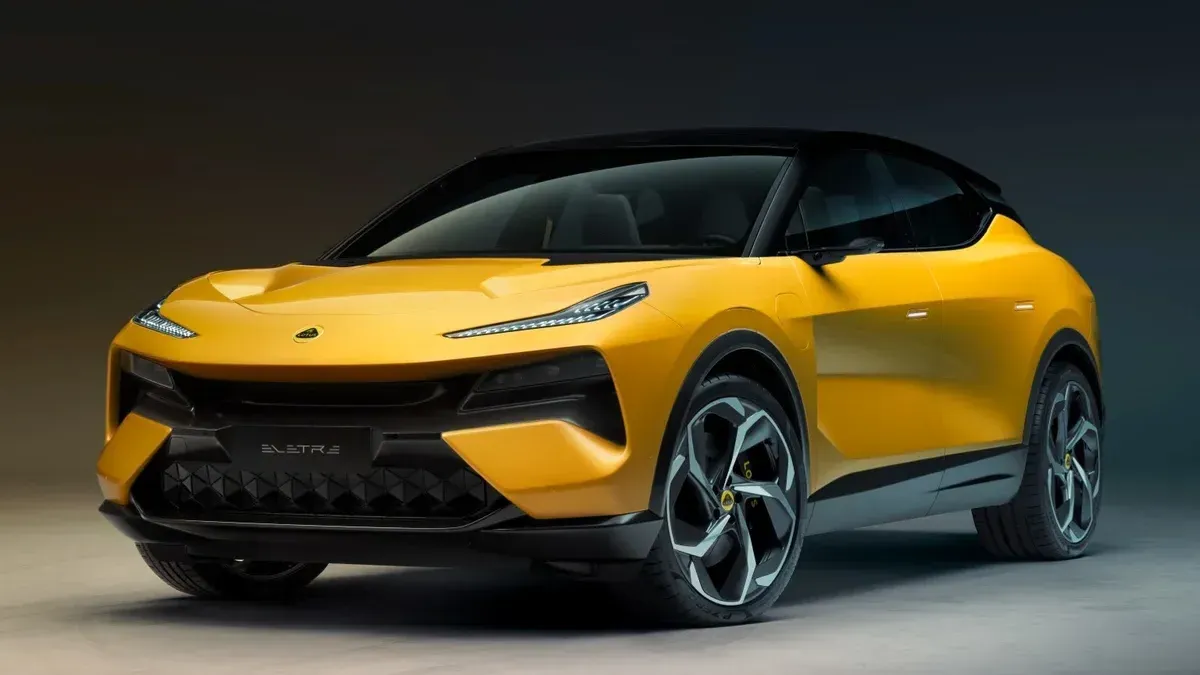
Image credit: Lotus
5. Mini Cooper E, Cooper SE, JCW E and Aceman (Zhangjiagang)
BMW and Great Wall Motors run a joint venture called Spotlight Automotive at a port-side plant in Zhangjiagang, Jiangsu. That's where the electric Mini Cooper E, Cooper SE, Cooper JCW Electric and the Mini Aceman small SUV come from. Petrol-powered Coopers are still built at BMW's Oxford plant in the UK.
The arrangement is interesting because GWM also sells its own brands in Australia (Tank, Cannon, Haval), so a single factory complex on China's east coast is producing cars that compete with each other in Australian showrooms.
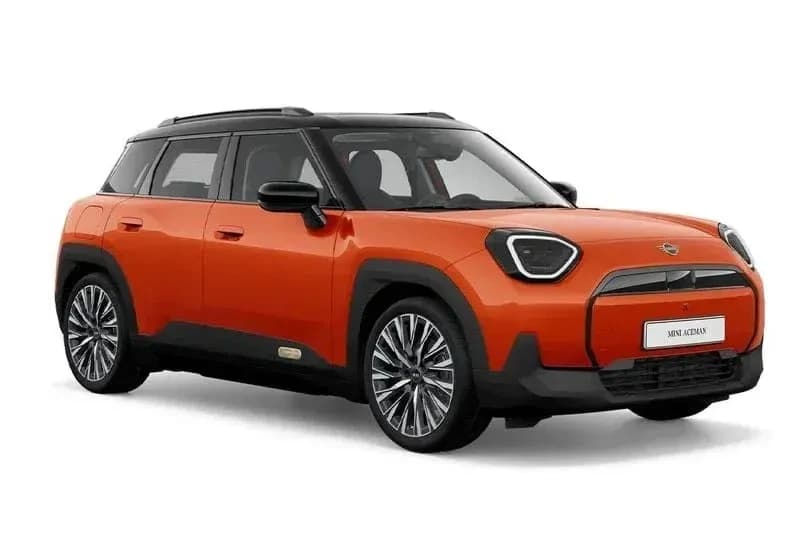
Image credit: Mini Australia
6. Cupra Tavascan (Hefei)
Cupra is the Spanish performance brand owned by Germany's Volkswagen Group. The Cupra Tavascan electric SUV is built at the Volkswagen Anhui factory in Hefei, a joint venture between Volkswagen and JAC Motors. It's the first Cupra ever built outside Europe.
The Tavascan opens at $69,990 RRP against the Model Y RWD's $65,900, so it asks about $4,100 more, with a richer standard feature list for the money. Without the China sourcing, that price would be higher again.
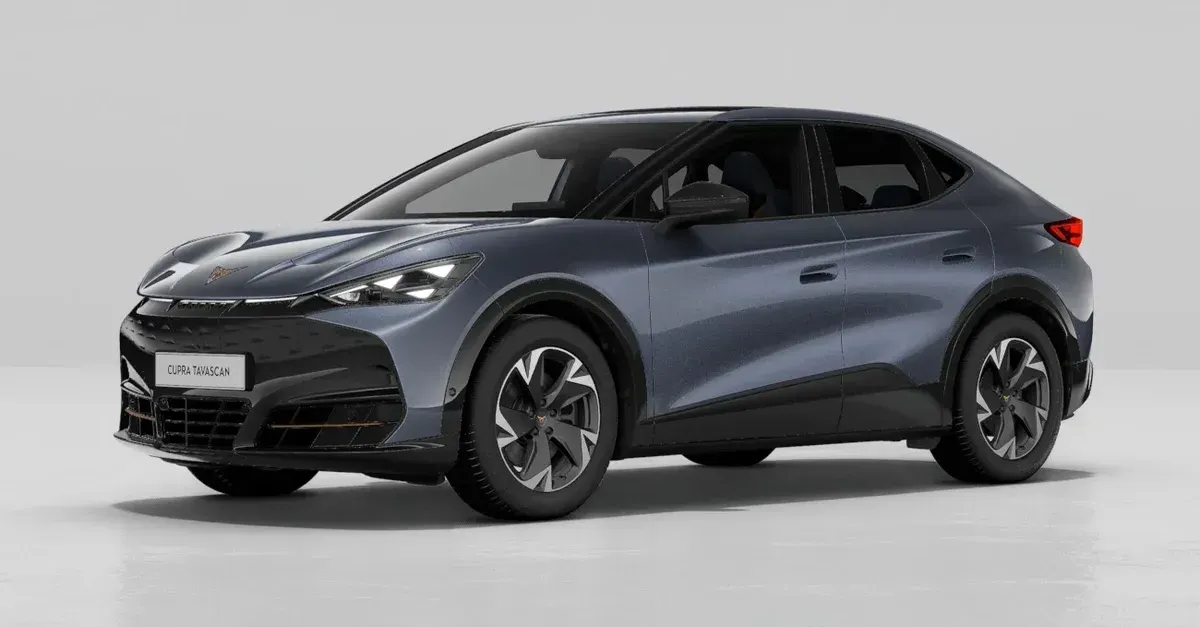
Image credit: Cupra Australia
7. Mazda 6e (Nanjing)
The Mazda 6e looks like a Mazda but underneath, it's the product of Changan Mazda, with the electric platform and drivetrain shared with Changan's Deepal SL03 and SL07 sedans. Built in Nanjing, Jiangsu.
It's a sharper deal than people expect: cheaper than the Tesla Model 3 Standard Range RWD and more powerful than the base BYD Seal. Mazda's CX-6e SUV is on the same Changan-Mazda platform.
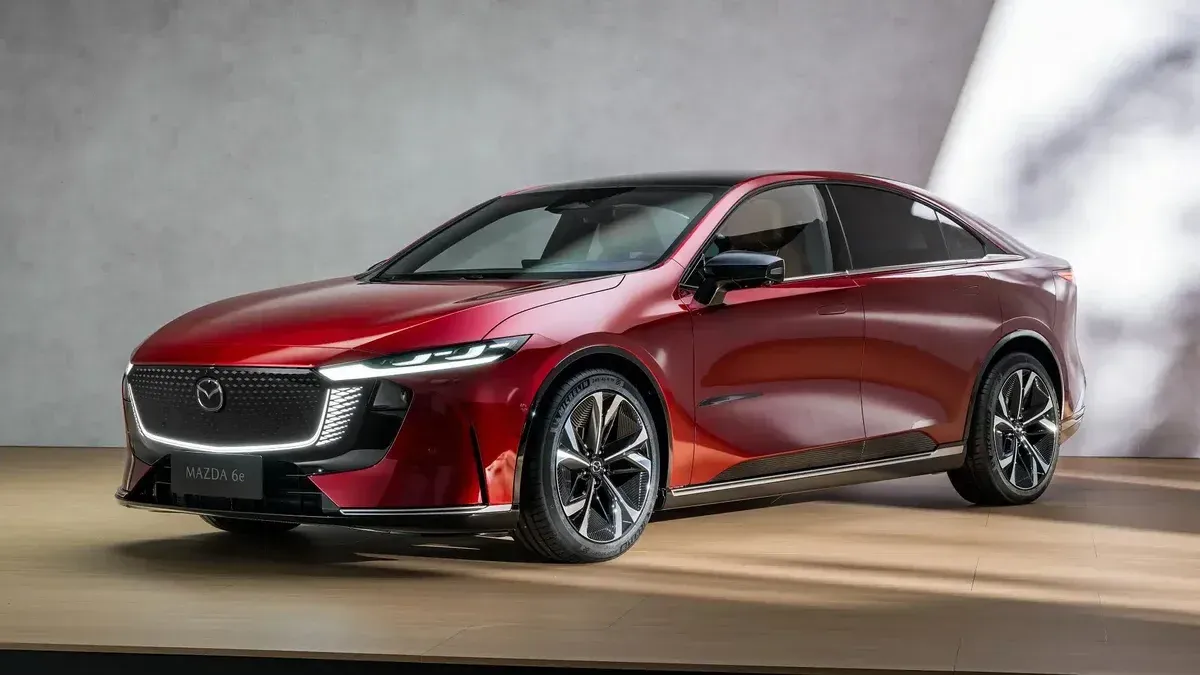
Image credit: Mazda Australia
8. Hyundai Elexio (Beijing)
The first surprise on the Korean list. The Hyundai Elexio is a Tucson-sized electric SUV built at the joint-venture plant operated by Beijing Hyundai (Hyundai + BAIC). It's the first electric Hyundai sourced from China for Australia.
Note this isn't connected to the ICCU warranty extension covering the Korea-built Ioniq 5, Ioniq 6 and Genesis EVs (see our separate ICCU warranty piece). The Elexio uses a different platform.
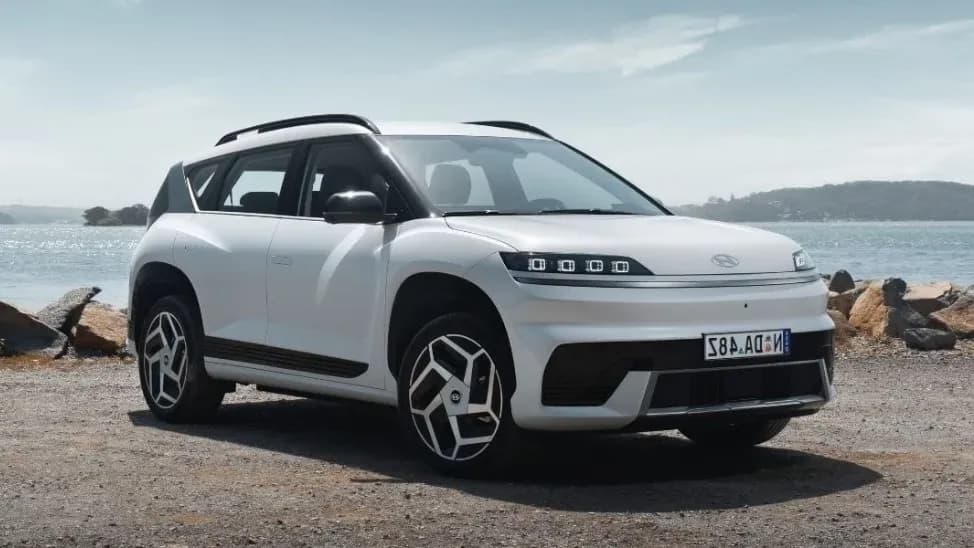
Image credit: Hyundai Australia
9. Kia EV5 (Yancheng)
Kia's first Australian-market model sourced from China. The Kia EV5 is built in Yancheng on the country's east coast, in a joint venture with Jiangsu Yueda. Yueda also part-owns Human Horizons, the company that builds cars under the HiPhi luxury brand for China.
Kia's other electric SUV in Australia, the EV6, is still built in Korea. So is the EV9. The EV5's China build is a deliberate choice to land it under the Tesla Model Y on price.
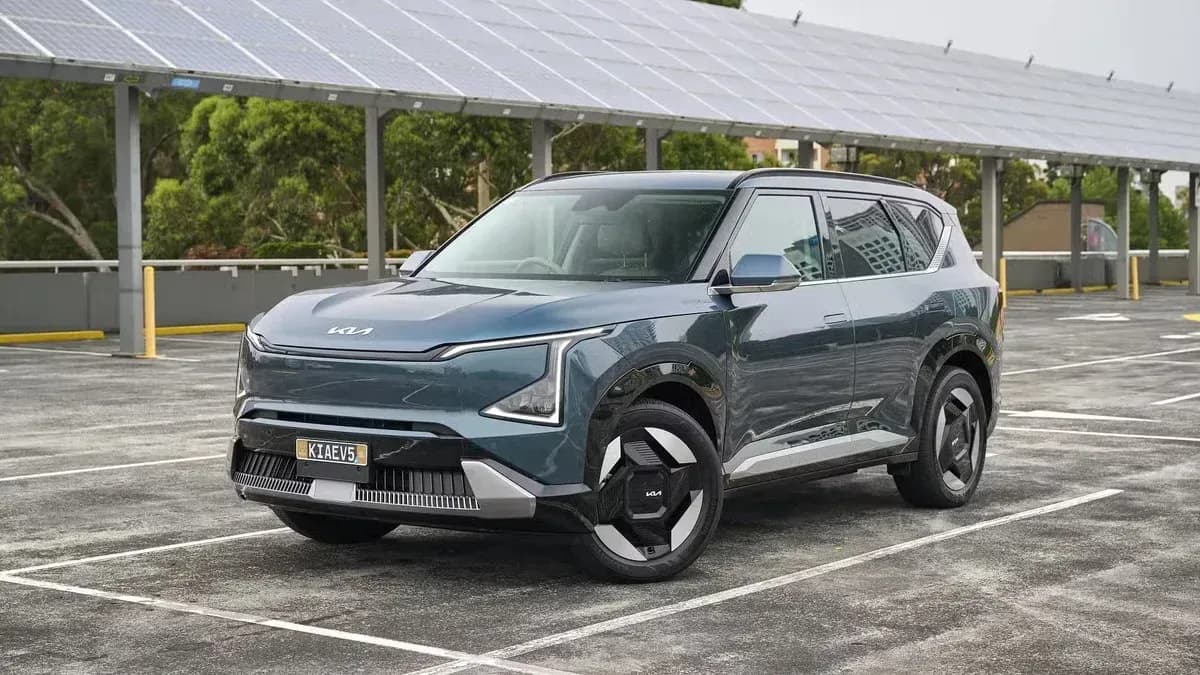
Image credit: Kia Australia
What it actually means for buyers
Most of the "is China-built bad" reflex is outdated. Tesla's Shanghai output is widely regarded as the company's best on quality control. Volvo's Daqing and Taizhou plants run the same automated production lines as their European counterparts. The Volvo EX30 and Polestar models all carry 5-star ANCAP ratings, the same as their European-built siblings.
The more interesting question is pricing. China-built cars typically arrive in Australia $5,000 to $15,000 cheaper than their European-built equivalents would be, which is why the Tesla Model Y, Volvo EX30 and Cupra Tavascan are all priced sharply against locally focused rivals. The wave of new Chinese brands arriving in 2026-2027 will only increase that pricing pressure.
For most buyers the practical takeaway is this: where a car is assembled matters less than the warranty terms, the safety rating, and how it compares against direct rivals on price and equipment. Use our comparison tool to put any of the cars in this list head-to-head.
See also: 9 Chinese Brands Coming to Australia | Hyundai/Kia/Genesis 15-Year ICCU Warranty | Best Electric Cars in Australia 2026
Disclaimer: Build locations are sourced from publicly available manufacturer information at the time of publishing and reflect current production for the Australian market. Some models are produced in multiple plants depending on destination market. Pricing is RRP and excludes on-road costs. Always confirm specs, pricing and country of origin with your local dealer.
Compare these picks side by side
Stack 6 of them on 200+ specs, price, safety and running cost in one view.
Compare all 6 nowFrequently Asked Questions
Are all Tesla Model 3 and Model Y cars in Australia built in China?
Why are Polestar and Volvo built in China?
Is the Mini Cooper still British?
What's the difference between a Chinese-built Volvo and a Swedish-built one?
Is being built in China a problem for ANCAP safety ratings?
New cars, real prices, straight to your inbox
Join the CarSorted mailing list for new-model launches, price drops and drive-away deals, honest reviews, and founding-member pricing on the upcoming CarSorted Pro Report.
- New-model launches
- Price drops & deals
- Honest reviews
No spam, unsubscribe anytime. By subscribing you agree to receive marketing emails.
Disclaimer: All information in this article was believed to be correct at the time of publishing (5 May 2026). Prices are manufacturer recommended retail prices (RRP) and may vary by state, dealer, and options. Specifications, government incentives, and rebates can change without notice. Always verify details with the manufacturer or relevant authority before making a purchase decision. Running cost estimates are based on average Australian driving conditions at 15,000 km/year. CarSorted does not accept payment for recommendations or rankings.
Written by Uzzi, CarSorted Editorial Team · 5 May 2026 · how we research
Comments (0)
Sign in to join the conversation
No comments yet. Be the first!