BYD Sealion 8 vs Tesla Model Y
Seven seats and a petrol tank, or five seats and none. Two very different cars at almost the same money, and the price bases are not the same either.
Specifications and pricing correct at time of publishing. Prices are RRP before on-road costs unless stated otherwise. Always confirm with the manufacturer or dealer before purchasing.
BYD Sealion 8 Dynamic FWD
From $56,990 drive-away
Large 7-seat PHEV SUV
1.5T PHEV, front motor
205kW
103km EV (NEDC) + 60L tank
No ANCAP rating published
270L / 960L / 1,960L
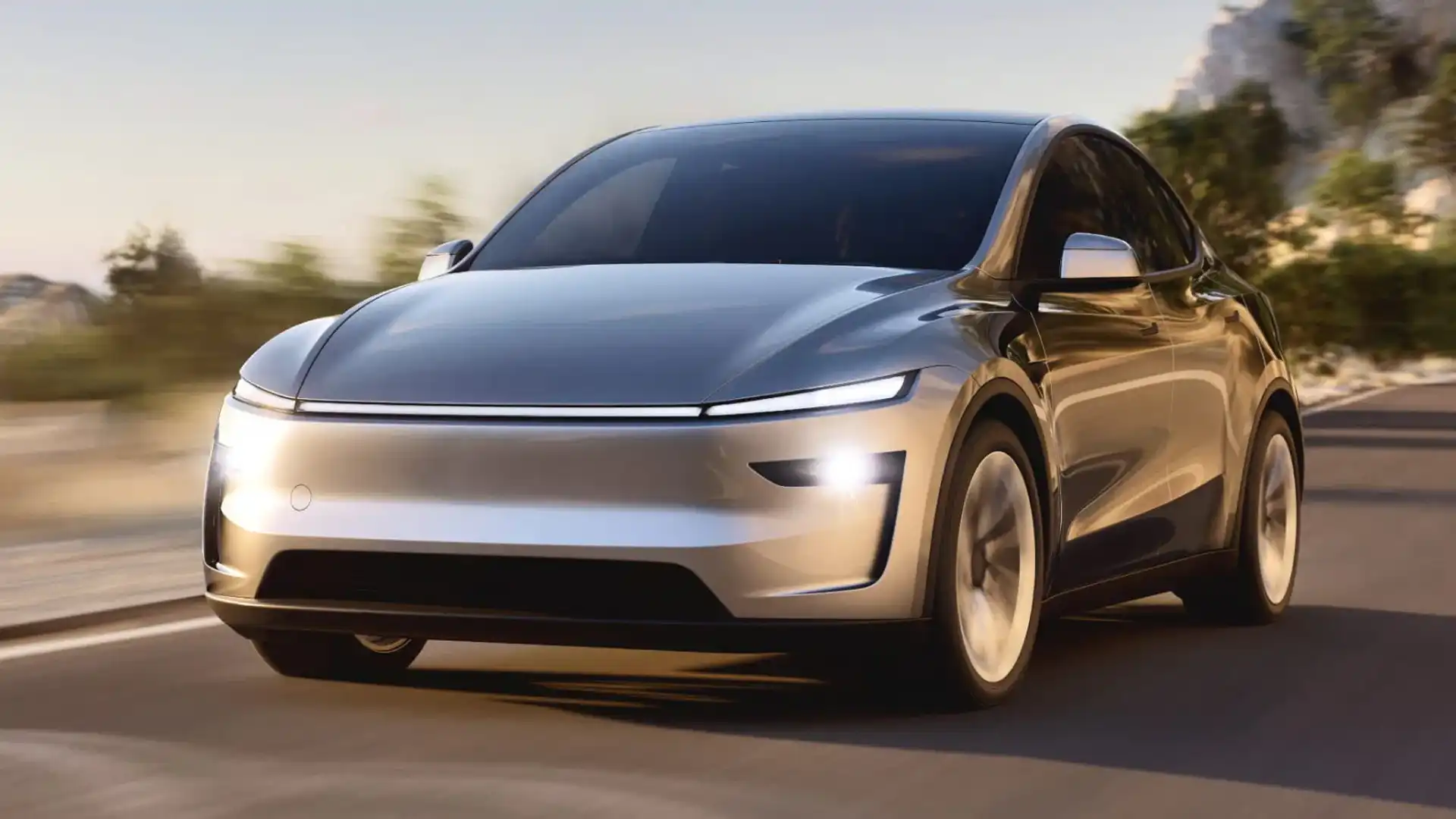
Tesla Model Y RWD
$58,900 before on-roads
Medium electric SUV
Single motor (RWD)
255kW
466km WLTP
5★ ANCAP (2025)
854L + 117L frunk
Price Breakdown
Read the basis, not just the number
These two prices are not the same kind of price and comparing them straight is how people get caught. BYD publishes the Sealion 8 Dynamic FWD at $56,990 drive-away, with free on-road costs, under a campaign covering orders placed between 1 August and 30 September 2026 for delivery by 31 October 2026. Tesla publishes the Model Y RWD at $58,900 before on-road costs. Registration, stamp duty and CTP all still have to go on top of the Tesla, and they vary by state.
So the gap is not $1,910. It is $1,910 plus whatever your state charges to put a $58,900 car on the road, which in most of the country is several thousand dollars. Tesla's own novated lease footnote gives a useful sense of scale: it quotes an estimated drive-away of $96,204 for a Model Y Performance listed at $89,400, a difference of $6,804. Apply something in that neighbourhood and the BYD's real advantage on the road is meaningful rather than marginal.
| Variant | Powertrain | Price | Basis |
|---|---|---|---|
| BYD Sealion 8 Dynamic FWD | PHEV, 7 seats | $56,990 | Drive-away (campaign, free on-roads) |
| Tesla Model Y RWD | EV, 5 seats | $58,900 | Before on-road costs |
| BYD Sealion 8 Dynamic AWD | PHEV, 7 seats | $63,990 | Before on-road costs |
| Tesla Model Y Long Range AWD | EV, 5 seats | $68,900 | Before on-road costs |
| BYD Sealion 8 Premium AWD | PHEV, 7 seats | $70,990 | Before on-road costs |
| Tesla Model Y Performance | EV, 5 seats | $89,400 | Before on-road costs |
One more thing that changes the maths for a lot of buyers, current as at September 2026. The Model Y is a battery electric vehicle priced well under the luxury car tax threshold for fuel-efficient vehicles, so it qualifies for the FBT exemption on a novated lease. Plug-in hybrids lost that exemption for new leases on 1 April 2025, so the Sealion 8 does not. For a salary-packaged buyer that single difference can be worth more per year than the entire price gap above. Run both through our lease calculator before you decide either is the cheaper car.
Safety Rundown
This is the clearest gap on the page, and it is not about how the cars perform. It is about what has been tested.
The Tesla Model Y holds a five-star ANCAP rating with a 2025 datestamp, scoring 91% adult occupant protection, 95% child occupant protection, 86% vulnerable road user protection and 92% safety assist. That rating applies to all variants except the Model Y L and runs to December 2031. The 95% child score and the 92% assist score are both near the top of what any SUV has managed under the 2023-2025 criteria.
The BYD Sealion 8 has no ANCAP rating published. Not a low one, not a provisional one: none. ANCAP has rated the Sealion 6 and the Sealion 7, both at five stars, but there is no rating page for the Sealion 8 and BYD makes no ANCAP claim on its own Australian model page or in its MY26 spec sheet. We will not infer a star rating from a sibling model, because ANCAP ratings are never inherited between models.
What we can say is what is fitted. The Sealion 8 has front, front side, far-side, second-row side and full-length curtain airbags, autonomous emergency braking, emergency lane keeping, blind spot detection, front and rear cross-traffic braking, a 360-degree camera and third-row emergency locking seatbelts. E-call is listed as arriving in Q2 2026 by over-the-air update rather than being fitted at launch. That is a well-equipped car by any reading, but equipment lists are not a crash test result.
If a published rating is a hard requirement for your family, this decision is already made. If you are comfortable waiting, keep an eye on ancap.com.au, because a car selling in these numbers usually gets tested sooner or later.
Feature Showdown
Both cars are well equipped and the equipment lists are not really the argument. The Sealion 8 comes with adaptive cruise, intelligent cruise control, traffic sign recognition, adaptive headlamps, a 360-degree camera, front and rear parking sensors across four zones, front and rear cross-traffic alert and braking, blind spot detection, driver fatigue and distraction monitoring, and a cabin monitoring system with child detection on all seats. Suspension is double-wishbone front and multi-link rear, with intelligent damping on the AWD grades.
It also has vehicle-to-load on every grade, with a discharge adapter supplied. That is genuinely useful if you camp, run tools, or want a backup during an outage. Tesla does not list vehicle-to-load for the Model Y.
The Tesla counters with the things Tesla is good at: over-the-air updates that meaningfully change the car, the Supercharger network, a mature app, and a driver assistance stack that ANCAP scored at 92% for safety assist. It also has 19-inch or 20-inch wheel options on the RWD and a claimed 201km/h top speed.
One equipment note on our own data. Our database has the Sealion 8 recorded as not having vehicle-to-load. BYD's own MY26 spec sheet lists V2L as standard on all three grades, so the manufacturer is right and our record is wrong. We have flagged it for correction rather than quietly publishing the version that suited the page.
Drivetrain
Two completely different machines
The Sealion 8 Dynamic FWD pairs a 1.5-litre turbocharged petrol engine making 110kW and 220Nm with a 200kW front motor, for a combined 205kW and 315Nm and a claimed 8.6 seconds to 100km/h. The Model Y RWD is a single rear motor making 255kW and 340Nm and claims 5.9 seconds. The Tesla is the quicker car by nearly three seconds, and it is also 394kg lighter at 1,921kg against 2,315kg.
Step up the BYD range and the numbers flip hard. The Dynamic AWD and Premium AWD add a 200kW, 360Nm rear motor for a combined 359kW and 675Nm and a claimed 4.9 seconds, which is quicker than a Model Y Long Range. That performance costs $63,990 and $70,990 respectively, before on-road costs.
Range, and what the word means here
This is the part that trips people up. The Sealion 8 Dynamic FWD has 103km of electric range on the NEDC cycle from a 19.0kWh Blade LFP pack, and a 60-litre petrol tank behind it. The AWD grades carry a 35.6kWh pack for 152km NEDC. The Model Y RWD has 466km WLTP from a 60kWh LFP pack and no tank at all.
NEDC and WLTP are not the same test and NEDC is the more optimistic of the two, so treat the BYD's 103km as a best case and expect meaningfully less in real driving. On the other hand, the Sealion 8 never strands you: when the battery is flat it burns petrol, and BYD quotes 5.3L/100km with the battery below 25% on the FWD and 6.3L/100km on the AWD. With the battery topped up it quotes 1.1L/100km and 1.0L/100km respectively, which is a lab figure that only holds if you plug in constantly.
That is the real split. The Sealion 8 is brilliant if your daily drive fits inside its electric range and you charge every night, because you will barely touch the fuel pump. It is a heavy 2.3-tonne petrol SUV if you do not. The Model Y has one mode and does 466km of it. To see what either would give you on your own commute rather than on a test cycle, our range estimator will take the official figure and knock it around with speed, temperature and load.
Charging
Not close. The Model Y RWD takes up to 175kW on DC and has the Supercharger network behind it. The Sealion 8 Dynamic FWD peaks at 40kW DC, with the AWD grades at 74kW. Both cars sit at 11kW on AC.
In fairness, 40kW is less of a handicap on a plug-in hybrid with a 19kWh battery than it would be on an EV, because you are mostly charging at home overnight and the engine covers the rest. But it does mean the Sealion 8 is not a car you top up usefully on a highway stop. If your plan is to road-trip it, you are road-tripping on petrol.
Space & Comfort
The Sealion 8 is a big car: 5,040mm long, 1,996mm wide, 1,760mm tall on a 2,950mm wheelbase, with a 5.9m turning radius. The Model Y is 4,792mm long on a 2,890mm wheelbase. That is 248mm of length and, more to the point, a whole extra row of seats.
Boot space is where the two rows versus three rows trade-off gets real. The Sealion 8 gives you 270 litres behind the third row, 960 litres with row three folded and 1,960 litres maximum. The Model Y gives you 854 litres behind the rear seats plus a 117-litre frunk, and 2,138 litres with the seats folded.
Read those carefully. With everyone aboard, the Tesla has more than three times the luggage space of a seven-up Sealion 8. With the third row down, the BYD pulls ahead for everyday family loads. And with everything folded the Tesla is still slightly bigger. The Sealion 8's advantage is not cargo volume, it is the seats themselves. It also carries 655kg of payload on the FWD and tows 1,800kg braked, against the Model Y's 1,600kg.
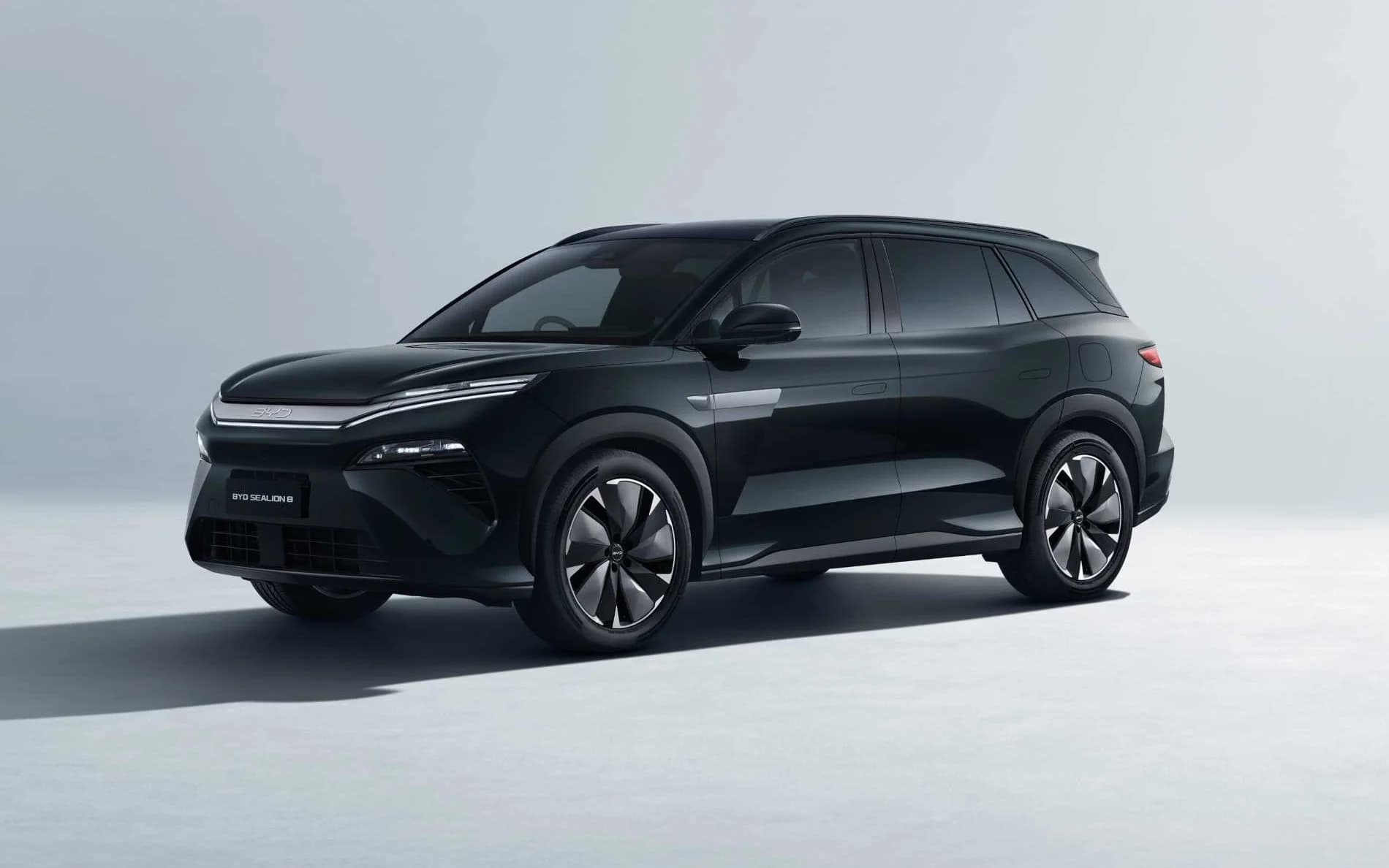
Inside, the BYD is the busier and more traditionally equipped of the two. Every grade gets a 15.6-inch touchscreen, a 10.25-inch digital instrument cluster, a full-screen panoramic sunroof with an electric sunshade, three-zone climate control with second and third-row ceiling vents, ventilated and heated front seats and a 10-speaker system. The Premium AWD adds a 26-inch head-up display, a 21-speaker DiSound system, massaging outboard seats in the second row and electrically adjustable leg rests up front.
The Model Y goes the other way and puts almost everything on a 16-inch centre touchscreen, with an 8-inch screen for rear passengers and no instrument cluster at all. Whether that reads as clean or as austere is personal. What is not in dispute is that the Tesla cabin is quieter to look at and the BYD gives you more physical seats, vents and adjustment for the money.
True Cost to Own
BYD covers the Sealion 8 for 6 years or 150,000km, with the Blade battery for 8 years or 160,000km. Tesla covers the Model Y for 5 years with unlimited kilometres, with 8 years and 160,000km on the RWD battery, rising to 192,000km on the Long Range and Performance. As with most warranty comparisons, the answer depends on your annual distance: above roughly 25,000km a year the Tesla term is worth more, below it BYD's extra year is.
Running costs are where the two diverge hardest, and where it is easy to be sold a number that will not hold. The Sealion 8's headline 1.0L/100km is achievable only if you plug in constantly and your trips stay inside the electric range. Do that and it is astonishingly cheap to run. Fail to do it and you are looking at BYD's own charge-depleted figure of 5.3L/100km on the FWD, in a car that weighs 2,315kg, and you are paying for petrol you would not have bought in an EV.
The Model Y has no such cliff. It costs what electricity costs, which on a home tariff over 15,000km a year is a small number, and it has no oil, no filters, no spark plugs and no exhaust. The BYD still has an engine to service. On the other hand the BYD does not care if your apartment has no charger, and the Tesla very much does.
Depreciation is the unknown on both. The Model Y has the longer trading history in Australia and a deep used market to price against. The Sealion 8 is new enough that nobody has a reliable resale curve for it yet, which cuts both ways.
The comparison people actually make
On paper these two have almost nothing in common. One is a 5,040mm seven-seat plug-in hybrid with a petrol engine and a 60-litre tank. The other is a five-seat battery electric SUV that has spent most of the past four years at or near the top of Australia's EV sales charts. But they land within a couple of thousand dollars of each other, they are both bought by families upgrading from a mid-size SUV, and so people cross-shop them constantly.
The honest framing is that this is not a contest between two similar cars. It is a question about your household. Do you need the third row, or would you rather have the better-resolved five-seater? Can you charge at home every night, or do you need the safety net of a fuel tank? Everything else on this page is detail hanging off those two answers.
For brand context, see BYD in Australia and Tesla in Australia.
Where these numbers come from, and what is missing
Every figure here is sourced to an Australian manufacturer page or spec sheet, or to ancap.com.au. Two gaps are worth naming rather than papering over. BYD publishes a drive-away price only for the Sealion 8 Dynamic FWD, so the two AWD grades are shown on their list-price basis. And Tesla now sells a six-seat, three-row Model Y L in Australia, which is arguably the closer rival to the Sealion 8, but it is not yet in the CarSorted database so we have not compared it here.
The CarSorted verdict
Buy the BYD Sealion 8 if: you need seven seats. That is the whole argument and it is a good one, because nothing in the Tesla Model Y range gives you a third row and the six-seat Model Y L is a different price conversation. The Sealion 8 is also the right answer if you tow near 1,800kg, if you regularly drive further than any EV in this bracket will go in a day, or if you cannot plug in at home. Take the Dynamic FWD at $56,990 drive-away unless you specifically want the 4.9-second AWD, because the FWD is the value grade by a wide margin.
Buy the Tesla Model Y if: five seats is enough. It is quicker, lighter, better to drive, charges more than four times faster, has a published five-star ANCAP rating with the best child-occupant score in this comparison, has a far bigger boot with everyone aboard, and is the only one of the two that still qualifies for the FBT exemption on a novated lease. It also asks you to have somewhere to charge it, which is the one thing that disqualifies it outright for some buyers.
What we would not do: buy a Sealion 8 without a home charger. A plug-in hybrid you never plug in is a heavy petrol SUV carrying 19kWh of battery for nothing, and the 5.3L/100km charge-depleted figure is the number you would actually live with.
Next reads: BYD Sealion 7 vs Tesla Model Y covers the all-electric version of this fight, Model Y vs Kia EV5 is the value angle, and Leapmotor C10 vs Sealion 6 looks at the smaller plug-in hybrid SUVs. You can also compare either car against anything else in the database.
The Verdict
This one is decided by your back seat, not by a spec sheet. The Sealion 8 gives you seven seats, a 1,800kg tow rating, a 60-litre petrol tank behind 103km of electric range, and a drive-away price of $56,990. The Model Y gives you five seats, 466km of real electric range, DC charging at 175kW against the BYD's 40kW, a five-star ANCAP rating with a 2025 datestamp, and a $58,900 list price that still has on-road costs to come. If you need the third row or you cannot charge reliably at home, the Sealion 8 is the obvious buy and nothing in the Model Y range answers it under $89,400. If five seats is enough and you have a driveway, the Model Y is the better-resolved car by a distance: quicker, far faster to charge, better rated for safety, and with a much bigger boot when the seats are up.
Disclaimer: All information in this comparison was believed to be correct at the time of publishing (17 September 2026). Prices are manufacturer recommended retail prices (RRP) and may vary by state, dealer, and options. Driveaway costs include estimated on-road costs for Victoria. Fuel economy figures are WLTP/ADR combined cycle. Specifications can change without notice. Always verify with the manufacturer before making a purchase decision. CarSorted does not accept payment for recommendations.
Published by CarSorted Editorial Team · 17 September 2026
Comments (0)
Sign in to join the conversation
No comments yet. Be the first!