Key Takeaways
- Tesla Model Y finishes May with 5,605 sales, the first EV to ever lead Australia's monthly chart
- It beats the Ford Ranger (4,474) and Toyota HiLux (4,005) by more than 1,000 units each
- Industry total: 106,887 vehicles, down 2.3% on May 2025
- BEVs hit a record 19.9% share with 21,303 units, up 111.6% year-on-year
- Electrified vehicles (BEV + PHEV + HEV) reached 46% of all sales
- Chinese newcomer Jaecoo J5 cracks the top 10 in seventh with 2,172 sales
- Tesla's month total of 6,433 is its best ever in Australia
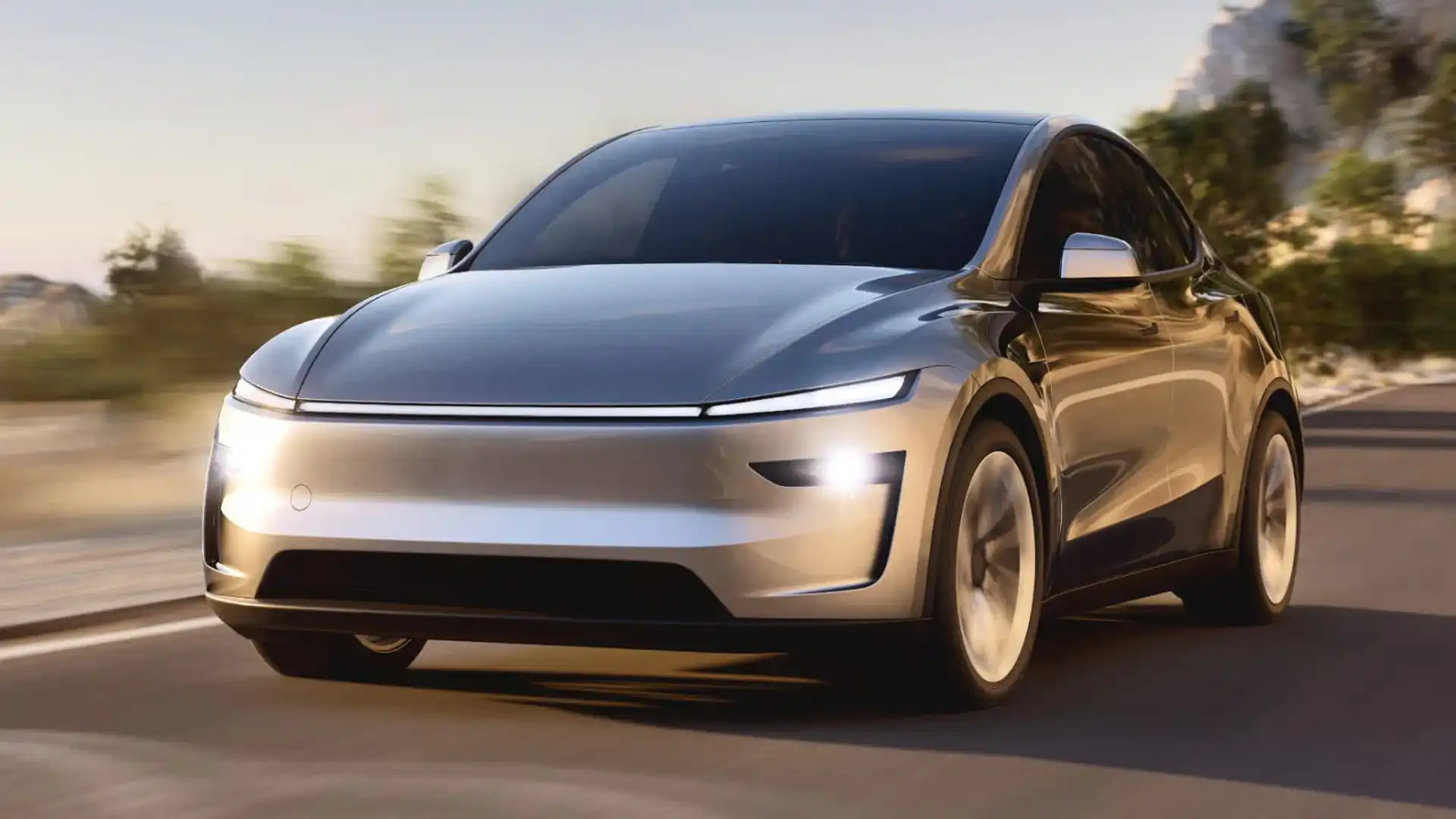
Image credit: Tesla Australia
For the first time since the FCAI started counting, an electric car is the best-selling new vehicle in Australia. The Tesla Model Y closed May 2026 with 5,605 deliveries, more than 1,100 units clear of the long-running champion Ford Ranger and 1,600 ahead of the Toyota HiLux. That single number rewrites a chart the petrol utes have owned for the best part of a decade.
If you have been shopping a mid-size SUV in the $55,000 to $75,000 zone over the past few weeks, you already had a sense this was coming. Tesla pulled long-range Model Y AWD stock forward, opened orders on the six-seat Model Y L, and held pricing while petrol crept back above $2.20 a litre in most capitals. Buyers ran the maths and a lot of them walked out with an EV.
The full May 2026 top 10
Source: Federal Chamber of Automotive Industries (FCAI) VFACTS, May 2026. Ranking is total new vehicles delivered in the month.
| Rank | Model | Body / fuel | May 2026 sales |
|---|---|---|---|
| 1 | Tesla Model Y | Mid-size SUV, BEV | 5,605 |
| 2 | Ford Ranger | Dual-cab ute, diesel | 4,474 |
| 3 | Toyota HiLux | Dual-cab ute, diesel | 4,005 |
| 4 | Toyota RAV4 | Mid-size SUV, hybrid | 3,865 |
| 5 | Hyundai Kona | Small SUV, petrol/hybrid/EV | 2,291 |
| 6 | Hyundai Tucson | Mid-size SUV, petrol/hybrid | 2,287 |
| 7 | Jaecoo J5 | Small SUV, petrol/EV | 2,172 |
| 8 | Chery Tiggo 4 | Small SUV, petrol/hybrid | 2,123 |
| 9 | Isuzu D-Max | Dual-cab ute, diesel | 1,916 |
| 10 | Ford Everest | Large SUV, diesel | 1,876 |
Four of the top ten are EVs, hybrids or plug-in hybrids. Three are diesel utes. The other three are conventional or mild-hybrid SUVs. Three Chinese-brand models sit inside the ten, with the Geely EX5 and BYD Sealion 7 not far below in 11th and 12th respectively, both above the 1,500-unit line.
How the headline EV beat the dual-cab benchmarks
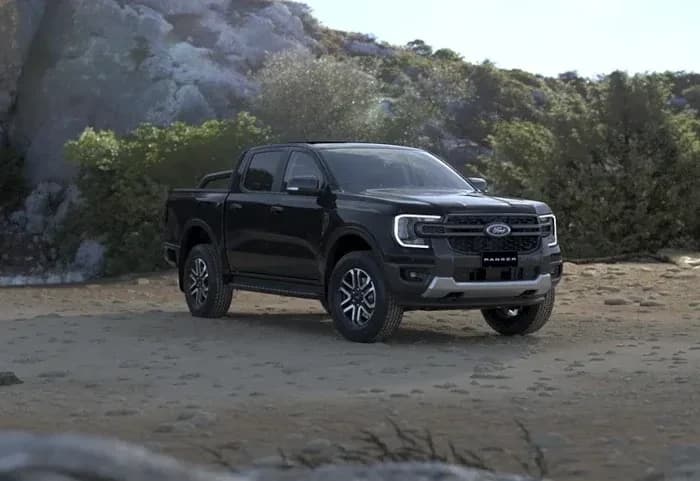
Image credit: Ford Australia
The Ranger has been Australia's top seller for most months since 2023, with the HiLux trading the crown back and forth. Both still cleared 4,000 units in May, which is a strong individual month for either of them. They did not collapse. The Model Y just ran past, helped by three things at once.
First, Tesla finally had stock to sell. The Long Range AWD made up roughly 47% of all Model Y registrations in May, after the supply pipe opened in mid-April. Second, the new six-seat Model Y L started its first proper delivery month at $74,900 before on-roads, pulling some of the demand that would have gone to a Kia Sorento Hybrid or a Toyota Kluger. Third, novated lease providers are still writing Model Y deals on the FBT exemption for sub-$91,387 plug-in vehicles, which lifts the comparable cash price for a salary-packaged buyer by another five-figure margin.
That last point matters more than the headline. A lot of the May Model Y volume looks to have come from fleet, novated and small business buyers rather than private cash sales. For a private petrol-car buyer, the chart-topper is still a Ranger or a HiLux. For a salary-packaged 9-to-5 worker, it is increasingly a Model Y.
EV and electrified share hit record highs
The bigger story underneath the Model Y line is the share of the whole market that is now electrified in some form.
| Powertrain | May 2026 units | Share of market |
|---|---|---|
| Battery electric (BEV) | 21,303 | 19.9% |
| Conventional hybrid (HEV) | 19,024 | 17.8% |
| Plug-in hybrid (PHEV) | 9,315 | 8.7% |
| Electrified combined | 49,642 | ~46% |
Three numbers stand out. BEV volume is up 111.6% on May 2025. Electric SUV sales alone are up 167% year on year. PHEV SUVs jumped 377%, with most of that coming from the BYD Sealion 6, GWM Haval H6GT Hi4 and the new Mitsubishi Outlander PHEV.
Diesel and petrol SUV sales went the other way. Diesel SUV sales fell 41%, petrol SUVs 31%. So the SUV segment overall is roughly flat. Buyers in that body style just changed what they put under the bonnet.
The longer-running shift is the price ceiling on EVs dropping. The GAC Aion UT at $30,990 driveaway and the GWM Ora 5 from $33,990 are now genuinely competing on cash price with a Toyota Yaris Cross Hybrid. Two years ago a sub-$35k EV was a Chinese-market rumour. In May 2026 it is the showroom floor.
The Chinese-brand surge
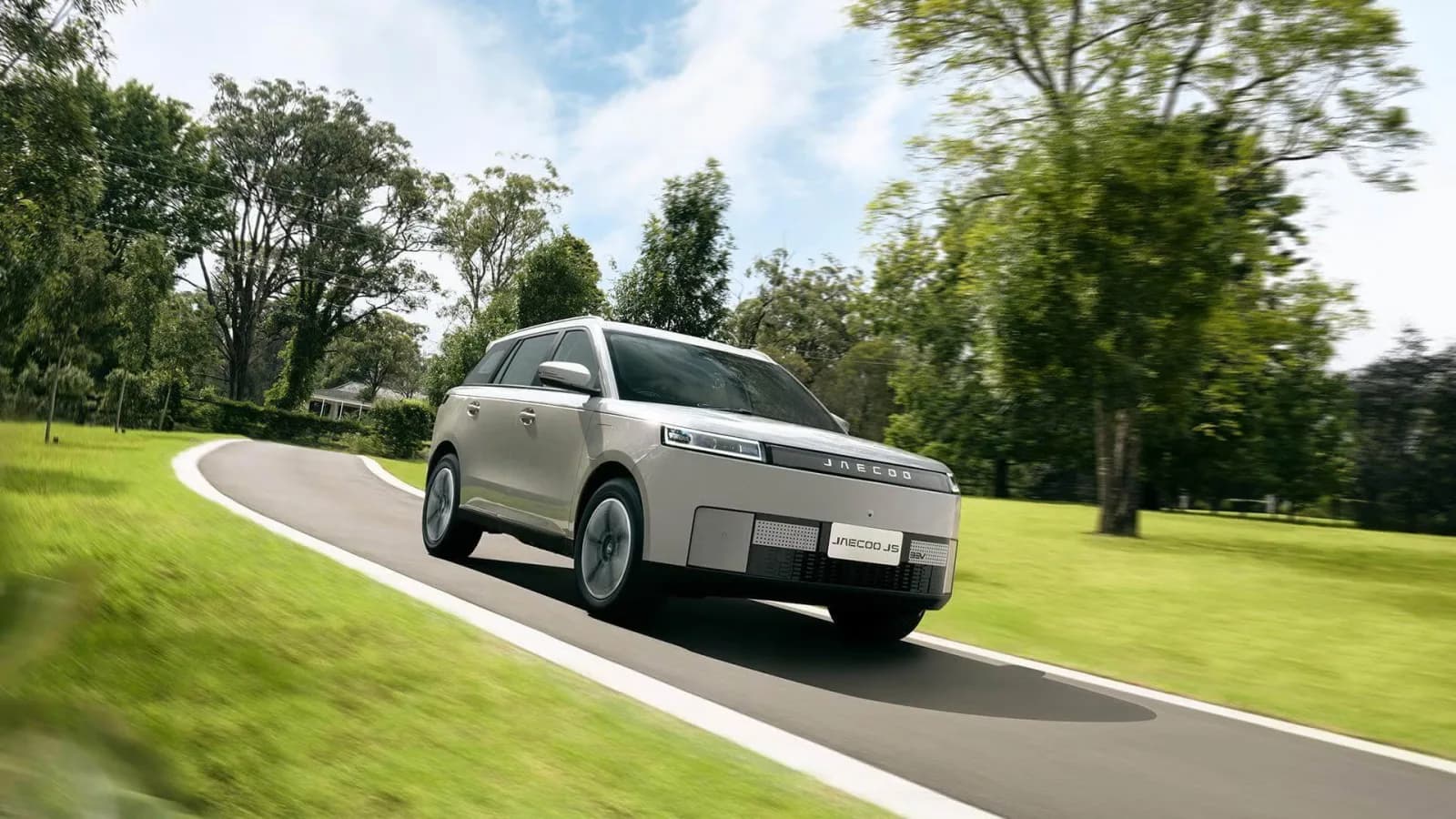
Image credit: Jaecoo Australia
The Jaecoo J5 in seventh and the Chery Tiggo 4 in eighth are the headline newcomers, but the underlying pattern is broader. Chinese-built models, badged either as Chinese brands or as Western brands like Tesla and Volvo using Chinese factories, made up close to 30% of new car deliveries in May. That includes the Model Y itself, which is shipped from Shanghai for the Australian market.
For shoppers, this is a buyer's market. Seven-year warranties on a Chery, ten years on an MG, eight on a Jaecoo. The traditional five-year warranty that Toyota and Mazda still hold the line on starts to look thin once you have a credible alternative with three more years of cover at $5,000 to $8,000 less.
Toyota RAV4 is still the petrol-side benchmark
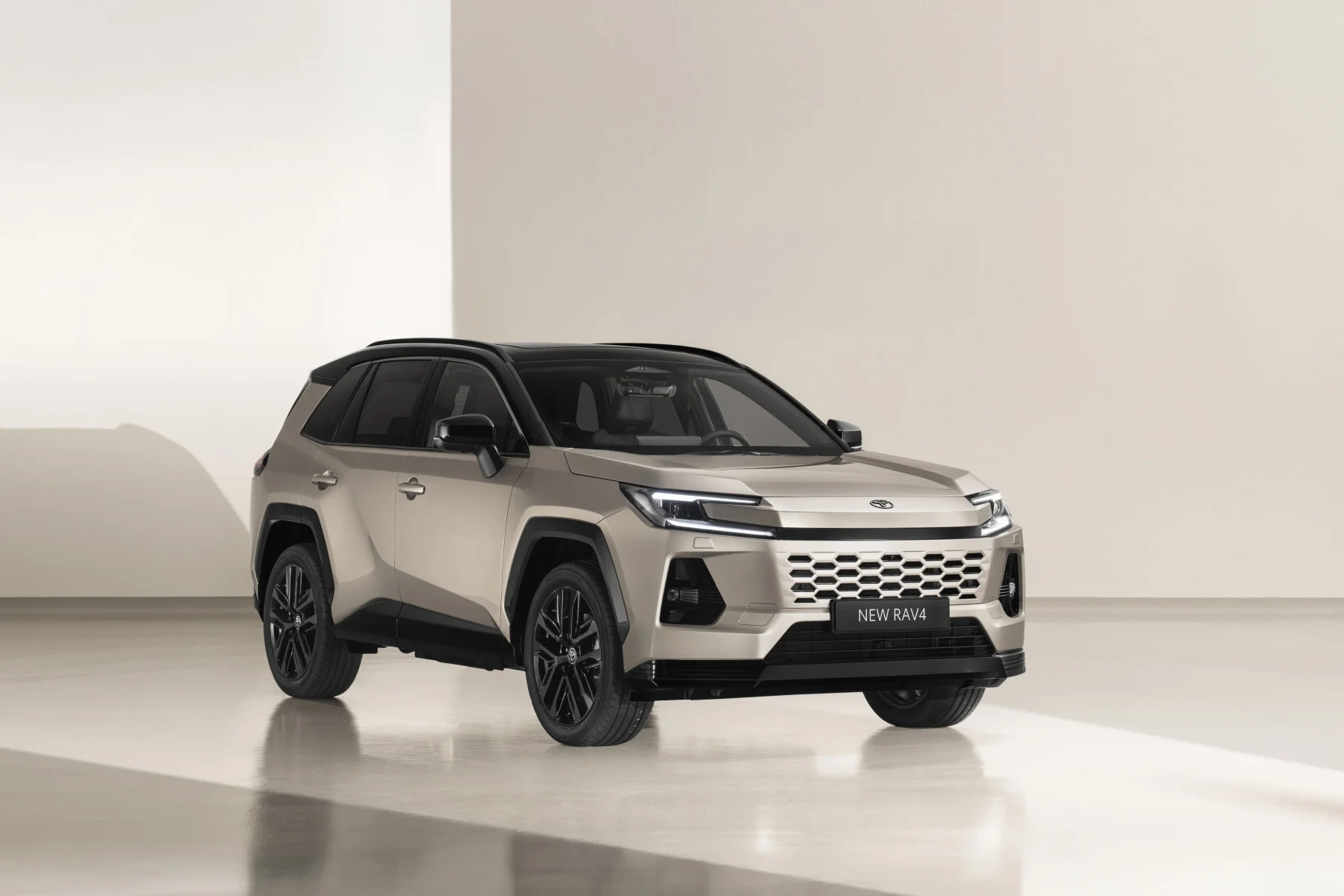
Image credit: Toyota Australia
Fourth on the chart is the Toyota RAV4, which is genuinely impressive given the sixth-generation car only landed in dealers in April and was running without an ANCAP rating in May. 3,865 units puts it ahead of the Hyundai Kona and Tucson, the segment's usual second tier, and within striking distance of the HiLux.
The RAV4 PHEV does not arrive until late June, so almost all of May's volume is the conventional hybrid. Once the RAV4 PHEV starts delivering at $58,840, you would expect the June and July numbers to climb again, eating into Model Y demand at the same price point.
Safety context
Four of the top ten in May 2026 carry a current five-star ANCAP rating: Ford Ranger, Toyota HiLux, Hyundai Tucson and Ford Everest. The Hyundai Kona sits a rung below on four stars from its 2023 assessment, so check the fine print if your workplace policy asks for five. The Tesla Model Y was rated five-star in 2022 under an older protocol but has not been retested under the 2026 protocol that ANCAP introduced in January. The new RAV4 is currently not yet rated while ANCAP retests it on the tougher 2026 criteria. The petrol Chery Tiggo 4 and the Isuzu D-Max have both earned five stars in their most recent assessments. The Jaecoo J5 has no ANCAP rating at all.
How it compares: $60k SUV showdown
Here is where the Model Y result actually changes a buying decision. On CarSorted's own database, the comparable mid-size SUV set at around $55k to $65k driveaway looks like this:
| Model | Indicative price | Fuel / range | Est. running cost / yr |
|---|---|---|---|
| Tesla Model Y RWD | $55,900 | 466 km WLTP, electric | ~$4,200 |
| Toyota RAV4 Hybrid Cruiser | $49,990 | 4.8 L/100km hybrid | ~$8,200 |
| Hyundai Tucson Hybrid | $52,990 | 5.3 L/100km hybrid | ~$8,600 |
| Ford Ranger Wildtrak (for context) | $63,940 | 7.6 L/100km diesel | ~$13,200 |
Across a five-year ownership cycle at 15,000 km a year, the Model Y RWD comes in roughly $20,000 cheaper to run than a Ranger Wildtrak before you account for the Tesla's cheaper services. That gap is most of the difference between the two cars at the bowser, and it is the maths that has finally tipped the chart.
The CarSorted angle
Sales charts are a lagging indicator. They tell you what other buyers did last month, not what is right for you. The May 2026 result is genuinely a milestone, but on CarSorted we treat it as a buy-signal in only two specific cases: novated-lease shoppers under the FBT cap, and high-kilometre fleet drivers in metro areas with predictable charging. For private buyers towing a van every other weekend, the diesel Ranger and HiLux are still the right answer, and that is reflected in their still-strong May numbers.
If you want to see how the Model Y stacks up against the cars it just beat, run the Tesla Model Y vs Ford Ranger comparison on CarSorted. The side-by-side covers price, towing, running cost, ANCAP and warranty so you can see whether the chart-topper actually fits your week. The full CarSorted directory also lets you filter the May top 10 by body type, fuel and budget if you want to cross-shop the rest of the list.
What this means for buyers
Three things change after May 2026, in practical terms.
If you are on a novated lease. The Tesla Model Y at $55,900 before on-roads still sits well under the $91,387 FBT-exempt threshold, so a salary-packaged version is the cheapest way to get into a five-star, 466km mid-size SUV in Australia today. The wait list has shortened from months to weeks. If your fringe-benefits structure allows it, the maths versus a $50k Tucson Hybrid is now openly in the Model Y's favour.
If you are a Ranger or HiLux buyer. Nothing changes. The diesel duo together still moved 8,479 units in May, which is more than the Model Y. Pricing has held, finance offers are still active, and the new HiLux BEV from $74,990 is for fleets and does not affect the dual-cab diesel range. If you tow more than 1,500 kg regularly, the chart-topper does not solve your problem.
If you are cross-shopping Chinese brands. The Jaecoo J5 and Chery Tiggo 4 inside the top 10 means service and parts networks for both are now scaling fast. Three years ago a Chery was a punt. With volume like this, residuals in the second-hand market will firm up and dealer service slots will be easier to book. The Jaecoo J5 vs Chery Tiggo 4 head-to-head on CarSorted breaks down which one to lean toward.
Best Electric Cars Australia 2026 | EV vs Hybrid: Which Saves More? | Best Mid-Size SUVs Australia
Disclaimer: Sales figures are sourced from the Federal Chamber of Automotive Industries (FCAI) VFACTS release for May 2026 and the Electric Vehicle Council. Pricing on comparison cars is RRP before on-road costs unless stated otherwise and is current at time of publication. Running cost estimates are CarSorted's indicative figures based on average 15,000 km annual driving and may vary with usage, fuel prices and electricity tariffs. Comparison links to /compare pages reflect the current CarSorted directory and may not yet cover every variant.