Key Takeaways
- Genesis GV60 Magma $130,000 before on-roads, orders open now
- Dual-motor AWD, 448kW / 700Nm normal, 478kW / 790Nm in Boost Mode (up to 15 sec)
- 0 to 100km/h in 3.4 seconds, 0 to 200 in 10.9 sec, 264km/h top speed
- 84kWh battery, 800V architecture, up to 350kW DC (10 to 80 per cent in ~18 min)
- Matte paint $4,000 is the only priced factory option
- 5yr/unlimited-km warranty, 5yr/75,000km free servicing, 10yr roadside
- ANCAP not yet rated
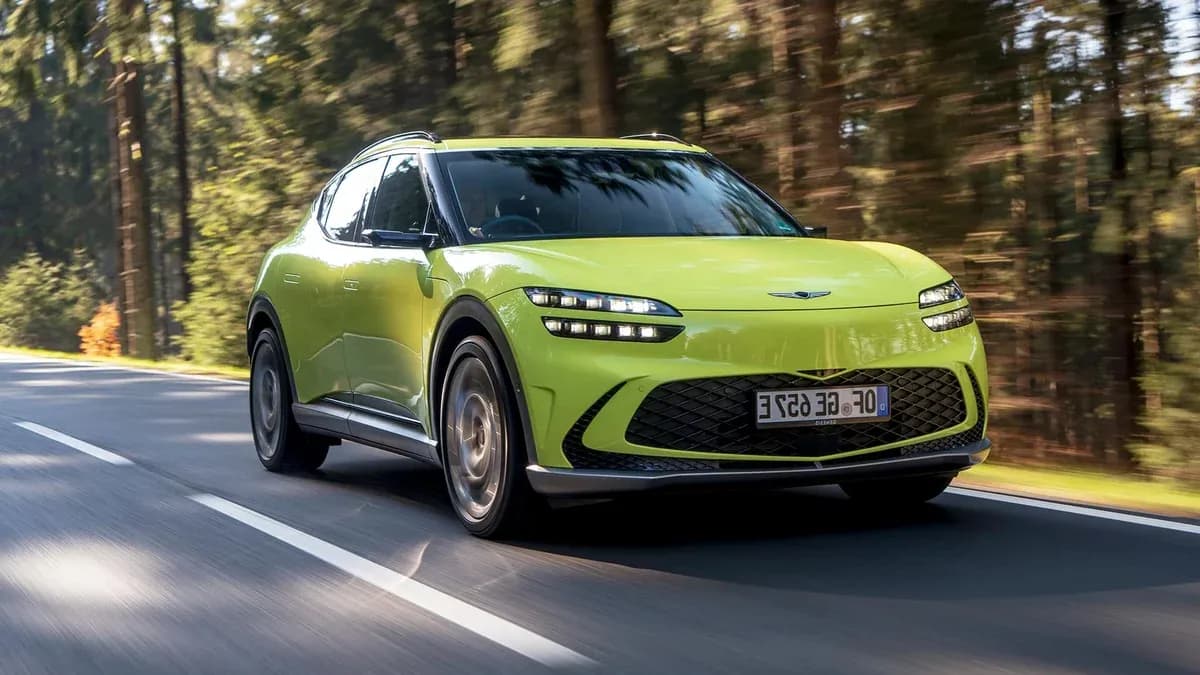
Image credit: Genesis Australia
If you have been waiting for the fast one, Genesis has finally handed the GV60 Magma a sticker. It lands at $130,000 before on-road costs, which is a $15,000 walk up from the Hyundai Ioniq 5 N it shares hardware with, and about $42,000 above the new rear-drive GV60 Advanced. Order books are open and cars are on the road here now, which shifts the Magma from a coming-soon curiosity to a live number you can actually park in a driveaway calculator against the Tesla Model Y Performance, the Model Y Long Range, and the two Hyundai N-branded siblings on either side of it.
The buyer question is not whether the Magma is quick, because a shared 478kW peak with the Ioniq 5 N settles that. The question is whether the Genesis badge, the Magma-specific design pieces, the plusher cabin and the free servicing are worth the walk over an Ioniq 5 N, and whether any of it moves the needle against a $103,000 Model Y Performance that undercuts them all on paper.
Pricing
| Variant | Price (before on-roads) |
|---|---|
| GV60 Magma AWD | $130,000 |
| Matte paint (option) | +$4,000 |
| Non-matte premium and standard hues | no cost |
Unlike the wider GV60 range, the Magma is a one-grade play. No packs, no Sport versus Luxury upsell, no cheaper Standard Range fallback. If you want in, you buy the whole car. That is fine for a halo, and it matches how Hyundai sells the Ioniq 5 N and Ioniq 6 N (single-spec, fully loaded, only the paint left to argue about).
Powertrain and Performance
The Magma runs the same twin-motor stack you get in the Ioniq 5 N and 6 N. Two permanent-magnet motors, one per axle, an 84kWh usable NMC battery under the floor and Hyundai Motor Group's second-generation 800V E-GMP electrical architecture. Base outputs are 448kW and 700Nm. Hit the Boost button (Genesis calls the mode Grin Boost internally, sold in Magma trim as N Boost) and outputs step up to 478kW and 790Nm for up to 15 seconds. That is enough to fire the car from a standstill to 100km/h in 3.4 seconds and on to 200km/h in 10.9 seconds. Genesis limits the top speed to 264km/h, exactly where you would expect a car on 275mm Pirelli P Zeros to stop chasing numbers on an autobahn.
| Spec | GV60 Magma AWD |
|---|---|
| Drive | Dual-motor AWD |
| Peak power (normal) | 448 kW |
| Peak power (Boost Mode) | 478 kW |
| Torque (Boost) | 790 Nm |
| 0 to 100 km/h | 3.4 sec |
| 0 to 200 km/h | 10.9 sec |
| Top speed | 264 km/h |
| Battery (usable) | 84 kWh |
| Architecture | 800V E-GMP |
| Peak DC charging | ~350 kW |
| 10 to 80% DC | ~18 min |
| Wheels | 21-inch forged |
| Tyres | Pirelli P Zero 275mm |
The clever bit on the software side is Virtual Gear Shift, which drives simulated shift points and a synthetic rev limit through the paddle shifters. On paper it sounds like a gimmick, and it kind of is, but it also solves a real problem with fast EVs: without shift markers, a long straight becomes one continuous shove and drivers stop reading how hard they are pushing. VGS breaks that up so the brain has ratios to hang onto. Genesis pairs it with a launch-control mode, a pre-conditioning routine that warms the pack for repeat runs, and the same drift optimiser that has been on the Ioniq 5 N since 2024.
Charging and Range
The 800V setup is not new to E-GMP, but Genesis has upgraded battery conditioning so the Magma actually holds its peak DC rate longer on a hot pack. A typical fast stop should be about 18 minutes from 10 to 80 per cent on a 350kW Chargefox or Evie unit, though Australia has very few chargers that can actually pour 350kW into one stall. Realistically, you will see 250 to 300kW on a good day. The car can also charge on 400V hardware without an on-board voltage booster losing you time, which matters at the 50kW to 150kW mid-tier chargers you are most likely to plug into on a highway run.
WLTP range for the Magma has not been finalised by Genesis Australia yet. It will land in the mid-400s given the shared hardware with the Ioniq 5 N (which posts 448km on the same 84kWh pack, same architecture, similar aero, same-size Pirellis). If you want a longer-legged Magma, wait for the GV70 Magma next year on a bigger pack. If you want the shortest-lived range but the wildest driving, the GV60 Magma is the pointier tool.
Design and Interior
The Magma is not just a badge and a chip. Genesis has fitted a Magma-specific three-hole front bumper for cooling, model-exclusive 21-inch forged alloys wrapped in 275mm Pirelli P Zero performance tyres, a fixed rear wing rather than the GV60's retracting spoiler, blacked-out Genesis wordmarks and Magma Orange as the hero paint. Matte finishes on selected colours are the only priced factory extra at $4,000. Everything else is standard.
Inside, the big change is the 27-inch integrated curved display already appearing on the standard GV60 update. Magma cars get a bespoke driving mode graphic, replacing the two-dial layout with a three-circle setup that shows motor temperature, battery temperature, road speed and lateral G. There is a dedicated Magma drive-mode button on the steering wheel, N-style bucket-lite front seats trimmed in Nappa with contrast Magma-orange stitching, and a suede-topped wheel. This is the piece that separates the Magma from the Ioniq 5 N experience: the Hyundai gets N-branded parts on a value-brand cabin, the Genesis wraps the same running gear in premium materials and Genesis' longer service program.
Safety
The GV60 Magma is not yet rated by ANCAP. Genesis Australia has not applied a carry-over rating from the standard GV60 either, so the Magma sits alongside the Ioniq 5 N as a currently unrated performance EV. Standard driver-assist tech covers AEB with cyclist and pedestrian detection, adaptive cruise, lane-keep assist, blind-spot monitoring, rear cross-traffic alert and a 360-degree camera. Ten airbags including a centre front airbag are standard.
How It Compares
The Magma sits in a strange spot on the price ladder because its cheapest technical twin is not a rival brand, it is a rival badge inside its own group.
| Car | Price (before on-roads) | Peak power | 0-100 |
|---|---|---|---|
| Tesla Model Y Performance | $103,900 | 339 kW | 3.5 s |
| Hyundai Ioniq 5 N | $111,000 | 478 kW (Boost) | 3.4 s |
| Hyundai Ioniq 6 N | $115,000 | 478 kW (Boost) | 3.2 s |
| Genesis GV60 Magma | $130,000 | 478 kW (Boost) | 3.4 s |
| BMW iX3 50 xDrive | $109,900 | 345 kW | 4.9 s |
You pay $19,000 for the Genesis over the Ioniq 5 N and $15,000 over the Ioniq 6 N for the same peak numbers. That is the price of the badge, the 27-inch OLED, the leather and the Genesis Complimentary Service program. Against the Tesla Model Y Performance the Magma is $26,100 dearer for the same 3.4 to 3.5-second 0-100km/h, but the Tesla gives back on drive modes, VGS-style theatre, seat quality and interior finish. Against the standard GV60 AWD Performance at around $105,000, you pay a $25,000 walk for 138kW more and the full Magma design pack.
Put another way, if you cross-shop these on a novated lease under the electric-car FBT exemption, only the Model Y Performance and BMW iX3 50 xDrive comfortably slip below the fuel-efficient LCT threshold ($91,661 in 2026-27) with any equipment left on the car. The Magma at $130,000 is well over the line and will attract LCT, dropping some of the FBT-exempt tax gymnastics out of the maths. If tax efficiency is why you were looking at premium EVs, this is not the one. If theatre is why, it might be.
Warranty and Servicing
Genesis backs the Magma with a 5-year, unlimited-kilometre new-vehicle warranty and covers the high-voltage battery for 8 years or 160,000km. The Genesis Complimentary Service program covers 5 years or 75,000km of scheduled maintenance at no cost, plus 5 years of Genesis To You concierge servicing (they pick the car up and drop off a courtesy vehicle), and roadside assistance is extendable to 10 years. For context, that is materially better than the free-servicing coverage Hyundai N gets. If you plan to keep the car five years, the Genesis servicing program alone recovers a chunk of the $19,000 walk over an Ioniq 5 N. Our warranty comparison breaks the market down side by side.
What This Means for Buyers
On CarSorted, the standard Genesis GV60 is listed in Advanced RWD trim from $88,300 before on-roads, which slips it under the fuel-efficient LCT threshold and keeps the novated-lease FBT exemption alive. The Magma at $130,000 does neither, but that is not the audience. This is a $130,000 halo car aimed at someone cross-shopping a Porsche Macan Turbo Electric or an Audi RS e-tron GT and looking at Genesis as the quieter, less-obvious choice.
The buyer test we would run is simple. If you want the fastest 84kWh Hyundai-group EV for the least money, the answer is still the Ioniq 5 N at $111,000, and the Magma does not beat it on any objective performance number. If you want that same drivetrain wrapped in a nicer cabin, with 5 years of free servicing, concierge pick-up and Genesis' brand experience, the walk is $19,000. Splitting that over 5 years puts the badge premium at about $3,800 a year, or the price of a decent set of track tyres. That is not a bad deal for someone who was going to buy premium anyway.
The cross-shop we would spend the most time on is Genesis GV60 Magma versus Tesla Model Y Performance. Different car, same 0-100 window, $26,100 apart. Stack them side by side on our CarSorted compare tool, or look at every performance EV on sale in the country in our best electric luxury SUVs guide before you sign anything.
Disclaimer: Specifications are sourced from Genesis Australia. Pricing is before on-road costs. Range figures are pending confirmation from Genesis Australia and will be based on the WLTP cycle. Actual real-world range, charge times and performance will vary depending on conditions, driver, road, load, ambient temperature, tyre choice and battery state.