Key Takeaways
- Range opens at $75,000 before on-roads for the hybrid ES 300h Luxury, tops out at $84,000 for the dual-motor electric ES 500e
- First battery-electric ES ever, priced only $2,000 above the equivalent hybrid Sports Luxury spec
- 74.7kWh lithium-ion pack, 510km WLTP for the ES 350e, 465km for the AWD ES 500e
- 150kW DC fast charging and 22kW three-phase AC as standard on both EVs
- Bigger body: 5,140mm long on a 2,950mm wheelbase, up 165mm overall vs the outgoing car
- Electric variants due Q3 2026, hybrid ES 300h follows later in 2026; ANCAP not yet rated
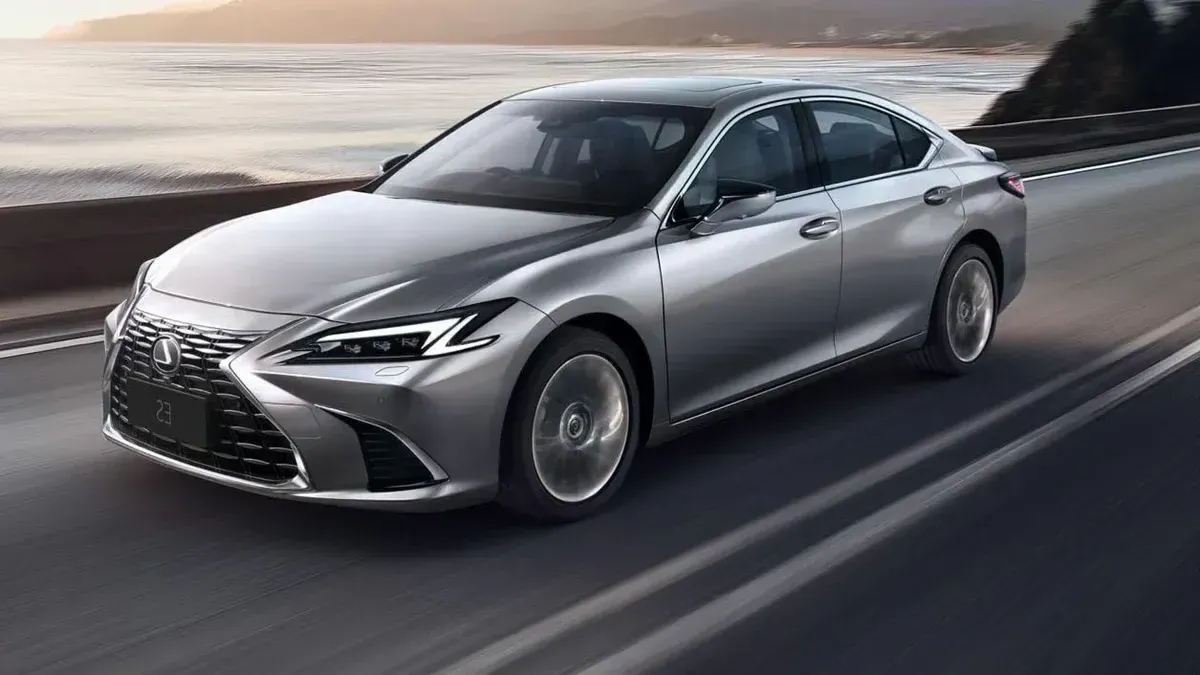
Image credit: Lexus Australia
Lexus Australia has locked in local pricing for the eighth-generation ES and the interesting bit is not the sticker, it is what sits under the badge. For the first time in the nameplate's 35-year run you can order a battery-electric ES, and the entry into that electric car is only $2,000 above the equivalent hybrid Sports Luxury spec. That is a much smaller EV premium than we are used to seeing on the German luxury sedans and it puts the ES in an unusual spot: a Toyota-owned, Japan-built luxury car aiming at private buyers and novated-lease customers who have been drifting toward a Tesla Model 3 or a Polestar 2.
The catch: the electric ES 350e and ES 500e are the launch cars and land during the third quarter of this year, while the ES 300h hybrid, which is what most existing ES owners will actually replace their car with, arrives later in 2026. So the story from a buyer viewpoint splits in two: a right-now EV decision, and a wait-a-few-months hybrid decision.
Full Australian pricing
| Variant | Powertrain | Price (before on-roads) |
|---|---|---|
| ES 300h Luxury | 2.5L hybrid, FWD | $75,000 |
| ES 300h Luxury + Enhancement Package | 2.5L hybrid, FWD | $82,000 |
| ES 350e Sports Luxury | Single motor EV, FWD | $77,000 |
| ES 500e Sports Luxury | Dual motor EV, AWD | $84,000 |
Two things stand out. First, Lexus has held the hybrid opener within striking distance of the outgoing car, and Sports Luxury has quietly become an EV-only trim. Second, the $7,000 walk from the ES 350e to the ES 500e buys you the rear e-axle and the extra 87kW of combined output, which is a smaller spend for AWD than most rivals ask.
The ES 300h Luxury at $75,000 slips comfortably under the fuel-efficient Luxury Car Tax threshold, and both electric grades sit under the EV LCT cap too, so a private buyer or a salary-packaging office worker keeps the FBT exemption on the plug-in cars.
Powertrains and specs
| Spec | ES 300h | ES 350e | ES 500e |
|---|---|---|---|
| Engine | 2.5L four + eCVT | - | - |
| Front motor | - | 165 kW | 165 kW |
| Rear motor | - | - | 88 kW |
| Combined output | approx. 148 kW | 165 kW | 252 kW |
| Drive | FWD | FWD | AWD |
| Battery | Small hybrid Li-ion | 74.7 kWh Li-ion | 74.7 kWh Li-ion |
| WLTP range | - | up to 510 km | up to 465 km |
| DC fast charge peak | - | 150 kW | 150 kW |
| AC charge | - | 22 kW three-phase | 22 kW three-phase |
| Length | 5,140 mm | ||
| Width | 1,920 mm | ||
| Wheelbase | 2,950 mm | ||
| Warranty | 5-year unlimited km (+5 years battery for EVs with annual Encore health check) | ||
The hybrid keeps the same 2.5-litre Atkinson-cycle four-cylinder recipe that has run in the ES 300h for years, refreshed with Toyota's fifth-generation hybrid drive and an eCVT. Combined output is around 148kW to the front wheels only in Australia. If you have driven the outgoing ES 300h, you know what to expect: quiet at cruise, easy to sit on 110 all day, mid-teens fuel economy in the city.
The EVs are the more interesting story. Both share the same 74.7kWh lithium-ion battery, the same 165kW front e-axle, and the same 150kW DC and 22kW AC charging hardware. What changes is the ES 500e adds an 88kW rear motor for a combined 252kW and four-wheel drive, making it the most powerful ES ever sold anywhere in the world. That AWD hardware costs 45km of WLTP range: 510km on the front-driver drops to 465km on the twin-motor.
Charging and running the EV at home
A 10 to 80 per cent DC top-up at a 150kW charger takes about 28 minutes according to Lexus, which is not a class-leading number in 2026 next to the 800V cars but is plenty for a real-world highway stop. The bigger deal for daily use is the 22kW three-phase AC hardware. Most home wallboxes are 7kW single-phase (11kW where you have three-phase supply), so most owners will fill the battery overnight regardless. But at public destination chargers with three-phase, the ES will pull the full 22kW where a Model 3 or Polestar 2 taps out at 11kW.
For a rough running-cost sanity check, our EV vs Hybrid running-cost tool puts a 20,000km/year ES 350e at about $920 to $1,050 in home electricity (using an average 0.28 c/kWh with a 15 per cent charging loss), against the ES 300h which would consume roughly $1,900 to $2,100 of E10 at a claimed 6.0L/100km. Servicing is capped for both under Lexus Encore.
Cabin, tech and equipment
The new dashboard is dominated by a floating 14-inch central touchscreen paired with a 12.3-inch digital driver display. Notably, the ES is the first Lexus in Australia to run Toyota's next-gen Arene operating system, which brings over-the-air updates across the whole vehicle rather than just the infotainment head unit. Cloud-native navigation, voice control tied to a natural-language assistant, and driver-profile sync all come as part of that stack.
Sports Luxury on the EVs picks up the full comfort kit, semi-aniline leather, heated and ventilated front seats with memory, a Mark Levinson audio setup and a panoramic glass roof. The hybrid Luxury opens the range with the same 14-inch screen but on smaller wheels and softer trim, while the Luxury Enhancement Package adds the Mark Levinson audio, a panoramic roof and heated rear seats.
Dimensions and practicality
The new ES is a substantially bigger car than the outgoing one. Overall length is up 165mm to 5,140mm, width grows to 1,920mm and the wheelbase stretches 80mm to 2,950mm. On paper that puts it a shade longer than a Genesis G80 Electrified and roughly the same length as a Mercedes-Benz E-Class. Rear-seat legroom is where you feel that wheelbase change, and the boot on the EV variants is quoted at 454 litres, similar to the hybrid.
Safety
The eighth-generation ES has not yet been rated by ANCAP. The previous car's 5-star result from 2018 has now expired under ANCAP's date-stamping rules, so the new ES enters showrooms as an unrated model until the local safety body publishes a fresh score. Lexus has said Safety System+ is standard across the range and includes intersection turn assist, hands-off freeway assist within the Advanced Drive package, blind-spot monitoring, rear cross-traffic auto braking, adaptive cruise, lane-tracing assist and traffic-sign recognition. Airbag count and detailed occupant-protection kit will drop with the ANCAP release.
How it compares
The interesting cross-shop for the electric ES 350e at $77,000 before on-roads is not the obvious German mid-sizer, it is what people are actually buying at this money right now.
| Car | From (before on-roads) | Battery | WLTP range |
|---|---|---|---|
| Lexus ES 350e | $77,000 | 74.7 kWh | 510 km |
| Tesla Model 3 Long Range RWD | $61,900 | 78.1 kWh | 629 km |
| Polestar 2 Long Range Single Motor | $66,400 | 82 kWh | 654 km |
| Genesis G80 Electrified | $132,000 | 87.2 kWh | 520 km |
The Tesla Model 3 and Polestar 2 are cheaper and quote longer WLTP numbers, but neither pretends to be a luxury car in the traditional sense. The Genesis G80 Electrified is the closer luxury sedan match, and the ES 350e sits $55,000 under it for a car with only 10km less range and roughly comparable cabin space. That price gap is going to make the Lexus the default cross-shop for anyone who was leaning toward a Genesis at the four-figure end of luxury sedan money.
Want the head-to-head at a glance? Run our Lexus ES vs Genesis G80 Electrified comparison or the Lexus ES vs Tesla Model 3 comparison.
Warranty and Lexus Encore
Standard vehicle cover is a 5-year unlimited-kilometre warranty. The high-voltage battery on the electric ES 350e and ES 500e gets an additional 5 years of cover on top, provided the annual battery health check is completed as part of the Lexus Encore ownership program. Encore also bundles service loan cars, a valet service in major metros and covered parking at nominated airports for the first three years.
What this means for buyers
If you were already lined up for an ES 300h renewal, the price is close enough to the outgoing car that the decision is essentially about whether to wait for the hybrid or move across to the electric ES 350e for $2,000 more. On CarSorted, a 20,000km-a-year metro driver plugged into a home wallbox at about 0.28 c/kWh saves around $900 to $1,100 in annual running costs going ES 350e over ES 300h. Over a five-year hold that closes the $2,000 upfront gap several times over, without touching the tax side.
The bigger opportunity is the buyer looking at a Genesis G80 Electrified at around $132,000 before on-roads. The Lexus ES 350e delivers a very similar package (battery, luxury cabin, quiet freeway ride, 5-year unlimited-km cover) at $55,000 less, and Lexus's dealer footprint and Encore program are already dialled in. If you can live without the AWD and heated rear seats that come standard on the G80 Electrified, the ES 350e is the sharpest luxury EV sedan on sale in the sub-$85k window in Australia.
Novated-lease buyers should also note the ES 350e and ES 500e both sit under the fuel-efficient EV LCT threshold, so the FBT exemption stays intact through 30 June 2027 while the current legislation runs. That is the pull factor that turned the Tesla Model Y L and the BMW iX3 40 into salary-package favourites, and the ES joins the same conversation now.
Do the number-crunch for your own kilometres and postcode using the CarSorted directory or run a direct ES 350e vs Model 3 Long Range comparison. Waiting on the hybrid? Cross-shop the Toyota Camry Hybrid and outgoing ES 300h in the meantime.
Disclaimer: Pricing is manufacturer's list price before on-road costs and is subject to change. Range and charging figures are Lexus Australia claims tested to WLTP methodology; real-world numbers will vary with driving style, weather, load and charger condition. Combined hybrid output is approximate pending final Australian homologation. ANCAP status current at time of publishing.