2026 Hyundai IONIQ 5 RWD review
The Best All-Round Electric SUV in Australia?
Data checked: specs 19 Sep 2026, price 19 Sep 2026
Text fact-checked against our data 2 September 2026Review snapshot
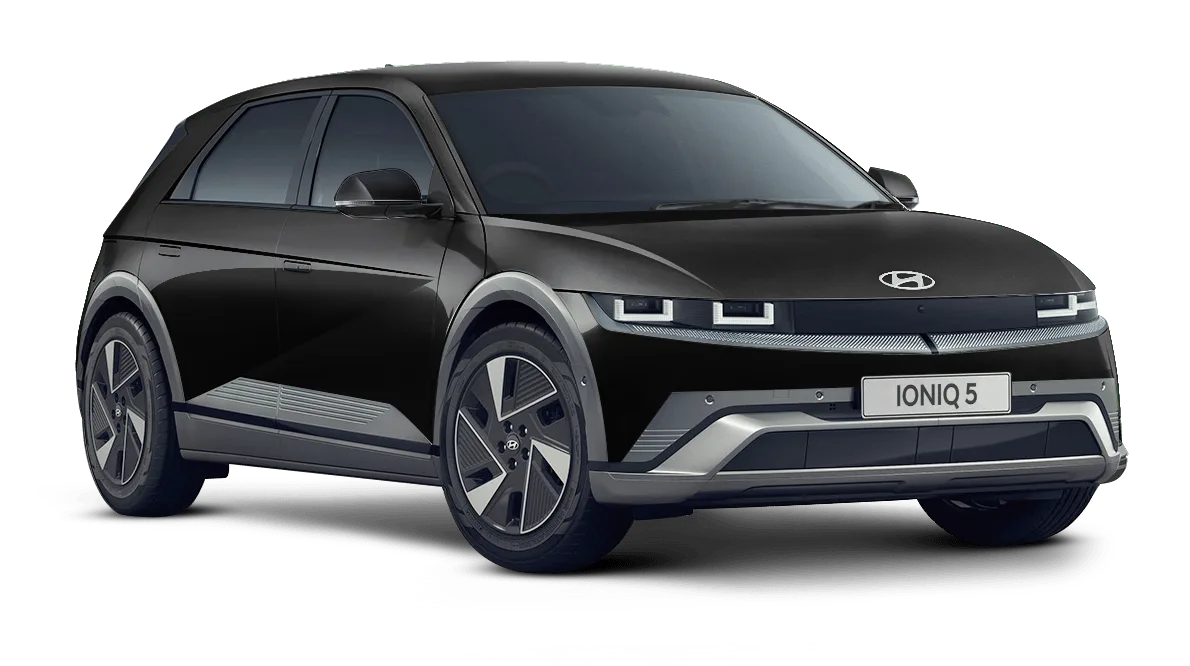
Model reviewed
Hyundai IONIQ 5 RWDFrom $68,200 RRP
Excl. on-road costs
from $333/wk in VIC, excludes servicing and insurance (estimate)
71/100
CarSorted Score
- WLTP range
- 570km
- Energy use
- 16 kWh/100km
- Towing (braked)
- 1,600kg
- Boot
- 520L
Likes
- 800V architecture with 350kW DC charging is class-leading
- V2L (3.6kW) turns the car into a mobile power station
- Spacious, well-designed interior with a flat floor
- 5-year unlimited-km warranty plus 8-year battery warranty
- Strong range on the RWD variants (up to 570km WLTP)
- Physical buttons for key functions alongside the touchscreen
Dislikes
- Boot space (527L) trails the Tesla Model Y by a wide margin
- Base variant misses out on some key tech features
- No spare wheel on any variant (tyre repair kit only)
- Heavy at up to 2,180kg, which adds to tyre wear
- Ioniq 5 N at $115,000 is hard to justify rationally
- 350kW chargers are still rare outside capital cities
This review is built from Hyundai's published figures, ANCAP and our own calculators. We have not driven this car.
Written 7 April 2026. The snapshot, tables, prices and scores on this page update from our car data; figures quoted in the text are as at that date.
The Quick Verdict
The Ioniq 5 has been one of Australia's most popular EVs since it landed, and the updated 2026 model with its 84kWh battery makes the case even stronger. With 800V architecture enabling 350kW DC charging (10-80% in 18 minutes), up to 570km of WLTP range, V2L capability, a genuinely spacious cabin, and Hyundai's 5-year unlimited-km warranty backing it up, the Ioniq 5 is arguably the most complete electric SUV you can buy here. Starting at $76,200, it is not the cheapest option, but the combination of charging speed, tech, warranty, and practicality is unmatched in this segment. And if you want to go completely mental, the 478kW Ioniq 5 N exists at $115,000 for reasons we will get to.
| Key details | 2026 Hyundai IONIQ 5 RWD |
|---|---|
| Engine | Electric motor |
| Power | 168kW |
| Torque | 350Nm |
| Drive type | RWD |
| Transmission | Single-speed reduction gear |
| Power-to-weight ratio | No data |
| Weight | No data |
| Spare tyre type | Tyre Mobility Kit |
| Tow rating | 1,600kg braked750kg unbraked |
| Turning circle | 11.98m |
| Energy consumption | 16 kWh/100km |
| Boot | 520L seats up, 1,580L folded |
| ANCAP | 5 stars (2021) |
Key details for 2 other variants
| Key details | 2026 Hyundai IONIQ 5 Elite RWD |
|---|---|
| Engine | Electric motor |
| Power | 168kW |
| Torque | 350Nm |
| Drive type | RWD |
| Transmission | Single-speed reduction gear |
| Power-to-weight ratio | No data |
| Weight | No data |
| Spare tyre type | Tyre Mobility Kit |
| Tow rating | 1,600kg braked750kg unbraked |
| Turning circle | 11.98m |
| Energy consumption | 17 kWh/100km |
| Boot | 520L seats up, 1,580L folded |
| ANCAP | 5 stars (2021) |
| Key details | 2026 Hyundai IONIQ 5 Premium N Line AWD |
|---|---|
| Engine | Electric motor |
| Power | 239kW |
| Torque | 605Nm |
| Drive type | AWD |
| Transmission | Single-speed reduction gear |
| Power-to-weight ratio | No data |
| Weight | No data |
| Spare tyre type | Tyre Mobility Kit |
| Tow rating | 1,600kg braked750kg unbraked |
| Turning circle | 11.98m |
| Energy consumption | 18.1 kWh/100km |
| Boot | 520L seats up, 1,580L folded |
| ANCAP | 5 stars (2021) |
Is it good value?
What Does the Ioniq 5 Cost in Australia?
Hyundai offers the Ioniq 5 in four distinct variants in Australia, ranging from the sensible base Dynamiq RWD to the frankly unhinged N performance model. All variants share the same 84kWh battery and 800V architecture. Here is the full pricing:
Driveaway pricing adds roughly $2,500 to $5,000 depending on your state and any applicable EV incentives. Queensland and ACT buyers tend to get the best deal on registration costs, while Victoria's distance-based EV road user charge adds ongoing costs. For a full breakdown of state-by-state incentives, check our best electric cars guide.
The Epiq AWD makes sense if you want all-wheel drive grip, 605Nm of torque, and every luxury feature Hyundai offers in the Ioniq 5. The N? That is for people who want a car that produces more power than a Porsche 911 Turbo. It is genuinely absurd and we love it, but it is a niche purchase.
Rivals: What Else Should You Cross-Shop?
Tesla Model Y (from ~$67,900)
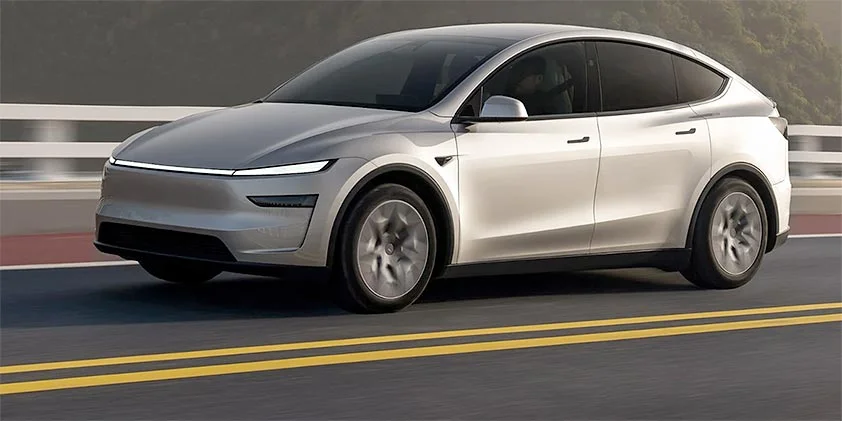
The Model Y is the Ioniq 5's most obvious rival. It starts cheaper, has a much larger boot (854L vs 527L), and benefits from the Tesla Supercharger network. The Model Y charges at up to 250kW, which is fast but not Ioniq 5 fast. The interior is more polarising (no instrument cluster, everything through the centre screen). If boot space and charging network are your priorities, the Model Y wins. If charging speed and V2L matter more, the Ioniq 5 takes it.
Kia EV6 (from ~$74,590)
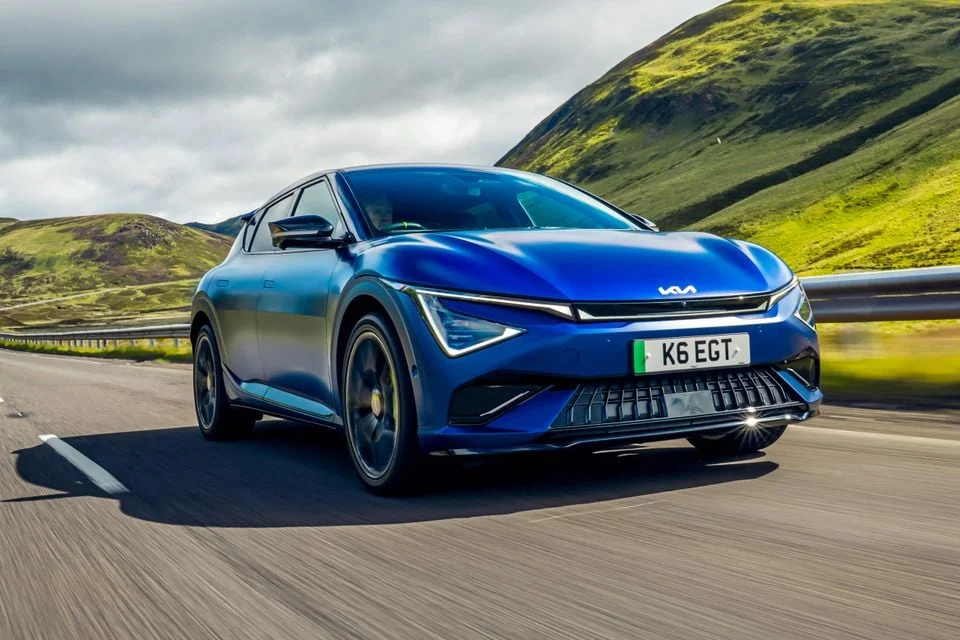
The EV6 shares the Ioniq 5's platform, battery, and 800V architecture, so on paper they are nearly identical. The differences come down to design (the EV6 is sportier-looking and lower-slung) and pricing (generally similar, though deals vary). The EV6 GT Line adds features like a GT-specific suspension tune and a more aggressive exterior. The Kia EV6 review covers this in full, but the short version is: choose on looks and dealer experience, because the engineering underneath is the same. The one ownership difference is the warranty: Kia's is 7 years against Hyundai's 5.
BYD Sealion 7 (from ~$52,990)
The Sealion 7 is the value disruptor. For roughly $23,000 less than the Ioniq 5 base, you get a capable electric SUV with competitive range and a well-appointed interior. BYD's Blade Battery technology is proven safe, and the 6-year warranty is decent. Where it falls short is charging speed (no 800V architecture), and brand perception and dealer network maturity. If budget is the primary consideration, the Sealion 7 deserves a test drive. But the Ioniq 5's charging speed and V2L make it worth the premium for buyers who can afford the stretch.
| Key details: Hyundai IONIQ 5 RWD | |
|---|---|
| Price | From $68,200 RRPExcl. on-road costs |
| Drive-away estimate | Calculating... |
| Cost per week in VIC | from $333/wk in VIC, excludes servicing and insuranceRepayments, fuel or charging, rego and CTP, servicing, tyres and insurance where held. Estimate only, not a quote. |
| Body | SUV |
| Powertrain | Electric, Electric motor |
| Towing (braked / unbraked) | 1,600kg / 750kg |
| Range | 570km (WLTP range) |
| Seats | 5 |
| Warranty | 5yr / unlimited km |
| Rivals | Tesla Model Y, Kia EV6, BYD Seal |
| The Hyundai IONIQ 5 range on sale | Price | Powertrain | Fuel or energy use |
|---|---|---|---|
| RWD | From $68,200 RRP | Electric, RWD | 16 kWh/100km |
| Elite RWD | From $73,200 RRP | Electric, RWD | 17 kWh/100km |
| Premium N Line AWD | From $83,700 RRP | Electric, AWD | 18.1 kWh/100km |
How far does it go?
| Energy and charging: Hyundai IONIQ 5 RWD | |
|---|---|
| Energy use (combined) | 16 kWh/100km |
| Battery (gross / usable) | 84kWh / 84kWh |
| Battery chemistry | Liquid-cooled Lithium-ion |
| Range (WLTP) | 570km |
| Peak DC charging | No data |
| AC charging | 10.5kW |
| DC charge time (stated) | 18 min (to 80%) |
| Charge port | CCS2 |
| Vehicle-to-load | Yes, 3.6kW |
| Service interval | 24 months or 30,000km |
What does it cost to own?
Running Costs
One of the strongest arguments for the Ioniq 5 is the running cost equation. Here is what to expect at 15,000km per year:
- Electricity (home charging at ~$0.30/kWh): Approximately $650-$800 per year for the RWD variants. The AWD models consume roughly 10-15% more
- Electricity (100% public charging): $1,500-$2,200 per year, depending on charger speed and pricing. DC fast charging typically costs $0.45-0.60/kWh
- Servicing: Hyundai's EV service schedule is every 15,000km or 12 months. Costs are lower than ICE vehicles. budget $300-$450 per service, or $300-$450 per year
- Tyres: The Ioniq 5 weighs around 1,985-2,180kg (variant dependent), which means tyre wear is higher than a lighter ICE crossover. Budget $450-$600 per year amortised on 20-inch tyres
- Insurance: $1,600-$2,400 per year depending on your profile and variant
- Registration and EV road user charges: Varies by state. Victoria charges $0.028/km for EVs (about $420/year at 15,000km)
Total annual running costs for an Ioniq 5 RWD charging at home sit around $3,300-$4,200. Compare that to a similarly priced petrol SUV like a Tucson Hybrid at $4,800-$6,000, and the savings are meaningful. Over five years, you are looking at $5,000-$9,000 in total cost of ownership savings, depending on how much you charge at home versus on public chargers.
Hyundai's vehicle warranty is 5 years with unlimited kilometres, two years shorter than Kia's 7 on the EV6. The 8-year/160,000km battery warranty provides additional peace of mind that the most expensive component in the car is covered long-term. For a deeper comparison of EV vs petrol running costs, read our electric car buyers guide.
| Warranty and servicing: Hyundai IONIQ 5 RWD | |
|---|---|
| Warranty | 5yr / unlimited km |
| Battery warranty | 8yr / 160,000 km |
| Roadside assistance | 5 years (renewed with dealer servicing) |
| Service interval | 24 months or 30,000km |
| Capped-price servicing | No data |
Cost per week in VIC: from $333/wk in VIC, excludes servicing and insurance
- Repayment estimate$292/wk
$5,000 deposit, 5yr loan at an assumed 7.5% p.a. on the RRP. Not an offer of credit
- Charging$13/wk
16 kWh/100km at 27.5c/kWh, the VIC reference price (Victorian Default Offer, Jemena flat rate (the middle of the five Victorian zones, 25.96c to 31.98c)); your tariff differs. As at July 2026, Essential Services Commission (VDO 2026-27)
- Rego + CTP$18/wk
VIC typical: car, metropolitan (high risk) zone, 12-month renewal, $958.80 a year. As at July 2026, VicRoads
- ServicingNo data
No data: no servicing cost held for this car
- Tyres$10/wk
Typical tyre spend for this type of car, scaled to 15,000 km a year (not this car's tyres)
- InsuranceNo data
No data: no insurance estimate held for this car
Based on 15,000 km a year in VIC. Estimate only, not a quote.
How safe is it?
Safety
The Ioniq 5 holds a 5-star ANCAP safety rating. Hyundai's SmartSense active safety suite is standard across the range, and it is one of the more comprehensive packages in the segment:
- Forward Collision Avoidance Assist with pedestrian, cyclist, and junction-turning detection
- Lane Following Assist (active lane centring)
- Lane Keeping Assist with lane departure warning
- Smart Cruise Control with stop-and-go
- Blind Spot Collision Avoidance Assist
- Rear Cross-Traffic Collision Avoidance Assist
- Driver Attention Warning
- Safe Exit Warning (alerts if a car or bike is approaching before you open your door)
- Speed Limit Assist
The Dynamiq and above add Highway Driving Assist 2 (HDA2), which combines adaptive cruise control with active lane centring and can initiate lane changes on the highway when you activate the indicator. Like all such systems, it requires constant driver attention.
Seven airbags are standard across the range, including a centre-side airbag between the front occupants. The battery pack is protected by a reinforced aluminium housing and sits low in the chassis, which lowers the centre of gravity and reduces rollover risk.
ISOFIX anchor points are on the two outer rear seats, with top tether points for all three rear positions.
| ANCAP: Hyundai IONIQ 5 RWD | |
|---|---|
| ANCAP rating | 5 stars (tested 2021) |
| Adult occupant | 88% |
| Child occupant | 87% |
| Vulnerable road users | 63% |
| Safety assist | 89% |
| Airbags | 7 |
| Driver assists: Hyundai IONIQ 5 RWD | |
|---|---|
| Autonomous emergency braking | Standard |
| Adaptive cruise control | Standard |
| Blind-spot monitoring | Standard |
| Rear cross-traffic alert | Standard |
| Lane-keep assist | Standard |
| Speed sign recognition | Standard |
| Driver attention monitor | Standard |
| 360-degree camera | Standard |
Standard, Optional (with the printed price), No (the maker's document says not fitted) or No data. 8 assists checked.
What is it like inside?
Interior and Tech
The Ioniq 5's interior is one of its strongest selling points, and it starts with that completely flat floor. With no transmission tunnel, driveshaft, or exhaust system to package, Hyundai's designers had the freedom to lay the cabin out more like a lounge room than a car. The centre console slides back and forth, the front seats recline almost flat (handy for DC charging stops), and the sense of space is remarkable for a vehicle of this size.
The dual 12.3-inch screens stretch across the dashboard in a single housing. The left screen is the digital instrument cluster, and the right is the infotainment touchscreen running Hyundai's latest software with wireless Apple CarPlay and Android Auto. Crucially, Hyundai has kept physical buttons and dials for climate control and volume. You do not need to go digging through a touchscreen to change the temperature or turn up the radio. That alone is a massive win over some rivals.
The dashboard uses a mix of soft-touch plastics and recycled materials (Hyundai makes a point of the sustainability angle). The Ioniq 5 N gets sportier bolstered seats with suede-like inserts.
The 3,000mm wheelbase (longer than many mid-size SUVs despite the Ioniq 5's relatively compact exterior) goes into rear legroom, and the flat floor helps the middle seat. There are USB-C charging ports and air vents in the rear.
The V2L (Vehicle-to-Load) system deserves its own mention. A standard 240V outlet under the rear seats and an exterior V2L adapter let you draw up to 3.6kW of power from the car's battery. You can run a kettle, power tools, a portable fridge, camping lights, or even charge another electric vehicle. On paper it sounds like a novelty, but for anyone who camps or works away from a power point it is a genuinely useful one. Campers, tradies working on remote sites, and anyone who has ever needed power where there is no outlet will appreciate it. Read our EV charging guide for more on V2L applications.
Boot Space and Practicality
The Ioniq 5 offers 527 litres of boot space with the rear seats up, expanding to approximately 1,587 litres with them folded. There is also a 57-litre front boot (frunk) on the RWD variants and a smaller 24-litre frunk on the AWD models (the front motor takes up space).
527 litres is competitive but not class-leading. The Tesla Model Y offers 854 litres behind the rear seats, which is a substantial difference if cargo capacity is a priority. That said, the Ioniq 5's boot is well shaped, the opening is wide, and the floor is flat.
The sliding centre console is a genuinely useful feature. Push it all the way back and you get a flat floor between the front seats that is wide enough to walk through from the front to the rear of the car. It is particularly handy when loading kids into car seats from the opposite side in tight parking spots.
| Space and dimensions: Hyundai IONIQ 5 RWD | |
|---|---|
| Seats | 5 |
| Boot, seats up | 520L |
| Boot, seats folded | 1,580L |
| Front boot | 57L |
| Length x width x height | 4,655 x 1,890 x 1,605mm |
| Wheelbase | 3,000mm |
| Ground clearance | 160mm |
| ISOFIX | 2 points (2L, 2R) |
| Top tethers | 3 |
| Seat trim | Wool blend / Leather-appointed combination |
| Spare wheel | Tyre Mobility Kit |
Does it have good tech?
Equipment Highlights by Variant
Dynamiq RWD ($76,200)
- Dual 12.3-inch screens (instrument cluster + infotainment)
- Wireless Apple CarPlay and Android Auto
- V2L (interior and exterior)
- LED headlights
- Cloth seat trim
- Rear parking sensors and reversing camera
- Smart key with push-button start
- 19-inch alloy wheels
- Heat pump (standard on all variants)
Epiq AWD (~$91,700)
- Everything in the Dynamiq, plus:
- Dual-motor AWD (239kW / 605Nm)
- Suede and leather sport seats with increased bolstering
- Gloss black exterior accents
- Electronic limited-slip differential
- Sport-tuned suspension
- 20-inch alloy wheels
N AWD ($115,000)
- Dual-motor AWD (478kW / 770Nm in boost)
- N-specific adaptive suspension with three modes
- Electronic limited-slip differentials (front and rear)
- N e-shift (simulated gear changes)
- N Active Sound+ (synthetic performance sound)
- N bucket seats with full suede inserts
- Drift mode (yes, really)
- N-specific 21-inch forged alloy wheels
- N-specific brakes (400mm front discs)
- Launch control
- Track-focused drive modes (Sprint, Endurance, Custom)
| Screens and audio: Hyundai IONIQ 5 RWD | |
|---|---|
| Touchscreen | 12.3 inches |
| Driver display | 12.3 inches |
| Audio | 6 speakers |
| USB | No data |
| Connected services term | No data |
| Connectivity: Hyundai IONIQ 5 RWD | |
|---|---|
| Apple CarPlay | Standard |
| Android Auto | Standard |
| Wireless CarPlay / Android Auto | No data |
| Wireless phone charging | Standard |
| Head-up display | No data |
| Built-in navigation | Standard |
| Digital radio | Standard |
| Over-the-air updates | No data |
| Remote climate (app) | Standard |
What the figures say about driving it
The Hyundai IONIQ 5 RWD has 350Nm of torque. It turns in 11.98m. These are the figures that shape how quickly a car gets moving and how easily it parks.
| The figures: Hyundai IONIQ 5 RWD | |
|---|---|
| Power | 168kW |
| Torque | 350Nm |
| 0-100km/h (claimed) | No data |
| Kerb weight | No data |
| Turning circle | 11.98m |
| Tyres | 235/55R19 |
| Drive | RWD |
| Transmission | Single-speed reduction gear |
| Towing (braked) | 1,600kg |
We have not driven the Hyundai IONIQ 5; these are Hyundai's published figures.
What's Under the Bonnet (and Floor)
All Ioniq 5 variants share the same 84kWh lithium-ion battery pack and 800V electrical architecture. The key differences are in how many motors they run and how much power they produce.
The 800V architecture is the headline technical feature. Most EVs in this price range (including the Tesla Model Y) run 400V systems. The practical benefit is charging speed. On a compatible 350kW ultra-rapid charger, the Ioniq 5 can go from 10% to 80% in roughly 18 minutes. That is faster than most people take to order and receive a coffee.
The catch? You need access to a 350kW charger to see those peak speeds. As of 2026, the ultra-rapid charging network in Australia is growing but still concentrated in capital cities and along major intercity routes. On a more common 150kW charger, the Ioniq 5 still charges quickly (10-80% in about 28-30 minutes), but you are not getting the full benefit of the 800V system. On a 50kW charger, expect around 60-65 minutes for the same charge. Our charging guide maps out the current Australian fast-charging network.
Best deals
Get a great deal on a brand new car today
One enquiry, up to four cars. We ask local dealers for their best drive-away price and send them back to you, so you compare real numbers instead of list prices.
Free for you to use. If you buy, the dealer may pay us a commission. Your details only go to a dealer if you say so.
Find a new car dealShould I buy it?
Our Take: Should You Buy the Hyundai Ioniq 5?
Yes, if:
- Charging speed is a priority. 350kW DC charging and 18-minute 10-80% times are best in class
- You want V2L capability for camping, work sites, or emergency home backup power
- An 8-year/160,000km battery warranty gives you confidence in making the switch to electric
- You prefer physical buttons for climate and volume alongside the touchscreen
- Rear passenger space matters. the Ioniq 5's rear cabin is one of the most spacious in any EV
- You want a car that does everything well rather than one thing brilliantly
Maybe not, if:
- Boot space is critical. the Tesla Model Y's 854L is significantly larger
- You want the cheapest entry to electric motoring. the BYD Sealion 7 and MG4 are much less expensive
- You rely heavily on a specific charging network (Tesla Superchargers, for example)
- You do not have access to home charging. the cost advantage shrinks considerably on public chargers only
- You want a spare tyre. every variant gets a tyre repair kit only
The Ioniq 5 is not the cheapest electric SUV in Australia, and it is not the one with the most boot space. But it is, in our view, the most well-rounded. The 800V charging architecture means less time waiting at chargers. V2L means genuine off-grid utility. The 8-year battery warranty means fewer sleepless nights about battery degradation. And the interior, with its flat floor, sliding console, and physical controls, is one of the most thoughtfully laid out of any EV at this price.
For most buyers, the Dynamiq RWD at $76,200 is the sensible starting point, while the Epiq AWD at $91,700 is well-specced with 239kW for those who need all-wheel drive traction or extra performance. And if you have $115,000 and want 478kW, the Ioniq 5 N is waiting.
Cross-shop with our Model Y vs Ioniq 5 and EV6 vs Ioniq 5 head-to-head comparisons. Or browse the full best electric cars in Australia guide to see where the Ioniq 5 ranks against every EV on sale.
→ Compare all Hyundai Ioniq 5 variants on CarSorted (200+ specs)
CarSorted Score breakdown
The CarSorted Score is algorithmic: it is calculated from this car's published data, not from a road test. How it works.
Safety
Energy Efficiency
Value
Practicality
Technology
Performance
Reliability
Questions buyers ask
How much does a Hyundai Ioniq 5 cost in Australia?
The Hyundai IONIQ 5 RWD is from $68,200 RRP, before on-road costs. The range table above lists every current variant.
What is the real-world range of the Hyundai Ioniq 5?
The Hyundai IONIQ 5 RWD has a WLTP range of 570km.
What warranty does Hyundai offer on the Ioniq 5?
The Hyundai IONIQ 5 comes with a 5yr / unlimited km warranty.
Is the Hyundai IONIQ 5 safe?
The Hyundai IONIQ 5 holds 5 ANCAP stars (rated 2021).
How big is the Hyundai IONIQ 5's boot?
The Hyundai IONIQ 5 has 520L of boot space with the seats up.
How much can the Hyundai IONIQ 5 tow?
The Hyundai IONIQ 5 RWD is rated to tow 1,600kg braked and 750kg unbraked.
How powerful is the Hyundai IONIQ 5?
The Hyundai IONIQ 5 RWD makes 168kW and 350Nm.
How to read this page. This is a review of the published figures: we have not driven this car. Prices, specifications, ANCAP ratings, warranty, equipment and the CarSorted Score come from our records for the variant shown, sourced from Hyundai's Australian documents, and update when those records change. RRP excludes on-road costs. Drive-away figures are estimates for the state you have selected unless marked as advertised; cost per week is an estimate, not a quote. The editorial text was written on 7 April 2026. Always confirm price and specification with the manufacturer or a dealer before you buy. CarSorted does not accept payment for recommendations.
Comments (0)
Sign in to join the conversation
No comments yet. Be the first!