2026 Hyundai i30 Hatch N DCT review
The i30 hatch Hyundai still sells new in Australia is the i30 N: a 206kW front-drive hot hatch from $52,000.
Data checked: specs 31 Aug 2026, price 1 Jul 2026
Review snapshot
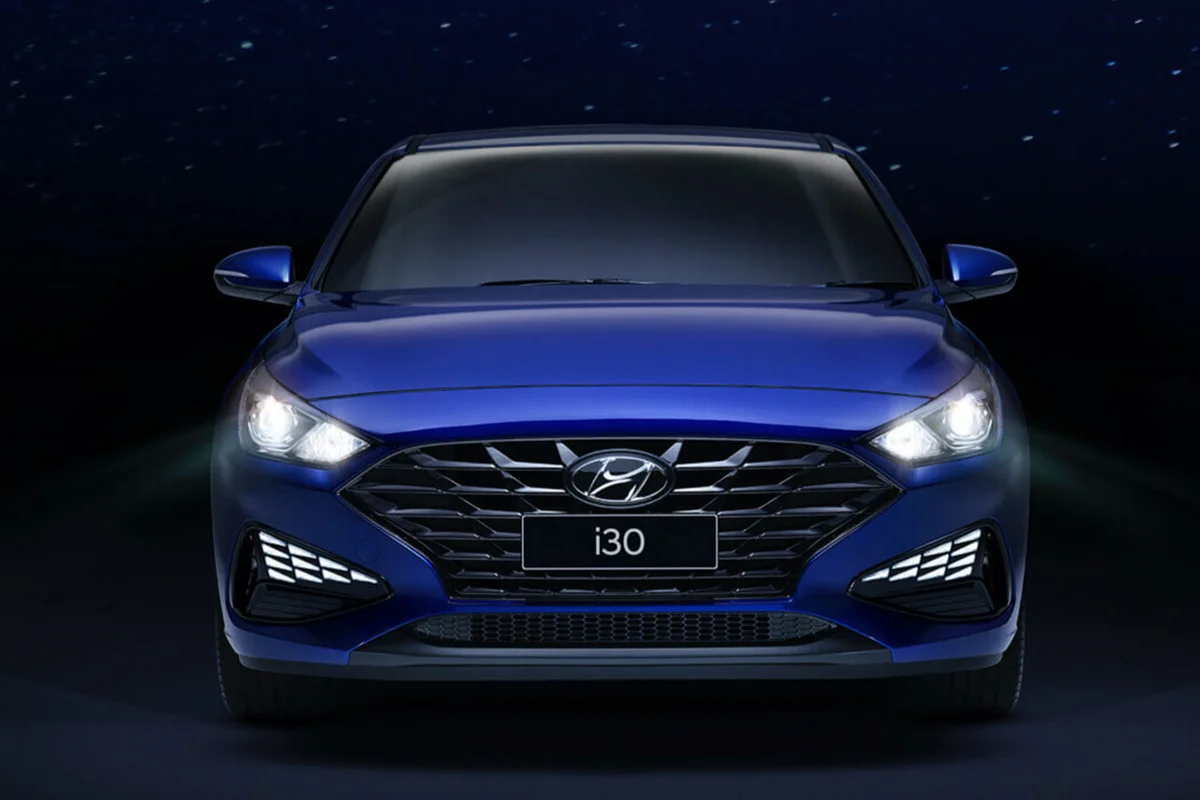
Model reviewed
Hyundai i30 Hatch N DCTFrom $52,000 RRP
Excl. on-road costs
from $294/wk in VIC, excludes servicing and insurance (estimate)
62/100
CarSorted Score
- Fuel use
- 8.5 L/100km
- Boot
- 381L
The i30 N is the only i30 hatch Hyundai still sells new in Australia: a 206kW, 392Nm front-drive hot hatch with an electronic limited-slip differential, from $52,000 RRP as a manual or DCT and up to $57,500 for the N Premium with sunroof. It keeps a 381-litre boot, 1,000kg braked towing and a five-year unlimited-kilometre warranty. Against it: 8.5L/100km on 95 RON, 10,000km service intervals and no ANCAP rating on our records.
Likes
- 206kW and 392Nm with an electronic limited-slip diff
- Manual or 8-speed DCT at the same base price
- 381-litre boot, more than a Golf GTI or GR Corolla
- Five-year, unlimited-kilometre warranty
- Launch control and adaptive suspension on every grade
Dislikes
- No ANCAP rating on our records
- 8.5L/100km on 95 RON premium
- 10,000km service intervals
- Plain cruise control in Hyundai's spec sheet
- 132mm ground clearance
Competitors
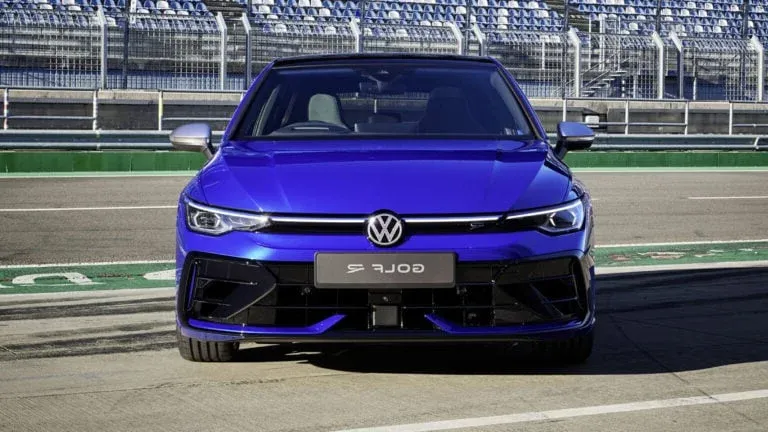
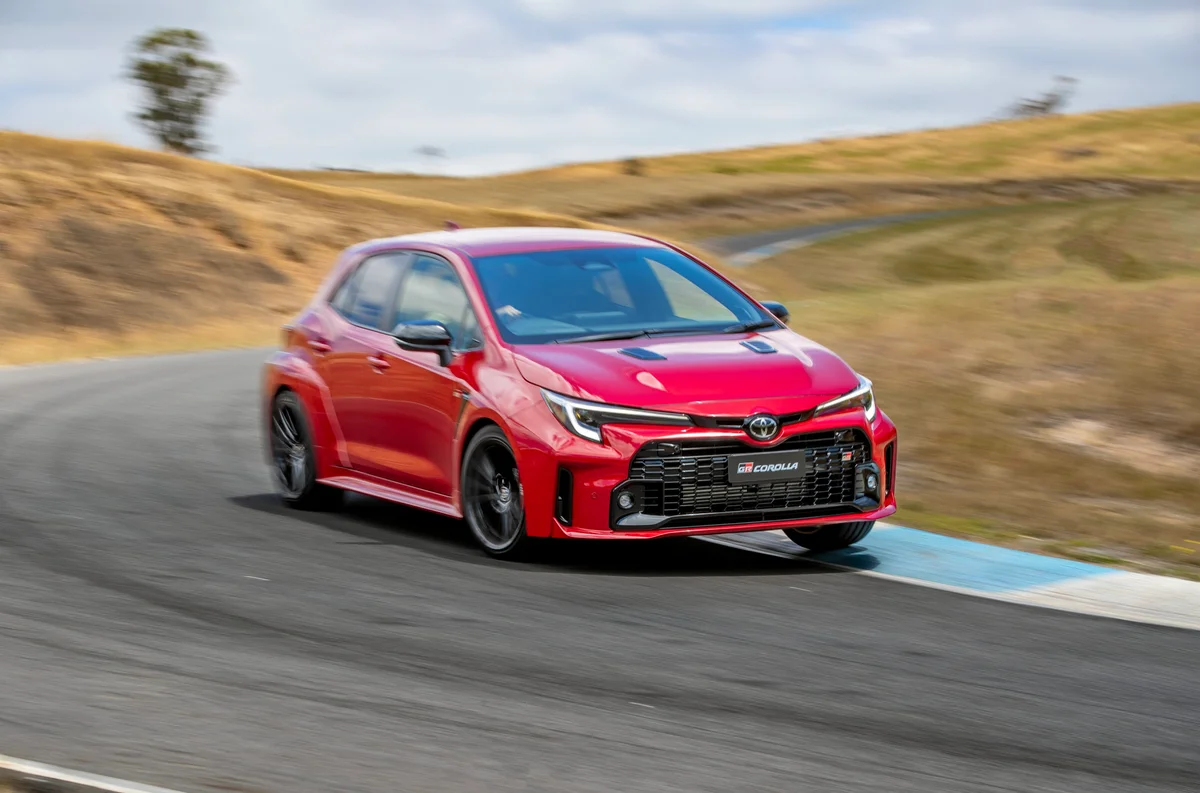
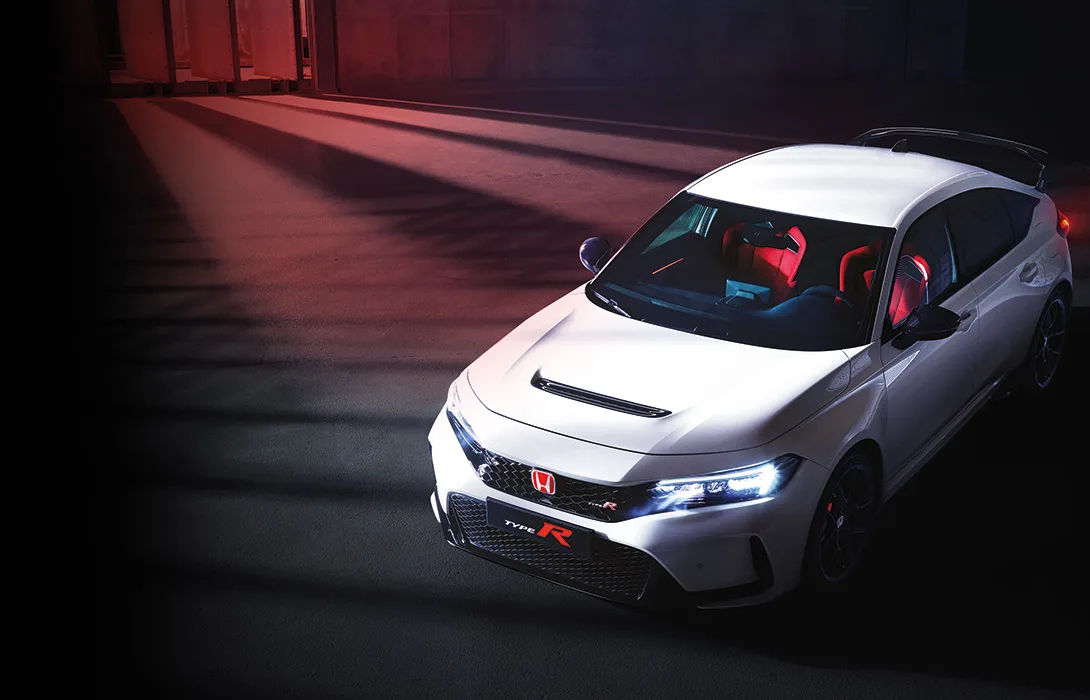
This review is built from Hyundai's published figures, ANCAP and our own calculators. We have not driven this car.
Written 7 April 2026. The snapshot, tables, prices and scores on this page update from our car data; figures quoted in the text are as at that date.
The Quick Verdict
This review used to be about the everyday 2.0-litre i30 hatch. Hyundai Australia no longer sells that car new: its i30 range now lists the i30 Sedan and, separately, the i30 N. So this page now covers the i30 N, the only i30 hatch you can order. It pairs a 2.0-litre turbo petrol making 206kW and 392Nm with front-wheel drive and a choice of 6-speed manual or 8-speed dual-clutch, from $52,000 before on-road costs. It keeps the hatch body, with a 381-litre boot and five seats. If you came here for a $30k small car, the closest Hyundai is the i30 Sedan.
It is one of the petrol hot hatches still offered new in Australia with a manual gearbox. We have not driven it. Everything below comes from Hyundai's 2025 Australian specification sheet, which we keep on file, and our rows for each of the five versions.
| Key details | 2026 Hyundai i30 Hatch N DCT |
|---|---|
| Engine | 2L 4-cyl turbo |
| Power | 206kW |
| Torque | 392Nm |
| Drive type | FWD |
| Transmission | 8-speed N DCT (wet clutch) |
| Power-to-weight ratio | 139 kW/tonne |
| Weight | 1,480kg (kerb) |
| Spare tyre type | Temporary space saver |
| Tow rating | 1,000kg braked500kg unbraked |
| Turning circle | 11.6m |
| Fuel consumption | 8.5 L/100km |
| Boot | 381L seats up, 1,287L folded |
| ANCAP | No rating on record |
Key details for 3 other variants
| Key details | 2026 Hyundai i30 Hatch N Manual |
|---|---|
| Engine | 2L 4-cyl turbo |
| Power | 206kW |
| Torque | 392Nm |
| Drive type | FWD |
| Transmission | 6-speed Manual |
| Power-to-weight ratio | 142 kW/tonne |
| Weight | 1,447kg (kerb) |
| Spare tyre type | Temporary space saver |
| Tow rating | 1,000kg braked500kg unbraked |
| Turning circle | 11.6m |
| Fuel consumption | 8.5 L/100km |
| Boot | 381L seats up, 1,287L folded |
| ANCAP | No rating on record |
| Key details | 2026 Hyundai i30 Hatch N Premium Manual |
|---|---|
| Engine | 2L 4-cyl turbo |
| Power | 206kW |
| Torque | 392Nm |
| Drive type | FWD |
| Transmission | 6-speed Manual |
| Power-to-weight ratio | 137 kW/tonne |
| Weight | 1,508kg (kerb) |
| Spare tyre type | Temporary space saver |
| Tow rating | 1,000kg braked500kg unbraked |
| Turning circle | 11.6m |
| Fuel consumption | 8.5 L/100km |
| Boot | 381L seats up, 1,287L folded |
| ANCAP | No rating on record |
| Key details | 2026 Hyundai i30 Hatch N Premium w/ Sunroof Manual |
|---|---|
| Engine | 2L 4-cyl turbo |
| Power | 206kW |
| Torque | 392Nm |
| Drive type | FWD |
| Transmission | 6-speed Manual |
| Power-to-weight ratio | 137 kW/tonne |
| Weight | 1,508kg (kerb) |
| Spare tyre type | Temporary space saver |
| Tow rating | 1,000kg braked500kg unbraked |
| Turning circle | 11.6m |
| Fuel consumption | 8.5 L/100km |
| Boot | 381L seats up, 1,287L folded |
| ANCAP | No rating on record |
Is it good value?
What Does the i30 N Cost?
There are five versions on our records, all RRP before on-road costs:
- i30 N Manual: $52,000
- i30 N DCT: $52,000
- N Premium Manual: $55,500
- N Premium with sunroof, Manual: $57,500
- N Premium with sunroof, DCT: $57,500
What each step up buys
The base i30 N has the full performance hardware: the 206kW engine, an electronically controlled limited-slip differential with two modes, three-mode electronically controlled suspension, launch control, ventilated discs front and rear, and 19-inch wheels on 235/35 R19 tyres. Inside are N sports front seats in cloth, a 10.25-inch touchscreen with satellite navigation and live traffic, Apple CarPlay and Android Auto, digital radio, a wireless charging pad, dual-zone climate, six speakers, smart key entry and front and rear parking sensors.
The N Premium adds $3,500 and swaps the seats for Hyundai's N Light Seats, lightweight front buckets in Alcantara and leather with an illuminated N logo, and adds heated front seats and a heated steering wheel. The N Premium with sunroof adds a dual-panel panoramic glass sunroof for another $2,000, and is the only Premium version offered with the DCT.
Manual buyers get automatic rev matching with three modes. DCT buyers get Hyundai's N Grin Shift, N Power Shift and N Track Sense functions and creep start. On the DCT, the blind-spot and rear cross-traffic systems are the avoidance types that can brake; the manual gets warning versions.
What it costs on the road and per week
Our drive-away estimate for the i30 N Manual is about $55,640 in VIC and $54,940 in QLD, and for the N Premium with sunroof DCT about $61,380 and $60,610. On our weekly-cost model ($5,000 deposit, five years at an assumed 7.5%, plus fuel, rego and tyres) the base car is about $291 a week in VIC and $290 in QLD, and the top grade about $317 and $316. Servicing and insurance are not included, and insurance for a 206kW hot hatch can be a large number for a young driver, so get a quote first.
Rivals: What Else Should You Cross-Shop?
Volkswagen Golf GTI ($58,990)
The GTI 195TSI makes 195kW and 370Nm, so it gives away 11kW and 22Nm to the i30 N, and costs $6,990 more than the entry i30 N. Volkswagen claims 7.2L/100km against the i30 N's 8.5L/100km, and quotes a 374-litre boot against 381 litres.
Toyota GR Corolla (from $67,990)
The GR Corolla GTS adds all-wheel drive and makes 221kW and 400Nm, for $15,990 more than the entry i30 N as a manual. Toyota quotes a 217-litre boot, well short of the i30 N's 381 litres.
Honda Civic Type R ($77,250)
The Type R makes 235kW and 420Nm through the front wheels and quotes a 410-litre boot. Its $77,250 RRP is $25,250 more than the entry i30 N, and our row also holds an $85,000 drive-away price in VIC.
On the figures, the i30 N is the cheapest of the four by a clear margin, with the second-largest boot. The GTI uses less fuel, the GR Corolla has all-wheel drive, and the Type R has the most power, each for more money.
| Key details: Hyundai i30 Hatch N DCT | |
|---|---|
| Price | From $52,000 RRPExcl. on-road costs |
| Drive-away estimate | Calculating... |
| Cost per week in VIC | from $294/wk in VIC, excludes servicing and insuranceRepayments, fuel or charging, rego and CTP, servicing, tyres and insurance where held. Estimate only, not a quote. |
| Body | Hatch |
| Powertrain | Petrol, 2L 4-cyl turbo |
| Towing (braked / unbraked) | 1,000kg / 500kg |
| Seats | 5 |
| Warranty | 5yr / unlimited km |
| Rivals | Volkswagen Golf, Toyota GR Corolla, Honda Civic Type R |
| The Hyundai i30 Hatch range on sale | Price | Powertrain | Fuel or energy use |
|---|---|---|---|
| N DCT | From $52,000 RRP | Petrol, FWD | 8.5 L/100km |
| N Manual | From $52,000 RRP | Petrol, FWD | 8.5 L/100km |
| N Premium Manual | From $55,500 RRP | Petrol, FWD | 8.5 L/100km |
| N Premium w/ Sunroof Manual | From $57,500 RRP | Petrol, FWD | 8.5 L/100km |
| N Premium w/ Sunroof DCT | From $57,500 RRP | Petrol, FWD | 8.5 L/100km |
How much fuel does it use?
Fuel
Hyundai claims 8.5L/100km on the combined ADR cycle for every i30 N, with 11.8 urban and 6.6 extra-urban for the manual and 11.9 and 6.5 for the DCT. The engine needs 95 RON premium unleaded. At 15,000km a year that claim works out to about $2,490 at $1.95/L, and premium usually costs more than that. The 50-litre tank covers a calculated 588km on the combined claim.
That urban figure is the one to notice. A hot hatch used mostly in town will sit closer to 11.8L/100km than 8.5, which on the same sums is about $3,450 a year. Track days and spirited driving use more again.
| Fuel: Hyundai i30 Hatch N DCT | |
|---|---|
| Fuel use (combined) | 8.5 L/100km |
| Fuel type | Petrol |
| Minimum fuel grade | 95 RON |
| Urban / extra-urban | 11.9 L/100km / 6.5 L/100km |
| Fuel tank | 50L |
| Range on a tank (calculated) | 588kmTank divided by the combined figure |
| CO2 (combined) | 197 g/km |
| Service interval | 12 months or 10,000km |
What does it cost to own?
Warranty, servicing and roadside
Hyundai covers the i30 N for five years with unlimited kilometres, with five years of roadside assistance on our rows that renews when the car is serviced through Hyundai. Read the warranty terms on track use before you book a track day, because performance cars often carry exclusions for competition use.
Services are every 12 months or 10,000km. For an enthusiast who drives a lot, that 10,000km interval means more than one service a year. We do not hold Hyundai's capped-price service figures for the i30 N, so ask the dealer for the schedule. Budget for consumables too: 235/35 R19 performance tyres and the ventilated brake discs cost more to replace than an everyday small car's.
We hold no resale figure for the i30 N.
| Warranty and servicing: Hyundai i30 Hatch N DCT | |
|---|---|
| Warranty | 5yr / unlimited km |
| Roadside assistance | 5 years (renewed with dealer servicing) |
| Service interval | 12 months or 10,000km |
| Capped-price servicing | No data |
Cost per week in VIC: from $294/wk in VIC, excludes servicing and insurance
- Repayment estimate$217/wk
$5,000 deposit, 5yr loan at an assumed 7.5% p.a. on the RRP. Not an offer of credit
- Fuel$51/wk
8.5 L/100km combined at $2.10/L premium 95, the site default
- Rego + CTP$18/wk
VIC typical: car, metropolitan (high risk) zone, 12-month renewal, $958.80 a year. As at July 2026, VicRoads
- ServicingNo data
No data: no servicing cost held for this car
- Tyres$8/wk
Typical tyre spend for this type of car, scaled to 15,000 km a year (not this car's tyres)
- InsuranceNo data
No data: no insurance estimate held for this car
Based on 15,000 km a year in VIC. Estimate only, not a quote.
How safe is it?
Safety
We have no ANCAP rating on record for the i30 N, so we do not state one here. Check ancap.com.au before you buy.
Hyundai's 2025 spec sheet lists its SmartSense suite on every grade: forward collision-avoidance assist with pedestrian detection, lane keeping and lane following assist, intelligent speed limit assist, driver attention warning, high beam assist, multi-collision braking, safe exit warning and a rear occupant alert. Blind-spot and rear cross-traffic systems are fitted to both gearboxes, as warnings on the manual and avoidance assists on the DCT. The spec sheet lists cruise control rather than adaptive cruise, so check that on the car if it matters to you. Seven airbags are fitted, with ISOFIX on the two outer rear seats and three top tethers.
| ANCAP: Hyundai i30 Hatch N DCT | |
|---|---|
| ANCAP rating | No rating on record |
| Airbags | 7 |
| Driver assists: Hyundai i30 Hatch N DCT | |
|---|---|
| Autonomous emergency braking | Standard |
| Adaptive cruise control | Standard |
| Blind-spot monitoring | Standard |
| Rear cross-traffic alert | Standard |
| Lane-keep assist | Standard |
| Speed sign recognition | Standard |
| Driver attention monitor | Standard |
| 360-degree camera | No data |
Standard, Optional (with the printed price), No (the maker's document says not fitted) or No data. 8 assists checked.
What is it like inside?
Practicality
Hyundai quotes 381 litres of boot space with the rear seats up and 1,287 litres with them folded, with a space-saver spare under the floor. That is more than the Golf GTI's 374 litres and far more than the GR Corolla's 217, and a pram will fit with the seats up.
The i30 N is 4,340mm long, 1,795mm wide and 1,445mm tall on a 2,650mm wheelbase, with an 11.6m turning circle. Ground clearance is 132mm, so watch steep driveways, kerbs and speed humps on those low-profile 19-inch tyres. Kerb weight runs from 1,447kg (i30 N manual) to 1,541kg (N Premium with sunroof, DCT). There are five seats, trimmed in cloth on the base car and in Alcantara and leather on the three Premium versions.
| Space and dimensions: Hyundai i30 Hatch N DCT | |
|---|---|
| Seats | 5 |
| Boot, seats up | 381L |
| Boot, seats folded | 1,287L |
| Length x width x height | 4,340 x 1,795 x 1,445mm |
| Wheelbase | 2,650mm |
| Ground clearance | 132mm |
| ISOFIX | 2 points (2L, 2R) |
| Top tethers | 3 |
| Seat trim | Cloth (N sports front seats) |
| Spare wheel | Temporary space saver |
Does it have good tech?
Screens, phones and sound
Every i30 N has a 10.25-inch touchscreen and a 10.25-inch digital driver display, with satellite navigation, live traffic updates, Apple CarPlay and Android Auto, digital radio and a six-speaker audio system. Hyundai lists a Qi wireless charging pad in the front console, front USB-C and USB-A outlets and two USB-C outlets in the rear console. Bluelink connected services add remote functions such as locking status and, on the DCT, remote climate control.
| Screens and audio: Hyundai i30 Hatch N DCT | |
|---|---|
| Touchscreen | 10.3 inches |
| Driver display | 10.3 inches |
| Audio | Infinity, 6 speakers |
| USB | USB-A |
| Connected services term | No data |
| Connectivity: Hyundai i30 Hatch N DCT | |
|---|---|
| Apple CarPlay | Standard |
| Android Auto | Standard |
| Wireless CarPlay / Android Auto | No data |
| Wireless phone charging | Standard |
| Head-up display | No data |
| Built-in navigation | Standard |
| Digital radio | Standard |
| Over-the-air updates | Standard |
| Remote climate (app) | Standard |
What the figures say about driving it
The Hyundai i30 Hatch N DCT has 139 kW for every tonne of kerb weight, 392Nm of torque, a claimed 0-100km/h of 5.3s. It weighs 1,480kg and turns in 11.6m. These are the figures that shape how quickly a car gets moving and how easily it parks.
| The figures: Hyundai i30 Hatch N DCT | |
|---|---|
| Power-to-weight | 139 kW/tonne |
| Power | 206kW |
| Torque | 392Nm |
| 0-100km/h (claimed) | 5.3s |
| Kerb weight | 1,480kg |
| Turning circle | 11.6m |
| Tyres | 235/35R19 91Y |
| Drive | FWD |
| Transmission | 8-speed N DCT (wet clutch) |
| Towing (braked) | 1,000kg |
We have not driven the Hyundai i30 Hatch; these are Hyundai's published figures.
Engine, gearboxes and towing
All five versions use the 2.0-litre turbo making 206kW and 392Nm, driving the front wheels through an electronically controlled mechanical limited-slip differential with Normal and Sport modes. Our DCT rows hold a claimed 0-100km/h of 5.3 seconds. The manual has a 6-speed gearbox; the DCT is an 8-speed wet-clutch unit. On the lightest version, the 1,447kg i30 N Manual, that is about 142kW per tonne; the 1,541kg N Premium with sunroof DCT works out to about 134kW per tonne. Hyundai's spec sheet also lists ventilated disc brakes at both ends on every grade.
Towing is rated at 1,000kg braked and 500kg unbraked, with a 75kg towball download: a light trailer or a pair of trail bikes, not a caravan.
Best deals
Get a great deal on a brand new car today
One enquiry, up to four cars. We ask local dealers for their best drive-away price and send them back to you, so you compare real numbers instead of list prices.
Free for you to use. If you buy, the dealer may pay us a commission. Your details only go to a dealer if you say so.
Find a new car dealShould I buy it?
Should You Buy the Hyundai i30 N?
Consider it if:
- You want a performance hatch and the choice of a manual gearbox, from $52,000
- You want a usable boot: 381 litres, more than the Golf GTI's 374 and the GR Corolla's 217
- You want Hyundai's 5-year, unlimited-kilometre warranty
Look elsewhere if:
- You wanted the everyday i30 hatch. It is no longer sold new; the i30 Sedan is Hyundai's small car now
- Fuel cost matters: 8.5L/100km on premium unleaded is the claim, and 11.8 urban
- You want all-wheel drive: the GR Corolla has it, the i30 N does not
- You want a published ANCAP rating: we hold none for the i30 N
On the figures, the base i30 N Manual at $52,000 is the value pick: the same engine, differential and suspension as the $57,500 cars, without the heated Alcantara seats or sunroof.
→ Compare all Hyundai i30 N variants on CarSorted (200+ specs)
CarSorted Score breakdown
The CarSorted Score is algorithmic: it is calculated from this car's published data, not from a road test. How it works.
Safety
Fuel Economy
Value
Practicality
Technology
Performance
Reliability
Questions buyers ask
Can you still buy a new Hyundai i30 hatch in Australia?
Only as the i30 N. Hyundai Australia's i30 range now lists the i30 Sedan (petrol, hybrid and N Line) and, as a separate performance model, the i30 N hatch. The 2.0-litre Active, Elite and N Line hatches are no longer sold new.
How much does the Hyundai i30 N cost?
The Hyundai i30 Hatch N DCT is from $52,000 RRP, before on-road costs. The range table above lists every current variant.
How powerful is the i30 N?
The Hyundai i30 Hatch N DCT makes 206kW and 392Nm, with a claimed 0-100km/h of 5.3s.
Does the i30 N have an ANCAP rating?
We have no ANCAP rating on record for the Hyundai i30 Hatch.
What warranty does the i30 N have?
The Hyundai i30 Hatch comes with a 5yr / unlimited km warranty.
Manual or DCT?
Both cost the same in the base and Premium-with-sunroof grades. The manual gets automatic rev matching; the 8-speed wet-clutch DCT gets launch-focused N Grin Shift and N Power Shift functions and, in Hyundai's spec sheet, the avoidance (braking) versions of blind-spot and rear cross-traffic assist rather than warnings only.
How much fuel does the Hyundai i30 Hatch use?
On the official combined cycle the Hyundai i30 Hatch uses 8.5 L/100km.
How big is the Hyundai i30 Hatch's boot?
The Hyundai i30 Hatch has 381L of boot space with the seats up.
How to read this page. This is a review of the published figures: we have not driven this car. Prices, specifications, ANCAP ratings, warranty, equipment and the CarSorted Score come from our records for the variant shown, sourced from Hyundai's Australian documents, and update when those records change. RRP excludes on-road costs. Drive-away figures are estimates for the state you have selected unless marked as advertised; cost per week is an estimate, not a quote. The editorial text was written on 7 April 2026. Always confirm price and specification with the manufacturer or a dealer before you buy. CarSorted does not accept payment for recommendations.
Comments (0)
Sign in to join the conversation
No comments yet. Be the first!