2026 Hyundai Kona 2.0 FWD review
The Small SUV That Does Everything Well Enough
Data checked: specs 7 Sep 2026, price 5 Oct 2026
Text fact-checked against our data 15 July 2026Review snapshot
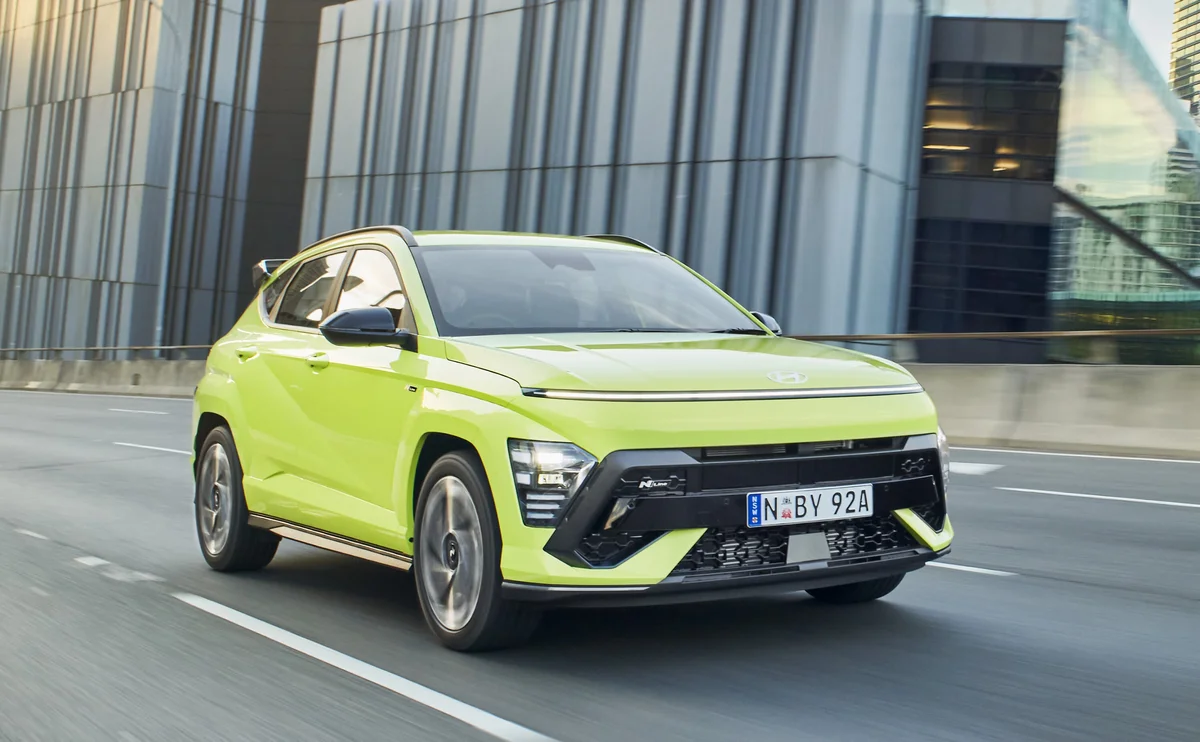
Model reviewed
Hyundai Kona 2.0 FWDFrom $33,950 RRP
Excl. on-road costs
from $197/wk in VIC, excludes servicing and insurance (estimate)
63/100
CarSorted Score
- Fuel use
- 6.6 L/100km
- Boot
- 361L
This review is built from Hyundai's published figures, ANCAP and our own calculators. We have not driven this car.
Written 7 April 2026. The snapshot, tables, prices and scores on this page update from our car data; figures quoted in the text are as at that date.
The Quick Verdict
The second-generation Kona is a massive step forward from the original. It's bigger in every dimension, looks far more distinctive, and offers the broadest powertrain range in the small SUV segment: petrol, hybrid, and full electric. The base 2.0 FWD from $32,500 gives you 110kW, a decent 361L boot, 1,300kg towing, and a 4-star ANCAP rating from 2023. It claims 6.6L/100km, which is average for the class. Where the Kona stands out is in its versatility. It genuinely does everything well enough that most buyers won't find a deal-breaking weakness. The question is whether "well enough" justifies the price when rivals specialise in what you actually care about.
Design: Bold Statement
The second-generation Kona looks nothing like the original. And that's entirely a good thing. The first-gen Kona had split headlights that confused people. The new one has a horizontal LED light bar across the full width of the front, pixel-style daytime running lights integrated into the bumper, and a confident, angular face that photographs well and stands out in car parks. It looks like a small SUV designed with intent, not cobbled together from a hatchback parts bin.
The side profile is clean with prominent wheel arches, a strong shoulder line, and a slightly raked roofline that gives it some visual motion even standing still. The rear gets a full-width LED light bar that mirrors the front. Overall, it's cohesive and distinctive. You won't mistake a new Kona for anything else on the road.
At 4,350mm long, 1,825mm wide, and 1,575mm tall, it's grown considerably over the first generation. It's 150mm longer and 25mm wider, which translates directly into more interior and cargo space. The 2,660mm wheelbase is competitive in the class. It's bigger than the Yaris Cross but still compact enough for tight parking.
The Premium 1.6T adds sport bumpers, dark chrome trim, and 18-inch alloys. It looks properly sporty without being obnoxious. The available two-tone roof on certain colours adds visual interest and works well with the darker exterior shades like the Shooting Star grey metallic and the Curdle Red.
| Key details | 2026 Hyundai Kona 2.0 FWD |
|---|---|
| Engine | 2L 4-cyl |
| Power | 110kW |
| Torque | 180Nm |
| Drive type | FWD |
| Transmission | Automatic |
| Power-to-weight ratio | 82 kW/tonne |
| Weight | 1,335kg (kerb) |
| Spare tyre type | Space saver |
| Tow rating | 1,300kg braked600kg unbraked |
| Turning circle | 10.6m |
| Fuel consumption | 6.6 L/100km |
| Boot | 361L seats up |
| ANCAP | 4 stars (2023) |
Key details for 3 other variants
| Key details | 2026 Hyundai Kona Hybrid FWD |
|---|---|
| Engine | 1.6L 4-cyl |
| Power | 104kW combined (engine 77kW) |
| Torque | 265Nm |
| Drive type | FWD |
| Transmission | Automatic |
| Power-to-weight ratio | 74 kW/tonne |
| Weight | 1,410kg (kerb) |
| Spare tyre type | Space saver |
| Tow rating | 1,300kg braked600kg unbraked |
| Turning circle | 10.6m |
| Fuel consumption | 3.9 L/100km |
| Boot | 361L seats up |
| ANCAP | 4 stars (2023) |
| Key details | 2026 Hyundai Kona Elite Hybrid FWD |
|---|---|
| Engine | 1.6L 4-cyl |
| Power | 104kW |
| Torque | 265Nm |
| Drive type | FWD |
| Transmission | Automatic |
| Power-to-weight ratio | No data |
| Weight | No data |
| Spare tyre type | Temporary space saver (16 x 4.0T, T145/90 D16) |
| Tow rating | 1,300kg braked600kg unbraked |
| Turning circle | 10.6m |
| Fuel consumption | 3.9 L/100km |
| Boot | 407L seats up, 1,241L folded |
| ANCAP | 4 stars (2023) |
| Key details | 2026 Hyundai Kona Premium Hybrid FWD |
|---|---|
| Engine | 1.6L 4-cyl |
| Power | 104kW combined (engine 77kW) |
| Torque | 265Nm |
| Drive type | FWD |
| Transmission | Automatic |
| Power-to-weight ratio | 68 kW/tonne |
| Weight | 1,525kg (kerb) |
| Spare tyre type | Space saver |
| Tow rating | 1,300kg braked600kg unbraked |
| Turning circle | 10.6m |
| Fuel consumption | 3.9 L/100km |
| Boot | 361L seats up |
| ANCAP | 4 stars (2023) |
Is it good value?
What Does the Kona Cost in Australia?
Hyundai offers the Kona in several flavours. We're focusing on the petrol range here, as it accounts for the majority of sales. Here's what you're looking at:
Driveaway, the Hybrid FWD sweet-spot variant lands around $43,000-$45,000 depending on your state. The step up from the base 2.0 FWD to the Hybrid FWD gets you a hybrid powertrain, leather seats, a Bose sound system, a panoramic sunroof, heated and ventilated front seats, and a digital instrument cluster upgrade. That's a lot of kit for the money and makes the Hybrid FWD a different proposition from the base model.
The Premium 1.6T AWD at $49,000 adds the more powerful 1.6-litre turbo engine (141kW/265Nm), a 7-speed dual-clutch auto, AWD, sportier suspension tuning, and premium styling. Whether a sporty small SUV makes sense is a separate discussion.
If you're weighing the Kona against its corporate cousin, our Kona vs Seltos comparison breaks down every difference in detail.
Running Costs
At 15,000km per year and the claimed 6.6L/100km on regular unleaded at $1.95/litre, annual fuel costs work out to roughly $1,930, or about $9,650 across five years. On the same maths a Yaris Cross hybrid claiming 3.8L/100km comes to roughly $1,111 a year, while the CX-30 and Seltos land close to the Kona. The Premium 1.6T claims 7.1L/100km and wants premium 95 RON, so it's dearer on both counts, closer to $2,240 a year at around $2.10/litre. Those are all claimed figures and every one of these cars will use more in practice, particularly in town.
Hyundai's capped-price servicing runs every 12 months or 15,000km. Service costs range from $290 to $420, with five-year total servicing costs around $1,700-2,100. That's competitive but slightly higher than Toyota and Mazda. The dual-clutch transmission on the Premium 1.6T requires specific fluid changes that add to its servicing bill.
Tyres on the base 2.0 FWD and Hybrid FWD are 17-inch, costing $150-220 each for decent replacements. The Premium 1.6T gets 18-inch wheels with sportier rubber at $200-280 each. Insurance is reasonable. The Kona sits in a moderate insurance group, with comprehensive cover typically $1,200-1,700 per year.
Resale value is solid but not class-leading. Expect the Kona to retain 55-60% of its purchase price after three years. The Toyota Yaris Cross holds slightly better at 60-65%. Our cheapest cars to run analysis has the complete annual ownership cost comparison.
Rivals: What Else Should You Cross-Shop?
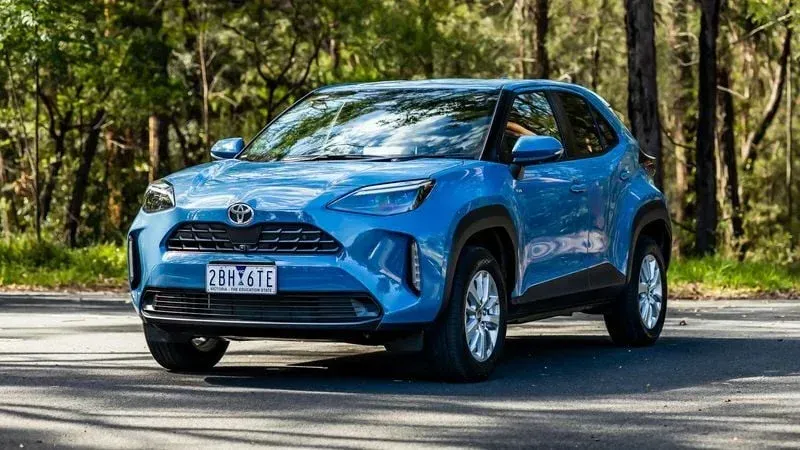
Toyota Yaris Cross (from $31,790)
The Yaris Cross is smaller, less powerful, and can barely tow. But it's a fuel-sipping machine at 3.8L/100km, which means annual fuel bills roughly $700-900 less than the Kona. It's also lighter, cheaper to buy, and has Toyota's legendary reliability behind it. If you're a city dweller who never tows and wants the lowest possible running costs, the Yaris Cross is the logical choice. If you need more space, more power, or any towing ability, the Kona wins. Full comparison at Yaris Cross vs Kona.
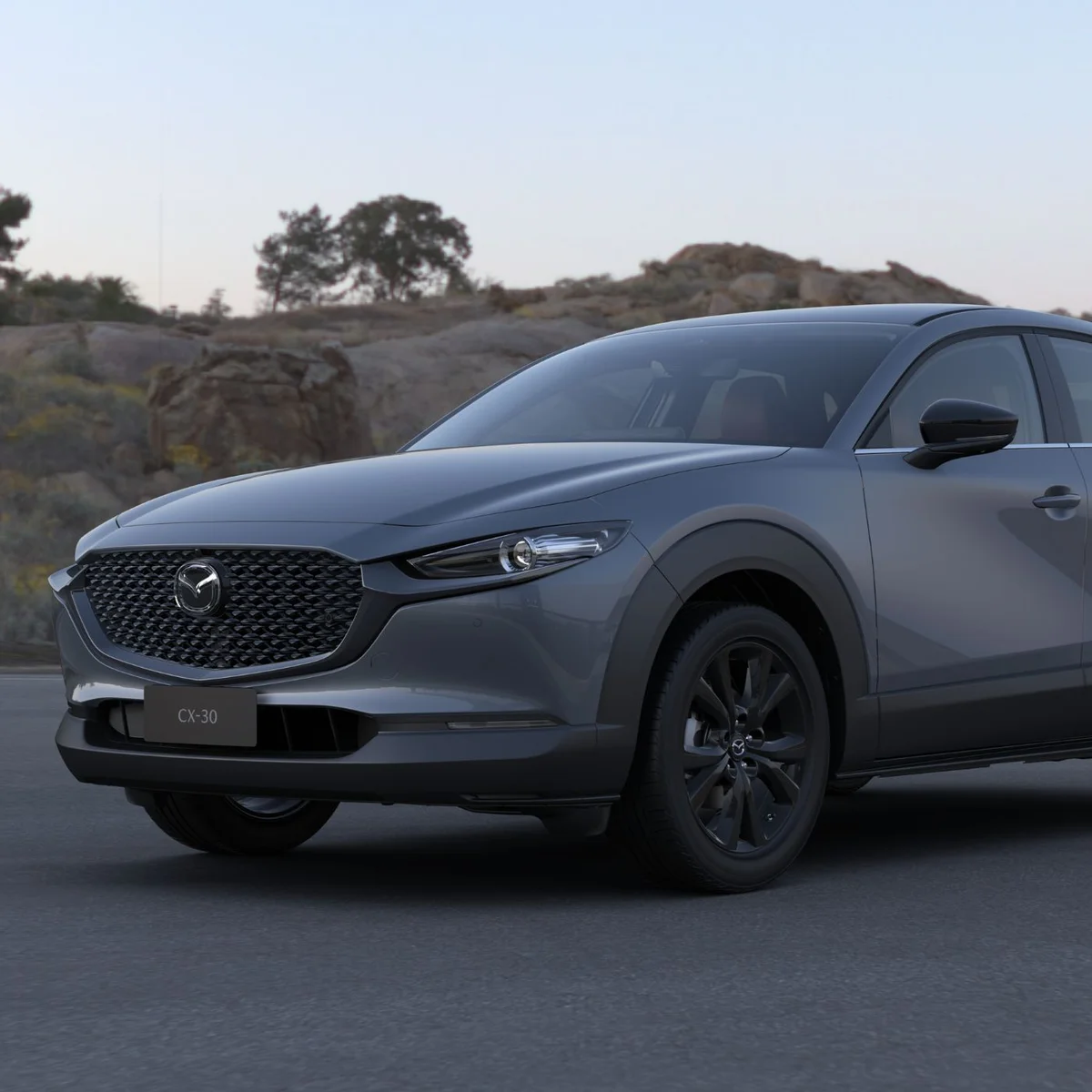
Mazda CX-30 (from $33,890)
The CX-30 is the premium alternative, and it leans on cabin materials and design. The Kona counters with a more tech-forward interior, better standard safety features, and the Bose audio system on the Hybrid FWD. For a deeper look, see our Kona vs CX-30 comparison.
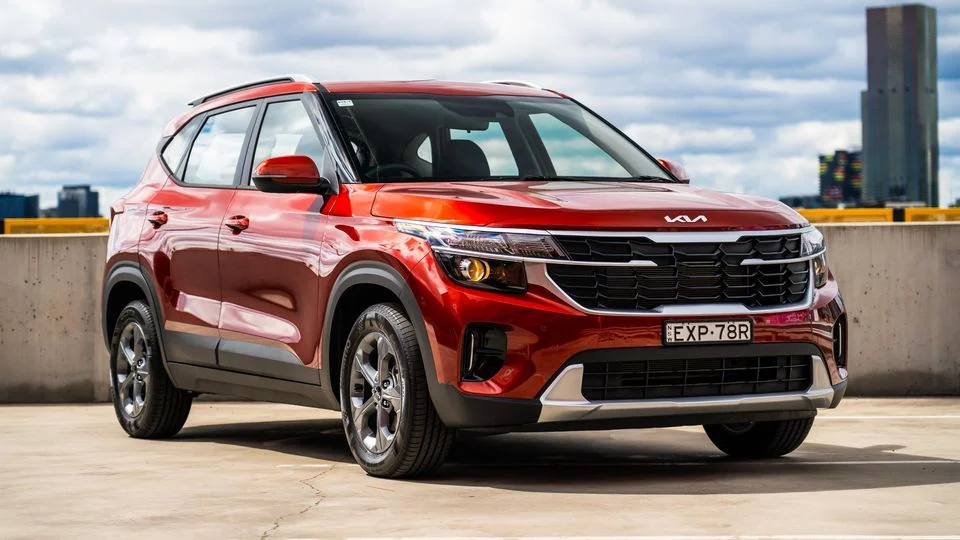
Kia Seltos (from $33,590)
The Seltos shares its platform with the Kona but is bigger in every way: 498L boot, more rear legroom, 1,500kg towing. It also gets Kia's 7-year, unlimited-kilometre warranty, which is among the best coverage in the segment. The Kona has a more modern design and the wider powertrain choice (including the EV option). The Seltos is the practical choice. Our Kona vs Seltos comparison has the full detail.
The Kona wins on interior tech and powertrain variety. The Yaris Cross wins on fuel economy and purchase price. The CX-30 wins on interior materials. The Seltos wins on space and warranty coverage. For the complete small SUV rundown, see our best SUVs under $50k guide.
| Key details: Hyundai Kona 2.0 FWD | |
|---|---|
| Price | From $33,950 RRPExcl. on-road costs |
| Drive-away estimate | Calculating... |
| Cost per week in VIC | from $197/wk in VIC, excludes servicing and insuranceRepayments, fuel or charging, rego and CTP, servicing, tyres and insurance where held. Estimate only, not a quote. |
| Body | SUV |
| Powertrain | Petrol, 2L 4-cyl |
| Towing (braked / unbraked) | 1,300kg / 600kg |
| Seats | 5 |
| Warranty | 5yr / unlimited km |
| Rivals | Toyota Yaris Cross, Mazda CX-30, Kia Seltos |
| The Hyundai Kona range on sale | Price | Powertrain | Fuel or energy use |
|---|---|---|---|
| 2.0 FWD | From $33,950 RRP | Petrol, FWD | 6.6 L/100km |
| Hybrid FWD | From $36,950 RRP | Hybrid, FWD | 3.9 L/100km |
| Elite Hybrid FWD | From $39,950 RRP | Hybrid, FWD | 3.9 L/100km |
| Premium Hybrid FWD | From $45,950 RRP | Hybrid, FWD | 3.9 L/100km |
| Premium 2.0 FWD | POA | Petrol, FWD | 6.6 L/100km |
How much fuel does it use?
Efficiency: Average for the Segment
Hyundai claims 6.6L/100km on the combined ADR test cycle for the base 2.0-litre petrol. That's middle-of-the-pack for a naturally aspirated small SUV, and the two engines in the Kona range drift away from their claims for different reasons.
The 2.0-litre is the straightforward one. No turbo, no electric assistance and nothing recovering energy under braking, so stop-start traffic is its weak spot: the engine idles through every hold-up and then has to haul the car back up to speed on its own. The CVT helps at a steady cruise by keeping revs low, which is why a highway run is where this engine looks best. Short trips are the other drag, because a cold engine runs rich until it warms through.
The Premium 1.6T claims 7.1L/100km, and the gap between claim and driving tends to be wider on a turbo. The test cycle keeps it off boost; merging, overtaking and a loaded car do not, and the engine runs richer when the turbo is working. It also wants premium 95 RON, which adds to the bill on top of the consumption. For context on claimed figures, the Yaris Cross hybrid at 3.8L/100km is in a different league entirely, while the CX-30 at 6.3L/100km and the Seltos at 7.0L/100km are comparable.
The 47-litre fuel tank is small: about 710km on the claimed figure, which means you'll be filling up more often than a Camry or HiLux owner. At current regular unleaded prices, a full tank costs around $92. On the claim, 15,000km a year comes to roughly $1,930 in fuel, and city-heavy driving will lift that.
If fuel efficiency is a priority, the Kona Hybrid (not widely available in all trims) claims 4.3L/100km, or you could step up to the Kona Electric for zero tailpipe emissions. For a pure petrol comparison, the Kona is competitive but unremarkable. The Kona vs CX-30 comparison has the full efficiency breakdown.
| Fuel: Hyundai Kona 2.0 FWD | |
|---|---|
| Fuel use (combined) | 6.6 L/100km |
| Fuel type | Petrol |
| Minimum fuel grade | No data |
| Fuel tank | 47L |
| Range on a tank (calculated) | 712kmTank divided by the combined figure |
| CO2 (combined) | 148 g/km |
| Service interval | 12 months or 15,000km |
What does it cost to own?
| Warranty and servicing: Hyundai Kona 2.0 FWD | |
|---|---|
| Warranty | 5yr / unlimited km |
| Roadside assistance | 5 years (renewed with dealer servicing) |
| Service interval | 12 months or 15,000km |
| Capped-price servicing | No data |
Cost per week in VIC: from $197/wk in VIC, excludes servicing and insurance
- Repayment estimate$134/wk
$5,000 deposit, 5yr loan at an assumed 7.5% p.a. on the RRP. Not an offer of credit
- Fuel$37/wk
6.6 L/100km combined at $1.95/L ULP 91, the site default
- Rego + CTP$18/wk
VIC typical: car, metropolitan (high risk) zone, 12-month renewal, $958.80 a year. As at July 2026, VicRoads
- ServicingNo data
No data: no servicing cost held for this car
- Tyres$8/wk
Typical tyre spend for this type of car, scaled to 15,000 km a year (not this car's tyres)
- InsuranceNo data
No data: no insurance estimate held for this car
Based on 15,000 km a year in VIC. Estimate only, not a quote.
How safe is it?
Safety: Four Stars, Strong Suite
The Kona holds a 4-star ANCAP safety rating from its 2023 assessment, not five. It was held back on vulnerable road user protection and safety assist rather than on occupant protection, where it scored well. Hyundai's SmartSense safety suite is standard across all variants and includes:
- Forward Collision-Avoidance Assist with pedestrian, cyclist, and junction detection
- Lane Keeping Assist and Lane Following Assist (highway centring)
- Blind-Spot Collision-Avoidance Assist with rear monitoring
- Rear Cross-Traffic Collision-Avoidance Assist
- Smart Cruise Control with stop-and-go
- Driver Attention Warning with facial recognition (Hybrid FWD and above)
- Safe Exit Warning when opening doors near traffic
- Intelligent Speed Limit Assist
Seven airbags are standard, including a centre-side airbag between the front seats. The body structure uses a high percentage of advanced high-strength steel, and the Kona scored 86% for adult occupant protection and 90% for child occupant protection in Euro NCAP testing.
One standout feature is the Blind-Spot View Monitor on the Hybrid FWD and above. When you activate the indicator, a live camera feed from the corresponding side of the car appears in the digital instrument cluster, showing you exactly what's in your blind spot. It shows you more than a simple warning light can.
| ANCAP: Hyundai Kona 2.0 FWD | |
|---|---|
| ANCAP rating | 4 stars (tested 2023) |
| Adult occupant | 80% |
| Child occupant | 84% |
| Vulnerable road users | 64% |
| Safety assist | 62% |
| Airbags | 7 |
| Driver assists: Hyundai Kona 2.0 FWD | |
|---|---|
| Autonomous emergency braking | Standard |
| Adaptive cruise control | Standard |
| Blind-spot monitoring | Standard |
| Rear cross-traffic alert | No data |
| Lane-keep assist | Standard |
| Speed sign recognition | No data |
| Driver attention monitor | No data |
| 360-degree camera | No data |
Standard, Optional (with the printed price), No (the maker's document says not fitted) or No data. 8 assists checked.
What is it like inside?
Interior: Genuinely Impressive for the Price
This is where the Kona punches above its weight. Hyundai has gone all-in on the cabin design, and it shows. The dashboard features a dual 12.3-inch screen layout: one for the digital instrument cluster and one for the infotainment system, connected in a single curved panel. It looks modern and premium in a way that the Yaris Cross and Seltos simply don't match.
The infotainment system has wireless Apple CarPlay and Android Auto, built-in navigation, and over-the-air update capability. Native navigation includes real-time traffic and natural-language voice commands.
The Hybrid FWD and Premium 1.6T get leather seats, a mix of soft-touch surfaces and textured panels on the dash, and ambient lighting. The base 2.0 FWD has harder plastics in some areas.
The steering wheel tilts and telescopes, the driver's seat has height adjustment on all grades, and the Hybrid FWD gets full power adjustment with memory. The C-pillars are thick, which is where the blind-spot cameras earn their keep.
Storage is well thought out. A generous centre console bin, deep door pockets, a useful shelf ahead of the gear lever (ideal for phones), two cup holders, wireless charging on the Hybrid FWD and above, and USB-C ports front and rear. The glovebox is a good size. Rear passengers get their own USB-C ports and air vents, which is a nice touch at this price.
Practicality: Bigger Than Before
The 361-litre boot is adequate but not class-leading. It's behind the CX-30 (430L) and the Seltos (498L), though it's larger than the previous-generation Kona. The boot floor has a two-level setup, so you can choose between a flat floor or extra under-floor storage. The opening is reasonably wide and the lip height is manageable.
The rear seats fold 60/40 to extend the cargo area to 1,205 litres. The fold is nearly flat, which is useful for longer items. For the weekend Bunnings run or transporting flat-pack furniture, the Kona copes well enough. Just don't expect wagon-level versatility.
Rear seat space has grown with the 150mm longer body. It's a step up from the Yaris Cross on size but still a step behind the Seltos, which is the clear space winner in this class.
ISOFIX anchor points are fitted to both outer rear seats with top-tether anchors across the back row. The raised ride height means less bending when loading small children in and out.
Towing is a genuine strength. The Kona petrol tows up to 1,300kg braked. That's the second-highest in this class behind the Seltos (1,500kg) and considerably more than the Yaris Cross (400kg). It opens up the possibility of towing a jet ski, a small camper trailer, or a decent-sized box trailer. For a small SUV, that kind of towing capability is a real practical advantage.
| Space and dimensions: Hyundai Kona 2.0 FWD | |
|---|---|
| Seats | 5 |
| Boot, seats up | 361L |
| Boot, seats folded | No data |
| Length x width x height | 4,350 x 1,825 x 1,585mm |
| Wheelbase | 2,660mm |
| Ground clearance | 170mm |
| ISOFIX | 2 points (2L, 2R) |
| Top tethers | 3 |
| Seat trim | Synthetic leather |
| Spare wheel | Space saver |
Does it have good tech?
| Screens and audio: Hyundai Kona 2.0 FWD | |
|---|---|
| Touchscreen | 12.3 inches |
| Driver display | 4.2 inches |
| Audio | 6 speakers |
| USB | USB-C |
| Connected services term | No data |
| Connectivity: Hyundai Kona 2.0 FWD | |
|---|---|
| Apple CarPlay | Standard |
| Android Auto | Standard |
| Wireless CarPlay / Android Auto | No data |
| Wireless phone charging | No data |
| Head-up display | No data |
| Built-in navigation | No data |
| Digital radio | Standard |
| Over-the-air updates | No data |
| Remote climate (app) | No data |
What the figures say about driving it
The Hyundai Kona 2.0 FWD has 82 kW for every tonne of kerb weight, 180Nm of torque, a claimed 0-100km/h of 9.9s. It weighs 1,335kg and turns in 10.6m. These are the figures that shape how quickly a car gets moving and how easily it parks.
| The figures: Hyundai Kona 2.0 FWD | |
|---|---|
| Power-to-weight | 82 kW/tonne |
| Power | 110kW |
| Torque | 180Nm |
| 0-100km/h (claimed) | 9.9s |
| Kerb weight | 1,335kg |
| Turning circle | 10.6m |
| Tyres | 235/45R19 |
| Drive | FWD |
| Transmission | Automatic |
| Towing (braked) | 1,300kg |
We have not driven the Hyundai Kona; these are Hyundai's published figures.
Best deals
Get a great deal on a brand new car today
One enquiry, up to four cars. We ask local dealers for their best drive-away price and send them back to you, so you compare real numbers instead of list prices.
Free for you to use. If you buy, the dealer may pay us a commission. Your details only go to a dealer if you say so.
Find a new car dealShould I buy it?
Should You Buy the Hyundai Kona?
Yes, if:
- You want a well-rounded small SUV that doesn't have any glaring weaknesses
- The powertrain variety appeals. petrol now, with the option to go hybrid or EV in the range if your needs change
- Interior tech and screen quality are important to you. the dual 12.3-inch setup is among the best in class
- You need decent towing from a small SUV. 1,300kg is competitive and genuinely useful
- You want the Premium 1.6T's 141kW turbo engine and AWD in a small SUV package
- Blind-spot camera technology matters to you. it's a genuine safety advantage
Maybe not, if:
- Fuel efficiency is your top priority. the Yaris Cross hybrid saves roughly $800-900 per year on fuel
- You want the best interior materials and build quality. the CX-30 leans harder on cabin materials
- Maximum space is your primary concern. the Seltos is bigger in every dimension and has significantly more boot space
- Warranty length matters. Kia offers 7 years vs Hyundai's 5
- You want the lowest possible purchase price in the segment (the Yaris Cross GX starts $1,290 less)
- You mostly do city driving and rarely tow. the Yaris Cross's hybrid system makes more financial sense for urban use
The Kona at $32,500-$54,000 across the petrol and hybrid range is the small SUV that refuses to be bad at anything. It's not the most efficient, the most spacious, the most premium, or the cheapest. But it's competitive in every single category, and that broad competence means most buyers won't find a deal-breaker. The Hybrid FWD at $39,990 is the sweet spot. The hybrid powertrain, leather, Bose audio, sunroof, heated and ventilated seats, and blind-spot cameras read like a far more expensive car's spec sheet. Book a test drive and judge it for yourself.
Start your comparison with our Kona vs Seltos and Yaris Cross vs Kona head-to-heads. Or browse the full best small cars in Australia list to see where the Kona ranks across the segment.
→ Compare all Hyundai Kona variants on CarSorted (200+ specs)
CarSorted Score breakdown
The CarSorted Score is algorithmic: it is calculated from this car's published data, not from a road test. How it works.
Safety
Fuel Economy
Value
Practicality
Technology
Performance
Reliability
Questions buyers ask
How much does a Hyundai Kona cost in Australia?
The Hyundai Kona 2.0 FWD is from $33,950 RRP, before on-road costs. The range table above lists every current variant.
Can the Hyundai Kona tow?
The Hyundai Kona 2.0 FWD is rated to tow 1,300kg braked and 600kg unbraked.
Is there an electric Hyundai Kona?
The current AU Kona lineup does not include a full battery-electric variant. The range comprises petrol and hybrid options: 2.0 FWD, Hybrid FWD, Premium 1.6T AWD, and Premium Hybrid FWD.
What warranty does the Hyundai Kona have?
The Hyundai Kona comes with a 5yr / unlimited km warranty.
How much fuel does the Hyundai Kona use?
On the official combined cycle the Hyundai Kona uses 6.6 L/100km.
Is the Hyundai Kona safe?
The Hyundai Kona holds 4 ANCAP stars (rated 2023).
How big is the Hyundai Kona's boot?
The Hyundai Kona has 361L of boot space with the seats up.
How powerful is the Hyundai Kona?
The Hyundai Kona 2.0 FWD makes 110kW and 180Nm, with a claimed 0-100km/h of 9.9s.
How to read this page. This is a review of the published figures: we have not driven this car. Prices, specifications, ANCAP ratings, warranty, equipment and the CarSorted Score come from our records for the variant shown, sourced from Hyundai's Australian documents, and update when those records change. RRP excludes on-road costs. Drive-away figures are estimates for the state you have selected unless marked as advertised; cost per week is an estimate, not a quote. The editorial text was written on 7 April 2026. Always confirm price and specification with the manufacturer or a dealer before you buy. CarSorted does not accept payment for recommendations.
Comments (0)
Sign in to join the conversation
No comments yet. Be the first!