2026 Hyundai Tucson Petrol review
The Tucson comes as a 115kW petrol in front-wheel drive or a 172kW hybrid in front- or all-wheel drive, with 539 litres of boot space in the petrol and 582 litres in the hybrid.
Data checked: specs 28 Aug 2026, price 1 Oct 2026
Review snapshot
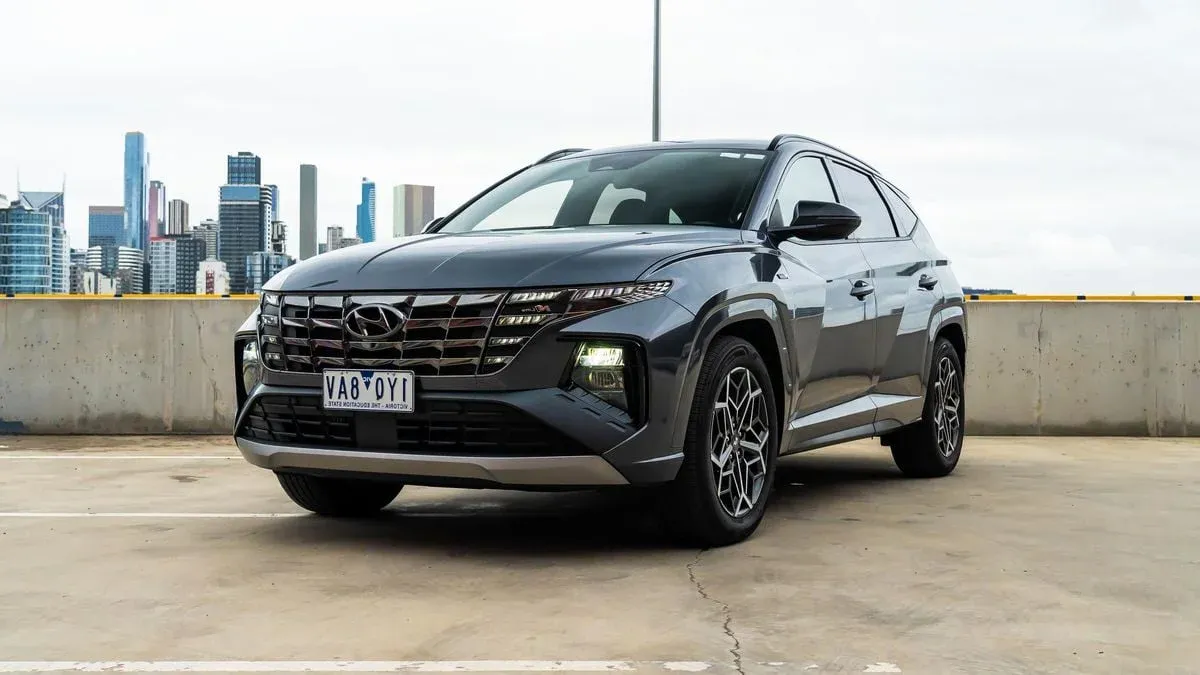
Model reviewed
Hyundai Tucson PetrolFrom $39,350 RRP
Excl. on-road costs
from $231/wk in VIC, excludes servicing and insurance (estimate)
60/100
CarSorted Score
- Fuel use
- 8.1 L/100km
- Towing (braked)
- 1,650kg
- Boot
- 539L
The Hyundai Tucson is one of the strongest mid-size SUVs in Australia, and for good reason. It starts at $39,350 for the 115kW front-drive petrol (8.1L/100km, 539-litre boot), and the 172kW hybrid claims 4.9L/100km in front-drive form and 5.3L/100km with AWD, with a 582-litre boot. Five-star ANCAP safety across the range, a 5-year unlimited-km warranty, and an interior that punches well above its price point. It's not perfect (the base petrol makes a modest 115kW and tows 1,650kg; the hybrid tows 1,900kg), but for most Australian families, this is the mid-size SUV to beat.
This review is built from Hyundai's published figures, ANCAP and our own calculators. We have not driven this car.
Written 7 April 2026. The snapshot, tables, prices and scores on this page update from our car data; figures quoted in the text are as at that date.
Design (Exterior)
The Tucson is one of the best-looking SUVs on sale in Australia. Hyundai took a risk with the "Parametric Dynamics" design language and it paid off. The front end features hidden running lights integrated into the grille surround. They only appear when the headlights are on, which is a neat trick. The headlights themselves are jewel-like LED units that give the car a distinctive look, particularly at night.
In profile, the Tucson has a longer, lower stance than the previous generation. At 4,630mm long and 1,865mm wide, it looks purposeful. The character line running from the front guard through the door handles and into the tail lights gives it a wedge-shaped appearance.
The rear is equally distinctive. The full-width tail-light bar connects left and right, making it instantly recognisable in traffic. The whole design feels cohesive and modern. It looks like it should cost $60,000, which is exactly what Hyundai intended.
Colour options include the usual whites, greys, and blacks, plus a couple of standout choices like Amazon Grey and Teal. The base grade rolls on 17-inch alloys and the Elite steps up to 18-inch alloys.
| Key details | 2026 Hyundai Tucson Petrol |
|---|---|
| Engine | 2L 4-cyl |
| Power | 115kW |
| Torque | 192Nm |
| Drive type | FWD |
| Transmission | Automatic |
| Power-to-weight ratio | 77 kW/tonne |
| Weight | 1,495kg (kerb) |
| Spare tyre type | Space saver |
| Tow rating | 1,650kg braked750kg unbraked |
| Turning circle | 11.8m |
| Fuel consumption | 8.1 L/100km |
| Boot | 539L seats up, 1,860L folded |
| ANCAP | 5 stars (2021) |
Key details for 3 other variants
| Key details | 2026 Hyundai Tucson Hybrid |
|---|---|
| Engine | 1.6L 4-cyl turbo |
| Power | 172kW |
| Torque | 367Nm |
| Drive type | FWD |
| Transmission | 6-speed Auto |
| Power-to-weight ratio | No data |
| Weight | No data |
| Spare tyre type | Space saver |
| Tow rating | 1,900kg braked750kg unbraked |
| Turning circle | 11.8m |
| Fuel consumption | 4.9 L/100km |
| Boot | 582L seats up, 1,903L folded |
| ANCAP | 5 stars (2021) |
| Key details | 2026 Hyundai Tucson Elite Petrol |
|---|---|
| Engine | 2L 4-cyl |
| Power | 115kW |
| Torque | 192Nm |
| Drive type | FWD |
| Transmission | 6-speed Auto |
| Power-to-weight ratio | No data |
| Weight | No data |
| Spare tyre type | Full-size spare |
| Tow rating | 1,650kg braked750kg unbraked |
| Turning circle | 11.8m |
| Fuel consumption | 8.1 L/100km |
| Boot | 539L seats up, 1,860L folded |
| ANCAP | 5 stars (2021) |
| Key details | 2026 Hyundai Tucson Elite Hybrid |
|---|---|
| Engine | 1.6L 4-cyl turbo |
| Power | 172kW |
| Torque | 367Nm |
| Drive type | FWD |
| Transmission | 6-speed Auto |
| Power-to-weight ratio | No data |
| Weight | No data |
| Spare tyre type | Space saver |
| Tow rating | 1,900kg braked750kg unbraked |
| Turning circle | 11.8m |
| Fuel consumption | 4.9 L/100km |
| Boot | 582L seats up, 1,903L folded |
| ANCAP | 5 stars (2021) |
Is it good value?
Rivals
The mid-size SUV segment in Australia is brutally competitive. Here are the three cars most Tucson shoppers cross-shop.
Kia Sportage
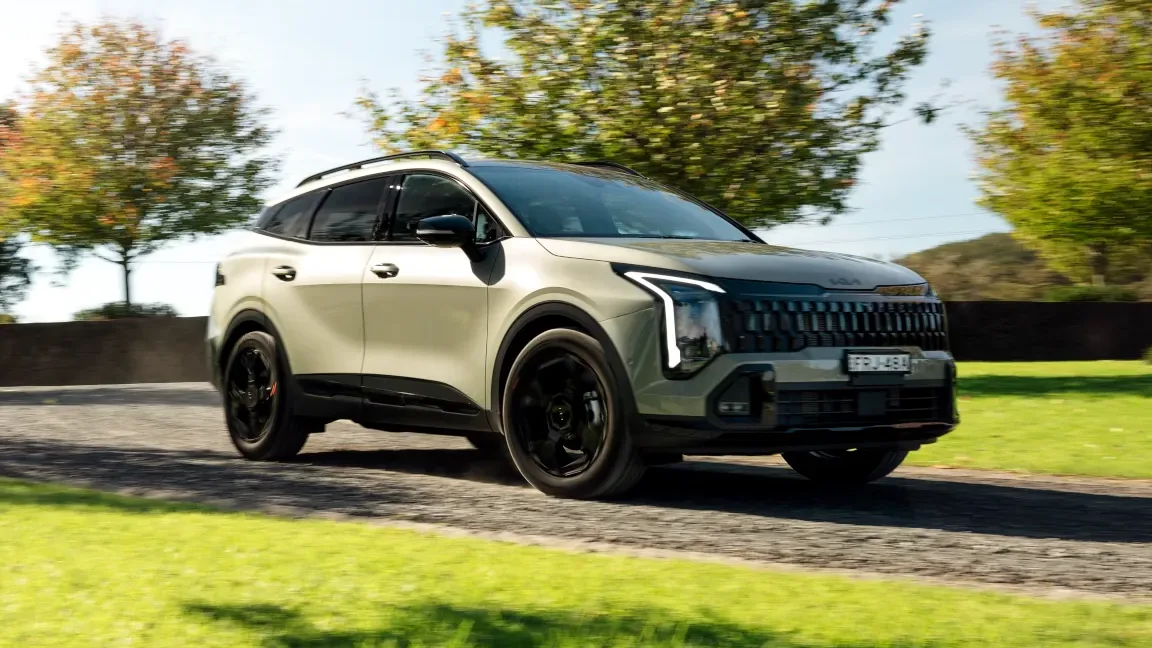
The Sportage is the Tucson's platform twin. Same engines, same transmissions, same underpinnings. The differences come down to styling (the Sportage has a more polarising front end), interior layout (the Sportage gets a wider curved dual-screen display), and pricing (very similar). Boot space is nearly identical at 543L vs 539L. Honestly, test-drive both and buy whichever one you prefer sitting in. Neither is objectively better. Full comparison in our Sportage vs Tucson head-to-head.
Toyota RAV4
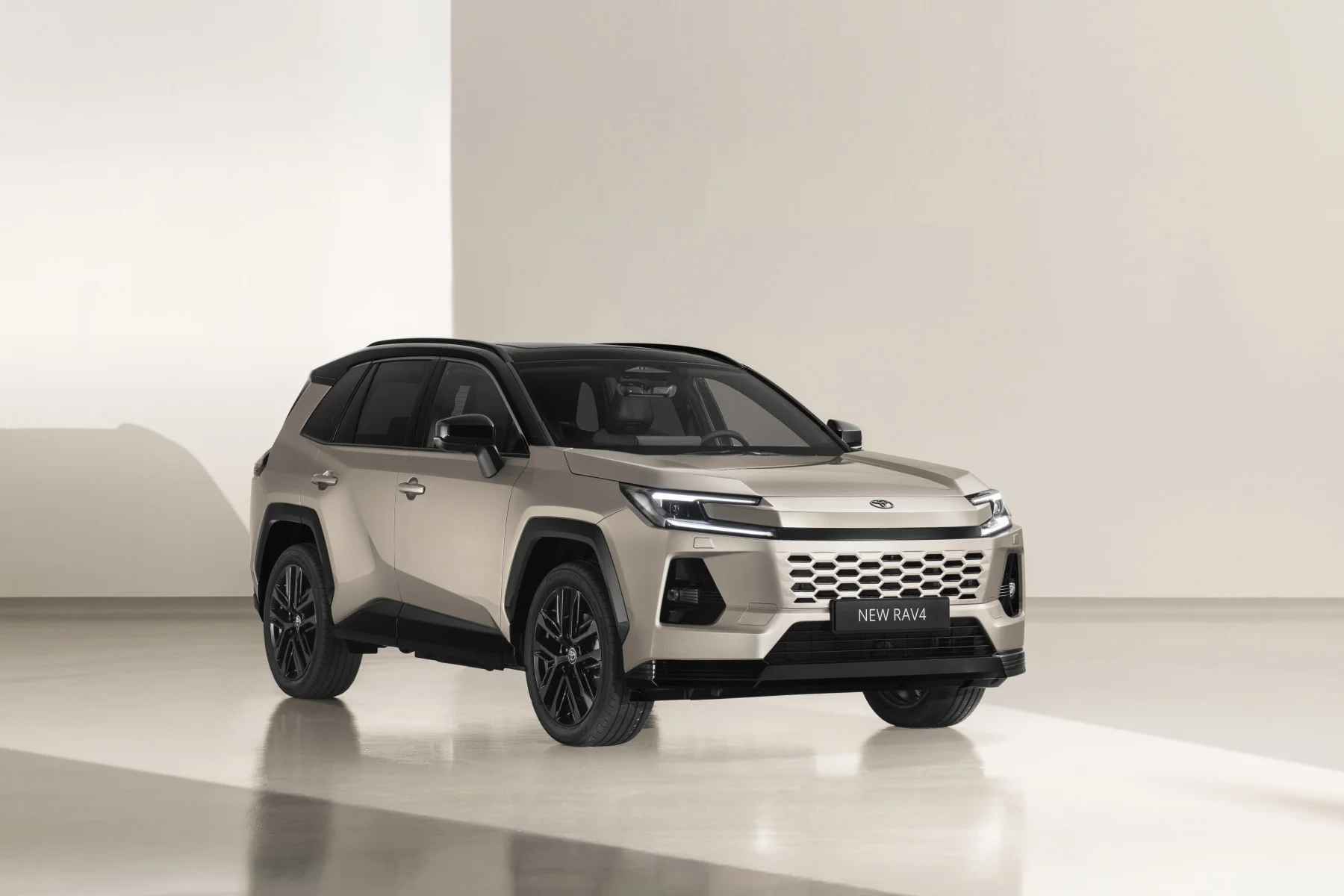
The RAV4 is the sales king in this segment, and for good reason. It offers the option of a hybrid that returns around 4.8L/100km and Toyota's bulletproof reliability reputation. Where the Tucson wins: design (the RAV4 looks more conservative), interior tech (the RAV4's infotainment is showing its age), and price at comparable spec levels. The RAV4 Hybrid is cheaper, though, which matters. See the RAV4 vs Tucson comparison for the data.
Mazda CX-5
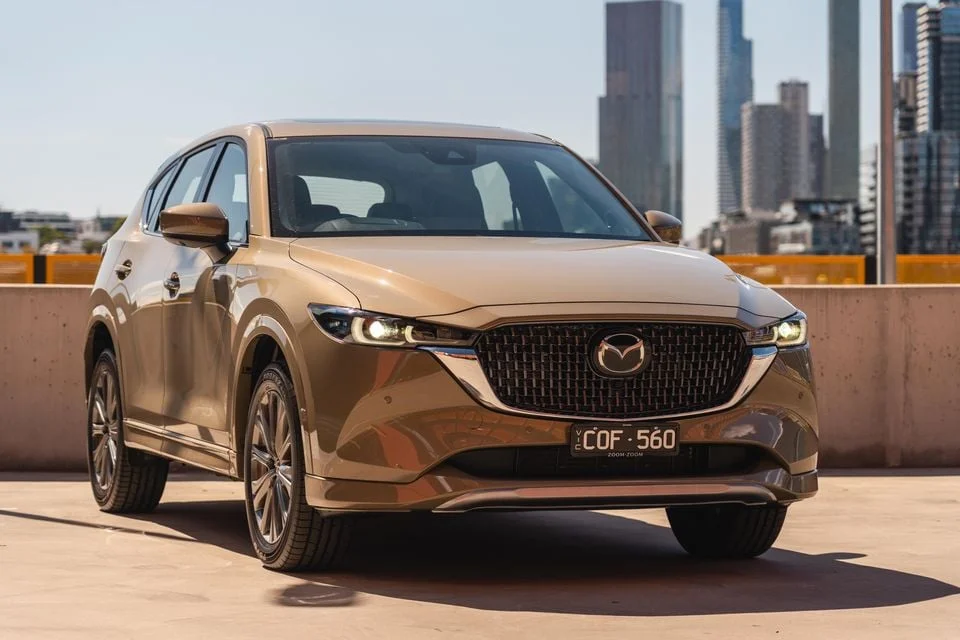
The CX-5 leans on cabin materials, and it offers a 2.5L turbo petrol. But it's smaller (466L boot), doesn't offer a hybrid, and the infotainment runs through a rotary controller rather than a touchscreen. If design and a turbo engine matter more than space and efficiency, the CX-5 is worth a look. But the Tucson is the more practical all-rounder. We also compare the Tucson against the larger Mazda CX-60 if you're considering stepping up.
| Key details: Hyundai Tucson Petrol | |
|---|---|
| Price | From $39,350 RRPExcl. on-road costs |
| Drive-away estimate | Calculating... |
| Cost per week in VIC | from $231/wk in VIC, excludes servicing and insuranceRepayments, fuel or charging, rego and CTP, servicing, tyres and insurance where held. Estimate only, not a quote. |
| Body | SUV |
| Powertrain | Petrol, 2L 4-cyl |
| Towing (braked / unbraked) | 1,650kg / 750kg |
| Seats | 5 |
| Warranty | 5yr / unlimited km |
| Rivals | Kia Sportage, Toyota RAV4, Mazda CX-5 |
| The Hyundai Tucson range on sale | Price | Powertrain | Fuel or energy use |
|---|---|---|---|
| Petrol | From $39,350 RRP | Petrol, FWD | 8.1 L/100km |
| Hybrid | From $42,850 RRP | Hybrid, FWD | 4.9 L/100km |
| Elite Petrol | From $44,350 RRP | Petrol, FWD | 8.1 L/100km |
| Elite Hybrid | From $48,350 RRP | Hybrid, FWD | 4.9 L/100km |
| Elite N Line Hybrid | From $50,850 RRP | Hybrid, FWD | 5.3 L/100km |
| Elite Hybrid AWD | From $50,850 RRP | Hybrid, AWD | 5.3 L/100km |
| Elite N Line Hybrid AWD | From $53,350 RRP | Hybrid, AWD | 5.3 L/100km |
| Premium Hybrid AWD | From $58,350 RRP | Hybrid, AWD | 5.3 L/100km |
| Premium N Line Hybrid AWD | From $59,850 RRP | Hybrid, AWD | 5.3 L/100km |
How much fuel does it use?
Fuel Economy
This is a tale of two engines.
The 2.0L petrol is rated at 8.1L/100km combined. Treat that as a lab number: a naturally aspirated 2.0L uses more in town and less on a steady highway run. It's not bad for a naturally aspirated 2.0L, but it's not particularly impressive either. The RAV4 petrol does similar numbers.
The hybrid is where the Tucson really shines. Rated at 4.9L/100km combined in front-drive form and 5.3L/100km with AWD, it uses far less than the petrol on the claims. A hybrid gets closest to its claim in stop-start traffic, where the electric motor does more of the work.
Over 15,000km a year at current petrol prices ($1.55/L), the 2.0L will cost approximately $1,820 annually. The hybrid drops that to around $1,230. That's a saving of roughly $590 per year, or $2,950 over five years. The hybrid also gets AWD, which on the petrol model isn't available at all. So you're paying a premium, but you're getting more than just better fuel economy.
| Fuel: Hyundai Tucson Petrol | |
|---|---|
| Fuel use (combined) | 8.1 L/100km |
| Fuel type | Petrol |
| Minimum fuel grade | No data |
| Urban / extra-urban | 11 L/100km / 6.5 L/100km |
| Fuel tank | 54L |
| Range on a tank (calculated) | 667kmTank divided by the combined figure |
| CO2 (combined) | 184 g/km |
| Measured fuel use (AAA, on the road) | 7.9 L/100km2% below the maker's ADR 81/02 claim of 8.1 L/100km. AAA test: the 2023 Hyundai Tucson STD, same engine, drivetrain and gearbox, a different grade, 8 May 2024. Source: Australian Automobile Association Real-World Testing Program (realworld.org.au). |
| Service interval | 12 months or 15,000km |
What does it cost to own?
Price and Running Costs
Hyundai prices the Tucson competitively, and the range is structured simply enough that you won't spend hours trying to work out which variant to buy. Four main grades, with petrol and hybrid options through the middle of the range.
The base petrol at $39,350 is a mid-size SUV with a 10.25-inch touchscreen, Apple CarPlay/Android Auto, LED headlights, and a full suite of safety gear.
The Elite Hybrid at $48,350 is the pick of the range, in our view. You get the more powerful and efficient hybrid drivetrain plus the Elite's upgraded interior, under the $50k mark before on-roads. All-wheel drive adds $2,500 (Elite Hybrid AWD, $50,850).
Running costs are a genuine strength. Hyundai offers capped-price servicing with 12-month/15,000km intervals. Annual service costs average around $400-500, which is cheaper than the RAV4 and CX-5. Insurance sits around $1,400-1,800 depending on your age and location. The 5-year unlimited-kilometre warranty is standard, matching most of the segment. Fuel costs depend heavily on whether you go petrol or hybrid. The petrol at 8.1L/100km will cost roughly $1,880 a year (at $1.55/L petrol, 15,000km), while the front-drive hybrid at 4.9L/100km drops that to $1,140. That's about a $740 saving annually on the claims.
| Warranty and servicing: Hyundai Tucson Petrol | |
|---|---|
| Warranty | 5yr / unlimited km |
| Roadside assistance | 5 years (renewed with dealer servicing) |
| Service interval | 12 months or 15,000km |
| Capped-price servicing | No data |
Cost per week in VIC: from $231/wk in VIC, excludes servicing and insurance
- Repayment estimate$159/wk
$5,000 deposit, 5yr loan at an assumed 7.5% p.a. on the RRP. Not an offer of credit
- Fuel$46/wk
8.1 L/100km combined at $1.95/L ULP 91, the site default
- Rego + CTP$18/wk
VIC typical: car, metropolitan (high risk) zone, 12-month renewal, $958.80 a year. As at July 2026, VicRoads
- ServicingNo data
No data: no servicing cost held for this car
- Tyres$8/wk
Typical tyre spend for this type of car, scaled to 15,000 km a year (not this car's tyres)
- InsuranceNo data
No data: no insurance estimate held for this car
Based on 15,000 km a year in VIC. Estimate only, not a quote.
How safe is it?
Safety
The Tucson holds a 5-star ANCAP safety rating, and the standard equipment list is strong across the board. Every Tucson sold in Australia gets the following as standard:
- Autonomous emergency braking (AEB) with pedestrian and cyclist detection
- Lane-keep assist and lane departure warning
- Blind-spot monitoring with rear cross-traffic alert
- Driver attention warning
- Rear parking sensors and reversing camera
- Six airbags
The Elite adds front parking sensors, a surround-view camera, safe exit warning (alerts you if a car is approaching when you open the door), a heads-up display, and a blind-spot camera that shows your blind spot on the instrument cluster when you indicate. That last feature shows you more than a warning light can.
The ANCAP scores break down as: adult occupant (86%), child occupant (87%), vulnerable road user (63%), and safety assist (73%). Those are solid numbers. The vulnerable road user score is slightly lower than some rivals, but overall the Tucson is a very safe car.
| ANCAP: Hyundai Tucson Petrol | |
|---|---|
| ANCAP rating | 5 stars (tested 2021) |
| Adult occupant | 86% |
| Child occupant | 87% |
| Vulnerable road users | 66% |
| Safety assist | 70% |
| Airbags | No data |
| Driver assists: Hyundai Tucson Petrol | |
|---|---|
| Autonomous emergency braking | Standard |
| Adaptive cruise control | Standard |
| Blind-spot monitoring | Standard |
| Rear cross-traffic alert | No data |
| Lane-keep assist | Standard |
| Speed sign recognition | No data |
| Driver attention monitor | No data |
| 360-degree camera | No data |
Standard, Optional (with the printed price), No (the maker's document says not fitted) or No data. 8 assists checked.
What is it like inside?
Interior, Screen, and Materials
Hyundai has made serious strides in interior quality, and the Tucson is a showcase of that progress. The Hybrid 2WD comes with the 10.25-inch touchscreen, digital cluster, and a clean dashboard layout.
All variants get a 10.25-inch touchscreen infotainment system with wired Apple CarPlay and Android Auto. The digital instrument cluster is also 10.25 inches across the range, which is generous. Physical climate controls sit below the screen as a touch-sensitive panel with haptic feedback. Touch panels are a matter of taste, so try it on a test drive before you buy.
The Elite extends the soft-touch surfaces across the dash and doors and adds leather seats, a heads-up display, a panoramic sunroof, and a Bose premium sound system.
Storage is well thought out. The centre console bin is a good size, there's a wireless charging pad (Elite and above), generous door pockets, a decent glovebox, and USB-C ports front and rear.
Practicality: Boot, Rear Seats, and Towing
Boot Space
The boot measures 539 litres with the rear seats up. That's a solid number. Fold the rear seats down (they split 60/40) and you get approximately 1,860 litres of flat load space. The boot floor is low and the opening is wide, so loading bulky items like flat-pack furniture is straightforward.
For context, the Kia Sportage offers 543L (marginally more) and the Mazda CX-5 has 466L (notably less). The Tucson sits in the middle of the pack, which is fine for most families. Check our SUV boot space comparison for the full picture.
Rear Seats
Two ISOFIX points and three top-tether anchors are standard.
Towing
Here's where the Tucson shows its limits. Braked towing capacity is 1,650kg for the petrol grades and 1,900kg for the hybrids. That's enough for a small camper trailer, a jetski, or a medium-sized boat. It is not enough for a full-size caravan. If you're planning to tow anything over about 1,500kg regularly, you need to look at something with more capability. The RAV4 Hybrid tows 1,500kg in AWD form and 800kg in 2WD, the CX-5 tows 1,800kg, and the Sportage matches the Tucson at 1,650kg.
For serious towing, you're really looking at a ute or a larger SUV. But for the typical towing tasks. a box trailer full of mulch, a small boat, or a modest camper. The Tucson's 1,650kg (petrol) or 1,900kg (hybrid) rating covers it.
| Space and dimensions: Hyundai Tucson Petrol | |
|---|---|
| Seats | 5 |
| Boot, seats up | 539L |
| Boot, seats folded | 1,860L |
| Length x width x height | 4,640 x 1,865 x 1,665mm |
| Wheelbase | 2,755mm |
| Ground clearance | 181mm |
| ISOFIX | 2 points (2L, 2R) |
| Top tethers | 3 |
| Seat trim | Cloth |
| Spare wheel | Space saver |
Does it have good tech?
| Screens and audio: Hyundai Tucson Petrol | |
|---|---|
| Touchscreen | 12.3 inches |
| Driver display | 4 inches |
| Audio | 6 speakers |
| USB | USB-C |
| Connected services term | No data |
| Connectivity: Hyundai Tucson Petrol | |
|---|---|
| Apple CarPlay | Standard |
| Android Auto | Standard |
| Wireless CarPlay / Android Auto | No data |
| Wireless phone charging | No data |
| Head-up display | No data |
| Built-in navigation | No data |
| Digital radio | No data |
| Over-the-air updates | No data |
| Remote climate (app) | No data |
What the figures say about driving it
The Hyundai Tucson Petrol has 77 kW for every tonne of kerb weight, 192Nm of torque. It weighs 1,495kg and turns in 11.8m. These are the figures that shape how quickly a car gets moving and how easily it parks.
| The figures: Hyundai Tucson Petrol | |
|---|---|
| Power-to-weight | 77 kW/tonne |
| Power | 115kW |
| Torque | 192Nm |
| 0-100km/h (claimed) | No data |
| Kerb weight | 1,495kg |
| Turning circle | 11.8m |
| Tyres | 235/65R17 |
| Drive | FWD |
| Transmission | Automatic |
| Towing (braked) | 1,650kg |
We have not driven the Hyundai Tucson; these are Hyundai's published figures.
Best deals
Get a great deal on a brand new car today
One enquiry, up to four cars. We ask local dealers for their best drive-away price and send them back to you, so you compare real numbers instead of list prices.
Free for you to use. If you buy, the dealer may pay us a commission. Your details only go to a dealer if you say so.
Find a new car dealShould I buy it?
Should You Buy It?
Yes, if: you want a sharp-looking, well-equipped mid-size SUV that doesn't cost the earth. The Tucson is one of the most complete packages in the segment. It looks great, has enough space for a young family, and the hybrid is one of the best value propositions in the entire Australian new car market. The Elite Hybrid at $48,350 is the sweet spot. It gets you 172kW, a 4.9L/100km claim, and a well-appointed cabin.
Maybe not, if: you need serious towing capacity (1,650kg for the petrol and 1,900kg for the hybrid won't cut it for a large caravan), you want the absolute maximum boot space (a large three-row SUV will hold more). The base 2.0L engine is also modest at 115kW. If you're buying the petrol, at least step up to Elite for the better interior.
CarSorted Score breakdown
The CarSorted Score is algorithmic: it is calculated from this car's published data, not from a road test. How it works.
Safety
Fuel Economy
Value
Practicality
Technology
Performance
Reliability
Questions buyers ask
How much does the Hyundai Tucson cost in Australia?
The Hyundai Tucson Petrol is from $39,350 RRP, before on-road costs. The range table above lists every current variant.
What is the Hyundai Tucson boot space?
The Hyundai Tucson has 539L of boot space with the seats up.
Does the Hyundai Tucson have a 5-star safety rating?
The Hyundai Tucson holds 5 ANCAP stars (rated 2021).
How much fuel does the Hyundai Tucson use?
On the official combined cycle the Hyundai Tucson uses 8.1 L/100km.
What warranty does the Hyundai Tucson have?
The Hyundai Tucson comes with a 5yr / unlimited km warranty.
How much can the Hyundai Tucson tow?
The Hyundai Tucson Petrol is rated to tow 1,650kg braked and 750kg unbraked.
How powerful is the Hyundai Tucson?
The Hyundai Tucson Petrol makes 115kW and 192Nm.
How to read this page. This is a review of the published figures: we have not driven this car. Prices, specifications, ANCAP ratings, warranty, equipment and the CarSorted Score come from our records for the variant shown, sourced from Hyundai's Australian documents, and update when those records change. RRP excludes on-road costs. Drive-away figures are estimates for the state you have selected unless marked as advertised; cost per week is an estimate, not a quote. The editorial text was written on 7 April 2026. Always confirm price and specification with the manufacturer or a dealer before you buy. CarSorted does not accept payment for recommendations.
Comments (0)
Sign in to join the conversation
No comments yet. Be the first!