2026 Honda Civic e:HEV L review
Is It Still the Best Small Car in Australia?
Data checked: specs 24 Jun 2026, price 24 Jun 2026
Text fact-checked against our data 15 July 2026Review snapshot
Model reviewed
Honda Civic e:HEV LFrom about $43,250 est. RRP
Estimated RRP: this brand lists drive-away prices only.
from $258/wk in VIC, excludes servicing and insurance (estimate)
75/100
CarSorted Score
- Fuel use
- 4.2 L/100km
- Boot
- 410L
Live offer: Bonus offer. $1,000 AmpolCash Fuel Card – Civic e:HEV L Ends 31 October 2026. All deals
Competitors

This review is built from Honda's published figures, ANCAP and our own calculators. We have not driven this car.
Written 7 April 2026. The snapshot, tables, prices and scores on this page update from our car data; figures quoted in the text are as at that date.
The Quick Verdict
The 11th-generation Civic is, quite simply, the most complete small car on sale in Australia. For $43,250, you get a 2.0-litre hybrid that's frugal on paper (4.2L/100km combined), an interior that looks like it belongs in a car costing $10k more, and Honda Sensing safety as standard. Its 2,735mm wheelbase is longer than a Mazda3's or Corolla's, and that length goes into the back seat. The only catch is the price. It's not cheap for a small car. But when you factor in what you get for the money, the fuel savings, and Honda's reliability, the Civic makes a very strong case for itself.
Design: Grown Up, Not Boring
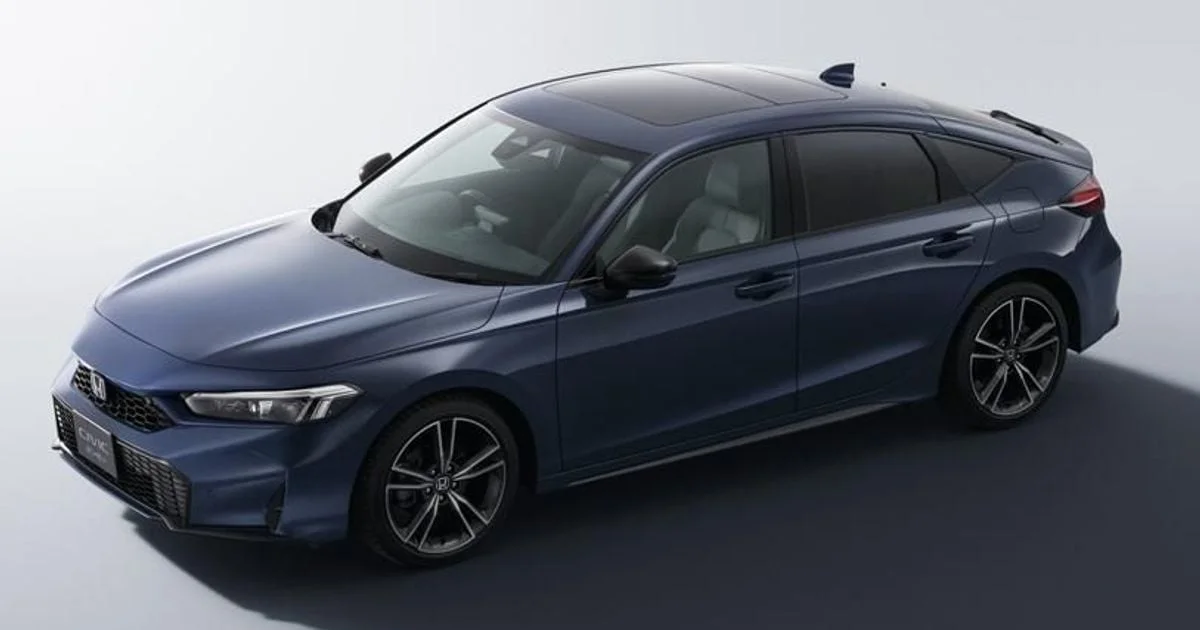
The previous Civic was polarising. Angular, aggressive, and covered in fake vents. The 11th-generation car took a completely different approach: clean, mature, and restrained. And it works brilliantly. The long bonnet, short overhangs, and fastback roofline give the hatchback genuine presence. It looks more expensive than it is.
The front end is clean, with slim LED headlights flowing into a simple grille. The side profile is the highlight. a low beltline, relatively large glass area, and a flowing roofline that terminates in a subtle spoiler. It's unmistakably a hatchback but doesn't look awkward or frumpy. The rear end is tidy, with horizontal tail lights that echo the front design language.
At 4,550mm long and 1,800mm wide, the Civic is at the larger end of the small car segment. It's closer in footprint to a mid-size car, which partly explains the generous interior space. The 2,735mm wheelbase is longer than a Mazda3 or Corolla, and that length goes into rear seat legroom.
The e:HEV LX adds gloss-black exterior trim and larger alloys for a slightly sharper look. The Type R, of course, goes full race car with its massive rear wing, widened arches, and triple exhaust pipes. Colour options are decent, with Crystal Black Pearl and Sonic Grey Pearl being the standouts.
| Key details | 2026 Honda Civic e:HEV L |
|---|---|
| Engine | 2L 4-cyl |
| Power | 135kW |
| Torque | 315Nm |
| Drive type | FWD |
| Transmission | Automatic |
| Power-to-weight ratio | 88 kW/tonne |
| Weight | 1,533kg (kerb) |
| Spare tyre type | Tyre repair kit |
| Tow rating | 750kg braked600kg unbraked |
| Turning circle | 11.4m |
| Fuel consumption | 4.2 L/100km |
| Boot | 410L seats up, 1,187L folded |
| ANCAP | 5 stars (2022) |
Key details for another variant
| Key details | 2026 Honda Civic e:HEV LX |
|---|---|
| Engine | 2L 4-cyl |
| Power | 135kW |
| Torque | 315Nm |
| Drive type | FWD |
| Transmission | Automatic |
| Power-to-weight ratio | 88 kW/tonne |
| Weight | 1,533kg (kerb) |
| Spare tyre type | Tyre repair kit |
| Tow rating | 750kg braked600kg unbraked |
| Turning circle | 11.4m |
| Fuel consumption | 4.2 L/100km |
| Boot | 410L seats up, 1,187L folded |
| ANCAP | 5 stars (2022) |
Is it good value?
What Does the Civic Cost in Australia?
Honda offers the Civic hatchback in three flavours, from sensible to slightly unhinged:
Driveaway, the e:HEV L comes in around $49,900 in Victoria. The e:HEV LX lands at about $55,900. The Type R at $75,000 before on-roads is in a completely different league and is really a separate conversation (it's a proper hot hatch that competes with the Golf R and i30 N).
For most buyers, the real choice is between the e:HEV L and the e:HEV LX. The ~$5,350 jump to the LX gets you extra kit and trim, but the e:HEV L is already very well-equipped, so the base model doesn't feel like a compromise.
Both e:HEV grades share the same hybrid drivetrain, interior and safety equipment, so the choice comes down to how much extra kit you want rather than any change under the bonnet.
Running Costs
This is where the Civic really shines. Honda claims 4.2L/100km combined on the ADR test cycle for the e:HEV hybrid. Town driving is the part that flatters it, because the electric motors do most of the low-speed work and the petrol engine often isn't turning the wheels at all.
At 15,000km per year on the claimed figure, you're looking at roughly $1,200 in fuel at current prices (~$1.90/L). A Mazda3 with the 2.0-litre naturally aspirated engine claims 6.5L/100km, which works out to about $1,850 over the same distance. Neither car will match its claim exactly, but the hybrid's advantage is widest in exactly the suburban driving most owners do, and it accumulates over five years of ownership.
Servicing is affordable. Honda schedules services every 12 months or 10,000km, with capped pricing for the first five years averaging $260-350 per service. The 5-year warranty is standard. Honda's long-term reliability means out-of-warranty surprises are rare. The Civic has historically been one of the lowest-cost small cars to own over a 5-7 year period. For a detailed comparison, check our cheapest cars to run analysis.
Rivals: What Else Should You Cross-Shop?
Mazda3 (from $28,990)
The Mazda3 is the Civic's closest rival and the other truly excellent small car on sale. Its interior leans on materials and design. But the base engine (2.0L, 114kW) makes less power than the Civic's, fuel economy isn't as strong, and the rear seat is tighter. The Mazda3 starts significantly cheaper, but the higher-spec variants (which compete directly with the Civic on equipment) close the price gap. For the full breakdown, read our Mazda3 review.
Toyota Corolla (from $30,710)
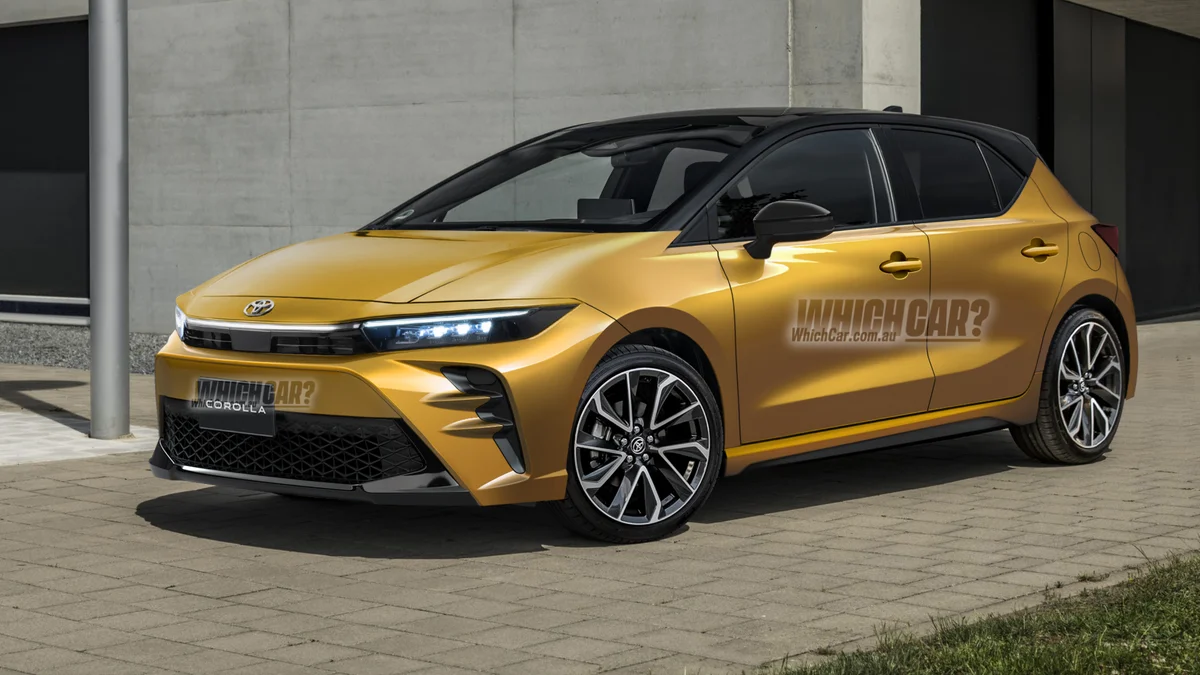
The Corolla is the safe choice, and there's nothing wrong with safe. Toyota's hybrid option delivers exceptional fuel economy (3.5L/100km combined on the hybrid hatch), the dealer network is the biggest in Australia, and resale values are consistently strong. But the non-hybrid engine makes less power. For maximum fuel savings and resale peace of mind, the Corolla wins. For power and rear legroom, the Civic. See our Civic vs Corolla comparison.
Volkswagen Golf (from $36,990)
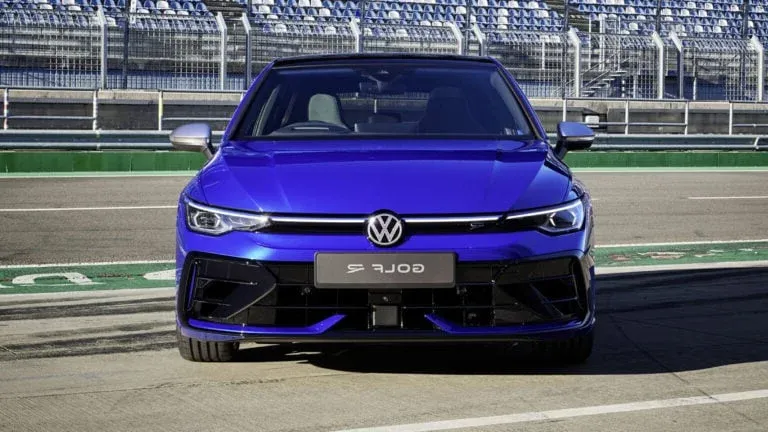
The Golf is the European benchmark. Its 1.4-litre turbo (110kW) makes less power than the Civic's 135kW hybrid. The Golf costs more, and VW's long-term reliability record doesn't match Honda's. If you want the European badge and don't mind paying a bit more, the Golf is worth a look. For Australian conditions and value, the Civic edges it.
The Civic leads on hybrid efficiency and power. The Corolla Hybrid is among the leaders on fuel economy. The Golf leads among these four on boot space. The Mazda3 wins on value entry pricing and interior quality. All four are excellent cars. Browse the full best small cars Australia 2026 guide to compare them all.
| Key details: Honda Civic e:HEV L | |
|---|---|
| Price | From about $43,250 est. RRPEstimated RRP: this brand lists drive-away prices only. |
| Drive-away estimate | $49,900 drive away (VIC, advertised) |
| Cost per week in VIC | from $258/wk in VIC, excludes servicing and insuranceRepayments, fuel or charging, rego and CTP, servicing, tyres and insurance where held. Estimate only, not a quote. |
| Body | Hatch |
| Powertrain | Hybrid, 2L 4-cyl |
| Towing (braked / unbraked) | 750kg / 600kg |
| Seats | 5 |
| Warranty | 5yr / unlimited km |
| Rivals | Mazda Mazda3, Toyota Corolla Hatch, Volkswagen Golf |
How much fuel does it use?
Fuel Economy: Genuine Hybrid Numbers
Honda claims 4.2L/100km on the combined ADR test cycle for the e:HEV hybrid, which is right at the sharp end of the small car class.
The e:HEV is worth understanding because it behaves differently to most hybrids. Two motors do the driving, and for the majority of town work the petrol engine is not connected to the wheels at all: it runs as a generator at whatever speed is most efficient for making electricity, or shuts off entirely. That is exactly the kind of driving the test cycle rewards, which is why suburban running is where a Civic hybrid sits nearest its claim, and why it does not suffer in traffic the way a conventional petrol does. At sustained highway speed the system clutches the engine directly to the wheels, because a straight mechanical drive beats going through the generator once you are cruising, and consumption creeps up. Short trips are the other thing to know: a cold engine has to warm up before the hybrid system settles into its most efficient patterns.
On the claimed figure at 15,000km per year, fuel costs land around $1,200 at $1.90/litre, with a Corolla Hybrid line-ball and every petrol small car in the segment behind. The tank is generous relative to the consumption, so fill-ups are infrequent for the average Australian commuter.
| Fuel: Honda Civic e:HEV L | |
|---|---|
| Fuel use (combined) | 4.2 L/100km |
| Fuel type | Hybrid |
| Minimum fuel grade | No data |
| Urban / extra-urban | 2 L/100km / 5.5 L/100km |
| Fuel tank | 40L |
| Range on a tank (calculated) | 952kmTank divided by the combined figure |
| CO2 (combined) | 96 g/km |
| Service interval | 12 months or 10,000km |
What does it cost to own?
| Warranty and servicing: Honda Civic e:HEV L | |
|---|---|
| Warranty | 5yr / unlimited km |
| Battery warranty | 8yr |
| Roadside assistance | 5 years |
| Service interval | 12 months or 10,000km |
| Capped-price servicing | No data |
Cost per week in VIC: from $258/wk in VIC, excludes servicing and insurance
- Repayment estimate$208/wk
$5,000 deposit, 5yr loan at an assumed 7.5% p.a. on the advertised drive-away. Not an offer of credit
- Fuel$24/wk
4.2 L/100km combined at $1.95/L ULP 91, the site default
- Rego + CTP$18/wk
VIC typical: car, metropolitan (high risk) zone, 12-month renewal, $958.80 a year. As at July 2026, VicRoads
- ServicingNo data
No data: no servicing cost held for this car
- Tyres$8/wk
Typical tyre spend for this type of car, scaled to 15,000 km a year (not this car's tyres)
- InsuranceNo data
No data: no insurance estimate held for this car
Based on 15,000 km a year in VIC. Estimate only, not a quote.
How safe is it?
Safety: Honda Sensing Standard
The Civic carries a 5-star ANCAP safety rating, and Honda Sensing is comprehensive across the entire range:
- Collision Mitigation Braking (AEB) with pedestrian and cyclist detection
- Adaptive cruise control with low-speed follow
- Lane Keep Assist System (LKAS)
- Road Departure Mitigation
- Traffic Sign Recognition
- Blind spot information system with cross-traffic monitor
- Auto high-beam headlights
- Multi-angle reversing camera
- 8 airbags including front-centre airbag
Eight airbags across the range is above average. The front-centre airbag between the driver and front passenger is a thoughtful inclusion. For learner drivers or new car buyers, the Civic's safety package offers serious peace of mind. See our safety features guide for a full breakdown.
| ANCAP: Honda Civic e:HEV L | |
|---|---|
| ANCAP rating | 5 stars (tested 2022) |
| Adult occupant | 89% |
| Child occupant | 89% |
| Vulnerable road users | 82% |
| Safety assist | 83% |
| Airbags | 6 |
| Driver assists: Honda Civic e:HEV L | |
|---|---|
| Autonomous emergency braking | Standard |
| Adaptive cruise control | Standard |
| Blind-spot monitoring | Standard |
| Rear cross-traffic alert | Standard |
| Lane-keep assist | Standard |
| Speed sign recognition | Standard |
| Driver attention monitor | Standard |
| 360-degree camera | No data |
Standard, Optional (with the printed price), No (the maker's document says not fitted) or No data. 8 assists checked.
What is it like inside?
Interior: Genuinely Impressive
This is where the Civic separates itself from most of the small car pack. The dashboard design is a masterclass in clean, considered design. A honeycomb mesh strip runs the full width of the dash, hiding the air vents behind it. It's visually distinctive and gives the cabin an open, airy feel. Below that, the controls are logically laid out with physical knobs for climate and volume. Honda didn't sacrifice usability for aesthetics, and the result is an interior that's both beautiful and functional.
The 9-inch touchscreen runs Honda's latest infotainment software. Wireless Apple CarPlay and Android Auto are standard. The e:HEV LX adds a Bose 12-speaker sound system.
There is a soft-touch dash top, textured metal-look trim and a leather-wrapped steering wheel even on the e:HEV L, with harder plastics on the lower panels.
The long wheelbase is where the rear legroom comes from, though the fastback roofline trims rear headroom. ISOFIX points on the outer rear seats are standard.
Practicality: Better Than You'd Expect
Honda quotes 410 litres for the e:HEV hatch boot, against 295L for the Mazda3 hatch and 217L for the Corolla Hybrid hatch on their makers' figures. The boot opening is wide, the floor is flat, and the rear seats fold 60/40 for 1,187 litres with the seats down. For weekly grocery runs, airport luggage, or a weekend camping trip, it's fine.
Where the Civic's practicality really shows is in the cabin, thanks to that long wheelbase. The rear floor is flat, with no transmission tunnel hump in the middle. It won't replace a mid-size SUV, but for a small car, the Civic punches well above its weight on passenger space.
Towing capacity is 750kg braked, which is low but typical for the small car segment. That covers a small box trailer or a lightweight camper, but anything heavier and you need a bigger car. The 1,346kg kerb weight and FWD layout mean towing isn't the Civic's forte, and that's fine. It's not what this car is for.
Cabin storage is thoughtful. The centre console has a covered compartment, there's a useful tray ahead of the gear lever, there are front cup holders, and the door pockets are sized for proper water bottles. USB-A and USB-C ports are in the front, with another USB-C for rear passengers. The glovebox is a reasonable size.
| Space and dimensions: Honda Civic e:HEV L | |
|---|---|
| Seats | 5 |
| Boot, seats up | 410L |
| Boot, seats folded | 1,187L |
| Length x width x height | 4,560 x 1,802 x 1,415mm |
| Wheelbase | 2,733mm |
| Ground clearance | 134mm |
| ISOFIX | 2 points (2L, 2R) |
| Top tethers | 3 |
| Seat trim | Leather |
| Spare wheel | Tyre repair kit |
Does it have good tech?
| Screens and audio: Honda Civic e:HEV L | |
|---|---|
| Touchscreen | 9 inches |
| Driver display | 10.2 inches |
| Audio | Bose, 12 speakers |
| USB | USB-C |
| Connected services term | No data |
| Connectivity: Honda Civic e:HEV L | |
|---|---|
| Apple CarPlay | Standard |
| Android Auto | Standard |
| Wireless CarPlay / Android Auto | Standard |
| Wireless phone charging | Standard |
| Head-up display | No data |
| Built-in navigation | No data |
| Digital radio | Standard |
| Over-the-air updates | No data |
| Remote climate (app) | No data |
What the figures say about driving it
The Honda Civic e:HEV L has 88 kW for every tonne of kerb weight, 315Nm of torque, a claimed 0-100km/h of 8.1s. It weighs 1,533kg and turns in 11.4m. These are the figures that shape how quickly a car gets moving and how easily it parks.
| The figures: Honda Civic e:HEV L | |
|---|---|
| Power-to-weight | 88 kW/tonne |
| Power | 135kW |
| Torque | 315Nm |
| 0-100km/h (claimed) | 8.1s |
| Kerb weight | 1,533kg |
| Turning circle | 11.4m |
| Tyres | 235/40 R18 |
| Drive | FWD |
| Transmission | Automatic |
| Towing (braked) | 750kg |
We have not driven the Honda Civic; these are Honda's published figures.
Best deals
Get a great deal on a brand new car today
One enquiry, up to four cars. We ask local dealers for their best drive-away price and send them back to you, so you compare real numbers instead of list prices.
Free for you to use. If you buy, the dealer may pay us a commission. Your details only go to a dealer if you say so.
Find a new car dealShould I buy it?
Should You Buy the Honda Civic?
Yes, if:
- You want the best all-round small car in Australia, full stop
- You want strong hybrid efficiency without a plug. 4.2L/100km is exceptional in this class
- Interior design is important. the honeycomb dash and physical climate controls stand out
- Rear seat space is a consideration. the Civic's 2,735mm wheelbase is longer than a Mazda3's or Corolla's
- Long-term reliability and low ownership costs are priorities
Maybe not, if:
- Budget is tight. the Corolla and Mazda3 start significantly cheaper
- You need absolute maximum fuel savings. the Corolla Hybrid is unbeatable
- Boot space is your top priority. 410L is competitive but some rivals offer more
- You want AWD. it's front-wheel drive only
- Resale value is paramount. Toyota holds value better over 3-5 years
The Honda Civic at $43,250-$48,600 (ignoring the Type R) is the most complete small car money can buy in Australia. It blends hybrid efficiency, interior design, safety, and space in a way that no single rival here matches on paper. The Mazda3 is more premium inside. The Corolla is cheaper and highly fuel-efficient as a hybrid. The Golf carries the European badge. But none of them nail every category the way the Civic does. It's a car that makes you wonder why anyone pays more for a mid-size SUV.
If you're cross-shopping, start with our Civic vs Corolla head-to-head. Or browse the full best small cars in Australia 2026 list to see where the Civic ranks.
→ Compare all Honda Civic variants on CarSorted (200+ specs)
CarSorted Score breakdown
The CarSorted Score is algorithmic: it is calculated from this car's published data, not from a road test. How it works.
Safety
Fuel Economy
Value
Practicality
Technology
Performance
Reliability
Questions buyers ask
How much does a Honda Civic cost in Australia?
The Honda Civic e:HEV L is from about $43,250 est. RRP. The range table above lists every current variant.
Is the Honda Civic fuel efficient?
On the official combined cycle the Honda Civic uses 4.2 L/100km.
What is the Honda Civic boot space?
The Honda Civic has 410L of boot space with the seats up and 1,187L folded.
Is the Honda Civic safe?
The Honda Civic holds 5 ANCAP stars (rated 2022).
What warranty does the Honda Civic have?
The Honda Civic comes with a 5yr / unlimited km warranty.
How much can the Honda Civic tow?
The Honda Civic e:HEV L is rated to tow 750kg braked and 600kg unbraked.
How powerful is the Honda Civic?
The Honda Civic e:HEV L makes 135kW and 315Nm, with a claimed 0-100km/h of 8.1s.
How to read this page. This is a review of the published figures: we have not driven this car. Prices, specifications, ANCAP ratings, warranty, equipment and the CarSorted Score come from our records for the variant shown, sourced from Honda's Australian documents, and update when those records change. RRP excludes on-road costs. Drive-away figures are estimates for the state you have selected unless marked as advertised; cost per week is an estimate, not a quote. The editorial text was written on 7 April 2026. Always confirm price and specification with the manufacturer or a dealer before you buy. CarSorted does not accept payment for recommendations.
Comments (0)
Sign in to join the conversation
No comments yet. Be the first!