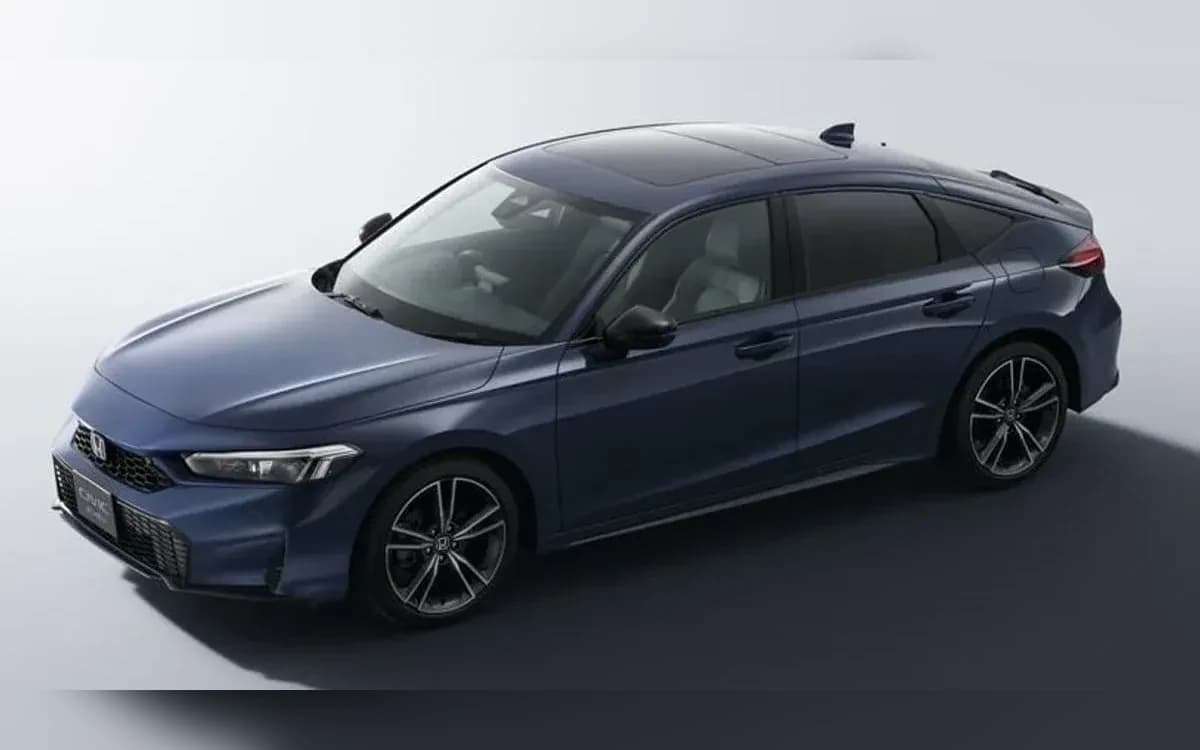
Image credit: Honda Australia
Recall summary
- 554 vehicles affected in Australia across three Honda nameplates
- Honda Civic: 2024 to 2026 model years
- Honda Accord: 2025 model year only
- Honda ZR-V: 2023 to 2025 model years
- Fault: the left-side seatback frame edge on the driver and front passenger seats may not meet the minimum radius requirements of ADR 3/04, Seats and Seat Anchorages
- Hazard: in a crash, contact with the frame edge could increase the risk of injury to vehicle occupants
- Remedy: free dealer correction, Honda Australia is contacting affected owners in writing
- VIN check via Honda Customer Care on 1800 804 954, customerservice@honda.com.au, or vehiclerecalls.gov.au
Honda Australia has issued a safety recall covering 554 examples of the current Civic, Accord and ZR-V over a manufacturing defect that puts the front seatbacks outside the boundaries of an Australian Design Rule. The campaign is small next to the four- and five-figure recalls that have run this year on utes and SUVs, but it is more interesting than the headcount suggests. This is not a component that is breaking in service. It is a compliance recall against ADR 3/04, the rule that governs seats and seat anchorages, and it is a reminder that the ADRs exist to catch geometry problems the market would otherwise never notice.
The affected cars sit right in the middle of Honda's Australian volume story. The Civic hybrid is the sedan Honda is asking a genuine Corolla-money premium for, the Accord is the last mid-size petrol-hybrid sedan Honda still offers in Australia, and the ZR-V is the mid-size SUV that just picked up two cheaper hybrid grades. Below is exactly what Honda has confirmed, what ADR 3/04 actually requires, how the fix works, and where 554 vehicles sits against the other Honda-shaped recall activity in Australia this year.
What Honda Australia has confirmed
Honda Australia notified the federal recall register on 23 September 2026 that 554 Civic, Accord and ZR-V passenger cars sold new in Australia are on the involved list. The build breakdown, as it has been described publicly, covers Civics from the 2024 to 2026 model years, Accords from the 2025 model year, and ZR-Vs from the 2023 to 2025 model years. Honda has not published a variant-by-variant count in the recall wording. Given the volumes each of those three nameplates does in Australia, the involved list looks like a specific production window rather than every car of that build year.
The technical defect is a shortfall against Australian Design Rule 3/04, Seats and Seat Anchorages. The ADR requires that edges on the frames inside a seatback be finished to a minimum corner radius so that a body pressed against them during a crash meets a rounded surface rather than a sharp one. Honda Australia says that on the affected 554 vehicles, the left-side seatback frame edge on the driver and front passenger seats may not meet the minimum radius that ADR 3/04 sets. In a normal driving day nobody touches that surface. The rule is written for the crash case.
The hazard is stated in the same crash-only terms. Honda's recall wording is that in the event of an accident, contact with the seatback frame edge could increase the risk of injury to vehicle occupants. That is a materially different sentence to the recall wording BYD used earlier this month on the Shark 6 spare wheel campaign, where the identified failure mode was a part detaching from a moving vehicle onto the road. Honda has not asked owners of the Civic, Accord or ZR-V to stop driving, and it has not attached a do-not-drive instruction to the recall.
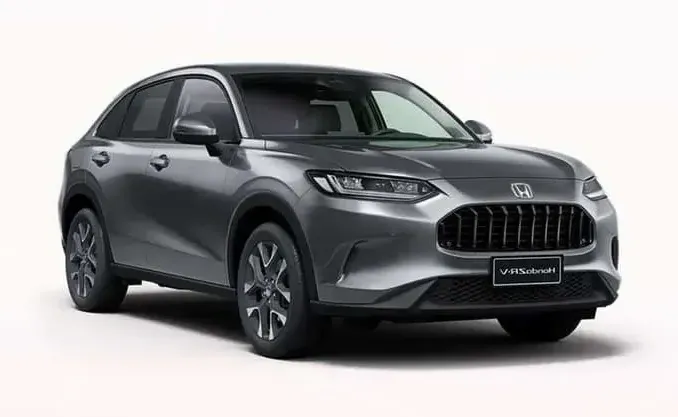
Image credit: Honda Australia
What ADR 3/04 actually requires, and why this counts
ADR 3/04 is the rule that says a passenger car's seats and their anchorages have to meet a minimum standard of strength, of geometry and of interaction with the occupant during a crash. It is one of the seat-related ADRs Australia has kept in step with the equivalent United Nations regulations for decades, and the radius clause is only one part of it. The rule assumes an occupant in a crash will not just stay in the seat they were belted into. A rear-seat passenger who is not restrained perfectly can pitch forward and strike the back of a front seat, and the front seat occupant themselves can rotate against the seat frame under load. The radius rule limits how sharp any edge on the frame can be at those contact points.
That is what makes this recall unusual in shape. Most recalls in Australia get triggered because something started failing in the field, a warranty pattern showed up, or an overseas parent company issued a technical bulletin that then flows into local sales. This one is a certification defect, a car built to a slightly different geometry than the type-approval drawings called for. It is not a fault that ever manifests during ordinary driving, because ordinary driving does not press an occupant against the inside of a seatback frame. What it does do is remove a slice of the injury margin the ADR was written to preserve, and that is what the recall exists to restore.
For a household with children in the second row of a Civic, Accord or ZR-V, the practical exposure is small in any given kilometre and only meaningful in a crash. But the ADR framework does not treat crash-only defects as low priority. Once the compliance question is raised, the correction is mandatory and the campaign runs. Which is exactly what has happened here.
The fix, the timeline and what owners should do
Honda Australia will contact every owner of an affected Civic, Accord or ZR-V in writing and ask them to book their car into an authorised Honda dealer at a time that suits. The dealer will address the ADR 3/04 shortfall on the driver and front passenger seatbacks, and the work is free of charge to the owner. Honda has not published a workshop-time estimate against the campaign, but seat-frame recalls of this kind are typically an under-a-day job at the dealership rather than a multi-visit repair.
Owners who want to move on the recall without waiting for the letter have three routes. The first is to phone Honda Customer Care on 1800 804 954. The second is to email customerservice@honda.com.au with the car's VIN and current owner details. The third is to enter the VIN into the federal recall register at vehiclerecalls.gov.au, which draws its data directly from the campaign the manufacturer lodged. All three of those checks will confirm whether a specific car is on the involved list.
Anyone who bought one of these Hondas second-hand from a private seller or a used-car dealer is entitled to exactly the same free correction. Recalls attach to the vehicle, not to the person who ordered it new, so a private-buyer Civic e:HEV from a Facebook Marketplace sale still qualifies for the workshop fix at Honda's cost. It is worth booking the work either way, because used-car buyers a few years down the line will look at whether the ADR 3/04 correction has been logged against the VIN.
How this compares to the year's other big recalls
Fifty-five recall notices have crossed our desk this calendar year, and the shape of this one is a useful counter-example to the very large campaigns that dominated the headlines. The BYD Shark 6 spare wheel recall covered 32,009 vehicles, or 58 times as many cars as this Honda campaign. The Ford Ranger side-curtain airbag recall covered 13,907 vehicles, 25 times as many. Even the Hyundai Palisade LX3 seat-fold software recall pulled a much larger fleet. Honda's 554 is small because the compliance defect is confined to a specific production window, not because Honda is running slower deliveries. In annual sales terms, Honda Australia moved several thousand Civic, Accord and ZR-V units across the affected build years, and only a slice of those carried the frame that misses the ADR radius.
The wording matters too. BYD attached the phrase may result in serious injury or death to its spare wheel campaign because the failure mode is a detachment on a live road, with third parties in the exposure. Honda's wording on the seatback frame is that the defect could increase the risk of injury to vehicle occupants, and it is contingent on a crash. Neither wording is optional under Australian Consumer Law, and both trigger the same free-repair obligation, but the practical urgency for owners is not the same. A Shark 6 owner who cannot get a workshop slot this week is told to remove the spare wheel from under the tray in the meantime. A Civic e:HEV owner is told to book the appointment, drive normally in the meantime and mind the second-row occupants until the correction has been done.
None of the three Hondas has been retested by ANCAP in response to this recall, and Honda's wording does not claim a rating change. The ZR-V retains its four-star ANCAP result from 2023 testing, and the Civic and Accord retain their respective ratings unchanged. Recall campaigns of this type do not automatically trigger an ANCAP re-rating, and we are not going to write one in.
What this means for the Honda cross-shop on CarSorted
Three of the affected nameplates are cars we track live pricing on and comparisons for, and it is worth being honest about where they sit against the alternatives our shoppers are also looking at. The updated 2026 Honda ZR-V range runs from $39,900 driveaway for the petrol VTi X to $51,900 driveaway for the e:HEV LX flagship, with the two new mid-range hybrids at $43,400 and $45,900 driveaway. That entry hybrid price is $11,500 lower than it was at the start of 2025, which is a meaningful move for a car that used to ask a big premium to go electrified. The Civic e:HEV L hybrid sits at roughly $49,900 driveaway depending on state, and the Accord e:HEV RS is $57,900 RRP, or the wrong side of $63,000 driveaway once metro on-roads are added.
At that money the Civic sedan is being asked to justify itself against the Toyota Camry Ascent Hybrid at $39,990 RRP, and the ZR-V is up against the Toyota RAV4 Hybrid and the Hyundai Tucson Hybrid at similar money. A one-off ADR 3/04 correction does not change any of those value calls on its own, and the fix costs nothing, but it belongs in the buying decision the same way an outstanding software recall would. If you are cross-shopping a used 2024 Civic hybrid this weekend, the answer to the question has the seatback correction been done is worth asking of the seller.
For anyone weighing the Honda hybrid trio against the current cheap-hybrid rush from the Chinese brands, the ADR framework is the same either way. Every car sold new in Australia has to certify against the ADRs and stay compliant with them across its production life, and every manufacturer whose parts drift out of that envelope is on the hook for the free fix. That is the framework the Civic, Accord and ZR-V are now being pulled back through, and it applies just as forcefully to the Chery Tiggo 7 Super Hybrid and the BYD Sealion 5 sitting alongside them on the shortlist. The rule is a floor, not a marketing angle.
Where the CarSorted database fits in
We track the Civic hybrid range, the Accord e:HEV RS and every trim of the ZR-V in our on-sale directory, along with a running record of ANCAP results, warranty periods, service intervals and price movements. The whole point of the site is that when a recall like this lands, the affected trims can be checked against their alternatives inside a minute rather than an evening of tab-hopping. If you want to run the numbers yourself, the full Australian new-car directory is the place to start, or jump straight into the Civic versus Corolla comparison that lines the Civic hybrid up against the segment's value benchmark.
We also publish a live view of recall activity across the market, and 554 vehicles for a compliance defect is a smaller headline than the ute recalls of the past month but a useful data point in the pattern. Recalls on Chinese-brand and legacy Japanese vehicles have been running at roughly comparable rates in 2026, and the compliance ones almost always come from the Japanese and Korean side of the fleet, while the field-failure ones skew Chinese. That is what a maturing market looks like, and it is not by itself an argument for one badge or the other.
Warranty and what stays the same
Honda Australia's standard five-year unlimited-kilometre warranty is unaffected by the recall, and any correction performed under a manufacturer recall does not consume any of that warranty coverage. The five years of roadside assistance that ship with a new Honda are unchanged too, and the scheduled servicing intervals of 12 months or 10,000km remain what Honda's own service program advertises. Owners who normally service outside the Honda dealer network can continue to do so, and that has no bearing on the recall entitlement. The recall correction itself is only done at an authorised Honda dealer, because that is who Honda has trained on the procedure and stocks the parts.
What this means for buyers
If you own a 2024 to 2026 Honda Civic, a 2025 Honda Accord or a 2023 to 2025 Honda ZR-V, do one thing this week. Ring Honda Customer Care on 1800 804 954 with your VIN, or key the VIN into vehiclerecalls.gov.au, and confirm whether your car is one of the 554. If it is, book the free correction as soon as your dealer has a slot. There is no cost, no impact on warranty, and no benefit to waiting. The letter is on its way but does not have to arrive before you make the call.
If you are shopping second-hand this weekend, add one line to the checklist. Ask the seller whether the ADR 3/04 seatback correction has been completed, and if the answer is unclear, either book the fix yourself post-purchase or use it as a negotiating lever. The correction still costs nothing to have done regardless of who owns the car, but a compliant, corrected VIN is what future buyers of your car in another two years will pay a slight premium for.
And if you are cross-shopping any of these three Hondas against the current wave of cheap hybrid alternatives, the recall does not on its own change the answer. The Civic e:HEV is still the smoothest small-sedan hybrid in Australia, the Accord is still the mid-size hybrid sedan the Camry undercuts by $18,000, and the ZR-V is still the segment's more premium-feeling mid-size hybrid. What the recall does change is the state of the paperwork on any specific car you are considering. Get the correction done, log it against the VIN, and the rest of the buying decision goes back to the price, the practicality and the running costs, which is what CarSorted is built to help you weigh up. Run the comparison on the CarSorted directory, and if you want to line the Civic hybrid up directly against its most obvious rival, the Civic versus Corolla page is a fair place to start.
Disclaimer: this article summarises a Honda Australia safety recall as described on the federal vehicle recall register and confirmed by Honda Australia's customer notification channels. Pricing and specification information for the affected Civic, Accord and ZR-V nameplates is drawn from CarSorted's own directory and Honda Australia's published price lists. This piece is not legal advice. If your Honda is on the involved list, the manufacturer is the authoritative source for the fix, and Honda Customer Care on 1800 804 954 is the fastest way to get moving.