Key Takeaways
- Honda and Mitsubishi have signed an MOU for a Honda ute based on the Mitsubishi Triton
- Honda's release names one market: ASEAN, in 2028
- Not confirmed for Australia. Honda Australia says it is “not able to confirm” the ute for here
- No name, price, engine or body styles published; no price to quote
- ANCAP: no data
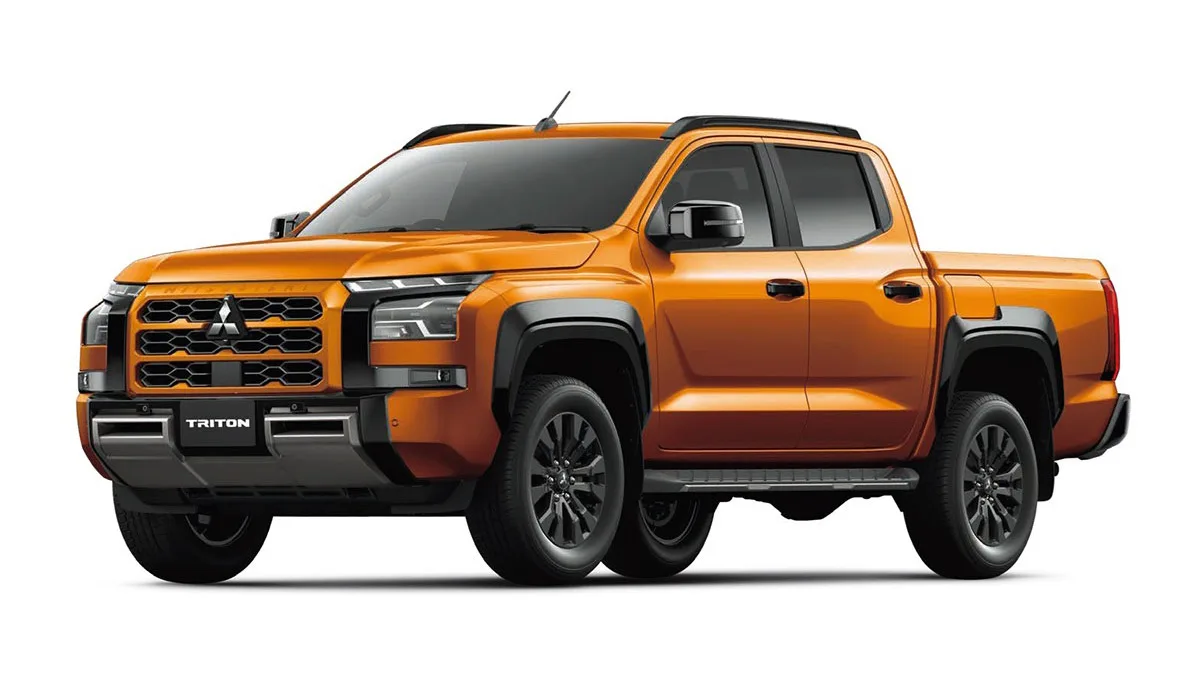
The current Mitsubishi Triton, the ute Honda's new model will be based on, as pictured in Honda's release. Image: Honda
If you have been waiting for Honda to build a ute, it finally is, sort of. Honda has signed a memorandum of understanding with Mitsubishi for a Honda model based on the Mitsubishi Triton. The catch for Australian buyers: Honda's release names one market, Southeast Asia, in 2028, and Honda Australia won't say whether we get it.
What Honda and Mitsubishi Actually Said
The release went out from Tokyo on 22 October 2026 under both company names, and Mitsubishi published the same text. It is a memorandum of understanding, and the first vehicle-supply tie-up between the two brands. The key line: “The new Honda model is scheduled to go on sale in the ASEAN market in 2028.”
The release says Honda will add the ute “primarily in the ASEAN market”, where it sells no pick-up today, and that the deal lets Mitsubishi lift production at its plant in Thailand. It grows out of the partnership the two signed with Nissan in August 2024. That is everything. No name, no engine, no cab styles, no price and no other country.
Where Australia Stands
Honda Australia's answer, given to GoAuto and Drive, was a spokesperson's statement: “We are not able to confirm if this model will be offered in Australia when it goes on sale.” Honda Australia's own news page carried nothing on the ute when we checked on 23 October.
So headlines calling the Honda ute “confirmed” are right about the car and wrong if you read them as an Australian launch. Drive reported Honda applied to register “Tideline” as an Australian trade mark on 29 July 2026 and floated it as a possible name, but Honda hasn't connected that name to this ute.
GoAuto notes a Honda ute would put the brand into a segment it has not competed in here. The 21 current Hondas in our directory are all SUVs, hatches, a sedan or a coupe: the HR-V, ZR-V, CR-V, Civic, Civic Type R, Accord, Prelude and Super-ONE. You can see the range on our Honda page. There's no ute in that list.
The Triton already has a relative in Australian showrooms. GoAuto and Drive both report that the current D27 Nissan Navara shares much of its underpinnings with the Triton. GoAuto also listed what could stand in the way here: making it look different enough from the Mitsubishi and the Nissan, whether one more low-volume model pays its way in Honda's local range, and the emissions cost of adding a mostly diesel ute.
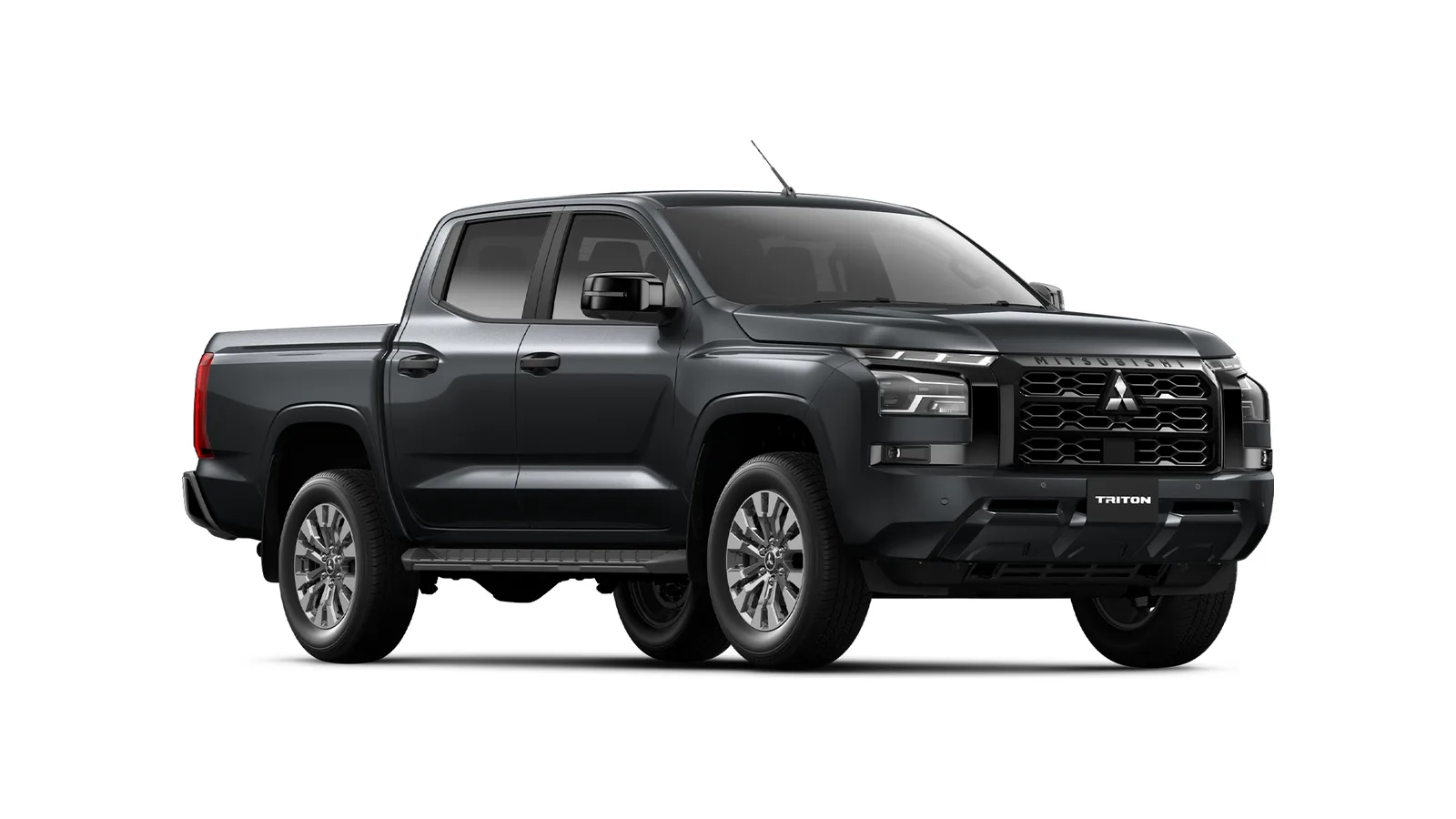
Australian-market Mitsubishi Triton double cab. Image credit: Mitsubishi Motors Australia
What the Triton Underneath Offers Today
This is the Triton you can buy now, not a preview of the Honda. Nobody has said which of these figures, if any, the Honda will share.
All 16 current Tritons in our directory are diesels making 150kW and 470Nm (a 2.4-litre engine on every row that lists the capacity), and every one is listed at 3,500kg braked towing. You can have it as a single cab, club cab or double cab, as a cab-chassis or a pick-up, in 4x2 or 4x4. The pick-ups we list are all automatic, and there is a six-speed manual on the GLX double-cab cab-chassis 4x4. Across the pick-ups, payload runs from 990kg on the Raider to 1,111kg on the GLX+ club cab 4x4, and the GLX double-cab cab-chassis 4x4 auto lists 1,207kg before you fit a tray. All our current Triton rows carry a five-star ANCAP rating.
On price, Mitsubishi Australia quotes the Triton as a recommended drive-away price, and a drive-away figure depends on the state you register in, so we're not printing one here. Mitsubishi Australia's own site is the place to check the figure for where you live.
Here is how that 3,500kg rating works in practice on three pick-ups, using the masses we list for each. Pick one, set a trailer, and see what is left for the tray.
Payload 1,055 kg · GVM 3,070 · GCM 6,210 · Braked tow 3,500 · Tow-ball 350 kg
Passengers, accessories and the tow-ball all count against the vehicle's payload and GVM. The trailer adds to GCM.
Total weight of people and gear inside the vehicle
Fully-loaded trailer weight, not the dry tare
Assumed at 10% of trailer ATM
Enter both from a weighbridge / your compliance plate to add a rear-axle gauge. Nothing here is estimated.
How these are calculated
Payload = GVM − kerb weight. Passengers, accessories and the tow-ball download all count against it.
GVM used = kerb + passengers + accessories + tow-ball.
GCM used = kerb + passengers + accessories + trailer (ATM). The tow-ball isn't added twice: it's part of the vehicle load and comes out of the trailer's axle weight, so (kerb + load + tow-ball) + (ATM − tow-ball) = kerb + load + ATM.
Tow = trailer ATM vs the braked rating. Tow-ball is assumed at 10% of the trailer (a common rule of thumb) unless you enter your own.
When a vehicle's kerb weight isn't published but its payload is, we derive kerb = GVM − payload. Manufacturers usually quote payload off the lightest build, so a car with options already fitted will have a little less real-world payload.
Vehicle weights (kerb, GVM, GCM, braked-tow and tow-ball limits) are the manufacturer's published figures from our database. Figures are a guide, not independently verified. Confirm against the compliance plate and never exceed rated GVM, GCM, tow or tow-ball limits.
These are Triton numbers only. For a full rig with a caravan or boat on the back, our TowingSorted planner does the same sums across any ute we list.
What This Means if You Need a Ute Now
Don't wait for it. Honda's own timing is 2028, in Southeast Asia, and Australia isn't on the list yet. If you like the idea of a Honda ute because of what sits under it, the Triton itself is in showrooms today, and you can compare it against any rival in our comparison tool.
If Honda Australia does commit, we'll add a coming-soon listing once it does, and fill in the name, engine, price and masses only as Honda publishes them.
Disclaimer: The 2028 ASEAN timing and the Triton basis are from Honda Motor Co. and Mitsubishi Motors' joint release of 22 October 2026. The Honda Australia statement is as quoted by GoAuto and Drive on 23 October 2026, and the Tideline trade mark application is as reported by Drive. Honda had not published an Australian name, price, specification or timing for this ute as at 23 October 2026. Triton figures are the values held in our directory on 23 October 2026 and apply to the Mitsubishi Triton only.